Under Who?

Who is God anyway? The question occurred to me as I read about the current Superior Court decision in New Jersey that “under God” in the Pledge of Allegiance remains constitutional. The American Humanist Association had sued to have the offending prepositional phrase removed, based on first amendment rights to religious freedom. I’ve always found the whole indoctrination of swearing to a flag somewhat provincial and perhaps even damaging to the unity of humankind. Nations, after all, are about keeping things for ourselves, something that the God of the Bible seems to find naughty. During the Cold War, waged against the “godless Communists,” the questionable phrase was added in 1954, only after we’d secured nuclear weapons. Does any nation that has the bomb have the right to declare divine sanction? I guess so, on second thought.

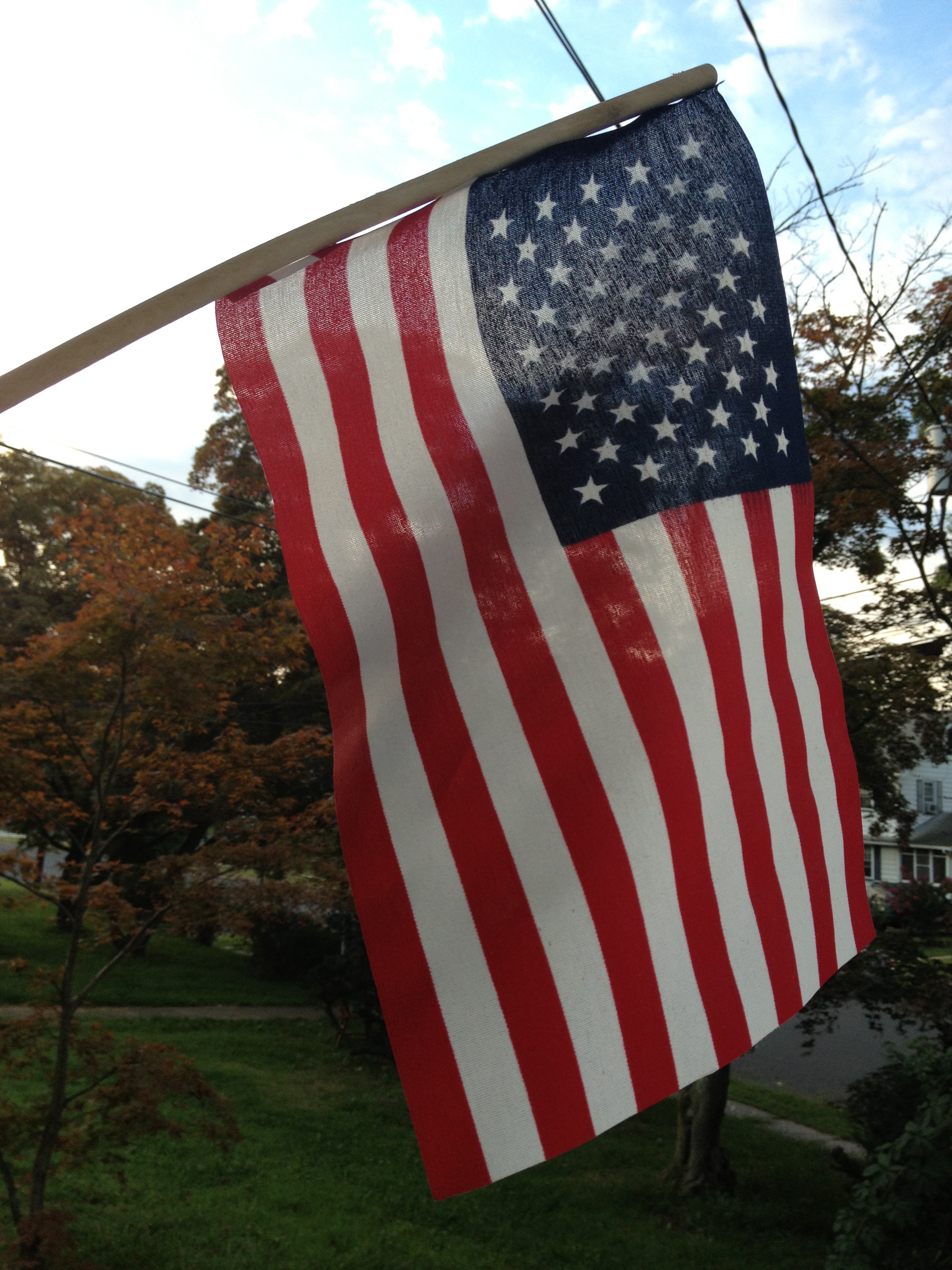
IMG_0962In his decision Judge David Bauman said that God, in this context, is not about religion, but about the state’s history. Granted, one of the New Jersey delegates to sign the constitution was a clergyman, and president of Princeton College. The same Princeton that became the home of the man who would open physics enough to let us begin a nuclear reaction. But I’m getting ahead of my story. This concept of God being an arcane aspect of history as opposed to a present and active force motivating people’s lives is a curious one. In order to keep the deity, he (and the historical God is male) must be demoted to an historical relic. If that is true of divinity, what does it say about the concept of nationhood itself? Have we come to admit that it is all a fiction to keep status quo ante?

Humanist and atheist groups have argued for years that public school (which no government takes that seriously) should not be a forum for religious indoctrination. Some religious groups (such as Creationists) clearly see such schools as a mission field ripe for proselytizing young minds. Such was clearly the case in 1954. Today we see the Russian Orthodox Church becoming a supporter of the government in Russia, where godlessness might be more a factor on the ground than on paper. In the United States we have a culture that provides lip-service to the almighty while the true god is secreted away in the shrines of bank vaults and expense accounts. It is really about a way of life, after all. Should we keep or remove “under God” from a pledge to personal gain? It is all a matter of how you define “God.”


Thor’s Return

Once as I sat in the office of an Ivy League professor of Greek religion, I asked about the myths of the Classical gods. The professor (who knew that I had taught religion as well, but at more like a Noxious Weed League school) appeared genuinely insulted and told me in no uncertain terms that scholars of religion didn’t take that nonsense seriously. The study of “myths” was left to Classicists, not actual scholars of religion. Is it any wonder, then, that we don’t really have a grasp on what the average person believes? Being a blue-collar scholar, I always took seriously what students told me about their beliefs. It wasn’t really a great surprise, then, when my wife pointed me to a story in The Guardian about a temple to the Nordic gods being built in Iceland. According to the story, the modern adherents of Ásatrúarfélagið (thank you unicode) don’t really believe in a literal Odin or Thor or Frigg, but see them as metaphors to help them face the way life is. A millennium after becoming Christian, some Icelanders are apparently getting back to their roots.

There has always been, to me, a fascination with the Nordic gods. These rough-and-tumble deities inhabited the harsh and snowy regions where daily life was often a struggle to survive against the elements. Frost giants were enemies and nobody really emerges as the winner after Ragnarok. In the Bible Yahweh does sometimes come out swinging, but for the most part he seems a deity content to sit on his throne and issue commands. The Scandinavian gods were characters of action. In some sense they seemed to struggle just like the rest of us do. They are, of course, more powerful and as the movie makes clear, Thor has a charisma that more self-righteous deities appear to lack. Lest anyone be ready to run to their priest at this point, please be aware that this too is a metaphor.

On the other side of the equation there are sure to be critics who argue that building a temple to fake gods in this day and age is obviously a waste of human talent and resources. Such are people with no imagination. Religious belief, metaphor or not, has been part of the human psyche from the very beginning. Elsewhere I have suggested that animals show the same behaviors as what we Homo sapiens would declare rudimentary religion. Rationalism has not provided a reasonable alternative to religious expression. Even a Stoic knows to appreciate art, although beauty provides no essential element to simple survival. Simply put, humans enjoy the finer things of life. Perhaps unappreciated since long sublimated, among those finer things are the old Nordic gods. And their return is a kind of resurrection.

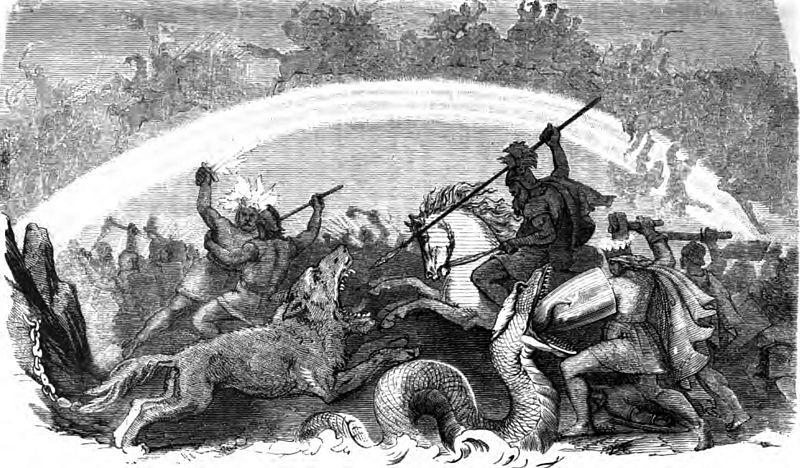
The Battle of the Doomed Gods

The Battle of the Doomed Gods


White Carrots

Acronyms are useful in a complex world, although they are frequently opaque to outsiders. Taking a new job you’re found constantly swimming in an alphabet soup of abbreviations that can drown you as easily as ABC. Each the church has them. As an undergrad religion major at a Presbyterian school I had to memorize TULIP (Total Depravity, Unconditional Election, Limited Atonement, Irresistible Grace, and Perseverance of the Saints), all of which but the last I had to reject on the grounds of sanity. As aids to memory they can serve as mnemonic devices, or they may simply be frustrating caricatures of reason. In any case, we all know them. In universities departments or divisions are known by acronyms, local businesses and landmarks may be as well. The internet has only speeded the process up, with countless abbreviations, some of which are definitely NSFW.

IMG_1889So it was that I learned an acronym that is current in the publishing industry. I always thought of the parsnip as a rather curious root vegetable, somewhat like a white carrot. As a child I severely disliked them, but I’ve come to appreciate them, roasted and glazed, as an adult. The word itself is somewhat fun to say: PARSNIP. It is also an acronym of things publishers, particularly those who publish textbooks in English as a second language, have to avoid. PARSNIP stands for, according to the popular explanation, Politics, Alcohol, Religion, Sex, Narcotics, Isms, and Pork. Interestingly to me, at least four of these things have their traditional taboo status because of religions. Clearly Religion is one of those, but restrictions on Alcohol, Sex, and Pork are also based on religious rules. One could argue that Narcotics also fits into that category as well. As I’ve mentioned many times on this blog, religion, substances, and sex are all deeply intertwined.

One of the curious things about this is that our post-Christian society has declared that religion is not worth discussing, or even learning about. We slash religion departments from universities and then wonder why we can’t discuss things like sex and alcohol, without which our society would apparently collapse, freely in other cultures. When I was a child, reading MAD magazine, I quickly learned two things that adults didn’t discuss were religion and politics. The list has grown since that time, but apart from the fact I have no idea which Isms are to be avoided, I see PARSNIP as the white carrot of religious taboos. And politics. In this secular world, we’ve become very politically correct, although we really shouldn’t mention politics in that phrase. Now I’m wondering if maybe I should reevaluate TULIP after all. At least the first part.


Star Struck

One of the coveted symbols of approval in my childhood was the star at the top of a paper. I watched in amazement (perhaps because they were so rare) when a teacher would inscribe a star without lifting her pencil from the paper. I thought I had never seen anything so perfectly formed. Of course, in my teenage years under the influence of Jack T. Chick and his ilk, I learned that the five-pointed star, especially in a circle, and more especially upside-down in a circle, was a satanic symbol. My childhood achievements had been, apparently, a demonic blunder. This fear of geometry still persists in America, as a story of a woman in Tennessee fighting to have “pentagrams” removed from school buses shows. The woman, who has received death threats and therefor remains anonymous, took a picture of the offending LEDs and has asked, out of religious fairness, to have the satanic symbols removed from the bus. The news reports are almost as tragi-comic as the complaint.

600px-Hugieia-pentagram

The pentagram, or pentacle, has a long history, some suggest going back to the Mesopotamians. (Uh-oh! We know how they loved their magic!) In fact, the symbol was benign in religious terms until it was adopted by Christians as symbolic of the “five wounds” (zounds!) of Christ. The symbol could also be used for virtue or other wholesome meanings. The development of Wicca began in earnest only last century, although it has earlier roots. Some late Medieval occultists saw the star as a magic symbol, and the inverted pentagram was first called a symbol of “evil” in the late 1800s. As a newish religion seeking symbols to represent its virtues, Wicca adopted the pentagram and some conservative Christian groups began to argue it was satanic, representing a goat head. (The capital A represents an ox head, so there may be something to this goat. I’m not sure why goats are evil, however.) Wicca, however, is not Satanism, and is certainly not wicked.

Symbols, it is sometimes difficult to remember, have no inherent meaning. Crosses may be seen in some telephone poles and in any architectural feature that requires right angles. The swastika was a sacred symbol among various Indian religions, long before being usurped by the Nazis. And the pentagram was claimed by various religions, including Christianity, long before it was declared dangerous by some Christian groups. There may be a coven in Tennessee seeking to covert children by designing and installing taillights of school buses, but I rather doubt it. School children feel about their buses as I feel about mine on a long commute to work each day. A kind of necessary evil. The truly satanic part, I suspect just about every day, is the commute itself. There must be easier ways to win converts.


Creating Diversity

Informed opinion is a chimera. I write that as someone who has time to read only the news stories my wife or my friends pass on to me. Once in a while one of those stories makes me feel less bad about being uninformed. A recent piece by Slate author William Saletan looks at polls regarding Creationism. The piece, picked up in the New Jersey Star-Ledger on a recent Sunday, demonstrates that although the United States is a nation of Creationists, we don’t agree about what that means. What becomes clear to me when I read such stories is that people who believe in the Bible seldom read it. Or at least understand it. Creationism “is not a thing” in the Bible. Many accounts about how the world began are represented, and the main point seems to be that it’s important that it was the God of Israel who did it rather than the competition. The first couple of creation accounts are compelling with their insistence that people are special, and that we are in charge while the owner is away. In fact, however, creation is a minor point in the story. It just has to start somewhere.

Those who set out to read the Bible, I suspect, begin to stumble in parts of Exodus and generally give up once they reach Leviticus. Although the main point of the books of Moses is the rules, the modern Christian finds the story more engaging. And the creation accounts of early Genesis are among the stories people actually read. They do make for a great, if contradictory, tale. They have, however, little impact on what people are supposed to do. Ironically, those accounts have become failsafe political devices. We vote according to how old we think the earth might be. We are special, after all.

Saletan’s point in the article is that the finer we parse the questions, the more divergent opinion becomes. The Bible doesn’t say how old the earth is—it’s really not a point of any significance to the story—but if you’re going to take it literally, you can do the math. Few literalists truly take the Bible literally. Logic very quickly breaks down as Genesis 2 follows Genesis 1. Americans are told that the Bible is literally true, but such a view literally makes no sense. We are committed to it, however, as we somehow equate believing in stories to be more important than understanding what those tales are trying to say. The polls, according to the article, make the point abundantly clear. When it comes to understanding the Bible Americans are very committed, if very confused.

Just one Creationist museum.  Photo credit: Creashin, Wikimedia Commons

Just one Creationist museum. Photo credit: Creashin, Wikimedia Commons


Divergency

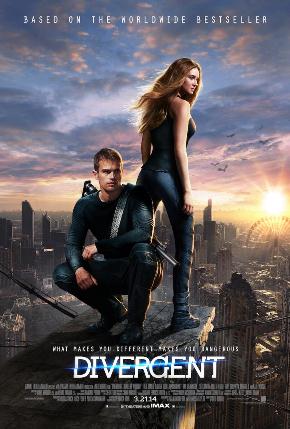
DivergentSelf-denial, no matter what its motivation, is a religious ideal. In its more extreme forms it becomes martyrdom, but most religions agree on the value of taking less for yourself so that others might have more. This has been running through my head since seeing the movie Divergent. I read and posted on the book some time ago, but having recently seen the movie—a fairly faithful adaptation to the novel—I was forcefully reminded that this is a dystopian parable. In the future, society is divided into different factions, based on a person’s predisposition. This is done to keep the peace, and the factions seem to get along until suspicion grows about the group called Abnegation. The Abnegation faction is moved by pity and compassion for others. They are the consummate self-deniers, not thinking of themselves to the point of limiting time they can spend looking in a mirror. Others are the focus. Naturally, those who see the utter selflessness of others wonder what they’re really up to. Suspicion grows that this group is after wealth, in the form of food, secretly stockpiling it for themselves. Nobody would give up for themselves so that others can have more.

As I watched the movie I thought about religious groups that preach self-denial. Granted, I’m only one person, but growing up that was the message I continually heard loud and clear in the teachings of Jesus, according to the Gospels. Deny yourself so that others might have more. The deeper I became involved with the church, however, the rarer I found such behavior. By the time I reached college, I still hadn’t figured out that religion had become an industry, like any other. A service industry, to be sure, but it still had CEOs and treasurers and, increasingly, political power. The political seduction of religion already had a history by the time I became aware of it, but I still believed that self-denial was at the core of true religion. Perhaps the factions I heard whispering around me were right. Perhaps there was something more driving all this.

In Divergent, the belief in selflessness leads to self-sacrifice. In many feel-good movies, this leads to an expected resurrection. Here the future is bleak, and the dead remain dead. There is a kind of resurrection as the Dauntless faction comes out of its stupor, but the movie leaves the viewer wondering if there is a future after all. Is there a place in the world for those who legitimately want everyone to share? I think that every time I find myself driving. Behind the wheel, selfish maneuvers that lead to little, if any, ultimate gain seem to be deeply embedded in those who want to get there first. Abnegation, it seems, is a danger on the road. Driving, it seems to me, is a real test of someone’s religious convictions. Perhaps it is that one has to realize that the vehicle in front of you contains another human soul. Or perhaps it is that the fragmentation of society has already gone too far and those who don’t take for themselves are not emulated, but consumed.


Holy Food

One of the undisputed benefits of working for a publisher of a wide variety of academic books is the opportunity to learn about different topics that might otherwise I might never have considered. For example, given the recent popularity of food studies (and this is probably fodder for its own post) authors have been producing micro-histories of specific comestibles. One that was recently featured in a YouTube short is peanut butter. One of the saddest food allergies, to my way of thinking, is that of the peanut. Peanut butter is such a singular symbol of childhood that it is a shame it is also such a potent poison for many. I grew up thinking that George Washington Carver invented peanut butter, but although he certainly was an innovator of peanut cultivation and disseminator of recipes, he was not the inventor. Peanut butter has been around for a long, long time. The modern food product is probably attributed to Marcellus Gilmore Edson, a Canadian who milled roasted peanuts into a kind of semi-liquid and received a patent for it.

What makes peanut butter a fit topic for a blog on religion is the work of John Harvey Kellogg. Kellogg was awarded a patent for a processing technique that led to the peanut butter we recognize today. Kellogg, whose name is more often associated with breakfast cereals, was an early vegetarian. Much of the impetus for his food experimentation goes back to the fact that he was a devout Seventh Day Adventist. The Adventists, biblical literalists, believed in promoting health through eating wholesome foods. Peanuts, a great source of non-animal protein, were seized upon by Kellogg as an alternative to butter, as well as a theologically satisfying food. Not only a food producer, he was also a promoter, and we eat breakfast cereal today largely through his efforts. For many, the day begins with a biblically inspired food.

IMG_1878

On kicks of nostalgia, or when I forget to buy a vegetarian alternative, I still take peanut butter sandwiches to work for lunch. I never considered this a religious activity, although my own vegetarianism likely has religious, as well as humanitarian, roots. In this post-religious age that we inhabit we sometimes forget that many of our most basic behaviors go back to religious beliefs. Sure, the promoter of peanut butter may have stumbled upon it without having fallen under the spell of Ellen G. White’s teachings, but the fact remains that Kellogg’s religion and his commitment to health were deeply intertwined. And the next time I reach for the Skippy or Jif or Peter Pan, I’ll be, in my own way, acknowledging the power of a religion I don’t even believe.


Truth Anonymous

SparkMany a student has been spared the reading of primary sources by study guides. This is not a new phenomenon. While still regularly teaching Hebrew Bible, I picked up a copy of Cliff Notes, The Bible, to show students how not to get the picture. To be fair, I was teaching future priests, and, despite my progressive outlook, I believe all Christian clergy ought to have read the Bible at least once. I know enough of Christian history to realize that the emphasis on sacred writ is not as ancient as many Protestants think—before the advent of modern literacy rates, scripture reading (and interpreting) was the business of the church. The laity were to receive it in the form of sermons, and so reading the Bible wasn’t really necessary. With the Reformation, however, the Bible became central and preaching became a matter of intelligent interpretation of the same. Today any Christian minister should have a pretty good grasp of holy writ, believe it or not.

With a touch of puckish optimism, my family gave me a copy of the Spark Notes Old and New Testaments at Christmas. Spark, according to the copyright page, is a division of Barnes and Noble, and, should the cover be believed, today’s most popular study guides. As an erstwhile author of biblical studies material, I was curious about who wrote the notes. Enough of the scholar remains for me to be critical, and one of the first questions always to arise is, who wrote this? The question ought to be even more poignant for Bible readers. One of the most looming of questions is that of authority to interpret. Different branches of Christianity still maintain the proprietary right to be the true guardians of the sole truth. Although perhaps softened somewhat from soaking in the broth of religious-political activism, the Fundamentalist would, in any natural world, distrust the interpretation of a Catholic. And vice-versa. Looking at my Spark Notes, I wonder who it is that is telling me the truth.

Abridgment is a kind of crime for literary connoisseurs. As a child I purchased my books from Goodwill or Salvation Army—the kinds of places to which poverty-level readers have access. Although occasionally drawn to Reader’s Digest editions on purely economical grounds, I studiously avoided abridged works. Who decides what single syllable of Melville should be left out of Moby Dick? All the degrees in the world don’t justify that! The interpreter is just as human as the reader, and this kind of power is too heady for mere mortals to handle. The abridger of the Bible must take heed of Deuteronomy 4.2 and Revelation 22.18-19. There’s a lurking suspicion, nevertheless, that something might be learned from the stripped-down scriptures. It is with some anticipation that I look forward to receiving some anonymous instruction as I seek a Spark of truth.


Like a Virgin

Having more than two days in a row when I could be both home and awake, led to some premature spring cleaning over the last few days. One of the artifacts discovered among the piles of “deal with it later” things was a booklet that was likely an impulse buy—a stocking stuffer or perhaps a whimsical birthday giftie. In our house it could have only been directed at me since it was a little book about Virgo. I have never, even in my most experimental modes, considered astrology to be anything but pure fantasy. I do, however, realize that it is just as old as astronomy, and ancient peoples firmly believed that the sky had unseen influences on everyone. Still, the calendar dates during which you are born can’t provide personality traits any more accurate than gross generalizations. Two of my brothers and I are Virgos, and we are very different personalities, despite having grown up together.

Still, curiosity compelled me to take a few minutes to look at the guide by Teresa Celsi and Michael Yawney. It begins with a brief introduction to astrology, and as I thought about it, I realized that there are indeed people who take it seriously. Long ago I recognized that the criticism “ridiculous” (apart from being offensive) is never an adequate antidote to religious belief. Many elements in conventional Christianity, and other mainstream religions, fall into the similarly implausible realm. There is a kind of science to astrology—labeling and categorization, observation and recording. I still don’t believe it, but I can see how it might appeal. And I thought I could recognize myself in the Virgo the booklet described. Yes, some of that was definitely me. Then I got to the bit about a Virgo’s house being neat and tidy, and how people appreciate it. We live in a small apartment and visitors (who are few) are more inclined to make sure their immunizations are updated after leaving, rather than praising our housekeeping skills. Fact is, clutter doesn’t bother me that much.

Virgo2

The majority of the little novelty book was about relationships, of course. I still remember the days when “what’s your sign” was considered an acceptable pick-up line, at least if movies are to be believed. I couldn’t remember my wife’s sign, and was surprised to read, when I found it, that we might encounter some conflict, should we decide on a permanent relationship. We’ve been married for 26 years with barely a raised voice in all that time. Maybe it’s because I’m a Virgo. Or maybe it is because we are more the agents of our own destiny than the stars. Nevertheless, it would be a comfort if we could pick up a chart and know what our lives might be like. It’s easy to see why astrology has taken on the quality of a religion for many. Please excuse me but, according to my nature, it is about time to get back to my cleaning.


X-mas Time

As predictable as crocuses in early spring are the controversies that crop up around holiday billboards. Even living in the quite blue state of New Jersey, I see plenty of advocating for the keeping of Christ in Christmas that the “keep Christ in Christie” campaign seems to lack. This year, however, the American Atheists billboard kerfuffle has shifted to Memphis and Nashville. There protests have been lodged that using children on “holidays for all” billboards is a kind of exploitation. And as we all prepare for the visit of baby Jesus, or Santa Claus, or any variety of mythical nighttime visitors, American Atheists are only asking that we all share the presents. It is an odd kind of culture war. Christmas, as we’ve long known, predates Christ. The holiday was usurped from pagan tradition and baptized into a holy day that was barely observed until the nineteenth century. The commercialization of the holiday gave it the current shape we recognize, and some Christian groups feel compelled to reclaim it in a kind of cultural crusade that will only end with complete acquiescence.

This is a holy war in which neither side is right. In the work-a-day world that I inhabit Christmas is above all a long weekend with a respite from the drudgery of a long commute to ensure that the system continues. Thousands stream into New York City, which, amazingly, does seem to transform for the holidays. The city that is, for most of the year, cold and heartless, suddenly displays a more human face. Giant wreaths and tall trees appear, bright decorations hang in windows. Menorahs and dreidels become manifest. Signs of Kwanzaa or other solstice-related holidays are evident for those who know how to spot them. People in general seem more generous than usual. Even many businesses relax their time-grabbing strictures a bit. Christmas did not begin as a Christian holiday, nor, it seems, will it ever be fully supersessionist.

IMG_1849

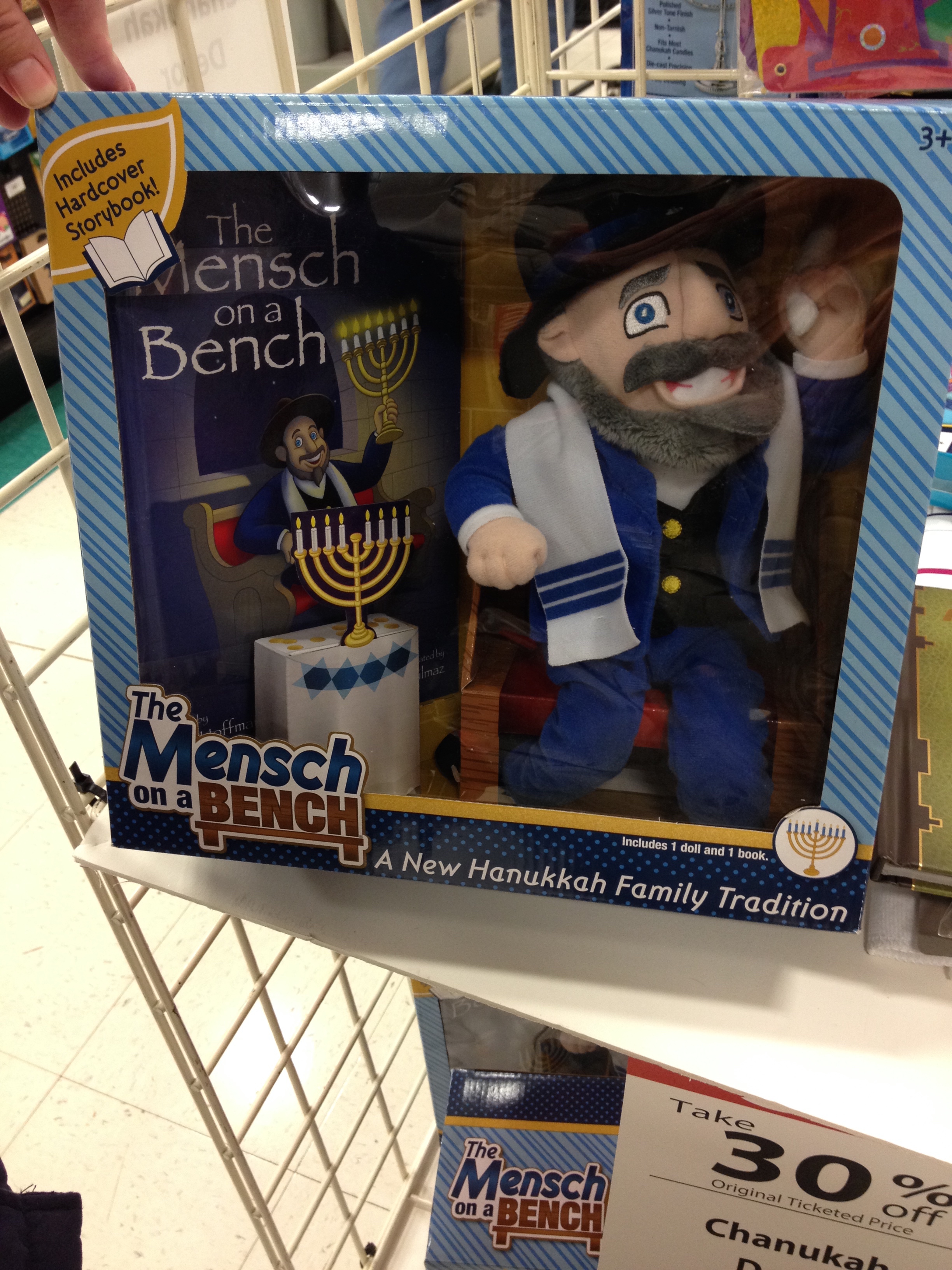
Celebration, I would suggest, is worth celebrating. Should atheists use a poster-child for the secular celebration of the holiday season? Should Christians have displays of mangers on church property where all passers by can see? Should Mensch on a Bench be displayed in stores? Should Santa be advocating for corporate giants who only want us to spend? Perhaps the answers are obvious. In my mind they are. We gather our families in, and in the northern style that has always resonated deeply with me, we look out the window and await the coming of the purifying snow.


M Is for Mary

While pre-celebrating Christmas with some friends recently, the topic of cats came up. This really isn’t surprising since two of the families present had been members of the local 4-H cats club. For a while cats were ubiquitous on the internet, but since I have so little time to browse the web anymore, I’m not sure if that’s still the case. Nevertheless, being near Christmas, someone narrated a story I’d never heard before. Tabby cats (like many jungle cats) have a distinctive marking in the form of an “M” on their foreheads. The legend suggests that on the first Christmas a tabby cat was in the manger. Seeing a mouse trying to crawl into the trough were baby Jesus lay, the cat killed the mouse, earning the thanks of Mary, who kissed it on the forehead, bestowing her characteristic M. It is a nice story (apart from the point of view of the mouse, I suppose)—an etiology to explain an evolutionary development in fur patterns.

Blessed is M...

Blessed is M…

Shortly after that my wife sent me a story on the BBC about the oldest inscribed human artifact. Zigzag marking found on a fossilized clam shell from Indonesia suggest that Homo erectus was an abstract thinker, I’m told. The markings, which must at least be 430,000 years old, predate the earliest known human markings by 300,000 years. If accepted by anthropologists this evidence could rewrite all of human history. We had no idea that Homo erectus had time to doodle on shells. Looking at the photos accompanying the BBC article, I couldn’t help but notice they’re in the shape of an M. Perhaps Mary kissed these shells too? So etiologies begin.

If you’ll pardon me for attempting to brush off my training in ancient languages, Mary of Nazareth was likely born into an Aramaic-speaking family. Her name, Mariam, would have been spelled with mem, which, although representing water is some scripts, took roughly this form: מ (assuming the Imperial Aramaic alphabet). If Mary were both historical and literate (the latter, at least, is doubtful) she would not have recognized the tabby’s distinctive mark as part of her name. It would have been an abstract symbol. Of course, God, being a natural lover of cats, may have had the Greek alphabet in mind, where the letter mu gives us our classical capital M. Mary, however, would probably still not have known what to make of it. We love to attribute significances to perceived patterns. The tabby’s distinctive M, as well as Homo erectus’s early exercises in penmanship present us with opportunities to continue making myths. And we should keep the myths in Christmas.


Entitlement

LopezNorthAmericaAs winter begins to settle in, I recall reading Barry Lopez’s masterful Arctic Dreams many years ago. That book left such an impression that when I saw his The Rediscovery of North America—a very small book—I thought it was worth the asking price. Lopez is one of those nature writers who can transport the reader into the world he observes. This brief volume, however, takes the reader to a very different kind of world—the world of European interaction with North America. As children we (and I speak for myself, or perhaps my generation) were still taught that Columbus was a kind of hero. He ventured into the unknown and discovered an entire new world. That world became the everyday place we inhabit with our comforts and our toys. Things only got better from there. Of course, I learned to distrust this view by the time I was an undergraduate, and my perspective has turned a bit more serious since then. These events, viewed from the perspective of the Native Americans, have a completely opposed outlook. Lopez tries to capture a sense of how to rectify these wrongs in his Thomas D. Clark lectures that make the basis for this book.

Greed, no doubt, drove the early explorers of the new world. And a sense of entitlement that has not diminished with the passing centuries. While it is not as simple as tracing this sense of ownership back to Genesis, clearly the Bible plays some role in it. Religions that teach their adherents that they have the sole truth will inevitably lead to entitlement. Monotheism, as I’ve noted before, possesses the tendency to make absolute claims. One God, one Church, one Truth. And non-believers become expendable. To the Catholic Spaniards setting out for the new world (or actually, old world, but tripping up on the new along the way), as Lopez points out, were driven by lust for gold. And spices. And fornication. Things that, if one took it seriously, would be decried by the church as vices. Still, taking advantage of the gullible and helpless is a time-honored practice among many religious bodies, and we know that genocide ensues.

Somehow history has taught us that some genocides are worse than others. Those inflicted on native populations, perhaps because they weren’t always intentional (in the case of diseases) are sometimes still given a silent assent. Yet, as Lopez makes clear, the intention to murder was there already. The conquistadors had already decided that the natives did not deserve the same rights as the God-blessed new arrivals. What saddens me—and I think Lopez too—is that this same sense of entitlement, instead of tempering with time, has continued to increase. Tea Parties and American Values often include removing those who disagree. Inconvenient indigenous populations that aren’t mentioned in the Bible except as Canaanite stand-ins. And should we care to make right what was perpetrated, perhaps we ought to consider rediscovering North America.


Catholic Nones

In a recent issue of the Chronicle of Higher Education, an article pondered the future of Catholic universites in an age of nones—those who don’t affiliate with any religious tradition. As with so much in life, the evidence countermands expectations. Enrollment is stable and even non-Catholics are attending. Part of this, no doubt, is because a greater number of high school students are being channeled into college, but there seems to be more to it than that. Those interviewed suggest that it is often that students, nones included, favor an education with a moral grounding. Materialism doesn’t give one much to go on besides human convention. Even if students don’t accept Catholicism, there’s no doubt that the Catholic Church presents itself in a way that admits little doubt over what’s right or wrong. Even if you choose not to observe the strictures, there’s a comfort in know they’re there.

One of the schools foregrounded in the article is Marquette University in Milwaukee. While at Nashotah House I came to know some members of the Theology Department there, and I visited the campus numerous times. One of the interlocutors in the article is a physics professor who, admitting concerns at first, has found Marquette—a Jesuit university—remarkably open to science. The days of Galileo are over. Even Catholics know science is science. Indeed, the Vatican itself employs scientists and a Catholic priest was the first person to formally postulate the Big Bang. As someone who has applied to many Catholic universities over the years, and who has had a fair number of interviews, my sense is that the close-mindedness comes with theology, not science.

IMG_0990

Especially in the days of retrenchment under John Paul II, control over hiring for religion (“theology”) faculty at Catholic schools underwent renewed scrutiny. I was informed that I was not selected for positions because I was not Catholic. You could, however, be a none physicist and land a job. This discrepancy of knowledge has led me to fine tune the Chronicle’s question a bit. The Catholic Church is well funded. Its universities would only be in danger from radical drops in student numbers. This favors the hiring of mainstream professors in every discipline. Except religion. It is as if this small presence on a large campus, such as Notre Dame, could hold out against the humanist knowledge emanating from every other department. A candle, as it were, in the hurricane. And that candle, amid all the nones, must accept official doctrine. At least on paper. And all will be well.


Texodus

I’m not sure what Patheos is, but it has been on my web-radar (or is it “ping”?) for some time now. They host bloggers with a more substantial platform than mine, and often have a number of comments that must require a full-time coterie of first responders. As a working class blogger, however, I siphon off their success to spin my own ideas a little further. All of this is preface to the fact that a recent article by Michael Stone on Patheos comments on Texas’s approval of textbooks where Moses inspired “the American system of democracy.” We are all used to Texas shenanigans by now, but making laws with the ultimate lawmaker just as a movie is being released that portrays Moses as a warrior is apt in a way that Rick Perry’s stomping grounds may not truly appreciate. The need to validate outdated laws with a largely mythical biblical figure is telling. Revisionist history depends on the version of history that is more compelling at the moment, and I find Moses charging the Egyptian army on horseback eerily appropriate.

Textbooks are insidious. They are society’s first crack at young, and naturally open, minds. As we socialize the rising generations to support that with which we’ve always felt comfortable—not wanting to jeopardize our ease in our advancing age—it becomes important to provide the appropriate propaganda. As I speak with fellow scholars (if I may be so bold) I frequently hear them decrying textbooks. By their nature they are a leveling off of what naturally comes in mounds—heaps, even. They are a tool used to keep everything even in a world of rough knowledge. They are insidious in that they are hard to override. Those of us who’ve taught in college know how difficult credibility is when “the book says” is the standard line of recourse. If it was published by Pearson corporation, it must be true.

Revisionist history.

Revisionist history.

Of course, we venerate the published word. Today the Bible, I suspect, were it newly composed, would have difficulty finding a publisher. Since it was written a couple thousand years ago, however, it retains all the trappings of hoary wisdom that is required to make the elders comfortable. Even scholars of the Bible have, as a matter of course, questioned Moses’ role in the story for centuries. As early as the Middle Ages some sages were asking how Moses knew to write his own death scene. Even so, the vast majority took the word literally, and now that we’ve defined ourselves as a “Christian nation,” or at least the southern half of a Christian nation, we can use the Bible as a textbook. What could be more natural? On the big screen I anticipate Christian Bale charging the Egyptians on horseback. In the Pentateuch I read of Moses hiding behind Aaron’s eloquence. One is biblical, but is it believable? If it comes to a contest of force between the two, I’ll go with Ridley Scott every time.


Thank You

Comments being rare on this blog, I do read them when they come along. Recently I had a reader comment, in the form of a question (as sometimes happens): “Do Native American Indians do ‘Thanksgiving’?” Although I’m fairly certain this was intended as a rhetorical question, I was raised a literalist and couldn’t help trying to formulate an answer. Although I can make no claims to know Native American culture well (I wish I did) it led me to ponder the concept of Thanksgiving. No doubt the idea had at least informal religious beginnings. Even with the early European settlers, a religious diversity was already appearing. Still, although the Native Americans lost pretty much everything, they were still involved, at least according to the early accounts. The great spirit they thanked was not likely conceived of in the way that the god of the pilgrims was, and yet, thankfulness is a natural human response. Writers, often fully aware that their work deserves publication, frequently thank an editor for accepting it. It’s a deeply rooted biological response.

800px-The_First_Thanksgiving_cph.3g04961

For some of us, Thanksgiving is more about having time to recuperate after non-stop work for about ten months. The standard business calendar gives the occasional long weekend, but after New Year’s the only built-in four-day weekend is Thanksgiving. It is that oasis we see in the distance as we crawl through the desert sand. Time to be together with those we love rather than those we’re paid to spend time with. To rest and be thankful.

Among the highlands of Argyll, in western Scotland, is the picturesque Glen Croe. Years ago, driving with friends through the rugged scenery of boulders and heather, the little car struggled with its burden of four passengers. We stopped at a viewpoint known as “Rest and Be Thankful.” The name derives from an inscription left by soldiers building the Drover’s road in 1753, at the highest point in the climb. The Jacobite movement and the Killing Time had instilled considerable religious angst to the Scotland of the previous century and led to the calamity of Culloden less than a decade before the road was laid. These religious differences led to excessive bloodshed throughout a realm supposedly unified by the monarchy. Even though no natives protested displacement, religion led to hatred and mistrust, as it often does. Is not Rest and Be Thankful, however, for everyone, no matter their faith or ethnicity? And in case anyone is wondering, yes, this rhetorical question contains a metaphor to contemplate. Rest and be thankful.