Personal Dogma

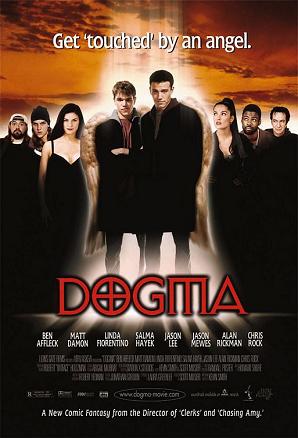
Dogma is a movie that many seminarians discover at some point in their theological education. Smart, funny, and irreverently reverent, the film follows the exploits of a couple of misled angels trying to get back into Heaven and thereby negating all of existence. It is no surprise, given Kevin Smith’s origin myth, that the film opens and closes in New Jersey, but I often ponder the strange coincidence of places in the movie to places I’ve lived since my own seminary career began (and ended, rather like the massacre scene in Red Bank before God cleaned it all up). Nashotah House, where I discovered Dogma, is in Wisconsin. Wisconsin is the state to which Bartleby and Loki, the two angels, have been banished. The means of their escape from this upper-Midwest purgatory is a church in New Jersey. Along their way the angels pass through Illinois and Pittsburgh, before crossing into the very state where God is located throughout the movie (the Garden State, of course!). After having been summarily dismissed from my seminary post in Wisconsin (not for watching Dogma, I’m assured), I too headed for New Jersey. Before that I had lived for a while in Illinois (home of Bethany) and Pittsburgh (home of Moobie). Watching Dogma is in many ways a reflection of a journey that I’ve accidentally undertaken.

YEE.tif

Another kind of dogma seems to be at work in the Eagle Mountain International Church in Newark, Texas. The Associated Press announced that 21 cases of childhood measles had broken out in the church, particularly among the homeschooled and unvaccinated. Fears of inoculating against a pre-medieval faith have led many of those who trust their own knowledge above that of the collective specializations of educators, to put their children at risk for the sake of belief. The belief, perhaps unsurprisingly, is poorly informed. One of the pastors of EMIC (!) has been encouraging vaccination as biblically sanctioned. If not for the sake of your children, for the sake of the scriptures…

Vaccination, in various forms, was developed in both Christian and pagan contexts. The earliest examples come from Asia where the plagues sent by the devil were resisted with human ingenuity. It takes a paranoid twenty-first century, first-world faith to suppose saving our children is some kind of conspiracy. “Let the one without germs,” we can almost hear them say, “throw their tissues away first.” In my Pittsburgh days, I was very much a literalist. How surprised I was to see Lady Aberlin from Mister Roger’s Neighborhood playing an angst-ridden nun, derailed by an exegesis of “The Walrus and the Carpenter” in Dogma. Although the Neighborhood is “anytown” those of us locals knew that Fred Rogers was from Pittsburgh. Lady Betty Aberlin was the niece of King Friday XIII, and only those with no conspiratorial imagination would suggest it is merely coincidence that her cousin is named Kevin. With or without dogma.


Back to the Future

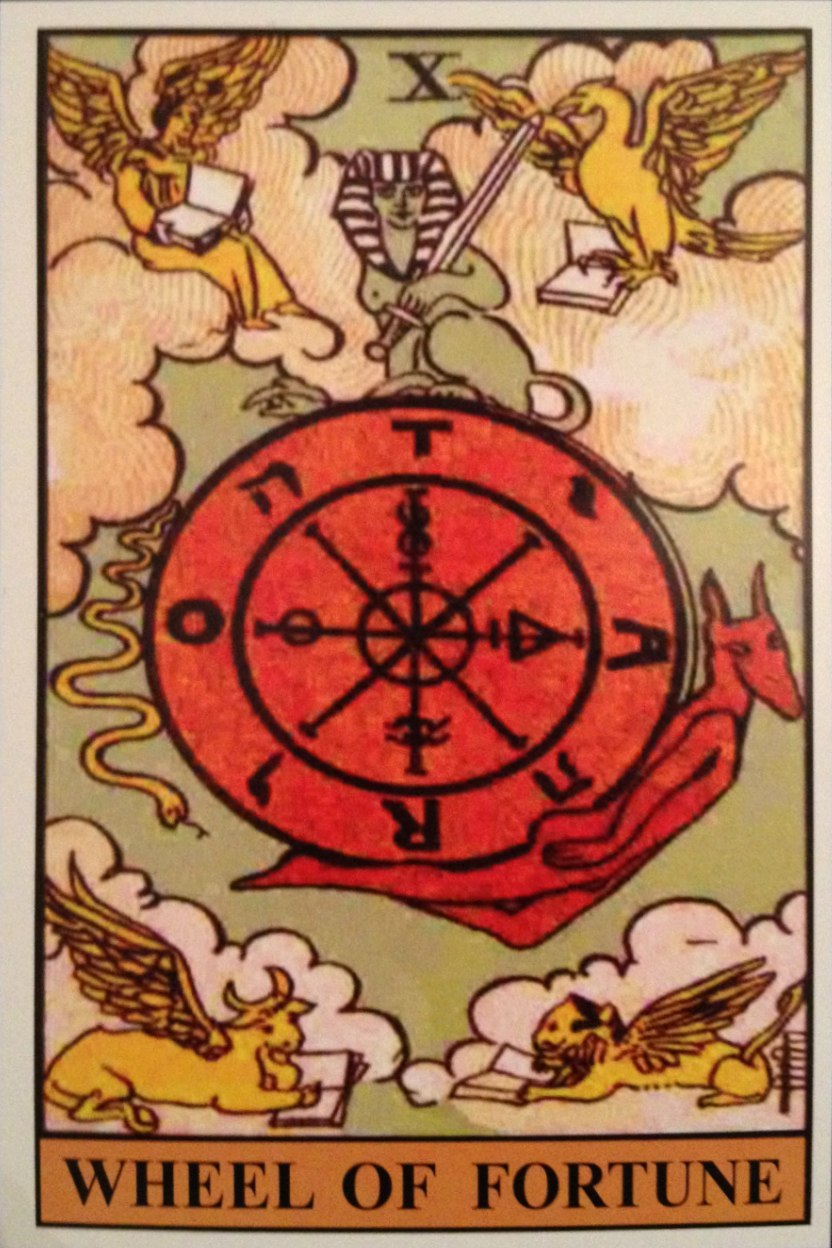
When I leave work, I’m in a rush. It would seem that Third Avenue and Eighth Avenue shouldn’t be that far apart, but you can’t see from one to the other. I’m a pretty fast walker, and I’ve negotiated city crowds since my graduate student days. If you get caught at a light on one of Midtown’s avenues, you get into a cascading series of minute-long delays and you could miss your bus. Since I do this nearly every day, I know the lights are on timers, and getting through one light may make all the difference in having to wait another half-hour in the Port Authority Terminal for a missed bus. So when the woman held out her hand in front of me, I was ready to pull a dodge, but then I saw the tarot card printed on the slip of paper she held toward me. I took it at nearly a run with an acknowledging nod of thanks. New York has any number of psychic readers, and I’ve noticed that different ones advertise in different street corners in town. Unlike the competition, this psychic doesn’t announce who s/he is (I always assume “she” but the chit doesn’t say). “Clairvoyant Consultant” is the only identity, along with a street address. “Gifted European Spiritual Psychic” also occurs. I will get a five dollar discount if I go in. Tempting.

Clairvoyant

On the bus I noticed something about the colorful print of the tarot card. I’ve never in my life touched a real tarot card. I’m not really superstitious, but why take chances? The Bible can be pretty harsh about such things. This card says, “Wheel of Fortune.” The wheel, with its runic (and Hebraic) symbols, is surrounded by clouds. On each of the clouds in the four corners is—and this caught me off guard—an iconic symbol of each of the evangelists. Matthew’s winged man is in the upper left, and Luke’s winged ox in the lower left. Mark’s winged lion is in the lower right and John’s eagle claims the upper right. On the wheel itself rest a sphinx, a la Oedipus, a serpent (a la Eden?), and what appears to be a recumbent devil. Clearly clairvoyants see some value in traditional religious symbols.

New York is quite a religious city, for all its secular trappings. Not all of the religions are traditional—many, in fact, would start a literalist’s blood on its way to a low simmer. It is a city of seekers. The wheel of fortune may be a more apt symbol than I realized. The earlier bus gets caught in traffic today, and at one of the common stops I see the later bus whizzing by, and I know that it will arrive at my home stop long before I will. Of course, I had no way of foreseeing that. Each day as a commuter is another spin of that wheel of fortune. It is not a surprise New York is such a religious city. Your fate is never really in your own hands. But this flyer is, and it entitles me to five dollars off a peek into the great unknown. I think maybe I got this card about two decades too late.


Amish Paradise

Once upon a time, intelligence could be found on cable networks such as Discovery Channel, and Animal Planet. Like higher education, however, these ventures soon learned that people do not want to be educated, but entertained. So it was that I found myself watching, with increasing bewilderment, Amish Mafia. The very discord of the title is intentional as the show “dramatizes” disagreements among the Anabaptist communities of central Pennsylvania. The result is coarse and seedy, and not a little salacious. And addictive.

Photo by it:Utente:TheCadExpert (Wikicommons)

Photo by it:Utente:TheCadExpert (Wikicommons)

I grew up not too far from several Amish communities, and I’ve visited Lancaster a time or two. Living a lifestyle that the vast majority of Americans would classify as boring, the Amish keep to themselves, constructing an existence based on strict religious principles and a rejection of modernity. Recently, however, the Amish have become a sexy topic for romances and fictional clashes between their traditional way of life and the high-tech world that surrounds them. For those of us who felt a kind of authenticity to The Witness, watching Mennonites lock and load their assault rifles to intimidate their rival construction workers, and, in the words of Weird Al Yankovic, “get[ting] medieval on your heinie,” Amish Mafia presents the viewer with a world of kidnapping, extortion, and shunning, all within one episode. Trashing-talking pietists climb into luxury cars and put drunken buggy drivers in straight-jackets where they’re hauled off to extreme Bible-reading therapy. This seemed nothing like the Amish I had learned about in classes on primitivist societies.

We like to watch the self-righteous crumble. Who doesn’t want to believe that they are about as good as their neighbor? Those of us in Pennsylvania, Ohio, Indiana, Illinois, and Iowa (from my experience) see the Amish occasionally, quietly living their lives without the amenities that define us. We resent that, yes, you can get along without cars, telephones, televisions, internet, and weapons. Who really needs well-made furniture and quilts to keep warm at night when you’ve got Ikea and a furnace like a locomotive in your basement? And they know their Bible. Goodie-two-shoes showing us something that many of us have suspected all along—authenticity comes from inside, not an electronic world we can’t touch. I don’t idealize the Amish. Their lifestyle takes discipline and a level of belief in a worldview that doesn’t match what I’ve been taught. But then, Amish Mafia also requires a gratuitous suspension of disbelief.


Slippery Logic

Last week NBC reported on a baby in Tennessee. Babies in Tennessee, one might suppose, are pretty common. This one, however, was given a name stricken down by the courts. Child Support Magistrate Lu Ann Ballew declared that the baby could not be named “Messiah.” Apart from the statement that this is a title and not a name (don’t tell Judge Reinhold, please), the judge (not Reinhold) demonstrated her biblical illiteracy by stating that the title messiah has, “only been earned by one person and that one person is Jesus Christ.” Oh well, this is the Bible Belt, after all. Nevertheless, I would expect someone so deep in the Bible Belt to know the actual Bible a little better.

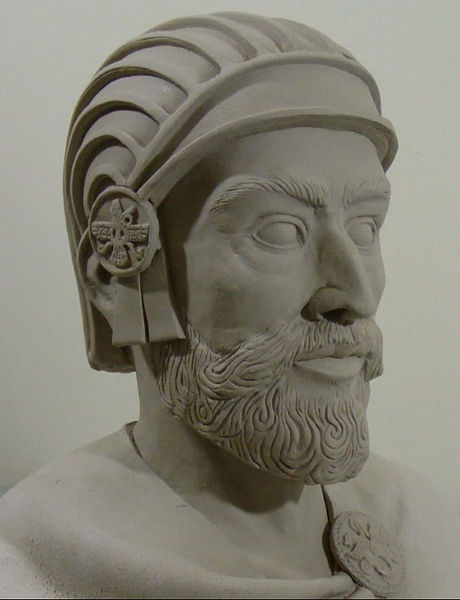
“Messiah” derives from a Hebrew word meaning “anointed one.” Its meaning is somewhat more literally along the lines of “smeared with oil,” for that is what anointing is. The title is used for several people in the Bible, not just one. Aaron, for one, was anointed. David was anointed as king, as were several other characters, including ill-fated Saul. And let’s not forget where Isaiah says clearly of Cyrus II, king of Persia, that he is “his anointed,” i.e., Yahweh’s anointed, in Hebrew, “his messiah.” Not Jewish, not Christian, Cyrus was a good old Zoroastrian. And he was just one in a long line of messiahs.

Where's your Messiah now? Oh, there he is.  (Photo by Persian Light.)

Where’s your Messiah now? Oh, there he is. (Photo by Persian Light.)

I’m not doubting Judge Ballew’s reasoning that it might be in the best interest of the child not to have such a controversial name. I do doubt, however, that it would be in the best interest of that child that he be raised being taught that evolution is a myth and special creation six thousand years ago is science. I do doubt that it is in his best interest to be taught that homosexuality is a sin and that it is something that only people have ever done because of their “fallen nature.” I do doubt that it is in the child’s best interest to be raised believing that if a woman is pregnant that a male-dominated government has the right to decide whether she carries the baby to term, no matter what. And once that baby is born, I do not believe it is the government’s right to decide on what his or her name shall be. And I expect that all the people named “Jesus” out there would agree. And Judge Reinhold.


Esoteric Goddesses

250px-Statuette_Goddess_Louvre_AO20127One of the nice things about the internet is that you can indulge your unorthodox interests and nobody will much care (except, of course, the US government). The other day, while reading about monsters, I found a fellow WordPress site, EsoterX. More specifically, I found a blog post on Ashtaroth. Those who have more than a passing interest in my background know that I spent a few years of my life writing about the goddess Asherah. Asherah and Ashtaroth are sometimes easily confused by anyone not reading about them in the original languages, but I settled on Asherah because we simply don’t have much textual information on Ashtaroth. Ashtaroth has gone by a number of names over time: Athtart, Astarte, and, as I just learned from EsoterX, Lord Treasurer of Hell. I won’t try to repeat the clever observations of EsoterX, but I can’t help myself add my own two shekels’ worth.

Ashtaroth is clearly one of the bad girls of the Hebrew Bible. She tempts the upright astray, and she seems to have been a perennial favorite among the less-than-orthodox Israelites. The Bible doesn’t take much care to flesh her out fully, and she appears only in minor roles in the Ugaritic texts. Some in the ancient world easily associated her with Ishtar, and their names do seem to bear some kind of relationship. Ashtaroth is connected to the planet Venus, as was the latter goddess Aphrodite—named, appropriately enough by the Romans, as Venus. Ashtaroth was also a militaristic goddess associated with horses. That girl got around.

Unfortunately, in the literature that survives from the earliest period, we are left with only the sketchiest of outlines of this once important goddess. Many of the Semitic deities have been revived in popular mythology of the modern age, and Ashtaroth, with her sexy, yet belligerent nature, is always appealing to the puerile imagination of pubescent boys. She was taken with great seriousness long ago, however, although her origins are lost to history and her attributes have become general enough to fit just about any old generic goddess. I’m glad to see that EsoterX has given her a shout-out and has traced a brief history of the goddess through the ages. Maybe someday we’ll find some accurate information on her early days. If we do, will somebody please give me a poke? I will probably be busy reading EsoterX.


Great Caesar’s Cost

College has been on my mind quite a bit lately. Thinking back to my own experience, I chose a school, as a first-generation college student, based on what I knew at the time. It wasn’t much. I chose a school close to home, and safe. A place friendly to, in what I believed to be a world in open hostility to, “Christianity,” by which I meant the conservative, Evangelical variety. The school I settled on, Grove City College, was at the time a selective school. This was the early 1980s and the “Religious Right” was just beginning to appear on the political horizon. Grove City was a Presbyterian college, and the Reformed, although sometimes theologically conservative, have generally been a bit more socially progressive. I recall the admissions numbers being trotted out to the incoming class, about how elite we were (something I’ve always denied and find personally objectionable) at having been admitted to a selective, private enclave such as GCC (“God’s Country Club” as it was locally known). Many of the kids did come from monied families, but I was there on the basis of government subsidized (and unsubsidized, as if I knew the difference) loans.

When my daughter was considering colleges she had been warned about Grove City. One of her friends was contemplating it, but soon wisely cast her thoughts elsewhere. Nevertheless curious, I picked up the Princeton Review’s The Best 376 Colleges, a kind of Bible for the collegiate-bound, to see if my old alma mater rated a mention. Sure enough, Grove City was present. For those wishing to make it in the heartless world of business, it can be a good training ground. What caught my attention, however, was the acceptance rate. According to the 2012 edition, 74% of applicants were admitted. So much for selective! This figure swirled around my gray matter for some months as I started to sort out the implications.

Over the past few decades, Grove City College—which was always conservative—has allied itself closely with the posturing of Tea Party types. Herein lies a true dilemma for the educated bourgeois: how to be intellectually progressive and socially repressed at the same time. To accomplish this difficult trick, a non-negotiable bedrock is required, and since even the earth is spinning crazily on its axis the only true solidity in the universe is religion. Claiming that, despite the 14.5 billion years of this universe’s elapsed lifespan, only one thing never changes and that is a particular interpretation of Scripture, you can go ahead with your science and your arts. But most of all, with your business. Although black holes may exist, and textual criticism may indicate Scripture has its own gray areas after all, nothing counts much at the end of the day if you don’t have capital to back you up. Open admission policies can be interpreted in more than one way, depending on your point of view.

Photo by "the Enlightenment"

Photo by “the Enlightenment”


Misplaced Zealotry

zealotReza Aslan’s book Zealot: The Life and Times of Jesus of Nazareth has brought public interest back to the only begotten, and it’s not even Easter time. A confession: I’ve not read Aslan’s book, so my thoughts here are purely academic. (In a time-honored tradition, I will comment without benefit, or liability, of having actually read.) My interest is, to be frank, less on what Aslan has to say than with how people are reacting to him. Within days of publication, the internet began to swell with news stories about public reaction to Aslan’s treatment. My interest was raised by the Chronicle of Higher Education, where an article by Peter Monaghan quotes Lauren Green of Fox challenging Aslan, “You’re a Muslim, so why did you write a book about the founder of Christianity?” I know this is Fox, and that it is poor form to abuse the idiot, but I couldn’t help but to wonder at such a misguided question.

I would ask, honestly, how many Christians have read a book on Moses or David, or any Hebrew Bible figure, that was written by a Christian. Far fewer hands would be in the air if the same question were framed with the caveat, “written by a Jew.” Every supersessionist religion reserves the right to analyze what has gone before in the light of its own theology. We all know the Moses of Cecil B. DeMille, but how many know the Jeremiah of Abraham Heschel? Do we bother to read what the believer writes about his or her own hero? Would we need to? We already know what the conclusion is going to be. I, for one, am very curious how some Muslims perceive Jesus. That’s always a fascinating question, since Islam, in many parts of the world, superseded Christianity, and has, until recent times, often peacefully coexisted.

Is it not because the author is Muslim that the challenge was issued? How quickly we forget that western civilization (which began in the “Middle East”) owes much to Islam. While Christianity plunged Europe into the Dark Ages, Islamic scholars were rediscovering Aristotle and making genuine progress in science. And yet, we are suspicious of what is discovered by those of “alternative” cultural heritages. I would be more surprised should Muslims show no interest in Jesus. During the past presidential election, many non-Mormons flocked to bookstores (okay, that’s an exaggeration; nobody flocks to bookstores any more, now that Harry Potter is done), eager for books about Latter-Day Saints. Most of them written by non-Mormons. I don’t know what Aslan has to say about Jesus. I suspect some are disconcerted because he bears C. S. Lewis’ code-name for Jesus in the Narnia chronicles, but Aslan may well have something to teach us about ourselves. I, for one, welcome it. How can we ever learn tolerance if we’re unwilling to hear how we appear to others?


Five Man Electrical Band

I grew up looking for signs. If you sincerely believe the Fundamentalist worldview, then we are all part of a great, divine dramaturgy in which we have expected roles to fulfill. The script (Holy Scripture) is a little vague on the individual details, but if you know where to look you can find signs. They may be obvious and literal or subtle and ambiguous. The faithful, however, know they must seek them out and take their chances. I grew up in a decidedly blue-collar world. In my head, though, it felt like I was meant for something more. My career ambition was to be a janitor, but my reading and the counsel I received from those who knew more than I did suggested I might have a higher calling. The concept was unfamiliar at first, but compelling. I had to be able to read the signs. I remember hearing about seminary for the first time. If I was going to be a preacher, I had to go to seminary. The summer before starting college, I sat on the dilapidated front porch of my step-father’s house and taught myself to draw the Greek alphabet. Signs were rare, but when spotted, definitive.

Seminary came to define my existence in a way that I couldn’t foresee. I started college with the idea that, all things being equal, I’d end up at seminary. Still, I was drawn to the life of a faculty member in a liberal arts setting. Eventually, I recognized it as my calling. Getting to seminary proved more difficult than I’d imagined. It wasn’t the grades—it was the expenses. I was in debt and I knew that bank barons did not forgive us ours as we forgave others theirs. In seminary, signs came to take on differing interpretations. Maybe I was correct about ministry or maybe not. Looking closely, I could see that the script had marginal notes, and that it wasn’t even the original manuscript after all. I’d learned original languages only to become more confused about the signs. When I left seminary I knew one thing for certain—I didn’t ever want to teach in one.

My first professional job, of course, was teaching in a seminary. It was not a matter of free choice as much as free economy in free-fall. In the early ’90’s recession, jobs were few and signs completely distorted. When impolitely asked to leave my seminary position after a decade and a half, I was type-cast as a bit-player. The washed-up seminary teacher. I began to see signs along the highway for seminaries trying to recruit potential clergy. This was no longer a calling, but a job option. Don’t enjoy the rat race? Why not try opting out? The pay won’t be as good, and society will come to despise the very doctrines you’ll be taught, but at least it’s a living. I still see such signs. And I’m still not sure if I’m reading correctly. And even today, I notice with appreciation when a floor is expertly stripped, cleaned, and waxed.

IMG_0723


By Jove!

When Zeus is taken seriously in the New York Times, even the open minded scratch their heads. It’s not because any of us really believe Zeus is up their hurling thunderbolts, but because anyone would even dare raise the question. Yes, Gary Gutting’s Opinionator article is lighthearted and perhaps even a little cynical, but it does raise serious questions. Did our ancestors believe in the gods with no “proof”? I can’t help but think of the phenomenally expensive video, I Still Worship Zeus. There are, in this day of high technology and low tolerance for non-scientific outlooks, people who continue to believe in Zeus. Well, his name does come from the same root as the old Indo-European word that gives us the Latin Deus, or “God.” And, let’s face it, the stories of the Greek gods can be pretty cool (despite sub-par big screen renditions). But to take any of this seriously…Seriously?

Jupiter_Smyrna_Louvre_Ma13

As Gutting points out, some of the great minds of Greek science didn’t question the existence of Zeus. I certainly wouldn’t care to pit my puny wit against that of Plato. Those scientifically minded Greeks, apparently, believed in the gods because of their explanatory value. Too many coincidences and synchronicities and epiphanies suggest something more than meets the eye. We don’t see gods today, so Gutting asks how we know the world hasn’t changed. Now, I take uniformitarianism seriously. It is the basis for geology and much of evolution. Our old, old earth shows no evidence of a sudden change in the way things happen. What is malleable is human interpretation. As recently as a century ago, belief in some kind of divine world was very pervasive. Only in the past few decades—since World War Two, I would guess—has the premise of the Judeo-Christian god become suspect. The daily experience of living in a world where theodicy just can’t explain all the suffering has led us to a kind of stalemate with the gods.

I once had a scholarly exchange with a colleague over the nature of the word “evidence.” Our little tiff was published in the Journal for the Study of the Old Testament. My colleague had suggested that Yahweh—the god of Israel—was considered a solar deity. I averred that evidence did not exist. With rejoinder and riposte, we had to agree to disagree. The evidence I was seeking was stringent, but as we all know, absence of evidence is not evidence of absence. And that is the point that Gutting makes, whether seriously or not. The question is not “Is Zeus there?” but “Was Zeus there?”. I decline to offer an opinion. I do applaud the New York Times, however, for attempting to get us thinking about serious issues once again. If Zeus did exist, then it behooves us to consider all the implications. And perhaps to reconsider home-owners’ insurance in a world where gods may roam at large.


Gnostic Agnostic

ACU-Stuckrad-WesternEsotericism-COVER.indd Hidden knowledge is sweet. Belief in it is very old. Kocku von Stuckrad’s Western Esotericism: A Brief History of Secret Knowledge offers its own kind of hidden knowledge—well, it’s not so much hidden as it is simply ignored—that even science owes a debt of gratitude to the draw of the esoteric. We are trained to treat such “New Age” ideas with contempt from our tender years, and we are assured that the light of reason has dispelled the gloom of occluded wisdom. Von Stuckrad, however, clearly demonstrates that the desire to explain our world streams from the same font as the belief that a larger, if hidden, reality lies behind what our senses perceive. Such ideas originate in antiquity and continue in various forms up to the present. The impetus to explain it all shows in Galileo’s belief in astrology as well as astronomy and Newton’s fascination with alchemy as well as calculus. Great minds have always been willing to be stretched.

In more recent, and self-assured, days vocal spokes-folk have declared a single way of knowing, and it is empirical and imperial all at the same time. That which cannot be explained rationally cannot be explained at all. Still, our experience of life often suggests otherwise. Sometimes it feels as if science overuses the coincidence excuse, and maybe there is something more going on. The esoteric, without fail, has been assigned to the category of religious thought because, in the current paradigm, the only real opponent to science is religion. If it’s irrational, it must be religious.

Ironically, von Stuckrad’s research demonstrates that the culture that led us to science, in many ways, has its basis in esoteric beliefs. That gnawing suspicion that not everything is explained by numbers and experiments has been with us since the days of Gobekli Tepe, the pyramids, and Stonehenge. Each of these monuments (and many others besides) were astounding feats of engineering—and engineering is applied science—while all being profoundly religious. Science in the service of the unknown. Such complexity need not be considered naive; even scientists can be subject to religious ways of thinking. Von Stuckrad does not advocate esotericism in his book; he merely documents it and treats it non-judgmentally. There is perhaps a hidden lesson here for all of us as well. Instead of declaring a single heavyweight champion of all the world, perhaps true wisdom lies in being fully human with all its complexity and contradictions.


God in the Shops

Over the past few weeks, as I’ve been out and about, I’ve been noticing the way that the divine has been utilized by shop-keepers. In a culture where incipient religion is so pervasive, it seems that God is treated much like the NSA in some quarters—always watching, always vigilant. I popped into a shop selling locally made items (I try to support the local economy when I’ve got a greenback or two to spare, although that is rare), where I saw a sign reading “Shoplifting & Theft Will Be Judged By God.” The sentiment gave me pause. Deeply embedded in our society is the idea that without a divine mall cop, we would all run amok with crime. Although religion is pervasive in the world, much of it is non-deistic, and yet highly moral (particularly in east Asian nations). Their cultures have advanced, even beyond western culture in many aspects of technology, and yet gods (and specifically our God) do not figure into the ethical equation. Pillage and plunder do not seem to erupt when God is not in the shop.

IMG_0903

Whimsical signs have been popular decorative items for decades now. The problem with whimsy is that it loses its effectiveness once the initial chuckle is over. Signs reading “no pain, no gain” in fitness clubs may inspire day after day (although I have my doubts), but the cute warning that “the dog is crazy” on your doormat fails to impress after the first reading. (It must be pretty obvious that I don’t entertain much.) Nevertheless, shops stock those impulse-buy signs that are clever and witty, if soon outdated. I found one the other day reading, “Don’t judge me because I sin differently than you.” Even with the strains of self-righteousness, there is valid thought here. When the woman caught in adultery was brought before Jesus, he said, “Let the one without sin throw the first stone.” This disputed passage is one of the most pertinent in all of Scripture. No stones flew.

IMG_0909

Finally, a friend came in bearing a shopping bag with Jesus on it. “Lookin’ good for Jesus, the King of Kings, King-size Tote” it read. The bag was clearly designed with a heavy dose of irony. I couldn’t help but notice that the bag was full of bottled gas. This portable version of the only begotten is a reminder of how commercial our religion has truly become. Although clearly presented with tongue distending cheek, we know that, as I tried to convince many at Gorgias Press, Sects Sells. People will buy cute knock-offs of their deities. In Wisconsin we used to visit Holy Hill, a Carmelite shrine where all manner of sacred kitsch lined the walls, from glow-in-the-dark rosaries to cheap, plastic saviors. The shop was never empty. Perhaps it is possible to worship both God and mammon after all.

IMG_0908


Firelands

BayardFirelandsPiper Bayard has been a long-time blogging buddy of mine. She’s kind enough to comment on many of my posts and even kinder to like even more. Piper recently published her novel Firelands, and she sent me a copy that I began reading right away. My schedule this entire month has been unfriendly to literacy, but I was always glad to have a few minutes to read a few more chapters of an intriguing post-apocalyptic future. What’s more, Piper is keenly aware that religion is behind much of politics—a point she boldly makes by constructing a dictatorship based around a miracle-claiming prophet-king who oppresses those who don’t believe—the Seculars, or “Secs.” Interestingly, Piper decided on the name Josephites for the religious rulers, and there are dark undertones here for those who know their religious history. As an unabashed fan of allegorical writing, I saw quite a lot here that was, well, apocalyptic, in the literal sense of the word.

In a misogynic future, the Josephites, who dwell in cities, burn many women for various heretical crimes in autos-da-fé entitled Atonements. These human sacrifices ensure fertility and also help to explain the trials of life in a post-cataclysmic world. The protagonist, Archer, has to not only survive, but to try to save her cousin, a grandchild of the eponymous Joseph, from the flames. The Josephites live in a society of thinly rooted but strongly mandated religion. There is an underground of true Christians, and Archer, although a Sec, acts with more compassion than any of the Josephites, except perhaps her cousin. In a world that has lost its bearings, religion both undergirds and undermines a dystopian society where differences of faith have come to define everyone’s role in a harsh world. (Those who have ears to hear, let them hear.)

In this world where heaven is a fiery hell, I realized that Archer was more familiar than she first seemed. A female warrior, she opens the book by tracking a large stag to feed her starving people. Nevertheless, it took me many chapters to realize that she was a hypostatic Artemis, the goddess of the hunt. No wonder she couldn’t convert to the standard religion! Her example leads the way toward a renewable and sustainable future, in touch with nature, while the “religious” in their urban environment are dying on the vine as they appear to thrive. This is a world where old gods are more authentic than an enforced religion that few believe and that only rules through fear. There is much more I could say about Piper’s fascinating book, but I want you to read it for yourself. Visit Piper’s website for more information, and support the work of an author who really has something to say!


Wars and Holy Wars

An article by James P. Byrd, promoting his new book Sacred Scripture, Sacred War: The Bible and the American Revolution recently appeared in the Washington Post. Byrd asks a very relevant question in our era: “Was the American Revolution actually a holy war?” He suggests that perhaps it should be interpreted so. The reason is straightforward enough—our nation, our culture in the United States, is so deeply steeped in scripture that even our Deist founders knew their Bibles better than many preachers today do. Byrd suggests, in his article, that people who believed in the separation of church and state could still have a deep sense of divine mission, and a belief that their war for freedom was a divine cause. Early state leaders were not anti-religious, nor über-religious. It is a balance that we would benefit from regaining.

Declaration_independence

I guess I’ve seen enough political shenanigans to realize that such posturing as the Tea Party and the Religious Right or Moral Majority present are deeply cynical. The use religion as a platform to achieve political ends while conveniently slashing and burning huge swaths of biblical reasoning leaves many questions in its wake. Were such motives sincere, I would expect a lot more turning of the other cheek, and walking the second mile uncoerced. I suspect there would be fewer hungry people and even fewer living in positions of extreme wealth and power. In short, without the agenda of political religion, I suspect we would be a more Christian nation.

War is difficult to justify from a strong ethical stance, as most ethicists know. Our founders decided to go to war against what they believed was unfair oppression by a more powerful nation. This takes on the cast of a holy war because people were being oppressed. The pre-emptive strikes were throwing crates of tea into Boston Harbor, and yet the more advanced nation refused to lessen the pressure. In the Bible, Pharaoh declared the Israelites should make bricks without straw, and we all know where that got him. Or we would know, were we as literate as our forebears were. Freedom was considered a sacred trust. We live in a time when trust is at a premium. You can’t fly or surf the internet without being watched in intimate detail. There is no talk of holy wars, it seems, since the sacred has no place in a society that does not promote the concept of liberty with all the risks and benefits it entails.


Human, All Too

Back in the days of The Scarlet Letter, and before, an even more egregious double standard afflicted the sexual practices of women and men. Our primate nature promotes two conflicting principles: disgust at cheating and the desire to get away with what we can. Unfortunately, biology has often showcased female infidelity with the “illegitimate” child, and religions have stood in line to condemn the behavior that led to such circumstances. I was reminded of this while looking at a “gown of repentance” at the National Museum of Scotland. The Scottish Reformation led to an unusually severe kind of Schadenfreude when it came to pointing out the faults of others. Janet Gothskirk, spiritual kin to Hester Prynne, was convicted of adultery and had to wear a “gown of repentance,” literal sackcloth, to humiliate herpublicly. Her partner in crime, William Murdoch, is not recorded as having received any punishment for the affair, according to the placard.

IMG_0845

Thus it has always been: boys will be boys, but girls will be good. And when it comes time to dole out the blame, well, boys sometimes just can’t help themselves. This double standard is still in widespread practice throughout the religious world today. It shares roots with the same thinking that leads to many major religions denying sacerdotal leadership to women, and to the unfair punishment doled upon women in cultures where their behavior “dishonors” that of the men-folk. And we have all seen where male leadership has steered this ship.

What struck me hardest, staring at the dirty, ratty garment of shame, was that forgiveness seems so far removed from the religion of the Reformation. Christianity has always claimed a basis in the concepts of love and forgiveness, but when it comes to the very real circumstances of human failings, the animal tendency to attack the weak is often the driving force. We deflect because deep down we know that we all have failings. Clergy and braggarts may sometimes claim otherwise, but we share this very common liability of humanness. We should try to help each other through it. We should remember the golden rule. We should remember that sackcloth was meant to be self-inflicted and that the role of the church was to absolve the guilt, not to showcase it. Janet Gothskirk is forgotten to history, save for the garment she once wore to display her weakness for all to see.


Weird Tales

WeirdTaleSince I first discovered H. P. Lovecraft, I believe that I have read all his published fiction. Most recently a multi-year marathon took me through the S. T. Joshi editions published by Penguin Classics. Reading those editions led to a natural curiosity about S. T. Joshi; H. P. Lovecraft is still an author struggling for respectability, although the internet has brought him great fame. The literary elite consider many genre writers as gauche, and those who read them decidedly low-brow. When I saw that Joshi had written a book entitled The Weird Tale (the genre designation preferred by Lovecraft), I decided to learn more. Joshi, I had known from his webpage, is an ardent atheist, but also a true admirer of Lovecraft’s craft. Since I’ve tried my faltering hand at fiction a time or two, generally having even less success than Providence, I wanted to see what Joshi had to say.

Few things are as inspirational as reading about writing. Those of us compelled to do it find it an endless source of fascination. What drives us to it? We don’t know. Where do the ideas come from? We can only guess. Why do we do it? We must. And so, it is clear, also felt the authors surveyed in Joshi’s fine little book. Although the names of Arthur Machen, Lord Dunsany, Algernon Blackwood, M. R. James, and Ambrose Bierce mostly just tickled some remote tendrils of synapses in my skull, this study was the first real knowledge I had of any of them. While some patterns emerge, there is a notable diversity of background to the writers of the weird. One element that Joshi doesn’t fail to notice is their religious conviction, or lack thereof. In many ways this is odd, but in others it feels perfectly natural. Many materialists count creativity as the predetermined motion of particles and energy that evolution makes inevitable. The writers, however, refuse strictly to conform.

Lovecraft was an atheist and mostly a materialist. Joshi is puzzled, however, when Lovecraft seems to call this certainty into question. I’m not. Lovecraft did not believe in God, but he invented gods. How difficult it must be for a creative mind to dabble in the divine and simply walk away at the end of the day. Lovecraft was no stranger to peculiar residues that clung to the unwary and the bizarre transformations that could occur under the aegis of misplaced belief. But like the narrator of many of his tales, at the end he too knew he’d been affected. I don’t mean anything as crass as deathbed conversion. Rather, like all those who are truly intelligent, we must admit that there are some things we just don’t know. Cthulhu may not be slumbering beneath the sea but many will not sleep easily at night with their closet doors open. To expect anything less of Lovecraft, to me, seems just too weird.