Mr. Hubbard’s Legacy

churchofscientology As a child just discovering the joys of reading in the early 1970s, I found science fiction captivating. We were poor, and our town had no library, so I’d buy my books on Saturday trips to Goodwill. In other words, you take what you can get. I recall buying a book by a guy named L. Ron Hubbard. I don’t remember the title or the story, but I recall my surprise when, as a religion major some years later, I learned that this same sci-fi author had started a new religion. Scientology was not something you’d likely encounter in a poverty-stricken, sub-Appalachian town in rural Pennsylvania, and with no Internet it wasn’t so easy to learn about such things even if you had. We did have TV, though, and we watched Welcome Back Kotter (Risky Business was a little too risky). When I discovered that John Travolta (“Vinnie” as we thought of him) was a Scientologist, I was curious. But only to a degree. When I first taught World Religions and spent a few years researching the Scopes Trial for a book I never had the chance to write, I became very interested in American religions. They don’t come much more American than Scientology (and Latter-Day Saints).

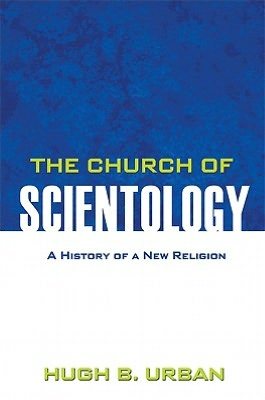
As soon as Hugh B. Urban’s book The Church of Scientology: A History of a New Religion appeared, it immediately went onto my reading list. Like most interested laity, I’d found it difficult to trust much of what I’d read on the Church of Scientology from media sources. Now I had a reliable guide! Even better, Urban frames his study around a question that pervades this blog: who gets to decide what is a religion? As Urban deftly points out, it is odd that government agencies are often those tasked with a job more fitting for those of us who’ve studied religion with the rigor that a physicist devotes to quarks and neutrinos. Some of us have parsed religious texts to bare bones and then dug up the skeletons beneath and examined their ossified remains as well. The world doesn’t take religion studies too seriously, however.

Urban’s book, well written and solidly researched, maintains that rarest of academic feats: objectivity. When approaching a religion, particularly a controversial one, emotions are easily engaged and objectivity is challenged. While confessing that he isn’t a Scientologist, Urban lets the historical facts speak for themselves. He doesn’t try to belittle those he studies, but he doesn’t coddle either. Reading his fascinating account, many questions are raised about the rights of religions and the role that secrecy plays. And we know that Urban is only skating across the surface of a deep and mysterious pond here. Sitting in my room with a yellowed, used copy of some L. Ron Hubbard pulp fiction story in my hands, I would’ve never guessed, as a child, what I was really holding.


Going In, Coming Out

Being primates, perhaps it is no surprise that we are fascinated by who is doing whom. We, literally, by nature, find sexual alliances fascinating. Despite the fact that close observation of nature has indicated that homosexuality is indeed natural—it has been observed in many species, and isn’t even limited to mammals—we can’t help but make it a deciding factor in what an individual is. Two unrelated news stories over the past week have focused on homosexuality as the overwhelmingly defining trait of a person. In the first story, the Evangelical Lutheran Church of America (ELCA) has elected its first openly gay bishop. (Gay bishops, even in the pre-Reformation church, have not been exactly an endangered species.) The Rev. Dr. Guy Erwin, however, is so much more than a partnered gay man. He is a highly educated person who had held that most rare of positions—a bona fide academic position in higher education. He is also a member of the Osage Nation. His election as a Native American or as an academic would not be newsworthy. His orientation, well, that’s a whole different story.

Meanwhile, across the planet, the Southern Baptist Convention (SBC) is cutting its ties with the Boys Scouts of America because the BSA has decided to make honest men of its boys. BSA has recently voted to allow gay boys to remain in the Scouts, something that the Mormons had no problem accepting. Quite apart from the misguided SBC move, I was saddened to see CNN’s inaccurate headline, “Baptists plan exodus from Boy Scouts.” The story does not indicate that the Baptist brand of Christianity has withdrawn, so to speak, from BSA, but the Southern Baptist Convention. Baptists are much more broad-minded than the SBC brotherhood (I use the phallocentric collective intentionally) would indicate. All Baptists, it seems, are guilty by association.

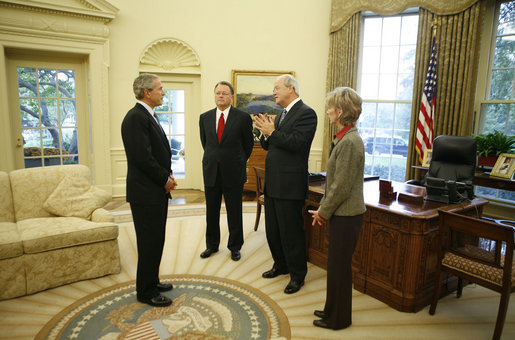
SBC in the White House

SBC in the White House

People are complex. Putting them into neat categories is unfair to who a person really is. The category “gay” is notorious for subverting all other qualifiers for decent human beings. As the National Socialist Party recognized, the easiest way to build a case against a people is to put them together in a class that “deserves” our fear, mistrust, and hatred. Don’t look at the individual beneath the label. You might be forced to change your mind. Did that individual overcome the difficulties of being a “minority” in his or her own native land? Did that individual work hard to climb through the educational system to attain an advanced degree? Did that individual commit his or her life to another person, no matter what the social stigma? None of that matters, as long as we can talk about his or her “orientation.” It is society itself that requires reorientation.


Curing Fundamentally

Despite the many problems with Richard Dawkins’ religious reasoning, he correctly notes that children are religious because they are taught to be. (That’s actually further than Dawkins is willing to go, since in The God Delusion he states that children are not religious at all, but are only claimed to be so by parents.) Belief is something that we are only beginning to understand, but it is clear that children are taught their religion, generally, by those who raise them. By the time most of us finish high school or college, however, we have learned that religion is limited to a relatively brief segment of our otherwise busy, secular lives. Over the years I have met many people whose religion I have studied in more depth than they, mainly because it was of little interest to them. God made no sudden appearances in their lives, the miraculous never occurred, and so life is business as usual. Religion was for Sunday morning (or whenever).

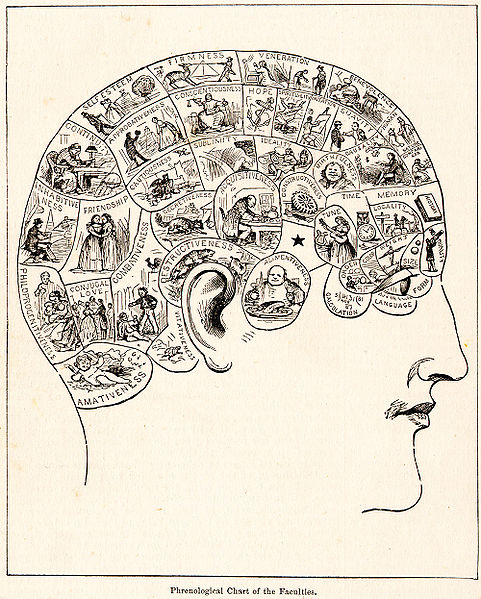
481px-PhrenologyPix

I was raised as a Fundamentalist. Although my readers may clearly see that I am no longer one, I do know that this bundle of neurons in my head has been made what it is, at least in part, because of that early training. Now a neuroscientist is suggesting that such thinking might be a curable mental illness. In an article in the Huffington Post, Kathleen Taylor, a neuroscientist at Oxford University, suggests fundamentalism may be a treatable disease. Looking over the secular headlines, there is no doubt that much of the misery in the world is caused by religious literalists acting out their fantasies in deadly ways. The suggestion that they might be treated for mental illness, however, raises profound—exceptionally profound—questions. Since I work in a city of millionaires and billionaires, I ponder how it is that extreme selfishness is not counted a mental illness. The desire of an individual to acquire far more wealth than one person can ever use seems to be an illness. Aesop might call it being a dog in the manger. No one is suggesting their brains be reprogrammed.

The even larger issue is who has the right to decide “the new normal.” Richard Dawkins may be correct that children reflect the religion of their parents, but as soon as adults declare what religion is acceptable we find other adults colonizing new continents, with the attendant misery that such migration entails. Where do we draw the line? If Fundamentalism programmed out, will Baptist neurons be allowed to remain? Methodist? Presbyterian? Mormon? The issue raised by Dawkins must be placed in context; if parents decide on a child’s beliefs do other adults have the right to decide on what is the correct belief? (Orthodoxy means precisely that.) Is a strict rationalist mentality what we want? A life without Hayden, Picasso, or Charlotte Brontë? What would Mr. Spock do? Will the real Randle Patrick McMurphy please stand up? Our rich fantasy lives are what make us human. If we are going to program out religious freedom perhaps the brave, new world is already here.


Playing Nicaea

Some professors are more creative than mine ever were. Not that there’s anything wrong with that. Even today “old school” means getting it done the arduous, nose-to-the-grindstone way. A friend of mine, however, is in Turkey where a class on social, political and religious relations has her involved in a role playing game (RPG in internet-speak) where the students take on the roles of the participants at the Council of Nicaea and argue the perspectives of those parties. What a great way to learn what minutiae set ablaze entire worlds! For those of you who don’t follow ecumenical councils, Nicaea was the big one. Depending on whom you trust, there were seven ecumenical councils that early Christians accepted, although others had gone their own direction before the first council (Nicaea) even began. Historians are now aware that Christianity was never a unified religion, just a varying number of winners and losers vying for who had the right to call themselves the true followers of Christ.

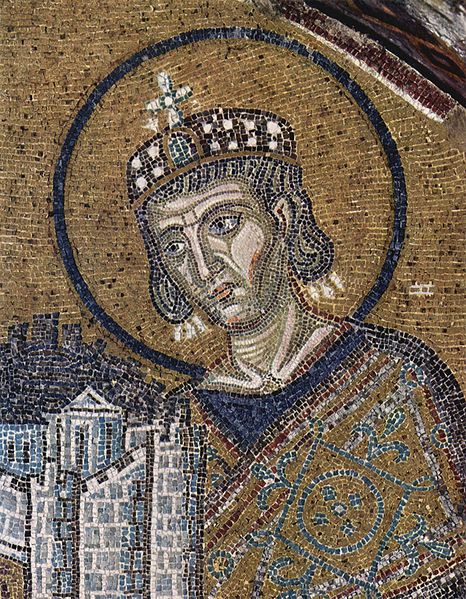
Constant Constantine keeps the halo.

Constant Constantine keeps the halo.

Nevertheless, the Council of Nicaea was one of the pivot-points on which all of history in the western world turns. Seem like a sweeping generalization? It is. But an honest one. Nicaea was the opportunity for the first Christian emperor, Constantine, to set in motion the swirling whirlpool of politics and religion that has never truly left the world ever since. Already before 325 C.E. there had been endless bickering about who Jesus really was, when Easter should be celebrated, which books belonged in the Bible (that most political of books), and who had authority over whom. The big question was really the relationship of Jesus to the Father, or, the first instance of “who’s your daddy?” Over questions like these, given history’s long view, thousands of people have died.

It’s not unusual to hear that the Council of Nicaea was the last time all Christians agreed on the major points. Many churches still recite the Nicaean Creed on a regular basis as a symbol of that unity. It is clear, however, already from the period of Paul’s letters (the earliest Christian literature) that differences of opinions had arisen among the first generation of disciples. Those we quaintly call Gnostics were among the earliest believers and they managed to survive, transmogrified, past all of the authoritative councils of the church. The very idea of ecclesiastical authority is one of power. Who has the might to make right? And it was a chance to be seen among the ecclesiastical elite. Nicaea left out, most famously, the Arians. And if the media is anything by which to judge contemporary Christianity, the majority of the Religious Right would fall into that camp as well. Recite with me now, “I believe in…”


Sacred Herstory

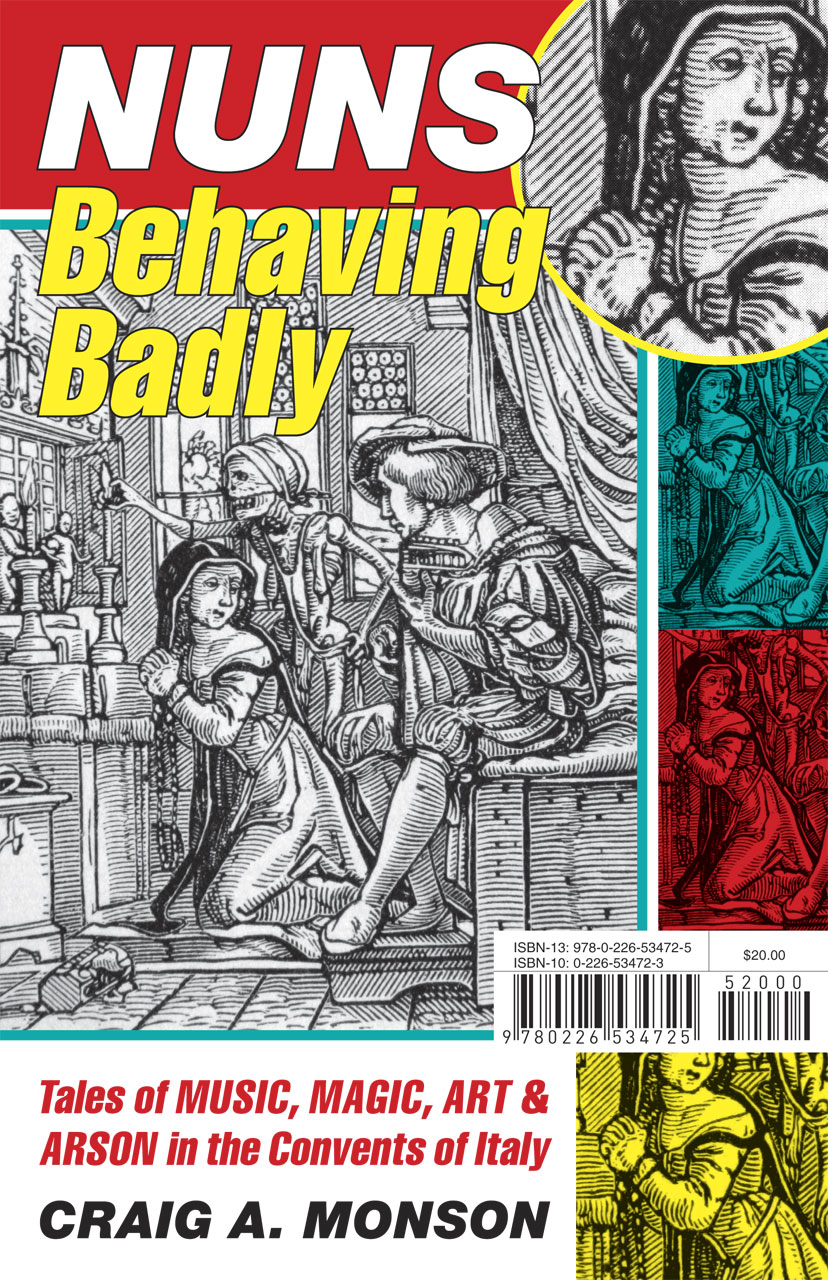
NunsBehavingBadlyHave you ever read a book thinking the author was a woman, but later learned that it was written by a man? Or vice-versa? This creates a disturbing kind of cognitive dissonance, and I suspect that it is hardwired to our communal instincts. We want to know whether it is a man or a woman who is talking to us. Expectations of gender are deeply embedded in all societies, and they become problematic when they ossify into rules. Gender roles, in earliest societies, were a matter of biological necessities. In a modern, urban context such roles are obsolete, and certainly damaging—especially to women. Craig A. Monson’s Nuns Behaving Badly: Tales of Music, Magic, Art and Arson in the Convents of Italy raised this issue to a conscious level once again. Christianity, always very sensitive to issues of sexuality, had developed in a social context of women as property. In the Middle Ages, where dowries were expected, families couldn’t afford to marry off all their daughters, and convents provided an easy, if not always spiritual, solution. Monson’s book, although not filled with salacious tales, illustrates the point well. In a society where wage-earning was limited to males, females had few options.

Monson narrates the stories of five different convents where a nun (or sometimes groups of nuns) refused to play by the rules established by the male hierarchy. The infractions, viewed from the twenty-first century, seem minor: playing with magic, singing, producing art work, wanting to go outside the cloister walls, visiting (gasp!) an opera! (There are a few more complex issues too, such as arson and the love that dare not Ave Maria its name.) In each case, the masculine authorities were called in to investigate, punish, and restore order. The end result is, although fascinating, somewhat melancholy. These willful women were often acting against boredom. Their lives had no impact beyond the convent wall, and, ironically, I learned, even their enclosures had prisons. A nun could be moved from her cell to the cell. And sometimes the only crime was wanting to hear a professional singer perform.

Nuns Behaving Badly is a clever title for a book. As I read the histories, however, I became increasingly convinced that those behaving poorly were not the nuns. A society fabricated on the premise that men are the divinely ordained masters of their universe is no stellar example of men behaving well. Even the occasional bishop, archbishop, or cardinal who sided with the accused had to bow to the will of the Holy Inquisition. The victims, although not physically tortured, were women who had thrown their entire futures into the service of the church, in one of the few roles allowed females in an era already pressing into the early modern age. The nuns were not behaving badly. They were simply being human. The truly bad behavior came in the form of a male hierarchy that brooked no dissent.


To Obey the Scout Law

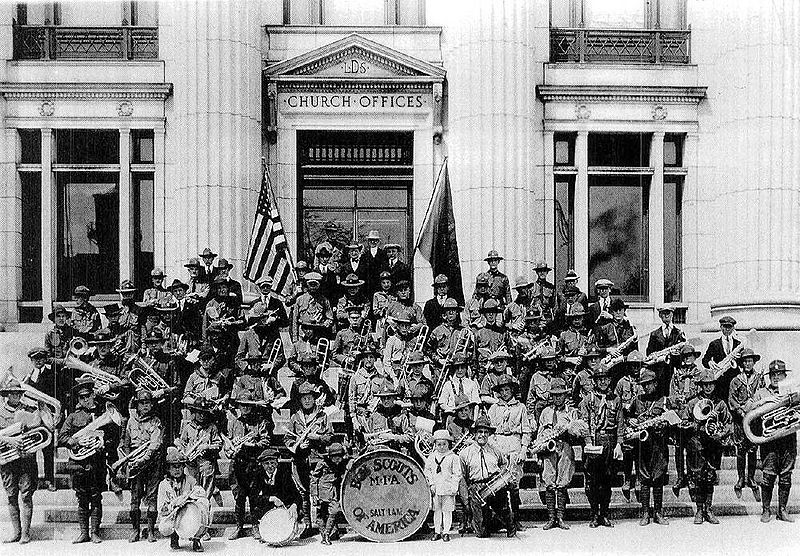
Society’s prurient interests have been on display again with the intense media blitz concerning Boy Scouts of America and the fraught issue of sexual orientation. As is to be expected, certain religious bodies have sounded the final trump once again as they frenetically posture against equality. The story is so old it is difficult to see how it counts as news. When I saw that the Church of Jesus Christ of Latter-Day Saints (the oldest sponsor of Boy Scouts and the denomination with the highest numbers) had made a statement about the issue, I almost didn’t even click on the link. We already know the official stance of such conservative groups, right? So I was genuinely surprised when I saw the note. This Mormon Church has no problem with the admission of homosexual boys since, and rightly so for a youth organization, the members are expected to behave according to the code of conduct. That code forbids sexual relationships, no matter a boy’s orientation, no matter with whom.

800px-CAB_with_Scouts

We all know that ideals are seldom observed. We should lead by example. I spent my high school years deeply involved in the feeder program for future clergy in a major Christian denomination (the one with the second highest number of Scouts). The youth programs frequently involved having hundreds of youths together for multi-day events. Chaperoned, of course. But kids with active hormones are about the most clever creatures on the planet. I frequently heard that opportunities to find some time alone with your favorite “spiritual advisor” were not difficult to arrange. And when I enrolled in a program to study for the ministry officially, I learned that the name seminary was somehow overly appropriate. Codes of conduct exist for a reason, and those who hold to them reward the trust of adults who institute them. Society can’t operate without such rules. What happens in reality, however, is a different matter. Anyone who reads the headlines can see that.

I applaud the Mormon Church’s stance on this issue. The Boy Scouts is a social organization with nary a merit badge for sexual knowledge or experience (at least not in the Handbooks I’ve seen). Those matters, as with adults, are private. Religious groups often act as if admitting admitted homosexuals somehow changes the Jamboree into a Woodstock. The problem is with the imagination of puritan adults. The solution to the anxiety is rather simple. For those concerned, volunteer to lead a troop. Attend a meeting. See what actually goes on. The fact is, kids will be kids, and making rules to satisfy uptight adults will not change that. Many groups could learn from the Mormons here: Scouting is not about sex. It takes the imagination of adults to make it so. Boys, as the saying goes, will be boys.


Down Will Come Baby

Princeton Theological Seminary is a school with a history. Unofficially allied with my alma mater, Edinburgh University, PTS is one of the powerhouses for supplying educated clergy to the Presbyterian tradition. And others as well, of course. And not a few PhDs into the ranks of the perpetually unemployed. Seminaries do offer all these services. Despite failing to be considered worthy of even an interview in what I count as five separate applications to the school, I still sympathize with its need to update its technology. I suspect that is what is behind its application for a half-million-plus-dollar New Jersey Higher Education Technology Infrastructure Fund grant. Education and technology surely go together as much as old-school loyalty and fairness, do they not? A front-page story in Tuesday’s New Jersey Star-Ledger proclaims the gnat that remains in the camel juice: state funds are being requested by a fully religious organization. The application for these state pork-bellies is also shared by Beth Medrash Govoha, a male-only Jewish seminary in Lakewood. Desperate times in higher education. What would Christie do?

PTS

Turning the clock back twenty-four hours, another front page newspaper story places religion squarely in the public face. “Three more step down in wake of priest scandal” hit my bleary eyes on a Monday morning. This is the saga of Fr. Fugee, banned from interactions with children after a molestation case some time back. As seems to be par for this unholy course, such clergy are shifted around rather than defrocked—being seminary fodder myself I can honestly ask, what else would they do? Society has little enough use for those of us who worked our way through seminary for honest means and toward what seemed at the time noble ends. How much more so for those who mask deeply rooted neuroses under the sanctity of ordination?

Fugee_0001

Seeing religious news on the front page of the paper is nearly always cause to shudder. We will occasionally see a new Pope or maybe a genuine act of Christian (or any other religious) charity, but mostly we are served the seedy and sad and downright tawdry. Religion, although in the ascendent, is seeking hard to justify its existence. Or is it just the vaunted liberal media bias showing through? As primates we all like to watch the haughty topple. It’s even in the Bible—Isaiah got a thrill out of tall ships tipping over. Perhaps it is because religion presents itself as the unadulterated good that we like to see it stumble. I always felt a tad uncomfortable reading Goofus and Gallant while waiting for a doctor’s shot or the dentist’s chair. Yes, Goofus screwed up big time once in a while, but that confident little eagle-scout-in-waiting Gallant could do no wrong. I knew who I was supposed to emulate, but life’s just not that simple. Maybe that’s why religion makes the front page. Maybe Gallant is a myth after all.


Heavy Metal

“I drive my car, it is a witness. My license plate, it states my business.” Only the hardcore may be able to place this quote from Daniel Amos’s impressive 1984 album Vox Humana. Even when I moved away from Christian rock after college, I kept Daniel Amos in my head—this is truly inspired artistry. Pop culture and religion courses have become a standard offering in religion departments over the past few years. We are, even as secular as we may be, a very religious society. When my daughter’s high school music program went off on its biannual concert tour, this year they headed south. On the itinerary: Dollywood. I came near to Gatlinburg, Tennessee on the trip I made to South Carolina to see my father for the final time, but I did not stop. I am told, however, that Dollywood is something to see. In one of the gift shops, my daughter snapped a couple of photos for my blog that draw all these disparate thoughts together.

IMG_1213

What we put on our cars is what we want the world to know about us without ever seeing us. This makes cars a perfect evangelistic tool for both the shy and the aggressive. The car becomes a tract. A statement that this vehicle is driven by an evangelical. I’m not sure it makes me feel any safer on the road. How many times have I been rudely cut off in traffic only to find a Jesus fish winking at me from the bumper of the offending car? Sometimes swallowing a Darwin amphibian. Religion speaks more loudly behind the wheel than it does from the pew. In the stress of traffic, what do we really believe?

IMG_1215

Cars are also the ultimate tools of self-assertion. Human beings, with little natural armor or predatory equipment, surround themselves with metal and accelerate themselves at velocities that nature never intended. We feel godlike behind the wheel. That metal box in front of us, driving too slowly, or having just pulled some stupid maneuver, is not a person. It is a thing. And those who choose to declare their faith on that object are under constant judgment. Well I know the evangelistic pressure to witness—fundamentalists are expert at manipulating guilt. Put these plates on your car and the world will know what you really are. But be careful. It’s not how you say, but how you play that will express what you truly believe.


Neither Black nor White

What hath Rome to do with Lagos? In the portion of the newspaper where religion is freely discussed—the Sunday edition, of course—Jeff Kunerth published a thoughtful piece entitled “Black atheists might feel lonely, but they’re not alone.” Kunerth reveals a double dilemma for the African-American non-believer: strong emic social pressure to be religious and etic deconstruction of race by many atheists. I know African-American humanists, and I have been informed of the lack of attention given to humanism and race. Both, in many circles, are troubling concepts. We like to think we’d evolved to the point of “race” disappearing from the social spectrum, but we also feel pride concerning cultural achievements, some of which are tied to “race.” Where would our culture be without the influence of African-American music, story, and art? Is belief required to truly belong?

I often wonder why it is that skin tone is used to divide people. Inevitably my thought goes back to the Bible. In the ancient view reflected in the book of Genesis, all creatures, humanity included, were created with inviolable boundaries of “kind.” As mules and ligers demonstrate, however, boundaries are often only as strict as we permit them to be. “Can the Ethiopian change his skin?” Jeremiah rhetorically asks in 13.23 of his eponymous book, “or the leopard his spots?” Not only is race fixed, but gender as well. Each according to his own kind. It’s this easy division that’s troubling me. Humans of all “races” may interbreed, something not possible for the liger or mule. We are free to change our outlook. The leopard spots are in our minds.

None of this is meant to belittle the difficulties faced by black atheists, or any others who are excluded by their own “kind.” It is simply a suggestion that we might enlarge the pie, to borrow from Getting to Yes, before dividing it. Belief has to be a matter of conscience, and acceptance should be a matter of principle. Too often religious beliefs divide rather than unite. Atheists and true believers, of one “race” or many, have a common cause to make a better world for all. The prophet anticipates a negative answer to his rhetorical question. Allow me, Jeremiah, respectfully to disagree. Yes, a leopard may change its spots anywhere except in the prejudiced savannah of the human mind.

Leopard_africa


Fear of Religion

Two online articles have, in my limited reading, linked the bombing of the Boston Marathon by Tamerlan and Dzhokhar Tsarnaev to religion. Although the boys are/were not part of any radical sect, it was their belief that their Muslim faith, apparently, motivated the bombings. While such revelations will no doubt prompt Islamophobia in some, the true terror belongs to all exclusive religions. People want to be part of exclusive groups. Whether it is the ritziest country club or the most erudite book circle, we all want to be part of that group that is superior. I recall very clearly in my New Testament classes at Boston University how our professor explained that Christianity never grows as fast as when it excludes people. He claimed the writers of the Christian Scriptures knew that. Conversion is fine and good—it gives you a gold star when you save souls—but not too many. If everyone’s invited to the party, it loses its appeal. Here is the dilemma of proselytizing religions. We want to grow, but not too much.

Throughout history people have rejoiced at the troubles of the exclusive few. It does not explain fully or in any way excuse antisemitism, but the fact that Judaism doesn’t seek converts may raise the jealousy factor of those outside. Those religions most anxious to convert others are also the ones with the longest track records of violence. Nothing promotes hateful behavior like insecurity. Insecurity is frequently masked with evangelistic bravado. The fact is, even if one religion won out—especially if one religion won out—the violence would increase dramatically. This sounds rather crass, I know, but it reflects the state of world religions pretty well. Religions, after all, are made up of people.

Plenty of Muslims participate in sporting events like the Boston Marathon. Islam has contributed tremendously to western culture, laying the groundwork for much of our science and philosophy. It corners no market on religious terror. Religions are often outgrowths of human frustrations with our limited possibilities. We know we have to die, and we dream of gods but we can’t emulate their strength or majesty or immortality. We want the best for those we love. The world, however, doesn’t conform to the deep desires of humankind and religion, whatever its origin, helps us cope. Evolutionary psychologists are increasingly of the opinion that religion has utilitarian purposes in human development. Religions, however, also take their premises rather too seriously at times.

In the name of love

In the name of love


Almost Heaven

OneidaUtopia. Sounds like a good idea—what’s not to like? There have been a number of attempts to form utopias in this sad, violent, and secular world, and although none have succeeded, it is difficult not to admire their spirit. The Oneida Community has long been a source of personal fascination. In that region of New York where spirituality was so urgent that many people crowded to the purveyors of new salvation, the Perfectionist sect of John Humphrey Noyes eventually settled down. Oneida: Utopian Community to Modern Corporation, by Maren Lockwood Carden, was written in the late 1960s as a sociological study of the followers of Noyes. Although the data are dated, it is a respectful, careful study of an unconventional group of utopians who managed to keep a dream of sorts alive for three decades in the latter half of the nineteenth century. If we known anything of the Victorian Era, it is that sexuality was handled with extreme delicacy and reticence. Most people would not have survived half an hour of Fox’s standard evening programming. Beneath social convention, however, they were as hot blooded as people have always been.

John Humphrey Noyes was a troubled soul. Like many institutors of religions, he was a seeker who knew what felt right but never believed he could find it. He studied theology at Yale Divinity School, and he had been profoundly moved by the Perfectionist movement. Perfectionism traces its roots to John Wesley and his perpetual need for assurance of salvation. Indeed, Noyes appears to have picked up the ideals of Perfectionism from Wesleyan theologians of the day. Noyes, however, believed that perfection on earth meant sharing everything. Well, nearly everything. Having been chased from a location or two for his radical ideas, Noyes and his followers eventually settled in Oneida, where they could practice “complex marriage” in peace. While few people remember the other doctrines of the Oneida Community, complex marriage is one from which even sociologists can’t keep their eyes. All adult members of the community were expected to love each other fully. While avoiding incestuous unions, all adults were married to all others. By practicing male continence, they kept the birth rate down, and, to the surprise of many visitors, seemed the most civil and sophisticated people around.

The Oneida Community, however, outlasted John Humphrey Noyes only by becoming a corporation. As most couples registering for their weddings even now know, Oneida tableware is considered of very high quality. The company, at least until the 1960s when Carden’s book was published, was under the leadership of one of Noyes’ descendants. Carden’s book delves into the running of the corporation as much as into complex marriage, and points out the very real impact the Oneida Community has had on America. I also think of it as a paradigm. It began as a Perfectionist utopia, a religion of (free) love and concern for all others, and ended up as a business corporation. Any number of other churches might fit into that same pattern—they begin as idealistic enterprises and end up as businesses. Perhaps this is the truly fallen state of humanity. We start out spiritual, but end up sadly entrepreneurial.


Chick Trick

Yesterday was our local town’s Earth Day clean-up day. I have always thought we lived in a clean town, and generally it’s true. When you look closer, however, the litter becomes all too obvious. Now, I know the purpose of this exercise is to get rid of pollution—my family filled five trash bags in the morning’s jaunt. As I reached for a bit of paper, I instantly recognized that I had found a half-torn page of a Jack T. Chick tract. Jack Chick is an old school Fundamentalist who draws some of the scariest cartoon evangelistic tracts imaginable. He is personally responsible for many of my childhood nightmares and phobias. Even as an adult, I still find myself believing, at some level, the tripe he serves up at the food of salvation. Children, you see, are extremely vulnerable to suggestion. Chick unremittingly claims we all deserve to burn in Hell, literally, and that only those who buy his version of Christianity can avoid it. He scares me. Instead of putting the torn comic strip in the trash, it went into my pocket. I needed to exegete it.

As a child I purchased every single Chick tract available from our local Christian bookstore. I was terrified of Hell and absolutely wanted to make sure I had double-covered every single base. A Chick tract can be read in a matter of minutes, but they can stay with you for decades. The one I found yesterday was one I’d never read. It consists of part of pages 5 and 6 of a black-on-black violence story involving a seriously looking tough guy called Ice Man. As the story opens, in media res, a photograph of “the preacher’s boy” is on a cell phone. Ice Man is seriously pissed off, and on page 6, in a drive-by shooting with an assault rifle, blows the young man away. His death, as in most Chick tracts, is violent, but bloodless. Chick spares most of the blood for the cross, where, sometimes it trickles eerily down over the repentant sinner.

IMG_0669

If I might be forgiven for some textual criticism, in which I might be guilty of a modicum of eisegesis, let me guess that the preacher’s boy had been suggesting that Ice Man change his sinful ways in the previous lacuna. In a fit of Icy rage, the PK becomes a sacrificial victim. Most likely, by the end of the pamphlet, Ice Man will have come to realize the evil of his ways and will end up on his knees. Depending on Chick’s mood that day, he may even end up dead. One thing is certain, the story will attempt to scare a youngster to a life of righteousness. The area where we were gathering trash is on the relative “wrong side of the tracks” for my little town. Some real violence does occur here, but it is mostly out of sight. Having grown up with Chick tracts guiding my every thought, I wonder if somebody got the message before it was too late. I see this torn page as a small sign of hope.


Bridge over Troubled

ReligionThe fundamental question of what counts as religion remains elusive. I read Robert Crawford’s What is Religion? hoping to find out. Crawford begins with the admirable assertion that in a pluralistic world all religions must learn to get along. Unfortunately, learning hasn’t always been one of religion’s strong suits. And we still don’t even know what religion is. As becomes clear within minutes of starting the book, consensus will be a stranger in this room. Nevertheless Crawford plows on, hoping against hope that comparison will reveal conformity. Religions aren’t really team players in that way.

Crawford keeps his focus on the “big six”: Judaism, Christianity, Islam, Hinduism, Buddhism, and Sikhism. Although these faiths contain the lion’s share of numbers, they in no way corner the market on religion. I wonder if Crawford’s net is really large enough. When trying to define religion, cutting corners gets you into trouble every time. No matter how we count it, religion is more than a matter of belief and broader than prescribed rituals. It must take seriously the attempts of even small knots of seekers in its preternatural accounting. Crawford sometimes gets bogged down in the details. Science plays a key role in his discussion but then the scope shifts to Christianity, a religion with more than its share of scientific troubles. Islam, for a while anyway, led the world in scientific thinking. What of Sikhs and science?

The more I read of What is Religion?, the more I got the feeling that all of these pieces don’t go to the same puzzle. Religions develop out of historical circumstances and needs. They, with a few exceptions, are not consciously devised by a bunch of eggheads shut up in ivory towers. Religions develop from people in difficult situations, whether physical or psychological. Think about it. If the Bible is to be believed Judaism grew out of slavery in Egypt (either that or Abraham’s childlessness). Christianity out of Roman oppression. Islam from Muhammad’s conviction that polytheism didn’t add up. Hinduism’s old enough to have lost its origins in deep antiquity, but Buddhism is clearly a reaction to pervasive suffering. Sikhism tried to steer between the clashes of Hinduism and Islam. We could go on, but I don’t wish to try your patience. I’m not suggesting I’ve finally done the impossible and defined religion. In fact, I may be suggesting the opposite. Religion encompasses many ways of being in the world. Crawford maybe got a start on the discussion, but it will go on as long as people have troubles.


Parochial Education

I’m sitting in King David’s Restaurant in Syracuse, New York. I’ve spent two days speaking with a wide diversity of religion scholars, and I’m realizing religion is not yet dead. A few days ago I wrote about the Burnt Over District and the Second Great Awakening. It occurs to me as I climbed the hill to the Religion Department in the rain, that I am on the trail of that Great Awakening. Syracuse University began as a Methodist school. Today, although affiliated with the United Methodist Church, it considers itself non-sectarian. Yet without those abstemious Methodists, they wouldn’t be here. The Methodists, now primarily represented by the United Methodist Church, owe their explosive growth to the Second Great Awakening. Out on the frontiers—for America was a rural nation—the revivals became showcases of the social, the supernatural, and the salacious. The Methodists and Baptists, in terms of numbers, benefited immensely.

With their enviable population base, the Methodists invested in higher education. Syracuse University, just up the hill, Adrian College, Boston, Central Methodist, Drew, Duke, Emory Universities, Florida Southern College—you could go nearly through the alphabet and not exhaust their schools—all owe their beginnings or present stature in part to those thrifty Methodists. Believers in an educated clergy, they reached out to embrace an educated laity as well. Although many of these institutions grew up and left their religion behind, the Methodists have impressed their stamp on American higher education unlike nearly any other denomination. Even when numbers in the pews decline, the Methodists will have left a legacy on the wider culture through their belief in education. About the only other Christian group invested so heavily in higher education has been the Catholic Church. Even so, the Methodist academic reputation climbs a bit higher.

I spent many happy years among the Methodists. Their way of looking at life, officially, anyway, isn’t extremist. Some aver that John Wesley was an extreme evangelist. Today he’d be snowboarding down the Alps to seek the unsaved, a Red Bull or two in his belly to stoke that restless fire. His followers, via media Methodists, eased into the mainstream—in some ways defined the mainstream. Methodism was good for a kid who needed to fit in. So as I sit in King David’s Restaurant, reflecting over my past that has landed me in this most unusual place, I am thinking about my Methodist roots. I’ve failed to impress those Methodist institutions where I was once courted for a circuit riding future. Now I watch as they educate other people’s kids. It is a safe guess that King David wouldn’t even be here if it hadn’t been for John Wesley and his personal need for assurance. If only more churches took education so seriously.

Climb that hill

Climb that hill


Burnt Over

I find myself in Syracuse. Skirting the very edge of the Burnt Over District, Syracuse is only a short distant from Oneida, birthplace of one of the uniquely American religions to have been conceived in this area. Moving further west, several of the religions following the “Second Great Awakening” roared through the state, including the one that was to become the Mormon Church. Looking out over the rugged hills, I wonder what might be in this land that inspires such religiosity. Americans are known world-wide for their religious predilections, and back before the South took the privilege of doling out religious mandates, upstate New York was busy churning out new religions. Of course, this was in the days before the extreme urbanization of culture took hold. Individuals, often isolated from others and struggling to survive in a sometimes harsh climate (they are calling for snow this weekend, still), they turned to God in new and innovative ways.

There must be a point at which religion reaches satiety. How many religions does one nation need? Thus, revivalists found a tired population here in the Burnt Over District. How much energy does it take to build a new faith from scratch? Some flared brightly and burned out (like the Oneida Community), while others flourished to the point of putting forth presidential candidates (I need not say which new religion has offered us a candidate too wealthy to countenance). Something in the soil, perhaps. Something in the mountain air.

Scholars opine that the Second Great Awakening occurred in part, at least, in reaction to the skepticism that was surging through intellectual circles at the time. America has always been good for a backlash or two. While many thinkers were praising the accomplishments of intellect, Smiths and Noyeses were at home brewing up that new-time religion for which Americans thirst. We are great consumers of religion. In the early 1800s revival after revival spread through New York, as well as through the southern states. The south reacted by boosting the Methodist and Baptist populations. New York gave us new religions. Americans aren’t that choosey. In a pinch, just about any religion will do. I stand here in Syracuse, the mid-April snow drifting down about me and wonder what is about to awake in this skeptical age.

Moses starts a new religion

Moses starts a new religion