Invoking Imbolc

As the year continues her eternal circle, we find ourselves once again at Imbolc, the cross-quarter day between the winter solstice and the vernal equinox. Imbolc is an ancient fire festival, and given how chilly our apartment has been these last few weeks, I think I could be downright pagan about it. Dividing the year into eighths, the pre-Christian calendar emphasizes the seasonal aspect of nature. The festival was originally dedicated to the goddess Brighid who became, in her later years, St. Brighid. Naturally, when the Celtic lands were converted, Imbolc was supplanted, somewhat, by the following day—not yet Groundhog Day—Candlemas, or the feast of Mary of the Candles. Diametrically apposed to Samhain, or Halloween, Imbolc celebrates the rekindling of light in a dark time of year. Some have suggested that the festival has roots as early as the Neolithic Period.

One feature of the old religions that was lost with the more transcendent interests of monotheism is the dedication to the earth. Religion, in its earliest forms, grew out of a profound awareness of human connections to the planet that was their home. Without our planet we do not thrive. Even though we’ve learned to catapult ourselves into space, our bodies don’t work so efficiently in zero gravity. (Read Mary Roach’s Packing for Mars for the gory details.) We evolved on and are part of the earth. Early peoples knew that instinctively. Their religion reflects that implicitly. Kindling a fire in winter is a small way of encouraging the light and warmth to return.

Stbrigid

Brighid, a goddess who represents the return to fertility with the earliest beginnings of spring, may also represent the earth. It will be at least another month or two before many of us will begin to see the hints of crocuses breaking through the wan grass, but Imbolc is all about turning that corner. The earth that seems to have forsaken us in the desolate winter is now about to welcome us back into the growing time. It is no wonder that, despite efforts of the missionaries, elements of the old religion remained. Whether with candles or bonfires, the pagan goddess Brighid, or the Christian Saint Brighid, ushers in February, our last full month of winter. And tomorrow, the groundhog will remind us once again that we are merely part of the earth.

Mercurial Monotheism

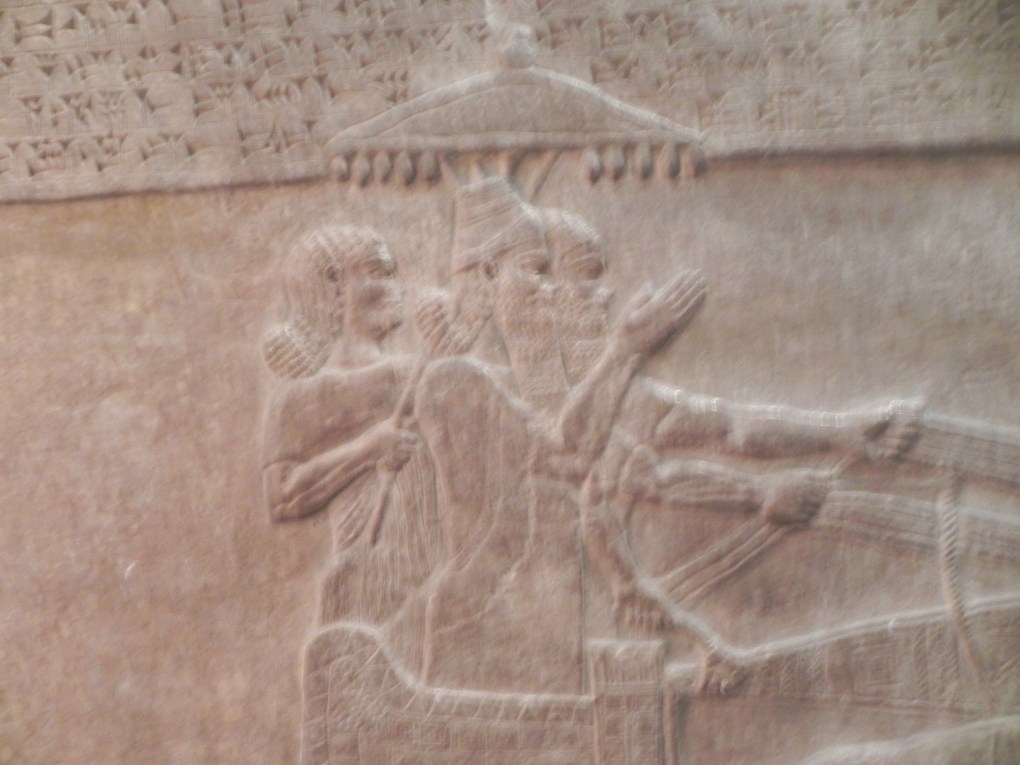
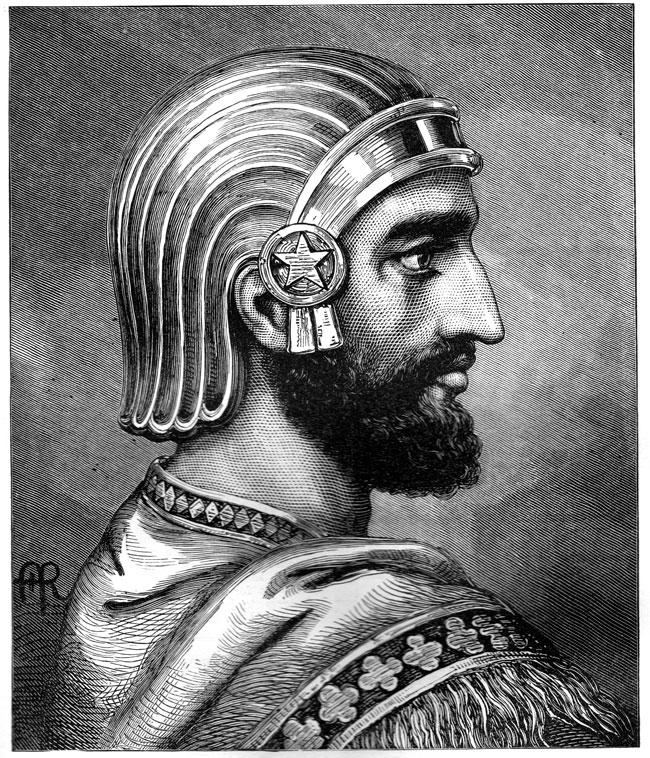
A friend recently asked about Isaiah 45.7, “I form the light, and create darkness: I make peace, and create evil: I the Lord do all these things.” I remember as a college student how professors tended to translate the problem away. Perhaps I was too young to understand the truth of the Italian phrase, “Traduttore, tradittore”—if I may betray myself—“translators are traitors.” I eventually did come to learn that those who’d already decided what the Bible meant could translate troublesome passages according to their biases. In this case the connotations aren’t even necessary to raise hackles, for the denotations do so fine just by themselves. Let’s put Isaiah 45 in context first. This remarkable chapter is an oracle from the beginnings of the Persian period that show Yahweh doing things in unexpected ways. It begins by calling Cyrus the Lord’s anointed—yes, that is the Hebrew word for “messiah”—the people of Judah had been in exile a long while and Cyrus, king of Persia, was their deliverer.

Back then, as even today, some would’ve been scandalized at this turn of phrase. The Judahites were beginning to develop the idea that the messiah would be a mystical deliverer, someone who would free them from the sad lot of being deportees. Some thought the messiah might be a divine figure. Here Yahweh is declaring a non-Jew, a foreign king, as a messiah. You can be sure there was some questioning of the prophet’s words. Second Isaiah, however, throws a well-timed curve in verse 7: God can do this because God creates both good and evil. This is a consequence of emerging monotheism. In a polytheistic world, you could have a plethora of deities. Monotheism, however, quickly runs afoul of the question of evil. If there is one god, where does it come from? Deutero-Isaiah shows Yahweh is capable of surprising things. The verse’s plain sense is blatant. Bald. Obvious. Yahweh creates both good and evil. Otherwise monotheism would be making false claims.

In college professors tried to insist that “evil” here wasn’t that really bad kind of evil, but rather something milder—a filtered cigarette rather than a Cuban cigar. They were prevaricating, however, as I learned when I too took up Greek and Hebrew. Evangelicals like to read monotheism into the Bible from the beginning, but the Bible itself fights against them here. Monotheism, like everything else, evolved. By the time Isaiah 45.7 was being penned, it was necessary to show that Marduk, and Enlil, and Ishtar had nothing to do with Jerusalem’s destruction and the fate of the deportees. No, this was Yahweh’s doing. And there was no apology for it. Monotheism had come, but at the cost of Yahweh’s innocence. According to this part of the Bible, the origin of evil is no mystery—it is the same as the genesis of all good things.

Who's your messiah now?

Who’s your messiah now?


Old-Tyme Religion

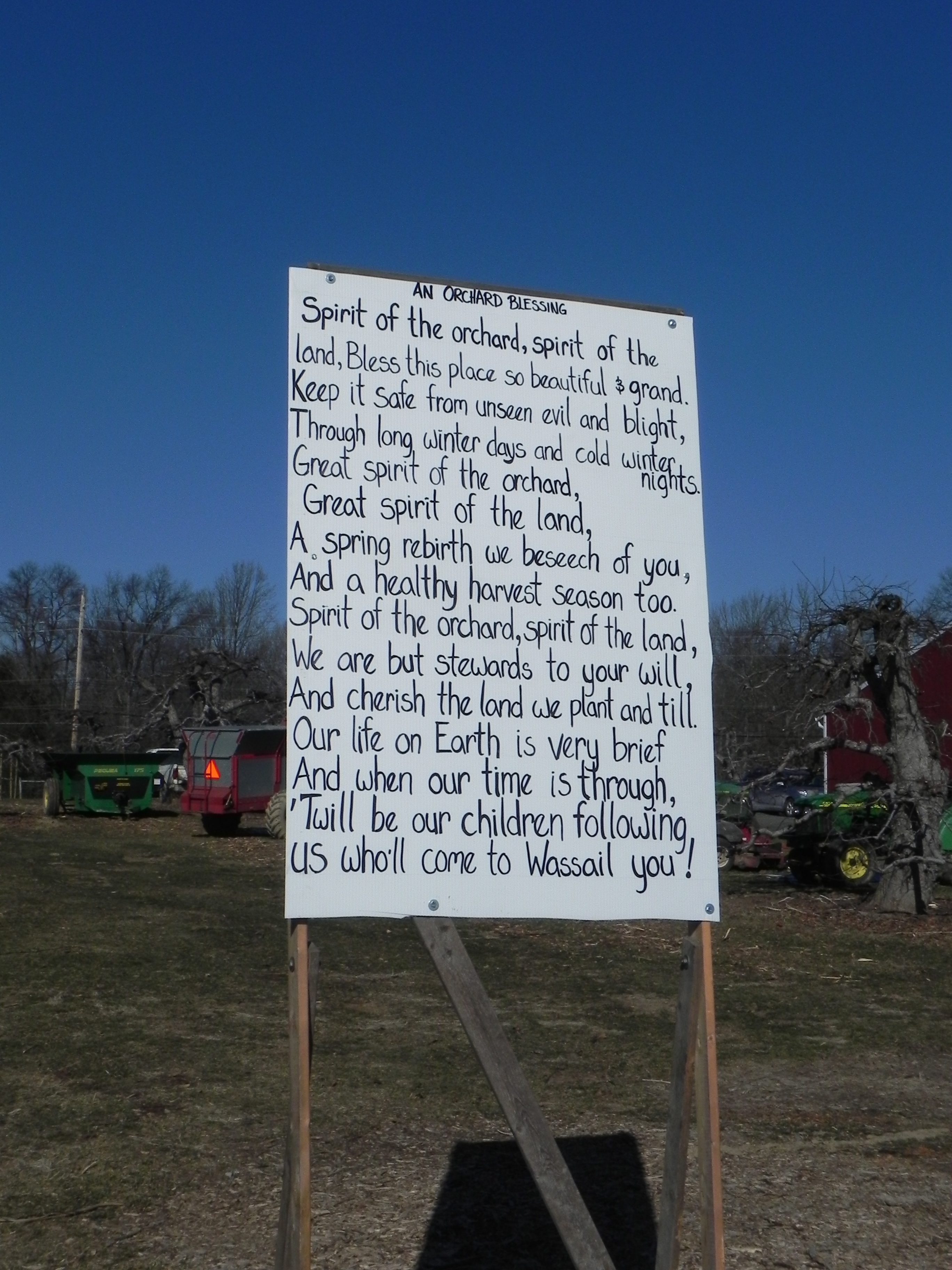
Run, two, three, jump, slap, run, two, three, jump. I can’t believe that I’m Molly dancing on a January afternoon with total strangers and it’s just over freezing out. And my big brother’s on the side watching me mess up every step. It must be wassail season again. In a festival that always reminds me of The Wicker Man (1973, please!), I visited the 16th annual wassailing of the trees at Terhune Orchards on Sunday. Molly dancers and Morris dancers, or Mummers, from Philadelphia help make this occasion festive. The ceremony of wassailing the trees clearly has deep pagan roots and is influenced in some respects by Christianity. We sing a wassailing hymn (one that many would recognize from Christmas time), say a wassailing prayer, make a loud noise to drive the demons from the trees, dunk bread into a pail of cider and hang it from the trees. Another festivity involves writing a wish on a slip of paper and burning it in the fire. My wish from last year came true—I can’t say what it is here—giving it a success rate better than some prayers.

DSCN2639

Watching this year’s wish rise up in the smoke, I have high hopes for the apples and dreams.

Christianity owes much to various pagan traditions. Often we don’t see it because Christianity (and many religions, actually) tends to absorb former beliefs and practices, “baptizing” them when it can’t expunge them. Pagan gods have often become saints, whether they want to or not. When the Christianity is peeled back there is a very human charm underneath. We worry whether the fruits will return, whether the days will get longer, or whether the cold will ever break. There are powers that exist outside our grasp, and call them Christ or call them spirits, we want them to be on our side.

DSCN2638

Throughout Europe and much of the rest of the Christianized world, the pagan traditions are called “the old religion.” Religions like to claim antiquity as part of authenticity. In fact, the earliest religions were surely shamanistic and very earth based. Revealed religions claimed to supplant much of what people did to ensure the continued regularity of nature. Even though we know the earth is spinning around the sun and that the tilt of its axis makes for seasonal change. I know that whether or not I dip bread into cider and jamb it onto the bare branches, even if I don’t shake the noisemakers to frighten the demons, the apples will grow. But we are all human too, and I’m only too happy to join the Molly dancers if only next summer the apples will come.


Twist and Shout

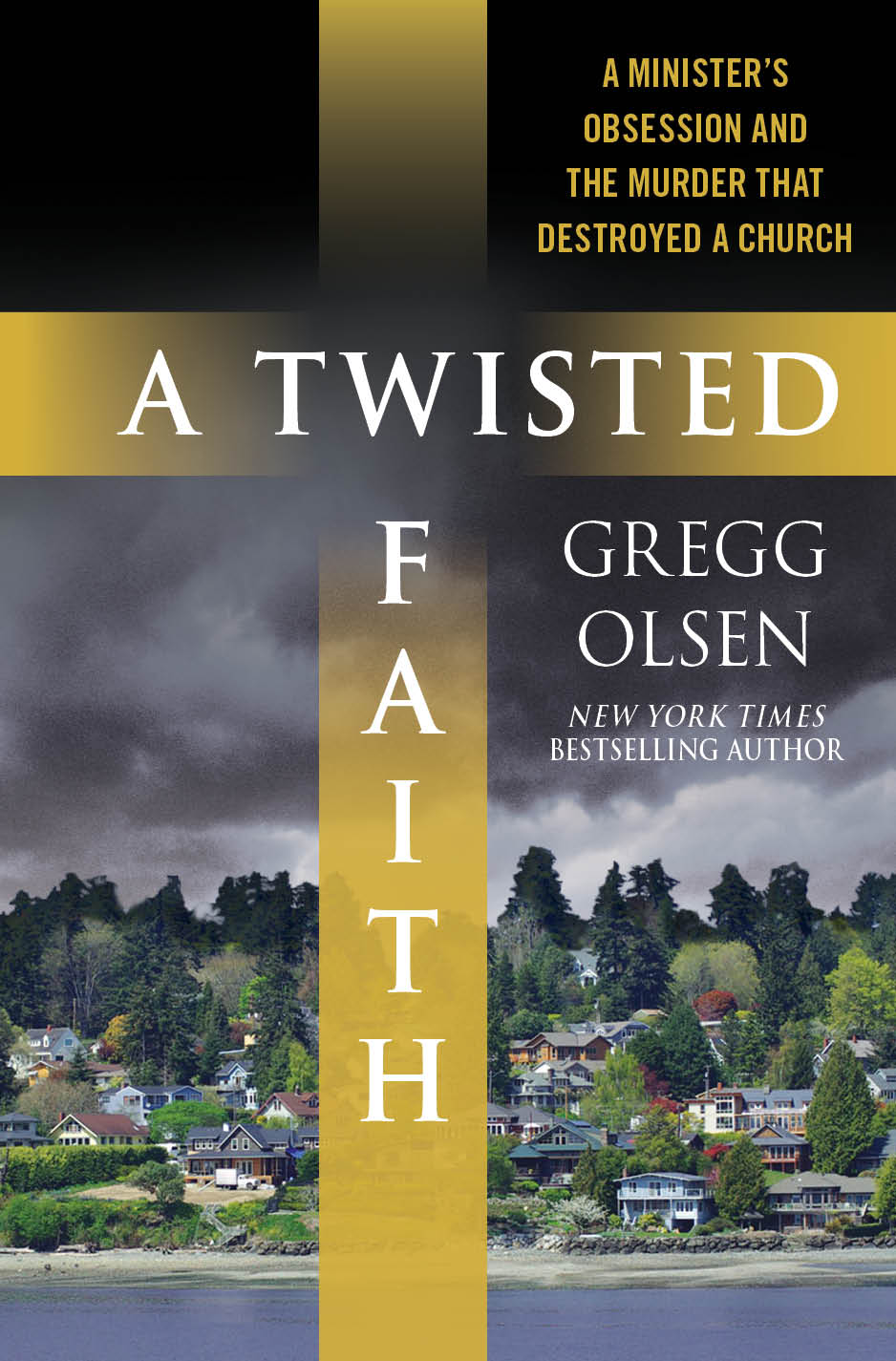
TwistedFaithTrue crime is not really my thing. I find regular life disturbing on a frequent basis, and reading about how someone willfully harmed another only seems to make my prognosis worse. When I saw that Gregg Olsen’s A Twisted Faith: A Minister’s Obsession and the Murder that Destroyed a Church took place in a number of places where various family members live (Poulsbo, Port Orchard, Seattle, Washington) I was drawn in. As the dark story began to unfold, at several points I almost put the book aside—this is a difficult account to read. Christ Community Church on Bremerton Island sounded a little too much like the Community Chapel in which I was reared. The power struggles, the self-righteousness, and the hidden lusts of those who live “clean lives,” all brought back painful memories. Nevertheless, I had to see how this sordid, almost salacious tale played out. Youth minister Nick Hacheney, to cut to the chase, murdered his wife and carried on affairs with at least four women in his church, including his murdered wife’s mother. Based on many personal interviews, Olsen digs deeply into the psychological trauma this one minister inflicted on the women he stalked, and revealed some of the neuroses of conservative religion.

I say “conservative religion” not to pick a fight, but because of the things both the women and men believed. After a conflict over whether to stay with the Assemblies of God denomination, Christ Community Church went independent when a new minister began seeking senior leadership over the congregation. So far that’s normal ecclesiastical politics. What made this so unbelievable is that many of the decisions were based on “prophecies” that self-proclaimed messengers of God presented and that clergy and people took at face value. Even when they blatantly failed to show any accuracy. There was never any questioning whether one received an authentic message or not. Some of these “prophecies” involved the deaths of congregation members, including the murdered Dawn Hacheney. Women with marriages in various states of decay, feeling sorry for the murderer (whom only one of them suspected) eventually gave in to his words “from God” that they were to have sex with him to help him get over his loss. The real pain was seeing the psychological manipulation he applied to his victims, causing them divine guilt if they refused.

In a community that readily accepts claims of direct messages from God, congregants are clearly sheep led to the slaughter. Most Christian denominations have mechanisms in place, no matter how faulty, to test such individual claims. Groups that trust their clergy to be honest all the time fail to calculate human weakness into the equation. It is no surprise at all when staunch, conservative clergy are caught violating their own rules (and congregants). Give them a blank check for signing God’s name to any statement and you’ve got a truly unholy writ. Many churches manage to avoid the most serious pitfalls most of the time. When one fails to discover the wolf in sheep’s wool, as happened on Bremerton Island at the end of the last century, true crime may be the mildest way to describe the results.


Hardsell and Gospel

When I find myself a considerable distance from my point of egress sometimes I have to take the subway to escape New York. Don’t get me wrong—I love New York, but Monday through Friday it is a place to work, not to play. Getting home is serious business. To get to the Port Authority Bus Terminal from the subway, one venue is a long underground passage. When I take this corridor, I find that it is often a favorite place for street evangelists during inclement weather; apparently the gospel goes underground when the weather turns nasty. So as I recently padded along that tunnel, I noticed an interesting conflict in worldviews. There were a series of street preachers, the central one with Bible in hand, and several others handing out tracts. If I’d had time I’d have listened to the preachers a bit; one was riffing with street language and intonation, and another was fluently flashing between English and Spanish. I took one of his tracts.

HanselGretel

The contrasting worldview was the posters repeatedly displayed in a long line along the wall—Hansel and Gretel: Witch Hunters. The movie is due for release next week. One of the modern remakes of fairy tales in the horror/action genre, this might be a fun ride, but the idea of secular forces taking on monsters clashed with the old fashioned gospel I was hearing with my ears. Or did it? Witch-hunting is not exactly PC in the days of religious pluralism when Wicca is becoming as normal a religion as the Anabaptists. Anyone who listens to most modern day witches knows that they are not evil, so I wonder how the movie plans on setting up the “evil” that our eponymous brother and sister have to conquer. I might just have to go to the theater alone to find out.

Tract

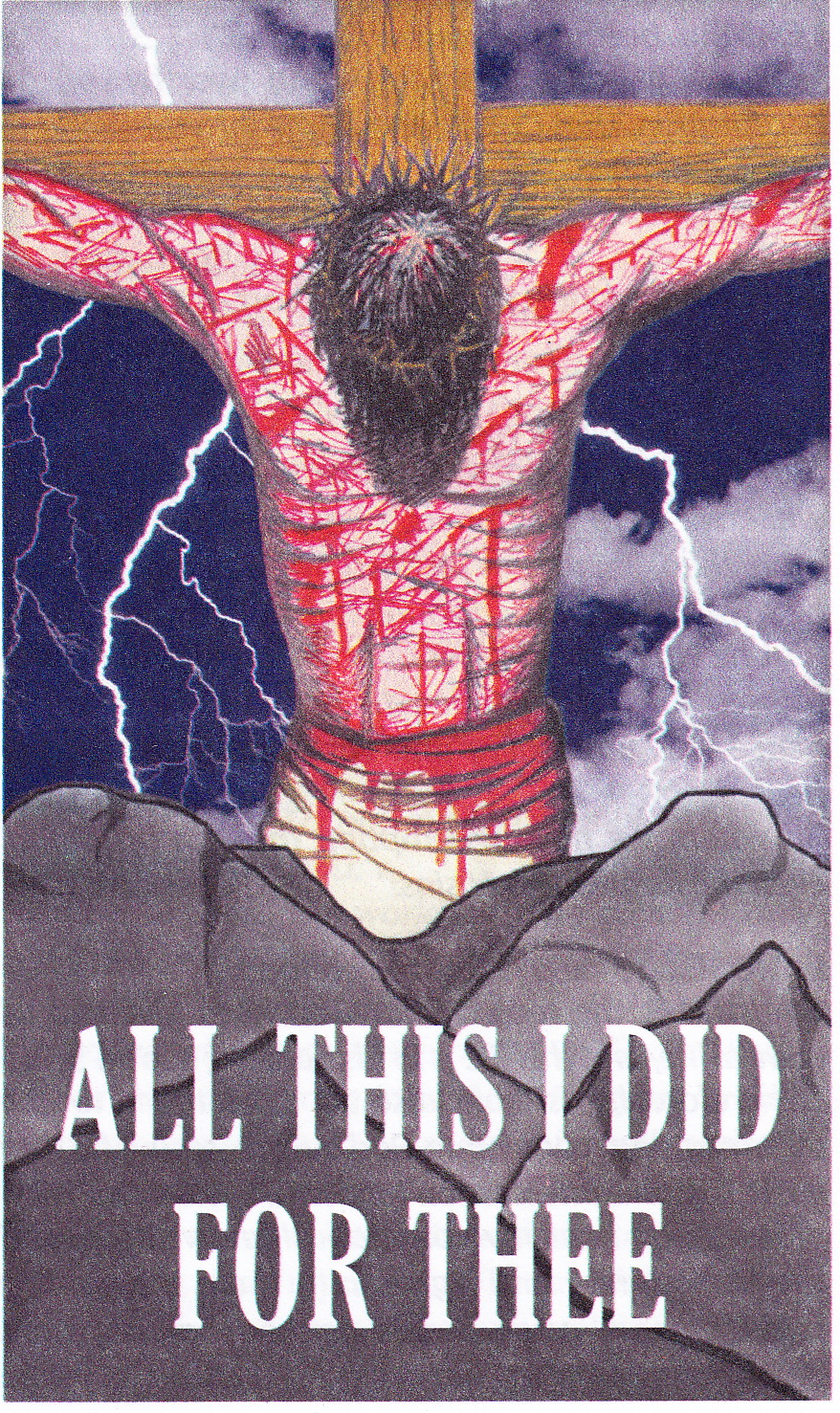
But is this really so different from our earnest street preachers below the ground? They are railing against the evil in the world, and if you follow their tracts, there is clearly no shyness about blood and torture here. The movie is rated PG-13, but what about the slip of paper I hold in my hand that shows a much bloodied Jesus hanging on a cross? Whether it’s with fancy crossbows or just plain crosses, the goal is to overcome evil. The real question is how to define it. Some, I suppose, would consider this movie a kind of evil; Gretel’s tight-fitting uniform is a little low-cut for taking on the forces of darkness, I should think. But the real evil is treating other people as enemies. And that even goes for street evangelists. If only they would admit the same for the wider world, maybe all this blood wouldn’t be necessary.


Witnesses All

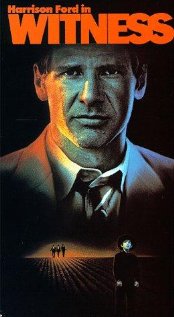
Witness“Only the bad man. I see. And you know these bad men by sight? You are able to look into their hearts and see this badness?” The words of Eli Lapp in one of the most memorable scenes in Witness often come back to me. While the lifestyle of the Amish strikes me as somewhat extreme, I have always admired their conviction that a simple life is a better life. The finer points of Anabaptist theology don’t always agree with my Weltanschauung, but their pacifism is the closest thing to Jesus’ Christianity that I can imagine. So as the NRA pulls out its big guns, arguing that the solution to children being massacred is to provide even more guns, I say they should watch Witness.

The year is 1985. In the movie Samuel Lapp witnesses a murder and when detective John Book finds out, he is chased to the Lapp’s Amish community where he hides out. One day young Samuel finds his gun and the camera angle is so oblique as the weapon in the foreground fades out to his grandfather Eli’s face, that you sense some violence has already been done even in the smelting of the metal to cast the revolver. “This gun of the hand is for the taking of human life. We believe it is wrong to take a life. That is only for God. Many times wars have come and people have said to us: you must fight, you must kill, it is the only way to preserve the good. But Samuel, there’s never only one way. Remember that. Would you kill another man?”

At this point all the fuss is only about limiting assault rifles. There is no sane reason that private citizens (my convictions go even further, but let’s not be too idealistic here) should have assault rifles. Not even a grizzly bear attack would justify it. The only effective weapon against violence is education. But look at one of the first budget items to get slashed when times get tough. Imagine a world where people were taught to solve their differences with discussions rather than violence. Even most crime, I suspect, would vanish if people didn’t feel themselves unfairly disadvantaged. Our violent legacy may go back to our common ancestor with the chimpanzees, but we like to imagine we’re better than they are. Are we?

“I would only kill the bad man.” So Samuel says with the conviction of a child. Badness is a fraught concept. It is often one of those qualities that we are not fit to judge in others, because we all know the directions our own thoughts take from time to time. Eli’s grandfather is a voice of wisdom here. But Samuel has the last word in this poignant scene, “I can see what they do. I have seen it.” If we exegete this just a little, however, I think we may be surprised at just who the bad really are. Think about it.


Here’s the Church, Here’s the Steeple

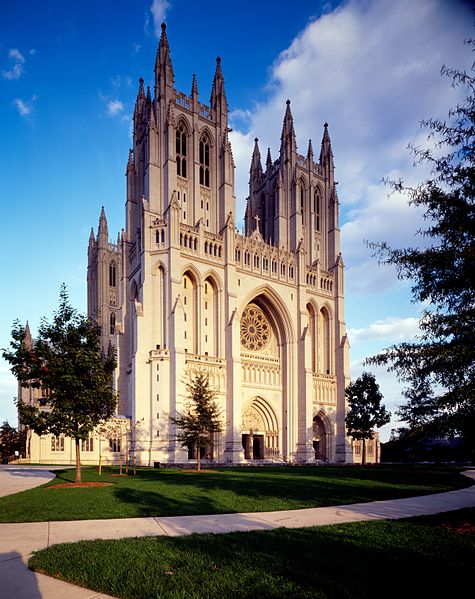
Americans seldom seem to fuss much about religion unless they perceive that it is under threat. We’re real believers in religious liberty that way. The threat angle is a vector worth measuring every once in a while. What gets our collective goat? A story on CNN last week about the National Cathedral caught some attention. Those who think about freedom of religion, liberty of conscience, and all that, might find the implications of a national cathedral itself a tad troubling. Of course, it really isn’t a cathedral for all of the United States, but it is used for many displays of civil religion including several presidential funerals and inaugural prayer services. The cathedral, historically and ironically, is of the Episcopalian brand. Episcopalians boast perhaps the smallest number of mainline protestants in the country, and since they are the remains of the “established church” of England in the States, it is not just a little odd that such an edifice should be associated, however informally, with government in its former colony. The reason that CNN ran the story related to a perceived threat to American religion: same-sex marriages.

Now that same-sex marriages have been approved in three states, some couples desire the symbolism of a wedding in the National Cathedral. It is a victory of social justice that highlights one of the deepest and most persistent of religious concerns—human sexuality. Although many religious denominations have made their peace with evolution by natural selection, few have really considered the implications of reproduction and its discontents. Formally ever since the Enlightenment (and certainly informally for all of human history) sexuality has been a subject of scientific scrutiny. And not just for humans either. As naturalists observe the world of our fellow creatures, we find all kinds of sexual behaviors labelled “unnatural” in humans are quite normal in nature. The reason is the religion that is invested in reproduction. People, many religions teach, are somehow different. Besides, in the days before scientific interest in animal reproduction, few bothered to consider what other animals did, far from human eyes.

For those willing to admit that nature can teach us something about ourselves, same-sex couplings are not limited to humans. They are a part of nature. As Martha McCaughey suggested in The Caveman Mystique, reproduction is only one of a variety of reasons that humans and other animals mate. For us, however, it is a strangely sacral act. All religions have something to say about sexuality, and many express strong feelings about what marriage means. So the Cathedral Church of St. Peter and St. Paul (two men, one might note) is in the news because of what marriages symbolize for many. Marriage is about commitment, not just sex. In a nation where commitment is only fair-to-middling, shouldn’t we applaud the use of the National Cathedral to reinforce such family values? Unfortunately, for many gender differentiation trumps love in what is understood as a legitimate religious outlook.

Carol M. Highsmith's National Cathedral

Carol M. Highsmith’s National Cathedral


None Too Human

Apropos of nones, CNN’s Belief Blog ran an opinion piece about the nones earlier this week. It seems that Rep. Kyrsten Sinema came out of the closet as a none at her swearing in. Nones are among the fastest growing non-religions in the world. I suspect a lot of it has to do with the internet; those who subscribe to no particular faith have discovered that it is okay to do so. Or not do so. It is so easy to see, online, that lots of others think that way. Many of these people are not atheists, and many describe themselves as spiritual, but the problem seems to be with organized religions. Religions are, of course, human inventions. Our experience of the world doesn’t ever seem to key completely to science or expectations of fairness or justice. Some of it may be due to illusion, or delusion, but we get the sense that something serious may be going on here. Many formal religions have tried to systematize something that can’t be tamed or taught to perform on cue. And since religious leaders are only human, there should be no surprise that they come fully loaded with the cadre of human weaknesses.

Despite claims of epic voyages to Hell in a small, wicker conveyance, things in human terms aren’t as bad as they used to be. Sure, the economy continues to mope, and far too few people are far too rich, but generally we’re living longer, we’re healthier (or at least bearing up better under conditions that would’ve rendered us unhealthy decades ago), and we’ve got lots and lots of toys to play with. Maybe we’ve reached a level of contentment that blocks out that quiet voice begging for attention. It is a still, small, voice. One of the things I notice is that quiet is hard to find anymore. Our gadgets beep and chirp and mutter and belt out rap or soul or rock in just about any venue where people are found. Religions have generally been nurtured in places of silence. We’ve become the nones.

The anti-atheists have done a good job equating non-belief with moral turpitude, but the ethical atheist is not hard to find. Religions have always been concerned with morals. At least since the Enlightenment, however, philosophers have weighed in on ethics, often without a theistic underpinning. The idea, according to humanists, is that we agree to certain moral expectations by our very humanity. Some don’t play by the rules, to be sure, but most of us do. Some with, some without a deity or deities telling them to do so. Once you sidle away from the angry New Atheists, you can see that atheists can be good people. Looking to blame evil on lack of belief is too easy and consequently misguided. Conservative Christians, progressive Muslims, atheists, polytheists, and nones all have their humanity in common. We are, or should be, no matter what our faith commitments or lack thereof, humanists.

Already empty, or about to be full?

Already empty, or about to be full?


Out with the Old

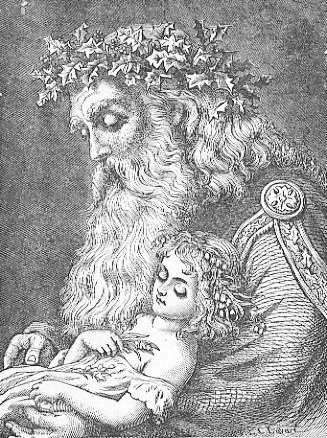
It’s become a time-honored tradition, as an old, secular year ends and a new one, brimming with potential commences, for various pundits to sum up the past twelve months for us. And since there hasn’t been a year without religion since Adam and Eve were created, it stands to reason that the religious year in review is yet another perspective to take on this mid-winter’s day. The New Jersey Star-Ledger, my state’s answer to the New York Times, ran a 2012 top stories in religion feature on Sunday, the one day that anyone might be tempted to pay attention to things spiritual. The list reflects the view of A. James Rudin and it features several stories, most of which tend to show the embarrassing side of belief. Rudin begins his list with an amorphous Islam as reflected at unrest in the Middle East. One of the misfortunes I often deal with in my editorial role is this association of Islam with violence. There are deep roots to the trouble in the Middle East, many of them planted and watered by Christians. Religious extremists, however, are the more sexy side of the story and they always abscond with the headlines.

I should take care with my word choice, however, because yet another of the stories—dominated as they are by Christians—concerns the Catholic Church’s continuing troubles with hiding away child molesters (number five). The number two story, also about Christians, is also about sex as well. That story highlights the chagrin of the Religious Right at the recognition, long overdue, of same-sex marriages in three states. Gender plays a role in story four, the succession of Rowan Williams as Archbishop of Canterbury, but also the related story of how the Church of England still refuses to recognize women as bishops. A deity who can’t see past genitalia should be troubling to any believer. Yet a full quarter of one commentator’s top religious stories are concerned with sex. That’s how the world sees the issue.

The remaining stories Rudin points out have to do with Jewish-Christian relations, aging pontiffs, and the growth of Nones in the US religious marketplace. Anyone who spends time reading contemporary accounts of religion will be familiar with the Nones—that increasing number of people who declare no religious affiliation. Ironically, those involved in such scandals as we often see in the headlines are troubled by the number of people opting out of traditional religions. I almost wrote “opting out of faith” there, but that’s not really the issue. The Nones I know, and there are many, don’t necessarily not have faith. They have lost confidence (if they ever had it) in religious institutions. Interestingly, Rudin concludes his list with the tragedy in Newtown, Connecticut, along with the death of Sun Myung Moon and a few others. The Newtown tragedy remains the least and most religious event in the past year. And unless those of us who survive do something about it, these dead will have died in vain. Let’s hope 2013 has something better on offer.

Father_time


Without a Hitch

I’m not really afraid of dying. All those years of being taught that “to die is to gain” have obviously done their work. At the same time, it is a poignant exercise to read the posthumous memoirs of a dying man. I remember my first funeral. Although I don’t recall the name of the poor, deceased honoree, I still see the reactions of the living vividly. I was under ten at the time, and the funeral home in Franklin, Pennsylvania was in a very somber mood. The man, who had been a friend of the family, “was not a Christian.” Having been buffed and rubbed in the Fundamentalist tub from my earliest days, I didn’t realize that what was meant was actually that he hadn’t been an active member of our particular church. Nevertheless, as a child, you get deeply impressed with these kinds of things. “I’ll never go to the funeral of a non-Christian again,” I remember my mother telling a friend. “The minister couldn’t find anything comforting to say.” While funerals are sad occasions by definition, this one left a crater that is still fresh over forty years later.

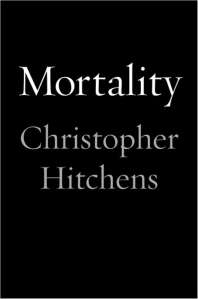
MortalityChristopher Hitchens is someone I found through his book God is Not Great. I don’t have time to read magazines, and I hadn’t read any of his previous works, but he raised some extremely valid points in this diatribe. My wife recently bought me his final oeuvre, Mortality. I felt as if I were back in that funeral home. It is not that I still hold to the odd belief system of Fundamentalism—of this my regular readers will have no doubt—but it is the forlorn feeling of reading the words of someone dying who hopes for nothing. Yes, it may be Stoic, and even noble. Certainly it seems far more worthy than visions of living in opulence with lots of available virgins with whom to toy while angels strum their harps overhead, but the certitude that one’s final days will be nothing but prolonged suffering—ouch! Maybe there isn’t a heaven, and if there’s a hell there’s something morally wrong with the universe, but doesn’t some residue of a human life remain? Even if it’s just the memories, the marks that we’ve made on others’ minds, don’t we somehow survive? Dying without hope nevertheless feels like milling about in that doleful crowd of specific Christians years ago.

Hitchens does offer a chapter in his final words devoted to those Christians who responded to his cancer with an unholy Schadenfreude, trying to torture the thoughts of a dying man with the promise of an eternal hell after experiencing a temporary hell of cancer treatments. This chapter made me sick. Anyone who so completely misses the message of compassion that suffuses the Gospels can hardly claim the designation Christian, I would insist. No one, no matter what their eternal plans, has the right to try to fracture anyone’s tenuous tranquility to make their own crown shine a little brighter. Such weekend warriors likely imagine that they are defending their fragile God, but in reality they are demonstrating that some of the criticisms of Hitchens were very well placed to begin with. No religion will live up to its full potential until it succeeds in the most basic practice of all—treating all people with respect and dignity. Until then, death has the final word.


Forget this Alamo

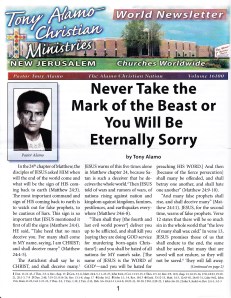
A person’s car is a haven of sorts. Very expensive, dangerous and yet necessary, they have made life a fair bit easier than caring for horses when you need to trot down to the Apple store to pick up a charger for your iPhone. When we leave our cars we don’t have to strap on the feedbag, but in many parts of the world, we do have to lock them up. From a young age I was taught not to touch somebody else’s parked car. People are very possessive of them and some folks get upset at even a smudged finish. I always find it strange, then, when a flyer ends up tucked under the windshield wipers. Not that it happens often, but around the holiday season some promoters will go in for the cheap advertising trick of that paper that first makes your heart skip since it looks like a ticket, and then annoys you when you find out it’s just more junk mail. The other day my wife came home with a new type of flyer under the blades. It was from Tony Alamo Christian Ministries.

To be honest, I’d never heard of Tony Alamo before. I seemed to remember the last part of his name, though. In any case, the earnest-looking evangelist warned loudly in the headline “Never Take the Mark of the Beast or You Will Be Eternally Sorry.” This was a cheerful way to greet the holiday season, but I decided to give him a hearing, or at least a brief reading. By the second short column I’d discovered his “Bible only” technique included interpolating [in brackets] his own reading of the Scriptures, but still enclosing them in the quotation marks. This is, categorically, not so different from preaching—the practice of making your followers believe that you have an inside line on what God meant to say in the Bible, but obviously didn’t spell out very clearly. This is the problem with all Bible literalists movements: they claim solely Bible [but only when interpreted their way]. Those who’ve found their windshields thus violated have grounds to be suspicious [if I understand this technique correctly].

It turns out that Tony Alamo is currently in prison [one suspects the parallel to Paul of Tarsus, or at least Silas, has passed his mind] for ten counts of transporting children across state borders for illicit purposes. I’m not sure which Gospel condones child molestation [perhaps “suffer the little children to come unto me”], but from the Illinois State Pen he still reaches out to put his grubby flyers beneath the nation’s windshield wipers. He also seems to be terribly worried about the end of times. With a 175 year prison sentence, anybody would be [unless, of course, they’ve be persecuted for righteousness sake, in which case they are blessed—and that’s actually in the Bible]. So beware the paper that get wadded up beneath your wipers. Sometimes the Alamo is best forgotten.

Alamo


No Year’s Eve

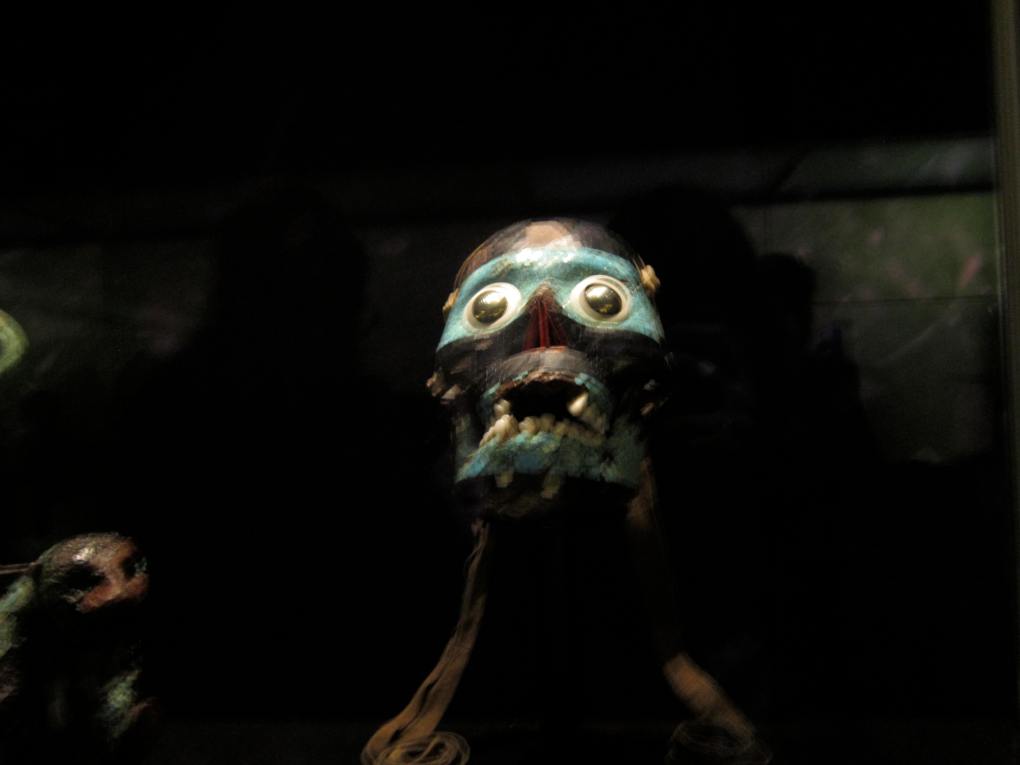
So the world’s supposed to end tomorrow. Again. These apocalypses have been coming thick and fast lately; it’s getting so that each end of the world is within sight of the previous end. Of all the strange ideas that religions have given us, the end of the world is the most insidious. While some may choose not to believe it, many politicians of record have actively attempted to provoke the end of time to force the divine hand at bringing a little bit of heaven to earth. Scary thing is, some of them had the power to annihilate us all in the process. Unlike past eschatons, however, this one derives from the interpretation of Mayan artifacts, strangely making it more believable to some people. Those exotic peoples of the past! They just knew so much more about worlds ending than we do. And I know otherwise intelligent people who believe that this is the last day of the earth.

Of course, if we take the earth’s temperature there does seem to be some cause for alarm. That’s not the Mayans’ fault, though. Some of these self-same fracking politicians have insisted that since the Second Coming is near it is alright to destroy the ecosystem that supports all life on the planet. Those are pretty high stakes if they turn out to be wrong. Oh, but they can make a healthy profit margin on the side, so at least they can go out in style. But what would a Mayan apocalypse mean to the firmly committed Christian? It would be very hard to recover from that, should Q’uq’umatz be behind it all.

The events of the past week have been more than a little rough. And the self-same politicians line up on the side of the NRA as they campaign for Jesus’ early return plan. The overall prognosis seems iffy at best. It is like the feeling the dinosaurs must’ve had on the evening of the asteroid. Some of them had brains the size of walnuts, an allegory too plain to require spelling out. What these eschatological episodes teach us is that human life is fragile. Madmen with guns remind us of the same point. I’m expecting, however, that things will be pretty much the same as ever tomorrow morning. I’ll be expected at work, the wheels of the sluggish economy will turn ever so slowly, and politicians will keep doing what they do best. Those counting on Mayan counting will find themselves in the company of Jehovah’s Witnesses and Harold Camping. All of us will find ourselves in a world where religion is perhaps the only power actually capable of total destruction. But if we wake up with aliens swarming the planet tomorrow we’ll honestly be able to say that we’d been warned.

The face of things to come?

The face of things to come?


Faith and Freedom

Schadenfreude is not my usual response to the downfall of a religious leader—with perhaps the exception of televangelists. After all, religious leaders are only human. Occasionally one crosses a very serious line, as the news about Nechemya Weberman, a Hasidic counselor who was found guilty of molesting a girl under his profession care, reveals. The sad part of this situation, apart from the tragic consequences for his victim, which are very serious in their own right, is that the Satmar Hasidic community insisted that it should have had the right to do its trial in secret. Sects that take their cue from the Bible are seldom fair to women. The Bible, after all, is not a very female-friendly tome, no matter how much feminists may try to rescue it from its androcentric world. Religions based heavily on the Bible feel they have the right to judge by their own standards—something a secular court can’t understand. It is back to the paradigm of the two swords here.

What are we to make of the civil crime that violates no religious laws for any one sect? What is wrong in one book is all right, or at least forgivable in the other. For a secular crime committed in a closed religious community in a country of religious freedom, who is to decide? These questions are decidedly more than rhetorical. Any religion that says women are here to serve men—and there are a disturbingly large number of such religions—can claim that God trumps gent d’armes every time. What’s more, they believe the decree is eternal and they are violating the divine will if they don’t keep to it. This situation is nothing new; at least as early as Tiglath-Pileser III, and probably earlier, ancient religions sometimes had to compromise under the hegemony of a higher power. But they were only biding their time until the political situation would grant their autonomy once more.

DSCN1828

It is simplistic to suggest that the two swords represent the two hemispheres of the brain, but we do have a rational versus emotive issue here. Rationally, would an unseen force endowed with a human personality demand the unfair treatment of some people simply because of an unexplained favoritism? It does not seem likely. But religions are seldom logical. “Credo quia absurdum,” Tertullian is remembered as sighing—“I believe because it is absurd.” Theologically profound? Certainly. Helpful in society? Not so much. Freedom of religion is a classic ouroboros, a serpent biting its own tail. Religions are free to declare their own beliefs, but their own beliefs may challenge the very authorities who grant them that privilege. Secular authority may have the ability to put to death, but resurrection is the prerogative of religion.


Chrismahanukwanzadan

Happy holidays from a pluralistic world! Whenever I see the “Keep Christ in Christmas” signs that crop up this time of year, I think of the wonderful profusion of holidays that people from most faiths can share without being territorial about it. After all, the Pagans got there first—the Christian Christmas predates Jesus by centuries, it turns out. So when my daughter wished me a happy Chrismahanukwanzadan—from a mix of Christmas, Hanukkah, Kwanzaa, and Ramadan—I had to smile. Seems like some in the younger generation are really starting to get it. It doesn’t matter what you call it, but a holiday that celebrates people getting along is worth the effort. Being possessive of our holidays rings of hollow triumphalism—I feel happy because I have something that you don’t. Is this really the spirit of this secular season of giving wrapped in many confessional names? I’m sure shepherds and Magi didn’t exactly share a Weltanschuung.

Those who despair the lack of Christmas have not spent much time with history. As a cultural holiday the celebration of Christmas is younger than the United States, at least in this context. From the beginning Christmas was a pastiche of traditions from different religions celebrating aspects of Odin, Sol Invictus, Jesus, and Zarathustra, at the very least. Bringing these religious figures together into a season that represents the human need for light amid a dark and cold time of year, who would want to exclude others from their own holiday traditions? Having stood in the bleak fields of the Orkney Islands in a massive stone circle aligned to the winter solstice and constructed over a millennium before the birth of Christianity, I have to believe Christmas is one of the earliest expressions of human desire and certainly not limited to Christians.

What makes a holiday holy? Is it exclusive rights like those slapped on every movie you pop into the DVD player? The trademarking of an idea someone else thought of? Religions have a long history of forsaking the spirit of the law for the letter—its most familiar name is dogma. No matter who came up with the idea of doing what we can to bring a little light back into the dreary world around the time when night seems unending, it is a cause that any person of any religion, or none at all, can fully appreciate. Instead of marking territory, should not those who claim Christmas as their own be glad to share it with all? If the one who’s birth the church proclaims at this time of year in no way improves our outlook to others we might wonder if there should be cause to celebrate at all. My answer, such as it is, is Happy Chrismahanukwanzadan!

A holiday in anyone's book

A holiday in anyone’s book


Spirituality Sampler

ManSeeksGodSometimes you read a book and wonder if somehow the author got into your head and fished around for material. Although I’m not Jewish, at least not that I know of, I found Eric Weiner’s Man Seeks God: My Flirtations with the Divine to be uncannily familiar at points. Not that I’ve ever been a journalist, nor have I had more than a few hundred people read anything I’ve written, but somehow I just couldn’t shake the underlying connectivity. For those of you unfortunate enough not to have read it, Man Seeks God is Weiner’s spiritual journey through various religions, seeking his God. Born culturally Jewish, Weiner never really resonated with the religious aspect until the last chapter of the book. In between, however, he shows a true pioneer spirit and tries diverse faiths, some of which are not for the fainthearted. As fits the postmodern period, he’s an authentic, intentional spiritual shopper. And he provides many laughs along the way.

Such a book must be difficult to write. There’s a lot of baring of the soul, and even a little baring of the body, at times. Weiner begins with Sufism, the mystical branch of Islam. Yes, it’s based on love. He then travels to Nepal to pursue Buddhist meditation, followed by a stint with the Franciscans in the Bronx. The only one of the “big five” he doesn’t sample is Hinduism. That might have thrown a speed-bump into his ending, though, to be fair. He makes no claims of comprehensiveness. At this point the story takes a turn toward decidedly exotic selections in the cafe of spirituality. I couldn’t read his account of the Raëlians without snorting aloud once or twice on the bus. Taoism takes Weiner to China and into a distinctly more philosophical frame of mind. He explores Wicca and Shamanism, which may be more closely related than he supposes, before coming home to Kabbalah, the mystical branch of Judaism.

Spiritual seeking is as mandatory as breathing for some people. Eric Weiner is one of those teetering on the edge of active exploration and the ability to shut out the questions, if only temporarily. Reading his confessions, it’s clear that he’s a rational, intelligent man. He made it through decades without really feeling the need for religion. When the ineffable pressed itself onto him, however, he turned to the mystical traditions. I was warned, in conservative Grove City College’s religion department, to be very careful of mysticism. The professor was dry-eyed serious as he said that seeking direct experience of God would generally lead to heresy. So there it was, in plain sight. Doctrine has precedence over the truth. Long ago someone smarter than us figured it all out. Our job? Just follow their path. I have a feeling that Weiner, having had some unexplained experiences of his own, might disagree. Sometimes you have to take out a personal ad in the spiritual scandal-sheets to get an idea what the divine really is.