Au Fait in the Manger?

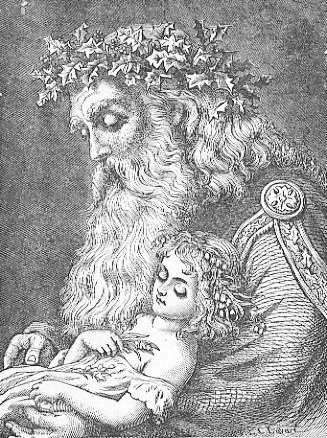
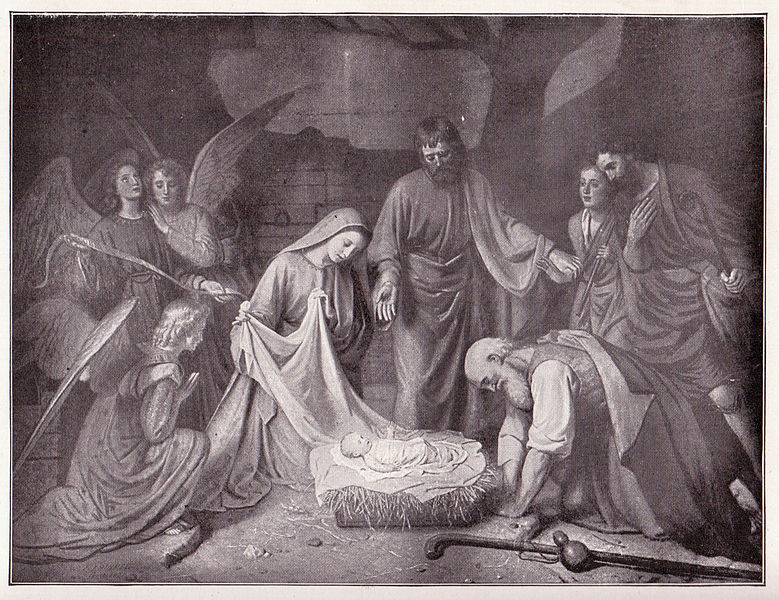
On Friday CNN ran a story about the Pope’s new book “debunking” myths surrounding Christmas. The headline certainly looked intriguing, but it turns out that the “myths” debunked are those of a very dim magnitude. Is anyone surprised—gasp!—that Jesus wasn’t actually born on December 25? And, guess what—those cows you’ve always seen in the manger? The Bible doesn’t actually mention them! Angels aren’t at the manger either! What kind of Christmas will this be? A biblical one, it sounds like. I haven’t read Jesus of Nazareth—The Infancy Narratives, but it really doesn’t sound like I need to. The Bible is very spare on stories about Jesus’ birth; nobody knew he would be a Lloyd Webberian superstar at that point, so we have a few loose traditions that tell of humble origins in an obscure setting. Not very good for commercial interests, however, and besides, the average person doesn’t read the Gospels to find out about Christmas. There are far too many television specials to be bothered with “Lo, there were in the same country…”

Christmas was not a big deal until relatively recent times. Now, don’t get me wrong—I’m not a grinch who believes the holiday shouldn’t be celebrated. I see nothing wrong with people giving things away, even if it is to pretend that they are celebrating an ancient Roman-occupied Judean birthday. This is the essence of what being religious should be all about; holidays should be occasions for thinking about others before one’s self. In my lowly opinion anyway. We’ve built an entire economic cycle on it, however, otherwise Black Friday might just be a free day to spend with family and friends instead of being trampled to death at Wal-Mart. Perhaps if society could find a way to distribute wealth more equitably every Friday would be in the black.

The Pope’s new book is an attempt to make the Catholic tradition appear up-to-date with scholarship. Plans are for the book to be published in an entire Septuagint of languages with a print-run the envy of nearly every academic editor in New York. The problem is there is no real news here. News should be, by definition, new. A book by the Pope declaring the true equality of all people, throwing open full sacerdotal participation to women as well as men, and the distributing of papal wealth to the poor—that would be a Christmas present worth the waiting! Instead, when you pull the shiny paper off this book on December 25, you’ll only discover that you’ve received it on the wrong date and there will be no angels singing. The cattle will be lowing, however, if you can use your imagination.

What’s wrong with this picture?


Gonad Make Disciples

The funny thing about authority is that when it counts those who have it are often afraid to use it. So yesterday the “mother church” (if that honorific still applies) of the Church of England voted not to allow women bishops. According to Reuters, the voting breaks down into three parties: the bishops, the clergy and the laity. The bishops and clergy both approved the motion while the laity fell short of approval by only four votes. My regular readers will know that I normally shy away from coarse language, but I wonder, along with the Joker, “what happened, did your balls drop off?” In a church built around hierarchy, where there is tremendous authority—according to official teaching, the very power to let one in or keep one out of Heaven itself—vested in the clergy, can they not say, “this is the right thing to do” and just do it? In a Protestant milieu where Methodists, Presbyterians and Lutherans have all overcome centuries of chauvinistic stain, why does the Church of England not do what the collected bishops and clergy have decreed correct? Are the laity now running the show?

I have had a long history with the Church of England. As laity I know that when the clergy want to throw their considerable weight around they are not afraid to do so. My entire career was thrown into turmoil because just such tonnage was shifted. And I had met the Archbishop of Canterbury (before he ascended to the throne) as he received an honorary degree from Nashotah House. When a layman could still shake his holy hand. It is time for the church to drop its magical infatuation with testicles and get on with the business of making the world a better place. Otherwise Heaven may include too many football games and deer hunts to really make all of us comfortable. The gender divide should be dropped and the church should be getting on to matters that really could use some compassion, both human and divine.

It seems that the staid laity of the C of E didn’t follow the fortunes of the radical right very closely in the recent elections this side of the big water. The day of exclusivism is over. It should have been long ago. Many have been the times when I was informed that doctrine is not a matter of democracy. Perhaps in an issue so basic, so fundamental as the equality of humankind, this should be one of those instances. The titular head of the Church of England is a woman. Has been for decades. Before Elizabeth the Second, for six decades of the nineteenth century Queen Victoria held that role. I think I speak for the majority of sensible laity when I say, in the spirit of the departed monarch, “We are not amused.”

She’s got the whole world in her hand.


Under the Influence

A news story over the weekend—when oddball stories of religion are welcomed by the media—revealed that a judge in Muskogee County, Oklahoma sentenced a youth to a decade of church for a serious DUI crime. An underage drinker, the defendant committed the unforgivable sin of killing another youth while driving under the influence. It is a sad and tragic case. Law makers in Oklahoma are challenging the church decision, according to the video blurb on Newsy, but there is a much deeper flaw in the logic of Judge Mike Norman here. Had the lack of compassion and common sense so blatantly on display during the recent presidential campaign come from other than committed “Christians” it would have been considered downright shocking. We tend to excuse misanthropy when it comes wrapped in doctrinal packaging, a Twinkie in a Cliff Bar wrapper. The judge himself maybe needs a little churching.

There was a time when the moral values of a good, Protestant upbringing were unquestioned. The problem is, we live in a much more diverse world now. What is particularly telling has been the evangelical response to this growing siblinghood of humankind. It is seen as a great evil, perhaps the reverse of Babel itself. We are bringing people of different religions together in what is comprehended as an unholy mix. Thing is, many of these people participate in religions far older than Christianity that have no Babel story to put themselves in proper context. How can they know they’re inferior unless we can get them to read our Bible, attend our churches, learn our religion?

Timothy McVeigh went to church during his youth. Reverend Jim Jones started his own church. Would time in Westboro Baptist Church in nearby Kansas count? There is a reason that church and state should be kept separate. As an institution the church is nearly as diverse as the human race that invented it. Religion has seldom been the solution to crime. Law enforcement officials used to wear a pentagram for a badge, not a cross. But that was back in the days when Oklahoma was the wild west and white-steepled churches didn’t exist to inveigh against the evils of a satanic symbol worn by the representatives of the territory. And since Oklahoma doesn’t believe in evolution, we’ve got to wonder if some things will ever change.

Would this church be all right?


Substance of Faith

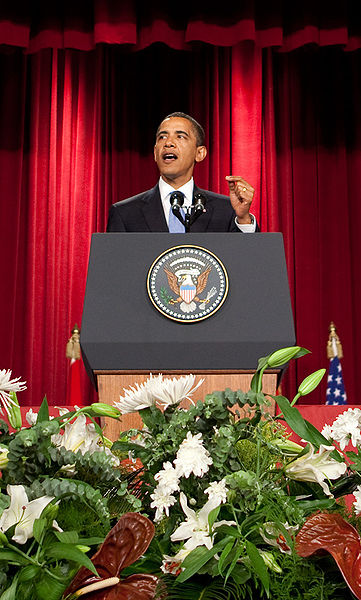
Every once in a very great while, faith is rewarded. I’m not talking about the faith that is bound up in black leather, inaccessible to realists who struggle daily to keep going. No, this particular faith is human based, based on my fellow citizens who saw it necessary to do the right thing. Although I have to rise before 4 a.m. to get to work, I tossed all night wondering what was happening at the polls. Obama’s reelection meant more to me than I guess I even realized. You see, I look at elections symbolically. Not as overtly black and white as Dark Vader and Luke Skywalker (neither candidate is pure good or evil), but I see that candidates stand for something. I don’t care what religion a president claims, but I do watch closely for what they value. Money, to my way of thinking, is not the way to build a society. Once in a while the rich need to be reminded that no, money can’t buy you everything.

Politics went off the rails when conservative religious issues were mingled with unfettered entrepreneurial aspirations during my formative years. God, I hope those days are over! People often vote with their emotions and studies have repeatedly shown that even conservative religionists like George W. Bush did not deliver a more productive, biblically literate nation after eight years of fumbling in the dark. The legacy was a national debt that should have been an embarrassment and a deeply polarized society. I was glad for the GOP nomination of Mitt Romney—it was a chance to test if the privilege of wealth had a chance of winning without the evangelical interests who see Mormonism as a “cult.” My faith in the American people paid off.

No, Obama’s first term was not a picnic, but every time I peeked, it sure looked like hard work was being done. Prolonged vacations to the ranch seemed to be a thing of the past. Difficult thinking was given a place in the nation’s capital again. If we want the one percenters to get the message, we must shout loudly. They live far, far above the rest of us in sound-insulated penthouses and never have to wait in line four hours just to buy gasoline. There is work to be done, and it has to start at the street level, if not below. This is faith. Quoting the Bible while bombing your enemies and protecting the wealthy elite is disingenuous in anybody’s ethical playbook. Thank you America for showing that giving in is not the only option. Tonight I will be able to sleep.


Big Top

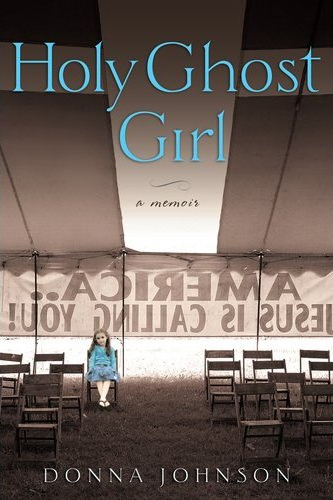
Being raised by a woman who staunchly kept her evangelical faith no matter what the world threw at her has undoubtedly left a deep impression on me. Over the past few years I’ve found myself reading the memoirs of girls raised in evangelical settings who’ve discovered truths often hidden from males in similar circumstances. Clearly one of those truths is that male privilege is the substrate for any kind of biblical literalism. I’ve just finished reading Donna M. Johnson’s Holy Ghost Girl and once again I’ve seen the light. Before I read this book I’d never heard of tent revivalist David Terrell, but I had attended a revival or two with my mother in my younger years and I knew, at least in theory, the evangelist is less important than the message. So they would have us believe. What Johnson accomplishes, however, is no less than astonishing. She presents a portrait that neither condemns nor condones her erstwhile stepfather, although her childhood was frequently undermined by the perils that accompany being raised by a revivalist groupie, and particularly being a girl in that situation.

Plaintive and reflective, Holy Ghost Girl raises questions that evangelicals often leave hanging in the air, such as when Brother Terrell’s son asks why he has to go to school when the rapture will come any day. Why indeed? When a court order had been issued, Johnson describes the puzzlement of the evangelistic team as they tried to decipher the letter: “Dreams, visions, prophecy, and scripture, our primary tools for making sense of the world, offered no insight on how to deal with legal issues.” This sentence suddenly explained so much of my own youth that I felt as if I’d missed out on the class that informed evangelicals of what was expected of them. The rules of this world do not apply here. Men are superior to women and girls who question that do so at their eternal peril. This becomes clear as Johnson reveals while the story unfolds that Terrell kept at least two secret families hidden from his wife, and, more importantly, from his followers. When Johnson’s mother found herself pregnant by Terrell and her daughter asked what she would tell the kids when they grew up the answer was pat: Jesus will return before then.

The idea of being excited for one’s belief is admirable. Evangelicalism has made an industry of it, conflating emotion with spirituality. Biblical literalism will always exact a heavy cost on girls. Those of us who study the Bible professionally learn early on that the Bible reflects the social conventions that gave rise to it and that world was unapologetically patriarchal. That stain will necessarily accompany any form of literalism—the sexes cannot be equal when the Bible says it ain’t so. Herein is the dilemma of the girl raised in an evangelical world: to question authority is to risk hellfire, and authority rests with men. Those who insist on women’s equality are of the devil. Johnson, obviously, took that great risk of making a deal with the devil and became a normal person. All of us raised evangelical have to come to grips with such issues if we want to make a lunge for normalcy, but the cost will always be far higher for girls.


Endorsement

Since a blog is a variety of media, and since media endorse their candidates, Sects and Violence in the Ancient World endorses Barack Obama for President of the United States. I endorse Obama for the working class, for those who think clearly, and for those whom society doesn’t give a chance.

Working class credentials are at a premium these days among politicians who want to appear to be just like the most of us. Often it is, in the words of Bruce Springsteen, “a rich man in a poor man’s shirt.” Some of us, many of us, maybe most of us, have grown up in the working class. We are fed a theologically conservative line by our clergy and sometimes they make efforts to wrap it loosely around political conservatism as well. I don’t buy it. I grew up working class and that mentality has never changed. This is something Obama understands. He may not be perfect, but in this working world, none of us are. Empathy is still currency.

Bemusement would be my reaction to the factual gaffs made by not only Mitt Romney but also most presidential candidates from the GOP over the last two decades, were they not so serious. They show a loss of touch not only with the average person, but with reality itself. In their world of corporate-level wealth and extreme privilege they don’t even have to obey the laws of climate change as long as their obsequious sycophants are willing to change the facts for them. I am amazed at how easily the wool is pulled over the eyes of the American public. Does anybody really listen to what these guys are saying? Does anybody bother to try to add it all up? No, not even a slide rule will help.

The economy was not fixed over night. Too many years of too much greed have dug us deep, deep in a rut. From their armored cars speeding along in the midst of motorcades maybe the politicians don’t see the homeless I walk past every day on my way to work in the richest city in the nation. Maybe they don’t see the utter lack of hope, the death of possibility in the eyes of those who, through no fault of their own, society deems useless. I’ve been unemployed, even though I played by the rules. I learned there are no rules, save one. Those with wealth will do whatever it takes to keep it.

I think Barack Obama understands all these points. As for the honorable opposition, I think his diamond-lens glasses may have grown too thick to read clearly what the tablets say. And those tablets, I’m told, are made of gold.


Mrs. Jesus

First we learned that Yahweh was married. Then we hear, “like father, like son.” A Galilean tempest in a Wonderland teapot. A papyrus fragment from centuries after the fact implies Jesus might have been married and the media smells blood. The scholars who translated the materials tried very hard to demonstrate that their efforts indicated nothing about the historical Jesus, but that doesn’t sell newspapers, magazines, and website hits. Jesus being married does. Spying an article about this in the Chronicle of Higher Education recently, I pondered why this might be. Why the great fuss over Jesus’ potential marriage? This is not an easy fabric to unweave. Americans have been routinely taught to idealize Jesus in order to underscore his divinity. A man without warts, no faults, perfect hygiene, completely symmetrical. His unwed nature is silent testimony to male superiority—when God chose to incarnate, he picked a masculine template. And for a man to need anything is a sign of weakness. If some Coptic Gnostic suggests that maybe Jesus had a weakness after all, well, that’s scandal enough to sell a million copies right there.

Theologians are quick to say that God is really beyond gender, but we sexual beings are so, well, focused on our biological packaging that we just can’t conceive a deity any other way. American culture thrives on the concept of a personal relationship with God. It is difficult to have a relationship without assessing the sexual roles. More than reproduction, our sexuality defines how we interact with others. By recasting Jesus as a married man, the whole dynamic is thrown off. Girls who are taught to uphold the virginal Jesus as an ideal man would now have to create room for the other woman. Boys would no longer have to consider the monastery. Overestimating the impact of marrying off Jesus in this country might well prove impossible.

The Chronicle takes a bemused look at the issue, as befits a disaffected, intellectual publication. For most Americans the relationship can never be so diffident. Scholars may find it funny, but we are vastly outnumbered. Like a divine paternity test, ink analysis of the papyrus fragment is out at the lab. If it’s just another forgery, life goes on much as before. The fact is, as has been stressed all along, all that can be potentially proven is that some people in the fourth century thought Jesus had a main squeeze. People have wondered that for centuries, with or without a papyrus to spark discussion. We are sexual beings, and like Xenophanes’s horses, our gods must look like us or become like the shadow over Innsmouth.

“And I think the couch should go over there!”


Secret Life of Apples

Considering that the story of Eden fits the pattern of many an ancient myth, modern writers still occasionally argue about what the fruit on the tree of life might have been. The favorite with medieval theologians seems to have been the apple because of the similarity of its name in Latin and the presumed badness of the act. Apples, however, are nutritious and make up a large part of autumn’s outdoor appeal. While at a local orchard over the weekend, apple picking, my daughter pointed out a tree with what might be termed biblical properties. A tree full of ripe apples yet to all appearances the tree was dead or dying. Perhaps that is nature’s way with apples, but it also seemed like such a resurrection symbol that I just couldn’t let it go. Would the apples carry on the line of the dead parent tree? Was there life after death?

I’m not sure why I’ve associated apples with new life. Shortly after my father died, I planted an apple seed in a plant potter in our Wisconsin home. To my surprise, the seed germinated and began to grow. We did not own our house, but we lived on a wooded campus and two large shade trees had been blown over in the past few months, so when the young tree was large enough, I planted it outside. The lawns on campus were rather aggressively mown with students who sometimes had anger issues, so I put up a little fence around the young tree to keep it safe from accidental mulching. By the time I was asked to leave Nashotah House, the tree was taller than me (not such a feat, but the fact that it survived so well was pleasing). No apples had yet appeared, but the tree is a symbol of new life. No one on campus knew its meaning, and I doubt very much that anyone thought much about it one way or the other after I left.

I often wonder if that little tree is still alive, and, if so, whether or not anyone enjoys its apples. Every year when the trees begin their long journey into a winter’s sleep, the apple trees send forth the own message of resurrection. Some will associate the fruit with sin while others will find pleasant autumnal memories. And a very few, I should suppose, will always think of trees as a symbol of someone they wish they might have known a little better. Far from being a sign of sin, the apple can be a sign of forgiveness and self-giving. Whether it is a myth or not, the northern hemisphere has begun its inexorable turn away from the sun. I look at a tree that is dead and full of life at the same time, and to me it seems to be a very different kind of fall than some suggest the Bible intends.


Buyer Beware

Pain, it is said, has a wonderful way of focusing the mind. So when I woke up in what can best be described as a body position used for extras in the movie, Twister, I took a few aspirin and got on with my life. I had purchased non-refundable tickets for a campus visit, and capitalism is nothing if not unsympathetic. The lower back pain was fine when sitting, or standing. Try anything in between, however, and you’ll learn the real meaning of reading the riot act. Once off the train—slowly, slowly—I was fine again, until I had to sit down. The next morning, facing a day of meetings (why is everyone’s office on the fourth floor? Why do Brownstones still lack elevators?), I decided I’d better pop into CVS for some meds. It was with considerable irony and not a few groans that I noted all the products for back pain were on the bottom shelves. The condoms, in the same aisle, were right at eye-level. Sitting on the floor, pondering the relative merits of chemicals of which I’d never heard, I thought about what we take for granted.

Parents and guardians are our first teachers. Among those early lessons are often the religious ones. Recently speaking with both seminary professors and pastors, I have heard the common refrain that church membership is declining and the number of younger people listing themselves as religiously unaffiliated is growing. I noticed this in my teaching outside the seminary setting; quite apart from students of other religious traditions, many undergrads took my class knowing nothing at all of the cultural matrix of Christianity in which they’d been raised. It is also true in a consumer mentality that one shops for religious experiences just like one shops for backache medicine. You go with the one that works for you. Few bother to ask if they agree with the theology, after all, Methodist = Baptist = Presbyterian = Lutheran in many people’s minds. Doan’s or Bayer? Take your pick.

Now that Dark Shadows has been released for home viewing, another component may be added to the equation. We pass on what we value to those we love. While the writing for Dark Shadows leaves quite a lot to be desired, there are a few memorable lines. Angelique, you may recall, cursed Barnabas Collins for unrequited love, turning him into a vampire. When he laments to Elizabeth Stoddard that Angelique hates him, she replies, “No, if she had hated you she would have merely killed you. A curse takes devotion.” Passing on our beliefs, perhaps, somehow ties into all this. As believing creatures, perhaps we each need to find our own solutions. My only fear is that when I find the right remedy, it may very well be on the bottom shelf.

Read the caption


The Future of Theological Education

It is almost like stepping into a time warp. To be honest, it is difficult for me to admit that I graduated from Boston University School of Theology a quarter of a century ago. Standing here outside 90-92 Bay State Road, where I once lived, is like looking into a shattered mirror. Behind those doors much of what made me who I am took place. Perhaps I left some of myself there. I don’t even know if the property is still the single student “dorm” for the school of theology or not. Kenmore Square has transmogrified from an area that felt like Times Square in the ’80’s to an upscale dogtown. When I stepped into 745 Commonwealth Avenue, it was like being hit in the face with a combination of nerve gas and roses. The hallways look wider now then they did back then. The hallways where so many of my assumptions curled up and died. They still have chapel and community lunches. The Boston Book Annex is closed.

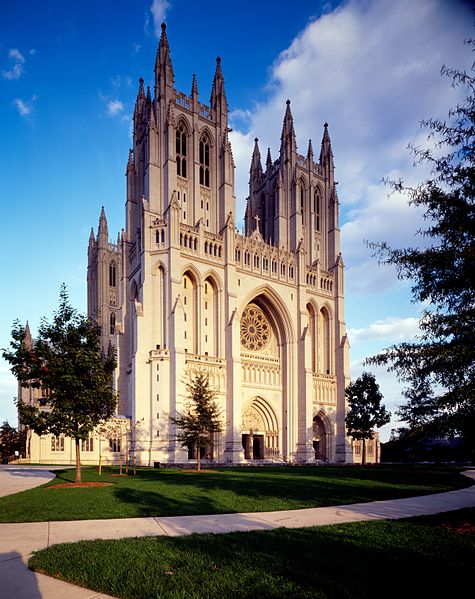
Boston University has sure poured a lot of money into the Back Bay redevelopment. Whence that sense of personal offense when I see a multimillion dollar new building there and recall the financial aid interviews where I was told, like in a Bruce Springsteen song, “we’d like to help you out, but we just can’t”? Has social justice come to live in these halls? In those days anyone who didn’t have an oppressed status was a minority. And I learned as much about hate as I did about love within these implacable walls. Is it ghosts that I feel rushing through me as i walk down Bay State Road, and stare out over Storrow Drive? I’m not sure of the future of theological education. Until schools of theology can lay down their swords and become truly ecumenical, can any change truly occur?

Theology is an exercise in the unknown. When I donned my red robe and graduated here, the world seemed to be full of possibilities. A lot of erosion can take place in twenty-five years, you know. I thought I was contributing to the future of theological education when I studied the Bible so minutely that no single letter existed that didn’t have a prehistory deep in the realm of pre-Israelite society. I assumed that truth was the end goal of theological inquiry. Problem is, for many, the end goal was written two millennia ago and we of the lost generations ever since have as our task simply to reinforce the crumbling foundations and assure our benefactors that we did have it right, we have had it right, all along. As I write this a very able colleague at another seminary is undergoing what can only be considered heresy trials for teaching the truth. Is theological truth so fragile? Maybe this is why it has taken a quarter century to return. Maybe this is the future of theological education. Those of us who still believe in theological education seem to be a dying breed, along with the ghosts of Bay State Road.


Shaman on Us

My reading habits are unorthodox. I don’t follow a fixed plan, but hope for something that will keep me engaged for the fifteen or so hours I spend commuting each week. I began October with a book about werewolves and followed it up with a book on the Hmong. Apropos of neither and both, I turned next to Shamanism: An Introduction, by Margaret Stutley. While not the best organized book, it does provide a smorgasbord of shamanistic traditions, principally from Siberia, where Shamanism was first recognized. Before I’d finished, I’d read about both epilepsy and werewolves.

Shamanism is not a “religion” per se. There is little agreement among scholars about what a religion is at all. Shamanism is very much a local set of beliefs and practices that have only very basic elements in common (shamans being one of them). It is a good example, however, of how moral heathens can be. Shamans often accompany egalitarian societies who do not require governments and religious leaders telling them to be nice to each other. No, this is not the noble savage myth, but it is a clear indication that major religions are not required for morality. It evolves on its own. Often shamanism is not constrained by overly left-brain influence, and sees connections science can only deny. The plight of Lia Lee was explained here in a way physicians could access—epilepsy and other diseases are problems of the soul as much as the body—if only they read books about religion. Healing involves calling the soul back. Treatment of the body misses the point. And sometimes the dead become werewolves.

We live in a world where real suffering is caused by lack of understanding about religion. Assuming a cultural hegemony of Christianity, or Islam, and sometimes even other religions, we discount those who believe differently than we do. The New Atheists frequently overlook just how seriously people take the world of the emotions and belief. That realm is a large part of what makes us human and it plays by no logical rules. Nor does it care to. In a country, such as the United States, where money is believed to be the very warp and woof of the good life, shamans sometimes secretly cut the thread. Still, don’t ask universities to expand the study of something as insignificant as religion because all intelligent people know that nobody really believes that stuff any more.


Science Friction

What hath CERN to do with Jerusalem? It might seem that the House Committee on Science, Space and Technology would be a reasonable place to look for members of Congress with a grip on science. But then, I often live in a fantasy world where things make sense. It is with some sadness, but no real surprise, that I read about the words of Georgia Representative Paul Broun, lambasting evolution and the Big Bang as theories from the Devil. Broun is a medical doctor who, under conviction of his Fundamentalist faith, has rejected the basic tenets of science. According to the Associated Press, he told a Baptist church congregation, “All that stuff I was taught about evolution and embryology and Big Bang theory, all that is lies straight from the pit of hell. And it’s lies to try to keep me and all the folks who are taught that from understanding that they need a savior.” Sounds like Satan had a very busy pre-history.

Anyone who knows me knows that I begrudge no one their personal religious beliefs. Someone who does not believe in embryology, however, might have selected a career more commensurate with his religion than medicine. Election year does tend to bring out the shock value statements in politicians. Having to convince their constituencies that they are just simple folk, they deny what their faith belies every time they accept an inoculation. If evolution is a lie, so is vaccination—something most medical doctors would have to have understood before facing medical school examinations. In the United States, however, such wrong belief is a generally apt qualifier for Congress. Especially among the Tea Party. Broun hails from the ironically named Athens, Georgia.

Over the weekend I watched the Star Trek (original series—please, I’m a connoisseur) episode, “The Mark of Gideon.” It is one of the episodes I don’t recall from childhood, but then, with Kirk and all that “mushy stuff” of being alone on the Enterprise with a woman, well, maybe it just didn’t stick when I was in my tender years. In any case, the symbolically named Gideonites have overpopulated their planet to the point of disaster by good clean living. They attempt to hijack themselves a disease “inadvertently” to reintroduce population control. Captain Kirk asks why they don’t use safe methods of birth control, even volunteering the Enterprise to be a kind of inner-galactic condom-dispenser. The Gideonites explain that they believe all life is sacred, and that preventing life is a great crime—regardless of the misery it causes. I had to smile to myself. Sounds like the people of Gideon may have had been lectured by a Georgia medical doctor who had gone off on a peculiar flight of fancy.


Bart’s Gospel

One of the near constants of the entertainment world is the social commentary on The Simpsons. The morality issues that get frequent play had led to a book entitled The Gospel According to the Simpsons some years back. And since Americans like their morality straight from the popular media, The Simpsons is not a bad place to look. The episode “My-Pods and Boomsticks,” although a few years old now, raises issues that are still current in our culture. I watched it with my daughter recently and she commented, “It’s just like Zeitoun.” My family read Zeitoun this summer (some high school reading programs have a way of involving more than just the student) and the revelation of just how deeply suspicious the nation is of Muslims disturbed us all. This particular Simpsons episode involves a Muslim family from Jordan moving into Springfield. Although Bart befriends their son, Homer just can’t get over the assumption that Muslim equals terrorist. In the end, however, it is Homer who ends up dynamiting a bridge rather than believing Muslims can be good citizens.

Apart from being the longest running primetime animated feature in history, The Simpsons bucks the convention of veering away from religious topics. Indeed, many episodes foreground religion and feature Hinduism, Judaism, and Buddhism as well as Christianity and now Islam. The religions may be gently chided, but they are not mocked, and we are given a glimpse into our own religious biases. Islam, as a religion, is not evil or bent on destruction. Like Christianity, it has many varieties and believers range from the sacred to the profane. It is not the religion that is a problem, but the society that gives the lie to true equality. Believe what you will; harm no one.

At work the other day I received an office memo about lunchtime Yoga. Whenever I see such notices I consider how this religious practice, in American minds, has become completely secular. The same may be said of some of the martial arts which, in original contexts, have a deep base in eastern spiritualities. These things do not bother us because we do not bother to learn about them as religious activities. Even Kung Fu Panda has a spiritual undertone. Religions display a wide variety of expressions throughout the world. Going to church one day a week and condemning those who believe differently all seven, many people do not stop to think of the contributions that other religions have made to our society as it exists today. American culture, while predominantly evolving from a Christian base, has strong elements of most of the major religions that go unrecognized or packaged as secular self-helps. We could still stand to learn a thing or two from Springfield.


Dracula’s Dinosaur

It must be October when a dinosaur with a parrot’s head, porcupine quills, and fangs is announced. Yesterday’s issue of Time online featured a drawing of the creature and a nifty animation of reconstructing the aptly named Heterodontosaurus. Well, that’s actually the genus name. The species goes by the delightful name Pegomastax africanus. Last I checked, however, space on the ark was filling up. Dinosaurs create a unique embarrassment to Creationists. One suspects that if they didn’t have kids they’d dismiss dinosaurs all together, but the troublesome fossils just won’t go away. What’s more, although they’ve been extinct for 65 million years, they keep producing new species for us to recover, describe, and name. When I was growing up (and I have it on good authority that the argument is still used) Creationists told us that no transitional forms had ever been found. Therefore evolution simply could not have occurred. This was generally followed up by a reference to Genesis. Excuse me, a fanged porcupine-parrot? If that doesn’t count as a transition, what does?

Religion loses nothing by admitting to an ancient earth. Nothing but literalness. One of the joys of reading is the exploration of metaphors, similes, and hyperboles—writing delights us with its constant surprises. Even those who claim to read a text literally are engaging in a form of interpretation even earlier than the first wedge mark pushed into clay. Written texts give us something to ponder, to think about, and occasionally, to obey. Just when it looks like the cover has slammed shut on the black book we find a new set of dinosaur tracks running across our clay tablet. The literal-minded might not see these as being a message from God, but surely the endless variety of creatures that have walked this planet more than make up for it.

We used to have a pet parrot. His name was Archie, named after Archaeopteryx, the feathered dinosaur. Although Archie was cut off by disease in the prime of life, he was a curious bird and when I reached into his cage to try to get him on my finger he would dole out what he meant as a painful bite. I always took it as a sign of affection. Had our little friend had the fangs of Pegomastax africanus, I would’ve thought long and hard before risking the finger-perching trick. I like to think it would have reaffirmed my fascination with the amazing adaptability of nature. Evolution, unlike God, has no purpose. An endless tinkerer, it gives us thousands of differing dinosaurs that had been gone many, many millennia before Moses ever even thought of Noah. Pegomastax is safely extinct now, and the only ones who have to worry about this perfect Halloween dinosaur are those who think that one particular view of one particular book is the only way to find truth.

We still miss you, Archie.


Who’s Got the Keys?

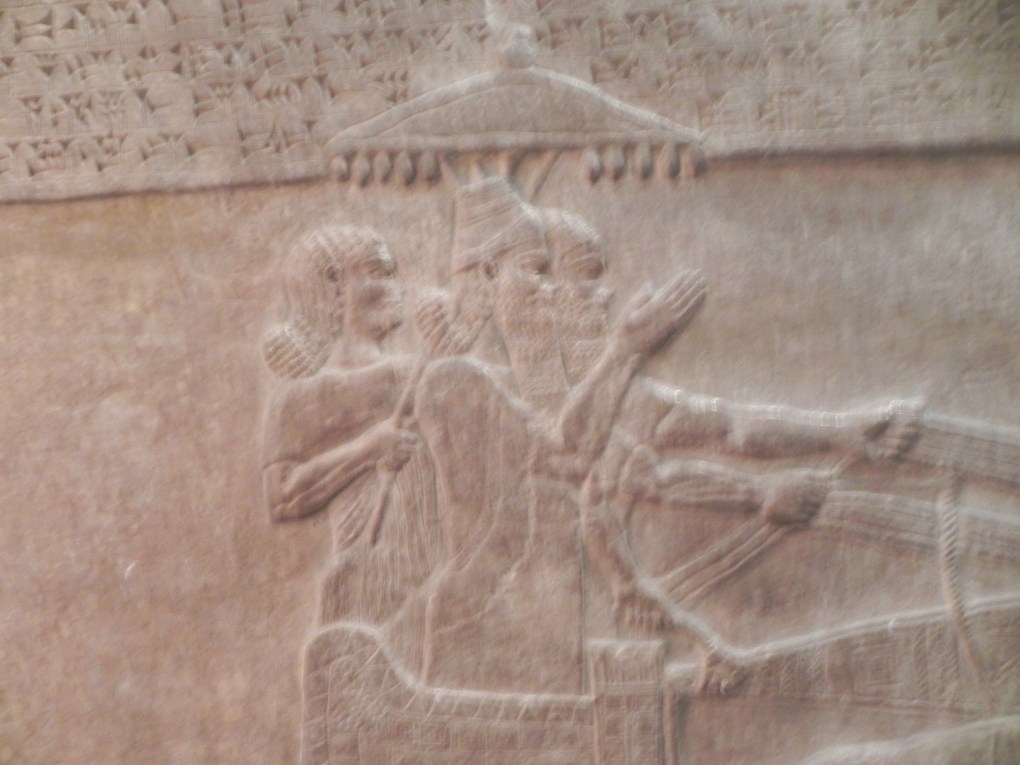
Having grown up Protestant, I assumed that was normal. Adults, who have the benefit of years of negotiating with other adults in ways that may seem unsavory to children, have the definite advantage here. Children believe what their parents tell them, and should the matter come down to eternal life or everlasting damnation, you sure want them to have your back. Sunday’s New Jersey Star-Ledger has a perspective piece by Tom Moran, whose parents raised him Catholic. Catholics and Protestants are Christians divided by a common religion. As I have studied the teachings of each over the years, it has sometimes felt impossible to fit the two together in any meaningful way. They both think Jesus is cool, but beyond that, the disagreements almost immediately begin. Moran notes that in the US fewer than one in four adults identifies as Catholic although one in three was raised in that tradition. His article goes on to outline how Catholicism has frequently aligned itself with law at the sacrifice of compassion. Sounds like religion to me.

Religionists place great, perhaps even eternal, stock in being right. The Catholic Church has traditionally considered itself expert in issues of reproduction, a conceit that is only more bold when it is regulated by celibate men. And the source can’t really be the Bible since there are plenty of places where the good book is a little naughty. The biblical understanding of reproduction was a conclusively unscientific postulate. When microscopes, not telescopes, revealed what was going on at the microscopic level, theology should’ve blushed and excused itself from the room. Instead, the church proclaimed that it knew better than any bespectacled intellectual; after all, unwavering tradition must count for something. This bears the imprint of a system with little left but theological bluster. And it’s losing its thinking members.

Moran interviewed Newark Archbishop John Myers, a man concerned with the sanctity of marriage and who has a questionable record of reporting abuses, for his story. As Moran pointed out, Myers has not been the outspoken advocate of the poor, but he does back the candidate with sacred underwear. I’m not sure when the last time was that the good Archbishop took a drive around Newark. It is hardly a little piece of heaven on earth. Even waiting for a train in the station can fill a customer with a sense of despair. God’s will, apparently, is somewhat more narrowly focused on what consenting adults do behind closed doors. The level of disjunction is enough to throw the Popemobile out of alignment. Of course, I write all this from the sidelines. I was raised Protestant, and no matter what the Mormons or the Catholics say, I was taught from my youngest years that they’re just plain wrong.

Those are some big keys…