Shelley, Byron, Trelawny, and Ahab

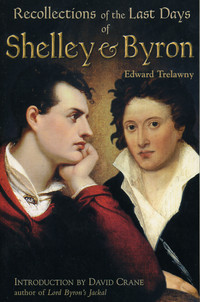
“I took up the word [atheist], as a knight took up a gauntlet, in defiance of injustice. The delusions of Christianity are fatal to genius and originality: they limit thought.” The words come from Percy Bysshe Shelley, according to Edward Trelawny. After visiting the display Shelley’s Ghost at the New York Public Library last week, I was struck by how little I knew of Shelley. I’d read some of his poetry, and had watched the fictional movie Gothic (maybe more times than is really healthy) to get a sense of this candle in the wind, the Romantic poet who died in a shipwreck before reaching 30. Edward Trelawny’s reputation as an historian is somewhat suspect, but he did form friendships with Shelley and Lord Byron and arranged the disposal of their earthly remains. His book, Recollections of the Last Days of Shelley and Byron, while somewhat self-serving, weaves an intriguing account. Among the mementos in the library display are some fragments of Shelley’s skull, taken after his cremation by Trelawny. This erstwhile biographer did prove his mettle by reaching into the pyre and pulling out Shelley’s heart, according to his own account, that eventually returned to Mary Wollstonecraft Shelley, his widow.

Trelawny admired Shelley’s atheism, and even applauded Darwin’s Origin of Species when it appeared. The nineteenth century was setting the stage for a strange Frankenstein’s monster of political and religious backlash against the freedom of the Romantics. Not all of the Romantics, obviously, were atheists, but their works extolled the wonders of nature and a sense of liberty from tyranny that would define them as dreamers and idealists. Lord Byron comes across much less favorably in Trelawny’s account, although their friendship lasted through some difficult times. After the poet’s death, Trelawny claims to have examined his feet, discovering the cause of a lifelong limp. His psychologically astute conclusion is that Byron’s disagreeable personality traits arose from his lifelong anger and anxiety about his birth defect.

Being an ardent admirer of Herman Melville’s Moby-Dick, I have to admit that the elements of anger at the divine for a limp (Captain Ahab forcefully stomps into mind), and the emphasis on ships and shipwrecks (as in Shelley’s death) tie these three literary geniuses together into a knot of suffering and seeking. Religion had consoled many in the nineteenth century, just as it continues to do now in the twenty-first. Among many of those who have endured through their literary works, however, God had slowly disappeared. Not quite as dramatic of a demise as Shelley’s, nor as unforgettable as Captain Ahab’s, but one for which there will be few biographers.


Occluded Religion

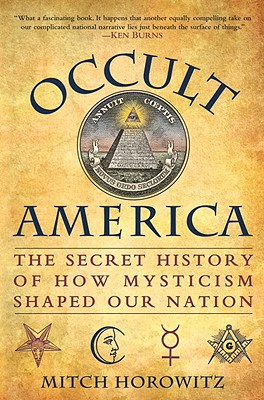
In my youngest days the word “occult” conjured the most perilous kind of fear in my inexperienced, Christian heart. It sounded malevolent and sinister, suggesting Hell, Satan, and the coercion of the divine. Therefore it took considerable time to pump up the courage to read Occult America by Mitch Horowitz. Well, maybe it wasn’t that dramatic—I learned in the course of my many years studying religion that “occult” is very difficult to tease out from “religion.” What I really feared is what others would think of me as I sat on the bus reading Occult America while heading to the Lincoln Tunnel. The word “occult” refers to the “hidden” or “secret” nature of certain religious practices. In ancient times it might refer to the Gnostics or Mandaeans, while in more recent days it might be used to describe Rosicrucians or Theosophists. Unconventional, yes. Evil, hardly.

Horowitz takes his readers through a whirlwind tour of some very colorful characters and, perhaps more importantly, shows just how deeply rooted occult practices are in the most Christian nation on earth. Few people realize just how influenced high office holders in this country have occasionally been by the occult. It seems a hard-and-fast rule that to be elected president you must be a professing Christian, strongly preferable if of the evangelical, Protestant flavor. Ronald Reagan made a great show of that while being personally convicted of the efficacy of astrology and some popular mediums. And Reagan has not been the only one. Still, politicians have to keep their more unconventional religious beliefs secret. The populace likes a straight shooter, devotionally speaking. The fact is that even what many people think of as regular Christianity has been seasoned somewhat with occult.

I can recommend this little book for getting a sense of just how deeply the occult has tunneled into the American psyche. The chapter on the ouija board took me straight back to a very straight-laced Grove City College, bastion of conservative evangelicalism. When I matriculated (which sounds vaguely occultish in its own right) the yearbook was called The Ouija. It was explained away as the combination of the French and German words for “yes,” but everyone knew, given what yearbooks are, that it had that spooky, occult vibe. By my senior year a more fluffy, evangelical-safe title of The Bridge replaced it. And many heaved a great sigh of relief. Christians thanked their lucky stars that they’d been delivered from the evils of the occult just as they were lining up to elect Ronald Reagan to a second term in office.


Do Not Enter

“Sign, sign, everywhere a sign, Blockin’ out the scenery, breakin’ my mind,” so runs the chorus of Five Man Electrical Band’s only hit, “Signs.” It is hard to imagine a more righteous hippie classic. When I was a younger man, I believed in signs. It made sense that if the world were unfolding according to a divine plan laid out for good, Christian folk, signs should be scattered throughout the world, pointing us in the direction we should go. I used to look for them assiduously. As I grew a bit more cynical with the years, and learned a bit more about science and probability, the idea that coincidences bore anything more than incidental meaning became a fixed paradigm. Every now and then something happens to make me question my assessment.

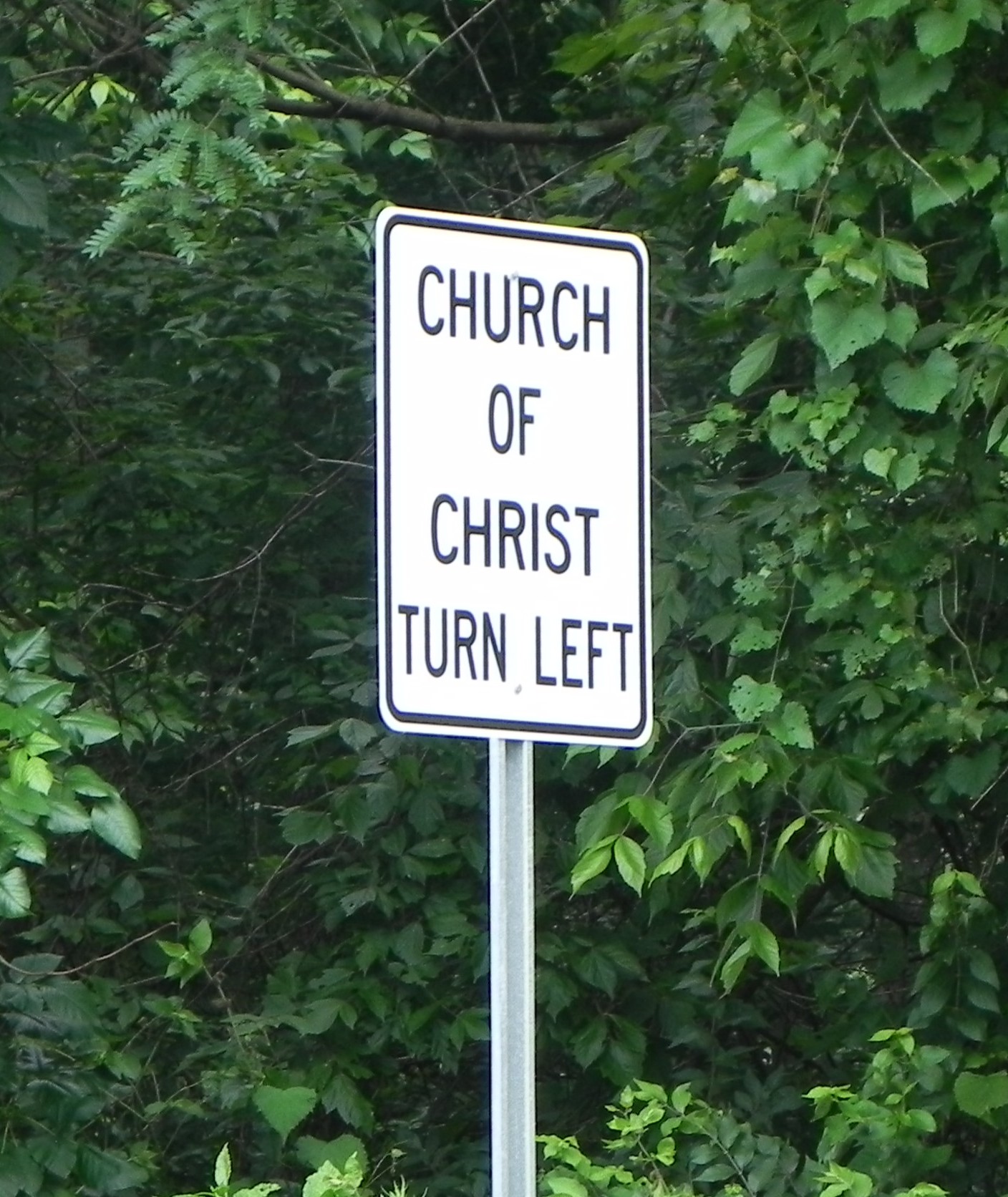
On my way into New Brunswick recently, I passed a sign. I used to drive this road several times a week when I was teaching at Rutgers, but I hadn’t been this way in a few months. I knew there had been construction going on, but a new road sign caught my attention:

Now, I’m one for finding the significance of buried statements. Here was a bold-face declaration that seemed to come directly from the almighty. In a day when Christianity is portrayed as an intolerant, bigoted institution, the simple truth of a road sign might actually bear considerable significance.

Throughout my life I’ve taken road signs a little too literally. When I worked at Nashotah House and I spied an orange sign on the road toward the seminary reading “Detour Ahead,” I knew that it was personally meant for me. The fundies from my college days frequently exploited the One Way signs liberally scattered across our nation, pointing their arrows into the mythological air. Anybody, of course, can make good use of a stop sign. A sign miraculously appearing that spells it out: Church of Christ Turn Left, can be nothing other than a divine message for a weary world. At least for those who still remember hippie bands with a certain fondness, and who don’t take themselves too seriously.


Lies, Damn Lies, and Statistics

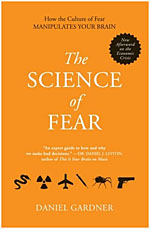
“The fear of the Lord is the beginning of wisdom,” so the books of Psalms and Proverbs agree. It must be true. Religion and fear walk happily along hand-in-hand. Some have suggested that religion began as a human response to fear. So this week I felt a little conflicted as I read Daniel Gardner’s The Science of Fear: How the Culture of Fear Manipulates Your Brain. The book had been recommended to me by one of my brothers. As a child fear defined me—it seemed that in a world where God was meant to be feared (for I was a literalist) that fear was the basic operating system for life itself. Gardner’s book is a fascinating exposé of the culture of fear. Gardner doesn’t really suggest that fear should be eliminated, but he does show how many of those in power manipulate fear into a faulty perception of risk management, for their own advantage. Beginning with 9/11 he demonstrates how the irrational responses of people to the tragedy led to even more deaths that quickly became buried in the white noise of everyday society. Comparing Bush’s response to FDR’s “the only thing we have to fear is fear itself,” Gardner demonstrates that the United States emerged from the depression and Second World War weary but confident and strong. After Bush’s two terms, the country is cowering and weaker. Why? The Bush administration heavily mongered fear.

Funnily enough, the release from fear comes from two main sources: statistics and psychology. Statistics reveal the true odds of common fears—these can be inflated so as to create an atmosphere of threat. People, as herd animals, will gladly give more power to the alpha male when serious treat is perceived (don’t kid yourself, politicians have long known this). Psychology enters the scenario because people think with both reason and emotion. Our immediate, visceral response (the “gut reaction”) is instantaneous and powerful, developed from millennia of evolution. It is, however, irrational. Reasoned responses, often better for us, take longer and people do not like to force themselves to think hard. We have a whole educational system to prove that. Faced with hard thinking or quick solving, which do you prefer? Be honest now!

Ultimately The Science of Fear is an optimistic book. Being made aware of the problem is half the struggle. Garden-variety fear is fine. Systemic fear paralyzes. Religion is often defined as one of the building blocks of culture. Instead of offering release from fear, religions frequently add their own ingredients for recipes of even greater fear. The concept of Hell is a great example: think of the worse thing you possibly can. Multiply it by several orders of magnitude. Repeat. And repeat. You’re still not even close to how bad Hell is. There’s your motivation right there. Place that religion in the midst of a society rich with natural resources and led by schemers who know that xenophobia increases power, and voila! Paradise on earth for some, a life of fear for the rest. Manipulation characterizes both the evolution of religions and societies. Gardner doesn’t directly address the religious side, but that’s the beauty of reason: he doesn’t have to. The cycle can be broken; think of Mark Twain’s words I’ve selected as a title. Think hard.


Sleeping with Darwin

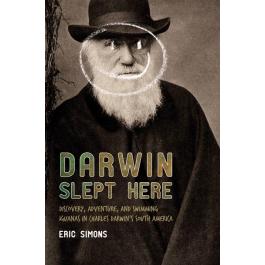
Although I’m hardly capitalism’s biggest fan, it would be difficult to overestimate how much the closing of Borders last year has affected my life. It is formidable to explain, as I sometimes must, to friends who don’t find books as irresistible as I do, how the simple pleasures of knowing a friendly bookstore was in town could make the world seem a little less cruel. There were towns that I instantly identified with the Borders located within their borders. Towns I rarely visit any more. All of this is by way of preface to explain the book I just finished. As the last desultory books lugubriously lined the shelves, my wife and I went through picking up titles we supposed we might have not found any other way. One of those titles was the little travelogue Darwin Slept Here by Eric Simons.

My admiration for Charles Darwin began when I realized that the Creationist venom I’d been bloated with from early days had been misguided. There was a fascination with this “evil” of evolution I’d been taught to shun. As I began to read more objective accounts, I realized Darwin possessed a keen, if tortured, mind that could not rest with half-truths and theological figure-fudging. In his account of following Darwin’s tracks in South America, Simons’ narrative not so much takes evolution any further, but presents a portrait of a world that has continued to evolve. In lives filled with uber-capitalism, where would a young person find five years to sail off on a voyage of discovery? Where would the health insurance come from? The 401K? The dental? As a species, humanity has been utterly domesticated.

Once in a while I dream of the Galapagos. I think of Easter Island and smile. So many places I will never be able to go. I spent three years specializing in Ugaritic studies and I will never make it to Syria—not on an editor’s salary. Not as an American. The world that we’ve constructed opens travel to the young who rarely have the resources to enjoy it. After seminary I spent six weeks in Israel. Young and healthy and heavily in debt, I at least glimpsed the sun setting over Jerusalem before getting hog-tied into the economy. Simons’ little book will not make him a millionaire, but as I read his reflections of rainforests, youth hostels, and rental cars on the Pampas, I thought where our world would be now had Darwin not been of a family of means. So much of our health care is based on understanding evolution. We would not be chained to our desks by threats of a slow, painful, and perfectly legal death without health insurance. We would be subject to biblical literalists who rejected the tenets of science— Come to think of it, perhaps we’d all better make tracks while we still can.


Hair Cut

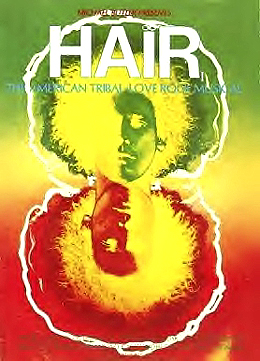
“This is the dawning of the age of Aquarius.” So we hear in the first number of the musical Hair. Since my daughter is learning about the 1960’s counter-culture in US History, she asked her middle-aged parents what life was like then. Well, my wife and I were both born in the early sixties and were a little young to get the full scope of things through juvenile eyes. Besides, I was raised in a biblically literalist family—probably not the best place to gain a great deal of insight into popular culture. We decided to watch Hair instead. One of the few aspects of that era I recall is the Vietnam War (something George W. Bush apparently didn’t remember). The optimism of the hippie movement never really came to fruition leaving an entire era of disillusionment to hang over the remaining years of the millennium. Nevertheless, there is a sense of freedom in Hair that conveys the exuberance of young idealism—something I can honestly claim to have never outgrown. Without idealism we, as a species, are lost.

As I watched the movie for the first time in years its biblical subtext occurred to me this time around. The identity of the youthful protestors is in their counter-cultural hair. Indeed, the show takes its very name from that aspect. Apart from the ubiquity of the hirsute righteousness on the screen, it is essential to the plot. As Claude Bukowski stops in New York City on his way to join the army, he falls in with the Philistine element of society—the long-haired (read uncircumcised) misfits who defy the principles of decency. The dinner party at the Franklin residence makes that perfectly clear. When thrown in jail Woof protests over-strenuously to having his hair cut, leading to the title number. When the friends decide to visit Claude on the army base on the eve of his departure for Vietnam, George Berger has his hair shorn (by a woman) and subsequently loses his strength. His vital force of arguing his way out of any predicament is sapped as he marches to the troop transport plane that flies him to his death. Singing about believing in God as he goes.

I have never used drugs—life has a way of being weird enough already without them—but the sixties seem to have had a moral righteousness that the Tea Party just can’t claim. It was a righteousness borne of speaking the uncomfortable truth to a society that honored the status quo above all else. The very status quo ante the Tea Party craves—a society of bigotry and inequality. A society of privilege and strict conformity. A balding society that has lost its voice. Drugs are not necessary to see unbelievable things. One of the Bible’s original Avengers, Samson tears his Hulk-like way through any crowd, felled only by the cutting of his hair. Hair also led to the death of Absalom, the son whose life David valued more than his own. At the end of the show it is quite clear where the righteousness really lies.


Lunchtime in Midtown

It was a brilliantly sunny day and there seemed to be rain nowhere in sight. It wasn’t even hot. Days like this have been rare this spring, so I went out for a lunchtime walk in my neighborhood. I’d been by the United Nations with some visiting family the day before, so I went down again and pondered the words attributed to Isaiah carved in the wall across from one of the largest intentional organs of peace in the world. I was reminded that a copy of the Edict of Cyrus resides in the UN; as a historical text it is often considered to be the first document promoting religious tolerance among lesser powers allowed by a greater power. The world could use a few more like old Cyrus the Great these days. I think Deutero-Isaiah would agree. So with biblical thoughts in my head, I strolled back toward Grand Central.

Along the way I saw a phrase from the Eucharistic Prayer on a building and it was like meeting someone from college that moved halfway around the world to disappear from your life. I saw that I was standing outside 815 Second Avenue. To the majority of the world—even the majority of Christians—this will mean nothing. At Nashotah House, however, “815” was regarded as the source of all evil. It is the headquarters of the Episcopal Church in America. It is hard, as a disowned son, to describe the feelings that assailed me there. Those good Christians who intended me such harm did not seem to realize all I had sacrificed to join them. Some of the clergy whose daggers remain in my back are well-paid priests right here in New York. Yon Cassius has a lean and hungry look, I thought.

With that cloud in my sky, I turned the corner back to work. Parked in the street was a truck labeled “Divine Moving & Storage.” That sounded an awful lot like a trope for my life. The reproduction of Michelangelo’s God reaching to Adam contrasting with a phone number ending in 666, this bundle of contradictions might just have been a small sample of the human experience. Caught constantly between Heaven and Hell with doleful prophets and profit-loving dolers of sacramental grace living one next to the other. New York is a religious city in every sense of the word. Somewhere off in the shadows I think I hear Isaiah whispering, “I make weal and I create woe…” I love a sunny day in Manhattan.


Dark Light

It took a few weeks and five states, but I finally got to see Dark Shadows. Although I’d seen the trailers, there was quite a bit over which I remained in the dark. After all, the television series ran daily for several years and the story of Barnabas Collins was never really resolved, to the best of my knowledge. Trying to fit all of that into a couple hours of cost-intensive Hollywood showmanship would be a tall order. I have come to trust the Burton-Depp collaboration, however, and I had read some time ago that Johnny Depp had wanted to be Barnabas Collins when he was growing up. It is difficult nevertheless to resurrect a vampire after some three-and-a-half decades of slumber. Speaking with some friends after the movie I discovered that I was not the only child discouraged from watching Dark Shadows after school as a child. But watch I did.

Barnabas Collins became a monster as the result of a curse. The series—which I remember principally as a series of impressions and images—and the movie make that clear. The man who has lost control of his own fate is a reluctant monster. An aristocrat who lives by draining the blood of the common folk. Despite the humor and carnality of the movie, social commentary is there. Sometimes buried in an iron coffin, and sometimes in a vintage VW bus from the early ‘70’s. It may not appear full blown on the big screen but it pulses through the veins nevertheless. Barnabas Collins is a reluctant and conflicted vampire, but he does kill others to survive.

Why would a kid raised in a religious setting be so drawn to a creature of evil? Perhaps it was because Barnabas was the ultimate penitent. He had to victimize others, but he always regretted doing so. Like any living (or undead) creature, his nature compels him to survive. He is sad about his lot in the world, but is helpless to change it. Like many children of the monster generation I was nourished by a long series of movies featuring impossible creatures, including vampires. The earliest vampire I knew, however, was Barnabas Collins. Although Bram Stoker had set the type nearly a century earlier, my measure of the vampire was the reluctant denizen of Collinwood. Although I read my Bible dutifully, and never missed church, I still found the plight of this lonely monster compelling. The movie may not live up to the standard of all Dark Shadows aficionados, but if it brings a subtlety of moral ambiguity to a generation of absurdly self-assured modern-day fundamentalist children, the curse of Barnabas Collins may really be a blessing in disguise.


After Before the Dawn

Apropos of reading Nicholas Wade’s Before the Dawn, as a sometime scholar of religion a number of points struck me. According to both material artifacts and DNA, several changes took place among human beings some 50,000 years ago. Having just read P. W. Singer’s Wired for War as well, the early coalescence of war and religion in human history was unavoidable. Wade ties the emergence of both with the development of language. It is only when we can speak that we can begin to express our theological speculations and, as history continues to teach us, despise those who disagree with us. It becomes clear quite early in the tome that Wade has an interest in explaining religion. Like many science writers he struggles with the issue of why religion persists, despite the explanatory value of science. We know how multiple aspects of our world work, yet we still defer to a divine that no one has ever seen or registered in any empirically verifiable way.

Not only does this tendency stretch back to our distant, distant relatives. The Natufians, about whom I generally lectured my students (itself ancient history), are marked as well by the dual achievements of religion and war. Wade is one of the few scholars I’ve discovered who concurs with my assessment that religion was among the earliest of human behaviors. In my mind, it is tied to consciousness and its evolution. Once we begin to realize that we are not in control of our destiny, we start to seek explanations from above, and hope that God loves us. Otherwise the picture isn’t so pretty. Indeed, Wade suggests that religion evolved as a socially cohesive force. Tying the concept to ethics and trust, he suggests early people had to learn to get along with strangers and religion cemented that bond.

I’m not a scientist, so I cannot assess whether this explains religion or not. It does seem clear, however, that if Wade is right religion itself has evolved into a more aggressive beast. Sure, religions still serve to bind people together—but only so far. As populations separated, their various religions evolved and led them to distrust one another. Instead of bonding humans together, religion began to put them into competition for the truth. Here, Wade’s analysis is sadly true—religion and war evolve together. Our small planet is yet too big for everyone to get along, to know and trust the stranger. Religion had helped us at the critical stage when we needed social bonding, and now it has naturally evolved into the opposite—a socially divisive force of orthodoxy and heresy. If Wade is correct, we all need religion to take on its most ancient role and bring people together instead of giving us excuses for war.

Waiting for the dawn


Whose Call?

I think about religion quite a bit. Well, it’s actually a big part of my job. I also spend quite a bit of time sorting out where religion is represented in the spectrum of human learning, specifically in higher education. One can’t help but notice a profound disconnect between reasoned thought on religion and the often brainless way that it is played out in public forums. Often this ineptitude comes through the mental fumbling of politicians, but just as often the culprits are well-heeled preachers who learned their trade at the hand of like-minded individuals who castigate the usual methods of examining evidence. Even as recently as this week I saw disparaging remarks made in a Chronicle of Higher Education article about seminary education—something I understand a little too well. For all their faults, most seminaries try to teach students to interpret their faith intelligently.

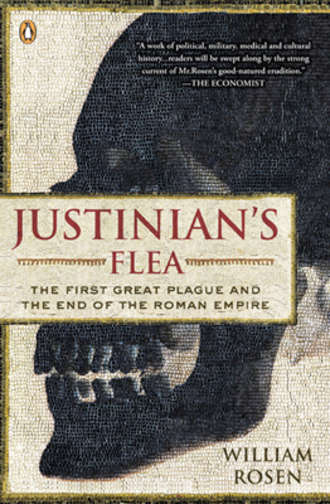
Perhaps it is too fine a line to be etched in the sand, but the study of religion and the promotion of religion are entirely different entities. Our society desperately needs more of the former. I quite often lament the short-sighted lack of education about religion in higher education. Given the frequently destructive nature of religious teaching, it would behoove us to understand it a bit better. In my research on the state of education about religion in the United States, it has become clear that many—perhaps most—high-powered institutions of higher education do not offer the opportunity to study religion. Many secular schools, seeming to fear religious cooties, simply avoid the subject like Yersinia pestis. There is nothing particularly alarming about that. Until one starts to count the number of accredited institutions that teach indoctrination as education.

A simple survey of institutions of higher education in the United States will reveal hundreds of doctrinally based colleges that generally teach uncritical attitudes towards religion. Students graduate from such schools with bona fide parchments that claim them to be proficient in the subject. Meanwhile, at the local state university, no one can study religion because it is considered a subject unworthy of academic research. Maybe it’s just me, but I have trouble reconciling this lack of interest with what I see in a society where Tea Parties are steeping and sabers are rattling in the name of religion. Same sex unions are being shouted down. Women are paid lower wages for the same work as men. The ground is being fracked beneath our feet. The impetus for these destructive behaviors takes is fueled by religion, and they only scratch the surface. I would humbly suggest that if we want to see the state of the union clearly it is best done with eyes open rather than hiding behind an amendment and pretending religion is not there.


Stormy Weather

The privileging of one literature over others is problematic. Of course, the entire industry of biblical studies is built around such preferential treatment. And so is a large share of Christianity. I’ve just finished reading William H. Jennings’ Storms over Genesis: Biblical Battleground in America’s Wars of Religion. For someone who has taught Genesis before there wasn’t too much new material in here, but it strikes me as a very good primer for those who wonder about why the issues of gender inequality, global warming, and evolution remain firmly entrenched in evangelical minds, and therefore, our society. Just the first three chapters of Genesis, as Jennings points out, have led to the much of the irrational, at times inane, arguments that just won’t go away. Tea Party kinds of issues.

At the base of it all is the concept that Genesis somehow represents the way the world is supposed to be (rather than the way it actually is). As if seconding my choice of bus reading, The Economist recently published an article on Glen Rose, Texas. I’ve known about Glen Rose since I was a child. There, in a bizarre twist on the Flintstones, locals claim human and dinosaur footprints intermingle in a nearby creek bed. As the article points out, some locals see this as evidence of young earth creationism—seems Fred and Wilma missed the ark along with Dino. For decades paleontologists have tried to explain that the “human” tracks are actually dinosaur tracks as well. Given their size and stride, if they were human Adam must’ve been a giant. Despite the science, the myth persists. Even the article in The Economist doesn’t give the scientific answer.

It would be difficult to find a book more influential than Genesis. It would also be difficult to find one that is less scientific. Anyone who has studied ancient societies knows that they delighted in telling outlandish stories to explain the origin of the world. After all, there were no eyewitnesses. No channel 11 helicopters hovering overhead to bring you the story live. It all comes from mistaking a good story for a good book. In an era when evidence of evolution literally abounds, we still have nearly half the population of this technological nation trying to make room for the Valley of the Gwangi. Jennings may not hold the answers to all the problems Genesis raises, but if people would read Storms over Genesis, we might be able to afford a little more energy to solving global warming rather than running from dinosaurs in Texas.


Lost Purpose

In a move that demonstrates its love of Inquisitions, the U. S. Conference of Catholic Bishops is officially investigating the Girl Scouts. Seemingly forgetful of the fact that a bunch of unmarried men with a record of protecting pedophiles is not above scrutiny itself, the Catholic Church now seems to think it has the right to police other organizations. The concern these men show for what goes on in other people’s underwear is beyond perverse—WWJD indeed? Both my daughter and my wife are Girl Scouts, and so I know it is not a perfect organization. I also know that it lives up to its goal of offering girls the chance to gain self-confidence and become empowered women. Women who are not trodden under the heavy feet of doctrine are tied to stakes and burnt, in good old-fashioned Christian charity. And why the fuss among our Roman companions? They’re afraid because of demonstrably false allegations that Girl Scouts “associates with” organizations to which the church also objects.

I was a Boy Scout for a few years. Already in those days jokes of homosexual leaders—and a few actual cases—were de rigueur. Where was the Catholic Church? Yet this year alone they have made strident moves against their own nuns and now, again, against the Girl Scouts. Where two or three women are gathered together, the Catholic bishops will begin to pick up stones. Better not read what Jesus is scribbling in the dirt. Some of my readers have problems with my biblical interpretation. I will now ask if anyone can produce a biblical prooftext for the church’s mandate to oversee the organizational structure of secular, non-profit, non-religious associations. What does the Bible say about that? Clearly what the Bible does allow sexually favors men. Where your testosterone lies, there will be your heart also.

All of this belies a lost of purpose for the church. Like the empire whose epithet it shares, the Roman Catholic Church is perceiving paranoid threats from every quarter. The purpose of Christianity, at least according to a guy called Jesus, was to help the poor and underprivileged and to love all people. Even those who crucify you. Now the message the headlines declare is that any organization offering women sexual autonomy will be investigated by the bishops. It matters not whether any allegations have a basis in fact. Christianity’s purpose? To assert male authority. To prevent any organization of women from achieving confidence or equality. To subjugate an entire half of the human race to the will of a single man. Does that sound like the true purpose of religion to you?


Same Sex Sanity

When the people speak, sometimes it’s just nonsense. So the people of North Carolina believe in the exclusive rights of dysfunctional heterosexuals over committed homosexuals. And President Obama makes a powerful statement. As Americans we are reared to respect personal freedom. And what freedom could be more personal than the open expression of love? The reasons given for exclusivity of heterosexual marriage are spurious—certainly the Bible considers marriage in purely pragmatic, not sacred, terms. As citizens of their own time they were as much programmed by their environment as are people today. Marriages were arranged and the concept of sexual orientation simply did not exist. It is not that I castigate marriage—having been married nearly a quarter of a century myself I would be a fool to do so—but I in no way feel threatened by anybody falling in love with anybody else. Nor is it the right of any loving Christian to stand in anyone else’s way.

A God who created gender-changing fish to fry in Hell (particularly on Fridays) seems unnecessarily cruel. (Yes, such fish do exist.) A God who created other animals that exhibit homosexual behavior (bonobos, penguins, elephants, lizards—at least 450 animal species have been caught in the act) and then condemns it is surely working at cross-purposes with the nature he (always he) created. It has become quite clear from nature that sexuality is far more than procreational activity. If your kit is for kid making only, why do so many good, Christian couples have trouble conceiving? And don’t say “God only knows” because Fundies have no monopoly on questions that demand a verdict. What is God playing at here?

Intelligence and sexual behavior seldom go together. Religions, however, have a hard time keeping themselves out of the bedroom. Loving, committed relationships hurt no one. For a religion claiming to be based on love, declaring various expressions of love wrong is diminishing the good in the world. The Bible has very little to say about homosexuality. Good, Bible-believing Christians often turn blind eyes to the many more stringent passages about divorce and remarriage, but single out the very few that mention specific same-sex acts. Do they not see how such cherry-picking makes a mockery of calling anything holy? With all the excised bits, it might be more appropriately called the Holey Bible. For me, it seems they might find it more instructive to observe the moray eels rather than trying to cover their wrasses.


Battle Bibles

“There are no atheists in foxholes,” so the old saying goes. No doubt, war is among the most stressful circumstances in which humans insinuate others (who goes to war happily and without reservation?). As a corollary, to keep soldiers comforted in hellish surroundings, it has at times been common to supply them with Bibles. In an exhibit I’ve not yet seen, the Museum of Biblical Arts in New York currently has a display of soldier’s Bibles. A poignant dissonance accompanies such a concept. In the newspaper story announcing it, the phrase that leapt out at me was “Bibles clothed in camouflage.” To be sure, the Bible contains many narratives of war, even demanding genocide in certain circumstances, but as a whole the most valued commodity appears to be peace. Too often, however, it is peace on our terms.

According to the article, Bible distribution began in the United States in the Civil War. Bibles were offered to belligerents on both sides. Naturally, taken into the viewpoint of the chosen ones, God is on the side of the reader. God is the ultimate conflicted deity. This is cold comfort to a soldier dying on the battlefield of all-too-human contention. In keeping with religious differences, over time Protestant, Catholic, and Jewish versions have been offered. Notes in these government-issued religious documents urge the soldier to find succor here. One need not read too deeply between the lines to find the message is the willingness to lay down one’s life.

In a world acutely aware of religious differences, the idea of supplying fighting forces with religious backing may seem questionable. Can there be sincerity in the message that Scripture of any description ought to comfort a person who has been placed in this unenviable position by human greed, powerlust, or self-aggrandizement? What reason have we for war any longer? If religion be true, why have we not matured by even a millisecond since Joshua invaded Canaan? Giving a soldier a camouflaged Bible is to place a Band-Aid on a gaping wound requiring many stitches. Far better to take the message of peace to heart and look for reasonable ways to solve our differences. Idealistic? Without doubt. But it might help to save the cost of distributing Bibles to those whose lives are seemingly less valued than those who begin armed conflicts in the first place.

There is no “holy” in war.


Beyond Measure

Thinking back to my first course in World Religions, I recollect learning about Hinduism, Buddhism, Islam, and Confucianism for the first time. It is likely that Taoism was also mentioned, but I had to do a ton of research before I taught the course for the first time at Oshkosh. I remembered learning nothing about Sikhism or Shinto, not to mention Jainism or any host of religions boasting smaller numbers, by gosh. Now that I’m in the business of commissioning books on world religions, I have come into a quandary. As I know from experience, those who teach world religions are faced with a classic case of TMI: too much information. These religions I’ve mentioned only begin to scratch the vast surface of human religious expression, while your typical semester is only 14 weeks in duration. How do we cover all the smaller religions, some of which may have even a million or more adherents, and may be, at times, geared toward violent behavior? There’s simply no way.

This is where the quagmire grows thickest—are “major religions” quantified by numbers alone? From comments of readers of this blog it is quite clear that Christianity is no uniform religion. The differences go deeper than Protestant or Catholic or Orthodox. Most of us follow rather idiosyncratic blends of various religions we’ve experienced. It is not unusual for a Christian to practice yoga or to engage in meditation. And there are thousands of smaller religions as well, and the beliefs are deeply embedded in the lives of those who hold them. A good example would be Native American religions. There isn’t just one. Various tribes held their own beliefs and yet try to find a textbook that covers the differences between them. (Ah, but publishers are bound by the need to sell many copies to make such books profitable, and what professor is going to have the time to parse out different belief systems of these small, sometimes powerless groups?)

It is the curse of categorization. In our free market economy bigger is always better. Religions, on the other hand, do not always concern themselves with winning the most tricks. The Zoroastrians, who gave us the concepts of Heaven and Hell and much else that became standard theology in the monotheistic religions, continue to exist. In small numbers. So small that, as a religion major, I didn’t really learn about them until I began teaching classes exploring the origins of our modern religious concepts. When the modern eye assesses the importance of something, it does so by crunching the numbers. Religions have been our human means of seeking the truth since civilization began, perhaps even before. Often numbers and truth just don’t align.