Biblically Married

The Bible says—. Fill in the blank. Go ahead, someone will believe you. The problem with biblical literalism is that it is often held by people who don’t read the Bible. Well, it is a gosh-darn big book—well over a thousand pages—do you know how much quality television watching time that represents? So many fundamentalists are surprised to find out how little the Bible has to say about marriage. In fact, it says almost nothing. There are no marriage rites given, and marriages are mentioned but not described in detail. So when modern-day readers want to find guidance about political policy they have to—to be frank—make a lot of stuff up.

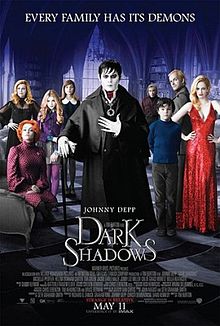
Take North Carolina, for example. Next week they are scheduled to vote on an issue of defining marriage. The intent, apparently, is to bring the state in line with the Good Book. In comes Matthew Vines, an evangelical Christian who’s also gay. Being a Harvard student, he has immediately impressive credentials. He has an on-line biblical exegetical exploration of what the Bible says, and more importantly, doesn’t say, about homosexuality. The other solution, to actually read the Bible, is a little too much to ask. Another part of the problem is that the Bible was written in a very different context, and to understand the Bible’s view on anything, you need to fit it into its context. All this Bible reading—and context too? Better leave it to someone on the television to explain it all.

Leonard Pitts Jr. is a columnist that I’ve come to trust. His good sense comes through in all his work. In Wednesday’s column, he highlights Matthew Vines’ hour-long talk as an example of what happens when common sense meets the Bible. For those who bother to read it, it will become clear that the Bible nowhere defines marriage. It says nothing about sexual orientation. The few passages on homosexual acts have a narrow context (that word!) that must be considered. Nowhere in the Hebrew Bible nor the New Testament is marriage considered a religious matter. It’s simply what people do. So as North Carolina heads to the polls, Bibles clutched in hands, but not in their heads, it might do to watch Matthew Vines as homework. I haven’t seen the video myself. An hour is just too long to take from my busy television-watching schedule.


Razzing Cain

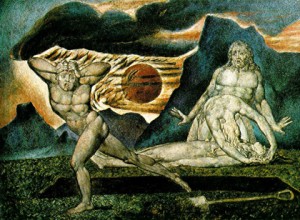
Generations of literalists who’ve had their eyes opened by reading what the Bible actually says have stumbled over Cain. His murder of Abel is fine—predictable even. The problem is what happens after that. Since he has murdered his brother, the only other human born so far, Cain seems prematurely concerned about “every one that findeth” him killing him. Seems unlikely that Eve, or even Adam, would like to kill the only surviving child they have. Yet God puts a mark on Cain. Presumably his parents would recognize him, so why is Cain literally a marked man? Rather than Omega Man survival techniques, Cain focuses his attention on kick-starting his love life.

Cain’s wife immediately raises the issue of where the girl comes from. Those who like to call themselves literalists have to back-peddle a little and suggest that since, according to Genesis 5 Adam and Eve had other children, this must be where she derives. Of course, she would in such a scenario, be his sister. Extraordinary circumstances call for extreme measures, but even so, literally, there are no other people yet. Cain is old enough to kill his brother and the next child born, according to the narrative, is Seth. Seth is explicitly a replacement for Abel, and really he doesn’t do Cain any favors in finding a wife. The story here simply slips out of character and gives us a world already partially populated.

As I was tweeting Genesis 4, it occurred to me that immediately after marrying, Cain builds a city. Cities only sprang into existence to allow for mutual protection with the diversification of labor, following on from the agricultural revolution. One of the main characteristics of cities is population. Genesis 4 has only Adam, Eve, Cain, his wife, and Enoch. It may be the smallest city in history since the entire human race could have easily fit into one modest house.

The stories of Genesis are etiologies—tales of origins that have no ties to historical incidents. Cain represents the urbanites, the city dwellers who will always somehow find ways of irritating God. In our urban culture where most people are born in towns or cities, we have lost touch with the life of the nomadic pastoralist. We are, however, merely following the literal path that the Bible lays out for us. As we shall shortly see, the children of Cain and Seth are the same.

Cain just can't figure it out


Planet of the Monkeys

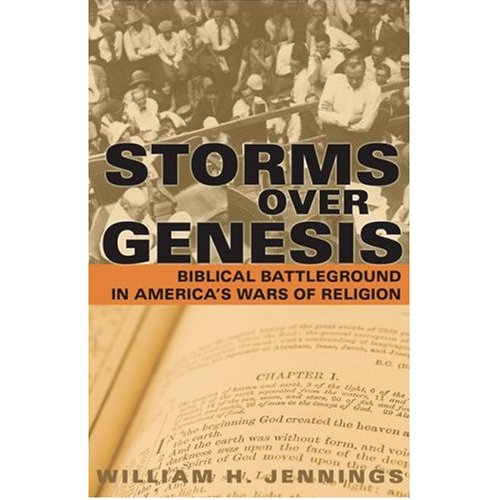
“If salvation is available only to Christians, then the Gospel isn’t good news at all. For most of the human race, it is terrible news.” That may not be Rachel Held Evans’s choice for the final word on the subject, but it is the privilege of all writers to be misinterpreted. I read Evolving in Monkey Town because of an odd confluence. Evolution always tastes like forbidden fruit to me, although there can be no real doubt concerning its factuality. Also, the spiritual journeys of women continue to fascinate me. Even if the women are young enough to be my daughter. I first learned about the Scopes Monkey Trial in Mr. Pierce’s tenth grade history class. In eleventh grade I argued the Fundamentalist side of an epic, three-day debate on evolution in current issues class. I set a reputation that I’m still attempting to live down. (Studying religion for the next ten years probably did me no favors here.) The end result is that I feel a personal connection to what happened in Dayton, Tennessee, although I’ve never been there.

Evolving in Monkey Town is a memoir of a struggling, skeptical fundamentalist. Reading it at times made me squirm a bit, seeing childhood worries and frustrations coming back to me through someone else’s experience. Some of Evans’s remarks could have come from me, had I the courage to write up my past so that others might view it. At the end of the book it was obvious that I could not agree with many of the author’s personal convictions, but she earned my respect. Under the constant pressures of pleasing a deity that can’t be seen, or empirically verified, Evans sees clearly the disconnect between the teachings of Jesus and Fundamentalist Christianity. She has a wonderful knack for clear sight and forthright comment. Like me, she has become aware that a Fundamentalist upbringing is something no one ever truly escapes.

The crisis that seems to have sparked Evans’s angst was the recognition that no matter how you arrange it, an exclusive religion cannot coexist with a just deity. The world is just too big for that. Any scenario in which God sets the rules and makes it impossible for the vast majority of humanity to attain those rules does reflect rather poorly on this pater familias. We are all reduced to a diabolical game of charades as we march merrily toward perdition. Theodicy is an insurmountable problem in this live-a-day world we inhabit. Reading about the altruistic traits of the primates most closely related to us reveals something about being a monkey’s uncle. When we look at the shenanigans religions enforce on people to make them more worthy of heaven, I think we would all have to admit to living in Monkey Town.


Rite and Wrong

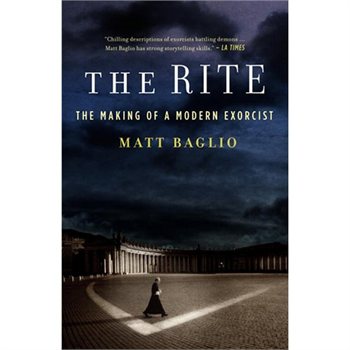
Anyone who’s never had anything very weird happen to her or him, raise your hand. Hmm, I thought so. Strangeness, whether prevalent or simply a unique event, is part of life. It is when we turn to explanations that the religious side of the equation suggests itself. Now I have a confession to make. When Borders was going out of business last year, I was in mourning. Those last poignant hours in my favorite bookstore I wandered the aisles picking up the books left behind by others, many of which I would not have otherwise purchased or read. One of those books was The Rite by Matt Baglio. I had seen the hype for the movie, and although the idea of possession terrifies me I’m not sure there’s anything here that can’t be explained by the likes of Carl Sagan’s Demon-Haunted World. Still, riding through the flickering lights of the Lincoln Tunnel on a bus on a gray and rainy morning, literal shadows of doubts creep in.

There is no doubt that events happen to us that seem to defy explanation. There is also no doubt that the enormous wealth of Christian mythology taken literally by Baglio defies all but the most gullible of readers. The problem is the black box. Nobody sees what goes on inside the locked chamber where the exorcist practices his art. Yes, it is a manly enterprise since the Catholic Church won’t admit of women priests. This was one books that left me tottering between what I know to be true and that shadowy place where doubts dwell. It is utterly certain that our perspective helps to determine what we see. A priest in a stuffy or chilly closed-off room believing a demon lurks therein will see the signs in the behavior of the victim. Throughout the book I kept pondering how so many possessed people lived in heavily Catholic Rome while in locales with more mixed religious traditions the phenomenon is rare.

Perhaps the most disturbing part of the story is the fact that Baglio readily admits: most of the possessed are women. In a religion where women have been marginalized as a matter of course from the early days, can this really be a surprise? And when the exorcist, a celibate priest, experiences sexual arousal how else can he interpret it but as demonic? The human mind is a fascinating system, capable of launching a body into stunning, adrenaline-induced feats of strength and endurance. It conjures gods and demons. And it can make a grown man cower on a dark and windy night with stories of possession racing through his head. I had a difficult time believing much of what I read in The Rite, but I do think perhaps it is now time to make a date with Carl Sagan. Lighting a candle in the dark is a very human thing to do.


The Price of Religion

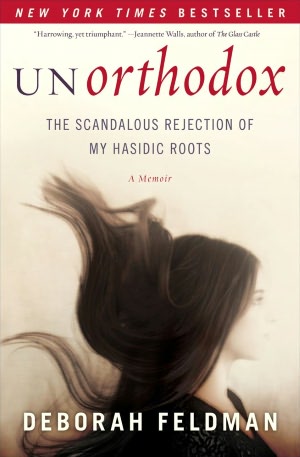
Gender is a religious construct as much as a biological one. The study of religion has brought me face-to-face with the reality that religion appeals to many women and to those who would manipulate them. Lately I’ve taken to reading the memoirs of women who’ve discovered the abuse their faith has doled out to them and who’ve taken moves to reclaim their lives. This past week I read Deborah Feldman’s Unorthodox: The Scandalous Rejection of My Hasidic Roots. As someone who has spent much of his life reading and re-reading the Hebrew Bible that gave fuel to the Mishnah that gave fuel to the Talmud that gave fuel to the Hasidic movement, I found Feldman’s narrative gripping. Some branches of Judaism, like some branches of Christianity, try hard to separate themselves from society. Their cloistered lives become secretive, and often by the standards of secular culture, incomprehensible. While reading this wrenching account of sexual domination, I kept wondering why Feldman didn’t try to escape. At the same time I already knew the answer.

I was raised by a religious mother who found her faith both a source of rules and a source of comfort. Unaware that religion can be a trap, women are frequently its victims. In a society that still refuses to give females equal opportunity for earning a living, is it any wonder that religions offer alternative routes that equally entrap? How do you appeal to a higher power when that higher power is, by biblical definition, male? Who will help you out when the largest religious structures in the world are male constructs? Yes, lately some religions have opened themselves to female leadership, but almost always at the cost of splitting off of factions that claim seniority and sanction from the beginning, when, they claim, only men ran this show. Deborah Feldman was trapped in a religion where her life, down to her hair and clothes and reading, was programmed by male expectations. In this continuum between religions we find the same progression in a series of degrees where men make the rules.

Many who read Unorthodox, I suspect, will see it as a condemnation of Hasidic Judaism. It is not. As Feldman makes clear, she has retained her Jewish identity, but she has let it evolve into a place where she is finally free to express herself. Gazing over the religious landscape, I see this as a place that many women find themselves. The very religions that had formerly held them down, however, continue to be male preserves. Even if women may join the club of bishops, clergy, or rabbinate, they do so with the constant reminder that they are only invited guests in what was once a masculine world. The world of men never voluntarily relinquishes its grip. As long as people are considered in the image of God they will always be by default male and female only as an afterthought. To conceive it any other way would be very unorthodox indeed.


Honor Thy Mother

Earth Day should be an international holiday. Perhaps the most disturbing attribute of some varieties of Evangelicalism is their tendency to read the “Be fruitful, and multiply, and replenish the earth, and subdue it” of Genesis 1 to be a mandate not tempered by a literal reading of Genesis 4. As I noticed when tweeting the text yesterday, Genesis 4.11 has God say to Cain, literally, “And now art thou cursed from the earth, which hath opened her mouth to receive thy brother’s blood from thy hand.” Her mouth? What is this if not a biblical affirmation of Gaia? The earth, according to Genesis 2, is literally the mother of Adam. Yahweh is the male element, the fingers molding the dirt (those who have ears, let them hear), while the womb of this bizarre conception is the earth itself. She has a mouth to receive the blood of Abel. The planet beneath our feet, according to the Bible, has not only a mouth, but also hands (Psalm 89, for those who doubt). It is our duty to grasp these hands and save our mother from ourselves.

In the spirit of the day, I decided to fix that pesky leak in the bathroom sink yesterday. We rent, of course, and our landlord—the nicest I’ve ever known—can be a bit slow when it comes to non-emergencies. I fixed the kitchen sink a year or two back, so I stuck my head under the cast-iron monster, baptized by the drips that continued to appear above my head from pipes far older than Methuselah, to see what I could do. After trips to every hardware store in the area, watching bemused DIY experts scratch their heads at photos on my phone of the Byzantine arrangement under my sink, I finally had to admit defeat and reassemble the old faucets again. The drips that fall are Gaia’s tears.

When I was in college I learned of Pascal’s wager. A philosopher who liked to hedge his bets, Pascal deduced that if God exists then our eternal fate relies on our obeying him (always him). If God does not exist, we have lost nothing by behaving ourselves, Pascal concluded. While many Evangelicals find that reasoning attractive, they do not apply it to their mother planet. If God is not coming back any day now, we’d better take care of the planet that sustains us. If God does show up, against all odds, what have we lost? Watching the plants burst back into life after a gray and dank winter, who can help but wonder at it all? Literal or not, the earth is so maternal that we should all pay her the reverence she is owed. Even if it means being a literalist for a day.

NASA's picture of our mother.


Nun Such Luck

It hardly seems to be news anymore when the headlines read “Vatican orders crackdown on US nun association.” Religions are largely characterized as men telling women (and milquetoast men) what to do. Perhaps because of our evolutionary, simian respect for the alpha male, most followers will resist pointing out inequities in the system just to have a smoother ride. The all-male Vatican is reportedly worried about how nuns of the Leadership Conference of Women Religious might be distorting the masculine teachings of holy mother church. No matter how much science the Vatican supports, it just can’t get over the idea that when God is found out there he will have not only a human face, but a human penis as well. The Associated Press article states that the Congregation for the Doctrine of the Faith—that is the organization of the Inquisition, my dear readers—found grave errors of doctrine among the ladies. Sounds like time for an auto-da-fé, n’est-ce pas?

Somewhere on its long and weary trek, the control of fellow humans for the sake of God has slipped into the rut of control of fellow humans for the rush of power. The Catholic bishops are worried about abortion (and other healthcare options for women). The Bible says nothing about abortion, considering life to coincide with the first breath. The chosen people did not have a conception of how conception worked (you can’t see the sperm or ova without a microscope, no matter how divine they may be) and so life began and ended with breath. The only reason to push the origin of life to conception is so that men may control women’s sex lives. These decisions are made by sexless men who wear dresses behind inscrutable walls of power. When nuns start seeking fair treatment for women it quickly becomes heresy.

I don’t mean to single out the Roman Catholic Church here, since many religions proclaim male superiority—loudly or softly. Back in ancient times when goddess worship was taken as seriously as the cult of male gods, a few religions did exist that gave women a position equal to, or sometimes even above, men. The priests of Cybele, for instance, had to undergo ritual emasculation. Strangely, religions with celibate priesthoods today leave their men intact, perhaps as a loophole for sin. I wonder how much more women-friendly official theologies would be if only eunuchs were allowed to serve as pastors. It is, as Genesis famously states, sin that “is crouching at the door,” and therefore it is better to remain gendered and pray not to be led into temptation. Perhaps we have something to learn from history yet.


Final Flight

Back in the day before CD players, let alone MP3 files, my mom had a squat, boxy rectangle of a cassette-tape player. (Remember, I am a student of ancient history.) The cassettes we had were home recorded, scratching and hissing like a disgruntled cat, but they were the latest in technology. And, of course, they were religious in nature. One particular tape I still remember with terror. Narrated by a optimistically doleful bass male voice, it recorded the events surrounding those climbing aboard a plane bound for heaven, along with authentic jet noises. It was, of course, a thinly disguised metaphor for death, something I realized even as a child. As the passengers climbed aboard, anticipating that meeting with Jesus, I trembled in fear. They were all about to die.

I have never been particularly afraid of death. Not that I’m in a hurry to go there, but I have always sensed it as inevitable and therefore not worth worrying over excessively. I was one of those who grew up thinking quite a lot about it, viewing it from different angles, trying to make sense of it. I still do. While I was in England, Time magazine ran a cover story on Heaven. Now that my feet are back on the ground, I have been reading the story with interest since I’ve just been spending several hours on a jet in the sky. One of the most surprising elements in the story is the fact that some evangelical preachers are beginning to inform their flocks that heaven is what we make it here on earth.

This may not sound shocking to you, but having grown up evangelical I knew that the only reason we behaved so well all the time was so that we could get into Heaven when we died. This was the economic basis of salvation—you paid for Heaven in good deeds and correct belief. Not that you exactly earned it, but you did invest in it. This was the defining characteristic of Christianity. The suffering that is so obvious in the world (I saw three homeless men curled up together inside the Port Authority Bus Terminal just this morning) can harsh anyone’s paradise. The traditional “Christian” response has been to look past that to a shimmering, if imaginary, kingdom in the clouds. I am very surprised that some evangelical pastors are willing to risk their entire campaigning platform in order to help those in need. It’s getting so that it is hard to tell which way is up any more. Maybe that’s what happens when you spend too long on a plane bound for a mythical destination.


Fighting Jesus

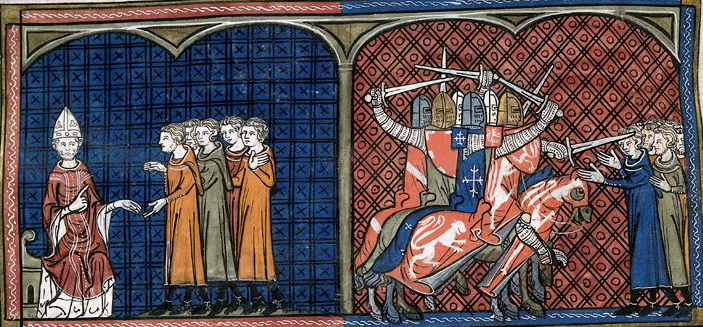
Jesus Wars, by Philip Jenkins, accomplished something no other book has ever done for me—it actually made the doctrinal debates of Late Antiquity interesting. An historian of religion with wide interests, Jenkins produces fascinating books on what might appear to be esoteric aspects of religious life. I remember yawning through theology classes where we learned of crusty, if utterly convicted, monks and bishops arguing over single prepositions in their efforts to define exactly who Jesus might have been. When Jenkins turns his attention to this dusty, unwashed phase of Christianity’s gamy early years, new avenues on regulated belief structures open the way to understanding just how little most believers know of their own traditions. On its way to feel-good evangelicalism, Christianity frequently paused along the way to brutally murder some of its own for disagreeing about whether Jesus shared the same essence as his dad.

Today many Christians are taught by their clergy that their faith differs little from that of the earliest Christians. All who are taught this should be compelled to read Jesus Wars in order to get a grip on what really happened. From the very beginning Christianity was deeply divided about who was truly a follower of Christ and who was not. Even within a generation of the death of Jesus his various groups of followers could find little that they all agreed upon. As Jenkins demonstrates, over the next few centuries that sad history was worked out with extreme cruelty and cudgels and swords. The side with strongest force of arms got to decide on doctrine. Nor did matters improve with the Protestant Reformation. Many Reformers lapsed into what would have found them tied to a stake for heresy, had they been fortunate enough to have been born in the early centuries of “the Christian Era.”

The one figure that seems to have been lost during the Jesus Wars was Jesus of Nazareth. Instead, human constructions of who Jesus might have been became the source of great suffering. Bishops beating bishops to death, saints having women murdered, monks forming an unwashed militia—it’s all here along with the debate over how many angels might dance on the head of a pin. Jenkins does an excellent job of demonstrating that what is now known as “orthodox” Christianity was often a matter of political accident. In the case of Theodosius II, the future of Christianity literally rode on the horse that stumbled, tossing the emperor to his death. No doubt, there will be those of one or another brand of Christianity who will see the divine will behind the ultimate outcome. That outcome, however, will always insist that all others are wrong. For those seeking a bit of balance, Jenkins will make enlightening reading. For others it may give the lie to doctrines made what they are by mere mortals. In any case, the words attributed to Jesus about loving your neighbors and enemies will nowhere be found amid the debates of who he might have really been.


Darwin’s Descendents

The plague that goes by the name of Creationism has been attempting to spread its reach to the shores of Britain. Proponents of a biblical literalism, whether overt or covert, have championed the idea that the world is terribly young—a mere cosmic toddler, in fact—compared to the vast geological ages of actual fact. When I unfolded my first ten-pound note and found Charles Darwin on the back, I smiled. England may claim a lion’s share of the heritage of one of the great unifying theories of science. In my brief jaunts between bouts of work I came across the tombstone of Herbert Spencer, the man who coined the phrase “survival of the fittest.” On a visit to Kew Gardens I strolled through the Evolution House. When I paid for my lunch, Darwin passed hands as the common currency of the realm.

Ten pound note

A school of thinking exists among many religious believers that insists that if science makes its claims justly then God cannot condemn them. Evolution runs as close to fact as does atomic theory. Those who doubt the latter should visit Hiroshima. Or Three Mile Island. Our literalist companions certainly don’t doubt nukes, but then, the Bible is mum on the subject of what things are really made of. Well, almost. According to Genesis 1, everything is made of chaos and divine words. The Bible doesn’t describe the origin of chaos—it is the natural state of things. God’s word, when it generates uranium, can be very deadly indeed.

Evolution House

Creationists selectively choose which science to believe and which to reject. Fundamentalism can trace its origins to Britain, but the culture rather quickly outgrew these childish fantasies. In America literalism sank deep roots, roots deep enough to withstand the hurricanes of reason that would otherwise clear the air. Can an American imagine Darwin sharing the money which reads “in God we trust”? And yet, Darwin lies scarcely two meters from Isaac Newton in England’s holiest shrine of Westminster Abbey. Science and religion have here embraced one another. Perhaps when we put all the monkey business aside, we will come to realize that we may still have a thing or two to learn from the nation of our founders. Literally.

Darwin at rest


Cain’s Dilemma

As I tweet the Bible into cyberspace, Cain strikes me as a most misunderstood character. Mercilessly portrayed as an ungrateful boor, the first vegetable farmer in folklore is demonized as the father of all sinners. Genesis, however, is impossibly vague on Cain’s crime. A close reading of Genesis 4 indicates that Cain was the first human being to offer a sacrifice to a higher power. Being a tiller of the soil, that sacrifice was of the fibrous kind, bereft of any fat or blood. The divine nose (metaphorically) is turned up at this attempt at pacification. In steps Abel with his bloody slaughter of animals and God is well pleased. Traditionally, Christian readers have attributed Cain’s evil intent toward Abel as jealousy. Genesis doesn’t seem to bear this out. “But unto Cain and to his offering he [the Lord] had not respect.” Cain was not jealous, but “wroth.”

Much later in time Paul of Tarsus will tell fledgling Christians that God is “no respecter of persons.” Still, in that first moment of divine favoritism, prior to any explicit instruction being given, we catch a glimpse of the future of this nascent religious movement. Even today, the literalists tell us, God expects something from us. What, exactly, differs from interpreter to interpreter. Cain’s crime was simply being human. Even more poignant in this case is the fact that the divine allowance for consuming meat has not yet been made. Abel raises animals for God’s appetite while Cain raises vegetables for human consumption. No sentient being is harmed in Cain’s offering. Abel, one might say, is the first killer in human history.

We all know the story. Cain will rise up against his brother and slay him. He will then receive a prototype of the mark of the beast and scamper off to rustle up a wife somehow. All this before the third natural born human being, Seth, is even conceived. Beowulf will reflect Cain’s dilemma centuries later, as Grendel is the spawn of the first murderer. The descendents of Cain are routinely demonized while the children of Seth repeat the cycle of divine favoritism over again. Here is Cain’s problem: God will like whom God will like. The rest cannot earn divine favor. The bloody consequences of this reading of history continue to play themselves out even today. Those who need divine approbation will go to any lengths to feel special, while all of us, the true heirs of Cain, have to work it out as best we can under silent skies.


As on Earth

Today’s version of the afterlife requires simple assent to a belief system, at least according to prominent interpretations of some religions. Belief alone is enough to ensure an eternal reward. The ancient Egyptians, however, considered the path longer and more torturous. Anticipating modern GOP ideals, they believed that only the wealthiest deserved a place in the beautiful west, while the poor and struggling should just fade away with the sunset. At an even earlier period the afterlife was reserved for the king alone. Even he didn’t have an easy time of it, however. To get to the afterlife you had to face many perils and trials. To help him along, as a royal crib-sheet, many kings had the requisite spells inscribed on the inside walls of their pyramids. After time these “pyramid texts” were copied by the wealthy and inscribed inside their coffins. These “coffin texts” allowed the rich potentially to buy their way into eternity.

Eventually the afterlife became democratized. The spells were inscribed on scrolls and sold to those who could afford them. This final development gives us our “Book of the Dead.” Egyptians had an organic view of death as a continuation of life itself into the inevitable future. That future offered a continuation of the prejudices of the present. Kings continued to reign, peasants worked the fields of Osiris. It may have been work, but it was better than the alternative. Christianity’s version of the afterlife was strikingly fair. At first.

At first simply being resurrected was gift enough. After all, otherwise standing in line for martyrdom at an obscenely young age utter madness. Before long, however, like the Egyptians Christians began to create Heaven in their own image. Mary inherited the heathen title Queen of Heaven. When Heaven grew too crowded with questionable types, Purgatory was invented. Social stratification became a hallmark even among the clouds. Perhaps it is our primate biology, but we humans just can’t seem to accept and promote true equality. In that respect the Bible has become a kind of Christian book of the dead. Even eternal life seems to have its drawbacks.


One of Us

I suspect quite a few people are thinking about Jesus today. He does seem to be in the public consciousness with appearances on both Newsweek and the Watchtower. Newsweek, I have to admit, was an impulse buy. I’m flying to London today and I wanted something light to bring on the plane, so why not take Jesus along? I’ll have to report on the contents later. What caught my attention was the contemporary, very Caucasian Jesus standing in what appears to be Times Square. Since I walk through here a couple times a day, the immediately striking aspect is how unremarkable this would be. Perhaps that’s what the cover artist was going for, but people who think they’re Jesus—or at least a close approximation—are hardly rare. It seems that many of them are interested in running for president. Many others run Megachurches. Very few live on the streets.

My Jehovah’s Witnesses friends stopped by recently. I used to chat with them when I was unemployed, but I’m no longer home during missionary hours. This edition of Watchtower also features a very Caucasian Jesus, but one who wears his hair in a style no first-century Jewish man would have. He has been stripped of his own faith heritage just as surely as the blue-eyed Jesus on Newsweek. The funny thing about Christianity is the chimera they make of the human half of Jesus. This is one part of the Bible nobody wants to take literally. Does Jesus need to look like us to effect salvific results?

It is often said that beauty is skin deep. One has to wonder just how profound faith is as well. People seem to be better at believing what they see. When it is time to consider what God might look like, we inevitably consult a mirror. Where is the comfort in an all-powerful being that looks like he’s not one of us? Well, maybe we could ask women what it’s like. For all the variables in Jesus’ appearance, he’s always male. Funny, so are the people who profit most from promoting his brand. Maybe my ideas are just taking a flight of fancy. The rest of me is on a flight as well. And I have no idea what the captain looks like.


Contextual Criticism

As I was reading Brian Pavlac’s Witch Hunts in the Western World, I learned about klikushi, or “shriekers.” These were Russian “witches” who appear as early as the seventeenth century and who are characterized by screaming, “wailing, barking, and writhing during worship services” (184). In that day this was taken to be a sign of witchcraft and women were arrested and tried for it. Fast forward a century or two. In the wilds of Kentucky what is generally called the Second Great Awakening was taking place. Manifestations of the Holy Spirit were, well, wailing, barking, and writhing, significantly, during worship services. These “signs” triggered the beginning of the Pentecostal movement, today one of the largest sects of Christianity. If the exact same behavior had taken place in a different context, the coverts would’ve been convicts.

It is safe to say that psychological explanations may be found for the bizarre activities of people living under a great deal of stress. No supernatural agency is required for glossolalia, spontaneous dancing, or canine vocalizations. If you look closely you’ll probably find any combination of the three in secular contexts during an average stroll through Manhattan. In a haunted country full of tales of the devil, they will be attributed to witchcraft. In a tent-meeting revival under the influence of an emphatic preacher, they will be called signs of the spirit.

Religions like to teach that they are universal, but in fact they are highly contextualized. What I used to tell my students about words applies also to acts—the meaning depends on the context. Whether somebody getting up off their ass is vulgar or merely a statement of fact depends on where the person is sitting. Religions are often rose-colored glasses, casting events in the shades we prefer to see. They are ways of interpreting the world around us and speculating on what, if anything, is outside our apparently closed system. There’s a lesson here to be learned by all. One person’s Monday may be another’s Thursday, but there’s no need for anyone to be crucified if they do it differently. Wouldn’t the world be a better place if we only believed that?

It's all a matter of perspective.


Disputed Territory

Revisiting a childhood home can be a bittersweet experience. As my wife reflects on the first house she remembers going up for sale, we are glad that we spent the holidays there one last time a few months back. In my case sentiment is a little harder to find. The three residences I recall from a fractured childhood all bear the same distinction: they were torn down after we left. All that remains of my youth is three parking lots. Things are a lot more level now than they were back then. Whenever I visit the area, however, I still slow down the car and remember. Memory, whether singular or collective, makes a geographic location a sacred space. We rented when I was growing up, so those spaces that I think of as mine were occupied by others before and after us. (The razing did not take place immediately after we closed the door for the last time.) Whether those others—strangers to me—consider the place special I have no way of knowing.

Holy, holy, holy?

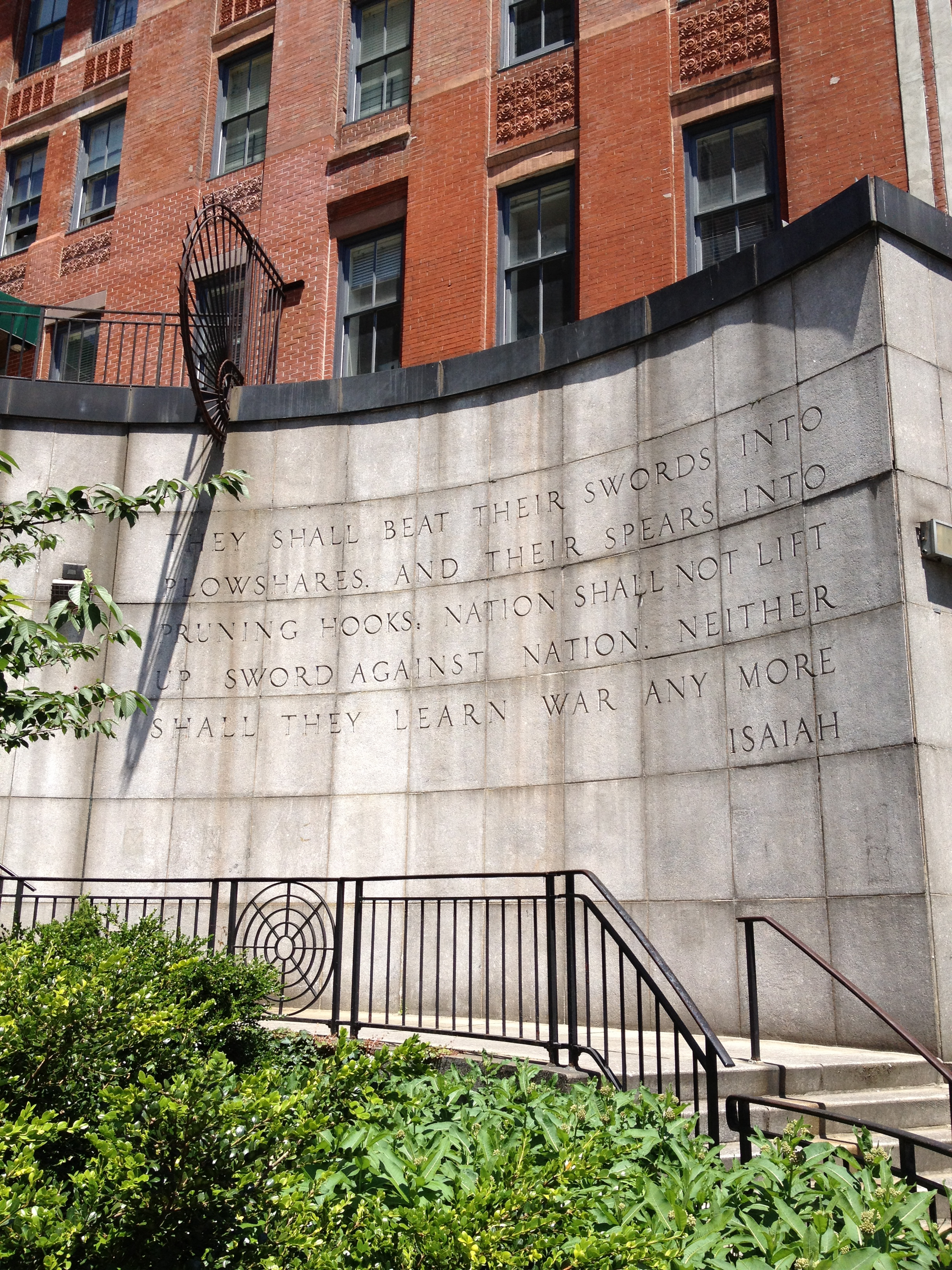
In other cases the sacral nature of a place is hallowed by tradition. Say “the Holy Land” and most people will know that you’re referring to what is now Israel/Palestine. I only traveled there once, but was privileged to stay for about six weeks. Working on an archaeological dig is a rite of passage for young biblical scholars (for such I was at the time), and weekends were spent visiting the places I’d read about since I could first remember. One of the most jarring aspects of the holiness was the evidence of violence. Cars burning by the roadside. Bombs going off in a post office in Jerusalem. Sounds of heavy artillery lobbing explosives through a blue sky during the sunny afternoon. A place so sacred as to be continually baptized in blood. Humans, human memory, are what make a place sacred.

All of this comes to mind with the political posturing of New Jersey governor Chris Christie visiting Israel. God knows New Jersey has enough problems of its own, but it is a relief not to have him hanging around for a while. Nevertheless, what has Trenton to do with Jerusalem? One thing the Middle East doesn’t need is one more bully. Pushing, shoving, crusading, shooting, and bombing haven’t worked for that elusive peace. What value can our dauntless leader add to this unholy mess? Maybe I’m just old fashioned, but I thought governors were supposed to take care of their own problems at home and leave international schmoozing until they got to the big offices. Maybe the race for a GOP nomination isn’t over yet. The most sacred space in this country is a white house that gets sold to the highest bidder every four years. At times there is more wisdom to be found in a parking lot.