Au Fait in the Manger?

On Friday CNN ran a story about the Pope’s new book “debunking” myths surrounding Christmas. The headline certainly looked intriguing, but it turns out that the “myths” debunked are those of a very dim magnitude. Is anyone surprised—gasp!—that Jesus wasn’t actually born on December 25? And, guess what—those cows you’ve always seen in the manger? The Bible doesn’t actually mention them! Angels aren’t at the manger either! What kind of Christmas will this be? A biblical one, it sounds like. I haven’t read Jesus of Nazareth—The Infancy Narratives, but it really doesn’t sound like I need to. The Bible is very spare on stories about Jesus’ birth; nobody knew he would be a Lloyd Webberian superstar at that point, so we have a few loose traditions that tell of humble origins in an obscure setting. Not very good for commercial interests, however, and besides, the average person doesn’t read the Gospels to find out about Christmas. There are far too many television specials to be bothered with “Lo, there were in the same country…”

Christmas was not a big deal until relatively recent times. Now, don’t get me wrong—I’m not a grinch who believes the holiday shouldn’t be celebrated. I see nothing wrong with people giving things away, even if it is to pretend that they are celebrating an ancient Roman-occupied Judean birthday. This is the essence of what being religious should be all about; holidays should be occasions for thinking about others before one’s self. In my lowly opinion anyway. We’ve built an entire economic cycle on it, however, otherwise Black Friday might just be a free day to spend with family and friends instead of being trampled to death at Wal-Mart. Perhaps if society could find a way to distribute wealth more equitably every Friday would be in the black.

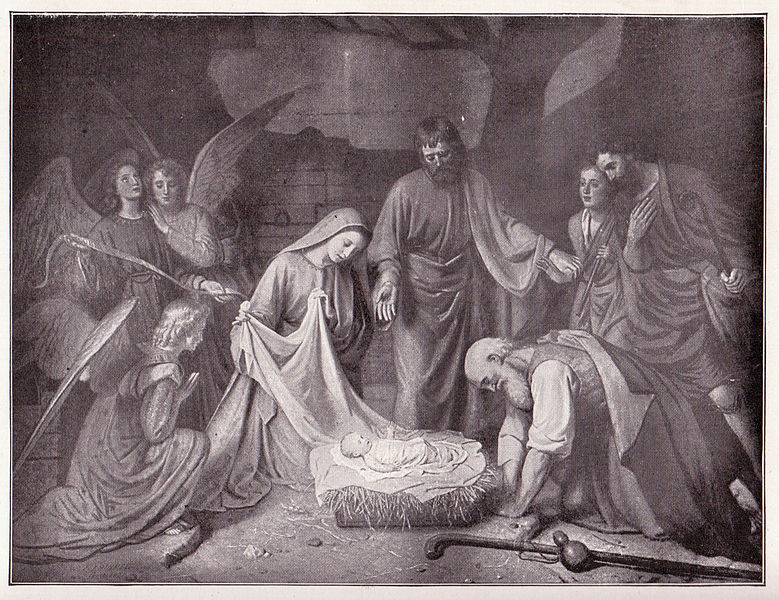
The Pope’s new book is an attempt to make the Catholic tradition appear up-to-date with scholarship. Plans are for the book to be published in an entire Septuagint of languages with a print-run the envy of nearly every academic editor in New York. The problem is there is no real news here. News should be, by definition, new. A book by the Pope declaring the true equality of all people, throwing open full sacerdotal participation to women as well as men, and the distributing of papal wealth to the poor—that would be a Christmas present worth the waiting! Instead, when you pull the shiny paper off this book on December 25, you’ll only discover that you’ve received it on the wrong date and there will be no angels singing. The cattle will be lowing, however, if you can use your imagination.
What’s wrong with this picture?


Gonad Make Disciples

The funny thing about authority is that when it counts those who have it are often afraid to use it. So yesterday the “mother church” (if that honorific still applies) of the Church of England voted not to allow women bishops. According to Reuters, the voting breaks down into three parties: the bishops, the clergy and the laity. The bishops and clergy both approved the motion while the laity fell short of approval by only four votes. My regular readers will know that I normally shy away from coarse language, but I wonder, along with the Joker, “what happened, did your balls drop off?” In a church built around hierarchy, where there is tremendous authority—according to official teaching, the very power to let one in or keep one out of Heaven itself—vested in the clergy, can they not say, “this is the right thing to do” and just do it? In a Protestant milieu where Methodists, Presbyterians and Lutherans have all overcome centuries of chauvinistic stain, why does the Church of England not do what the collected bishops and clergy have decreed correct? Are the laity now running the show?

I have had a long history with the Church of England. As laity I know that when the clergy want to throw their considerable weight around they are not afraid to do so. My entire career was thrown into turmoil because just such tonnage was shifted. And I had met the Archbishop of Canterbury (before he ascended to the throne) as he received an honorary degree from Nashotah House. When a layman could still shake his holy hand. It is time for the church to drop its magical infatuation with testicles and get on with the business of making the world a better place. Otherwise Heaven may include too many football games and deer hunts to really make all of us comfortable. The gender divide should be dropped and the church should be getting on to matters that really could use some compassion, both human and divine.

It seems that the staid laity of the C of E didn’t follow the fortunes of the radical right very closely in the recent elections this side of the big water. The day of exclusivism is over. It should have been long ago. Many have been the times when I was informed that doctrine is not a matter of democracy. Perhaps in an issue so basic, so fundamental as the equality of humankind, this should be one of those instances. The titular head of the Church of England is a woman. Has been for decades. Before Elizabeth the Second, for six decades of the nineteenth century Queen Victoria held that role. I think I speak for the majority of sensible laity when I say, in the spirit of the departed monarch, “We are not amused.”

She’s got the whole world in her hand.


Under the Influence

A news story over the weekend—when oddball stories of religion are welcomed by the media—revealed that a judge in Muskogee County, Oklahoma sentenced a youth to a decade of church for a serious DUI crime. An underage drinker, the defendant committed the unforgivable sin of killing another youth while driving under the influence. It is a sad and tragic case. Law makers in Oklahoma are challenging the church decision, according to the video blurb on Newsy, but there is a much deeper flaw in the logic of Judge Mike Norman here. Had the lack of compassion and common sense so blatantly on display during the recent presidential campaign come from other than committed “Christians” it would have been considered downright shocking. We tend to excuse misanthropy when it comes wrapped in doctrinal packaging, a Twinkie in a Cliff Bar wrapper. The judge himself maybe needs a little churching.

There was a time when the moral values of a good, Protestant upbringing were unquestioned. The problem is, we live in a much more diverse world now. What is particularly telling has been the evangelical response to this growing siblinghood of humankind. It is seen as a great evil, perhaps the reverse of Babel itself. We are bringing people of different religions together in what is comprehended as an unholy mix. Thing is, many of these people participate in religions far older than Christianity that have no Babel story to put themselves in proper context. How can they know they’re inferior unless we can get them to read our Bible, attend our churches, learn our religion?

Timothy McVeigh went to church during his youth. Reverend Jim Jones started his own church. Would time in Westboro Baptist Church in nearby Kansas count? There is a reason that church and state should be kept separate. As an institution the church is nearly as diverse as the human race that invented it. Religion has seldom been the solution to crime. Law enforcement officials used to wear a pentagram for a badge, not a cross. But that was back in the days when Oklahoma was the wild west and white-steepled churches didn’t exist to inveigh against the evils of a satanic symbol worn by the representatives of the territory. And since Oklahoma doesn’t believe in evolution, we’ve got to wonder if some things will ever change.

Would this church be all right?


After the Gold Rush

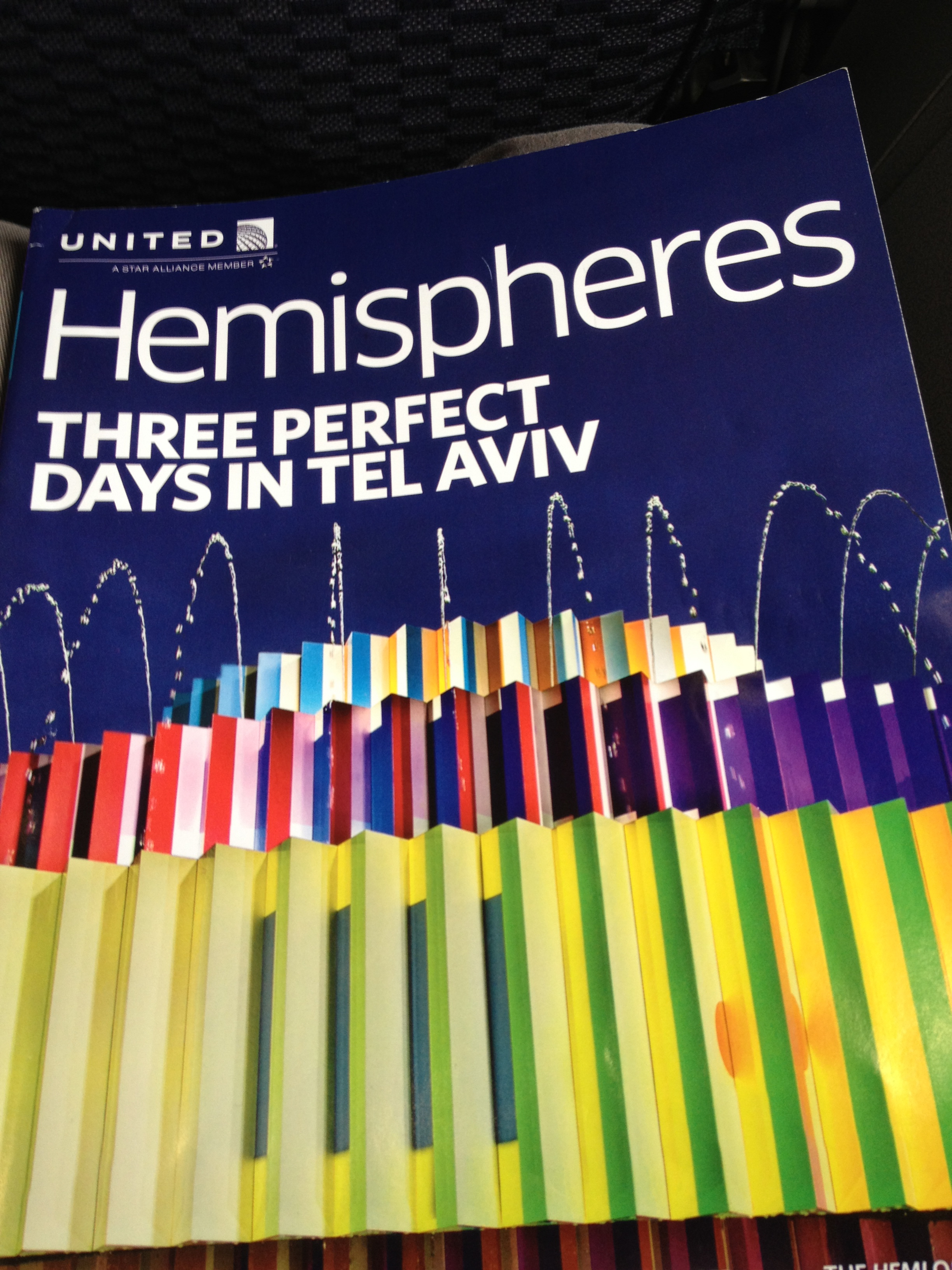
The morning I flew to Chicago for the American Academy of Religion and Society of Biblical Literature annual meeting, the headlines in the morning paper were about the rocket attacks in Tel Aviv. Ironically, the in-flight magazine cover on United, I noticed as I fastened by seat belt securely low across my waist, read “Three Perfect Days in Tel Aviv.” The irony wasn’t so much funny as it was sad. The situation in the Middle East is hopelessly entangled, but it all comes down to our obsession with dividing people into groups. Religious, ethnic, social: somehow we are not like them. We’re better, superior in some way. It matters not that proving superiority is a purely subjective enterprise. After all, we just know it. When history places one persecuted group in a position of persecuting another group, well, I’m afraid we all know what happens.

The problems in the Middle East are largely biblical and predominantly petroleum-based. Even those who tend to read the Bible figuratively can see a land claim based on an Abraham who probably never existed as strangely literal. Especially when there’s oil in them thar wells. Isolationism served the United States well until it was discovered that they had more black gold than even Texas does. Establishing a foothold in the region was not such a subtle policy; the x-ray vision of politicians funded by heavy industry saw beneath the sandy soil to the real deity that lay beneath. Dig a well, hit a gusher, and, like the Bible says, “he anointeth my head with oil, my cup runneth over.” Good news for modern capitalists. But some people will have to die.

As I sat in the lobby of a posh hotel, waiting for an appointment, I heard a fragment of a conversation as a couple of scholars rushed by. They were discussing the aftermath of the rocket attacks on Tel Aviv. One suggested to the other, in the context of how many Palestinians might die in retaliation, “well, if they can keep the numbers down…” and then they were gone. My mind jumped to The Prisoner. “I am not a number, I am a free man!” crashed in my head with the way that the dead in the Middle East are piled up as “the numbers.” I’m sure it was only intended as a convenient turn of phrase. Outside the hotel lobby the striking workers from the Hyatt labor disputes were protesting in a cold, crisp Chicago morning. They were soon cleared away. My fear, Number Six, is that you are wrong. We are all numbers, even the best of us.


Dreaming of a Black Xmas

By my best reckoning, Thanksgiving has not yet taken place this year. Since Halloween, such as it was, is now over, we must still be in November. As I was exiting my office building last Wednesday, I noticed that the holiday tree was already going up in the lobby. A few blocks away and I heard the first Salvation Army bells of the season and shouts of holiday cheer. The great tree in Rockefeller Center was being erected. (I picture burly guys with a super-sized tree stand swearing in the cold air—”Left, nudge it to the left!”) Maybe it’s just a storm-weary city glad to be rid of Sandy, but it does seem to be a bit early to me. Holidays, in any modern sense of the word are about opening wallets and injecting cash into the system. The very corpuscles of capitalism. I enjoy holiday cheer as much as the next guy or gal, but I don’t mind waiting for it to arrive. Antici-

Holiday seasons are as old as holy days themselves. In our work-obsessed culture, however, convincing bosses of the regenerative utility of granting more than a single day off at a time is an uphill battle. Productivity is what we’re all about. And so we lengthen our public show of holidays instead. Thanksgiving’s not much of a banker except for grocers, and although turkeys may make great primary school decorations, they don’t really match the productivity and professionalism that corporate offices like to promote. The December holidays, however, give us Black Friday. Listening to the news over the last few days, it is clear that many people are biding their time, already ready to get those distant family members out the door, and let’s get those bargains! pation.

Holidays reflect what we hold sacred. I’m not one of those purists grinches who see gift-giving as some inherent evil—in fact, giving things away is one of the under-utilized tenets of most major religions—but I do wonder how much of it is an appeal to the ego. I feel good when I make someone else happy. Yet at some level, I’ve indebted them to me. I’ve made a business deal. The holy days have been infected with capitalism. Warm memories of not having to go to school for nearly two whole weeks, being with my family—the place I was unquestioningly accepted—and getting presents as well? What could be more sacred than that? But I’m getting ahead of myself. It is still mid-November. After all, Black Friday (and what’s that day before that called?) hasn’t even started yet.

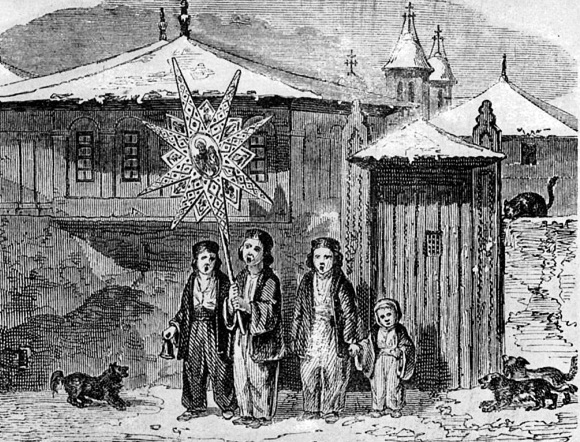
A waif in a manger?


Night of the Johnstown Flood

Floods always have a whiff of old Noah about them. I first heard of the Johnstown flood from a minister who has had a profound impact on my life. He had been in Johnstown for the 1977 flood, and that led me to learn a little bit about America’s first great natural disaster. I decided to follow up David R. Montgomery’s flood book by David McCullough’s The Johnstown Flood. Like most stories of human tragedy, this devastating flood combined elements of human culpability with nature’s own inscrutable workings. The 1889 flood came during an unusually heavy rainstorm. Some years before, an exclusive millionaire’s club had repaired an artificial dam rebuilt for the recreation of the wealthy high above the town. Records show the repairs to have been lackluster—at one point they purchased hay to act as cheap fill. Although the members knew of the danger they did nothing to avert the deadly potential a breech in the dam would inevitably cause. When the dam burst during the storm, over 2200 people died.

Wrenching, like most natural disaster accounts are, the story of human misery raises questions of theodicy and basic humanity. Members of the club were those who ran Pittsburgh in the days before their steel mills fell silent. Apart from a few like Andrew Carnegie, who gave generously to those in dire need after the tragedy, most of club members gave nothing to the relief effort for what their negligence helped cause. They hadn’t even hired an engineer to consult about their dam project when they decided to rebuild it. Lawsuits filed failed to touch them; the suffering of thousands failed to move them. Fast forward just over a century—as the towers of the wealthy came down the working class tried to save as many as they could, some at the cost of their own lives. We all know who are regarded as the heroes.

“Was it not the likes of them [club members] that were bringing in the [foreign workers], buying legislatures, cutting wages, and getting a great deal richer than was right or good for any mortal man in a free, democratic country?” McCullough’s words, explaining the sense of those who’d lost everything to the idle dalliances of the leisured class, still ring true in the world of one percenters. Often it takes a tragedy to bring society’s inequalities into focus. As a nation we’ve gone on to have even more costly disasters since May 31, 1889, but the instability built by corporate greed has kept pace, indeed, perhaps even surpassed what it was back then. “And God saw that the wickedness of man was great in the earth, and that every imagination of the thoughts of his heart was only evil continually,” or so I have it on good authority.


Blame it on the Rain

I’ve been on the losing side of my share of elections (although it feels like far more than my share), but I’m amazed at the character of the GOP that has come through these last few days. The quote that keeps running through my mind comes from The Dark Knight when the Joker says to the Chechen that if they cut him up and fed him to his hounds, “then we’ll see how loyal a hungry dog really is.” Blame has been flying thick and fast, but one thing I don’t hear any Tea Partiers suggesting is that Hurricane Sandy was sent by God to seal the election for Obama. Hurricane Katrina may have been sent by God to wipe out the sinners in New Orleans, but when Sandy gave a chance for Obama to show his true colors, it was just a freak storm. I’ve never been a fan of Chris Christie, New Jersey’s bully governor. During Hurricane Sandy and its aftermath, however, I was very impressed how he handled the situation. He showed a rare side full of compassion for those who were suffering. He vowed to help President Obama make things right again. When the storm of the election was over, however, Christie’s own party verbally crucified him for doing the right thing. Does this not show us just what white privilege spawns?

Turning back the clock is an exercise best left for post-apocalyptic scenarios of rebuilding society and the occasional spring or fall weekend. As our world makes progress—and yes, it is slowly making it—we must constantly reassess the situation. The ethics of the 1950s favored white men, the mores were blithely uninformed that an entire world exists outside this strange isolationism that could only be broken when Communists threatened our way of life. We are over half-a-century beyond that: the Berlin Wall has fallen, the Cuban missiles are gone, and those seeking to move to America are by and large the tired, the poor, and those yearning to breathe free. Not all of them are “white.” Not all of them are male. They are, like the rest of us, human beings.

I have never wished want or deprivation on anyone. I know what moderate want feel like (I lost an entire day of my college education searching for three dollars that fell out of my pocket, wondering how I would make it through the week without it). I have spent several years of my life tip-toeing around unemployment, and sometimes falling into that crevasse for a year or two at a time. Each time I claw my way out I earnestly wish that no one would ever have to face that. A political party that puts such a strong emphasis on giving up all the good we’ve managed to obtain, and cries about health care that doesn’t even approach the humane, universal care available in just about every other “first world” nation, is a party in need of serious, prolonged soul-searching. On this day when we honor veterans who, despite personal differences, stood side-by-side for the good of their country, perhaps those attacking their own might in days of privilege spend a few moments in serious thought.

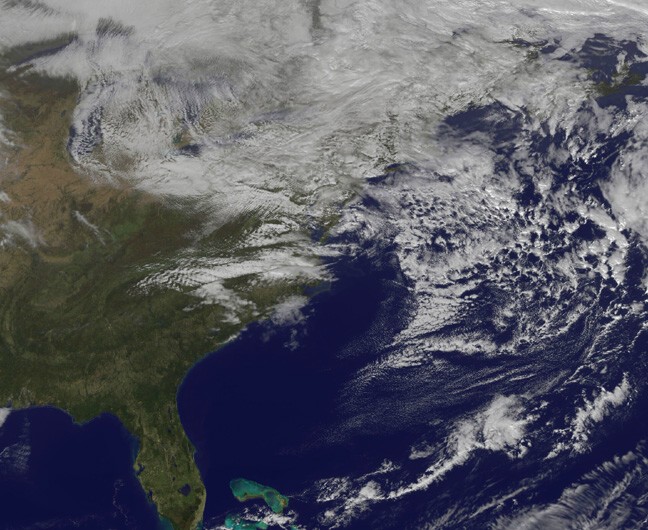
Blame it on the rain…


November’s Vampires

It may have been the year without a Halloween here in the northeast coastal region of the United States, but it looks like some of the spirit has persisted into November. My daughter was disappointed when, due to storm damage, our local borough cancelled Trick-or-Treating for this year. So I was intrigued when I spotted a news story yesterday discussing Prince Charles’ relationship to Vlad the Impaler, the historical Dracula of yore. (And a good Christian by his own reckoning.) I wondered about the timing of the story until I noticed the gothic script on Google’s search page and realized that yesterday was Bram Stoker’s 165th birthday. Well, it would have been, supposing that he has remained dead since 1912. Completely unrelated to this anniversary, I read Dracula again in September through October and realized just how religiously charged a story it is. The Church of Ireland, to which Stoker’s family belonged, was Anglican in name and identified with both Catholic and Protestant traditions. In Dracula the more Catholic side seems to predominate.

Prince Charles’ connection to Vlad Tepes suggests perhaps a deeper meaning. The short news clip I saw (I can’t recall which network it was on) noted that the connection is being promoted by Romanian tourist agencies. Nevertheless, Prince Charles appears in the material acknowledging his hereditary connection to Vlad III, and noting that Transylvania has much to teach us. (He goes on to explain that the people of Romania have a lot to teach other Europeans about sustainable practices.) I could not help but note the irony of a member of the royal family, however, inviting comparison with a character who came to be known as the drainer of other people’s blood. Taking that which by no rights belongs to them.

Perhaps it never occurs to those with great wealth that what they amass is absconded from others. In a world that holds to a social contract that values money—which is merely a symbol—for some to have excess means that others will have less than adequate amounts. I’ve always had trouble understanding such selfishness. Perhaps it was being raised in a Christian environment with siblings with whom I was expected to share. Maybe it was just a part of the sober assessment of the social injustice I began to notice when I was a teenager. Somehow I’ve never felt entitled to much, but I do wonder how others can justify taking more than they need while knowing that many others suffer from real want. It is a matter of degrees, I realize, and we all do it to some extent. I have never complained about taxes because I know that my eyes too may be blinded by the beguiling glitter of gold. When the very wealthy don’t pay taxes (not pointing any particular fingers here), they too, like Prince Charles, may claim to be true descendants of Dracula.

Just add vampire of choice


Substance of Faith

Every once in a very great while, faith is rewarded. I’m not talking about the faith that is bound up in black leather, inaccessible to realists who struggle daily to keep going. No, this particular faith is human based, based on my fellow citizens who saw it necessary to do the right thing. Although I have to rise before 4 a.m. to get to work, I tossed all night wondering what was happening at the polls. Obama’s reelection meant more to me than I guess I even realized. You see, I look at elections symbolically. Not as overtly black and white as Dark Vader and Luke Skywalker (neither candidate is pure good or evil), but I see that candidates stand for something. I don’t care what religion a president claims, but I do watch closely for what they value. Money, to my way of thinking, is not the way to build a society. Once in a while the rich need to be reminded that no, money can’t buy you everything.

Politics went off the rails when conservative religious issues were mingled with unfettered entrepreneurial aspirations during my formative years. God, I hope those days are over! People often vote with their emotions and studies have repeatedly shown that even conservative religionists like George W. Bush did not deliver a more productive, biblically literate nation after eight years of fumbling in the dark. The legacy was a national debt that should have been an embarrassment and a deeply polarized society. I was glad for the GOP nomination of Mitt Romney—it was a chance to test if the privilege of wealth had a chance of winning without the evangelical interests who see Mormonism as a “cult.” My faith in the American people paid off.

No, Obama’s first term was not a picnic, but every time I peeked, it sure looked like hard work was being done. Prolonged vacations to the ranch seemed to be a thing of the past. Difficult thinking was given a place in the nation’s capital again. If we want the one percenters to get the message, we must shout loudly. They live far, far above the rest of us in sound-insulated penthouses and never have to wait in line four hours just to buy gasoline. There is work to be done, and it has to start at the street level, if not below. This is faith. Quoting the Bible while bombing your enemies and protecting the wealthy elite is disingenuous in anybody’s ethical playbook. Thank you America for showing that giving in is not the only option. Tonight I will be able to sleep.


Vote!

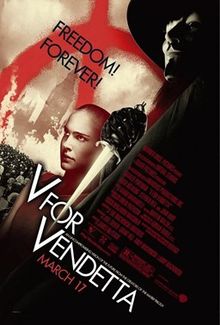
“Remember, remember the fifth of November.” Election day is upon us and my mind goes to V for Vendetta. The movie is about oppressive regimes and, more importantly, people finding a voice. It is a strongly emotional film for me not because of the violence, but because of the symbolism. Yes, V is out for vengeance, but we are all V, having been co-opted into a system that doesn’t seem to have our best interests at heart. At least we can vote. The scene at the very end, where V’s future, alternate universe gunpowder plot succeeds, always leaves me with damp eyes. By virtue of watching many movies, I am not prone to shed tears at what I know to be fiction. But some fiction possesses a verisimilitude that fact lacks. V for Vendetta is one such fictional vision.

I grew up a Fundamentalist Republican before such a combination was de rigueur. I also grew up believing in liberty, an idea that often resonates with those who don’t have much in the way of material goods. At least we have our freedom. By the time I attended a Christian college, I learned the error of my ways. I asked around to find out why America always seemed to get involved with conflicts under GOP administrations. I learned that, in some cases anyway, belief that Armageddon was around the corner motivated such wars. Even some presidents believed, as their religion taught, that the end of the world was nigh and it was their duty to hasten the process. Be careful what you vote for.

As I stood in long lines waiting for a bus out of New York City yesterday, I listened as other passengers wanted to talk. Hurricane Sandy left many people in poor circumstances, feeling the pain that is only alleviated by sharing. They told of devastated neighborhoods where people who hardly knew one another came together, naturally, to help each other. I listened to descriptions of those with power opening their houses and sharing their food with people they didn’t know. It wasn’t because the government forced them to—they did it because it was the right thing to do. When I watch V for Vendetta I don’t cry because I approve of violence; I have been a pacifist since childhood. I cry because the vision of justice prevailing is so beautiful that no other response seems appropriate. With that vision in mind, I am heading out to vote.


Hard to Digest

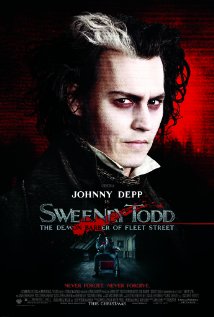
Sweeny Todd has never been one of my favorite shows, but the dark humor and gratuitous bloodshed made it seem somehow appropriate as a November movie after a hurricane. I’m referring to the Tim Burton movie, of course, and as I watched it this time I noticed a few religious themes that I had overlooked in previous viewings. The story is not complex: a barber is robbed of his young wife by a powerful establishment cad and determines that the time has come to exact his revenge. Along the way he rents a room from the hapless pie-maker Mrs. Lovett on Fleet Street and puts his murderous revenge to work supplying her with meat for her pies. The song where they hatch their nefarious plot, “A Little Priest,” is filled with innuendo and even a little social commentary. As the schemers look out at the crowds of London, several of their potential victims are mentioned as clergy.

When Todd asks Lovett if the priest is good she replies, “too good at least,” noting that its only fat where it sat. “Not as hearty as bishop,” nor “as bland as curate,” Todd observes. Mistaking a grocer for a vicar because it’s “thicker,” the duet eventually warble that the friar’s drier, but overall the clergy are “too coarse and too mealy.” Stephen Sondheim and Hugh Wheeler are not theologians, naturally, but it is noteworthy that the only role the clergy play in this film/musical, which is ultimately about social justice, is as fatty meat. When Benjamin Barker is wronged, the clergy are never mentioned as recourse or balance to a corrupt official. The church is simply establishment, a comfortable and expected part of the environment.

Johnny Depp portrays a mostly believable sociopath, interestingly reversing his first big screen role in Nightmare on Elm Street where he is the victim of a psychopath with razors for fingers. Edward Scissorhands, another step on the evolution from victim to perpetrator, found Depp with blades for fingers. In Sweeny Todd he declares with a straight razor held aloft, “at last my arm’s complete again!” The pattern here is a sad but familiar one. The victim who finds no redress in society adopts the role of the vigilante or the perpetuator of victimization. Who might step in to interrupt this cycle if not the clergy? But to return to “A Little Priest”: Todd observes that what the world terms business as usual is really one man eating another (this is, after all, patriarchal Victorian London). This may be the piece that at last makes sense of the puzzle. What is truly diabolical is not one man’s revenge, but the system that insists all play by the rules of genteel cannibalism while persistently calling it civilization.


Two Swords

One of the more interesting situations to emerge from Hurricane Sandy’s aftermath was the celebration of Halloween. I know that I’ve already lost some readers right there since Halloween is a disputed holiday. Often Halloween is maligned as “Satanic,” a claim that is absolutely untrue. It may have some paganism in its roots, but then, so do most religious events and ideas. Halloween is a Christianization of various folk customs, frequently Celtic in origin, on a night when the protective wall between the living and the dead was believed to be especially thin. As adults grew more sophisticated and scientifically informed, the holiday lingered as a children’s fun day with dress-up and pranking, both normal childhood ways of playing. This neutered holiday has proved to be commercially viable as well, now supporting September-October Halloween stores at a density of about a dozen per square mile. Its success is rivaled only by Christmas.

In light (or perhaps dark) of the devastation of Sandy, New Jersey Governor Chris Christie canceled Halloween. We heard the news on our battery-operated radio, sitting in the dark. While this was one of those rare times when I think Christie was motivated by the concern of both poor and rich, I did ponder the implications of a government canceling a holiday. All Hallows’ Eve is the night before All Saints’ Day. “Hallows” is simply another—less used but more evocative—word for “Saints.” While largely secular in its present guise, Halloween is a religious holiday. My mind went back to the doctrine of Two Swords that I learned about many years ago. Originating in the papal bull Unam Sanctum, very early in the fourteenth century, the doctrine teaches that in spiritual matters the church holds the sword while in temporal matters the state holds its own sword. Who has the right to cancel a holiday?

Of course, Chris Christie has his own ways of issuing bull, but his real concern was that conditions were too dangerous for trick-or-treating. Indeed they were. On a short walk, I saw power cables dangling like electrified cobwebs on just about every block, snaking along the ground. Branches were still falling from trees. Curfews (many still in effect) were widespread. Not a good night for masked strangers to show up at your door. But as in the case of the Grinch leaning out over Whoville after he’d stolen all the trappings, Halloween came, it came just the same. What we saw on Halloween was people helping one another. No tricks (for the most part, although among the first to recover were businesses who recorded new ads to broadcast on the radio before the wind even stopped blowing), just good natured mortals helping one another, protecting others from the grim reaper. To borrow a line from Charles Schultz, “That’s what Halloween’s all about, Charlie Brown.”

Will the real Halloween raise its hand?


Silent Fright

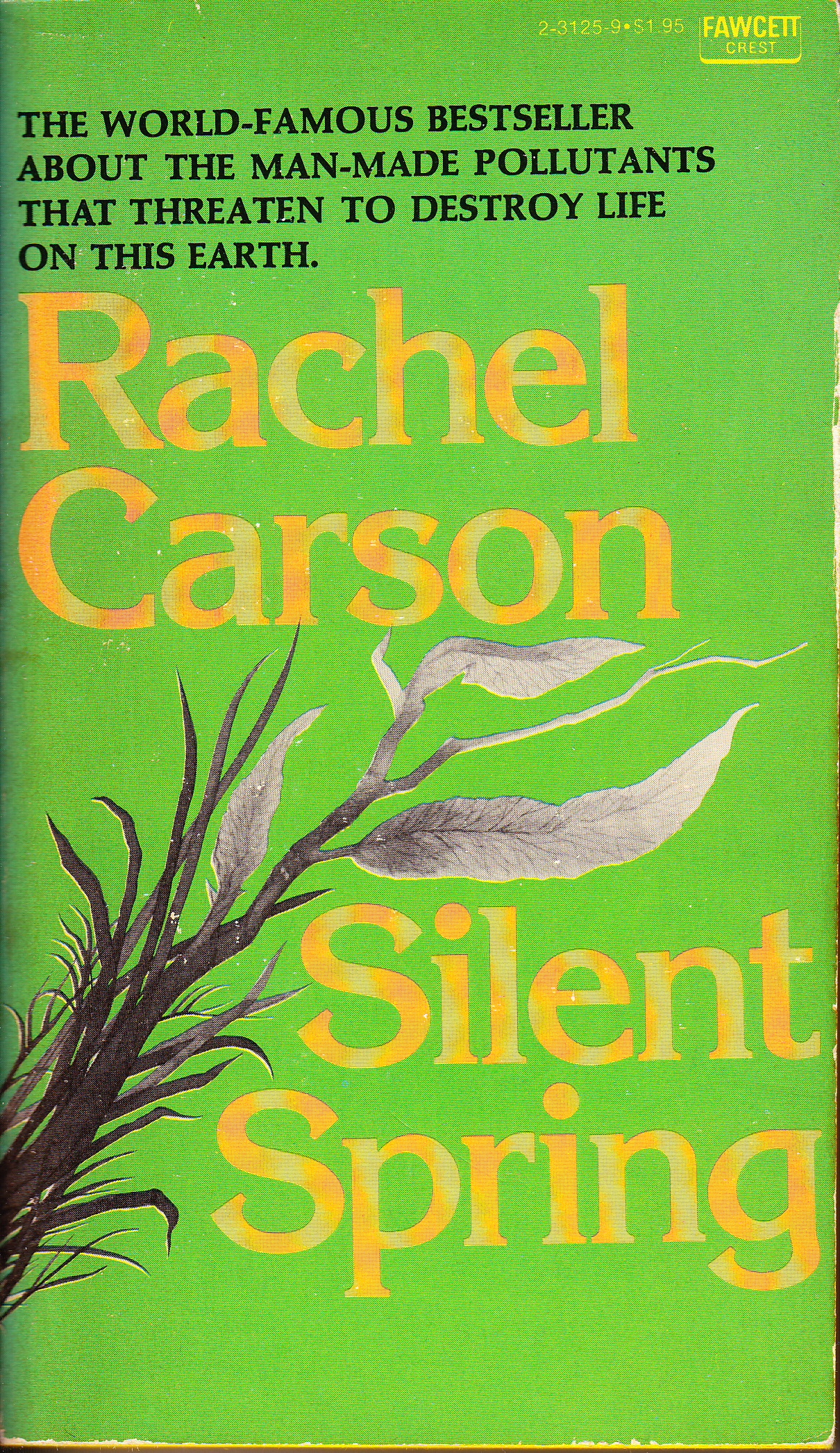
“[A] sight to be endured with one’s mind closed to thoughts of the sterile and hideous world we are letting our technicians make,” is how Rachel Carson described the indiscriminate use of herbicides fifty years ago. Silent Spring, although clearly dated, remains a chilling book for a number of reasons. One of the most obvious is that although the book is half-a-century old, the breakdown of some of our toxins released into the environment before it was written is still not complete. And perhaps more frightening still is the fact that we continue to stumble forward without giving enough thought to where our actions against our planet might lead. The quote above presses urgently at the heart of the matter: those with the destructive interests are almost always those who set the agenda. As Carson noted fifty years ago, the right of the nature lover to enjoy an unspoiled part of nature is just as valid as the right of the greedy to rape the landscape for “resources.” But we all know who eventually gets their way.

On a finite planet with finite resources, one of those that cannot be replaced is the beauty that nature has spent billions of years evolving us to appreciate. Desire for beauty reaches down to our most primal and basic levels. In the United States how many people drive hundreds or thousands of miles just to see Yellowstone every year? And yet, last time I was there I spied an empty can carelessly tossed into one of the stunning blue hot pools that require a delicate balance of nature to maintain. Those who appreciate the glory must always be those who pay the price. The fancy name for this is aesthetics, and some writers have suggested that the violation of beauty is a deeply disturbing problem on a philosophical or theological level. The basics are easily comprehended: we mar the planet at the cost of not only our own, but of every future generation.

Silent Spring warned those empowered to make laws that a dangerous road had already been selected. The radioactive fallout from bombs detonated to indicate national superiority continues to render some locations uninhabitable, and all of us carry traces of toxins that others have spread in our bodies. Humans, as Prometheus represents, have the ability of forethought. It is not always easy; in fact, it is often very hard. Somewhere back in a cave somewhere, long, long ago, even before our species emerged, future humans realized how. We teach. We teach our young of the dangers we’ve discovered, and instruct them to avoid them. As society evolved, money—the ultimate poison—crept into the environment and education became devalued. Even now, higher education—established for the joy of learning—has become economically driven job training. And people we’ve never met, and companies we’ve never heard of, pay off those who make laws, and another piece of our pristine environment disappears. Silent Spring remains in print, but how can we convince the disinterested to read it?


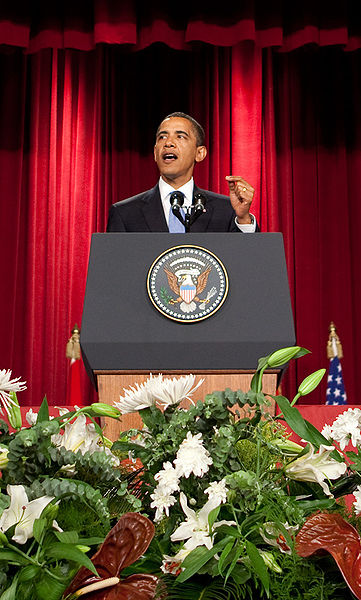
Endorsement

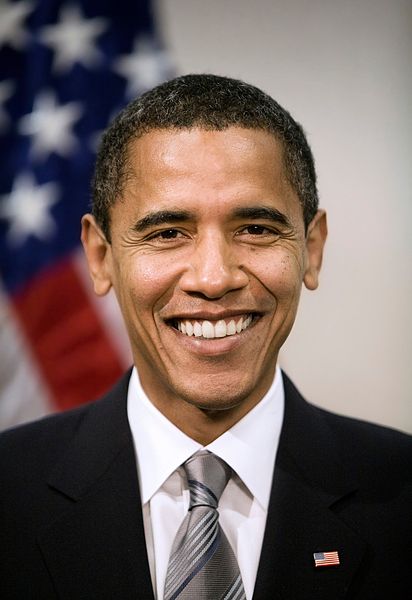
Since a blog is a variety of media, and since media endorse their candidates, Sects and Violence in the Ancient World endorses Barack Obama for President of the United States. I endorse Obama for the working class, for those who think clearly, and for those whom society doesn’t give a chance.

Working class credentials are at a premium these days among politicians who want to appear to be just like the most of us. Often it is, in the words of Bruce Springsteen, “a rich man in a poor man’s shirt.” Some of us, many of us, maybe most of us, have grown up in the working class. We are fed a theologically conservative line by our clergy and sometimes they make efforts to wrap it loosely around political conservatism as well. I don’t buy it. I grew up working class and that mentality has never changed. This is something Obama understands. He may not be perfect, but in this working world, none of us are. Empathy is still currency.

Bemusement would be my reaction to the factual gaffs made by not only Mitt Romney but also most presidential candidates from the GOP over the last two decades, were they not so serious. They show a loss of touch not only with the average person, but with reality itself. In their world of corporate-level wealth and extreme privilege they don’t even have to obey the laws of climate change as long as their obsequious sycophants are willing to change the facts for them. I am amazed at how easily the wool is pulled over the eyes of the American public. Does anybody really listen to what these guys are saying? Does anybody bother to try to add it all up? No, not even a slide rule will help.

The economy was not fixed over night. Too many years of too much greed have dug us deep, deep in a rut. From their armored cars speeding along in the midst of motorcades maybe the politicians don’t see the homeless I walk past every day on my way to work in the richest city in the nation. Maybe they don’t see the utter lack of hope, the death of possibility in the eyes of those who, through no fault of their own, society deems useless. I’ve been unemployed, even though I played by the rules. I learned there are no rules, save one. Those with wealth will do whatever it takes to keep it.

I think Barack Obama understands all these points. As for the honorable opposition, I think his diamond-lens glasses may have grown too thick to read clearly what the tablets say. And those tablets, I’m told, are made of gold.


Mrs. Jesus

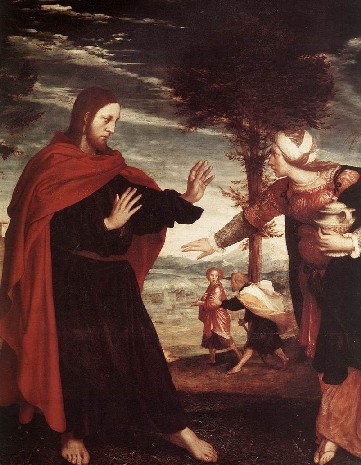
First we learned that Yahweh was married. Then we hear, “like father, like son.” A Galilean tempest in a Wonderland teapot. A papyrus fragment from centuries after the fact implies Jesus might have been married and the media smells blood. The scholars who translated the materials tried very hard to demonstrate that their efforts indicated nothing about the historical Jesus, but that doesn’t sell newspapers, magazines, and website hits. Jesus being married does. Spying an article about this in the Chronicle of Higher Education recently, I pondered why this might be. Why the great fuss over Jesus’ potential marriage? This is not an easy fabric to unweave. Americans have been routinely taught to idealize Jesus in order to underscore his divinity. A man without warts, no faults, perfect hygiene, completely symmetrical. His unwed nature is silent testimony to male superiority—when God chose to incarnate, he picked a masculine template. And for a man to need anything is a sign of weakness. If some Coptic Gnostic suggests that maybe Jesus had a weakness after all, well, that’s scandal enough to sell a million copies right there.

Theologians are quick to say that God is really beyond gender, but we sexual beings are so, well, focused on our biological packaging that we just can’t conceive a deity any other way. American culture thrives on the concept of a personal relationship with God. It is difficult to have a relationship without assessing the sexual roles. More than reproduction, our sexuality defines how we interact with others. By recasting Jesus as a married man, the whole dynamic is thrown off. Girls who are taught to uphold the virginal Jesus as an ideal man would now have to create room for the other woman. Boys would no longer have to consider the monastery. Overestimating the impact of marrying off Jesus in this country might well prove impossible.

The Chronicle takes a bemused look at the issue, as befits a disaffected, intellectual publication. For most Americans the relationship can never be so diffident. Scholars may find it funny, but we are vastly outnumbered. Like a divine paternity test, ink analysis of the papyrus fragment is out at the lab. If it’s just another forgery, life goes on much as before. The fact is, as has been stressed all along, all that can be potentially proven is that some people in the fourth century thought Jesus had a main squeeze. People have wondered that for centuries, with or without a papyrus to spark discussion. We are sexual beings, and like Xenophanes’s horses, our gods must look like us or become like the shadow over Innsmouth.

“And I think the couch should go over there!”