The Ides of March

In the days of ancient Rome, politicians as well as plebeians feared the interference of the gods. Auspicious days were ignored, even by emperors, at their own peril. In my Mythology class the concept of hubris frequently emerges. Generally thought to be excessive pride, hubris can take many forms. Whenever a mere mortal strives for godhood, however innocently, it must be punished. Julius Caesar, declaring himself emperor, had to face the wrath of the gods. The ides of March kept in check the ambitions of the powerful. In a world where the political become too powerful, the very phases of the moon step in to restore balance.

The ides seem to have their origin in the date of the full moon. The month of March, named after the god Mars, featured a military parade on the ides. Then, as now, political power is simply the form of government backed by the military. The history of human unrest, especially notable since the American and French revolutions when the common people shouted, “Enough!”, is where might is shown not to equal right. Pontiffs and presidents, enamored of firepower and its blandishments, appear like Caesar before their populaces, confident in their wealth and military backing.

The concept of hubris might once again be meaningful to a culture under siege. As pundits and politicians make bids for places of abusive power, confident that there is no one above them, ethics are reformed in their own images. Have they not become their own gods? We the people bow to their vision of what should be. How many political leaders retire to uncertain futures because their own pensions have been slashed and healthcare diminished? Those who care for them in their dotage are the very children whose educational funds they’ve slashed. Hubris? It behooves all of us to beware the ides of March. Most, like Caesar, will ignore the warning and don the purple. Those who read, however, will not anger the gods.
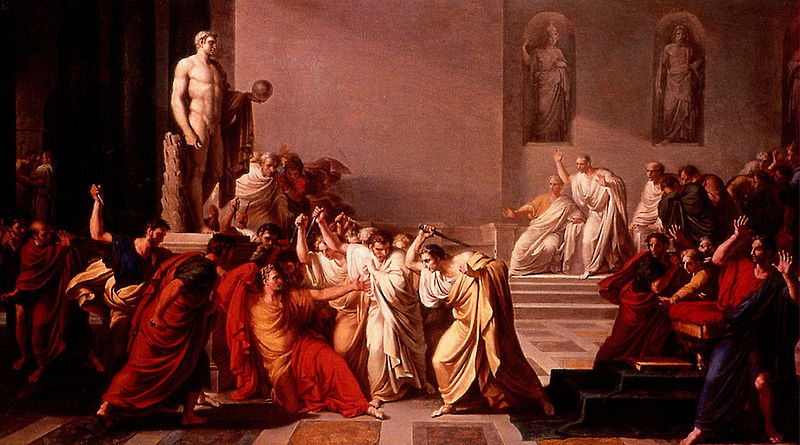
Et tu, Brutus?



Jane Who?

“Conventionality is not morality. Self-righteousness is not religion. To attack the first is not to assail the last.” So states Charlotte Brontë in the preface to the second edition of Jane Eyre. I am inclined to believe that the lines were widely ignored by clergy and politicians, for public leaders in nineteenth century Britain were not likely to take the advice of a young lady who only had one real credit to her name. Politicians and clergy of twenty-first century America can hardly be expected to have read Jane Eyre, for how would this woman know the harsh realities of how to assert one’s own will on the masses? In the stewing tea pot of the Religious Right, conventionality is morality. Self-righteousness is religion. George Santayana might well have saved his cramped fingers from writing, “Those who cannot remember the past are condemned to repeat it.”

As politicians oil their moving parts in preparation for next year’s great race, they know that many constituents will gladly accept conventionality as morality without asking about the origins of such practices. Schoolyard bullies who seek their own aspirations praise the great darkness that has settled over New Jersey where education is simply a commodity with which to bargain. Jane Eyre? Who’s she? If she’s a constituent, I’d better spin this slashing of education funds to her liking. Without an educated public, it is much easier to bolster one’s personal authority.

For years educators have been watching in dismay as other developed nations soar past American expertise in science, math, and even geography. Our response: let’s cut education funding. Conventionality is morality. Education teaches children to think for themselves. Is it not better to show them that self-righteousness is religion? We can put other religions on trial (thank you, Mr. King), while conveniently forgetting our founders were largely religious dissenters. To know that, however, you have to read a little history. We are far too busy plotting how to shortchange our future in order to feather further already overly plush nests.


Thy King Dumb Come

Is it legal to be Muslim? It is against the law to be religious? What about an extremist? The Peter King Trials, under the auspices of the almighty House Homeland Security Committee, are attempting to put radical Islamists on trial. My question is: when was the last time they cleaned their own backyard? Religions make extreme claims. As long ago as Yahweh thundering from Mount Sinai, adherents to monotheistic religions have claimed that their interpretation of God demands many unsavory actions – genocide, infanticide, war-time rape – all permissible in the Holy Bible. When terrorists draw their inspiration from the Quran, however, it crosses that invisible line in the sand. During the deepest chill of the Cold War nobody thought to bring Russian Orthodox Christians to trial. After all, they are cut from the same monotheistic cloth.

The damage done by Christian extremists is less visible, or at least more forgivable, in American eyes. Innocent mistakes, people doing what they thought that God demanded. It could happen to anybody. As long as they are Christian. As we daily watch the infectious creeping of Fundamentalism and its subtle (or overt) violence against those who are different, in a great move of theatrical diversion, King and his minions try to focus blame on “pagans.” Right belief, the afterbirth of monotheism, has taken on a life of its own. It can brook no rivals. If it is Christian right belief it can support the sale of fellow human beings, the dehumanization of prisoners of war, the starvation of the young. They are, after all, not Christian. Not like us.

In the words of the King, “Too many of the leaders of the Muslim community… are not cooperative and are not willing to speak out and condemn this radicalization that’s going on.” Physician, heal thyself. Radicalization in the name of Christianity is acceptable, even laudable. It is just part of the frontier, pioneering spirit of this great nation. Other religions, however, need not apply for freedom. After all, what do they think this is – a democracy?

Just following the king of kings


Myth of Jerusalem

As I stood atop the Mount of Olives watching the sun set over Jerusalem several years ago, I had difficulty believing I was actually there. For a working class kid who’d only ever been to Canada before (and only because we lived not too far from Niagara Falls), this was a moment like a scene from the Bible itself. Jerusalem is a city of myth and dream, and it represents just how seriously mythology may be taken. A new book, Jerusalem, Jerusalem: How the Ancient City Ignited Our Modern World, by James Carroll, was reviewed in Sunday’s newspaper. I have not yet read the book myself, but a couple of lines from Tom Mackin’s review leapt out at me: “Jerusalem is as much a symbol as a reality. Because most Orthodox males spend their time studying the Torah, they are unemployed. Piety brings poverty.” This is editorializing with parsimony.

Those of us raised to believe that pursuit of the highest calling of humankind is that of seeking the divine often end up forced to live the consequences. This pursuit does not pay, unless one is willing to sell one’s soul to become a televangelist. Unemployment has a way of sharpening one’s focus. The message repeatedly heaped upon you by society is that you have nothing of value to contribute. True, religious founders often declare the ineffectual satisfaction of lucre, but then, most of them didn’t have a child to put through college. Having spent nine years after high school studying the Torah (and Prophets and Writings and documents written long before any of this), I see now what could not be seen then.

When I watched the sun set over Jerusalem with some friends, a stray cat wandered over, looking for affection. Or, more likely, food. I had some scraps that I shared with the hungry kitten when it unexpectedly bit my finger and scampered away. My friends, concerned for rabies or some other infection, rushed me down the Mount of Olives and into the Holy City seeking a holy pharmacy. Little did I know at the time that a myth was being enacted at the expense of my aching finger. Acts of kindness are rewarded with the hand that feeds being bitten. I had to come down from the mountain, earn a doctorate, and be dismissed by well-groomed evangelicals before I could finally see that the symbol was the same as reality. I need to read this book to restore my faith in mythology.

More and less than it seems


Gila’s Got the Whole World

Singing pretty-boys and colossal lizards – it must be time for The Giant Gila Monster. A horror film that portrays all the innocence of the 1950s before the Beat Generation led us down the path to reality, the film has earned cult status in recent years. More accurately titled, “A Regular-Sized Gila Monster Filmed in Close-Up,” the sub-mediocrity of the movie has probably done more for preserving it in popular culture than any other aspect. The film stars the relatively unknown Don Sullivan as a great teen role model who writes and performs his own songs. The number that receives the most Internet attention, and the one that makes this movie of interest to this blog is “The Mushroom Song.” Chase Winstead (Sullivan’s character) has a young sister who is just learning to walk with leg braces. To cheer her, he picks up a ukulele and sings: “And the Lord he said I created for you/A world of joy from out of the blue/And all that is left to complete the joy–/Just the laugh of a girl and boy/And there was a garden, a beautiful garden/Held in the arms of a world without joy/Then there was laughter, wonderful laughter/For he created, a girl and a boy/And the Lord said, laugh, children, laugh/The Lord said, laugh, children, laugh” with the final line repeated numerous times.

Laugh, children, laugh

Perhaps intended to underscore the societal norms of a time when “the Lord” made frequent appearances as an unseen supporting actor in many movies, this song is oddly out of place. The disability of Missy Winstead is obviously a device to raise tension: how will a disabled girl run from a giant lizard? The song, however, provides the resolution – the Lord will take care of all good people. Their response should be to laugh. The reference to Adam and Eve, fitting for teen fantasies of all generations, also belies the evolution of this monster. The gila grows to its great size because of chemicals in the water that wash to the delta somewhere in Texas. This creature did not evolve. The Lord will take care of it. The Lord and nitroglycerin.

Respectful teenagers with predictable haircuts and a society that believes a missing teenage couple could be doing nothing but eloping fits the world of the Religious Right exceptionally well. Even though they may not be perfect, these kids know right from wrong for they live in a black-and-white world with no ambiguity or ambivalence. Children of subsequent generations have grown up with shades of gray or psychedelic colors. The older generation is frightened by new developments, claiming that the world they know is about to end. In fact, an evolution is occurring. Those who try to hold society to the norms of the 1950s would do well to move ahead a decade and at least listen to Bob Dylan. No matter how far we progress, however, it seems that Texas will always delight in producing Lord-loving, bloated threats to rational civilization.


In the Beginning FIRST

Robots can be strangely emotional. Partly it’s that Colosseum atmosphere of a FIRST Robotics event, partly it’s being reminded of the vitality of youth, partly it’s hope for the future, and partly it is being part of something larger than yourself. Sounds religious. All that and lack of sleep. Yesterday was the culmination of the New Jersey Regional competition of this year’s FIRST Robotics season. As a non-scientist/engineer wannabe parent, I attend the competitions I am able to and I always leave deeply conflicted. There is a strange disconnect between science and religion that maintains an uneasy peace in many educated minds. My malaise began when I saw the following plaque, quoting the Bible, outside the Trenton Sun National Bank Center. In a state where labor is constantly under attack by its aristocratic government, it was a poignant reminder that such events as this celebration of science would not be possible without the efforts of laborers.

Bible lesson before the games

Emulating sports events, FIRST Robotics begins its events with a ritual. This in itself goes back to classical religions where competitions were dedicated to the gods. As a local speaker stood before the crowd of several hundred youth, mentors, and advisors, he reiterated the commitment the FIRST program has to service. To make his point, he began speaking about what he’d learned in church. It was here that the conflict settled home. For many years I taught (still do, in a less direct way) those who were training for careers in the church. I am committed to teaching them that religious reactions against a scientific worldview are misguided and bound to collapse. And yet here was a highly educated scientist simply accepting the teaching of a minister. There is a deeper issue here.

I know many clergy, perhaps too many for the good of one layman. And I know that many of them are far too busy to sort out the detailed intricacies of how science and religion interact. In fact this may be the only truly honest way to engage our world. As I listened to excited kids making announcements about the millions of dollars available for budding science students in college, I reflected on our treasure lying where our hearts are. Looking around at the mess the world is in, I see religion often taking a leading role in violence and distrust, reaping the benefits of science for evil purposes. I see scientists attempting to instill a rational worldview on societies deeply mired in unreflective religion. And I find them mixing at the fringes. I salute FIRST Robotics, but I wonder if we can ever truly escape the wrath of the gods.


Shake Your Booty?

The Roman Catholic Church has been making headlines again. Yesterday’s newspaper afforded two headlines to the great mother church – or maybe I should say “pleasant parent church.” The first story regards the Pope’s new book, Jesus of Nazareth-Part II, due for release next week. In it the Teutonic Vater exonerates the Jewish people for the death of Jesus. The embarrassing mastodon in the room, however, is why the church ever blamed the Jews in the first place. From the beginning Christian theology declared Jesus’ death part of God’s master plan. It also provided a convenient excuse for centuries of hate crimes that continue to this day. Believers, however, are quick to justify God’s actions, even when the Bible tentatively raises its own objections. In my prophet’s course, many students had trouble accepting the fact that the story of Micaiah ben-Imlah in 1 Kings 22 indicates that God sanctions lies in the mouths of prophets for a larger divine purpose. Perhaps we should also look for Micaiah ben-Imlah-Part I on the bookstore shelves soon.

The second article, already making its rounds on the Internet, concerns a new translation of the Bible. Shaking the traditional word “booty” from its vaunted position, the Ash Wednesday Bible calls it “spoils of war.” I was pleased to see my personal friend Bishop Sklba interviewed as part of the release publicity. As he rightly notes, “English is a living language,” to which some have subtly added, “and a dying art.” The article rehearses the sophomoric tittering at funny-sounding verses that has plagued the church ever since the laity have been educated. Gelding the Bible is a small price to pay for sanctity.

Regardless of efforts on the part of the religious, the Bible remains an often bawdy text set in the context of a sexist and supersessionist world. It is the world in which the Roman Catholic Church came of age. As we start to see the first, faint blooms of a distant equality beginning to push through a vast leaf-litter of decomposing, brown tradition, the theology and foundational document of the church require some window-dressing. In this world of aggressive, bully governors and oh-so-self-righteous politicians, it is encouraging to see a massive religious organization bashfully blushing and suggesting that shoving others may not be the best method of getting your own way. Could it be that the church still has some valuable lessons to teach the world?

Oh, uh, sorry about that...


Sanity Plea

How far up the chain of command does an insanity plea go? Back in 2005 Boyce Singleton Jr. admitted stabbing his girlfriend to death because “God told him to do it.” An appellate panel has just decided that the guilty verdict must be thrown out because the jury had not been instructed in insanity plea etiquette. “But, the appellate panel said [Judge] LeBon should have told jurors that they could acquit Singleton by reason of insanity – even if they found Singleton knew killing Michelle Cazan was wrong – if they believed he felt God compelled him to act,” according to the New Jersey Star-Ledger. A former colleague at an institution plagued with insanity once told me, “humor the mental.” That may be the best advice a weary nation might hope for. While political rulers from the privileged caste whittle, hack, and bludgeon away at the meager benefits of their underlings (previously known as constituents), those who refuse to pull back hands and feet endanger a digit or two. In the name of God, why doesn’t somebody do something?

There was a time when saying God made you do something evil was considered blasphemy. In today’s America it is an open justification for just about any war crime or personal vendetta you may want to implement. You see, God is freely available for those who know that a mere human committing their heinous acts would be clapped in irons. Long generations of televangelists have given the public the divine American Express card number. Do you hate this particular group? So does God! Do you want to declare war on that country? So does God! Do you want to stab your spouse? So does God! The rhetoric is so normative that a president can declare a personal quarrel a national crusade because God told him to. No one even bothers to look up from Facebook.

It is time to remove God from the equation. When I was a child Flip Wilson ratcheted up the laugh meter with his catch phrase, “the Devil made me do it!” Classic transference was funny because everyone knew it was a bogus excuse. Not long after Flip’s demise the catch-phrase spread to the White House with only a simple title change. Are not the Devil and God interchangeable? Once a president claims divine precedent, doesn’t it trickle down to those lower in the social order? That’s the way of democracy, and God has been very democratized. Who needs an insanity plea when you’ve got the creator of the universe in your back pocket?

Where did you say this boat stops?


Devil’s Ethics

It’s that time of year when state employees (even part-timers) are subjected to ethics training. Each year the irony of the situation becomes thicker and more viscous. You see, those of us who have part-time engagements are often on the receiving end of ethical violations, and we know better than to make ripples since we are disposable. I’ll say nothing of the well-known (almost infamous) ethical history of New Jersey, but today’s headlines suggest an even higher power when it comes to unethical actions. An Associated Press story bears the headline “U.S. biological horror stories brought before commission.” The report concerns official United States studies conducted on its own citizens by exposing people to and deliberately infecting them with various diseases. This may come as a shock to many, but already in the 1980s it was documented that America’s guinea pigs were its own citizens.

Leonard Cole’s Clouds of Secrecy: The Army’s Germ Warfare Tests over Populated Areas, published in 1988, exposed many documented incidents of biological agent testing on non-consenting, and unsuspecting citizens. The testing was done in the name of national security (for which you may now be groped by any TSA official whose hands are not otherwise engaged). As this report demonstrates, our own government has viewed those of us not in positions of power as manipulable, expendable, and somehow less valuable than those elected by schemes they devise themselves. Democracy, it seems, is not free.

We are expected to heave a sigh of relief (come on now, everybody, it’s okay) since the history exposed is between 40 and 80 years old. That’s ancient history, right? An industrial-military complex today would never violate the rights of citizens. At least not officially. At least not as long as the Freedom of Information Act ensures that citizens have access to records (several years after the fact), and as long as it is not deemed a matter of national security. The color of your underwear and the shape of what is beneath are government assets. Also, so is your immune system. Otherwise you are free to live your life uninhibited. Unless, that is, you are a state employee with an extensive ethics background. Excuse me, but I’ve got to get back to my ethics training.


Sinking Ships

In anticipation of the Academy Awards, last night I revisited Titanic. Since I tend to view art from the perspective of metaphor, I was once again struck by how our society resembles that great ship. In particular, with the current turmoil between plutocratic governors and the average citizens who’ve elected them, the brazen upper-class passengers on the Titanic embody the interests of the self-interested. When Captain Smith leads the privileged first class travelers in “Eternal Father, Strong to Save,” in their own private chapel unsullied by the second and third class detritus, the line “for those in peril on the sea” resonates with the Prosperity Gospel. The well-to-do are that way through no fault of their own; God loves them more and made them better off than the rest. And when icebergs float, those unloved by their creator sink.

Over the past few weeks, in the shadow of events unfolding in Egypt and even Libya, we have seen the assertions of the aristocratic governor class assailing the workers. Attempting to make unions illegal, reducing the services offered to the poor, attempting to shorten the lives of the elderly by withdrawing medical programs (let us not ask how much profit pharmaceutical companies make for they are dearly loved by their father who art in Fort Knox), they know the rush of divine power. Indeed, populations are so complacent that as long as we have our MTV (substitute here your favorite media narcotic), that we shrug our collective shoulders and say “whatever.”

Perhaps it is not the metaphor James Cameron intended, but it is the working class Jack who sinks to an icy grave while the privileged but bankrupt Rose remains afloat. Our sympathies are with the young lady abused by privileged society, but the lifeboats should best remain half empty to preserve the upper crust rather than risk all going down together. After all, the Bible informs us that bread cast upon the waters comes back. And those who take up more than their fair share of the lifeboats wager that when that bread comes back it will be docile and subdued after its ordeals in the North Atlantic, and the Carpathia will come and restore society to its proper order. And so perhaps it is only a metaphor that more than a decade later the shoo-in for the Academy Awards is a film about the royal family. I think I see an iceberg ahead.

This is only a metaphor


Agenda in Pink

One advantage of the technological revolution is that it is a lot easier to look things up in the Bible now. As a biblical scholar who cut his teeth the hard way by reading and rereading Holy Writ until great swaths were committed to memory, now I find it much easier to visit BibleGateway.com rather than haul out the old print concordance and crack my knuckles before straining a muscle to lift the thing. The other day while looking up a passage for class on BibleGateway, I saw an advertisement that made me cringe. Zondervan, owned by Rupert Murdoch’s News Corporation, is now offering a “Precious Princess Bible.” I did a literalist double-take at the banner. My imagination began to spin: does this edition offer all the misogynistic passages in pink letters? Should not the owner of all FOX News do all that is possible to keep women in their place?

Even a short list will serve to make the point:
Exodus 21.7: And if a man sell his daughter to be a maidservant, she shall not go out as the menservants do.
Leviticus 27.3-4: And thy estimation shall be of the male from twenty years old even unto sixty years old, even thy estimation shall be fifty shekels of silver, after the shekel of the sanctuary. And if it be a female, then thy estimation shall be thirty shekels.
1 Corinthians 11.3: But I would have you know, that the head of every man is Christ; and the head of the woman is the man; and the head of Christ is God.
1 Corinthians 14.35: And if they will learn any thing, let them ask their husbands at home: for it is a shame for women to speak in the church.
1 Timothy 2.12-13: But I suffer not a woman to teach, nor to usurp authority over the man, but to be in silence. For Adam was first formed, then Eve.

The Bible is hardly a tome to affirm the “precious princess” concept that many modern parents believe they are fortunate enough to claim. No matter how much we candy-coat it, this is salvation with a double standard. One of the truly remarkable aspects of Christianity is the number of women who adhere to it despite the secondary status the foundation document lends to them. Despite a few harsh words, Jesus is depicted as treating women well. But the Bible tantalizingly refuses to tip even his hand in favor of feminism. The Bible is a man’s world. I am personally awaiting the He-Man Combat edition. It would fit many parts of the Scriptures remarkably well.


Devils and Mooncussers

New Jersey is an easy state to caricature. Some of the most remarkable aspects, however, are those that seldom find their way into the popular media. An unseasonably warm spell led my family to a sudden awareness of cabin fever that sent us seeking diversion over the weekend. We ended up at Tuckerton Seaport. To get to the museum from our location meant a long drive through the pine barrens. This unique ecosystem is impressive for its size (over a million acres) as well as for its unique plant-life and relative lack of population. And, of course, the Jersey Devil.

A relatively harmless Jersey Devil

Even serious museums such as the Seaport can be expected to play up the heritage a bit. In a corner of the wildlife diorama is tucked a little sculpture of the Jersey Devil. The diabolical aspect comes only from the folklore of its birth as an accursed child. Far more dangerous were the human elements in the maritime history. Mooncussers were those who set out false lights for ships, hoping to lure them into the shore where the vessels would run aground, leading to easy plundering. The lighthouse has long been a religious symbol, a metaphor ready-made for illumination, safety, and solidity. This very reputation led the way for mooncussers to steal the signs of security to enhance personal gain.

The devil of personal gain unfortunately haunts more than the remote pine barrens of New Jersey. Those who use religion to attain that gain are the modern mooncussers who draw the unwary too near to the rocks and shoals. And mooncussers encourage others to participate in their sham, as long as there are gullible captains who are uncertain of the shore. The early church liked to compare itself to a ship. This image inspired many a nave ceiling to be designed as the hull of an upturned boat. Unfortunately, the hull often appears to have been capsized and the mooncussers appear in the role of diabolical captains set on wrecking the very vessel they command. Who needs a devil when human greed is far more than adequate to lead even the upright to opt for easy gain at others’ expense?


In the Name of Hate

Saint Valentine’s Day: a minor holiday that no one gets off work or school, but which has both naughty and nice aspects to it. A day with long pre-Christian associations (sorry St. Valentine), the celebration has become an icon of love in the Hallmarkian holiday world. It is a welcome change to the weariness of winter that drags on around the northern hemisphere, reminding lovers and curmudgeons alike spring is on its way. A holiday of hope.

At the same time, an editorial in Saturday’s New Jersey Star-Ledger raises the ghosts of less pleasant times. The Mississippi Division of Sons of Confederate Veterans is attempting to sponsor state license plates honoring General Nathan Forrest, first Grand Wizard of the Ku Klux Klan. While pointing out that Forrest eventually distanced himself from the movement, state officials want to acknowledge his contribution to their state’s history. License plates advertise to the nation as a whole what states uphold as their most attractive traits. In a world where the Klan is still seething under the surface, with active groups in nearly all states, it is not hard to see that hate can not lead us forward. It has failed in the past and it has no hope of success in the future.

Among the most distressing, if not revealing, features of various hate groups is their outspoken adherence to “old time” Christianity. Religion is but one tool in their arsenal, but what makes it so deadly is that even “peaceful” religions such as Christianity have a violent heritage. The Bible can be used to justify genocide as well as rescuing the widow and orphan. Christianity has a long history of being used for political, often hateful, ends in America. It is a trend that is dressed up in its Sunday best for glib talk-show hosts and windbag politicians who claim that “old time” values (read “white privilege”) are what America needs. Do we really need more hate? It’s Valentine’s Day. Let’s give it a break on the rhetoric of hate for at least a day. Who knows? It may become a habit.


Sacred Bowl

No winners in this game

I am not a sports fan. Nevertheless, in years when we can afford cable I’ve watched the Super Bowl with a perverse curiosity. Especially when I’ve lived near the locus of one of the competing teams. Having grown up just north of Pittsburgh and having spent fourteen years just south of Green Bay, this year would have been a toss-up for me anyway. I have friends from both Pennsylvania and Wisconsin, and it was interesting to watch the pre-game posturing, knowing that someone’s self esteem would be low this morning after. The Super Bowl, unlike Sunday religious meetings, is an event that never fails to fill the pews. Football reaches across denominational borders into personal pride. It is an odd thing to find regional self-worth in the antics of highly paid professional players from all over the country secured in a single location by money alone.

Sports are religious for many. There are acolytes, saints, bishops and high priests of the gaming community. And the congregation feels special when their team wins. An odd way to measure civic pride. When was the last time that a city bragged about the social care offered to its unfortunate? Would sponsors pay millions to see a city cleansed of unemployment, uneven health care, and corruption? Shining cities just aren’t set on the hills any more. What shines are lycra leggings and polycarbonate helmets. And funny commercials. For one day many Americans are gathered around the common altar of the television screen and many, many prayers are uttered.

In a world full of serious problems, playtime may be essential release. Nevertheless, when the game is over the problems remain. If only people could get as excited about solving a genuine crisis, and feel a sense of accomplishment by helping those on the opposite team. Instead religions divide up into teams and compete for stakes higher than even a Vince Lombardi, stakes that are sometimes taken too literally. No matter what the teams may be, the losers are always the same. They are the ones who suffer no matter which team walks away with the prize. Who won the Super Bowl? Did anybody really win?


The Heart of Babylon

One of life’s great ironies I’ve been pondering is how I earned a Ph.D. in a world-class university only to find myself unemployed, and apparently unemployable. Never one to rest on laurels – my own or anybody else’s – I nevertheless feel a sting whenever an alumni magazine arrives in my mailbox. All those successful, smiling faces depress me. Some of them have even studied religion and found a place in the field. When my advisors encouraged my aspirations in the academic world I wish they’d told me that it is really an old boys’ network of drinking partners and back-room favors. The university days I dream of ended long ago. I still look through the magazines to try to understand what went wrong.

FREDDY II is happy to meet you

So it was that the article on FREDDY in the Edinburgh alumni circular caught my attention. As the flummoxed president of Team 102, the local high school FIRST Robotics team, I was glad to be reminded of my alma mater’s hand in the field. FREDDY was developed in Edinburgh as the “first automated industrial robot to integrate perception and action” (according to my alumni rag). This meant that robots would be able to perform complex tasks in industry and earn lots of money the university would never see. So it is that we build our own nemeses. We look for progress and find the creature no longer requires the service of the creator. Those who gaze too deeply into the light lose their vision.

I am awaiting the automated university professor. I sing the soul electric (with apologies to Walt Whitman and Ray Bradbury). Should we not be honest about what we want? Universities seek entrepreneurs and sports stars: real learning takes place in the market and on the gridiron. Never mind the current economic meltdown; it’s all part of the classroom experience. Meanwhile the number of adjunct instructors nationally now outnumbers the full-time faculty of the university world. We have built a machine designed to deconstruct itself. As more and more colleagues join me on the sidelines we will always have something to read, as long as we share. I have enough alumni magazines to last any victim of academia a lifetime, and everyone in them seems destined to live happily ever after.