Black and What?

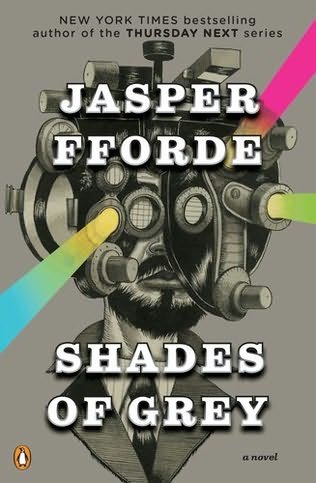
Dystopias are not all of the same stripe, or, in this case, color. Jasper Fforde’s Shades of Grey is perhaps the most colorful look at a bleak future I have ever read. The premise, funny and strangely serious, is that in the distant future color perception ability determines social rank. A cast of odd characters who see predominantly only one color vie for superiority while keeping to the rules of the founder of this society. The hilarious results often carry profound consequences. Those who live within this highly stratified culture fear those who do not, including a mysterious group known as the monochrome fundamentalists. The founder of the social order, Munsell, has achieved god-like status and his writings have the force of scripture.

This dystopia reflects, whether intentional or not, the social impact of many religions. Reading about the prefects, the political leaders of this culture, is like reading about the clergy who mistake spiritual guidance for power. The transition from pastor to politician is simple enough among social creatures like ourselves: we need those with persuasive powers to make decisions in accord with our best interests. Prefects and priests, however, are both eminently corruptible (let us say nothing of politicians) and evolution favors those who look out for themselves. The trick is to make others buy it.

Fforde’s dismal future includes Leapbacks where useful technology from the past is discarded in order to make people more compliant. In a world where color is a rare commodity, a modern usage of the rainbow seems apropos. Everything we are learning from psychology and biology—sciences still in their youth—suggests that sexual orientation is deeply ingrained, more so that just preferences or likes. The mainstream religions, however, have actively discriminated against those who are aware of their deepest needs. I know many excellent, caring individuals who’ve been kept from the ministry because of their orientation. Others who are clearly deleterious to the church climb to positions of power based on their approved sexual appetites. And society falls into lockstep with them. I don’t know Jasper Fforde’s political views, but along with him I would suggest that the ability to see shades of gray might be the best thing for any society, whether in the distant future, or especially, in the present.


Friend of Jonah

Last year a gray whale was spotted off the coast of Herzliya in Israel. As in the days of Jonah. Actually, we need to turn the clock back a little further. According to Arthur Max of the Associated Press, the gray whale was hunted to extinction in the Atlantic already in the eighteenth century. This whale, therefore, had to travel north of Canada from the Pacific Ocean through channels that are normally frozen. Global warming has opened these passageways and plankton last seen in the north Atlantic 800,000 years ago have begun to reappear. If Jonah was smart, he’d have stayed in that whale and would’ve just kept going.

Big business stands to lose the most from cleaning up the environment. It cuts into the bottom line. Happily, if brainlessly, joining the laissez-faire coven are many of the “Religious Right” who see destruction of the environment as part of God’s plan. So much for “and behold, it was very good.” When free market economists first met the conservative evangelicals it seemed that they had little in common beyond similar haircuts and a desire to turn time back to the 1950s. Since then they’ve joined to become a very powerful force in American politics, preventing any headway to improving the globe for others, even if it isn’t a personal concern of theirs. So much for “do unto others as you would have them do unto you.”

Each year in my Prophets class I have students that are far more concerned that a literal Jonah was swallowed by a literal whale rather than hearing the message Jonah proclaimed: repent or face destruction. If we turn the thermostat up a few degrees more each year maybe Jesus will finally jump on that white stallion and split the Mount of Olives. You can’t quite see the Mediterranean from there, but if you could you might spot a lonely gray whale. You don’t need to look for the little man inside. That whale is the sign of Jonah.

Wave to Jonah for me!


Reverend Sanders?

According to the Associated Press yesterday, Yenitza Colichon was sentenced to 18 months’ probation for child neglect and cruelty. The charges stemmed from a 2007 religious ceremony in which her seven-year-old daughter was made to watch a chicken sacrifice in New Jersey, and the girl was fed the animal’s heart. The practice is part of the Palo Mayombe religion of central Africa. This whole incident highlights the vital question of when religion crosses the line into child neglect. Many of us bear scars—some psychological, some physical—from our religious upbringings. It has been concluded by psychologists that children do not possess the level of abstraction necessary to deal with religious concepts until they are about the age of twelve. Parents, often fearful of eternal consequences should their children depart the one, true faith (whatever that is), begin religious instruction early, often passing their children off to others who are in no real sense an expert in the religion itself.

The United States embraces, on paper, the concept of freedom of religion. Rightly, it seems, the strong arm of the state will step in when a child is endangered or neglected. The unanswered question is at what point does this neglect or endangerment occur? Authorities turn a blind eye if the faith is time-honored, and, especially, if it is of European/American extraction. Typically of the monotheistic variety. What is standard practice for other religions, as this case demonstrates, may be called into question. Sacrifice is also at the heart of the Judeo-Christian tradition. Sublimated into different forms for both political and theological reasons, those of us in that tradition have abstracted sacrifice to bloodless words on a page. When we see red, child neglect and cruelty are cited.

Religions frequently make extreme claims over the lives of their adherents. Most religions relax such claims for children, but others continue ancient practice that is tacitly condoned. Sometimes those permissible rites cause real physical pain and scars. If under the hand of a moyel, okay; if scarification in African tradition, not okay. Religions denigrating personal achievements of the young, setting them onto a path of failure, okay; religions ritually killing animals, as even the Bible demands, not okay. Without making any judgment on specific religious outlooks, the reality of lingering effects remains. Are the terrors of Christian nightmares inspired by tales of Hell any less cruel than watching a domesticated animal die? Is eating a chicken heart any less unusual that fish on Fridays? Is being unfamiliar with a religion grounds for dismissing its authenticity or claim for equality? Some of us find animal sacrifice distasteful, but if we proclaim a tidy sacrifice each Sunday, and share it with our children, that particular rite/right is protected by law.

What would (wiki-commons) chickens do?


Voted Off the Island

One of my readers sent me an article about the Church of Sweden. According to this article only about 15 percent of the members of this national church “believe in Jesus.” The question raised by this statistic is a vital one in a world where politics and religion become inextricably intertwined: what is Christianity and who decides? As the recent vote in New York permitting gay marriage (about time!) shows, many who identify themselves as Christians in America equate that religious outlook with conservative political views (even on issues the Bible says little about). It is what the believer says they “believe” that defines the religion. Ancient religions, as I have noted before, show that this outlook on devotional practice is not the only alternative.

Religions began as a matter of praxis—what people did rather than what they believed. What does an almighty deity gain from theological assent in the heads of believers? Is it a warm, fuzzy feeling or something more? Belief, a very strong motivating factor in humanity, is a psychological phenomenon, not a spiritual one. Many religious groups today are reluctant to accept that psychology covers the territory formerly covered by spirituality. Both phenomena (or the phenomenon) occur in the brain. If a brain does not assent to the typical belief structure, is it thereby deported from the gathering of a religious body? Many times in religious history that has been the case, but what do we say to the Church of Sweden? Kick out 85 percent of your members? I can see many unhappy, unemployed clergy in such a future.

What does it mean to be Christian? Is it to deny civil rights to anyone who differs in outlook or lifestyle from you? Is it sleepily to say “yea” when you wake up after a sermon? Or is it following the teachings of Jesus? The same one who once taught his followers to love those who differed from them, to turn the other cheek instead of proactively pulling out their handguns? It seems that in the modern furor to laid hold of claims of absolute righteousness humanity has somewhere fallen between the cracks. I’ve never been assaulted by a Swede, and I don’t recall, in recent years, Sweden invading other countries to further its economic fortunes. Could it be that, to paraphrase a religious thinker of antiquity, a Swede shall lead them?


Contriving the Rapture

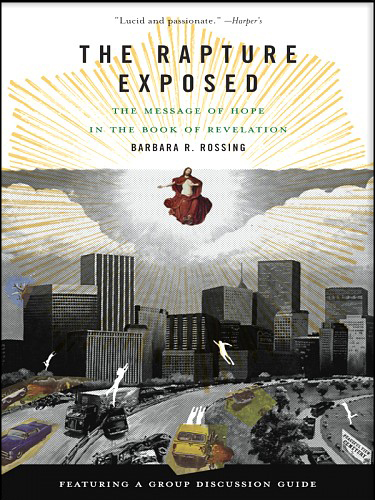
In the light of last month’s failed rapture attempt, I decided to read a book that I picked up some years ago that had been written in the wake of the millennial scare. Having grown up with nightmares of the rapture, I learned during my first college class on the book of Revelation that it was relatively modern meme, invented in the nineteenth century. Barbara Rossing’s The Rapture Exposed seemed a good way to refresh my memory without having to go through all those boxes of books in the attic to find my original textbooks. Rossing, a Lutheran minister and New Testament professor, brings to light some very important facts beyond the historical roots of this theological fabrication—facts that should concern religious and secular alike. The rapture was invented by John Nelson Darby, a founder of the Plymouth Brethren and convoluted biblical scholar. Basing his roadmap of the future singularly on Daniel 9, he concocted the rapture to make sense of his apocalyptic epiphany. Drawing diverse sections of Paul’s letters to the Thessalonians, the Gospel of Matthew, and the book of Revelation together, he mixed thoroughly, half-baked it, and pulled the rapture out of the oven.

The idea caught like wildfire. Today young people who’ve never read the Bible and who’ve seldom attended religious services know what the rapture is. What they do not realize is that nearly all of the Christian tradition rejects it, seeing it for what it is—a Johnny-come-lately of amateur theology that sees the Bible through the lenses of dilettante-sensibilities like those of Michael Drosnin (The Bible Code man). Instead of seriously reading the Bible and trying to understand it, society prefers to see it as a little bit of magic in the midst of our scientific and technical world view. It is a safe place where bits of the supernatural are preserved and that defies rational explanation. Rossing’s book does a good job of exposing the wrong-headedness of LaHaye’s Left Behind conclave, but she overlooks an important feature of this coterie: they have an unconfessed agenda.

The unspoken agenda is best summed up by Lt. Frank Drebin of Police Squad when he says, “blowing away a fleeing suspect with my 44 magnum used to mean everything to me. I enjoyed it, well who wouldn’t?” Rossing misunderstands Fundamentalism when she expresses surprise at the bloodlust present in the Left Behind novels. What she doesn’t take into account is that, as a collective, Fundamentalists thrive on self-righteousness. Feeling the same violent urges that others do—all humans experience violent emotions—they sublimate that aggression and save it for the unrighteous—God’s enemies. When the gloves come off in the apocalypse, that hatred bursts out in good, old-fashioned bloodletting—albeit with combat helicopters and high-tech weaponry. Of the Christians I know who own guns, the Fundamentalists are most avid in their rights to do so. In college I met my first Christian survivalists and I learned that the rapture was a ruse. It is a deadly mix, especially when this warped theology makes it into politics. Although Rossing’s vision of a new earth in the second half of her book may not appeal to everyone, Americans should read at least the first few chapters to learn why the rapture will never occur.


Literary Floods

Oryx and Crake ends with a cliffhanger. I read the book at the suggestion of a friend and found a dystopia that simply continues along present trends. Naturally I had to read the second part, Margaret Atwood’s The Year of the Flood. I had picked up this book first, not realizing that there was a previous novel, because I supposed the eponymous flood to be that of Noah. I was not disappointed on that score. In keeping with her strong biblical awareness, Atwood has given readers the creation in Oryx and Crake, and the deluge in The Year of the Flood. Set in the same forlorn future, those who survive the pandemic described in the first book seek to survive in a world where most of the people are gone. Many of the survivors, as we learn in the second installment, are former members of an alternative religion, God’s Gardeners. This quasi-cult, led by Adams and Eves, prepares for the waterless flood (pandemic) by caching Ararats—supply stores—around the broken-down city they inhabit. As in Genesis these Noahs and Mrs. Noahs are replications of Adam and Eve.

Not only is Atwood an engaging author, she supports the green causes advocated by her books. This is a more honest form of religion than most sharply chiseled theologies that do nothing to improve the lot of a suffering world. Academic religionists like to tell us exactly what God is like while shrugging shoulders over the destruction of everything he putatively made. In Atwood’s world, those who believe in God express it through care of their planet. As always, however, they are the modest voices easily drowned out by the unconscionable greed of the powerful. In the words of John Dickinson from the musical 1776, “Don’t forget that most men with nothing would rather protect the possibility of becoming rich than face the reality of being poor.” Rare is the person willing to take the higher road and set aside his or her own wants for the benefit of others.

Ethics, at one time, meant seriously considering the implications of what we do. With the morals of our “leaders” it is pretty difficult to hold to that illusion any longer. Yesterday I sat through another round of ethics training and learned nothing that I hadn’t learned in Sunday School as a child. Be nice to others, don’t use them for your own advantage, help those who need assistance. It really isn’t that hard. Newt Gingrich with his highly unethical treatment of his ex-wife, Anthony Weiner’s peccadilloes, Sarah Palin’s revisionist reality—these scarcely inspire confidence. The flood is upon us. I think I might rather live in a world the Margaret Atwood would envision, as long as she was there too, to show us how to survive.


The Big Man

“When the change was made uptown/And the Big Man joined the band…”

Clarence Clemons (from WikiCommons)

Among the earliest markers of religion in human culture is the advent of music. While still disputed, bone “flutes” from about 40,000 years ago seem to indicate that early humans knew the value of music. Driving around now that the weather has warmed up, it is clear that people still find music so important that they like to share it from their open car windows at a volume I find uncomfortable even across the street. Like religion, music is an intensely personal aspect of life. Although I mention bands I like occasionally in this public forum, I never parse my music tastes too much because they are a little too revealing. With Clarence Clemons’ death yesterday, however, it is appropriate to pause and give my respects.

Those who know me sometimes wonder at the fascination I have with Bruce Springsteen; I am not an idol-worshipper and not all of Springsteen’s work appeals to me equally, but he represents an appreciation of the ordinary person. What first drew me to his music was the fact that he understood blue-collar mentality and angst generated by an unfair society. In an interview on his Born to Run special edition, Springsteen notes the seminal change that Clarence Clemons made in the E-Street Band, as reflected in the opening quote from “Tenth Avenue Freeze-Out” above. The playing of Clemons’ saxophone was so distinctive that even my very untrained ear could often pick it out on other artists’ albums even before reading the credits.

The E Street Band, of course, changed over time and lost a first-generation member with Danny Federici’s death three years ago. Although Bruce Springsteen is alive and well, and still active in causes to help those who are victims of an uncaring system, the E Street Band will never be the same without Clarence Clemons. The old camp song says that music never dies, and that is a hope we can hold out for the impact of remarkable performers as well. When I walk into a classroom with kids who have no idea who the Beatles were and who’ve never heard of Alice Cooper, Deep Purple, or Pink Floyd, I feel my age. But it is okay as long as I can still listen to the music once I get home (I never play the stereo while driving—I prefer to concentrate on the music a little too much). It is like a religious experience. I am sure the cosmos is a more harmonious place for having hosted Clarence Clemons, even if just for a little while.


Zombie Friday

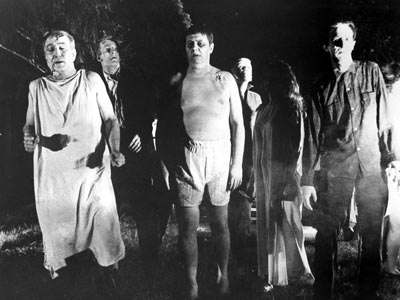
New Jersey is known for its zombies. Last October Asbury Park gained admission to the Guinness Book of World Records for the largest zombie walk (exception is made, of course, for daily life in Washington, DC). The movie zombie, in its now classic form, was reborn in western Pennsylvania, but New Jersey is the place where strange afterlives appear to gravitate. Yesterday Stephen Finley was sentenced. Finley, a mortician, had been convicted of selling the healthy organs of his dead customers to earn a little extra on the side. Given that the governor, Chris Christie, might rival Vlad the Impaler in his zeal for chopping, this really does not surprise me at all. Is it not the ultimate triumph of the free market to consider human beings commodities to be packaged, used up, repackaged and resold? Moral rectitude is on the side of the strong arm.

As someone who has been on the receiving end of the chop more than once, and reduced to a zombie-like state of perpetual job-insecurity, I think I know how the undead feel. Not having a place in the normal world of the living, but not quite dead, the zombie wanders about looking to feed on brains. This idea of brain-lust seems to stem from the cult classic The Return of the Living Dead, although, not being a film specialist, I would welcome correction on this point. Nevertheless, like the modern zombie I hail from western Pennsylvania and nothing satisfies me like a good brain (metaphorically, of course).

The idea of harvesting the organs of the powerless dead also suggests the endlessly referenced Soylent Green. Here the staunch NRA promoter Charlton Heston fights against the establishment that is turning (spoiler alert) people into Soylent Green, the ultimate solution to food shortages! For, after all, are people not just commodities? America’s thirst for zombies reflects our growing sense of victimization: the zombie is primarily a creature without a will, brought back by powers beyond its control. In the original vodun context the zombie was a source of cheap labor. Is it any surprise that West African slaves brought the concept to the New World with them? Today, of course, those with the cash may simply purchase the organs they desire, cutting out the middle man and going straight to the source.


Bread Alone

The sad story of the death of an eight-year old girl from Irvington, New Jersey bears uncanny echoes to a case a year and a half ago of a mother who starved her children believing God would provide. The current case of Christiana Glenn’s death is heart-wrenching and the outlook is not improved when it appears that the girl’s mother had religious motivation to abuse her child. Christiana died from untreated physical wounds and malnutrition, prompting columnist Kathleen O’Brien to write about how food and religion often come together in unusual ways. As O’Brien points out, religions generally safeguard children from food privations, but less scrupulous leaders of what are frequently termed “cults” do not have the same strictures. The only real difference between a religion and a cult is society’s attitude toward it—religions tend to be larger and with finer pedigrees, but beliefs are beliefs. When religions seek control over believers’ lives, they often delve into the practice of deprivations, generally mild. More extreme groups take the idea to fatal limits.

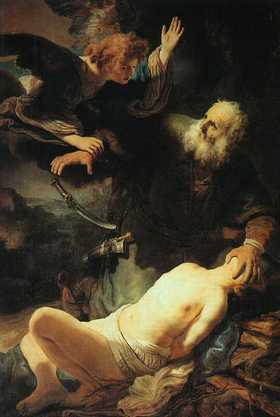
Even the Bible records from near the very beginning that deprivations are part of the religious expectation. One of the most complex and frightening stories from Genesis is that of Abraham’s near sacrifice of Isaac. No matter how theologians wash it, this story retains its stain of an adult—whether directed by God or not is a mute point—attempting to harm a child in the name of faith. The story, many centuries later, still sent Søren Kierkegaard into a tailspin that came out as Fear and Trembling. What kind of deity asks for a child to be harmed, even in jest? For Christiana Glenn, there’s no taking it back. The Bible tells us nothing of how the interior life of Isaac responded to this episode.

Food and religion are among the most common elements abused in American society. For our bifurcated (if not bipolar) outlook, one sustains body and the other sustains soul. While science still lacks evidence for the soul, the body remains the only basis upon which we have to base our ethics. Even biology dictates that care of one’s own young is an evolutionary imperative. It is tragic indeed when a religion overrides what all cultures respect as the ultimate “should” —take care of your children. In a world overpopulated by religious experts the street value of the soul will never face a recession. Believers, characterized my many religions as sheep, will go wherever their leaders tell them to go. As a culture suspicious of funding the study of religion, it may not be food that is reaped at the end of this harvest.

Thou shalt not...


Vulcan’s Anvil

Volcanoes have long been the prerogative of the gods. Saturday’s eruption in the Puyehue-Cordon Caulle volcanic complex in southern Chile joins last month’s outburst from Grimsvotn in Iceland for divine fire-storms. In the days before geology, the only explanation for these impressive explosions was the gods. The concept of Hell was fairly late in the development of ancient Near Eastern religions, otherwise volcanoes might have been labeled as Hell breaking loose, literally. Many historic eruptions have influenced the course of history, most notably Thera and Vesuvius. Ancients would have been hard pressed to see such spectacular—and obviously divine—displays as “natural.” Indeed, the concept of “natural” events was itself slow in evolving since the gods were always lurking in the dark corners of the evolving human psyche.

Fortunately, beyond disrupting some air travel, these two latest outbursts have been fairly benign from a human point of view. This too is an evolved perspective since we tend to see ourselves as the overlords of the natural world. Watching industrialists poke new orifices in the planet’s crust for personal gain even in rare and delicately balanced ecosystems, who can doubt that we are masters of our own domain? Much of the misdirected sense of such entitlement comes from interpreting the Bible as declaring the planet ours from the days of mythical Eden. Some of the more perverse applications of this principle include those who try to force the hand of God into sending the Second Coming due to their creating conditions appropriate to an apocalypse. Others declare that since said Second Coming is nigh, why not trash the environment? We won’t be needing it much longer.

Apart from the obviously failure of logic here, the anthropocentric view is also misguided. The earth was not created for us—we simply evolved on it. The corollary also stands true: long after any human intelligence is here to read these words, our planet will continue on its weary track around the sun until it blossoms into a red giant and consumes our final cinders. There are no horsemen in the clouds, but this planet is all that we have (even the space station depends upon it) and when we grow too arrogant, the planet unconsciously gives us a spectacular display to remind us that we are mere guests upon this globe. We need to treat it with respect.


Crossing Over

The periodic reforms that have swept through the church like so many Massachusetts tornadoes have often whirled around the matter of ceremony. Certainly there have been disputes over obtuse points of esoteric doctrine for which there is no final arbiter, but frequently the rancor involves what the faithful do when they meet together. In keeping with ancient templates, religion is generally a matter of what people do more than of what they believe. I personally had my love of ceremony beaten out of me by its plangent and perpetual repetition at an institution so enamored of it that humans and their needs were viewed as mere obstacles to sacerdotal perfection. Nevertheless, as the school year winds down, ceremony is all around us: graduations, awards dinners, rites of social passage. Last night I attended a Girl Scout bridging ceremony. Bridging is the symbolic crossing of a bridge to indicate a new level of commitment and integration into the larger Girl Scout community.

It's just a bridge.

As I sat staring at the bridge, waiting for the celebration to begin, it occurred to me that this was very much like a religious service. A group of spectators had gathered to watch a ritual unfold—a ritual that involved everyday objects invested with a new significance by the context. The bridge is just a small arch bridge over artificial water; before the ceremony kids run and jump over it with no fear of divine reprisal. Once the correct words are spoken, however, crossing the bridge becomes a solemn act. The ceremony opened with a kind of invocation, a creed (the Girl Scout law), a kind of Scripture reading—complete with exegesis of what that “Scripture” means and a reference to God as creator of all—a sacramental act of transformation, and even a hymn or two. The main difference I felt between this ceremony and most religious events was that the Girl Scouts are far more accepting and affirming than most religious conglomerations. Of course, there is the matter of gender distinction, but what is a church without any exclusivity?

I have great admiration for the Girl Scouts. In the face of a community that continues to act out male supremacy as a matter of God-given right, the Girl Scouts (and other similar organizations) offer a place for young women to assert their sense of belonging. Religion has just as often been used to suppress aspirations as it has been to uplift them. Life is difficult enough without God breathing down our necks. Human institutions that encourage thoughtful regard for those who are different, or underprivileged, or simply overlooked, often fill the gaps that religions callously leave behind. Yes, some religious institutions still display a social conscience, but if we wait for the religious to solve the suffering of the world, it is good to have groups like the Girl Scouts around who actually put their beliefs behind their ceremonies into action.


I Can Haz Edukashun?

Myths are alive and well. One of the most pervasive myths, along with the one that says clergy only work on Sundays, is the concept that educators take the summer off. Undoubtedly some do, but the summer is traditionally the time for professors to conduct research without having to break up their concentration with several classes a day. Those were the halcyon days. This morning’s newspaper slapped me like a fistful of razors as I read the story of Rutgers University’s president’s resignation. I knew about the resignation, but being fumblingly employed part-time by his mighty university, and having to take annual ethics training for the pittance I’m allowed, I blanched as I read these two sentences: “McCormick earns $550,000 a year as president and is eligible for a $100,000 yearly bonus, though he hasn’t taken the money in recent years due to the university’s budget troubles. Ralph Izzo, chairman of the board of governors, said he thought McCormick would be worth his [continued] $334,000 professor’s salary.” A few pages later the headline tells how Chris Christie, New Jersey’s cut and bleed governor, took a state helicopter ride to get to his son’s baseball game. Also, he wants to prevent state employees from making a viable living.

In this twilight zone of an educational nightmare, a guy with professional ethics training just wants to close his eyes and make it all go away. For what are we educating our young if not for greed? What professor is worth more than 100,000 dollars to any university? In the old days, back with ethics had intestinal fortitude, the term for such folks was “sell outs.” Is there really any drive for excellence at such pay scales? It is no wonder we are raising the “entitlement generation.” Actions used to speak louder than words. State-mandated ethics training has now corrected that little oversight. Higher education used to be about ideas; today it’s “show me the money.”

The truly sad part of all this is that we keep pretending. We preach the myth to a public easily pacified and crucify those who beg to differ. Back in my Nashotah House days a trustee once hushed me so that the board might listen to a student with “fire in his belly.” My belly’s a blackened cinder by now. Is anybody listening? Mythology, particularly in the Greek world, revolves around the concept of hubris. It is a concept with which modern university folk are clearly unfamiliar. It goes something like this: like most people I think I am better than others. In order to prove it, I’ll increase my blandishments until there is no longer any doubt. Is that Olympus straight ahead? I might as well take that as well!

I’d love to stay and lecture some more, but I’m apparently entitled to more state ethics training.


Witch Kitsch

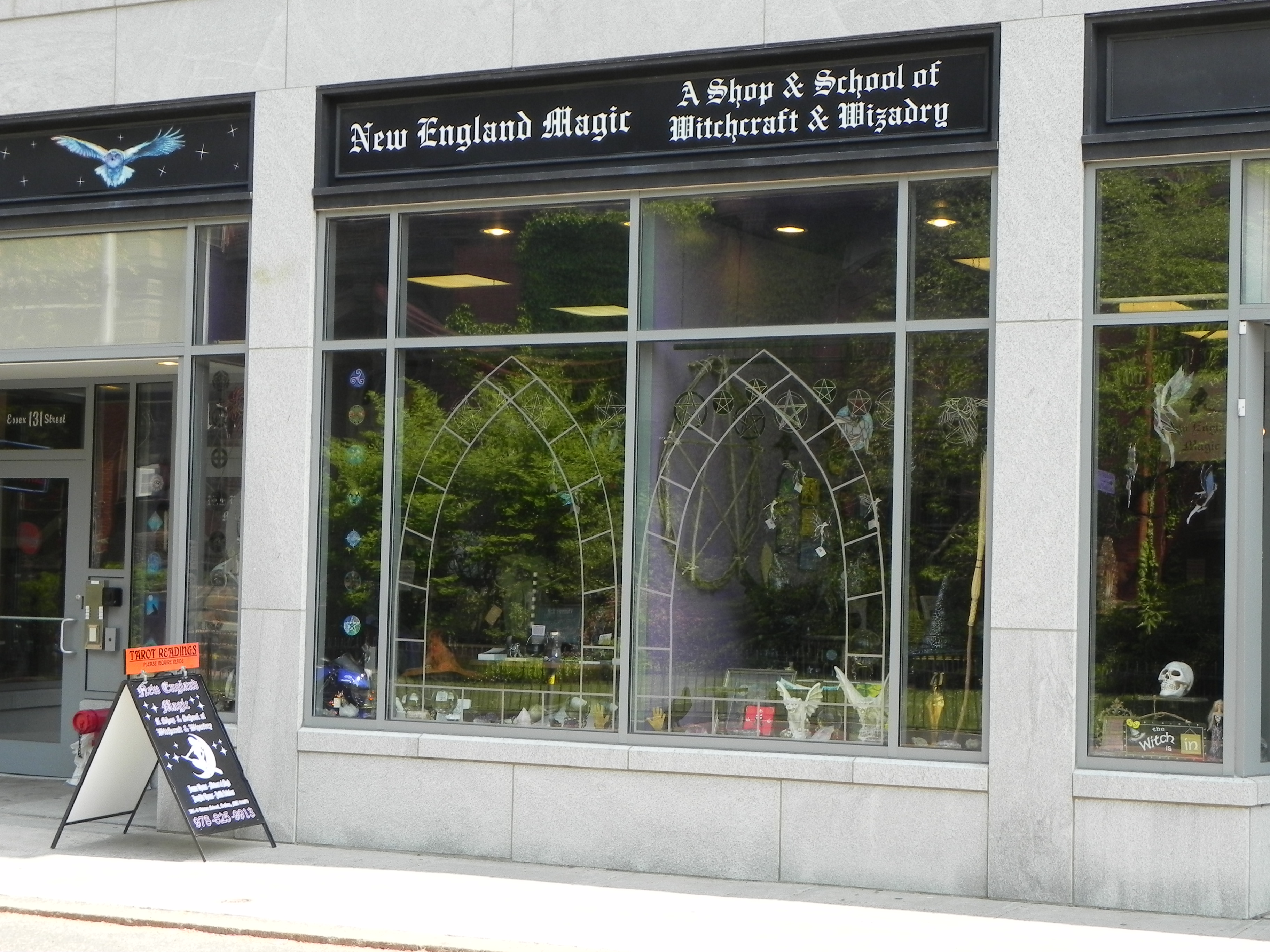
Salem is a town with a conflicted identity. The true history of the death of innocent women and men for a fictional crime is sobering. In a day when few take witches seriously—certainly not many believe that supernatural, green-faced hags fly the unfriendly skies—it is difficult to sense the utter terror the idea once comprised. We are still afraid, but our fears take more current forms. So with its lugubrious history, Salem now demonstrates itself as a model of tolerance. One local source cited the fact that eight or nine hundred modern witches live in the city. Modern Wicca, while taken very seriously by its practitioners, is laughingly appreciated by those who find release in the caricature of fictional, idealized witches. The police cars in the city of Salem even have witches riding broomsticks on them.

In this day of triteness and easy entertainment, it is easier to project the fictional image of the pointy-hatted witch and laugh at our past mistakes. Salem bills itself as “Witch Town” and hosts several witch museums, varying in historical accuracy. Shops throughout the town exploit this image of the harmless witch. It is difficult for the visitor to know which witch believes his or her establishment to be authentic and which is just out for a quick buck.

Places have a feel to them, as any pilgrim knows. The National Park Service, in its visitor center for Salem has a question-board that asks, “How Many Witches were Executed in Salem?” The answer underneath is “None.” Instead, twenty regular people were murdered for a crime they didn’t commit. The witch hysteria happened so early in the history of the town that it appears foundational for all its later developments. Who would go out of their way to visit yet another thriving mercantile port of the eighteenth century, were it not for the tragedy underlying it all? Like children laughing while making guilty eyes at their parents, those who prosper over Salem’s sad history realize that whether modern witches live there or not, religious intolerance is never a heritage to wear proudly. Exploiting a tragedy to make a profit is a time-honored American practice, and the real witch to fear is the one who says, “cash or credit?”


Lesson of Salem

I married a witch. I suppose I ought to clarify that a bit. My wife is descended from Rebecca Nurse’s brother Jacob. Rebecca Nurse was one of those unfortunately hanged as a witch in Salem, Massachusetts in 1692. My family has been spending the last couple of days touring Salem, seeking to get in touch with our heritage. Yesterday we had the rare opportunity to tour the home of Rebecca Nurse which, remarkably, still stands over 300 years after the tortured events of the late seventeenth century. Our tour guide was impressively knowledgeable about the witch hysteria. She noted that in the Puritan (Reformed) mindset, with no science to speak of, evil could only be explained by the Devil. If misfortune came, the Devil was to blame. Even after the “witches” were exonerated (too late to save 20 lives), it was understood that the Devil incited the girls to make their false claims against their ultimately and penultimately righteous neighbors. Without the Devil none of this made sense.

The Rebecca Nurse homestead

Salem was founded as a utopian community free to live out its Puritan religion. It was named after Jerusalem, a city of peace (!). As our guide noted, religious freedom was not the same as tolerance; the Puritans wanted the freedom to celebrate their own religion, but were extremely suspicious of all others. One of those hanged as a witch, George Jacobs, had nearly beaten a neighbor to death simply because he was a Quaker. Rebecca Nurse, however, at 72 years old, was no threat to anybody. She was a member of a Christian community that turned on her. Condemned for charges the nearly deaf woman could not even hear properly, she was hanged for consorting with a mythical Devil.

Rev. Parris's house, where the witch hysteria began

No doubt the religion of the Puritans was a harsh religion with a God nearly as unforgiving as that of Sweeny Todd. The problems occurred, however, when the law came into the hands of religious leaders. There is an allegory and a moral to this story. Today many of the tourist attractions in Salem focus on the need for true tolerance. They no doubt come closer to the spirit of the founder of Christianity than the Puritans ever did. As I stood looking over the hole in the ground that is all that remains of Rev. Parris’ parsonage—the very location the witch hysteria began as his daughter Betty started to act odd after hearing the stories of the slave Tituba—a profound sadness afflicted me. Twenty people died and many lost all their worldly possessions because of an uncontrolled mythology of a church convinced of its own righteousness. An allegory and moral for the twenty-first century indeed. Have we yet learned the lesson of Salem?


Decomposition

The following video report addresses a number of issues recently raised on this blog: apocalypses, zombies, fear, and humor. Zombies, of course, have been clawing their way to the top of the monster pile for a few years now. Media analysts have suggested that they represent the triumph of the working class—no sartorially suave vampires these—instead they are spattered with blood and gore, multitudinous, and clumsy. Having watched the most recent apocalypse come and go, and having been a victim of an unstable economy for several years of my professional life, I think zombies represent something else. Instead of being the triumphal usurpers of vampiristic free markets, zombies represent the breakdown in culture we are experiencing in the present.

If history gives us anything to go by, we know that powerful world empires ebb and flow. The Persians succumbed to the Greeks, and the Romans could not stop the Goths. The Holy Roman Empire was dissected into the nations of the modern European Union (roughly), and the sun now sets regularly on the British Empire. The United States, the capital of the zombie craze, has perhaps passed its zenith and the zombies know it. Since the 1970s we’ve watched as religious extremists have made a mockery of a political system that had already grown problematic. Like decaying corpses that won’t go away, the factors that propelled the United States to a place of prominence have been undermined so that the non-undead can continue to feather nests already stuffed with down as high as Babel. In the constant see-sawing of political parties the imperialist trends of the obscenely wealthy have rocked their way into the dominant. Is it any wonder that zombies are brainless, yet insatiably driven?

What does it feel like to watch the azimuth decline on a great empire? It is difficult to say. History, as the aphorism states, is written by the winners. Revisionist history has become quite fashionable to those who find that the facts refuse to bow to their worldview. Zombies are those who, historically, do the will of their masters without question. Instead, the zombie of the twenty-first century bows to no master. Pure selfish survival is its sole aim. Perhaps the CDC is too late, the zombies have already overrun us.

Newsy.com’s Report