Caesar Salary

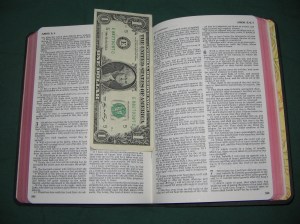
Juxtapositions interest me.  Washington’s Birthday and taxes have become connected in my mind.  Until the present administration I had no serious concerns about taxes; if people are going to live together they need to pool their resources.  If I had a choice now no Republican would be able to lay a dirty finger on my hard-earned contributions, but I know we all use the roads and bridges.  Some of the money actually goes to useful things.  I wonder what George would’ve thought of it all, though.  His birthday is a holiday, but employers have sent out their tax forms and so it’s become a kind of day of reckoning for me.  I used to be able to calculate roughly the right amount to be withheld so that I’d get a small return each year.  Tax laws being what they are, however, that has changed rather drastically.  I leave February feeling poor and cold.  And I don’t approve of how they spend most of our money.  Still, a day off work is a fine time to visit my accountant.

The mind of the Human Resources denizen is an odd place of rules devised by no god.  I never know from year to year whether “Presidents’ Day” will be a day off or not.  I remember standing on a wintery street corner waiting for the 114X into New York because the 117 didn’t run on federal holidays.  HR had decided that year that we wouldn’t have this day off.  Like the government, Human Resources has the ability to implement laws that make no sense.  I do appreciate the fact, however, that someone understands how medical insurance works.  For that you need a specialist.  Another strange juxtaposition.  In any case I’ll visit my accountant today and it may be the only time I’ll be sweating in February.

Adulting, some of the young say, isn’t much fun.  It has certainly become a lot harder to understand.  Our government complicates things to the point that you daren’t do your own taxes.  A visit to the doctor may or may not cost you.  And don’t even bother to try and find out where all that money you send to Washington’s going.  I just hope that when I get on the interstate that it’s maintained.  And that they keep an eye on the bridges.  If they don’t I won’t be able to get to the accountant’s office to be able to pay more taxes.  On Washington’s Birthday it’s in the best interest of the powers that be to keep the roads open so that we can send them our unholy tithes.  Strange juxtaposition, it is, between Washington and Lincoln.
Render unto Caesar


In the Cult

The word “cult” has fallen out of favor with religionists.  The reason for this is the problematic claim that any one religion makes to being the “only true” religion.  If that religion then sets about to study other religions there is a built-in bias that the study is being done from the perspective of those who know the truth looking somewhat bemusedly toward other religions.  A cult was defined as a relatively new religion with a fairly small number of adherents.  The more correct term is a “New Religious Movement.”  The idea of brainwashing is controversial, but it is clear that people can be made to follow the leader against their better judgment.  We’ve seen this time and time again and not just in places like Jonestown or Waco.  The word “cult” seems to fit.

Branch Davidian compound in Waco; photo credit: FBI, courtesy Wikimedia Commons

A friend recently pointed me to the work of the psychologist Jeremy E. Sherman.  Sherman has been studying the behavior of Trump followers and has illustrated quite well how it is a cult.  This is one place where the use of the term becomes essential.  I’ll lay aside my objections to the word to point out that a cult denotes a group that follows a leader without critical assessment of that leader.  You’ll have noticed that Democrats are quite critical of one another.  They think about and assess what each other say and do.  When someone like Trump, who is well known as a Pez-dispenser of lies, becomes a saintly paragon of his party, capable of no wrong, we’re in the land of cults.  What Sherman does that I can’t, is suggest how to deal with such thinking.

Most of us try to reason with our interlocutors.  If reason is turned off, as in blind following, it simply falls on deaf ears.  The public record of Trump’s doings speaks for itself.  Those who refuse to see it or engage it will never be reasoned out of it.  The parallels with Hitler’s Germany are extremely frightening.  Not even a decade after his death Hitler was understood to have been clearly unstable and driven by evil impulses.  Many of those alive today overlapped with the lifetime of this dictator.  There’s no doubt that Nazism behaved like a classic cult.  Presented with credible evidence of breaking the law while within office, Trump’s followers blithely acquitted him.  Those who study cults would expect no less.  We need to arm ourselves with knowledge of how religious thinking works.  To do otherwise is dangerous, despite what our economically driven bastions of higher education may say.  (See?  I’m critical of those on my side!)  Or we can lay down reason and simply follow.


The Tube

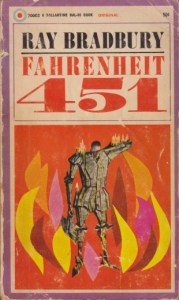
I’m sitting in a medical facility waiting room.  I’m not afraid of dying, but medical stuff terrifies me.  To calm me down, inane daytime television is on.  I may be one of the very few who brings a book to such places, but I can’t read with the insipid chatter going on.  This time, since I’m waiting for someone else, I brought my laptop.  Nevertheless, I can’t help but think of Ray Bradbury at times like this.  Many people think Fahrenheit 451 is about burning books.  Bradbury did write about burning books in his short stories, and it does happen in Fahrenheit 451, but that’s not what the book is about.  In interviews he said that he intended, as is pretty obvious from a straightforward reading of the text, to warn about the invasive nature of television.  It was, metaphorically, burning books.

Waiting rooms always bring that to mind.  Not only that, but it’s Valentine’s Day and all the talk shows are going on about how it’s “the day of love” (every day should be).  It’s not a day off work; I had to cash in a sick day to be here.  The word “holiday” keeps cropping up on the television, to which I have my back. Ever since leaving Nashotah House I haven’t watched television.  On our recent move to Pennsylvania our cable company didn’t offer a non-television option.  It was unthinkable.  We pay for something we don’t use.  Burning books.  I don’t have time for television.  I see shows that have proven their worth via DVD well after they’re off the air.  And that only when I can read or write no more in a day.  I guess I’m a Bradbury disciple.

Like any disciple, I have changed certain teachings of my leader.  Bradburyism is a religion objecting to ubiquitous television.  At the same time, I grew up watching the tube, and to this day I’ll stop just about anything to watch DVDs of The Twilight Zone.  Rod Serling, however, selected stories and teleplays that were well written.  This was a literate show.  Besides, my daily life often feels like the Twilight Zone.  Like Valentine’s Day in a waiting room.  The book beside me remains unopened.  It’s the same when I take the car to the garage, or go in for an oil change.  You can’t escape it, even though everyone else is paying attention to their phones.  How long until we learn to switch off?  Of course, medical waiting rooms are the places where I may need brainless distraction the most.

Photo credit: Smithsonian Institution


Human HU

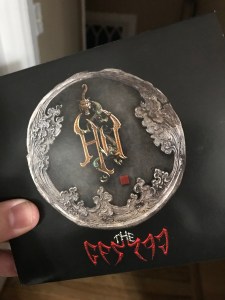
In these times of extreme xenophobia, we desperately need to understand those who are different.  When my brother recently shared his discovery of The HU’s album The Gereg, I was at first a little concerned.  That deep-seated childhood evangelicalism suggests anything that unfamiliar is bound to be satanic.  How unfamiliar?  Mongolian throat-singing unfamiliar.  Songs sung in Mongolian, unfamiliar.  Album art that could be heavy metal.  I’d never come across anything like it.  I suppose it’s a natural, knee-jerk reaction to say anything so unfamiliar is potentially demonic, and it shows just how paranoid a culture can be.  We think of 1950’s America as “the norm.”  I wasn’t alive then, but I’ve seen pictures.  Buzz cuts still give me the willies.  I trust Mongolians more.

I don’t know if The HU is a deliberate play on The Who or not, but the word roughly translates to “human.”  Like many ancient practices, nobody thought to write down the origins of throat singing.  Traditionally it was what Inuit women did when men were out on the hunt.  Like many aspects of hunter-gatherer society, it fascinates.  Some cultures reported that when Christian missionaries came, with their cultural imperialism in tow, they suppressed throat singing.  It looks like I wasn’t the only one raised to be suspicious of that which is different.  I learned, however, of my own cultural biases.  I learned that ones’ own assumptions must be interrogated.  If humanity is to survive, we must learn to try to understand one another.

Although the actual roots of throat singing are lost in unwritten times, I strongly suspect it has a religious, or if you prefer, spiritual, origin.  When women gather it isn’t the same as when men consolidate power and institutionalize violence.  I’ve read that when women rule there is a strong impulse to cooperate, to suppress aggression.  Men can learn this.  Indeed, as those white, male missionaries took up their positions in far-flung parts of the globe they spread the idea that men alone held the divine right of, if not kings, priests.  Conversion, you see, is seldom gentle.  Making the world in your own image, if you’re a man, runs into certain obvious problems right away.  HU means human.  When I feel the cold paranoia of my own government creeping up on me, I cue-up the soundtrack of my life.  I’m no longer a young man, and I don’t fear the different as much as I used to.  I need to hear something different, something human.


VFD

It’s been a few years since I read Fahrenheit 451, the classic novel by Ray Bradbury.  Like so many dystopias, it’s seen a resurgence of interest since 45 was elected.  (I can’t help but notice the shared digits.)  Bradbury was a writer of his time.  So much, I suppose, could be said of all of us who write—how can we be anything else?  Still, it’s difficult not to see that his fear was of television decimating reading.  And intelligence.  We’ve got the internet now, so the effect has been magnified a bit.  The tale, despited being dated, is poignant.  The more electronic we become the more of what used to be termed “real life” we miss.  At this reading it was clear that The Book of Eli was largely based on the last pages.

When Montag confesses to his wife that he’s been secreting books away, and she finds him insane for doing so, he takes the book in his hand to a former acquaintance, Faber.  It turns out that the book is the Bible, perhaps the last in existence (see what I mean?).  On the subway ride he tries to memorize the Good Book.  Now, I’ve been on the New York City subway, and I know the delays can be long, but there’s an error of scale here.  The Bible’s a big book.  Still, he gets pieces of it down.  Now, in the 1950s, when Fahrenheit 451 was published, the Bible was known for its liberating qualities rather than its darker side.  Also the atomic end of World War II was clearly still a painful living memory.  The two may not be unrelated.

Given the age of the story, I won’t worry about spoilers.  In case, however, it’s on your list proceed with caution.  The war that’s been building the entire story takes place the night of Montag’s escape.  Along with the intellectuals forced out of the cities, he becomes part of a human library.  Each person is, through a memory recovery technique, capable of recalling the books they’ve read.  Montag becomes, appropriately enough, Ecclesiastes.  Perhaps the least evangelical book in the Bible, along with Job (with which most evangelicals find themselves cheering on Job’s friends), Qohelet has long been one of my favorites.  It’s an honest book.  The same can be said for Bradbury’s novel.  Primarily a short story writer, Bradbury didn’t sustain the narrative to novel length very often.  But when he did he fashioned a book that, particularly now, needs to be read.


Officially Broken

Now that democracy is officially broken, it was with some poignancy that I stumbled upon a piece of ancient history.  Everyone has a box that contains their past life.  It used to be a physical box with papers in it, and in mine (which still has actual papers), I stumbled across a letter yellowed with age, dated 1980 from Conshohocken, Pennsylvania.  In an ill-fated career as a teenage journalist, I reported in the results of the presidential election from one of the polling places in Oil City, Pennsylvania.  The envelope held a serious letter from a state official letting me know how important my duty was.  As I looked at my teenage scrawl two things became clear: the Democrats had won in what is now a deeply red zone, and even when democracy worked it didn’t work well.  

You see, I had a number to call to report the results.  Since toll-free numbers hadn’t proliferated at that time in history, I was to make a collect call.  And since I lived in Rouseville, some three or four miles away, I couldn’t get the results in immediately.  On my way home, before making the collect call, it was announced that Reagan had won.  The ballot results, still tucked away in my envelope, hadn’t been reported, and obviously they weren’t important.  It was the first election in which I voted and I learned then that the system didn’t take all votes into account.  Now that Trump is firing those who managed to testify at his impeachment Republican senators reply, “Yes, that’s good, that’s right.  It’s as it should be.”  Democracy is dead.

These United Orwellian States displayed their predilections long ago.  I’d read 1984 about that time, before the eponymous year of the title.  I’d been deputized to report on an election whose results were declared before every vote was counted, and I lived in the Eastern Time Zone.  I didn’t vote in elections for several years after that.  When politically conscious friends asked why not, I said “what’s the point?”  You see, the reporting assignment was part of a current issues class in high school.  It was to teach us how government worked.  My teacher’s signature still graces the form inside.  As one political party has embodied massive dereliction of duty, we limp along toward November.  I don’t know if my vote will count or not, but I will be at the polls again.  Anyone who believes in democracy will have to be.  And perhaps, just perhaps, all the pre-planned cheating won’t work this time around.  Eric Arthur Blair, it is said, died a paranoid man.


Shifting Perspectives

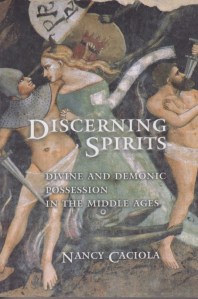
Perspective.  The ability to change it is vital to understanding.  I’ve been working with the idea of demons for a few years now.  My perspective, however, has been aided by Nancy Caciola’s Discerning Spirits: Divine and Demonic Possession in the Middle Ages.  Noting something that has long been a puzzle—behaviors attributed to saints were also recognized among the demonically possessed—Caciola suggests a solution.  In the Middle Ages very few female saints were canonized.  Delving into records from the period Caciola noticed that when saintly behaviors exhibited by men were experienced by women those behaviors were deemed demonic.  In other words, from a perspective that saw masculine experience as normative, when supernatural events were encountered in women they were seen as diabolical.  Using Hildegard of Bingen’s frame of an “effeminate age,” Discerning Spirits explores the idea of how the Medievals told good from evil.

 My own experience of “discerning spirits” came about through a United Methodist curricular study on spiritual gifts.  I was in either junior or senior high school, and deeply involved in the church.  An adult study (I was close enough) on spiritual gifts explained the laundry list compiled by Paul in 1 Corinthians 12.  The apostle from Tarsus notes that discerning spirits is a divine gift.  I trembled as a teen, wondering if I might possibly have it (that was the point of the study).  It seemed like an immense responsibility.  The issue, it turns out, was nothing new.  Since codified in the Bible it had to be true, but what was it all about?  Smarter people than me were struggling with it.

There’s plenty of provocative and explanatory information in Discerning Spirits.  From ancient times it was understood that gods could possess people.  By the New Testament demons clearly could too.  We hear less and less about divine possession as time goes on.  In fact, it becomes a kind of heresy in itself.  Demonic possession was never really in doubt.  It fell out of favor with the Enlightenment, but it didn’t really disappear.  This book shows a clear trajectory from women’s possession as being demonic straight toward the witch craze that erupted in Europe toward the end of the Middle Ages.  It was no coincidence that the majority of accused witches were female.  The perspective had shifted with the fortunes of the church during the Medieval period.  Fear of schism and fear of unsupervised spirituality in a world where only men could be priests led to results that, in hindsight, look inevitable.  Caciola’s book is an important source for not only ages past, but also a mindset all too prevalent in our present world.


Peaceful Resolutions

It came as a shock.  Raised as I was in a nation enamored of weaponry, I did not realize that many countries in the world do not have armies.  In some places, such as Israel, service in the military is compulsory.  In approximately twenty nations, however, people are secure enough not to require armies.  It’s probably symptomatic that such nations are fairly small in land area.  The more you’ve got, the more you want to protect.  Without materialism would we even need militaries?  Yes, we fight over different religious beliefs, but those conflicts are tied to a sense of ownership as well.  This is “our land” and don’t “you” tell us what to do in it!  I can imagine a world where armies need not exist.  The key, it seems to me, is love.

In a Simpsonesque way, of course, hostile aliens might invade.  Could we not try to come to a peaceful resolution?  Or could we not learn to protect ourselves without having to be in a position to destroy those who might prefer a more socialistic lifestyle?  Those who might look different?  Those whose moral standards push us to think more broadly?  Like many people I’m dismayed at the unconscionable size of our military budget.  Killing the world once over is no longer enough.  Now we have to try to pollute space as well.  Where are those aliens when we need them?

The fact is nations exist on this earth without standing armies.  They don’t cause trouble and some of them are extremely bookish (no surprise there).  Can we imagine what our world would look like with an education budget swapping places with the military one?  Do we dare even think such dangerous thoughts as peace and mutual goodwill?  Is no-one big enough to stand up to Adam Smith (with kudos to Thomas Piketty for trying!)?  The wealth of nations could be applied to make well-fed security mostly a reality.  We lack the will.  Well, most of us do.  I draw comfort knowing that several small nations around the world feel no need to waste their budgets on weaponry.  Their rich may not own dozens of houses fit for dozens of kings, but they have perhaps a peace of mind that no amount of military might can give.  We don’t seem to understand that weapons cater to fear, and that, as one religious text says, “perfect love casts out fear.”   


Memories of Scotland

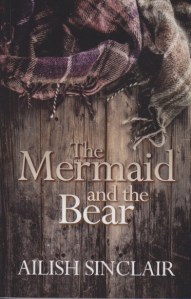
I admire those who follow their dreams.  I have been writing fiction for over forty years now, and although I’ve had some success placing short pieces my novels haven’t found much interest.  So when I see the published work of someone who obviously loves writing as much as Ailish Sinclair does, it warms my heart.  Her debut novel, The Mermaid and the Bear, is the kind of historical fiction tinged with a little fantasy, all set in Scotland.  Having spent three happy years in Scotland myself, I like to read native writers.  One of the categories in this year’s Modern Mrs. Darcy’s reading challenge is a debut novel, so all these things came together in this one little book.  There may be a little spoiler info below, so proceed with caution!

Sometimes I read a novel without knowing much about it in advance.  That was the case with this one.  I read Sinclair’s blog posts and appreciate the fact that she doesn’t compose long, rambling essays.  Her posts often make me stop and think.  Her novel follows a love story that turns into a witch-hunt.  Unlike that claimed by those who have the whole world watching them, this was a real one.  The historical notes tell a bit about the characters based on women actually tried in Scotland during those dark times.  In fact, when one of my doctoral advisors gave my wife and me a walking tour of Edinburgh early on in our time there, he pointed out where the witch trials had taken place.  Sinclair captures the rage and frustration of women who had no recourse once such accusations flew.  A religion only too ready to believe the worst about people, women in particular, showed no mercy based on what was only hearsay and jealousy.

It’s difficult to imagine what life would have been like in such times.  Castles and lairds make us think of fairy tales, but reality must’ve been somewhat harsher.  It’s fun to pretend about witches around Halloween, but there’s a sadness that’s difficult to escape as an adult.  That sadness is all the more profound for finding claims of witch-hunts on the lips of abusers and others who do their best to perpetuate inequality.  They dishonor those who actually did die so that men like them could feel smug self-satisfaction in the past.  The Mermaid and the Bear brought a number of these thoughts to mind.  Our society has made some strides towards treating all people as human beings but we’re yet a long way from where we need to be.  Books that remind us of that are always to be welcomed; dreams are worth pursuing.


How To Study

As much as I critique Calvinism, I participate in its hardness sometimes.  For instance, when I was employed in higher education I would’ve considered reception history—the kind of research I’m now doing—soft.  My doctorate consisted of learning to read dead languages and trying to make sense of ancient religions where tons of lacunae existed.  It was rigorous mental work.  More modern studies, however, often look at the human (softer) side of religion.  There are any number of approaches: gender studies, sexuality studies, disability studies, and plenty involving the social sciences.  I was taken aback, however, when I first encountered fat studies.  This is apparently a thing now.  As far as I know it hasn’t been applied to biblical studies, yet.  The title is intentionally somewhat derogatory, rather like queer studies adopted a term at first intended to disparage, but later taken as a token of pride.

Fat studies is a field that considers the acceptance of all body types, and the prejudices against those who might be called “overweight.”  We’ve begun to reach a period of acceptance of difference—well, we had been getting there, until about three years ago.  Academics are keen to explore implications of just about anything, and considering those who face acceptance issues due to weight, or body mass index (BMI), suggests itself.  The media likes to cast us into various crises: an obesity crisis, an anorexic crisis, substance abuse crises, and satanic panics.  Each of these crisis points eventually leads to some form of study.  We want to understand this inherent complexity of being human.  Some feminists expressed surprise when masculinity studies became a thing some years back.  Being male, I see that the only way to break down seeing my own gender as normative is to put it under the microscope with all the others.

Because of historical developments, a particular subset of the human race came to see itself as the measure of all things.  I doubt this was intentional, but over time the male of northern European persuasion, particularly the Protestant variety, came to be seen as the textbook human.  He stood about six feet tall and tended to fit a certain BMI.  He was straight.  Like a ruler.  All other humans were measured against him.  This system of privilege is breaking down.  Some, as we can see in Washington, are reluctant to let it go.  Difference, however, is endemic to any species.  And males are no more normative than females.  Or those attracted to their own gender.  Or who change gender.  Or who weigh more than others.  Until we learn to accept all humans, it’s only right that we study our assumptions.  There will always be those who look at dead languages and some day we may want to study even them.


Fueling Fires

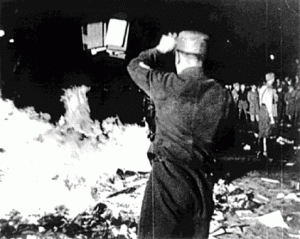
Paying attention to world affairs can take all your time.  In fact, for those who study foreign affairs, it practically does.  I’ve been struggling with the fact that you can’t be lazy in a democracy.  I know that’s true—we must constantly be vigilant of governments turning evil (with a wink)—and yet we each have our own lives to look after.  Trying to balance this teeter-totter, I noticed a Washington Post story lately about library officials in China burning books.  Said books challenge government ideology and are being destroyed.  We’ve seen this before.  Nazis burned books, and Republicans would certainly like to.  Even further back in history Medieval thinking led to the destruction of what would now likely be invaluable tomes.  There is biblical precedent, of course.  Read Acts 19 if you need a refresher.

Book burners now do their deed for its symbolic value.  We live in an age of Kindles and Nooks and books online.  Not as many are printed as there used to be, but the smell of burning plastic doesn’t convey the same pathos.  Besides, you can just whip out your synced phone and continue  reading.  Those of us who’ve committed our lives to reading find this symbolic gesture heinous.  Yes, there are books that offend us.  I’ve read more than one that I wish I hadn’t.  I have, however, no inkling to burn them.  Books represent our attempts to increase knowledge.  Fiction or non matters not.  Those who write have something to say, and surveys reveal that many adults really would like to write a book.  As a symbol, there’s nothing like it.  I suspect that’s why burning them makes such an impact.

The western world is struggling to understand China.  One of the largest investors in both Africa and South America, China is building foreign relations just as the Trump administration is jettisoning them.  Many well-informed Americans don’t realize just how long and how well China has been making connections through financial investment.  Sounds like a very capitalist thing to do.  That librarians should burn books seems an odd form of theater in such a scenario.  Governments that can’t take criticism are autocracies.  I know few donkeys that would state any one of their party is really a saint.  That’s GOP territory.  At least we haven’t started book burnings on the White House lawn.  As we turn our gaze to the east, or, depending on your perspective, to the west, we do have to wonder just how long it will be before we do.


Space Farce

Okay, so “Space Force” sounds like a gimmick that you’d see in a 1950’s ad geared to dungaree-wearing boys.  These boys, who’d be named “Dick” would show the girls, named “Jane,” just how it was done.  So as I read about the furor of dedicating a King James Bible from the Bible Museum as the official Bible for military branches aimed at the stars, I had to think how very small we actually are.  So 45 thinks, like Reagan thought, that we need outer-space defenses.  These guys need to read more science fiction.  Actually, some plain old science would help.  If there are most advanced civilizations out there—and such seems increasingly likely, given that our understanding of science is subject to change—we are nothing more than cosmic mosquitoes buzzing close to our own planet where we can wail on each other in the name of lucre.  And we call it “Space Force.”

An article on NPR points out the hypocrisy of swearing in the military on a Bible.  One guy in there, I’ve heard tell, was called “the prince of peace.”  He’s somewhere near the back.  The public loves a good warmonger, though.  We can send our tentative rockets into orbit where bug-eyed aliens laugh with bemusement, and say “Just you try something.”  Or we can make business deals with Russia with one hand while pointing our missiles in their direction with the other.  Is that a missile or am I misreading something, Dick?  I can’t ask Jane, because she just follows along.  Maybe we’re inheriting the consequences of those who grew up reading Dick and Jane.  Boys with their rockets, girls with their dolls.

Bringing religion into the military is nothing new.  German soldiers marched out into a couple of World Wars with “Gott mit uns” inscribed on their waists.  Millions died.  No lessons were learned.  So now we want to take conflict so far over our heads that we can’t even see.  Ancient people knew the gods were fighting far above.  That’s how they made sense of the world.  Some, like Erich von Däniken took those stories literally and thought our alien observers were the reason.  Now that we’ve got drones we have no need of UFOs anymore.  All that sci-fi I watched as a kid wasn’t wasted after all.  Only I grew up reading that Bible instead of swearing on it.  I was pretty sure that war wasn’t a good thing, as he rode on a red horse with his sword pointing upward.  Time to dust off William S. Gray and get back to watching Space Force. 

From NASA’s photo library


Bodies and the Fall

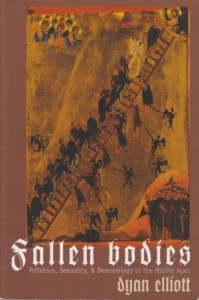
Less common than it once was, the term “Dark Ages” was formerly used to denote what in Europe was known as the Medieval Period.  We now know that the pervasive darkness ascribed to the time was only partial: science, legal thinking, and rationalism were well underway.  Nevertheless, the sway of the church was enormous, and even until and beyond the days of Isaac Newton, the supernatural was assumed to exist.  Dyan Elliott’s Fallen Bodies: Pollution, Sexuality and Demonology in the Middle Ages is a fascinating journey through this contradictory time.  Elliott explores how the mysteries of sex (nocturnal emissions and menstruation loom large among them) played important roles in the development of Catholic theology that ultimately led to the close association of demons and witches.  Concerns with priestly purity, largely due to concerns about transubstantiation, led to enforced celibacy and the (further) denigration of women.

It would be difficult to summarize this insightful book.  Although relatively brief, it packs a wallop.  Concerns about purity go back to the Bible and before.  Ancient cultures had recognized aspects of contagion and knew that some diseases spread by contact.  Their perception of biology was “scientific” according to their current understanding, but it lacked microscopes and knew no shortage of supernatural entities.  Demons had great explanatory value in such a world.  As Elliott shows, they often appear in disquisitions about sex.  How can spiritual beings engage in physical relations with human bodies?  What were they made of?  Were they all bad?  Although demons had explanatory value they also raised many questions.

Fallen Bodies draws correlations between the dismissal of priests’ wives and the evolution of witches.  As the Eucharist became more and more holy, stricter controls had to be placed on consecrating hands.  Sex was the great source of pollution, and the Virgin Mary became rather less human through her own miraculously sterile conception.  The implied misogyny may not have been so much intentional as a reflection of the struggle to understand what modern medical science generally explains materially.  We still grapple with the mystery of life.  Conception can be viewed clinically, and biological responses can be “explained” scientifically (anyone who’s been in love will admit to the mystery of it, though).  Denizens of the Middle Ages worked with the tools they had to make sense of a world often bewildering.  Even physics still has to deal with quantum realities.  History teaches by its unfortunate missteps.  Someday those who “govern” the world may learn to read it and exorcise demons now otherwise readily explained.


Integrity

I’m not lying when I say untruth has been on my mind a lot.  A few days ago I posted on freedom of speech and how it’s an ideal rather than an actuality.  What with lies being lobbed at us daily, I got to thinking about the ethical implications for honesty.  Integrity.  The freedom to state what we actually think is something a little different.  How often in daily life do we act authentically?  And when we’re with others we act differently than when we’re alone.  Which is truly us?  Someone pointed out to me recently that if you walk with someone your body language is different than if you walk alone.  Even walking alone your body language shows your interior frame of mind.  A sad walk isn’t the same as a happy walk.

As social creatures, the ideal of being forthright all of the time would lead to chaos.  All of us lie, one way or another, at times.  That’s where integrity comes in.  Integrity, it seems to me, indicates someone who is honest, all things being equal.  I once noticed a politician who blinked every time he said the word “God.”  That blink, I believe, was a form of “scare quote.”  I don’t know, but I suspect said politician didn’t have any strong belief in a deity.  Some circumstances require that you pay lip service anyway.  Ethics dictates that we try to be honest, but even keeping secrets is a kind of lie of omission.  Our own personal wants—which are honest—often have to be suppressed for the sake of fairness.  Again, we live in a situation where the most powerful pursue their own desires while neglecting the needs of others.  Is this then integrity?

Often I ponder what it means to be social creatures.  Some of us are naturally introverts.  We nevertheless rely on others because society is too complex.  What any one person could build an iPhone single-handedly, and then set up the 3G, 4G, or 5G network on which to use it?  Could that same person grow their own food, manufacture their own automobile, and construct their own house?  The self-made rugged individualist is a myth we cherish, but it too is an untruth.  We rely heavily on others and we count on those closest to us to be honest.  When lying becomes a lifestyle integrity lies in tatters on the floor.  Just three years ago I wouldn’t have been having such thoughts, if I’m honest with myself.


Now You Don’t

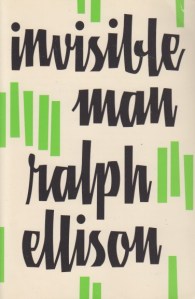
Quite some time ago I realized I should read Ralph Ellison’s Invisible Man.  What put me off, as usual, was length.  Long books take a real time commitment, but since Black History month is coming up, and we’ve just celebrated Martin Luther King, I planned ahead and read.  A profound book, at several points I felt like a voyeur reading it.  The African-American experience of life is something I always feel uncomfortable approaching.  I’m afraid of appropriation, and I’m afraid of not paying attention.  I grew up not having a sense of racism, but nevertheless am implicated in the whole.  Maybe that was intentional.  As a story Invisible Man is often described as a picaresque, but having an unreliable narrator who was a victim of my own culture was difficult to countenance.  It was hard to know what to think.

We never understand another person’s experience of life.  We sympathize, we empathize, but we can’t really get inside the head of even our best friends.  I can’t help but think we’d all be better off we recognized that race is a social construct, and a potentially evil one at that.  We are all human beings and we should act that way.  But this novel left me wondering if it’s really possible.  Good novels will do that to you.  So I’m sitting here scratching my head and a little bit flummoxed by what I’ve just experienced.  Was it authentic or can I not help but project my own experience as an non-minority upon someone else’s writing?  Even questions like this are socially conditioned.  I too am trapped in my own mind.

You might think that by this time we would have evolved beyond our distrust of those long separated from us by natural barriers.  Homo sapiens are distrustful of strangers, and even the internet hasn’t brought us the understanding we require.  Not yet, anyway.  The background to “race relations” in the United States can’t be separated from slavery and the attitudes it engendered.  On almost every page of Invisible Man its traces can be seen.  That kind of cultural memory, and other cultural memories such as Jews being routinely castigated by Christians, or monotheists being raised to combat polytheism, are deep dividers.  Our cure for these evils is understanding.  I had to keep reminding myself that this was a work of literary fiction.  It rings true, however, and although it represents a world I do not know the fact of its publication invites  those of us outside the tradition to read.  Indeed, doing so is one way of attempting to reach understanding.