Prehistoric Steps

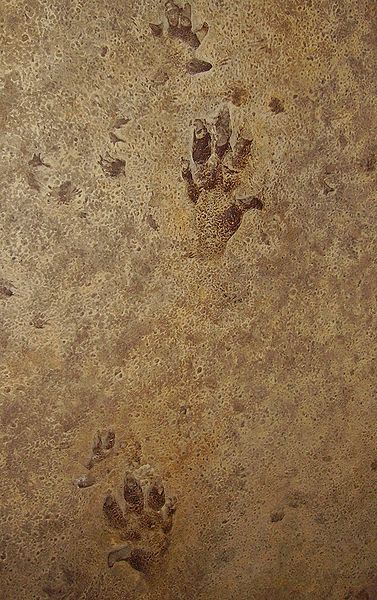
Britain has always had a share in the great events of the past (speaking strictly from a western hemisphere point of view). Not only did the ten “lost tribes” of Israel end up there (according to some, with apologies to Joseph Smith), but young Jesus traveled there with Joseph of Arimathea (according to others, with no apologies). While these stories are obviously non-historical, Britain does have an illustrious heritage that has left Stonehenge and the Cerne Abbas giant in its wake. It is thrilling to read, then, that fossilized footprints from some 850,000 years ago were recently discovered. Coastal erosion, similar to the event that revealed Skara Brae to the world, uncovered the footprints for a short time in Happisburgh, near Norfolk. About 50 footprints were discovered, according to The Independent, with a group comprised of women, men, and children. They were walking alongside a stream, apparently looking for the Pleistocene version of carry-out fish-n-chips at least 844,000 years before Adam and Eve.

The British landscape boasts an ebullient antiquity. Our years spent in the British Isles involved exploring everything from Lanyon Quoit in Cornwall to the Ring of Brodgar on Mainland, Orkney with our friends. It is a land where the past lives on into the present. No wonder some speculated that the biblical past made its way here as well. At least now we know that some very early humans did as well. Homo antecessor, the makers of the prints, visited a Britain replete with elephants, hippopotami, rhinoceri, and hyenas. It is speculated that they may have domiciled on off-shore islands to keep safe from the predators that roamed pre-Roman England. One thing we know for certain about people is that they do get around.

Chirotherium storetonense  trackway, photo credit: Ballista

Chirotherium storetonense trackway, photo credit: Ballista

Homo antecessor is an extinct species. Many of the hominids that contributed in some way to the possibility of our existence are long gone, creating endless headaches for scriptural literalists. Their lives, as The Independent speculates, may have involved being preyed upon by large predators and the constant search for food. They also liked to walk on the beach. I wonder how far they had come on the road to religious belief. Constant fear of predation must surely have played into it. We don’t know how far back the evolutionary chain religion goes, but we do know that it is a profoundly human outlook. You can’t stand beneath the towering Neolithic menhirs of the Ring of Brodgar and not feel it. Sometimes a walk along the shore is all it takes.


Jesus, My Foot

A story going around the internet features pictures of Paula Osuna’s bruised second toe. According to the YouTube story, Osuna fell down the stairs then had her boyfriend rub some sacred dirt from the shrine of El Santuario de Chimayó in New Mexico over the injury. As part of the healing process, an icon of Jesus appeared on her injured toe. Now, New Mexico has a reputation for hiding some potent sites of paranormal import (at least 51 of them), but I had never heard of Chimayó before. It is apparently one of the most visited shrines in the country. Like Holy Hill, a local shrine I used to visit once in a while back in Wisconsin, the site itself is supposed to lead to healing. Healing sites sometimes hold their own irony.

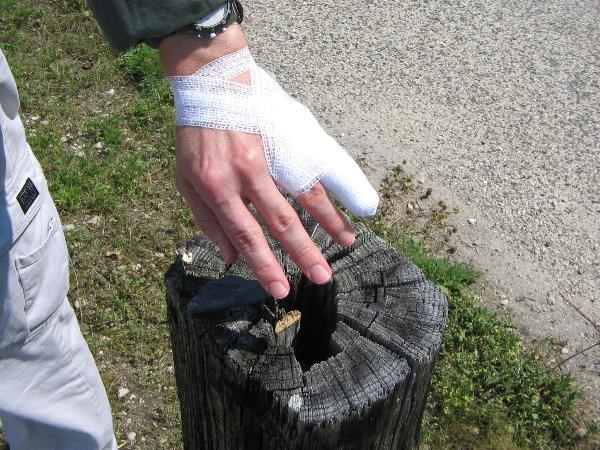
When we lived in Wisconsin, my family used to be avid geocachers. We still go out once in a while to find the little boxes hidden in the woods, but in Wisconsin there were plenty of day trips to be had with minimal traffic (unlike our current setting). One day we drove to Holy Hill National Shrine of Mary, Help of Christians, a discalced Carmelite community built atop a glacial moraine that gives spectacular views of the southeastern corner of the state. Inside there were many abandoned crutches, as I knew from previous visits, but this time we were present to find a small ammo box filled with trinkets, hidden in the wooded grounds. As our GPS narrowed us in on the coordinates, I made the typical error of watching my device rather than my feet. I slipped on a pile of rocks and my left hand slid onto a broken beer bottle, slicing open my little finger. Fortunately our geocaching bag held a small first aid kit, but no amount of gauze and holding my hand over my head could stop the bleeding. After we’d logged our find, we drove to a local emergency room where I received about ten stitches. Although the injury took place on the grounds of a healing shrine, no Jesus appeared on my shredded pinkie. Nor did miraculous healing come because of the location.

DoYouSeeWhatISee

Pareidolia is a most fascinating evolutionary development. One of the first things imprinted on a newborn person is the image of a human face. In remarkably short time the infant can register the intent of various expressions on a human face and will soon learn to mirror them. That desire to find a friendly face never leaves us. We see faces everywhere. There are entire websites dedicated to pareidolia. We like to think there is a watchful parent ensuring that we won’t stumble and fall. Life, however, is full of accidents and injuries. Some of them are even the results of visiting healing shrines. Belief is what makes the difference. Ironically, even when Osuna’s bruise lost the shape of Jesus, she still believed in the healing power of the dirt. Her story has been covered on television and is easily found on the web. It is a fame born of faith. Miracles are always there for the taking.


Poe Knows

CambridgeEdgarAllanPoeA recent trip to Baltimore prompted me to read Benjamin F. Fisher’s The Cambridge Introduction to Edgar Allan Poe. Well, that and the fact that I had purchased the book from an overstock table on a visit to a local indie bookstore (support your local!). Poe is a difficult writer to get to know. His personal life seems to have been largely an effort to find financial security while he knew his intellect was greater than those who employed him, and yet he was the one left without means. His literary talent, now considered one of the brightest constellations in the American writers’ heavens, was denigrated and demeaned and not fully appreciated until after he died of unknown causes in a city where he no longer lived. There is a profound sadness about Poe, and he seems a tragic figure. I do wonder, however, whether success would have ruined him. The more society woos you, the more you’re willing to lower your standards, I shouldn’t wonder. Not that I would know.

GhostsKnowFisher’s guide is a basic introduction that only toys here and there with Poe’s religious outlook. I’ve not run across much about Poe and religion, but there is a deep spiritual awareness, along with ratiocination, in his tales and poems. I suspect it might go back to the fact that religion and fear are so tightly intertwined. If a religious element is missing, it sometimes leaves a reader hungry. I’d also been reading Ramsey Campbell’s Ghosts Know concurrently with Fisher. This is a novel where a skeptical radio talk-show host takes on a stage psychic to see who really knows who might’ve killed a young girl. As the story unfolds it becomes less and less likely that the psychic is tapping into anything other than individuals’ wish projections.

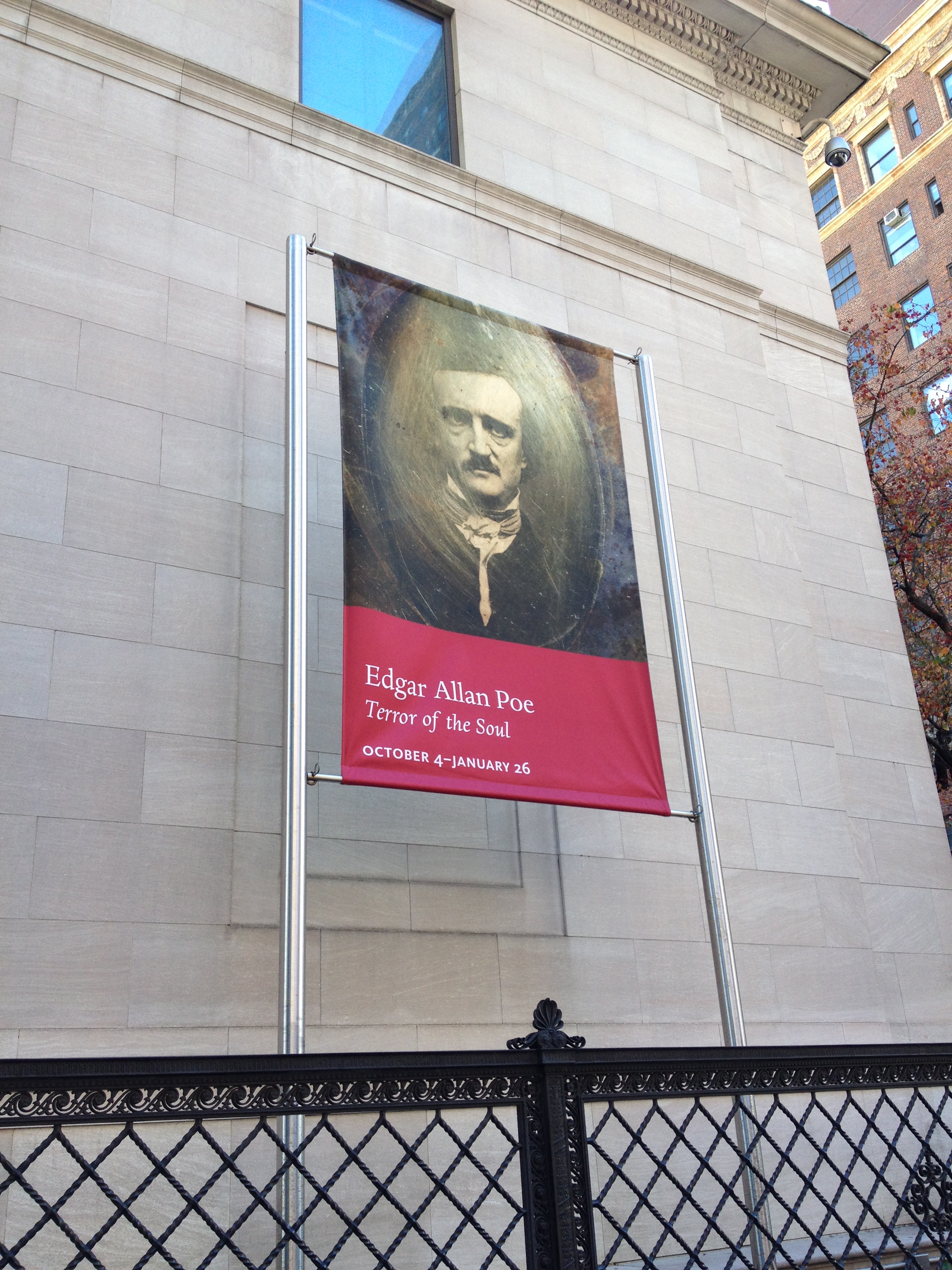
While I found both of these books interesting, I pondered the fact that Poe referred to the scariest elements in his works as “terror of the soul.” The supernatural in Poe, as Fisher points out, is often really just a projection of an interior state of one of the characters—the eponymous tell-tale heart is guilt breaking through, not an undead heart beating. In an era where belief in the soul is waning, scary books seem less frightening. We’ve been robbed of both the supernatural and the soul, so what is left to fear? If death is only a more profound kind of sleep and morals are only a matter of social convention, then we are truly alone in this vast universe. Of what should we be afraid? Still, when the night stretches on for many long hours this December, I find myself inclined toward Poe and I wonder if ghosts truly do know.


Schrödinger’s Luggage

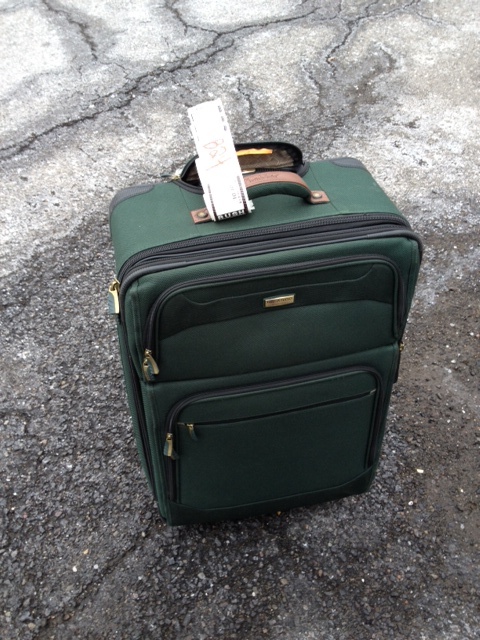
I recently had the misfortune of flying on Delta Airlines. In all honesty I suppose my antipathy to Delta began with a flight on which I was not actually a passenger. A few years ago a news story of a Delta flight navigating to the wrong city created smirks for those who can afford to fly airlines that have better track-finding skills. With all of my flying over the past years, I’ve ended up on Delta a couple of times and my sense of their muddled thinking has only been confirmed. On a recent flight before which we were informed that our boarding would be “expediated” since the captain was late landing his jet at the next gate and would be flying right back to Atlanta whence he’d just arrived, I hoped the navigation would be better than the grammar. Landing in Atlanta for a flight to the thriving metropolis of Allentown, Pennsylvania, the gate agent repeatedly told us that the flight to “Aberdeen” was about ready to board. Several customers had to call out “Allentown” a few times before the agent realized her mistake. My misgivings grew. When I landed in Allentown, my checked bag had decided to take a tour of Detroit. It was late at night and I might have been a bit brusk with the poor, graveyard-shift Delta agent, but he assured me that my bag would be in by noon the next day.

Not a particularly trusting soul any more, I called Delta baggage information the next morning after looking at their website. The website showed the bag sitting just 15 gates from my departing Atlanta flight but then taking off to Detroit. When I called the representative told me that no information was available on my baggage (the artistry of understatement!). I informed her that I had the website up and that it showed my luggage in Detroit, I wanted to know when it would be in Allentown. Her tune changed to indicate, “oh yes, it is in Detroit.” But then, she could neither confirm nor deny that it would be on its scheduled flight. I had already determined to drive back to the airport to collect it. If Delta cannot be trusted to navigate to the right location in the air, then what would be their chances be on the ground in New Jersey? As I kindly suggested to the representative that they hire employees who could read, I couldn’t help but think of Schrödinger’s cat.

Erwin Schrödinger was the physicist who came up with the thought experiment of a cat placed in a box with a deadly substance. Whether the cat is alive or dead is only a matter of speculation without looking in the box, so, in reality, the cat is both alive and dead simultaneously. I’m no physicist, but I thought of Schrödinger’s luggage being both in the cargo hold and not being in the cargo hold at the same time. This was the very mystery of the universe, courtesy of Delta’s ineptitude, being foisted upon my frantic brain. Where was my bag? It was not in my possession, and I had last entrusted it to an airline that thought the best route from the Midwest to Allentown was through Atlanta and then Detroit, but they weren’t really sure if that was the case either. There is a consolation, however. You can get a refund of your twenty-five dollar baggage misplacement fee, in the form of a voucher for your next lost luggage episode on Delta airlines. I’m about ready to crawl into that box with Schrödinger’s kitten and await my fate.

Both here and not here.

Both here and not here.


Some Baltimore Lessons

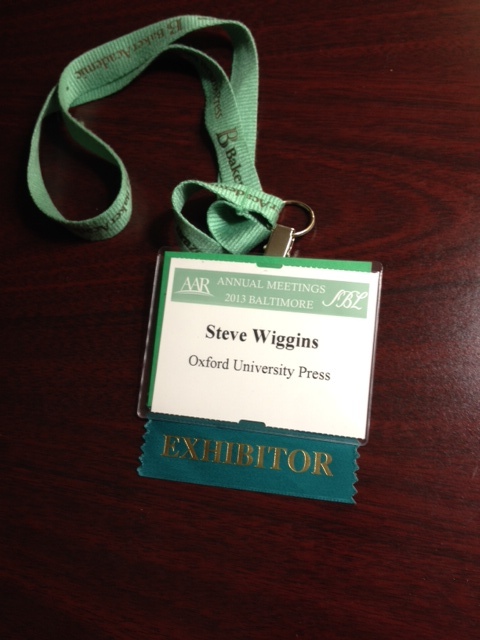
As someone who hovers around the edges, perhaps I’m preoccupied with perceptions. I have been attending the American Academy of Religion and Society of Biblical Literature annual meeting regularly since 1991, with a few years off for bad behavior. Usually it is held in a colorful US city that can afford to have a myriad of religion scholars show up all at the same time. I have noticed, over the years, what a conspicuous lot we are. As I drove into Baltimore, for example, I could tell who the locals were right away. They fit their environment. When I reached the medical area near one of the large hospitals, the people were wearing scrubs and white coats. I could navigate to the convention center by following the bearded, tweeded, and professionally dressed feminine to where the specialists in arcane subjects gather. We rather stand out. The funny thing is, once you get us together, we don’t always have a lot in common.

I used to teach, and as a teacher you run into this strange contradiction of roles where you are expected to keep your expertise up-to-date, to entertain students in the classroom, and to write books and articles in your spare time. I excelled at this and found my niche for a while. The beard I already had, but the look had to be acquired. Tweeds were not difficult to locate in Scotland, and so I returned to the States with the image already down. At Nashotah House, I recall many students complaining about the rules that forbade wearing a “seminarian collar.” Yes, even priests have a guild. A seminarian collar looks like a Roman collar, only it has a dark vertical stripe in the middle to warn the penitant that this is not a full-fledged priest and confessing your darkest deeds might not be a good idea. Don’t buy any wafer’s s/he’s selling. Their complaint was that to learn the role you have to dress the part. The administration at the time had rules against it. Confusing someone for a priest can have serious consequences. (Never mind that on a campus with at most 50 students everyone knew everyone else by name and habit.)

So I sit in my car at the stoplight and watch the academic parade. In this crowd there are people with god-like status in the academy, but whose names would mean nothing in even a highly educated household. The metaphorical Red Sea of scholars in the bookstalls parts at their approach. On the street corner they look lost. To the locals it is obvious that a horde had descended upon the town. Many forget to remove their name tags, announcing to the secular world that there be giants here. But they are shivering giants, as if they might’ve forgotten to pack a coat and the wind sure is chilly for this time of year. I suppose I must look like one of them myself. After all, I’m trying to turn the wrong way on a one-way street again.

Am I that obvious?

Am I that obvious?


The Write Place

In my mind, Baltimore is inextricably bound to Edgar Allan Poe. From the accounts of Poe’s life, it is clear that he sensed nowhere as a welcoming home. Indeed, he was barely mourned at his passing and the memorial gravestone in this city was only added decades later when his works had attracted serious attention. Many of the eastern cities now like to claim him: Boston (although with Bostonian diffidence), New York, Philadelphia, Baltimore, and Richmond. All have various mementoes of his transient existence in those places, although he was not made to feel at home there when he was actually alive. The writing life is a difficult and often lonely one. Poe knew that better than many. It is so lonely that nobody is even sure why he was in Baltimore when he died, or what the cause of death was. He has become an icon to many that write.

Ironically, my career has repeatedly shoved me back to the publishing industry. That doesn’t mean that it is any easier to get published, however. The world is full of words, and those who hold the key to publishing respectability have so little time (a fact I know well, as a sometime editor). Some of us resort to blogs and pseudonyms while others die young in Baltimore. The world loves a self-promoter. Those with something intelligent to say are often discovered only in retrospect. And soon their work enters the public domain and can be claimed by all.

Other writers have called Baltimore home. Not many have football franchises named after their literary works, whether here in Maryland or elsewhere. And Baltimore, like many of the major cities of the United States, has great swaths of the neglected, the poverty-bound, and the hopeless. As I drive through the city it is clear that many have been left to face the cruelties of a self-promoters’ economy. They live with little—overlooked and forgotten. But there’s a party in town for those who can afford it. As I settle down with a cask of Amontillado and my notebook, I know that I have only just begun to get to know Baltimore. Maybe I will meet the ghost of Poe here, amid the brightest lights of scholarship and the darker shadows beneath.

Poe in New York

Poe in New York


Away as a Stranger

I’ll admit it. One of the things many scholars secretly enjoy about the American Academy of Religion and Society of Biblical Literature annual meeting is discount rates at fancy hotels. Unless things have changed drastically since my teaching days, professors don’t make enough to spend nights at four-star hotels as a matter of course. This year, however, Routledge pulled the rug out from under me less than a month before the conference. I had to cancel my reservation and forget the dreams of a leisurely train ride to Baltimore, a nice walk to a luxury hotel, and four days of schmoozing with the intellectuals (or at least those who are considered smart enough to write books). Then, Oxford University Press. I started work on Monday, and by Friday I was attending AAR/SBL. But with a twist. All the hotels were full—not a room in Bethlehem, I mean, Baltimore. So I had to find a run-down hotel several miles away and drive four hours to get there frazzled and decidedly unacademic. Still, map is not territory.

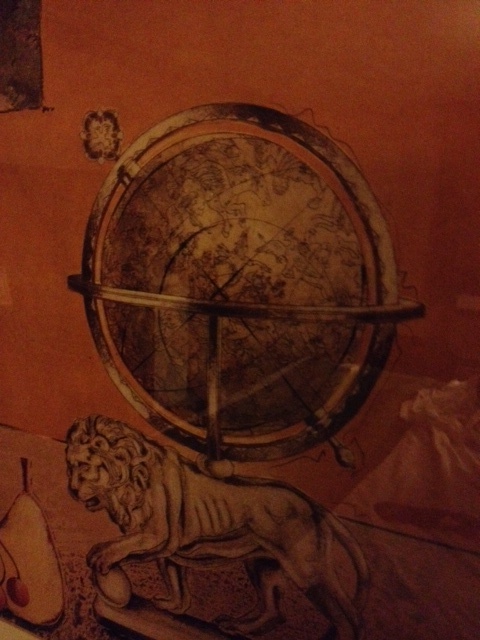
worldmap

Getting back to the hotel from the Convention Center, I had technology issues. You see, I didn’t have time to plan the trip out this year. I had no maps, figuring my smartphone was more intelligent than I (I don’t set a very high bar). Alas, for the GPS on my phone knows Baltimore less well than me, apparently. When the scenery turned industrial and I could see the ocean although my hotel is miles west of the city, I knew I was loss. My GPS, groping for dignity, kept instructing me to make u-turns on the interstate. Finally, I pulled off an exit and tried to use dead reckoning. Baltimore, like most cities, has problem areas. My GPS took me on a tour of them, as darkness was falling. Boarded up row houses leered at me as I took each turn the phone dictated. I noticed with alarm that the low battery indicator had come on and I was nowhere near anything that looked like a conference center, highway, hotel, or even Salvation Army. I had trusted technology, and it had let me down. Finally, with 8 percent battery power remaining, I spied my seedy hotel in the distance. I was never so relieved.

I have attended this conference since 1991 (I’ll leave the reader to do the math), and only one year did I not stay at a conference hotel. I think I remember why. People are discarded here. Entire cities left to crumble. Without a map, I witnessed territory that I’d rather not have seen. My academic friends, I know, were tipping back a glass, knowing that they had only to find the elevators to be home. Map is territory. And the terrain is untamed. We have created our urban jungles, and it will take more than a GPS to get our way through them. Tomorrow I will try again, if my trembling fingers can find the ignition, so that I can drive to where the more fortunate dwell. Some dreams are best left undreamt.


Falls Tree

The autumn trees have been absolutely transcendent the past few days. From my earliest memories fall has been my favorite time of year, and a large determinant is the trees. Some weeks back, while on the campus of Notre Dame University, I noticed the highly stylized icons of biblical tropes etched into the stone walls of the library. The marble of the walls was highly polished, making images difficult to capture, but I tried to snap one of the tree of life. The tree of life has many associations that go back even into pre-biblical times. Many people are familiar with the story from Genesis, where the tree of life is forbidden to Adam and Eve because they ate from the tree of knowledge. That tree, however, goes back to ancient Mesopotamian stories of paradise as well. Even the Sumerians considered trees foundational.

IMG_1001

I suspect that trees are impressive partially because of their longevity. From a human perspective, they long outlast us—some of the oldest trees in the world are located in western Asia. If we don’t attack them, some species have a pretty good chance of lasting hundreds of years. With roots that run deep and crowns that reach high, trees have been a rich source of symbolism for religions for a very long while. The goddess Asherah was, in some way, connected with trees. I’ve noted in some of my more academic work that the precise nature of this relationship is never really clarified, but some have suggested that the tree of life itself is a form of the goddess. Certainly in Judaism the tree of life inspired the menorah and its gift of light, to be celebrated later this month.

Looking out my window at the brilliant reds and yellows, I am glad for the solidity of trees. Much of life is much less stable than our wooden companions. The myth of the tree of life is a reminder that even if we can hold the eons in our heads, our bodies will not last so long. It is a poignant thought, best captured by the slow falling of the leaves at this time of year. The leaves had just started to change as I strolled the campus of Notre Dame, unaware that my own fall was likely already set in place. The proverbial axe, as it were, was already laid to the root of the tree. I was perhaps too busy thinking about the tree of life to notice the changes taking place around me. A good metaphor will do that to you, and it might even live as long as the tree of life itself.


World War 1.2

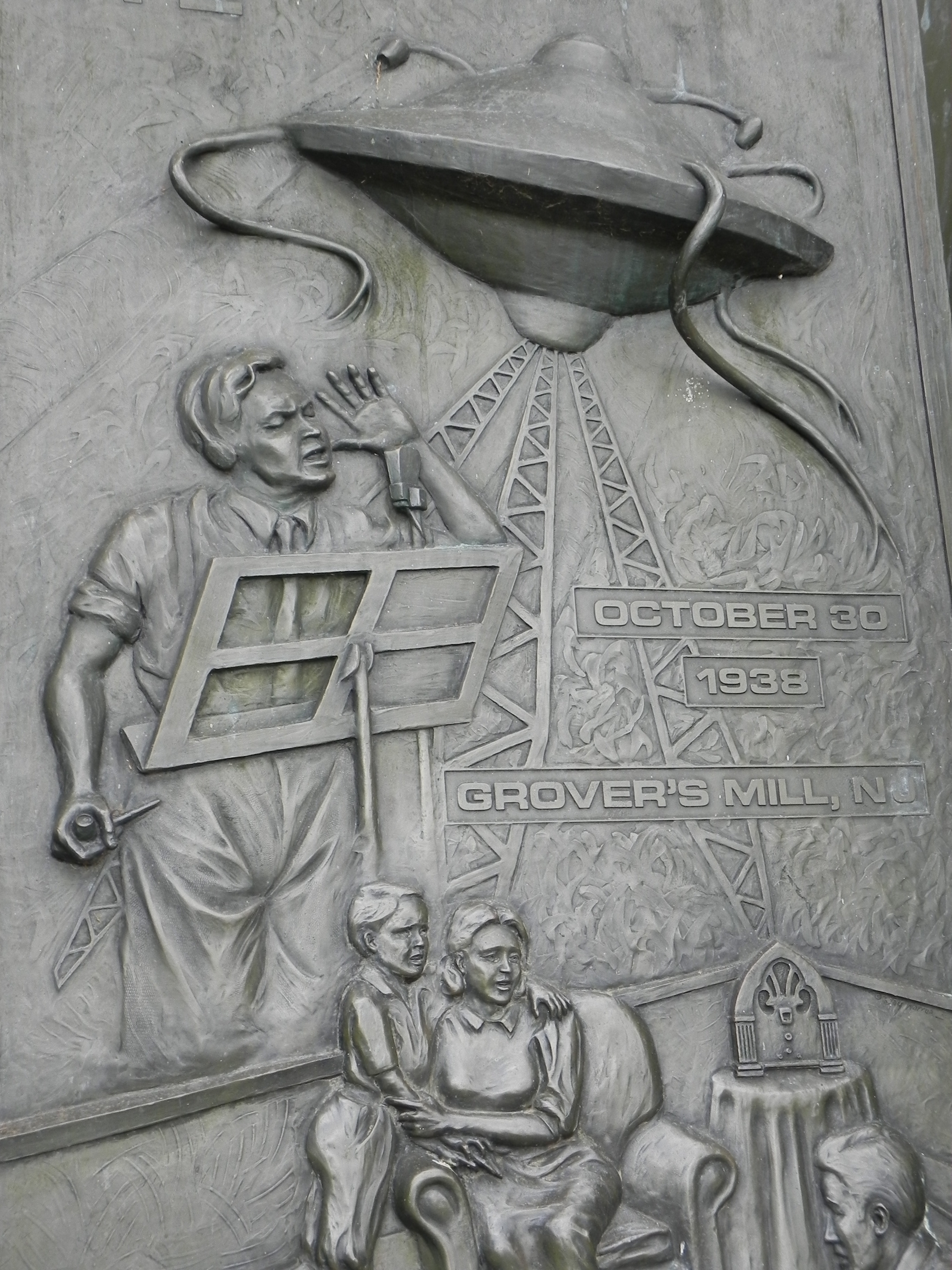
75 years ago today Orson Welles presented a radio drama version of The War of the Worlds. Perhaps it was the looming fear of the Second World War in a society that hadn’t yet overcome the trauma of the First, or perhaps too few people had read H. G. Wells’ novel, but the result was surprisingly catastrophic. Panic arose as listeners supposed that the invasion was real—the broadcast, although announced as a radio drama, followed a news bulletin format that overrode the rational faculties of many. This episode would influence government decisions about what to reveal to the public for years. And, naturally, it all began in New Jersey. Unlike the novel, the radio broadcast set the invasion, initially, in Grover’s Mill, New Jersey. This tiny town is difficult to locate even today, falling as it does between the busy north-south roadways that run through the central part of the state.

DSCN4241

The Hindenburg disaster had taken place the previous year in Lakehurst, New Jersey. Welles, impressed by the radio coverage of that celestial fear, used those broadcasts as models for his play. A few weeks ago I ventured to Grover’s Mill to let my imagination roam free for a while. A great deal of history may have been determined by that broadcast and the public reaction. We are ready to believe that danger lurks above. The First World War began to make early use of the airplane as a weapon. The sky, previously, had been obtainable only with the slowly moving balloon. Only eleven years earlier Charles Lindbergh had crossed the Atlantic by plane for the first time. The Second World War would see air combat as a major component of victory, also for the first time. My mother grew up in New Jersey, watching planes searching for German U-boats off the shore. The skies were not so friendly then.

DSCN4239

As I stood in Grover’s Mill, I recollected an unpublished book I once wrote about the weather in the book of Psalms. The thesis, somewhat loosely, suggested that for the average person the sky reflects the mood of the divine. Dramatic clouds still look angry, even when God is removed from the equation. The Reagan era gave us all new things to fear raining down on us from the skies. September 11, 2001, brought the skies crashing to the earth again. Invasion from above is an apt way to add a chill to Halloween, for it takes the prerogative of the deity and makes it either human or alien. At least most people who believe in God think he’s on their side. When the Wright brothers took their heavier-than-air craft briefly to the skies in 1903, The War of the Worlds had only been on the market for five years. The coming decades would drive God from the skies and we would come to learn that what falls from above would no longer have our best interests at heart.


Making Saints

Some places are inaccessible in the academic world. Or perhaps invisible. I couldn’t help but have Santa Muerte on my mind as I visited the Phoenix/Tempe area of Arizona. I knew from reading Andrew Chestnut’s Devoted to Death that the skeleton saint has a large following in that area. Having been raised in a working class religion in a blue-collar household, I also knew that such trappings might not be entirely visible around a university setting. Arizona State is a huge school and my minimal free time on the trip only permitted a wander-radius of a couple blocks from around the campus. Many universities are, because of their property-value-lowering non-profit status, on the edge of sketchy neighborhoods where work-a-day people live. It didn’t seem that way in Tempe. The areas I reached all seemed to have that adobe-solid middle-class feel to them. Not that I go looking for seedy neighborhoods when I’m traveling by myself, but I do like to see stores that aren’t part of a chain, and to get a sense of local culture. For most academics, the pedestrian devotion to Santa Muerte is below the radar.

The concept has haunted me ever since reading Chestnut’s study—why would people find appealing to death attractive? Santa Muerte has the trappings of a Catholic saint, but she is, plainly put, death personified. She is a favorite among drug lords and criminals, and that is somewhat understandable. Her Hispanic devotees, I realize, often live lives of desperate poverty. The well-heeled saints of conventional religion might not be able to see things from their perspective. Although the Catholic Church continues to make saints, many of the traditional saints predate capitalism. Capitalism creates its own insidious disenfranchisement. I realized this already as a child growing up in a setting where just about everybody I knew had it better than my family did. For some to prosper, others must suffer in such a system. I knew which end I belonged on.

As in my visits to Santa Barbara (a much more conventional saint, by the way), Austin and Houston, in Tempe the Hispanic population was evident mostly in the menial labor sector. The person who makes your hotel bed or brings the hot plate of food to you in the restaurant. The person who mops up your spills or picks up your trash. And they are the ones who’ve made it into the earning bracket of the minimum wage. Why not worship personified death? Does not Santa Muerte remind them that we all face the same rictus grin at the end of our days? Isn’t it best to be on good terms before we reach that inevitable place? It was clear that on my visit I wasn’t going to be able to get far enough from prosperity to see the skeleton saint myself. At Phoenix Sky Harbor airport, waiting for my 11:30 p.m. flight back to cloudy skies, all the shops were closed. I passed by a boutique with local art, and there I possibly glimpsed her. A small statuette, possibly just the grim reaper, among other Day of the Dead motifs. Was it inspired by Santa Muerte? I would never know, I pondered, as the Hispanic airport attendants, still at work around me, were busy emptying the garbage.

IMG_1080


Sun Devils

Unbelievable. The unrelenting sun of Arizona is unbelievable. Even a “cloudless day” back east is only an approximation. Here it is literal. And like all things literal, it attracts the Fundamentalists. I spent the day on the campus of Arizona State University, the country’s largest university by enrollment. Outside the student union, a couple of bands were banging away in the heat, but when I passed by in mid-afternoon they’d been replaced by a street preacher. He was nattily dressed and provocative. When I first walked by he was talking about students being either “a wicked homosexual, a wicked pot-smoker, or a wicked feminist” and went on to throw in some choice words such as “Obama-loving sinner.” Nobody seemed to be paying him much mind. I went on to a couple of appointments and when I passed that way again, at least ninety minutes later, he was still at it. Now he had a small crowd. Students virtuously challenged him as he claimed that he was without sin, “yes, I am Christ-like” he said to one question, and proceeded to tell anyone that challenged him that they were not children of God and that they should run to Hell because they would enjoy it so much.

Preachit

The more I watched this charade, the more trouble I had believing that the preacher was sincere. He quoted, out of context, of course, chapter and verse. He literally thumped his Bible. His hatred for anyone who disagreed with him was plainly evident. I felt embarrassed on so many levels. This is a state university, and the man had a clear agenda of hatred and intolerance. I was here to meet the religion faculty. Everything students were being taught in their classes was being shot down by an ancient book that had relevance only by being quoted out of context. And all of this on a campus whose mascot is the Sun Devil. Devils abound on campus, but the worst, it seemed to me, preached loudest.

Somewhere along the way to enlightenment, this kind of Christianity slipped the rails to become its own self-righteous force. What right had this man to tell students they were wicked? To me they seemed hospitable, peace-loving, and kind to the stranger in their midst. The preacher, self-fascinated, claimed to be without sin. I guess that gave him the scripture-sanctioned right to cast the first stone. Good thing he wasn’t in the crowd when Jesus rescued the woman caught in adultery. When a few students pointed out his flaws in reasoning, which were many, others applauded before he flew back to his out-of-context biblical backbone. More quoting, more thumping. The sun was out in full force in Arizona, but somehow it failed to fall on one man who proclaimed himself better than all others.


Phoenix Rising

As a bird with the incredible gift of resurrection, the Phoenix is one of the most enduring symbols of Greek mythology. We, as people, are pretty accustomed to messing things up and the hope of renewal is something we earnestly crave. The Phoenix, when its long life is over, goes up in a burst of flames only to be reborn from its own ashes. Christians early latched onto this poignant symbol, as have many other religions. In origin the Phoenix is likely related to the sun mythos. Isn’t there always a small shadow of fear that somehow it might fail to rise tomorrow morning, plunging us all into interminable darkness? The Phoenix is a harbinger of hope. These are my thoughts as I soar, birdlike, toward Phoenix, Arizona. A city named after the resurrecting bird. I’m not certain what awaits me here—I’ve never been to Arizona before, but I do know it is desert, and that life in the desert is always precarious. I’m glad to have brought my mythology with me.

Phoenix was, appropriately enough for October, first named Pumpkinville. It is difficult to imagine this sixth most populous city in the United States coming to prominence under that moniker. Since it is October, however, there is an aptness to such history. My trip, as most of my travel, relates to business rather than pleasure—there is a kind of hope in resurrection here as well. As a city in the desert, resurrection would seem to be central to those millions who call Phoenix home. Indeed, the concept of the gods as we know them seems to have been conceived and born in the harsh environment of desiccated lands. Some suggest the Phoenix was originally taken from Egyptian lore. Egypt was, outside the Nile delta, a nation only a few miles wide, snaking alongside a life-giving river in the wilderness.

Phoenix

What is it about deserts that brings the spiritual to mind? It always seemed to me that it was an issue of utter dependence. People living in a harsh environment need all the help they can get. It is difficult to suppose that harsh deities might arise in perfect circumstances. Today Phoenix depends more on engineering and control of the environment than on providence. The gods of the desert nevertheless find a home here. Even if they have adapted to an affluent lifestyle. As go the experiences of people, so go the fortune of the gods. And resurrecting birds.


The Tell-Tale Telegraph

Steampunk CityThere’s a guy next to me with a robotic arm. Women with lace umbrellas and aviator googles walk by on the arms of Victorian gentlemen with walking sticks. A couple have an effervescing water-cooled device on their backpacks. I must be in Steampunk City. The forecast had predicted rain, but it is a beautiful October day in Speedwell, New Jersey. Steampunk City, an event dreamed up by Jeff Mach to make money for local museums, draws in a good crowd of the garishly bedecked, causing my wife and me to feel desperately underdressed. I’ve read my share of steampunk fiction, and I am really thrilled to see so many people taking an interest in such a literary event. I did wonder, however, what demonology had to do with it. Kevin Meares of Delaware Valley Demonology Research is giving a talk on demons, and it’s interesting to notice how the light laughter of customers from the booths outside wafts through the door where stories of possession are being told.

It is difficult to listen to Mr. Meares and believe that he hasn’t seen some pretty strange things. A practicing demonologist rather than the armchair variety, he has accompanied priests on exorcisms and is utterly convinced of the reality of the entities. When asked where demons come from, he relies on the Bible and Bible lore. Either they are fallen angels, remnants of a prior creation (thus the discrepancy between Genesis 1 and 2), or the offspring of the Nephilim of Genesis 6. Whatever they are, he has seen them in the dark, and people have died because of their activity. Being somewhat of a skeptic, I still find myself a little creeped out, kind of wishing I was outside with the laughing, costumed fiction readers.

Steampunk is often about alternate realities. A world where technology developed in the fog of steam rather than the neat circuitry of electricity. Speedwell, ironically, (and probably intentionally) is where the telegraph was invented and first demonstrated. It is a key site in the Industrial Revolution, the development that made the modern world what it is with smart phones, air-light laptops, and iCloud. I’m in the basement of an historic building having my rational worldview threatened by stories of demons. Although I’m wearing my nonplused face, I know that things will be different in the middle of the night. I’ve got brass gears in my pockets and supernatural entities in my head. I’ve met a watch maker outside who translates Aramaic manuscripts. What hath God wrought indeed, Mr. Morse? Yes, I’m in an alternate universe, and I may decide not to come back to the work-a-day one after all.


Twilight Zones

It was twilight last night when I drove into Binghamton. My thoughts naturally turned to The Twilight Zone since one of my childhood heroes, Rod Serling, had grown up here. Binghamton University was also the professional home of novelist John Gardner, of Grendel fame. Seeing the colorful leaves fading to the gray of a falling evening, I thought of how evocative a word “twilight” is. We are creatures with an in-born fear of the dark and twilight is our last hope of light before the night settles in. Maybe it was having just so recently read Grendel, but twilight and gods together brought “the twilight of the gods” to mind (it might have helped that a sudden thunderstorm broke out at the moment). When I first saw the word Götterdämmerung, in junior high school, I thought it must be a potent swear word, what with all those doubled letters and umlauts. My German teacher calmly explained that it was the fourth and final cycle of Richard Wagner’s opera, Der Ring des Nibelungen and it translated to Twilight of the Gods. It is itself a translation of the Norse word Ragnarök, with its single umlaut. Even though it wasn’t swearing, the concept sent a shiver through me anyhow.

I’ve never sat through a performance of The Ring, but I have heard the music with its famous Ride of the Valkyries. Based on Norse and Germanic mythologies, The Ring has deep roots in a pagan mythology where night plays a prominent role. Although J. R. R. Tolkien denied having been inspired by Wagner’s work (there was a certain political incorrectness to it, along about the early-to-mid-1940s), both four-part cycles draw on the Norse mythology that continues to fascinate us with movies like Thor and The Avengers. What impacted my young mind the most, however, was the very concept that the gods could be defeated. How was such a thing even possible? We were raised to believe good conquers evil. How can the gods—even pagan ones—lose? It was a world-distorting concept for someone yet to face high school.

Last night I was literally in the twilight zone. Having driven through the Endless Mountains region where autumn’s reds and yellows inspired me with just how colorful death can be (a European friend once confessed to me that driving along a wooded road in Pennsylvania his first autumn here he had to pull over and weep for the beauty), twilight was already on my mind. October fades into the twilight of the year. The mythologies of the northern races, the Norse and the Celts, seem almost obsessed with the ominous, growing darkness. There is a beauty to it, but also an abiding fear. Are the gods powerful enough? It was a question first raised when my eye fell on that striking word Götterdämmerung that somehow became a part of me.

409px-Ring63


All Booked Up

I remember places by books. Perhaps it is a sickness, but it is a wonderful illness—I love being surrounded by books. When I travel to a new place, a book often serves as a souvenir, as I recall where I discovered a certain title and decided that I want to own it. Of course, independent bookstores are rare and becoming rarer. Who can remember which Barnes and Noble was which? The loss of independent bookstores is a sign of culture collapsing, at least ideologically. Being surrounded by LED screens is just not the same. The viewing goes both ways. Some towns I associate primarily with their bookstores. Over a recent weekend I visited Cranbury, New Jersey for the first time in many months. Apart from its utterly charming, historic downtown, Cranbury is the home of The Cranbury Bookworm, one of my favorite used book stores. My optimism fell under a cloud when I saw the storefront empty. Suddenly, the compelling draw of this quaint town was somehow diminished. My wife and I walked down another block, and I was somewhat revived to see that the Bookworm had merely moved.

Of course, the new location was much smaller. I heard the cashier telling another customer that they had been forced to move and had kept only twenty percent of their stock. So much was clear from my own browsing. My past visits had been perhaps a little too imprudent, but I often walked out with an armload of happiness. This time I purchased a couple of inexpensive paperbacks out of a sense of duty. I support used bookstores in principle. I have had people tell me that we have too many books for the amount of space we can afford to rent. Some people regularly recommend a purge. In a world where finding a comfortable place to be encased by books is increasingly difficult, I have come to regret some of the treasures I’ve given away, or sold, over the years. If I can’t find a sanctuary for books, I shall have to make one. For those who never learned the rapture of reading, it is difficult to explain. I have a phobia of booklessness.

Photo credit: CillanXC. I miss Borders.

Photo credit: CillanXC. I miss Borders.

Even this thing we call religion began, fairly early, as an expression in writing. After people invented writing as a way of keeping receipts, they began recording religious texts. Eventually a Bible. Religious books proliferated. It may seem counter-intuitive, but even today Christian books make up a huge market, no matter how much head-shaking goes on by those who seek only secular lucre. Religion and books often go together, but even when our published parcels take a profane track, they remain lovable. They are more than texts—they are memories. One of my advisors along my academic path inscribed each book with his name, the place he bought it, and the date. Perhaps he infected me with the books-as-souvenirs idea. If he did, I thank him. And I will continue the elusive quest for the bookstore where I might pass a happy hour or two on an autumn weekend.