A Certain Man Went Down

Among the progeny claimed by Wabash College is Dan Simmons. I’ve read a couple of Simmons’ ghost novels, although in reverse order. I read A Winter Haunting, which I quite liked, and followed it up with Summer of Night. Having lived in the Midwest many years, it was easy to visualize the scenes. Then came the time for my trip to Crawfordsville, Indiana. I started the day in South Bend, finishing up my meetings at Notre Dame. I’d noted on the map that, as is often the case, the places I need to get to just aren’t connected by anything resembling a direct route. Although the forecast said “30 percent chance of rain,” I’d awoken at 4 a.m. to a thunderstorm and it had been pouring all morning long. I could swear they were making plans to convert the great Notre Dame stadium into an ark. Perhaps I’d forgotten just how persistent Midwestern storms can be. Soaked, I crawled into my rental car to tool down to Crawfordsville. At least the rain had finally stopped.

On one of those highways in the middle of corn fields as far as the driver’s eye dares look, the low tire pressure light came on. I dutifully pulled over and called Hertz. The suggestion was to find a gas station and put some air in the offending tire. Someone could be there in three hours. Looking about me at the amber waves, I thought of the spirits of Dan Simmons’ stories. A car breaking down in the heartland. No one around to offer assistance. The illusion allusion was shattered when a stranger pulled over and asked me if I needed help. I recall a priest friend once tearfully confessing to me that he had, on a rainy night, refused to stop to help someone with a flat because of fear for his safety. I understood completely—it can be a scary world out there. “And likewise a Levite, when he was at the place, came and looked on him, and passed by on the other side.”

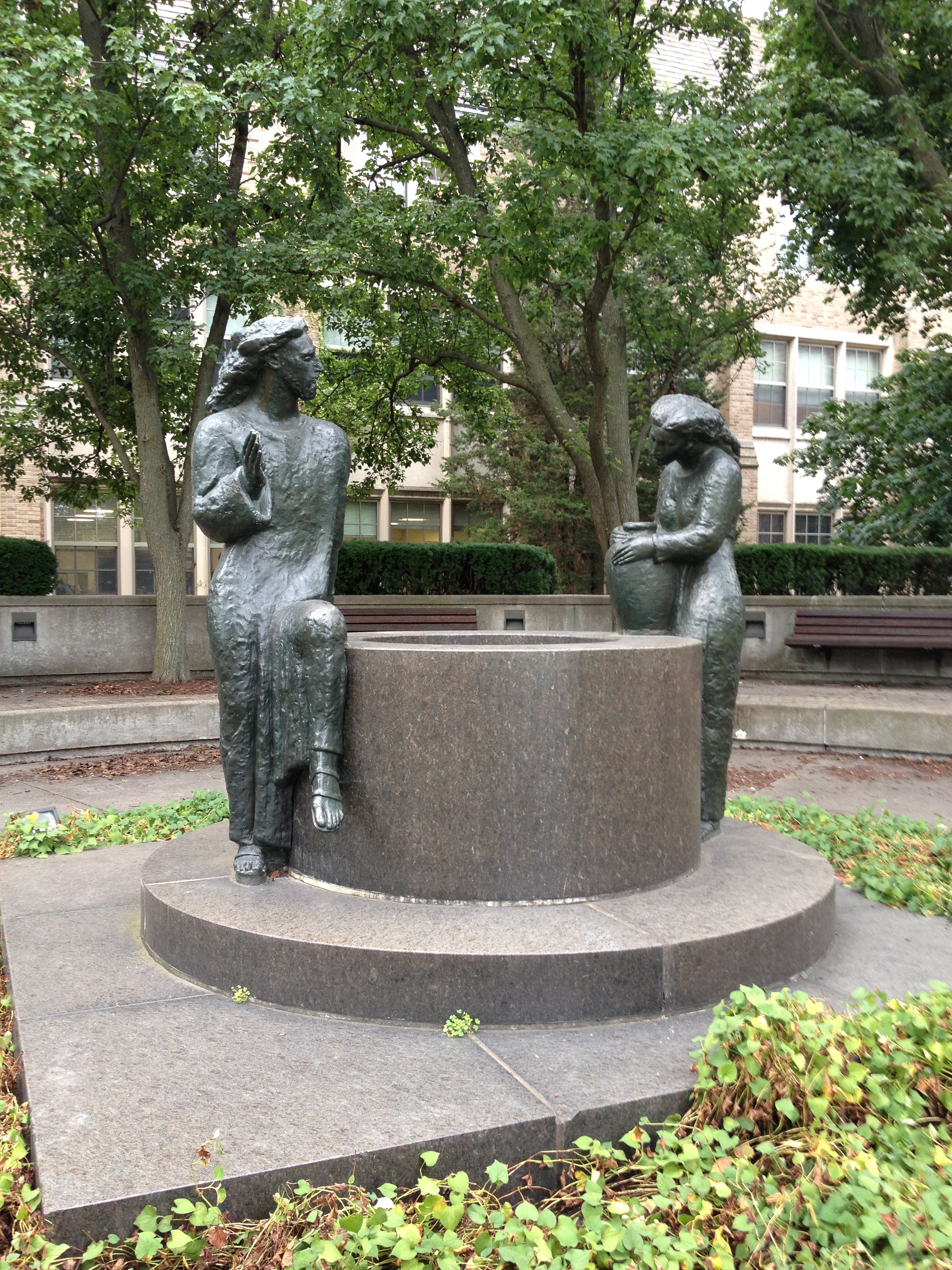
With multiple stops to put air into my slowly leaking tire, I limped my way from town to town, reaching my destination after dark. Along the way a fierce rainbow appeared to the east as the sun began to set. Once you’ve abandoned the interstate in Indiana, there’s no going back. I began to notice just how many churches dotted each little village through which I drove. Samaritans, I thought. As I write this in Crawfordsville, I think of the corn, sorghum, and soybean fields that inspired Dan Simmon’s ghosts. I think of a stranger, a woman of minority demographics, stopping to see if I needed help along a lonely highway. She was among those our society would deem vulnerable, and yet she was the only one who stopped. And I think of parables. “But he, willing to justify himself, said unto Jesus, And who is my neighbour?”

IMG_0988


Our Lady of Culture

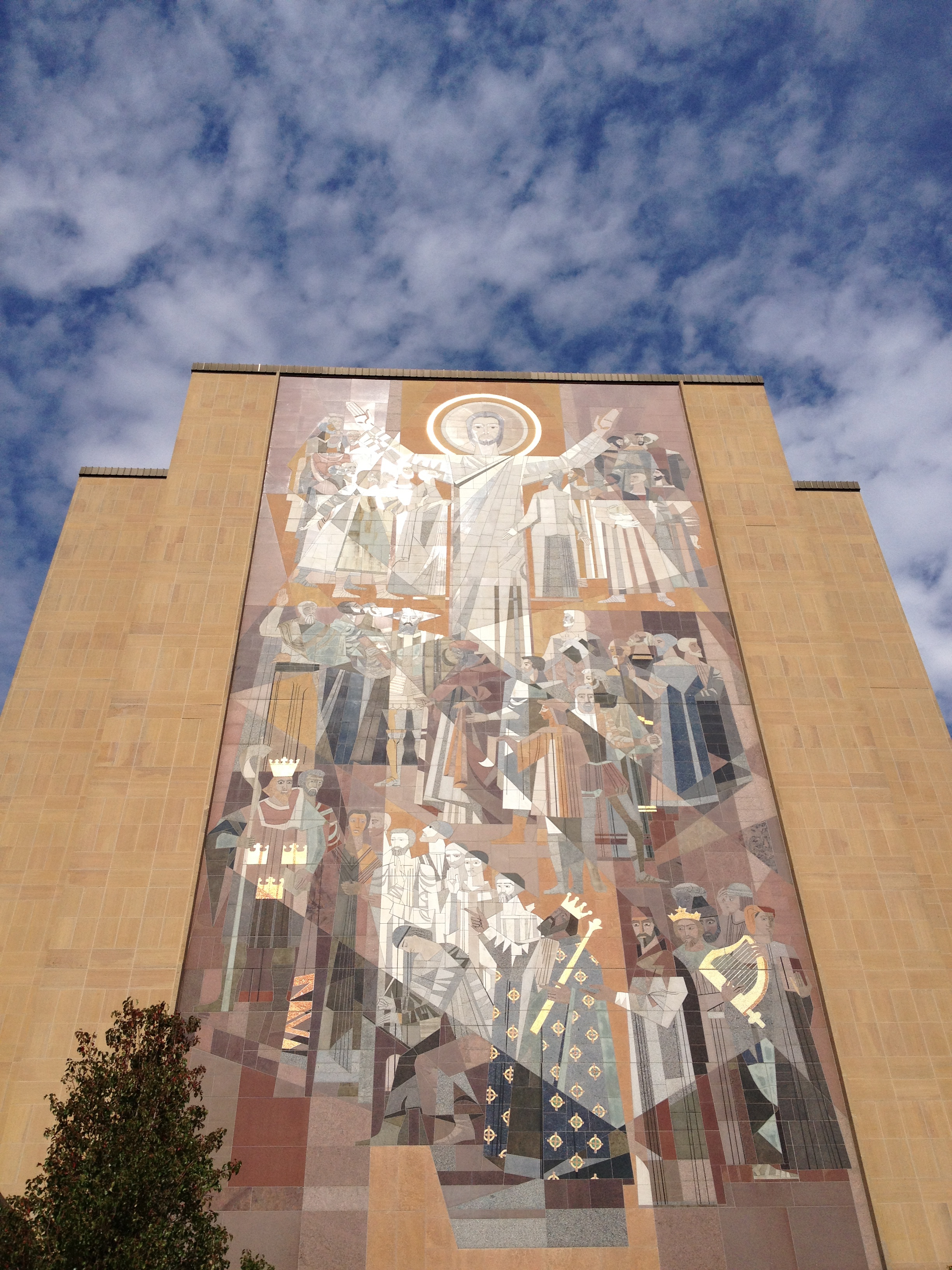
So I’m in the land where sport and religion become one.  Notre Dame is an intimidating university for a small Protestant like myself.  Like on a first date, I’m never sure what to do with my hands.  Standing below the famous “touchdown Jesus,” more properly, the “Word of Life,” I feel small indeed.  For a long while in US history, Catholicism was treated like some kind of cult.  Those of us reared Protestant were taught to fear “them” and their ritualistic ways.  I’m more afraid that someone might ask me about football stats.  Sports is a religion I’ve never studied.

IMG_0997

Culture is like a colossal Cuisinart.  Lots of stuff goes in, all of it more or less equal, and the blades begin to whirl.  Sports, religion, fast food, alcohol, a dash of education, and we’ve got an American classic.  The only time that sports come to my mind is when they start to take on the flavor of religion.  The level of the devotion of fans is the envy of many a church.  In fact, the word “fan” was borrowed from the lexicon of religious behaviors.  It is not difficult to sense the pride in football here, but then, sports are often a civilized way to assert one’s self-worth in a culture where self-worth feels under threat.  It is hard to recall a time when the Fighting Irish were not mainstream.

“High culture” has put itself on the endangered species list by becoming inaccessible in a culture that doesn’t value education (not to reflect on the academics I’ve seen at Notre Dame, which are pretty impressive).  I cringe, however, when I see polished politicians basking in their lack of introspection on issues that impact the entire human race.  They seem proud to declare themselves untainted by education.  They will support sports, however, and particularly football where violence is padded, but still encouraged.  It is culture for those who enjoy the lowest common denominator.  In the airport I noticed another “touchdown” character who, in some quarters in more recognized than the deity soaring over Notre Dame’s venerable stadium.  I was in the true presence of culture even before I boarded the plane.

IMG_0977


Just Binghamton

I seem to find myself in Binghamton again. The town, while clearly economically depressed, still retains a bit of its 19th-Century charm with some beautifully restored downtown buildings and a sense of history. While too many store-fronts are still vacant and too little money exists to improve the area sufficiently, I happened upon a warm and cheerful independent bookstore—River Read—and that always gives me hope in such circumstances. Bookstores such as this are like seeing the first crocuses after a long, harsh winter. There is some life in this seemingly dead planet yet. Outside the bookstore stands a statue of Martin Luther King, Jr., backed by a sluggish river and yet more vacant windows. I think of justice and all that it means.

IMG_0969

My own hometown (not Binghamton) is virtually a ghost town. It is a feeling difficult to describe, visiting a place that served as your first secure setting in the world only to find it crumbling under an economy with so much wealth with so little reach. Where is the justice in that? Binghamton, near the founding location of IBM, ironically began suffering at the decline of the Cold War. Manufacturing has gone for pastures of a different kind of green, leaving a sometimes sad and forlorn city in its wake. Binghamton sheltered a young Rod Serling, a man who would give the world the Twilight Zone and its endless spinoffs. It is home to a first-rate university. And a wonderful bookstore.

While in River Read we heard some locals talking, in almost Springsteenian fashion, of local civic traditions that had disappeared. Times have changed. Cities like Binghamton don’t draw in the curious or those with liberal purse-strings. Endicott Johnson, the shoe manufacturer, developed a strong sense of welfare capitalism in the city last century—capitalism with a heart seems to have gone extinct these days. The idea that those with the means to create jobs and livelihoods should care for their employees would seem to be a matter of common sense. Instead, common cents have come to rule. Binghamton University is investing in the town, and a sense of cautious optimism dares to suggest itself. Justice is a matter of distribution rather than entitlement. And that’s why I’m standing out here under gray September skies, staring at the statue of Martin Luther King, Jr.


Have a Blessed Day

“Last stop: New York Port Authority. Have a blessed day.” This secular blessing is sometimes appreciated after the harrowing commute to Manhattan, but I often wonder about its origins. Bus drivers are among the most under-appreciated of employees, I reflected on Labor Day. They are routinely blamed for matters beyond their control: accidents that snarl traffic for hours, mechanical problems, highway construction. Often I only reach the Port Authority Bus Terminal on time two days a week. I always say “thank you” to the driver while exiting, however. I’m very glad it’s not me behind the wheel.

Photo credit: Hudconja

Photo credit: Hudconja

A few months back, however, I noticed that a few of the drivers, while announcing the terminal stop, will add “Have a blessed day.” Last week I sat back further than usual, and heard an interesting exchange as I awaited my turn to exit. The driver had wished us a blessed day (whether we wanted one or not), and several of the passengers, upon disembarking, said back, “Have a blessed day.” I’m sure the driver appreciates it. As a lifelong student of religion, however, I found it fascinating. New York City is a great place to observe religious developments. “Have a blessed day” is innocuous in its lack of specificity. Who is doing the blessing here? At the behest of what intermediary? The driver has literal street cred by making it to the Port Authority unscathed. S/he has the power to bless and to curse. Those of us helpless as passengers are at their mercy. If the driver doesn’t drive, we can’t serve the god Mammon.

I always thought “Have a blessed day” was like an after-sneeze blessing. It is unusual for the sneezer to panegyrize their blesser by wishing good fortune back. Most often they are too busy blowing their noses. Here on the bus the driver might be Muslim (it is clear that some are), Christian, or Hindu. Some are likely among the most deserving of atheists. A blessing laid is a blessing played, however, and many are the passengers who are now returning the favor. We don’t know which deity is being invoked; it may be that it is simply the force that is with us. As we climb off that bus into a city that crushes a human soul as easily as a cockroach, we all could benefit from a blessed day. And I wonder on my way to work whether I’ve just witnessed a new religion being conceived.


Where Angels Drink

Moving water is an impressive erosive force. When I have the opportunity to visit family in the western United States, we generally visit a cold, meltwater stream in the mountains where numerous circular cavities dot the resistant granite and basalt that make up the main exposed rock of the mountains. These cavities are nearly perfectly round, and can be quite deep. They are formed by pebbles and other sediment settling in natural depressions in the rock and being swirled around as the waters gush down the mountain. Over the millennia, the swirls grow into deeper holes, trapping the pebbles that will act as a natural drill, cutting away the circular depression as they are roiled around by the endless flow of water. Some of these potholes can grow quite large, but the ones I generally see have the diameter of perhaps a basketball, and are only about a cubit deep. They are young potholes.

At least that’s what I used to believe. The last time I was in the mountains, some younger members of the wider family were there. They came back from visiting the exact same creek that I had the day before, reporting that they’d seen the angels’ drinking cups. Excited in the way that only kids can be, they chattered on about the potholes and quickly moved on to other diversions. My mind, however, was fixated at the geologic phenomenon I had just seen. More precisely, I was amazed at how a religious explanation had come to account for a well understood aspect of nature. The previous day I had explained to my daughter the forces of nature that had carved these curiosities quite without angels. I had witnessed a kind of mythopoeia: the birth of a myth. The children probably did not make up this name, but I had never before heard it.

A very large pothole from Wikicommons (in Finland)

A very large pothole from Wikicommons (in Finland)

When potholes grow very large they are sometimes called the more secular giant’s cauldrons or giant’s kettles. When we see something in nature that appears to be intelligently designed, the mind naturally moves to the realm of the mythical. We don’t believe in giants any more, but angels are somewhat commonplace in the repertoire of supernatural creatures taken seriously. Surveys continually show that many Americans believe in angels, whether guardian or garden variety. Many people claim to have seen them. I can’t make that boast myself, but I now have a suspicion of where I might look to find angels. Particularly if it is a hot night in the mountains, I will, I’m sure, find them at their favorite watering holes.


God in the Shops

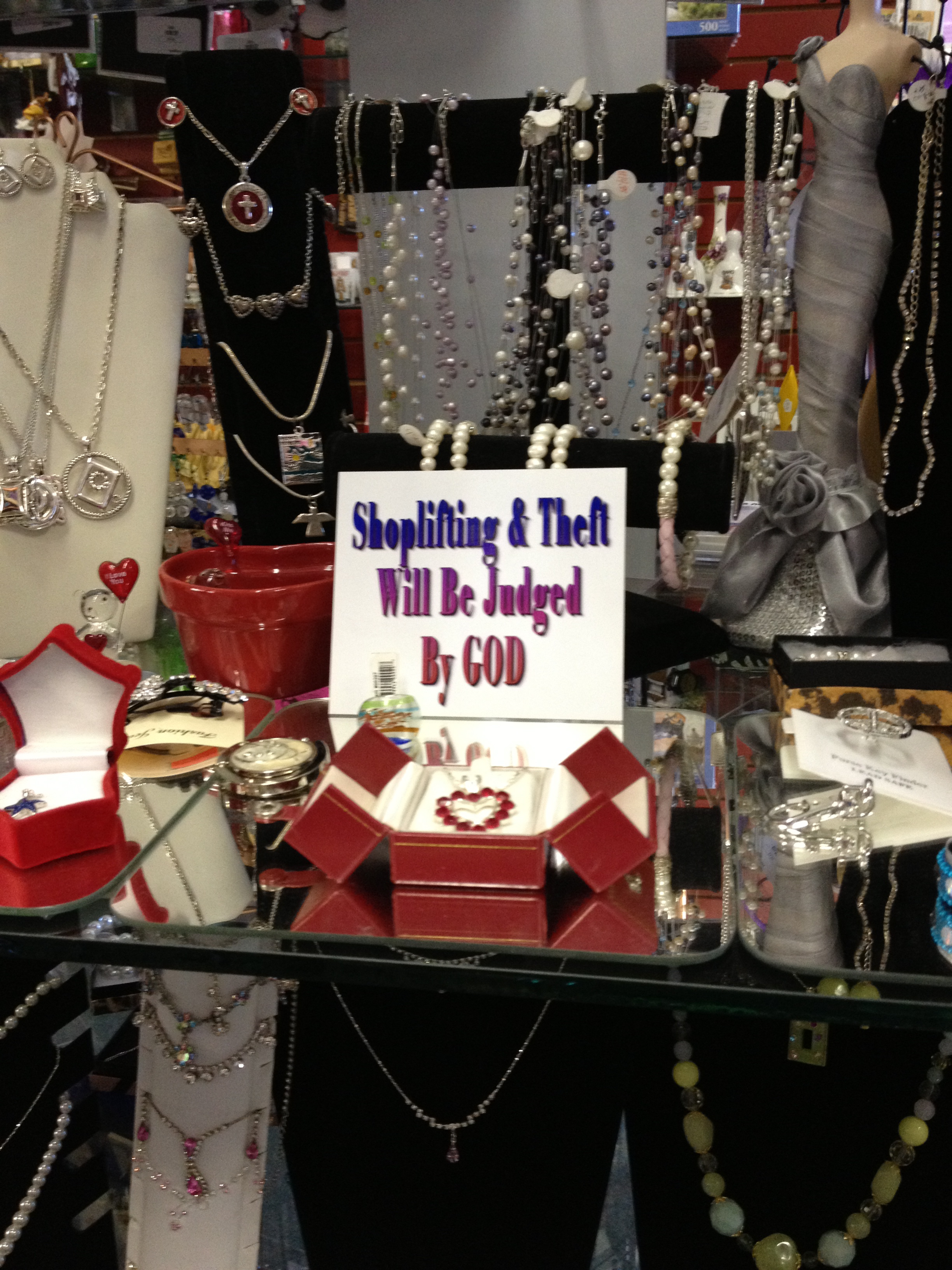
Over the past few weeks, as I’ve been out and about, I’ve been noticing the way that the divine has been utilized by shop-keepers. In a culture where incipient religion is so pervasive, it seems that God is treated much like the NSA in some quarters—always watching, always vigilant. I popped into a shop selling locally made items (I try to support the local economy when I’ve got a greenback or two to spare, although that is rare), where I saw a sign reading “Shoplifting & Theft Will Be Judged By God.” The sentiment gave me pause. Deeply embedded in our society is the idea that without a divine mall cop, we would all run amok with crime. Although religion is pervasive in the world, much of it is non-deistic, and yet highly moral (particularly in east Asian nations). Their cultures have advanced, even beyond western culture in many aspects of technology, and yet gods (and specifically our God) do not figure into the ethical equation. Pillage and plunder do not seem to erupt when God is not in the shop.

IMG_0903

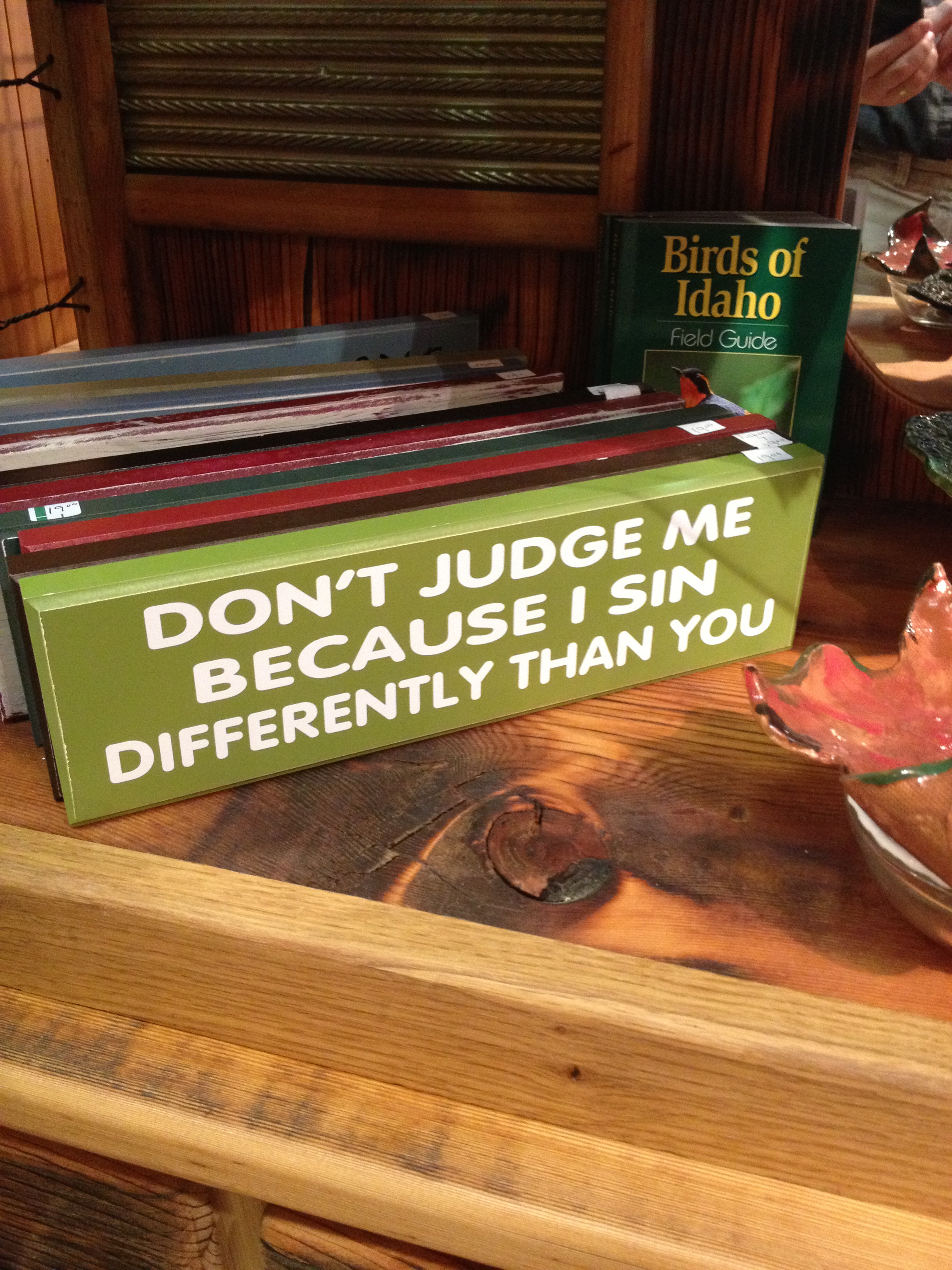
Whimsical signs have been popular decorative items for decades now. The problem with whimsy is that it loses its effectiveness once the initial chuckle is over. Signs reading “no pain, no gain” in fitness clubs may inspire day after day (although I have my doubts), but the cute warning that “the dog is crazy” on your doormat fails to impress after the first reading. (It must be pretty obvious that I don’t entertain much.) Nevertheless, shops stock those impulse-buy signs that are clever and witty, if soon outdated. I found one the other day reading, “Don’t judge me because I sin differently than you.” Even with the strains of self-righteousness, there is valid thought here. When the woman caught in adultery was brought before Jesus, he said, “Let the one without sin throw the first stone.” This disputed passage is one of the most pertinent in all of Scripture. No stones flew.

IMG_0909

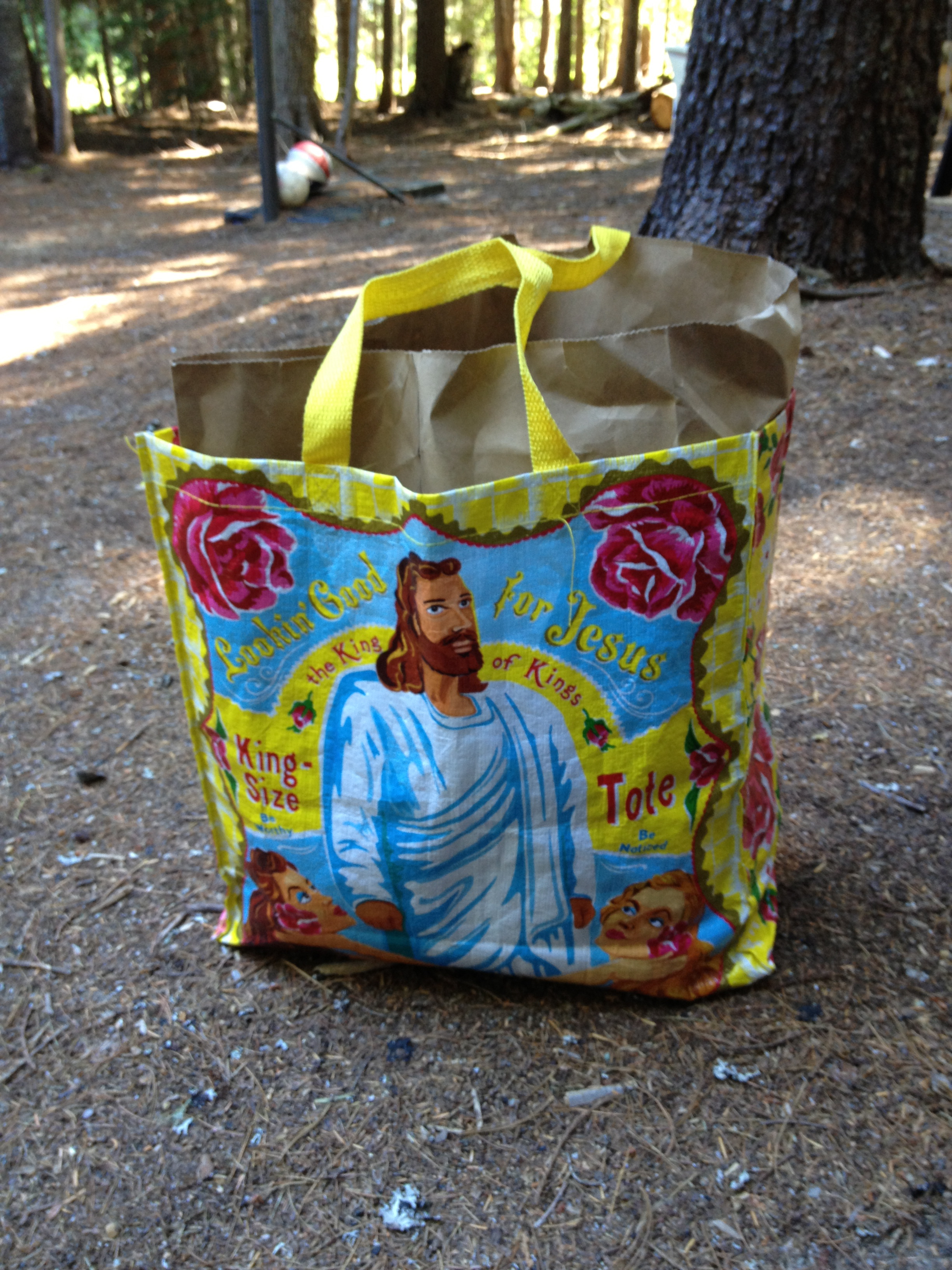
Finally, a friend came in bearing a shopping bag with Jesus on it. “Lookin’ good for Jesus, the King of Kings, King-size Tote” it read. The bag was clearly designed with a heavy dose of irony. I couldn’t help but notice that the bag was full of bottled gas. This portable version of the only begotten is a reminder of how commercial our religion has truly become. Although clearly presented with tongue distending cheek, we know that, as I tried to convince many at Gorgias Press, Sects Sells. People will buy cute knock-offs of their deities. In Wisconsin we used to visit Holy Hill, a Carmelite shrine where all manner of sacred kitsch lined the walls, from glow-in-the-dark rosaries to cheap, plastic saviors. The shop was never empty. Perhaps it is possible to worship both God and mammon after all.

IMG_0908


Hidden Messages

Symbolic gestures are among the simple pleasures of life. Unobserved, and certainly unappreciated, they comfort only those who perform them most of the time. Nevertheless, sometimes I just can’t help myself. Upon being summarily released after long-term employment at a certain institution of higher education, the day I left campus for the last time, I left a note with a Shakespeare quote tacked to my office door before literally brushing the dust from my feet as I drove through the gates never to return. The quote was from Julius Caesar, a play to which my niece had taken me that summer for a Shakespeare in the Park performance:

Let me have men about me that are fat
Sleek-headed men, such as sleep a-nights.
Yond Cassius has a lean and hungry look;
He thinks too much: such men are dangerous.

I have no doubts that my symbolic gesture was overlooked and the chit summarily discarded as the detritus of a warped (i.e., liberal) mind. The act, however, had been done.

Due to a booking accident, I once found myself flying first class. Those who know me will understand just how vexing this was for me. I fly quite a bit for work, and I am a populist through and through. Airlines set apart special bits of feet-darkened carpet for premium-class passengers to tread upon. They cordon off a special “lane” for the pampered class that is a nothing more than a matter of a jump to the left and a step to the right away from where those of us who wear last year’s (or decade’s) clothes board the same vehicle headed for the same destination and to which we’ll all arrive at the same time. I don’t disparage those who like receiving drinks while on the tarmac and hot towels to freshen up, and actual food on real plates while those of us before the curtain insist that there is no wizard hiding up there after all. I’m just not one of them.

IMG_0899

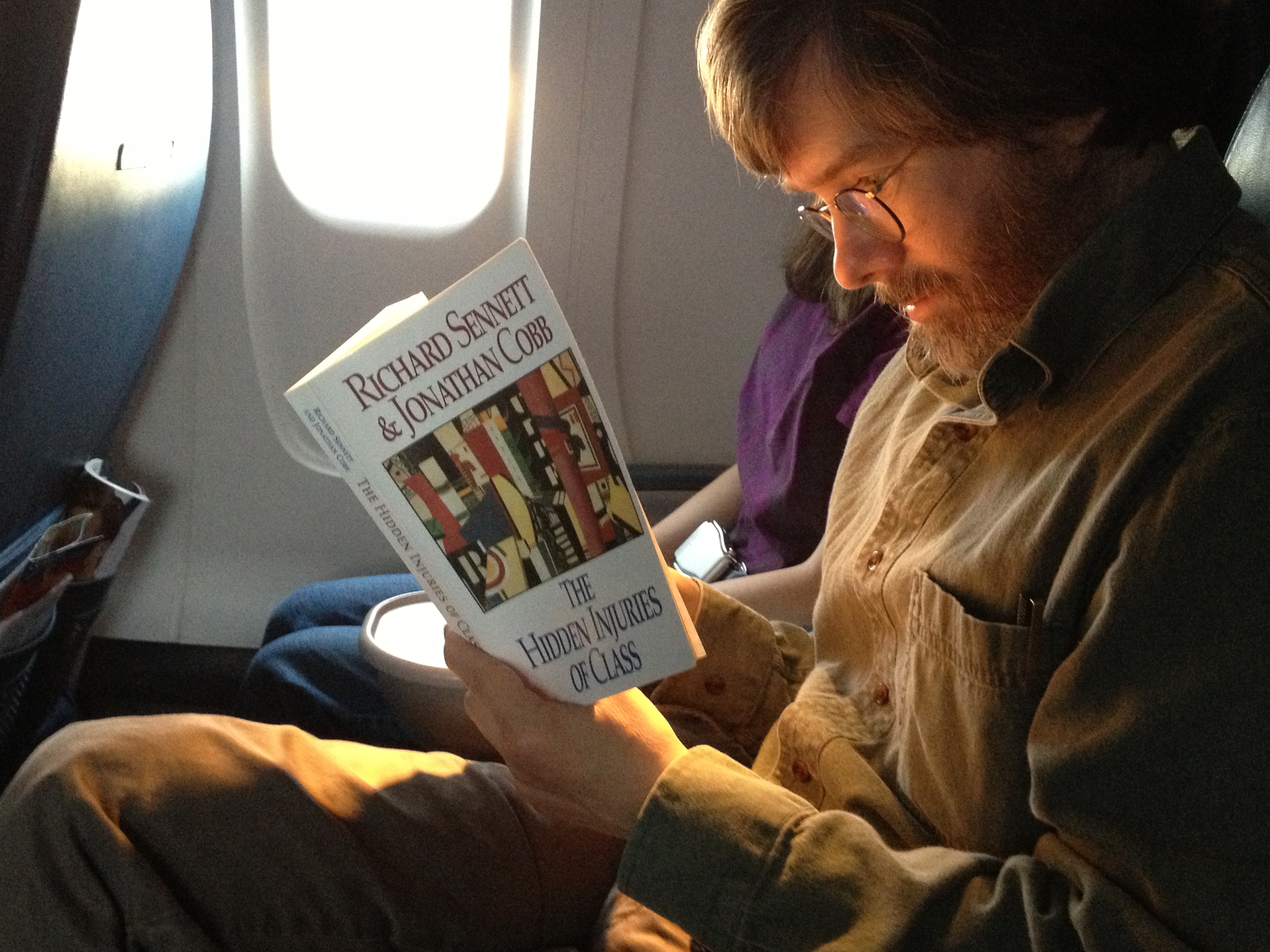
So I found myself in a leather seat with an entire cow’s worth of skin to myself. I had never been so kindly treated on a plane, with perhaps the exception of flying economy on Virgin Atlantic. I knew from the in-flight magazine that those behind me received only little pretzels and overpriced snack boxes while I was offered warm food and champagne. I pulled out my reading for the flight, The Hidden Injuries of Class by Jonathan Cobb and Richard Sennett. I’m sure nobody else noticed. But wasn’t that precisely the point?


Free Freedom

A weary-looking TSA official asked me why I opted out of the full-body scanner at the airport recently. As always, I responded that it is against my religion. The haunting lyrics from a Larry Norman song waft through my head; “I was born and raised an orphan, in a land that once was free…” It used to be, when I was little, that you were innocent until proven guilty. As I stand in line at the airport, next to an eerily humming x-ray machine that is examining all my secrets, learning what I’m reading without ever having to read my blog, I watch fellow citizens step inside a sci-fi-inspired glass chamber while being bombarded with God-knows-what so that any unnatural contusions might be spotted and analyzed. They raise their hands above their heads like outlaws in the old west. We are all guilty now, until proven innocent. If you are Trayvon Martin, you pay for the assumption of guilt with your life. Don’t worry, Mr. Zimmerman, you’ll be acquitted.

IMG_0622

In my darker moments, I wonder who benefits from a government that keeps increasing amounts of data on its citizens while cutting programs to ensure their comfort and health. We have elected a police force, not officials of the people, by the people, for the people. Vigilantes can literally get away with murder, as long as the skin-tone algorithm is correct, but if you’re perverted enough to want to fly, you have nothing about which your government is not interested. Who is being protected here? Who is being kept safe? A stranger has his gloved hands on my crotch. I’m feeling a little more than vulnerable.

Protest is a sign of love in this troubled world. If I step inside that glass chamber and raise my arms, I am declaring that I am guilty. Let me prove my innocence to you. Technology has made our private lives so easy to scrutinize. I used to think the future envisioned by Jacques Ellul was just a touch paranoid. I’m now beginning to think he didn’t go far enough. This computer on my lap can be like a TSA official in my own home. My website visits may be traced and analyzed, and my self-publish words misconstrued. And if I go to the store at night, a stranger can follow and shoot me with the blessings of our legal system. Of what are we so afraid? Is it time to stand our ground yet?


To a Fallen Goddess

One of my favorite places to visit in New Jersey is Grounds for Sculpture. Over the past several years that we’ve domiciled here, we’ve had the opportunity to take several friends and family members to see the whimsical, creative, and inspirational park over in Hamilton. When my daughter graduated from high school, she requested a visit to Grounds for Sculpture, and, since family were near at hand, we took the opportunity to see it again.

I’ve always been aware of the religious aspect of creativity. Perhaps it is because I like to flatter myself into thinking that I’m the creative sort, despite my years of academic training, or perhaps it is the kind of pipe dream for which the liberal-minded are easily accused. In either case, I have always found that the best art evokes something similar to a religious experience. There is an element of wonder, emotion, and awe here. Not every piece of art conjures it, just as a single god isn’t sufficient for the whole of humanity. As I wander the grounds, I grow convinced that this or that sculpture had a vision akin to what I’d call religion, that led to the creation of such a trenchant piece. I always leave feeling blessed.

Photo credit: Grounds for Sculpture, postcard

Photo credit: Grounds for Sculpture, postcard

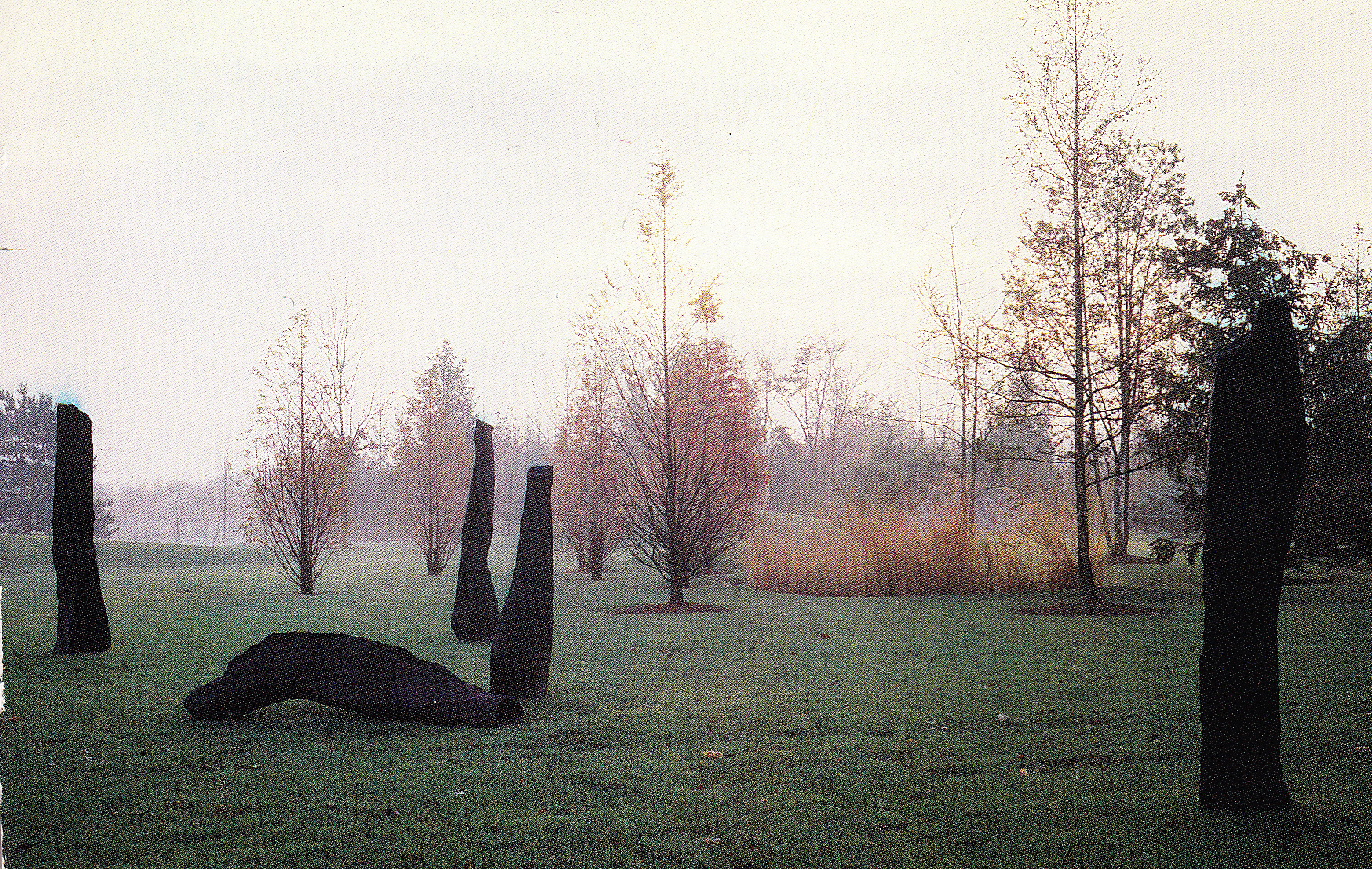
On this most recent visit, a very conscientious relative found, and later sent, a postcard of a sculpture I’d never seen. (It is possible that the sculpture is not currently on display, as the Grounds are continually evolving.) The piece is entitled “Excerpts of a Lost Forest: Homage to Ashera,” by Tova Beck-Friedman. Several of my relatives have me to blame for their awareness of Asherah; she is, after all, a relatively obscure goddess in the Hebrew Bible. The sculpture, however, speaks to me of the continuing ability of even extinct gods to inspire artists. Just as Asherah occupied several years of my academic life, I suspect she also haunts the work of sculptors who’ve come to realize that not all gods must be male, and not all gods must be real to be important. Quite the contrary, the collective deities of our heritage may still be found where art thrives.


Cultural Religion

IMG_0825

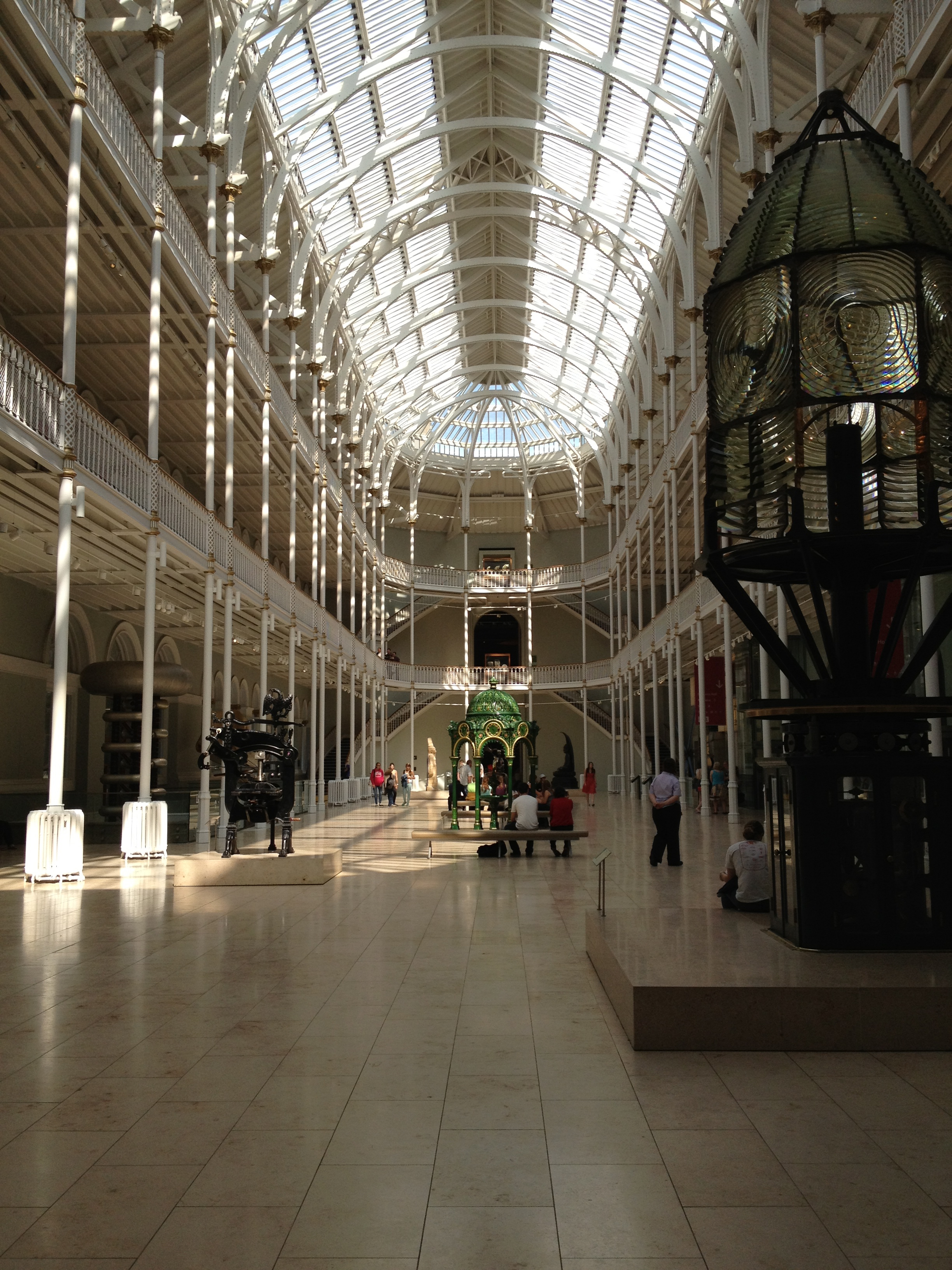
The National Museum of Scotland, like many museums in the British Isles, is free to visitors. Such museums are repositories of national pride and provide a sense of the scope of a nation’s history. While penurious grad students (as opposed to plain penurious, as best describes those long unemployed), my wife and I would wander over to Chalmers Street and pop in for an hour or two of inexpensive culture. During the last minutes of my recent trip to Scotland, I ducked into the newly—well, it has been nearly two decades, I have to admit—expanded museum for a gander. I was naturally drawn to the history of Scotland section—you can see dinosaurs and robots in the US, after all—and was struck at how very religious it was.

IMG_0857

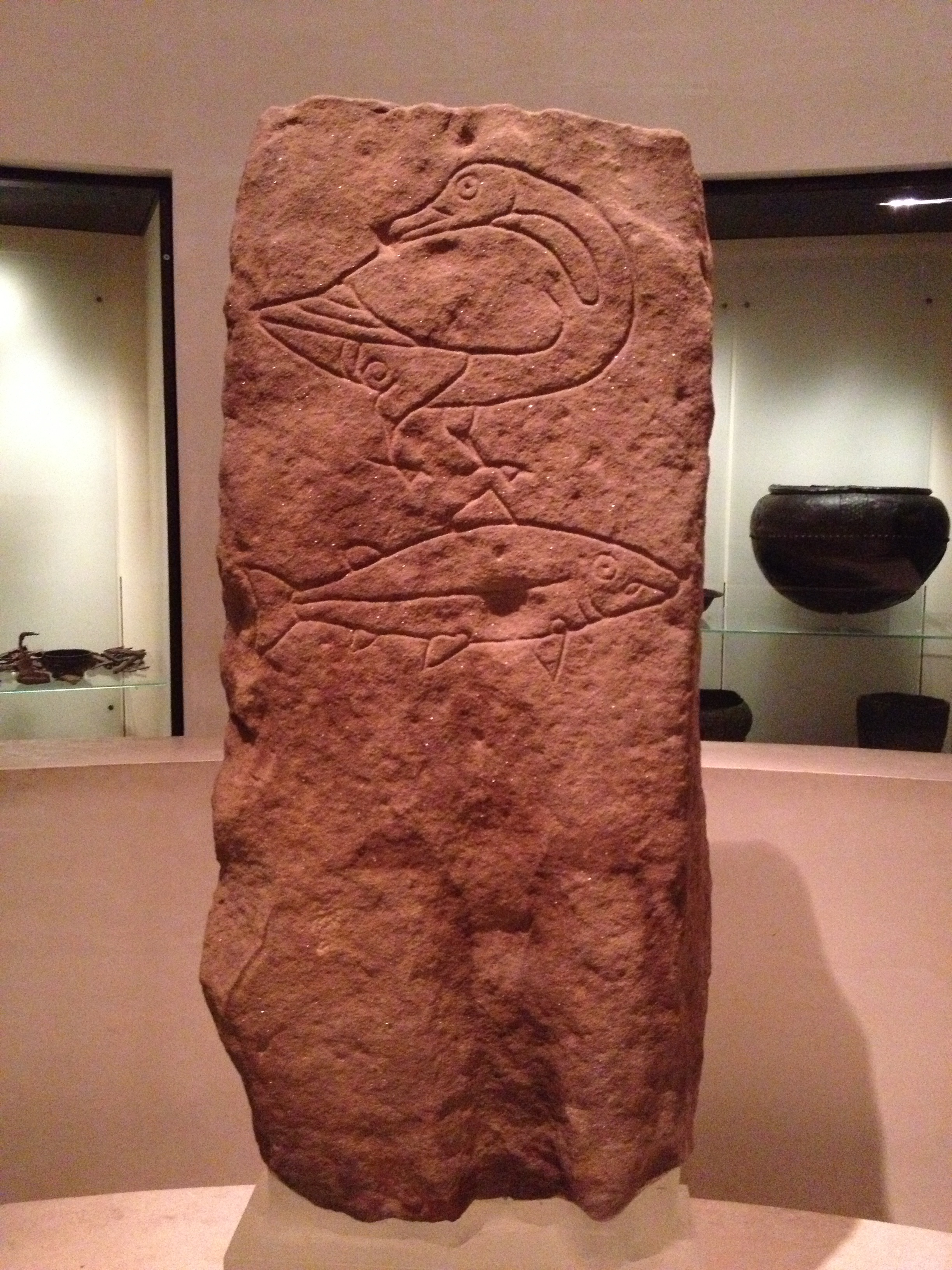
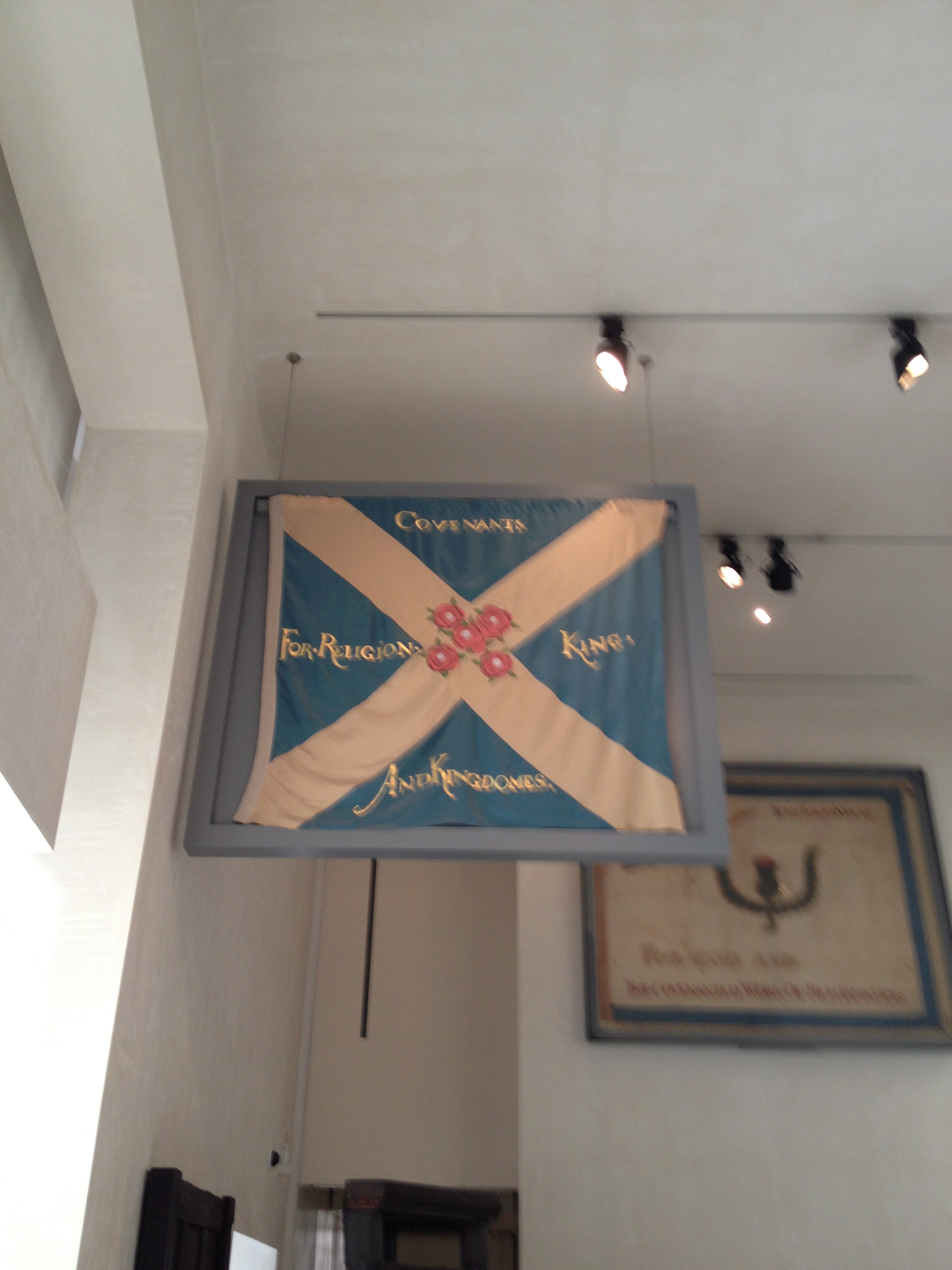
It’s not that the Scots are any more pious than other peoples, but it is the nature of religious artifacts to receive special treatment, and therefore, to survive time’s greedy decay. No one dares to anger the gods. Beginning with the Stone Age Picts, and flowing through contact with the Romans and eventually to the Celtic culture now associated with Scotland, religion is obviously preserved. Prehistoric Picts, by definition, didn’t leave written accounts of their religion, but the treatment of special artifacts in a gritty, harsh world shows where social values were to be found. Christianization, with its apocalyptic earnestness, only accelerated the process. Celtic crosses, case after case of precious metal sacramental artifacts, and a large display of the Reformation denominated the more secular displays, or so it seemed. (The working steam engines and large looms, however, gainsay a bit of my enthusiasm. And swords seemed to be everywhere.)

IMG_0837

While there is a genetic base for some sense of nationhood, it is not unusual to hear a person of African or Indian heritage speaking with the familiar Scottish brogue. Surely they are Scottish too. Culture clearly ties disparate peoples together into a “nationality.” In this museum that reaches back to the dinosaurs and beyond, a great deal of the history involves people of similar ancestry who come into contact repeatedly with those of other heritages. What gets left behind after those encounters, when it’s not swords, is religious. The religions themselves then clash, fracturing into a new stage of cultural development. Even in today’s secular Europe, some of the most notable buildings are the cathedrals. And in its own way, the National Museum of Scotland is a cathedral to all who wish to understand what makes us human.

IMG_0838


Monument to Madness

Reflections on the implications of my recent trip to the United Kingdom will likely continue to filter into conscious expression over the next few days. Jet lag will inevitably fade, and some concepts will shake down and settle into place as the reality known as work once again demands its pound of flesh per day. One of the realities that struck me during my time in St Andrews was how violent the Reformation was when it came to Scotland. Truth holds the world hostage, since everyone wants to believe they own it. And it’s my word against yours unless one of us can pull in a larger authority—and who is larger than God? There was a lot of credibility riding on the Reformers’ certitudes. And resistance was strong. Fatal even.

Reform is nearly never gentle, especially religious reform. After the Society of Biblical Literature’s meeting disbanded last week, I wandered around the old, medieval section of St Andrews, trying to get a sense of what such conviction must have been. One of the participants narrated to me more of the stories of those who’d died in the course of conversion. Patrick Hamilton, it turns out, may have been the first victim of the Reformation, but he was not the last. Walking along on a sunny afternoon in a country where several religions consciously coexist (I was, as an American, surprised to see so many large mosques in the UK), it seemed difficult to believe that humane individuals would torture someone to a horrendous death by burning just because of religious differences. The killing times seemed so long ago. Or perhaps our killing has just become more subtle.

IMG_0814

Following the directions I’d been given, I came upon the Monument to the Martyrs. Not wishing to belittle the atrocity of undeserved deaths, I could not help thinking of the pillar as a Monument to Madness. Is the need to feel right so great that others must be made to die for it? After all, among those generally considered to be sane, we all believe that we are right. Who consciously accepts untruth as reality? In such circumstances the best, the only reasonable response is to agree to disagree. I can let you accept your truth, if you’ll let me accept mine. And perhaps such tolerance would serve our planet well. Even the number of trees spared had autos-da-fé been forbidden provides a silence to the wisdom of allowing difference to thrive.


Check Mace

In the medical sciences building of the University of St Andrews stands a glass display case cradling a mace. The mace, a symbol of smiting authority that goes all the way back to Old Kingdom pharaohs, has a long tradition in academia as well. In all the pomp and glitter of an academic processional, a dean, provost, or chancellor carries a symbolic mace, as if to keep an unruly faculty in order. (I am sure that most of them have wanted to use that mace a time or two in reality, but have been constrained by both convention and the rule of law.) Medical science is among the fields of research quickly moving away from the spiritual mumbo-jumbo of medieval superstition. We are, after all, simply soft machines, doing as nature has programmed us. What more could there be to it?

IMG_0778

Looking more closely at the mace, I see on its ornate base, a flanking ring of winged oxen. Perhaps obscure to medical students, the winged ox is the symbol of the putative Gospel writer, Luke. Each of the Gospels emphasizes different aspects of Jesus, and the symbol assigned to Luke has been the ox. If the wings didn’t give it away, the explanatory placard on the wall nearby confirms my analysis. Eyes traveling up the silver shaft, the crown of the mace houses yet another saint, this one an apostle. St Andrew (of course) tops the mace, holding his X-winged cross. Underneath is an amorphous structure for which I need to turn to the placard to have explained. The fountain of healing waters, it tells me.

IMG_0779

From tip to tale, then, the mace of medical science is inherently religious. My reading of late has been from scientists claiming that, in the words of the old commercial, “parts is parts.” There is no underlying life-force or animating principle. Life is biological robotics, so I’m told. So as I stood in St Andrews last week, considering this metallic mace, I was poised on the edge of science and symbol. There is no biological need for such symbols—indeed, the mace was originally a weapon to inflict grievous bodily harm. Now, chased with silver, intricately ornate, it begins and ends with religious implications. I can’t help wonder what the robots make of that.


Hansel and Regretel

HanselGretelHansel and Gretel: Witch Hunters was on offer on the trans-Atlantic flight. Since I missed it in theaters, I decided to watch it on my mini-screen inches from my face. Witches, among the classical monsters, have a strange longevity into the world of science—like van Helsing (of movie fame) the protagonists have steam-punkish gadgets to destroy the naturally invincible foes. What’s not to like? I could not help but be disturbed, however, at what seemed to be the inherent misogyny of the film. Perhaps it was the lighting on the plane, but I saw only one male witch among the monstrous hordes of females who were battered, shot, and burned with apparent sangfroid. Women were guilty, it seemed, until proven innocent. And Mina, the white witch, again underscores that women who are “clean” are still potential witches underneath. Naturally, she dies before it’s over, but in a noble way.

The witches in the movie are strangely removed from a traditional, satanic context. They derive their power, like modern wiccans, from nature and strange mixes. The source of their magic is never explored very deeply, but when they catch trespassers in their forest, their queen states that even God himself fears to go there. Bewitching bravado, to be sure, but where does this image of God originate? A god afraid of the very nature that (in a film such as this, certainly) “he” created? The sacrifice of children is a good biblical trope, but seems to do little more here than to build the tension.

Monster movies, I realize, are “guy flicks.” Something about all that testosterone seems to be energized by images of ordinary people fighting monsters, against incredible odds. The monsters here, however, are barely distinguishable from regular women. Folklore has a deep well of traditions about witches from which the savvy might draw to write an intelligent, entertaining tale of witch-hunters. After all, the real antagonist, traditionally, is the male devil. He is, in medieval tradition, the source of witching magic. By removing Satan from the picture, we are left with strong women who must be repressed, and the world is really no safer when Hansel and Gretel are done. In fact, the end of the movie implies that they will never be finished. An opportunity for a subtle shift of paradigm was missed in this film, and, as usual, it is women who end up paying the price.


Caledonia Dreamin’

“Edinburgh is a mad god’s dream.” So penned poet Hugh MacDiarmid with sentiments that could’ve been composed by H. P. Lovecraft. My association with Edinburgh seems accidental, but there is little in my life that compares to this mad god’s dream. The Gnostics used to believe that there was nothing in divinity that precluded a kind of divine madness. Philosophers, back when they still considered god a postulate, argued about whether the deity was good or evil. If they’d come to Edinburgh, I suspect, the debate would’ve taken on a whole new cast. In his poem “Edinburgh,” MacDiarmid captures the untamed nature of a city that has never been given the accolades of Paris, London, or New York, but is just as edgy and twice as beautiful.

Dreaming gods, of course, are nothing new. Vishnu, according to some strains of Hinduism, is the god whose dream is the universe. In the Ugaritic Baal Cycle, it is a dream that reveals to the ancient god El that Baal has returned from the land of death. And, of course, Cthulhu lies dead but dreaming in the city of R’lyeh. To me, Edinburgh is a wonderful alchemy of divine dreams. I was a young man, still so very naive when I moved here. Looking back at those old photos, I see a much younger face from the past, telling the camera that yes, he’d found paradise, the very place of God’s dreaming. Our human politics, however, trump divine dreams every time. Although I never wanted to leave, I was not permitted to remain. Yes, the camera does, at times, capture the soul.

DSCN3490

I am on the train that will take me from Edinburgh, having seen it anew through my daughter’s eyes. I came here penniless some twenty-four years ago, but with a head full of dreams. Life has taught me the cost of dreams since that time, and I have had to pay with wrecked careers and uncertain futures, trusting that the god who is dreaming all this is mad indeed. Nevertheless, like the gods, I refuse to stop dreaming. As much as Hugh MacDiarmid captures the spirit of Edinburgh, as I sit here, with a wee bit of mist in my eyes, my mind is on the words of another poet, Baroness Nairne. To her I will have to leave the last words, from this south-bound train. “Fareweel, Edinburgh, where happy we hae been.”


Reflections on a Ruined Cathedral

On my final day in St Andrews, the symbol of its ruined cathedral weighs upon my mind. In a world both increasingly secular and religious, it is the latter that led to the fall of this house. I’ve toured many impressive cathedrals in my time, from Chartres in its gothic splendor to the plain majesty of Durham. These engineering feats of medieval “superstition” still draw theists and atheists alike, in wonder. In crass terms, they represent a large economic investment. It terms of spirit, they are sublime. Under the duress of ecclesiastical prestige, those who couldn’t really afford the resources nonetheless stretched their stonework toward God. In secular Europe, some of the best known sites are sacred.

St Andrews Cathedral fell victim to the Reformation. Religions are notoriously selfish in this way. When a new divine regime takes over, the wonders of the previous god become spoils. Hagia Sophia (which I’ve never seen) went from basilica to mosque, and Roman Catholic St Andrews became an eviscerated shell at the hands of Protestant thinkers. Even in ancient Israel the temple of Jerusalem was build atop a site of even more ancient heathen shrines. We conquer to stoop.

St Andrews, named for the patron saint of Scotland, is better known for its golf than its god. The divine may have built this city, but the divot has captured its heart. Priorities change with time—we call this progress. Not far from the crumbling cathedral lies a ruined castle. Not the haunt of royalty, the castle was build to house powerful bishops and archbishops. Some of these were the warrior bishops who were knights as well as prelates. Some, like Alexander Stewart, led troops to war. And yet the cathedral could not survive the change of religious climate. If we can’t have it, then it must be destroyed. The great cathedral, once the largest church in Scotland, and among the largest in Europe, perhaps represents the fate of all acts of faith, when something more insistent comes along. Or maybe I just don’t want to leave.

DSCN3593