All Day Long

The summer solstice is always a bittersweet day.  The longest day of the year.  From now on the days will begin, almost imperceptibly at first, to get shorter.  The wheel begins its six-month roll toward the cold, dark days of winter.  Although the year whiplashes through these extremes in the temperate zones, I wouldn’t have it any other way.  The changes are slow right now.  In fact, the celebration of Midsummer doesn’t usually come until about the 24th.  These long, languorous days can be like that.  

I’ve been studying holidays for well over a decade by now.  Some have origins that are obvious, such as the solstices and equinoxes.  Although ancient peoples were quite capable of observing and marking these days, it seems their perceptions of the seasons were somewhat different than ours.  Midsummer, to us, is the official beginning of summer.  We all know, however, that we’ve had days that’ve felt like summer already.  They start to come, often in May.  “Meteorological summer” is actually June through August while “astronomical summer” begins today.  Our calendars are a matter of convention.  Not only that, but the motivation to mark special days began as a religious impulse.  Otherwise we’d have no particular reason to tell one day from another.

But think of the ancients again.  People were generally illiterate, and although the elites could mark and know the actual solstice, Midsummer marks what the weather feels like on the ground.  Seasons, in antiquity, were understood by what was happening on the ground.  For example, in Ireland February 1, the festival of Imbolc, was considered the start of spring.  Ewes were lambing and that was a sure sign winter was beginning to end.  With such and outlook, folk wisdom reckoned that summer began on May Day, or Beltane.  In such a perspective, the longest day marks midsummer.  Yes, the heat and humidity have really yet to set in, but the climate in Ireland and the British Isles is tempered by the Gulf Stream and doesn’t reach, say, Midwestern extremes.

Those of us raised in scientific worldviews have been taught from youth that summer begins today.  People haven’t always seen it that way.  Not everyone experiences the extremes of weather that temperate regions of the United States do.    In the northern hemisphere—for the global south experiences its shortest day of the year today—the days get no longer than this.  Wheels by their very nature spin.  Our round planet now gives us shorter days until the other extreme is reached.


Joyous Beltane

Every year around Beltane, I think of The Wicker Man.  Of course, the holiday itself, aka May Day, is no cause for alarm.  What makes the movie so effective—and I mean the original film, of course—is the fear of others’ religions.  My last two books have explored the nexus of horror and religion and The Wicker Man always stands out as an example of how naturally the two go together.  May Day, or Beltane, represents one of the cross-quarter days.  It falls roughly halfway between the vernal equinox and the summer solstice.  Days are noticeable longer now than they were back before the equinox, and Beltane, like many cross-quarter days, uses the symbolism of light to remind us of the seasonality of life.  While the light is here we should make use of it.

Photo by Ameen Fahmy on Unsplash

Agricultural festivals—and many ancient holidays began as such—acknowledge the importance of the lives of animals pastoralists depended upon.  Imbolc, the start of spring, was marked by sheep beginning their lambing.  Beltane was the point at which cattle could be driven to pasture.  It stands opposite Samhain, the origin of our Halloween, with Lughnasadh falling between.  These holidays were often celebrated with bonfires (thus The Wicker Man), but fire was understood as protective rather than destructive.  Although the Celts seem to have originated in east-central Europe, they were pushed to the northern fringes of the British Isles by other invading peoples.  Their location in chillier climes suggests that fire may have also held a practical purpose.

May Day is celebrated throughout much of Europe as a day associated with fertility.  This, it seems, was a major cause of concern among Christian missionaries.  Fertility is, of course, a natural hope.  Agrarian peoples rely on it to survive.  Fire served to bless the animals and to keep away the mischief of the little people, or nature spirits.  Much of what we know of Beltane, as with other Celtic holidays, has to be reconstructed since the Celts didn’t leave a scholarly archive that could be farmed for information.  Indeed, prior to widespread literacy what would’ve been the point of writing down what the folk already knew?  It was obvious that summer was on the way.  Even in years when the temperatures struggle to warm consistently, there are hints that “the light-soaked days are coming.”  The bonfires of Beltane represent the warmth and light that are on their way.  And what religion could object to that?


Being Equal Again

Things creep up on you.  Like the equinox.  It really should be a holiday, but then again today’s already Saturday.  And from today, for the next six months, there will be more light than darkness.  It was an occasion ancient cultures marked and celebrated.  For us, unless it happens to fall near Easter (it’s still a couple weeks away this year), it’s an item in the news feed and nothing more.  It is, however, an opportunity to celebrate our place in nature.  The temperatures are beginning to warm just a bit around here, despite the flecks of snow in the air just three days ago.  The more tenacious of the spring perennials have already begun to shine green.  Things have begun to come back to life.  That’s why Easter is always in the spring.

Today it will be light as much as it is dark.  Balance.  Our old wobbly earth strikes this metaphorical fulcrum twice a year, giving us a glimpse of what lies ahead.  Birds, those great prognosticators, have been showing up to let us know things are about to change.  Finches, robins, starlings, and mourning doves have been conspicuous the last few days.  Even as the dirty, icy snow piles continue to hold on in their private mountains, they too seem to know time has come to be moving on.  Change is the way of nature.  This just happens to be the half of the year when we can see what we’re doing.  At this great balancing point of the year we should take the opportunity to ask if we like where we’re heading.  Do we welcome the light?

Soon enough we’ll begin to take it for granted.  Life will continue its busy ways even as we tell ourselves summer is the time for vacations.  Perhaps so.  But let’s linger in this moment.  Take a few minutes to ponder what it means to be in balance.  Equality.  It feels like something worth celebrating.  Corporate American parsimoniously counts days that might be considered grudging respites from trying to cop a profit.  Although we’re given Christmas off it can’t abide that moving target called Easter, which always comes on a Sunday anyway.  Here in that calendrical holiday barren zone between Presidents’ and Memorial days, we’ll always find spring, if we look for it.  It’s evident in the changing of the light, even if there’s still a chill in the air.  Even as our bosses ignore it, the red buds begin to appear on the trees.


Winter Waiting

The waiting, as Tom Petty knew, is the hardest part.  Along the slow turning of the wheel of the year it’s now light enough to go jogging before work.  That won’t last, however, because Daylight Saving Time is imminent and will set us back a month in the illumination department.  Also I haven’t been able to jog because the massive snowstorm we had a couple weeks back dumped over two feet of snow on the jogging trail and it hasn’t melted yet.  I miss it.  The jogging, I mean.  I’ve become one of those people who never the leave the house and I see how difficult it is just waiting.  Waiting for the snow to melt.  Waiting for the vaccine.  Waiting for the light.

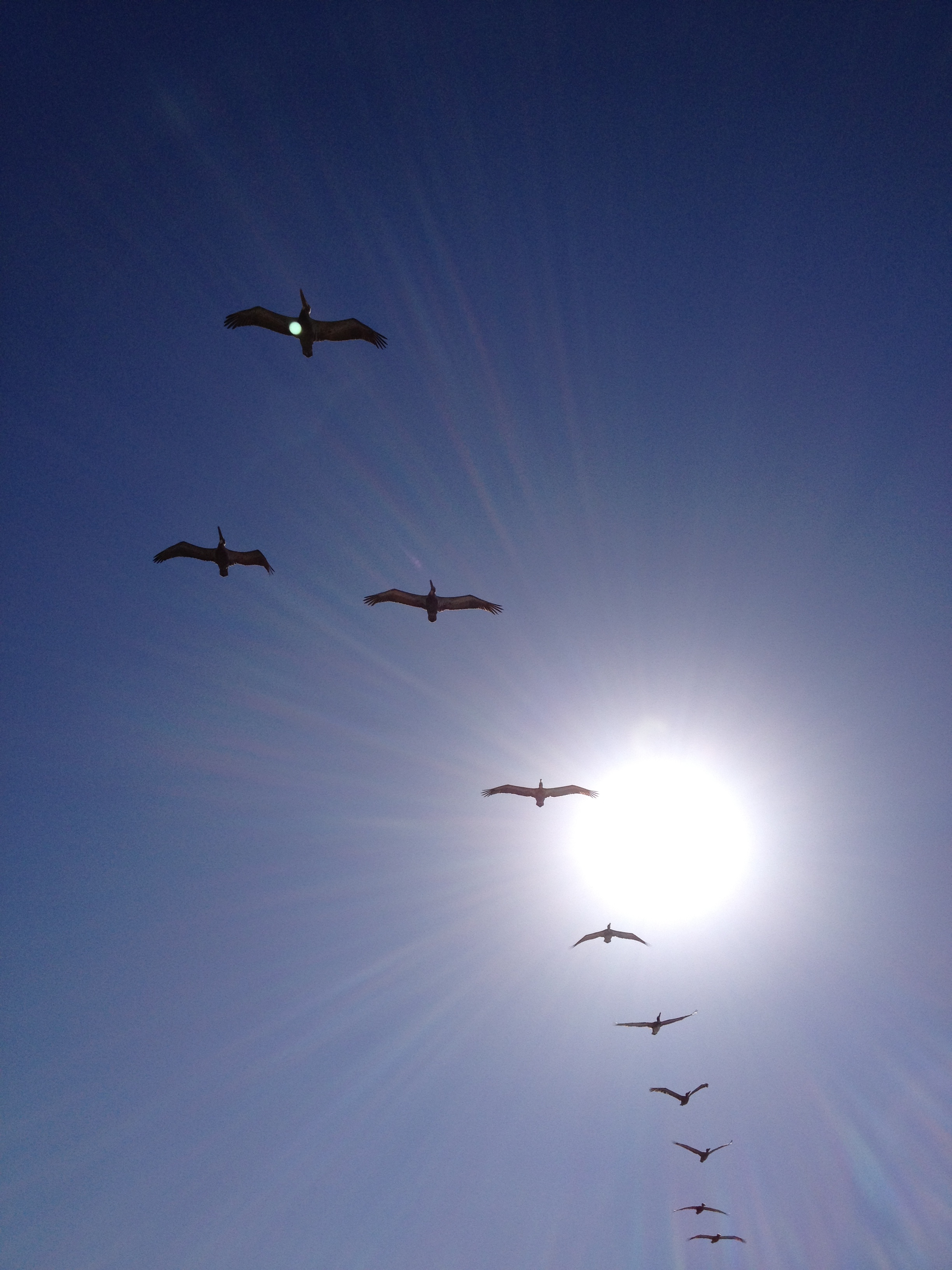
I’m no psychologist, but I have to wonder if that isn’t one of the greatest stresses faced by the many stir-crazy people who’ve been shut-ins for pretty much a year now.  For us this snowstorm took away the little mobility we had.  Getting out daily for a constitutional put me in touch with nature, at least.  Now nature is under a thick, crusty white blanket, slumbering away.  But the birds have begun to return.  With their avian wisdom they’ve seen the end of winter.  Suddenly this past Wednesday they were here, bringing hope in their wings.  Birds have long been symbols of freedom—we’ve got a couple bald eagles in the neighborhood, reminding me of that.  A far more ancient association was that between the bird and the human soul.  The ability to soar.

We may still be mired in winter, but time is inexorable.  Relentless.  As the globe wobbles recklessly back toward the warmer seasons we need to take responsibility for our part in global warming.  Ironically these freak storms are the result of an overall warming trend.  The weakening of the jet stream that allows cold northern air to drop snow in Texas and storms to cover much of the rest of us all at the same time.  The pandemic has helped clear the air a bit.  At least we’ve rejoined the Paris Climate Accord, and we’ll try to begin undoing the damage to our planet that the last four years introduced.  It will take some time, of course.  By now we should be experts in biding our time.  The snow will melt.  The light will continue to grow.  I will get back out on that jogging path again.  But for now we wait.


Critical Snow

No two snowflakes, I’ve always been told, are the same.  Far be it from me to question the collective wisdom of our species, but I wonder how this fact is ever confirmed.  I suppose I’ve personally swallowed a good deal of the evidence over time.  Snowflakes melt and we can’t get them all under the microscope, can we?  This year has been a winter of more than usual snow around here.  During our most recent storm I stared out the window and tried to count.  Billions of snowflakes collected in my yard alone, and no microscope-bearing statistician was anywhere to be seen.  I like the idea of each flake being unique, but I know it’s a theory impossible to falsify, and I wonder if it’s accurate.

I’ve been thinking a lot about critical thinking.  At its base, critical thinking is about asking questions and learning reputable places to find answers.  Not “fake news” or “alternative facts”—these are tools in the Devil’s workbox—but evidence-based information.  Primary education, it seems, is about learning to read, and write, and handle numbers.  It is about learning who we are  and who we’ve been.  About the way that science helps us understand this old world.  Higher education, as it’s generally conceived, used to be about learning critical thinking.  That was before colleges became mere trade schools, catering mainly to careers with high earning potential so that alumni would give more money back to the college.  Where will we learn critical thinking?  No two are the same, right?

Instead, knowledge and hearsay become very similar things.  I used to tell my students not to take my word for it.  Just because I can legitimately put the word “doctor” in front of my name doesn’t mean I know everything.  Yes, I am an expert but even experts aren’t exempt from the test.  So, as more snow starts to fall, I think about all the many, many places I’ve heard that no two flakes are the same.  I think of the astronomical number of snowflakes that have fallen this year alone.  The number of years before we ever evolved on this planet.  In ice ages and even during human-initiated global warming.  And I realize nobody’s done the actual work of comparing every single snowflake to every other one.  Tradition is like that accumulating snow, building on past layers until great glaciers form.  And who, I wonder, would argue with a glacier?


One Day or Another

Although normally a time for celebration, Mardi Gras, I’m told, was subdued this year.  Today is Ash Wednesday but many of us feel like we’ve been living a year of Lent already.  I once told a fellow office worker on Ash Wednesday, “I think about death every day, I don’t need a yearly reminder.”  Looking out at the old snow, melting, freezing, refreshed with occasional flurries, I’m reminded of the cycles of nature.  I’ve been watching the turn of the year’s wheel.  Over the solstice I looked into Yule, and just a few days ago considered Imbolc.  The wheel of the year is a symbol for modern earth-based religions seeking to be kept in sync with nature.  It is a cycle, slowly turning.  Death, in this way of thinking, is part of a larger system.  It seems appropriate to consider it this Ash Wednesday.

I say it’s Ash Wednesday but it would be more correct to say “for many Christians it’s Ash Wednesday.”  Cultural imperialism is difficult to shake.  With the pandemic still embracing us tight we haven’t had much reprieve from thoughts of death these many months.  Thinking of the wheel of the year, however, may bring hope.  A wheel in motion spins around to a new beginning that, in the nature of circles, is equally at every point.  New beginnings are offered every day.  While we’ve never been in a year of isolation before, there is nothing that hasn’t been before.  Self-aggrandizing dictators, world-wide pandemics, calls for social justice and fairness, have all come around before this.  They may come around again.  The main thing is to keep it moving.

It moves, in fact, without us.  One of our human foibles is being species-centric.  When we discuss, in a pique of teenage angst, of “destroying life on earth” we really mean destroying humankind and perhaps many other species as well.  Not all.  With a kind of collective insanity we go about warring against our own kind, exploiting all other species we deem valuable, and talk as if that’s all that matters.  Today, for some, it is Ash Wednesday.  For others it is World Human Spirit Day.  For many of us it’s just another workday among many very similar, cut from the fabric of a year that has no even spokes to keep it rolling.  Beneath our feet this orb spins on, regardless.  The cycles continue, with or without us.  How wonderful it would be if we could actively contribute to their progress.

Photo by Ameen Fahmy on Unsplash


Ode to Snow Days

Once upon a time there were special gifts called “snow days.”  On these special days no one was required to report to school or work.  It was a caesura to late capitalism, albeit a brief one, in which the forces of nature triumphed over making everyone “go out” to work or school.  The pandemic has, of course, eliminated snow days.  Never again will there be the excuse of “I left my laptop at the office,” or “the roads are unsafe.”  The evil monster that enslaved all mortals of a certain class had won.  No brave knight, wearing mittens or not, dared face this great beast, and so nobody lived happily ever after.

There is a moral to this story.  Well, not so much a moral as an addendum.  During snow days we had time for our civic duty of clearing sidewalks of snow.  I begin work before the sun comes up, and consequently I don’t stay awake very late.  Over the past few days we’ve had several inches of snow.  It began falling Sunday morning, and it fell through Tuesday morning.  I had to take time out of my usual work schedule to shovel in the morning.  By that point it was already six inches at least of the kind of snow that’s so heavy that it starts to turn blue beneath the surface.  I hurried back to work since I had a couple morning meetings.  The snow continued to fall.  I normally don’t take a lunch break, but I had to on Monday, just to stay ahead of the snow.  After work, just before dark, I was out in it again.

The snow day, in other words, isn’t just about time off from work.  It’s also about taking care of things that need to be done in a weather emergency.  The idea of remote work being work without ceasing has really caught on during the pandemic.  Without office walls to constrain it, capitalism is free to take over our private spaces—and our civic duties—as well.  The dearly departed snow day was more than just a lark.  For younger couples it meant being home to take care of the kids when school was cancelled.  In other words, it was a day to acknowledge that weather is still in control.  We do need that reminder once in a while.  The snow out there is pretty.  It’s also deep.  More than that, it is even a symbol.


February Festivities

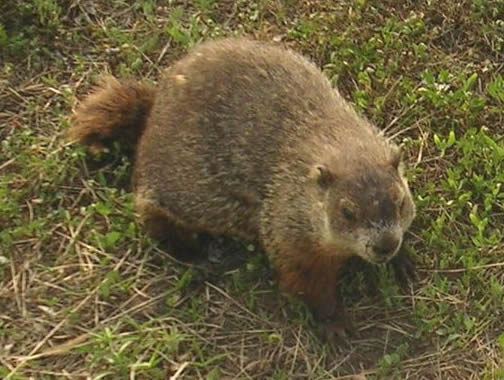
One of the more commonly overlooked holiday complexes comes around Groundhog Day.  It may seem strange to be thinking about spring right now, but it’s on everyone’s mind.  (In this hemisphere anyway.)  When seasons actually begin is a matter of perspective, and that’s not just a north-south hemisphere divide.  With our scientific outlook, we take the path of equinoxes and solstices.  If you look closely, however, there is a set of seasonal holidays that falls midway between them, dividing the year into eight spokes.  These cross-quarter days were recognized in some cultures as the early inklings of a new season beginning.  If Halloween (Samhain) marks the start of winter, this holiday, Imbolc, is the beginning of spring.  The day had many associations, one of which was watching a groundhog (or other animal) to see if the weather would begin changing sooner or later.  Spring itself is inevitable.

The popularity of Groundhog Day owes quite a bit to the movie of that name.  The film is more complex than its classification as a comedy might suggest.  Although the day itself does deal with the cyclical nature of, well, nature, repetition isn’t an inherent theme in the holiday.  Neither is it part of the related Christian celebration of Candlemas.  Indeed, I tend to think Groundhog Day has the makings of a horror story.  Being stuck in time could represent a terrible fate for many.  Interestingly, Phil Conners (Bill Murray), after having been stuck in this same day for a considerable amount of time, suggests to Rita Hanson (Andie MacDowell) that he might be a god.  He is immortal and he knows everything that is to be known in Punxsutawney.  He can predict things before they happen (of course, he has become Punxsutawney Phil, in a manner of speaking).

A philosophically rich movie, the story has appealed to adherents of several religions.  That, in itself, is amazing.  The endless repetition could represent samsara to those of south and east Asian religious inclination.  The learning to be kind, and even forgiveness aspects, appeal to those who want to find a Christian message in it.  Not bad for a holiday nobody gets off of work, and which frequently falls in the middle of the week.  The holiday complex of Imbolc, Candlemas, and Groundhog Day represents what had once been a more prominent season than we currently recognize.  Revivals of the more ancient celebrations have begun to appear, but the endless repetition so valued by capitalistic systems has nearly captured us all.


Good Will

Social media can seem overwhelming.  There are so many sites and there’s so much to keep track of.  And that’s in addition to all these “super storms” we have dumping inordinate amounts of snow and rain on a house neglected by previous owners.  Given the circumstance, I joined Next Door.  I don’t have time to follow it, but each day I get notices of new posts.  On Christmas morning one from the previous day caught my eye.  A local mother could neither afford to decorate her tree nor buy her teenage sons presents.  She turned to Next Door and the comments and offers of help posted shortly thereafter revived my faith in the inherent goodness of people.  Holidays bring out the best in us, I believe.  We want others to be cared for.  It’s just too bad we have trouble enacting it in any political setting.

Next Door is about grassroots connections.  We are fairly new to our town.  Although it’s distinctly purple, the people are friendly to one another.  It saddens me that we’ve allowed the politics of hate to define us for four years.  Those unable to see through Trump’s self-serving tenure think it’s been business as usual as one man has torn the country apart to make himself feel good.  Out here among hoi polloi, people are reaching out to strangers, offering Christmas ornaments, gifts, and food.  I think that must be rain on my face.  Why else would my cheeks be damp?  Left to their own devices most people would behave well toward others.  Fear makes us act in destructive ways.  What if we all reached out helping hands when anyone was in need, and accepted handouts without shame when we needed them?

Christmas was rainy around here.  Just a week after receiving an early snow dump of over a foot, the rain gauge is overflowing.  Caring for our environment, it seems, would be the most obvious way of ensuring the greatest good for the greatest number.  I know that sounds utilitarian, but it certainly feels more moral than personal enrichment at the expense of others.  Too much water here while the west suffers drought and wildfires.  We know our actions contribute to the instability in our atmosphere.  No actual scientist denies it.  As these twelve days of Christmas play out, I see no sign of compassion from the swamp, yet there is a light shining through the gloom.  It’s a sign of human kindness.  And it is as close as next door.


Thoughts of Christmas

Christmas, in merry old England, used to be the day when bills were due.  There are vestiges of that still.  Just this past week, when my mind was on upcoming celebrations and family time, companies continue to email me their bills, reminding me that all celebrations are but temporary.  Money’s the real thing, and it takes no holidays.  While the holiday season may be subdued for some due to lack of travel, for me any day that I don’t need to leave the house is a good one.  We had a pretty nasty patch of weather on Christmas Eve, and one might be tempted to say that the atmospheric conditions outside are frightful.  There’s a coziness about staying indoors around the holidays.  Besides, there’s a pandemic out there too.

We’ve got a quiet day planned at home with our usual traditions.  We added a Yule log to our celebrations this year—much of what we now recognize as Christmas derived from the teutonic Yule.  Otherwise, we are quiet people with rather simple tastes.  Even if we can’t afford much, the holidays mean time off work.  Time for those close to us without constantly having to auto-correct back to earning money at work.  I frequently reflect on how distorted capitalism has made us.  Our European colleagues have far more time off work than Americans do.  They don’t seem to suffer for it.  There’s not much light outside anyway, so why not hunker down a while?  Reflect on what’s really important?

First thing this morning, after watering the tree, I fired up the computer to write a few words before the festivities began.  The first two emails in my inbox were, as if on cue, bills.  Computers have no idea this is a holiday, and our neighbor’s early morning car announcing its lock secured tells me that he’s just getting home from work.  The fiction that we all have today off, as time home with family, plays out every year.  Holidays are often the privilege of the affluent, which is why, I suppose, Saturnalia was marked by a reversal of roles for several days.  Rome wasn’t exactly a friendly empire, but it wasn’t a capitalist one either.  This Christmas I’m hoping that those who have to work today—healthcare workers, those who keep stores open for last-minute supplies, emergency workers of all kinds—will have adequate time for peace coming to them.  Even non-essential work can be wearying.  Let’s celebrate, thankful that we’ve survived these last few years at all.  The bills will wait until tomorrow.


The Halloween

Halloween seems especially portentous this year.  Some of us thrive in this introduction to what was a major set of Christian holidays that encompassed many pagan traditions.  The lynchpin was All Saints Day (All Hallows), which in good Christian fashion upheld its favorite sons (and a few daughters) to remind the rest of us what a sorry lot of humanity we are.  Followed by the more democratic All Souls Day where the vestments went from white to black, it was preceded by Halloween.  Through mostly Celtic additions from Samhain, the first of the three days became decidedly spooky and came to be a commercial holiday.  There’s more to it than that, of course, but we all know Halloween.

This year a number of other phenomena are converging on today.  Not only is it a full moon, but a famed blue moon—the second full moon this month.  It feel like something could happen.  And if that weren’t exciting enough the powers that be have decided to end Daylight Saving Time tonight (well, technically tomorrow morning).  And Tuesday is the most importation election day in the history of our nation, when we decide whether to retain democracy or become a monarchy.  Seems like a strange confluence of phenomena.  Meanwhile, outdoors a pandemic rages and some locations have had early snowfalls.  The last of what had been Hurricane Zeta blew through here yesterday.  Who needs Halloween to be scared?

For some years I’ve been contemplating the spirituality of Halloween.  We live in a death-denying culture while knowing full well we all die.  Halloween has become a holiday when we can think about it openly.  Pretend we’re someone/something we’re not.  Perhaps, if we’re lucky, we might learn something from it.  It has become a boon for horror films, but they’ve been successfully spread through the rest of the year as well.  There’s plenty to be frightened of in July and January too.  Still, there’s something about Halloween.  Some of my earliest memories are of this particular holiday.  Poor as we were, we always had costumes for the day.  I remember sitting on the school bus, wearing a mask, thinking that nobody knew who I was, and I could really be the hero or villain that my costume suggested that year.  Now we wear masks all the time and we’re frightened every day.  Halloween is coming along with a blue moon this year.  There must be some significance to that.


The End of Snow Days

It’s a chilling thought.  An article in the New York Times said it, but we were all thinking it.  Snow days may well have become another victim of Covid-19.  No, it’s not snowing yet (but give climate change a chance!), but New York City schools have figured out that if students can learn from home then one of the truly treasured memories of our youth may no longer be necessary.  In fact, snow days ended for me when I began working remotely.  My supervisor had suggested, even before that, that I take my company laptop home daily, in case of inclement weather.  The idea of awaking, wonder-eyed, at the world covered in white—that cozy feeling of knowing you had no obligations for the day but to enjoy the pristine world out your window—is a thing of the past.

Technology has changed our lives, and some of it is even for the better.  It hasn’t made work easier for some of us, but has made it longer.  We used to talk about kids and their continuous partial attention, but now work is always at home with you and that time signature on your email says something about your work habits.  As the days are now shorter than the nights, as they will be for six more months, finding the time to do what you must outdoors (it may be cooler, but lawns still insist on growing) is always a bit more of a challenge.  And when the snow does fall you’ll still have to shovel the walk.  All time has become company time for a truly linked-in world.

The real victim here, it seems to me, is childhood.  Snow days were a reminder that no matter how strict, how Calvinistic our administrators wanted to be, the weather could still give us a smile now and then.  A legitimate excuse not to have to go to school and, if parents couldn’t get you to daycare, a day off for everyone.  The strict number of limited holidays allotted by HR had limited power in those days.  Although we all know that well-rested, happy workers tend to do better jobs than those who are constantly stressed out and who have trouble sleeping, we’ve now got the means to make the sameness of pandemic life the ennui of everyday life, in saecula saeculorum.  Thanks, internet.  At least now we work where we have a window and can look out on nature and can see what we’re missing.


Mother of Life

Homeostasis is, if I recall correctly, the state of equilibrium that entities and systems seek.  When we’re too warm we seek someplace cooler and when we’re hungry we look for something to eat.  It’s a great process of evening things out because we live in a world of extremes.  Well, relative extremes for a planet that suited to life.  Autumn came in with a chill this year, at least around here.  We had a couple of nights with frost before apple-picking season even began.  Over in Denver they went from a heat wave to inches of snow overnight.  I often wonder, if our species manages to survive long enough, what life will be like once everything evens out.  Until then, because of human climate degradation, we’ll be facing more extremes.  That’s the way the GOP likes it.

Meanwhile, there may be evidence that life exists on Venus.  Or at least in the atmosphere of the hottest planet in the solar system.  Up through my college years I toyed with the idea of being an astronomer.  I’d learned in high school (for we were a Sputnik-era school in rural Pennsylvania that had a working planetarium) that it was mostly about math.  I’m afraid I have no head for such things.  Still, I remain fascinated by other planets and their potential.  I’m in the market, you might say.  Venus had captured my young imagination not only because Ray Bradbury and C. S. Lewis wrote stories about living there, but because of the images from the Russian Venera (blush, giggle) probe program.  I knew in high school (planetarium, remember?) that Russia had landed probes on the rocky surface of Venus that had only functioned for a couple of hours at most before breaking down in the extreme conditions.  Extremes, again.

Venus could, it was thought, never have supported life.  The new evidence, however, stands to show us just how little we understand life.  It exists in the most inhospitable environments on our planet.  When life was found near black smokers on the ocean floor it was considered a fluke.  Maybe life is the norm instead of the rarity our exaggerated sense of self-importance suggests.  Venus, after the sun and moon, is the brightest natural object regularly visible in our skies.  Both the morning and evening star, it beckons to us.  Although not definitive, we’ve found evidence of life on both Venus and Mars.  And yet many of us prefer science deniers to lead our nation.  So I think of homeostasis as I look at Venus out my early morning window.


Being Equal

With all that’s been happening lately—as 2020 shudders along—we find ourselves at the equinox.  For some of us the weather has already been unseasonably cool, feeling like mid-October rather than September.  It stands as a reminder that the wheel of nature continues to turn, despite human foibles and plans.  Some trees have begun to sense the change and have started their winter fast while others keep their green to suck the last possible sugar from the sun.  Days have been getting shorter since late June, of course, but now the drama will increase until the winter solstice has us in the dark for much of the time.  It all depends on where you live, but for me the temperate zones have always been home.

I suspect our various predilections toward the oughtness of the world depend in large measure on what we experienced in childhood.  I knew winter before I ever experienced summer and the transitional seasons have always been my favorites.  The idea that we can take more time and reflect, it seems to me, mirrors what happens in autumn.  It’s cooler, so we spend time indoors a bit more.  Some years that doesn’t kick in until later, when the heat is on and there’s a coziness to a house that’s been left to nature’s fever all summer.  Windows are shut and locked.  Artificial warmth reminds us that we can find some solace inside.  Meanwhile the trees show us the proper way to face harsh conditions, and yet half a year from now we’ll be eagerly watching for buds.  The Celts, temperate zone dwellers, thought of this change as the wheel of the year, slowly turning.

From where I sit in my study, with south and west-facing windows, I watch the path of the sun.  Having worked in a cubicle with no outside windows for years, I was always disoriented at the end of the day.  Now I can watch and begin to understand.  The difference is really striking if you have a single place from which to watch it unfold.  The sun is so much higher in the sky in July that it’s evident we’ve entered a new phase now.  Instead of being overhead at noon, the shining orb rolls more to the south, sending blinding rays directly through my window.  When it reaches the west (where it will, before long, sink before touching that window) I know the work day is over.  It’s no wonder our ancient ancestors kept this transition with holidays we’ve long sacrificed to capitalism.  I can still, however, see the changes and appreciate them for what they are.


Jacob’s Ladder

Jacob, it is said, was quite a dreamer.  While fleeing from his brother Esau he had a dream of a ladder, or stairway, to heaven.  Well, “Heaven” as we recognize it didn’t exist then, but you get the idea.  Angels were climbing up and down on it, I’m guessing to do roof repairs.  You see, neither my wife nor I are what you might call tall.  In fact, I’m a bit shorter than the average guy and we can’t reach the top shelf in our kitchen, let alone the ceiling.  Or, God forbid, the roof.  So when tropical storm Isaias (not to be confused with the prophet) dropped upwards of five inches of rain on us, some of it got inside.  Our roofer, vexed as I was, promised to get over the next week but there’s more rain in the forecast.  I had to get up there to do some temporary patching.  I needed a ladder.

Ours is an older house.  The roof is way higher than any ladder we have.  I have one that allows me to get as high as the ceiling, but being acrophobic I don’t use it much.  It doesn’t come halfway to the lowest roof.  The hardware stores have ladders, but delivery’s a problem.  A ladder twice as long as our car seems like a road hazard, strapped to the top.  I asked about delivery at the local Lowe’s.  It would cost a third of the price again of the ladder itself, and that’s only be if they could deliver it.  Their truck was, ironically, broken down.  Wasn’t this a DIY store?  Could nobody there fix a truck?  I put a face-mask and rubber gloves on for this?  The world isn’t easy for the vertically challenged.  I really don’t want to climb that high, but with the ceiling below already coming down I’ve got to do something.

I wonder if Jacob’s ladder is still lying about somewhere, unused.  We don’t live far from Bethlehem.  Maybe I can scoot over the Bethel and pick it up.  Then again, maybe angels deliver.  I hear they can be quite accommodating.  Of course, if they’d keep the rain off in the first place that would’ve been helpful.  I’m pretty sure that Plant and/or Page had a leaky roof.  When they went to get up there they’d found somebody had already purchased the ladder (I think they call it a stairway in England).  So I find myself with a leaky roof and no way to get to heaven.