Predatory Birds

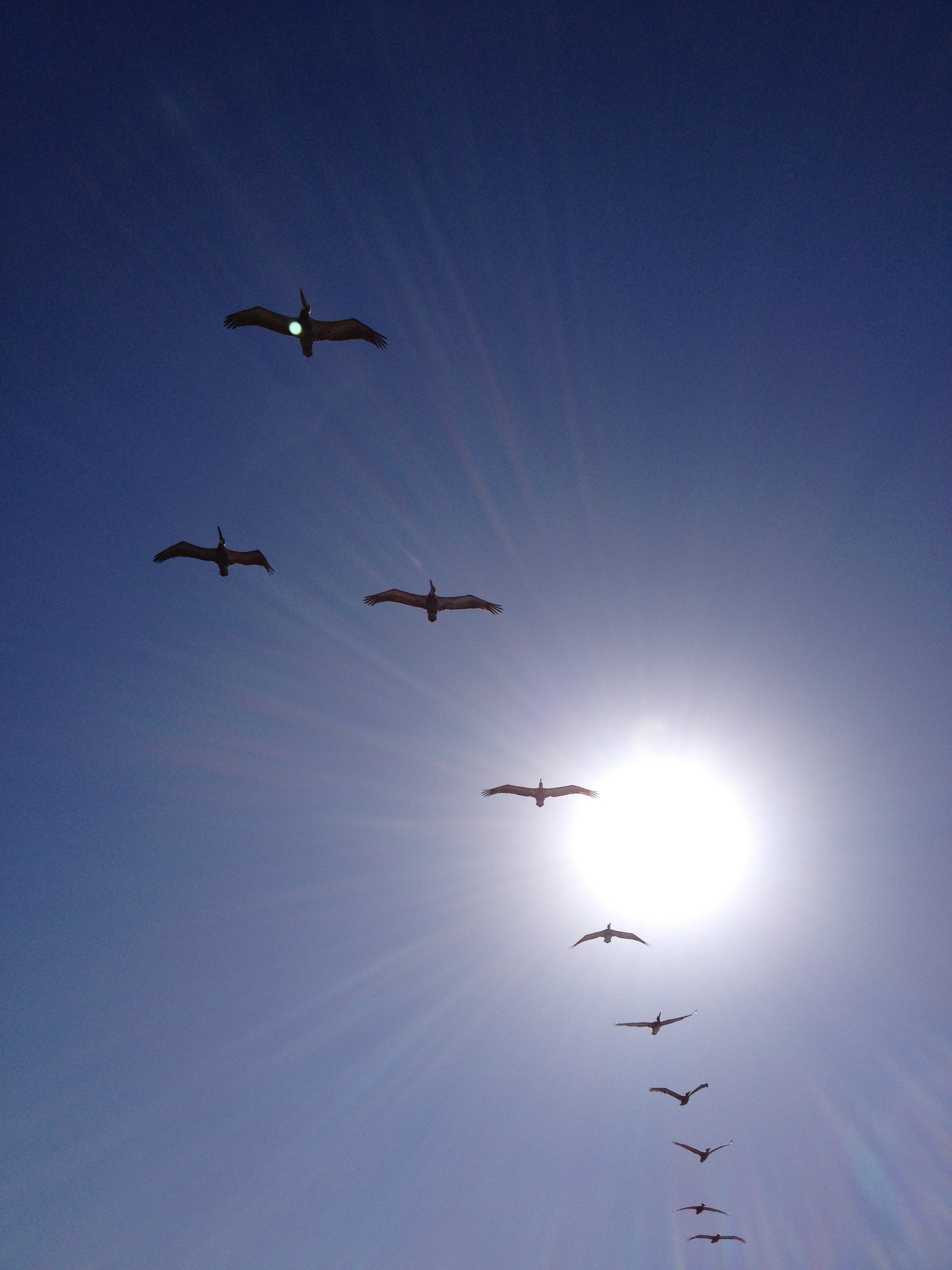
Maybe it’s a pandemic thing, what with humans huddling away more, but the big birds have come back.  Turkey buzzards and Canada geese are pretty common most of the time, it seems, but other large birds have been putting in an appearance around here lately.  Perhaps the most spectacular are the bald eagles.  My wife and I saw a couple on election day.  (I’ve been a lifelong believer in signs, as much as I try to deny it.)  We were out on a rare errand when one of them flew right over our car.  A couple days later I saw one out the window while I was at work.  My home office has a window that looks out over a small local park.  There are trees and a creek runs through it.  The eagle was likely keeping a look out for fish.

Image by Kathy Büscher from Pixabay.

This past week, however, the activity stepped up.  On a bleary-eyed Monday I sat in my office chair thinking that there were five whole days until I could relax again.  Mondays are hard.  I glanced out my west window and a bald eagle was heading straight toward our house.  I got a good look, but didn’t have time to grab my phone for a photo.  Two days latter, as I was getting through my email, a flash of wings caught my attention.  A great horned owl swooped up into a tree across the street.  Since the leaves are down, I had a chance to grab some binoculars and get a good look.  It was far enough away that a photo would’ve shown only a blur.  I should’ve been working, but sometimes you simply have to stop and look.

On Thursday, again in the morning, a broad winged hawk came and landed on the large electric wire that runs down my street.  The electric (I presume) cable is quite thick and sturdy.  With the binoculars I could see the bird’s claws gripping the twisted contours of the cable.  We regarded one another for some time.  We’ve only lived here for just over two years but I sit in that office nearly every day and I’d not seen such a slow riot of predatory birds.  As I said, I tend to take things as symbols.  I don’t always interpret them correctly, of course.  One thing that makes me glad is that seeing a bald eagle around here, at least for the time being, isn’t such a rare sight.  And I think I know what it means.


At Sea?

Brian Fagan is a name I’ve long known.  Not exactly the consummate stylist, he is a very prolific archaeologist and anthropologist.  I’ve read a few of his books.  Recently my wife and I read his Beyond the Blue Horizon: How the Earliest Mariners Unlocked the Secrets of the Oceans (you see what I mean about style?).  Divided into different regions of the world, the book explores early boat-craft, sketching how people without our technology navigated oceans, often reaching remote locations.  What interests me is when anthropologists make statements about ancient religions, often before the advent of writing among the peoples studied.  No doubt such peoples realized the dangers of open water—open water is still dangerous with all our tech.  It is reasonable to assume their response was religious.  What exactly it was, we don’t know.

The one that really caught my attention was on the Maya.  Coastal Mayans valued the spondylus, or spiny oyster.  This particular mollusk is seasonally toxic—itself an interesting phenomenon—that becomes a hallucinogen.  Hallucinogens have frequently been associated with religion for indigenous peoples.  If archaeology is to be believed, even temples in ancient Israel burned cannabis, so who’s to judge?  Fagan writes that this practice led to shamanistic trances, and this seems likely.  He goes on to suggest that the spondylus was thus a gateway to the supernatural world.  Of course, in the biblical world shellfish were a forbidden food.

While Fagan likes to reminisce about his own past sailing, and likes to describe boats in detail, and show off his nautical language skills, I think about the religious aspect of the great waters.  We still have only a small understanding of the oceans that cover most of our planet.  We can fly over them these days, and miss the intensity of being where no land is in sight.  It can be a transcendent experience, I’m sure.  I’ve seldom been that far from land.  On a ship bound for the Orkney Islands from John O’Groats we were on the North Sea beyond the sight of shore, if I remember correctly.  Although I can’t recall how long the voyage took, I can imagine the feeling of nerves aching for a sight of coastline.  Even with minke whales off the starboard bow, I knew my feet belonged on terra firma.  It’s more comfortable to read about the gods of the ocean in books like Beyond the Blue Horizon.  And when I’m out to sea, I always pray the mariners know what they’re doing.  


Trade Wars?

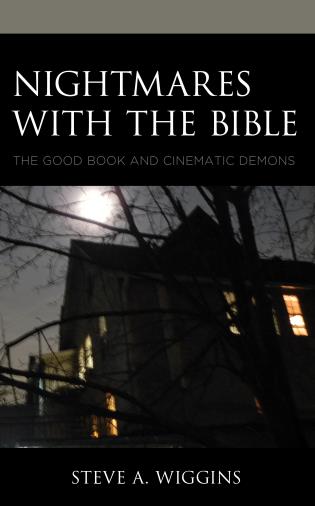
A few friends are suffering sticker shock at the cost of Nightmares with the Bible.  I offer my sincere apologies.  To those in the normal world (outside academia) such pricing appears predatory.  It is, but you’re not the intended prey.  One of the pillars upon which capitalism rests is “what the market will bear.”  You price up any product until people stop buying it, then you retreat.  I’m no fan of the dismal science, but I am certainly not in the cheering section for capitalism.  Institutionalized greed.  Still, I can explain a little of why Nightmares comes with such a high price tag.  Publishers have long indulged in “library pricing.”  Although many libraries now buy ebooks instead, the model persists.  The idea is that libraries can afford higher prices than mere mortals.  For those of you not in academia, $100 is actually on the low end.  Believe it or not.

In researching Nightmares I saw monographs I coveted.  Some of them priced at $175.  Considering that some of these were under 200 pages, my primitive math sets the rate at about 87 cents per page (single-sided).  Here’s where the disconnect comes in.  Nightmares was written for general readers.  I long ago gave up the idea that to be intelligent a book must be impenetrable.  And academics wonder why people question their utility?  Only after I signed the contract did I learn that the Horror and Scripture series, of which Nightmares is the second volume, would suffer “library pricing.”  There is a discount code for those who may not be libraries.  But please, have your library buy a copy.  That’ll give me fuel for a paperback argument.

In a “catch-22” scenario, it goes like this: a publisher tells an author, “if your book sells well enough at this price we’ll issue a paperback.”  The truth is your hardcover only sells well if you’re well known or if your choice of topic is truly compelling.  If the unit cost were actually the same as the library pricing I’d be a rich man.  Where does all that money go?  It’s a legitimate question.  It’s not royalties!  Academic publishing is an expensive business to run.  Apart from overheads—there are always overheads—you need to pay tech companies to ready your files so they can be printed.  Unless the print run (generally under 200 now) is intended to sell out you’ll have it done domestically so that you don’t have to pay warehousing costs on unsold stock.  I knew a single-man academic publisher who stored his stock in his basement.  Excuses aside, my apologies that Nightmares costs so much.  I’ll send the discount code to anyone who’d like it.


Arrival

Excitement that comes during the work week gets sublimated.  Work, you see, is like a huge ship chugging ahead at about 30 knots.  It takes some time to stop, or even change direction.  So on Thursday, while I was still at my desk, Nightmares with the Bible arrived.  Since all work—even salaried—is measured by the clock by HR,  I couldn’t take off time to enjoy the birth.  I opened the box, cursorily flipped through a copy, and got back to the task for which I’m paid.  After work it’s time for supper and I can’t stay awake much beyond seven or eight, which meant I neglected my baby.  Friday was another work day, and although I wanted to do all the things marketers tell you to do, I had other duties.

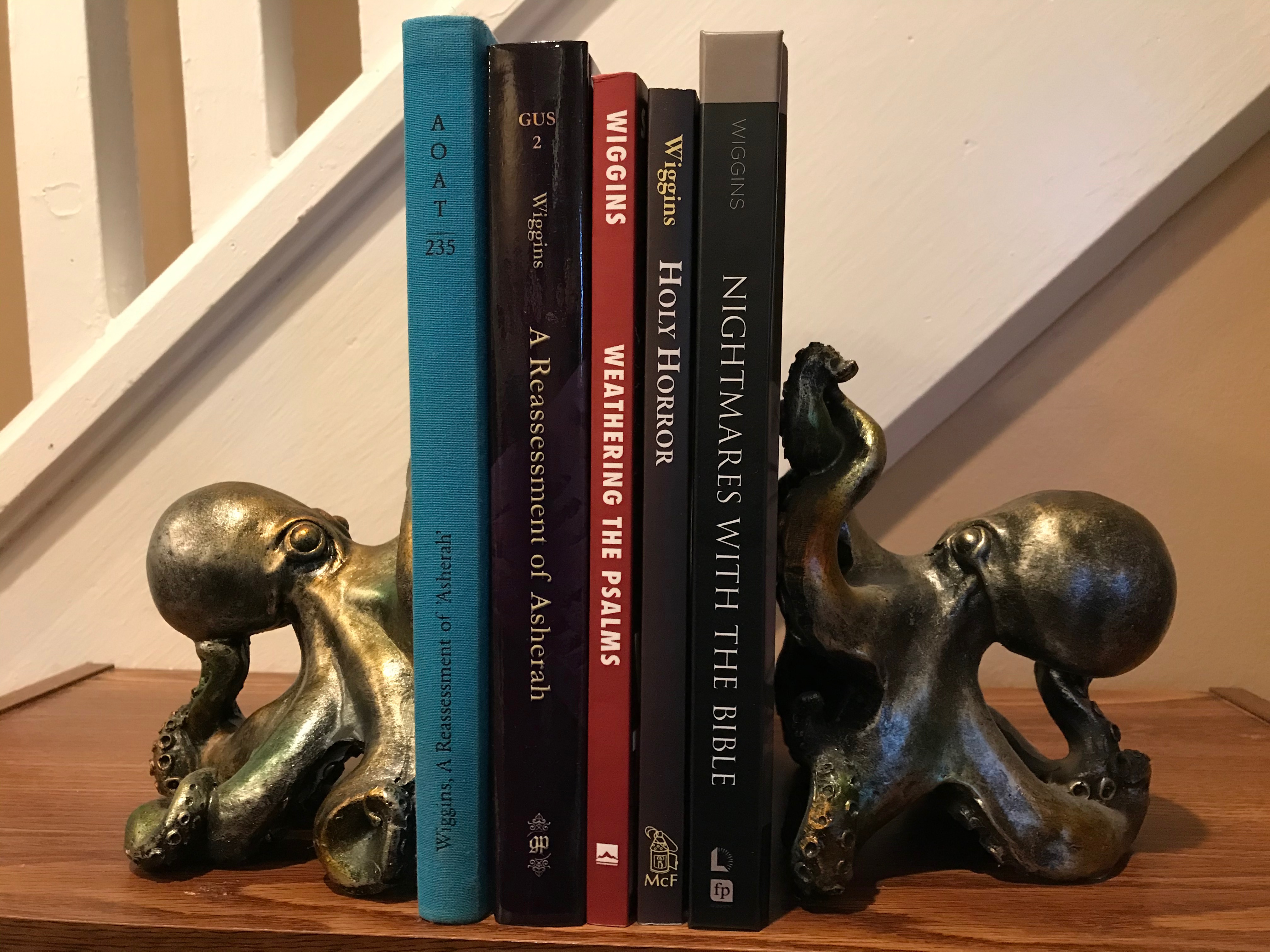
So now it’s Saturday and I can officially say Nightmares have been released.  I have a discount code flyer, about which nobody has yet emailed me, but the offer still stands.  You can get a discounted (but still expensive) copy by following the instructions below.  Feel free to share with your rich friends.  Better yet, have your library order a copy.  I’m hoping for a paperback on this one, but that’ll be a couple years and I know paperbacks seldom outsell hardcovers, even expensive ones.  Raising a child can be a costly venture, no?  Adding another book meant that my display copies had to move out of their cubby-hole onto a bookshelf.  Hopefully, if things go well, there will be more siblings.  Perhaps better priced.

A Reassessment of Asherah was published by a European academic press and put at the incredibly high price of $78 back in 1993.  Gorgias Press reissued it, with additional material, but made it even more expensive.  I can’t even afford to buy a copy.  Weathering the Psalms was only $22, but wasn’t a gripping topic for many.  Cascade Books, at least, know how to price things.  Holy Horror, at the shockingly high $45 for a paperback (McFarland), languished.  It missed its Halloween release and no reviews have appeared.  “Nightmares” might well capture my sense of the price for my second missed Halloween release.  There are other books in the works.  If any of them get completed I’ll be seeking an agent to try to bring the prices down.  Until then, Nightmares will be the final word.  It’s out there now, for those brave enough to engage with it.


Toilet Paper Redux

So we find ourselves needing to clean up again.  Maybe you’ve noticed it too.  Since the second wave of the Covid-19 outbreak has wiped across the nation toilet paper has once again become a hot commodity.  Not finding a single roll in Target, I decided to test the waters on Amazon.  Sure enough, many brands are now listed as “out of stock.”  Could it be a coincidence that Trump will be leaving office and we need a lot of toilet paper right now?  Inquiring minds want to know!  Capitalism is like that.  Supply (or lack thereof) and demand.  Instead of making sure people have access to the basic necessities, we would rather have panicky citizens with soiled underwear looking for leadership where none exists.  And voting for lack of leadership yet again.  Flush!

Still, you’ve got to wonder—why toilet paper?  What is it about thin paper on a roll that presses the fear factor?  If people can know to avoid embarrassing smells, why haven’t they plugged their noses when the breeze blows across Pennsylvania Avenue?  Logic fails here.  Have we educated a nation to fear for their backsides but not to see clear and president danger in front of them?  Now that we’re nearing two weeks since the results were announced, we have had nothing but pouting from the Oval Office.  That, and drilling in the Arctic Wildlife Refuge.  Seems like we’ve got to be dirtying the world somehow.  We could use some toilet paper.  Maybe America needs more fiber in its diet.

Those who still support Trump don’t seem to realize that his response (or lack thereof) is the main reason a quarter-million people have died in this country and the virus is completely out of control.  I guess it’s that way with messianic figures.  Ironically the Bible (printed on thin paper itself) warns of someone who acts messianic while lying all the time.  He’s called the Antichrist.  You can tell him because just about everything Jesus did, he does the opposite.  Welcome the foreigner?  Feed the hungry?  Heal the sick?  Talk about God and how to deepen your relationship with the divine all the time?  Have you got any boxes checked yet?  Or are you waiting for the Charmin supply truck to go rolling on by?  Perhaps it’s time to invest in paper.  We print our money on it and hope somehow it will save us.

White gold or pay dirt?


Raven Wisdom

Just twenty pages in and I was reflecting on how Christianities and the cultures they cultivated have caused so much suffering in the world.  Assuming there is only one way to be, and that way is pink, European, and monotheistic, has led to so many displaced people thrown aside as collateral damage.  Ernestine Hayes’ The Tao of Raven is a remarkable book.  A native Alaskan, Hayes participated in the colonialist venture of higher education to try to also participate in the “American dream.” If this book doesn’t make you feel uncomfortable in your own skin, I don’t know that you’re human.  As I mentioned in a recent post, I have a deep interest and lasting guilt to learn about indigenous peoples of the country where I was born.  About the culture that is so Bible-driven it can’t see the human beneath.  The capitalism that takes no prisoners.

The Tao of Raven is one of the most honest books I’ve ever read.  Hayes refuses to sugar-coat the alcoholism, the broken promises, the poverty offered to native Alaskans.  Even as Trump’s final rages go on, he has opened the Alaskan Wildlife Refuge for drilling, to the highest bidder.  Apart from those whose wealth will increase as a result, we will all suffer.  Those who lived in Alaska before the colonists arrived the most.  The idea of colonizing, without which capitalism just can’t work, reveals its evil here.  When a voice like that of Hayes is able to make itself heard we cannot but feel the condemnation.  When over seventy-million people vote for a hater, we all tremble.

The book ends much as it begins.  A sincere regret for those who’d been fed the contradictory messages of missionaries.  Those told to accept suffering on earth so that they could go to the white person’s Heaven, while those inflicting the suffering lead comfortable lives with modern conveniences.  The double-standards that allow people to die on the street like dogs.  The double-standards that can’t see that you need not be Christian to upend the tables of money-changers.  Indeed, the last time someone dared to such a thing was two millennia ago.  When Christianity slipped its fingers between those of capitalism a monster would surely be born.  The cost would come in human lives, even as a quarter-million lay dead in this country from a virus a rich man can’t be bothered to address.  Do yourself, do the world a favor.  Read this book.  Read it with your eyes open and learn from Raven.


Black Bible

In such a bibliocentric culture, I wonder why we lack curiosity about the Bible.  Not only do we not study it much in religion classes, we often accept it as a fixed cultural object.  Saying that it’s the word of God, as if that explains anything, many Protestant groups take it as the 39 books of the “Old Testament” and the 27 of the New, ignoring the 66 total that stands like a warning sign of impending idolatry.  Roman Catholics and some Anglicans add the books of the Apocrypha, or Deuterocanon, bringing the number closer to 73 books.  I say “closer to” because some of these books seem to be expansions on other books already in the canon.  Over the years the National Council of Churches has added a few more books, considering various other groups (mostly Orthodox) that recognize some further works as canonical.

In this era of recognizing the importance of black lives and black culture, I’m amazed there’s so little curiosity about the Ethiopian Orthodox canon.  I’ve spoken to many biblical scholars who could care less that the fantastic books of Jubilees and 1 Enoch are in the canon of the Ethiopian and Eritrean Orthodox Churches.  It’s almost as if these groups simply don’t matter in the world of Christendom.  I note that biblical scholars I ask about this are usually Protestant or Catholic themselves.  It seems to me almost a racist slight not to include books that are recognized among some Christian groups, but not others.

What is the scientific criterion for determining a book is the word of God or not?  It surely can’t be fear of contradiction, for the Protestant Bible—the briefest in mainstream Christendom—has plenty of contradictions of its own.  The Bible itself famously does not name the books included.  Various authorities made decisions at various points about which books should be included and which should be left out.  It is such a very human process.  But when it comes to including the books of churches that total nearly 40 million members, suddenly people just aren’t that curious.  Those of us interested in demons have to take Jubilees and 1 Enoch seriously.  They are fascinating books.  And Biblical for millions of people.  The past several years have made me think quite seriously about the borders built around the Bible.  Whose choice is it not to include books already in the canon for their neighbors?  Or, as might be more accurate, who has the authority to cut out books that already belong for many African Christians?


Nightmares Awake!

According to Amazon, Nightmares with the Bible has now been published.  Authors are seldom the first to see copies of their own books, strangely enough.  I probably won’t have any physical copies for a couple of weeks yet.  Until then I’ll wait like an expectant mother.  I don’t actually read my own books after they’re published.  Like some other writers I know, I’m terrified of finding mistakes.  And the older I get the less certain I am about anything.  I’m not even sure if it’s officially published yet or not.  I choose to trust Amazon’s opinion on that.

Right now I’m caught up between four or five other book projects, each a good bit along.  Since writing is often a mood-based thing, what I do in the sleepy hours of pre-dawn is what I feel like writing on any given day.  Unless you have a book contract in hand, that’s not, I suppose, that unusual.  I’m trying to guess what might most get the attention of an agent.  Both Holy Horror and Nightmares with the Bible were written for general readers.  I don’t have the name-recognition to command any kind of attention (or affordable prices), so I need to find a topic that’ll do the work for me.  I personally find religion and horror a fascinating subject.  Many other academics do as well, but general readers not so much.  It’ll feel more like reality when I have a copy I can have and hold.  I still haven’t reconciled myself with ebooks.

What usually makes me stick with a project for the dash toward the finish line is a book getting close enough to see the ribbon ahead.  I write incessantly, so I have a backlog from which to draw.  I know my tastes are odd, which means it’s a challenge to get others onboard with my likes.  I know horror fans love to read about movies.  I suspect most of them don’t care much about the religious aspect of what they’re seeing.  That’s why I write about it.  People get information about religion from popular media.  Even if they deny their interest, writers and directors will slip it in regardless.  I’m just calling them like I see them.  The nice thing about movies is you can have instant replay.  And with a fair number of us now publishing books in this niche, hopefully conversation will follow.  Until then, I’ll just be waiting here until my first copy arrives.


Documented Error

Back in September I wrote a post on documentaries.  One of those I’d watched was Hostage to the Devil, on the life of Malachi Martin.  Curious, I began looking for biographical information, only to find conflicting reports.  Robert Blair Kaiser, a journalist, was interviewed in the documentary and he claims that Martin is not to be trusted.  Given that Martin had academic credentials and academic publications, it’s clear that something is up here.  So I decided to read Kaiser’s Clerical Error.  As an award-winning journalist, Kaiser had written a book on Vatican II that sold fairly well, establishing his own credibility.  Clerical Error is a book, in large part, that was intended to discredit Malachi Martin because Martin had an affair with Kaiser’s wife.  That spices things up a bit.  (And explains the cover photo.)

It’s an odd book, overall.  Kaiser begins by describing how he became a Jesuit.  Autobiographical works are generally most interesting during the early years, and Kaiser does a good job illustrating how he was naive and probably joined the Jesuits out of fear of sexuality.  Some of the disciplines (including self-flagellation) are difficult to reconcile with the twentieth century (when they took place) but demonstrate the command religion can have over life.  Confronting church politics, he decided to become a journalist instead of a priest.  When he was assigned to Vatican II a couple things happen—his book gets lost in the weeds, and, he meets Malachi Martin (spelled Malachy throughout).  At first taken with Martin, the two became friends.  Martin helped him access places in the Vatican that would’ve otherwise been blocked to him, as a layman, even if a former Jesuit.

Then the tale becomes sordid.  According to Kaiser, Martin, still a Jesuit priest, began an affair with his wife.  The final third of the book has the draw of a soap opera as Kaiser tries to confirm what he suspects.  Overworked, he checked into a mental health facility, and this fact gave his detractors the grounds for claiming that Kaiser was mentally unbalanced and that Martin was really as he presented himself—a Jesuit priest, academic, and exorcist.  According to this book, which never made a large splash, the evidence is clear.  And the ability of the church to cover up scandals is legendary.  The most damaging parts, in my purposes for reading the book, are the allegations that Martin was a pathological liar.  (Why do we have so many of these?)  If true, nothing he wrote can really be trusted.  This is the very reason that of late I’ve been obsessed with the idea that lies are a clear sign of the one the Bible calls “the father of lies.”


Aging Music

Poignant is the word that comes to mind.  Perhaps in stark contrast to my listening to My Chemical Romance, I’ve also been listening to the latest albums by artists such as Bruce Springsteen (Letter to You) and Meat Loaf (Braver Than We Are).  And Leonard Cohen (Thanks for the Dance).  In the last case the album was so late as to be posthumous.  Before that I spend quite a bit of time with David Bowie’s Blackstar.  These albums are, at least in part, about growing older and dying.  Now death is nothing new to rock-n-roll, but it seems as if as some of my favorites age they’re sending a message out from the autumn of their careers.  We may still be here, but we won’t be forever.


I’ve never really been afraid of dying.  In fact, as a kid I often imagined myself as an older man with some anticipation.  Now that I’m approaching that threshold of elderhood the view is just a touch different than it was to a small boy with a lifetime in front of him.  Leonard Cohen, at least, was dealing with aging as early as Various Positions, the album where he gave the world “Hallelujah.”  And Springsteen has toyed with it in various places, such as Devils & Dust.  What I’m hearing in these songs, however, is a kind of acceptance that isn’t really fearful at all.  It’s as if rock suddenly matured.  So many of the original pioneers died young and tragically, and those who survived have been calling to us like ghosts to let us spend our worn-out days in peace.

Perhaps it’s just that it’s November.  Light is becoming a rare commodity, and it will remain in short supply until around the middle of March or so.  Music helps us through the transitions.  There are albums that convince me I’m immortal.  If I weren’t so tired at the end of the day I might continue to believe that.  On a weekend when I had a few free moments I went to a local CD store.  Wearing mask and gloves, I could see that only people about my age were there to buy actual discs.  We’re not the streaming generation.  It gave me some comfort to see the names of bands I’d almost forgotten.  These artists, of course, will continue to live on after they’re gone.  They’ve left us a legacy.  We’d be wise to consider their advice from time to time.  And take a moment or two to reflect on the coming of December.


Constipated Democracy

Vows apparently mean nothing anymore.  I suppose that’s what happens when you begin your administration with “alternative facts” and keep it up for four years.  When you vow to uphold the Constitution—hand on the Bible—that means you’ll play by the rules.  Instead we find ourselves with a bad case of constitutional constipation and we all know that we need a national enema.  It has been a week now since it’s been mathematically impossible for Trump to win the electoral college.  Yet even his evangelical followers can’t seem to recall that hand on the Bible, that promise to obey.  Apparently it’s okay to lie before God, if you think like we do.  If you don’t want to have conversation but want to talk at others and say you’re right.  It saddens me that so many Americans simply don’t care what the majority clearly wants.

This is especially the case because Trump is being treated as some messianic figure.  An overweight, womanizing, pathologically lying Jesus.  And people are saying, “Yes, that’s what the Bible tells us is good, and right, and just.”  Those who are settled in good paying jobs—people of my generation—have been beneficiaries of the systems of education and government programs that the Trump administration has spent four years dismantling.  And they have the audacity to call themselves Christian while their lives are saying “I got mine, I don’t care about anybody else.”  And they’re the ones who wore WWJD paraphernalia just a couple decades ago.  WHCB?  What Has Christianity Become?

Many of us (the excluded majority, in fact—Trump won the 2016 election while losing the popular vote) knew the greatest danger would be that he would be “normalized.”  This would all come to be seen as the normal course of politics.  People from Trump’s own family have gone on record that his run for office was a publicity stunt meant to drum up business for his failing empire.  And those who acted/wrote/supposed that he had any “plan” or “strategy” at all were simply failing to see a career grifter fleecing the country while playing golf and having his “fixers” do the work.  Until he one-by-one threw them under the bus.  This was all done in the public eye and yet his followers think he really has the best interests of this country at heart.  He has torn countless families apart, and not just at the border.  And now that he’s been defeated he keeps the charade going while his followers bow down and worship.  Excuse me, but I think I need to use the restroom.


Demonic Monsters

One of the perils of writing books is that you often realize something after the book has gone to the printer.  Book production is a lengthy process.  I submitted the manuscript for Nightmares with the Bible in January.  The procedure of getting it ready has stretched eleven months.  In that time, as any writer knows, you keep thinking about what you wrote.  That’s where blogging comes in handy.  In any case, as I was pondering demons the other day I realized that they really only became the objects of horror with The Exorcist.  Now I’m not alone in noting the importance of The Exorcist in kicking off the modern interest in demons.  But what I’m now thinking is that in making them the subject of a horror film—intended to be realistic—The Exorcist made demons monstrous.  Let me explain.

Demons have generally, in Judaism, Christianity, and Islam, been evil.  They cause suffering and misfortune.  They also, however, have a mischievous nature.  In other words, they can be playful.  So can grizzly bear cubs, did I hear you say?  That’s precisely my point.  Grizzly bears aren’t evil.  Powerful, yes.  Dangerous, certainly.  Evil, no.  One of the threads I take up but don’t spend too much time weaving into my book is the idea of the playful demon, or sometimes, the playful Devil.  In the Middle Ages such ideas weren’t rare.  Think about imps.  Do people really fear them?  Not so much.  And the often scatological behavior of demons in that time period made them a little less than serious.

I’m not suggesting that possession and exorcism are to be taken lightly.  I know they existed before William Peter Blatty ever decided to write a novel about them.  It was that novel, however, and the subsequent film, that made demons into monsters.  They joined the unholy pantheon of creatures like vampires, ghosts, and zombies.  They had the added frisson of being accepted as real by many religious traditions.  They continued to evolve in popular culture until they proliferated around the cinematic and television worlds.  Now we pretty much instantly recognize demons as monsters when we spot them.  I suspect they would not have been seen in a similar way in the Middle Ages.  Troublesome and evil they could be, but would they have been thought of in that mental category that we call monsters?  I have my doubts.  Perhaps it is good I didn’t think of this before sending my book off.  I doubt the publisher would’ve been happy if I’d added an extra chapter at the last minute.


Childhood’s End

Childhood.  It’s a time of many lessons that we soon learn to apply to all of life.  One of those earliest lessons is “Don’t be a sore loser.”  When someone else wins you congratulate them with a smile, even if you’re inwardly aching.  Fair play, it’s called.  Or morality.  All of these characteristics are sadly lacking in the Grand Old Party, it seems.  There has been no evidence of voter fraud, Biden currently leads by over 5 million votes, and yet Trump refuses to concede.  Not only that, the dissembler in chief, Mitch McConnell encourages such behavior.  In my fundamentalist church you’d have failed Sunday School for less than that.  And where are the biblical literalists?  Right there with them, thumping their Bibles but not reading them.  What happened to turn the other cheek?  Or even, for God’s sake, an eye for an eye?

Instead the world is watching as a putatively grown man throws a temper tantrum about losing.  Hilary Clinton conceded on the night of the election.  I’m sure it didn’t feel good to do so.  Nor did it feel pleasant for the 44 other losing candidates (in fact, more) who had to go home with their hats in their hands.  Not content to act like a king, Trump is behaving like a monarch for life.  His followers, perhaps aware that Americans will never again put up with such a travesty of a presidency, insist that someone must’ve miscounted by about five million.  They won’t be content until they can count themselves, throwing away any ballots they disagree with.  And they’ll continue to call themselves Christians.  Because, like the Donald, they can.

I’ve reached the stage in life where childhood has become a lingering preoccupation.  I sure got some things wrong.  Not being a sore loser isn’t one of them, however.  Like all people I’ve lost my fair share of contests.  Sometimes the stakes have been very high.  If you want to retain any dignity or moral standing at all, you know you simply have to admit, “I lost.”  We knew as soon as Trump was nominated in 2016 that he wouldn’t admit he lost then, even if he had.  We knew four years ago he’d never admit he lost when he would.  The Republican enablers stoked those fires in which to burn the Constitution.  Some of us, at least 77 million at latest count, are tired of all this political theater.  Big boy pants, it seems, are difficult to locate this season.


Bible Lesson

I was recently reading the revised preface and “To the Reader” (in draft form) for the NRSVue.  In case alphabet soup’s not your thing, that’s the New Revised Standard Version updated edition.  Of the Bible.  As I read through these seldom referenced pages it occurred to me, not for the first time, the care and concern with which scholars approach the original text of the Bible.  No matter what Fundamentalists may say, we do not have the original text.  In some places the translations you read are the best guesses of those who’ve spent their lives trying to understand what an obviously corrupted copy was intended to reflect.  Such care reflects the widespread (but shrinking) sense that this text somehow magically informs daily lives and should lead to political action.  I’m sure Jesus would’ve arched an eyebrow over that.

Biblical scholarship is hampered by the fact that the manuscripts that have survived are copies of copies of copies (etc. etc.).  Translators—yes, including those of the King James Version and the New International Version—are making some informed guesses on an Urtext we simply don’t have.  Lives, however, are often sacrificed on the basis of the belief that we have here some object to be worshipped instead of read and understood.  I like to tell my skeptical friends that the Bible is actually full of really good things.  There’s some nasty stuff in there too, but we can learn from the parts that convey deep spiritual wisdom.  Listening to your elders is a good idea, but it’s not the same as worshipping them.

Humans have a deep desire to make things sacred.  Maybe it’s because after watching us muddle around down here we want to believe there’s something better out there.  It’s problematic, however, when we make an earthly object, put together by humans, into a deity.  There are those who get around this by claiming the Bible is from God in the original.  The point is we don’t have the original.  There are some words (especially in Hebrew) of which the connotation and denotation are unsure (for words have no inherent meaning).  Reading, we know, is a complex enterprise.  That’s why it takes years to master it and constant practice to maintain it.  Those who leave off reading after school may, I fear, fall back into literalism when they encounter a text.  Bible scholars take great care at trying to reconstruct the original, and all of that can be undone by a failure to just keep reading.