Mediating Reality

The brain is one troubling organ. The gateway to both our thinking and our physical experience—as well as our survival—it tends to explain things in terms of narrative. Human consciousness likes a good story. Experiment after experiment has shown that if the brain doesn’t know why you do something it will make up an answer. Consciousness is far from foolproof. Those who rely too heavily on rationalism don’t like to think about such things. Logically, if your brain can fool you then you can’t believe everything evidence seems to verify. Think about that. If you dare.

Psychology has sometimes received a bad rap among the sciences for not having empirical evidence to back up some of its assertions. “Freudian” is now used as much as a slur as it is a sign of the sudden insight that strange things constantly go on inside our heads. BBC Future recently ran a story by Melissa Hogenboom titled, “The woman whose tumour made her religion deadly.” The account regards a woman who came to the hospital with serious self-inflicted wounds. Although hackneyed, the voices in her head told her to do this to herself. Brain scans indicated a tumor at the point in her brain where auditory information and religious belief come together. Paging Dr. Jaynes! Now, I know this is over-simplified. I’ve read enough neurology to know that brain functions can switch from one part of the brain to another and that mapping this kilo-and-a-half universe is one of the the most vexing of scientific enterprises. Still, in this case, the implications were clear: the woman’s self-destructive behavior was connected, in her brain, to religious commands.

Many educated people in this post-Christian world rely staunchly on reason. I don’t disagree that reason is essential. I do wonder, however, what happens when such thinking is forced to confront the fact of the irrational brain. Ever since setting our clocks forward I’ve been awaking in the midst of dreams. My usual sleep cycle hasn’t yet adjusted. I know some pretty strange stuff is going on in my brain when rationality’s taking a snooze. The other day I awoke convinced I was in my boyhood home. Rationality tells me it was razed years ago. Yet this brain with doctoral-level education was convinced it was in another state at another time. And this isn’t the result of a tumor, but normal sleeping brain functioning. It does make one wonder if putting too much faith into rationality isn’t a form of minor neurosis. To find out you have to ask a troubling organ and hope for a rational answer.


Body Count

While I’m privileged and proud to have been part of one of millions protesting over the weekend with our nation’s youth, I can’t help but be a little reflective. Why does our world continue to shortchange women? You see, I had the honor to be a man invited to march in Washington, DC on January 21, 2017. I was there the day before, when the devil in the red hat assumed control. Helicopters were buzzing all over the place, flying low and dramatically over the scene. There were some small riots, to be sure, and I saw police action up close. The day of the march itself, however, all was peaceful. Including the skies. The helicopters were home, their blades drooping listlessly. The women marched. Few paid attention.

It’s hard to tell how many people there are when you’re in a crowd on the streets. There’s no stadium seat numbers to guide you. The National Park Service, which has metrics for counting visitors, probably knows best. As we thronged toward the capitol building we asked an NPS officer if they had any estimates. She nodded. “We’re estimating it’s 1.3 million.” When the headlines squeaked the next day all they said was “hundreds of thousands.” The White House was saying maybe 500,000. Of course, this was now the era of fake news. Nobody worth their testicles could say that the Women’s March drew more than a million to the capital, but it did. Because it was led by women, we have to scale the numbers down. It’s a trick employers use all the time.

This past weekend’s rallies and marches are being noticed by a reluctant press. Official estimates in DC are at a million. The Washington Post noticed that Metro ridership was “far behind” the Women’s March. Women are finding their voices. They were cheated out of the first female presidency by an electoral college that forever will bear the badge of shame for electing a candidate who lost by three million popular votes. People don’t like to be cheated. Women, who throughout history have been the victims of unfair policies upholding male privilege, are half of the human race. They number in the billions. Those who steadfastly hold to Trump—who’ve abandoned their tribe—have the right to be heard as well. They, however, must listen to their sisters. This is not about fiscal conservancy. This is not about unborn babies. This is about the most basic human right of all. We march because this is about the numbers. Women are equal to men. And we will march until the numbers are counted as they actually stand.


Hope for the Future

I’m standing in a haunted place. There was an act of violence here this week. Gun violence. A man died in this restaurant where I sat with my wife and had lunch just a couple of months ago. I’m in Princeton for a rally organized by a teenager. We’re here to tell the government we the people want sensible gun control laws. The website said they were expecting 500. Five thousand turned out instead. Princeton’s not the kind of town where you expect gun violence. Affluent and privileged, it’s the kind of place many of us go to get away from real life for a while—they’ve got the best bookstore around and you can still find DVDs at the Princeton Record Exchange. You don’t expect people to be shot dead here.

America’s perverse affair with firearms goes hand-in-hand with its refusal to ensure adequate treatment for the mentally ill. We give them firearms and wonder what could possibly go wrong. We elect the mentally deficient to highest office in the land and instead of reining him in, the GOP reigns with terror. They have shown time and again that they prefer NRA money to our children. They have sold out. And the word appropriately used to describe such a party good manners prevent me from inscribing on this blog. Republicans, true republicans, need a new party. Instead they refuse to call this aberration in Washington what it truly is. Thousands took to the streets yet again this weekend. This was my fourth rally or march since January of last year, and hey, government—they keep getting bigger.

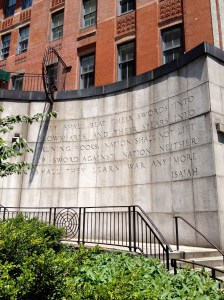
“Woe to the inhabiters of the earth and of the sea! for the devil is come down unto you, having great wrath, because he knoweth that he hath but a short time.” So saith the Good Book. It’s a book the Republican Party has forgotten how to read. Especially the “evangelicals” who’ve betrayed their saintly name. While I’m here in Princeton, a few hours away in the sullied capitol of this once reasonable nation, half a million are on the march. And just as women led the way last January we’re being shown the truth that anyone can lead better then old white men. And the fact that the organizers of these protests are high schoolers, I am inclined to leave the last words to the prophet Isaiah, whom, for any Republicans who might be reading, is in the Bible: “The wolf also shall dwell with the lamb, and the leopard shall lie down with the kid; and the calf and the young lion and the fatling together; and a little child shall lead them.”


Kids These Days

I couldn’t have been an easy kid to raise. As a teen, while other kids were experimenting with drugs and sex, I started an unexpected habit. I can’t remember why or how it happened. I was the son of a professional drunk and a high school dropout. (Step dad worked in a sewage plant, so that likely wasn’t it either.) Somehow I’d discovered classical music. It wasn’t through records we had at home. If the artist didn’t have Cash or Twitty in their name you were probably tuned into the wrong station, buddy. Since this was before the internet it must’ve been something I heard on television. On Saturdays I’d beg to go to the Oil City Public Library where you could borrow LPs. I’d check out five at a time, and listen to them with headphones on at home. The general opinion in my neighborhood was that this was snob music and other people didn’t want to hear it.

One of the pieces I discovered was Tchaikovsky’s 1812 Overture, (officially The Year 1812). This particular recording began with a chorus singing the Russian hymn, in English (hey, I was just learning!). Although I loved the bombastic ending (what boy wouldn’t?) I was haunted by that hymn. I paid no attention to the conductor—I couldn’t tell a Stravinsky from a Stokowski—so I memorized the albums I liked by their cover art. As a teen I had no idea things would ever change and that one day I’d be downloading music instead of carefully, lovingly pulling it out of a colorful sleeve, breathing in the experience.

Russia’s been on a lot of people’s minds lately. I have a great deal of respect for the Russian people. There’s a stolidity and pathos there that is rarely captured in any national music. I longed to hear that recording again. It took the better part of a day searching the internet to find it—I could walk right up to it in the Oil City Public Library four decades ago and put my hand on it. Those days are gone. When I finally located it on YouTube (Eugene Ormandy, Philadelphia Orchestra, in case you’re interested) I couldn’t stop listening. Not only did it take me back to my fractured childhood, it also made me feel a deep connection for a nation that probably looks at my own with great and earned distrust. We all need to learn to look at ourselves from the outside. That hymn! Listen to the words. I could imagine myself being oppressed by people I didn’t know and who had no reason to hate me. Unto our land bring peace. Amen.


Bearing Light

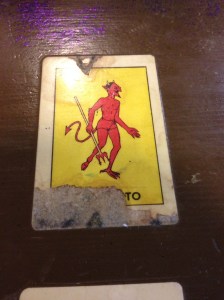
Jeffrey Burton Russell knows a devil of a lot about the Devil. I’ve just finished the third of his five books on the subject, Lucifer: The Devil in the Middle Ages, and I certainly learned a thing or two. As someone who considers himself an historian of religion, being exposed to a concept over several volumes has a way of making me feel humble. The theme of this series, at least so far, is that the Devil is a conceptual way of dealing with evil in the world. In the days of polytheism a single source of evil wasn’t needed, but no matter how you slice it, monotheism implicates God in the fact of evil in the world. The Devil is one way to try to lift some of that burden from the divine shoulders.

Lucifer is an interesting installment because ideas of the diabolical really took off in the Middle Ages. Russell’s previous volume, Satan, became heavily theological and there’s a bit of that here as well. While there’s no doubt some average people in the Dark Ages tried to figure out where Devil came from, the officials sponsored by the church were those whose ideas were written down and preserved. Those ideas, unsurprisingly, were theological and complex. Scholasticism, which began in the Middle Ages, launched what was to become known as systematic theology in the modern era. Among the many topics with which it concerned itself was the Devil, and evil. Ranks of angels, both fallen and un, peopled the atmosphere. Galileo’s perspective would eventually change this cosmology by making it both simpler and more complex at the same time. Lucifer, however, still survives.

One of the stranger developments of the Devil in this time period is as a form of light relief. The idea of plays (which had been around since classical times) also took off in the Medieval Period. In these plays Lucifer and his demons often took on a comical cast. Even when the tone was serious (and what morality play isn’t?) the Devil could be used for laughs. An incredibly rich mythology had been adopted by the church at the time—think Star Wars with more religious characters—that assured the laity that Satan’s doom was sure. Besides, we like to make fun of the things we fear. Think Washington, DC. Now that I’m halfway through Russell’s oeuvre on the subject, I’m curious where his next volume will go. No matter how much you think you might understand evil, as we’re daily finding out, there’s always so much more to learn.


Group Activity

While reading about various religious phenomena—both positive and negative—one of the recurring aspects that forces itself on our attention is contagion. Going back at least to the 450 prophets of Baal on Mount Carmel, the idea of crowd sourcing religious frenzy can be disturbing. It involves groups of people and loss of control. Not only is the frenzy itself frightening, but also the apparent paranormal accoutrements to such enthusiasm. In more specific terms, the revivals of the “Second Great Awakening” and the mass exorcisms described by Michael Cuneo in American Exorcism both boast supernatural elements. I’m not saying there can’t be a scientific explanation, but I am saying what happens in such circumstances has been understood to be supernatural by educated, experienced people. Both demoniacs and new religious converts display superhuman strength and atavistic behaviors that one doesn’t otherwise see in a lifetime. Once they start happening, they spread.

This is one of the draws of charismatic Christianity. Speaking in tongues can be quite contagious, I’m told. According to Cuneo’s carefully anonymized accounts, so can demonic possession with its attendant paranormal activity. Some scientists have explored the idea of consciousness as a “hive mind” phenomenon. Many “minds” brought together can produce something greater than the sum of the parts. We’re used to this in the world of insects, but since humans like to be radically individual we miss the instances where it occurs among our own species. While not always so, such events are often religious in nature. People gathered together in emotionally charged settings, personal experience draws off of that of others, and suddenly a person’s doing something they formerly believed to be “impossible.” God and demons both have explanatory value here.

Despite our tendency to want to destroy each other, humans have great potential when we work together. Our petty fears and jealousies could be contained, disassembled, and repurposed, if only we possessed the will to do so. The desire to stand out in a crowd—not to blend in but to be a unique individual—runs strong in our fractured psyches. We hate being mistaken for somebody else. Religious experiences, much maligned these days, tend to be group experiences. Yes, a mystic may have a personal and highly individualized rapture, but in the presence of others the excitement may be shared. “Mass hysteria” and group hypnosis have sometimes been posited as the culprits behind such events. Those who participate, however, use other terms to describe what has transpired. They may not call it a “hive mind,” and they won’t be alone in rejecting the phrase.


The Power of Literature

Among the uber-wealthy families that America has produced were the Dukes. Most famous for the university that bears the family name, they made their money in tobacco and then electricity. And what a lot of money it was! Although many people can point to North Carolina as the home of Duke University, many don’t realize that they liked to vacation in New Jersey. A large property, regally landscaped, rests just outside the unlikely town of Hillsborough. When the last Duke heir died, the foundation opened the property to the public, taking Green initiatives to heart. It’s good to see money with a conscience once in a while. Since we’re not far from Hillsborough, when cabin fever sets in and there’s actually sunshine on a late winter weekend, Duke Farms is a convenient getaway for a few hours.

Surrounded by a rock wall, the main property once housed luxury that most people will never experience. Ancient sycamores line one avenue that leads to a coach barn far nicer than the houses hoi polloi live in. Although we’ve visited the grounds many times, we haven’t seen all of it by a long stretch. Over the weekend we came across a gravel trail we’d never taken. The main avenues are wide, blacktop, pedestrianized boulevards that lead past aging structures, fountains, ponds, statues, and quaint bridges. The gravel trail meanders back and forth through small hills and glens, and it’s easy to believe you’re in the middle of the woods from time to time. At the top of one of these hills we came to the pet cemetery, amid the leafless trees.

We can all understand the emotional attachment to pets. Even the wealthy feel it. The cemetery was large for non-humans, with stones going back to 1953. Even a pair of camels were buried there. I can’t visit a pet cemetery, however, without thinking of Stephen King. It was a blustery, chilly day. We were alone on this remote trail we’d just discovered, and thoughts of resurrection didn’t seem that far fetched. The rich, after all, can do anything they please. Nevertheless, there was a pathos here. We were being given a glimpse into private lives. The names of other people’s pets, and sometimes their species. The things that had touched the monied class deeply. I’ve buried a few pets in my time, and it is always a solemn activity. One from which not even wealth can protect anyone. And here was another testament to the power of literature. Groping for a way to understand this place, a favorite horror novel seemed just about right.


Hypocrisy, Defined

Things look pretty Stormy in DC. I suspect my Republican background is showing when I say I don’t condemn sex workers. If they’re not exploited and they like what they do, hey, a job’s a job. The evidence, of course is that Trump had an affair with Stormy Daniels when his wife was recovering from the birth of their son. And hush money was paid right before the election. This is public knowledge. What I find interesting are the responses that Republic congressmen have been giving journalists. In a recent story in the Washington Post, various congressional leaders of the GOP were asked if Obama had been caught in such a situation would they have pursued impeachment. “Of course,” they answered. When asked why this didn’t apply to Trump, they simply shrugged. There’s a word for that.

Hypocrisy may seem like an old-fashioned notion these days. Indeed, when I was growing up I frequently heard it from Fundamentalist pulpits. It was considered, along with lying, to be about one of the worst sins possible. Now Fundamentalists are lined up behind Trump (who’s lined up behind Stormy apparently) and saying all of this is just fine. The Lord’s will is being done. Moderate Evangelicals are scrambling to find a new label for themselves, for their vaunted title has been taken by a party that will condone anything as long as rich white men benefit. Cheat on your wife while she recovering from giving birth? That’s the new Fundamentalist way! Congressmen, it seems, don’t want people to look too closely into such things. My, there’ve been a spate of recent retirements lately, haven’t there?

I grew up and grew away from Fundamentalism. Although it seems counterintuitive, this sharped my moral sense considerably. Poll after poll shows that actual morality, according to Fundie standards, is more often lived by liberals than conservatives. Divorce rates are lower, for example, and we tend not to own guns. So, even when the skies over the Potomac are growing stormy, the elected officials of God’s Own Party smirk and say, “Doesn’t the Bible command you ‘Love thy neighbor’?” They take it literally, of course. And it’s just fine that the leader of the free world exploits women. Many of these same people gathered to condemn Bill Clinton for loving his neighbor in the blue dress. Hypocrisy was a bad thing back then. “I did not have sex with that woman,” became a mark of national shame. Now presidents brag of grabbing women by their private parts and the Republican Party claps its hands and says, “Hypocrisy? Never heard of it.” Does it look like another storm to you?


Signs of the Times

America’s phallic affair with guns should give us pause to wonder what the true motivation is. My wife sent me an NPR story on the World Peace and Unification Sanctuary in Newfoundland, Pennsylvania. Congregants gathered carrying AR-15s, saying that the Bible’s rod of iron was really a semi-automatic. Did I say it was a phallic affair? According to the story by Scott Neuman, some of the faithful had substituted the crown of thorns for a crown of bullets. Literally. That man dying on the cross because of government overreach, I suspect, wishes he had his hands free so he could rub his eyes. He’s hanging here dying with the title prince of peace only to have grenade grannies praising his name with high explosives. This is what passes for Christianity these days.

Photo credit: Isabelle Grosjean ZA, Wikipedia

Sensible evangelicals have been in full retreat since November 2016. Stripped of their label by extremists who somehow mistake the lamb of God for Rambo, they no longer have a name of their own. Like worms on the sidewalk in the rain, there’s nowhere left to go. The same is true of rank and file Republicans. They wonder what has become of the (God help us!) party of Nixon. Watergate seems like a mere indiscretion compared to this. I’m sorry, were you waiting for Armageddon? Don’t worry, those who move the hands of the doomsday clock have shifted it closer to midnight than it’s ever been before. You’ll have your end times soon enough.

Among the ironies witnessed by the crucified one from his vantage point high on the cross is that it was his zealous followers who started all this. Religious experts tell us that all world religions depart significantly from the teachings of their founders within one generation. If you’ve read Paul’s letters you know this to be true. I grew up as a Fundamentalist. Even though for my career I specialized in the Hebrew Bible, my upbringing was focused on the red letter words of the other testament. Over and over and over again I read them. Think of others before yourself. Turn the other cheek. Walk the extra mile. Give away everything you own. The ones I don’t recall internalizing were: arm yourself with deadly force. Give your grannie an assault rifle. If someone slaps you on the cheek, blow him away. It is more blessed to destroy than to forgive. We sit beneath a giant clock with a commander in chief with an itchy nuclear button finger. Even a clock can be a crucifix, if you look at it in a certain way.


Testamental Annihilation

I’d be a hypocrite if I didn’t tell you there may be spoilers below. The book to which I alluded last week—the one made into a movie—was Jeff Vandermeer’s Annihilation. I first saw the book in a Green store in Ithaca, New York. I figured it must have a planet-friendly message if it were being sold at such a venue. I’ve finally had time to read it. There may be spoilers, so if you plan to see the movie, be warned.

Set in a kind of edenic dystopia not far from now, the novel gives none of its characters names. The narrator is the biologist of a four-member team sent into Area X—a region in the south from which no expedition has returned. Clearly intended to be part of a series, the novel does leave quite a few things hanging. Among the many unanswered questions is what has happened here. One of the problems with having Bible-radar is that you can’t overlook references to the Good Book. Without going into too much detail, the story has mysterious writing on the wall. That itself is a biblical trope, of course, but when the biologist discovers notebooks from previous expeditions, she considers that the writing is like something from the Old Testament. This description made me pause and ponder. The Hebrew Bible has, in the popular imagination, been cast in the role of a harbinger of doom and gloom. Granted, there are many passages that have earned that reputation, but on the whole it’s a very mixed bag. Still, in popular culture “Old Testament” means things are going wrong.

While not a horror novel, there are elements of horror here. People transforming into plants and animals, sloughing human skin. And resurrection—how New Testament! This made me think that maybe a penchant for horror isn’t such a strange thing for a guy who spent a decade and a half teaching the Hebrew Bible. My motivation for going in that direction had more to do with my interest in origins, but nevertheless, I also grew up watching monster movies. Maybe, unbeknownst to me, I was bringing the two together in this field of study. It’s difficult to tell at the end of book one what the overall message will be. But since I’m discussing the Hebrew Bible maybe I’ll take a stab at prophecy and predict that the second book of the series will be in my future. And I wouldn’t want to be a hypocrite.


Odd One Out

The older I get, the more I realize I’m the one that’s weird. Go ahead and say it, “You’re just now figuring this out?!” This epiphany came to me on a stiff breeze. To understand you have to get the idea of commuting on New Jersey Transit. Although twice in one week my route was blessed with a brand new bus, the general operating procedure is to use the oldest, least reliable buses on my route. It is one of the longest routes the company runs into New York City, which means that it is one of the most expensive. You’d think they’d use their best buses, but then you’d be thinking like me. Breakdowns aren’t as frequent as they had been for a while, but other discomforts are fairly common. Just this past week, for instance the heat was stuck on high. Add about 50 bodies to an enclosed, overheated space, and well, let your imagination go.

Now interstate buses aren’t like the school species. The windows don’t open. There are, however, two escape hatches in the ceiling. When I got on board I noticed immediately that it was a sauna bus. The last time this happened (and yes, this wasn’t a unique situation in my experience) passengers opened the escape hatches to create a breeze. Problem was, it was winter this time. The day was struggling to reach 40 degrees outside. As we hit the highway the wind was blowing full against those in my row and I learned what wind chill really can be. There wasn’t much traffic, so the bus was tooling along at about 65. I could feel my left eye beginning to freeze up. My book pages were flapping wildly in my blue-tipped fingers. The personal nor’easter cut right through my winter coat. In my row we were lined up like eskimos, all bundled up. There were no free seats to which we might move. I couldn’t reach the hatch to close it. Nobody said anything.

Here’s where the weirdness comes in. As I child I was raised being taught that true believers think of others first. Other people may not see it, but I consciously try very hard in subtle ways to make sure others get what they need before me. I’m learning not everyone necessarily thinks that way. If I had a degree in fluid dynamics I might be able to describe airflow on a speeding bus. Instead, let me put it this way: the guy who opened the hatch was sitting in the row in front of it, out of harm’s way. The icy blast didn’t hit him, but it did everyone behind him. Passengers tend to think of themselves first. I’m sure I do, too. Just trying to get home after a trying day of work is, well, trying. It’s just that some folks try not to do things that cause others pneumonia, no matter how warm they feel. But then, I’m the odd one, I know.


Experimental Truth

Only the truly naive suppose that the government doesn’t lie. I just miss the days when they lied for what could be construed as good reasons. Now you can tell if the president’s lying simply by observing if he’s talking. In nostalgia for the days of defensible lies, and also my own youth, I picked up The Philadelphia Experiment by William L. Moore and Charles Berlitz. Before you roll your eyes too much, please bear with me. I was aware of this book when it first came out, but I never read it. My brother did and his interest has stayed with me all these decades until I finally got around to a bit of guilty pleasure reading myself. In case you don’t know the story, it goes like this:

In 1943 the U.S. Navy was experimenting with invisibility. At or near a naval yard around Philadelphia, the U. S. S. Eldridge was subjected to intense electro-magnetic fields that made it vanish. It showed up moments later in Chesapeake Bay, and then reappeared in Philadelphia. The crew aboard the ship went mad, although the experiment had been successful. Now, of course the story was denied, and still is, by the military. Moore and Berlitz track down enough clues in this book to make the event plausible. Nothing can be proven, and according to physics, this kind of thing can’t happen. Reading the account is a spot of fun amid the daily lies spewing from Pennsylvania Avenue.

There is a personal element involved in this story as well. One of the characters (at least one) uses a pseudonym. (Although the event was decades earlier than the book was written, the military has a long memory.) The pseudonym stuck out because it was Reno Franklin. The name was gleaned from a road sign from Oil City, where I went to high school. It gives the mileage to Reno, and then, Franklin (the town where I was born). Seeing my little town in a book that was a bestseller in it’s day was a strange kind of validation. Did the Eldridge really disappear one fine day in 1943? Most of us will never know. In the name of national security the truth, if there is anything actually to hide, has been classified. But that’s where guilty pleasures come in. Books like this, although they can’t be considered unvarnished truth, are enjoyable to read and vanish into a haze of a world where the Nazis ruled on the other side of the Atlantic, not over here.


Sky Mercies

While in a used bookstore recently, I was going over the science titles. I like to read accessible science since I often find it approaches religious ideas in secular terms. Once in a while even the terms of these disparate disciplines coalesce. I spied a volume on the top shelf titled The Mercy of the Sky. The spine showed a purplish cloud-bank, and the very concept set me wondering. We’d just been through a bomb cyclone the day before with wind bellowing through our apartment. Many trees were down and power was out for several people I’d overheard talking that day. I stared at the spine, thinking perhaps this would be a good follow-up to Weathering the Psalms, but as I already had books in my hands, and since I’m not the tallest guy around, it seemed beyond my reach. Of course, after I left I thought more about it.

The previous day’s nor’easter had revived that sense of a storm as divine anger. Strong winds, my wife commented, are generally disturbing. They make it difficult to sleep. It’s hard to feel secure when the heavens are anything but merciful. Although the wind is easily forgotten, it’s among the most easily anthropomorphized of natural phenomena. And it’s ubiquitous. Everything on the surface of the earth is subject to it. Indeed, the atmosphere is larger than the planet itself. Is it any wonder that God has always been conceptualized as in the sky? The quality of the mercy of the sky, we might say, is strained.

Danger comes from the earth below us, the world around us, and the realm above. Like our ancient ancestors staring wonderingly into the sky, it is the last of these that’s most to be feared. The wind can’t been seen, but it can be felt. It cuts us with icy chills, drenches us with dismal rain, even flings us violently about when its anger compresses it into a tight whirl. We can’t control it. Unlike other predators it requires neither sleep to refresh nor light to see. Its rage is blind and it takes no human goodness or evil into account. After a great windstorm, the calm indeed feels like a mercy. Elijah on Mount Sinai stood before a mighty wind, tearing the land apart. It was the still, small voice, however, that captures his imagination. There’s a calm before the storm, but it is the stillness in its wake that most feels like the mercy of the sky.


Belief Matters

What you believe matters. This is shown clearly in the case of exorcism. Brian P. Levack admits to personal reasons for interest in this dark subject. His The Devil Within: Possession and Exorcism in the Christian West is a masterful treatment of a topic that it considers from many angles. As a form of Christian practice it goes all the way back to the beginning—Jesus’ initial fame was as an exorcist of sorts. He didn’t require any ritual or authority to expel demons, but he became a public figure largely because of his ability to do so. Levack’s study focuses mainly on the Middle Ages and the Early Modern period. The latter was the high-water mark of possessions until the resurgent interest of the post-Exorcist twentieth century.

An aspect of exorcism that had raised my curiosity more than once was its Catholic disposition. Many Protestants believe in demons, but only the Roman Church has the grand ritual to drive them out. There are Protestant exorcisms, but they have a different goal—they’re intended to eliminate sin. This leads Levack to a strong contrast between Catholicism and that most extreme of Protestant traditions, Calvinism. Few Calvinists suffered from possession. Those who did were not held blameless, as in Catholicism (if you were being controlled by a demon you could hardly be held responsible for your actions). Calvinists believed only the sinful could be possessed and since their God is Republican you can hardly count on any mercy. In fact, if you were possessed, chances were you would become a witch. And everyone in early modernity knew what the cure for that would be.

We tend to think that the Enlightenment drove such beliefs extinct. In fact, the height of both witch hunts and demonic possession came after the scientific paradigm took hold. Levack makes the point that this is a kind of theater—performance undeniably plays a part in exorcisms. Both science and Calvinism, taken neat, can leave a body feeling cold and in need of some emotion. As the book notes, you could generally find a Catholic priest who’d be glad to drive out your demons. It seems that the great forces of good and evil play themselves out not only in the spiritual realm, but in the varieties of religious experiences in the all-too-political world of the church. The Devil Within is a fascinating book with a plausible thesis written by an author who understands that ideas have consequences that aren’t always easy to expel.


Spoiler Alert

I work in a cubicle. That’s just one word shy of the famed “six word novel” challenges. I’m wondering what qualifier I should add. To understand this dilemma you have to realize a few things. My first professional job (professor) included a three-room office to myself. Also, I am a middle-aged man amid a work-pool of mostly twenty-somethings (everyone else my age has their own office). My cubicle has walls six feet high, so I can’t see, but can hear my just-out-of-college neighbors. Very few people talk to me at work. In fact, I can go an entire week without anyone saying anything to me, right here in the largest city in the country. The office is generally very quiet. You can hear everything. This leads to my concern with a very specific peril regarding work in a cubicle.

Much of the meaning in my life comes from what I read. In addition to all the books I review here on this blog, I have quite a few fiction projects going at any one time. I happen to be reading a book just now that was recently made into a movie. The reason I know it’s been made into a movie? My unseen, 20-something colleagues began talking about it yesterday morning. Complete with spoilers. Now, they couldn’t see the contortions on my face, hidden in my cubicle. The people who sit next to me work in a different department than mine and I have no reason to speak to them—they don’t even know who I am. Should I, like the voice of God, thunder unseen from my cube, “No spoilers!”? Or should I just continue to sit here with my fingers jammed firmly into my ears and hope that when I pull them out I don’t learn anything more about what I haven’t read yet?

I know it’s just me. I don’t read the blurbs on a book before reading the book itself. I don’t read reviews of movies before seeing the film. Guys my age appreciate the craft of story, building up to the reveal, not getting it in Monday morning water-cooler talk. I finally got up and walked away from my desk. There’s nowhere private to go on my floor, so I went to the stairwell and pointlessly climbed to the top floor and back down again. I returned to my desk and they were still talking about it. Not only was it Monday morning in a New York City where nobody had spoken to me in the three hours since I arrived in town, but there wasn’t even a spoiler warning for one of my favorite pastimes. Such are the perils of cubicle life.