Evil Masters

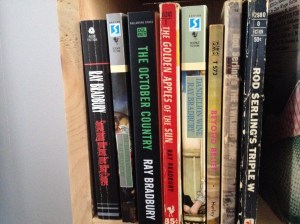
Whoever Modern Mrs. Darcy is, she keeps me honest. This is my third year of doing her reading challenge, and in an effort not to go out and buy all the books I want, I try to select from among my own pre-existing collection tomes I’ve never read. One of the categories this year was a classic you’ve been meaning to read. I spied on my shelf a copy of Jules Verne’s Master of the World that I bought before my high school years but had never actually consumed. I think I was a bit put off by 20,000 Leagues under the Sea. Don’t get me wrong—that’s a great book, but it’s dense and long and very detailed. And I was probably too young when I read it. Master of the World, like 20,000 Leagues, was part of Verne’s magnum opus Voyages extraordinaires, a set of fifty-some novels recounting, well, extraordinary voyages.

What makes Master of the World topical to this blog is the Devil. I’d better explain that. The story surrounds a somewhat naive detective trying to solve the mystery of a great, inaccessible, hollow mountain in North Carolina. While investigating this mountain (prior to the age of heavier-than-air flight) he learns of an automobile that is terrorizing the United States by driving 200 miles per hour. The credulous colonials seriously think that perhaps the Devil is driving this car. While that may be but passing fancy, it’s an image that replays itself throughout the book. Anyone who recklessly drives so fast—and the car can transform into a boat, submarine, and airplane as well—must be diabolical. The Devil’s amusements seem pretty tame, and the driver isn’t supernatural after all, once he’s discovered.

Robur the Conquerer is Master of the World, in his own opinion. At the climax he flies his marvelous machine into a hurricane, proclaiming his mastery like a good mad scientist. The machine, called The Terror, is destroyed and Robur is presumably killed in the storm. When our narrator returns home after several weeks missing (he was kidnapped by Robur and thus learned a bit more about the driver’s madness), his housekeeper has the last word. She declares that although Robur was not the Devil he was worthy of being so. The Devil has become a lot more nasty since Verne’s day, apparently. Why, our own government makes Robur the Conquerer look like an amateur demagogue. Either we’ve become terribly more accepting of everyday evil, or the dark lord has grown even worse over the century. I, for one know which one to believe.


No Whine

Sneaking in a grocery run to Wegmans before church one Sunday awhile back, I was in line behind a distinguished looking gentleman. “I’m sorry,” the clerk told him, “we can’t sell alcohol before 11 a.m.” She set aside an expensive looking bottle of Glenlivet as he nodded solemnly. From behind me a woman called out, “Is that true, I can’t buy my wine?” Like Paul Masson, it seems, in New Jersey they will sell no wine before its time. Many, I suspect, have supposed that blue laws would’ve lapsed by now. What most people probably don’t realize is that this is yet another instance of how the Bible continually impacts our lives. Although the weekend has become enshrined as relief from jobs that most of us find tedious, blue laws were biblically based to keep us in line.

The Puritans did all within their power to enforce their views onto larger society. Sunday was not only “the sabbath,” it was a time for no fun—read Laura Ingalls Wilder for getting a sense of what this was like even on the frontier—and church attendance. Nothing potentially more attractive than church was to be on offer on Sunday morning. Here in over-populated, wonderfully diverse, secular New Jersey, those doing their weekly grocery shopping were learning the Bible has a very long reach indeed. Even if many people don’t realize that the Good Book’s behind it, they must abide by Puritan standards. I suspect many have no idea why blue laws remain in force. The Bible doesn’t loosen its grip easily.

As we pushed our cart past the ends of the other check-out lanes I noticed that several of them had bottles purloined at the point of egress. I suspect that most of the would-be buyers weren’t hurrying home to get ready for church. Instead, they were probably annoyed that they’d have to go out again later to continue their purchases. The Supreme Court has upheld blue laws on the basis of giving time off to those of certain professions that work by the hour. Those of us who don’t punch the clock are, according to the logic of such a decision, given exemption from the law of the land (but not to make immoral Sunday morning purchases. Indeed, in some professions attendance at church is part of the job expectation). It is perhaps bewildering for those raised in different religions. The idea of time off, although it probably wasn’t intended for humanitarian reasons, has also become one of the hidden blessings of the Bible. Without the sabbath, our weekends would also be an opportunity for others to make more money by the usufruct of our precious time. Holding off a few hours to buy alcohol seems like a small price to pay, in comparison. The Bible giveth, and the Bible taketh away.


Nightmares with

One of my greatest phobias is that people will think I’m arrogant. Those who know me realize that I’m highly self-critical, as befits a lapsed Fundamentalist. Self-image isn’t my strong suit. So it is with great trepidation that I celebrate a tiny bit at another book contract. Book number three (still not officially titled) now rests with McFarland Books. Shortly after I signed the contract for the book nameless here forevermore, Lexington and Fortress Academic announced a new series: Horror and Scripture. Maybe you know the feeling too. You’ve just done something you’re proud of and then you’re upstaged. My book deals with the Bible and horror films—what could be more Horror and Scripture than that?

The new Lexington/Fortress series has two editors. One of them is a friend of mine. (Monsters and horror don’t often mix with the Good Book, and those few of us interested in such things receive glances askew.) She asked me if I’d consider contributing to the series. This takes a lot of careful thought on my part. I have a sum total of about an hour a day to write, often less. I can read research-related material on the bus, if I can stay awake, but other than weekends—already quite busy catching up from not being home all week—I have very circumscribed writing time. Nevertheless, I do get up at 3:00 a.m. so that I can have that vital hour to write. Why not focus my efforts onto another book? Perhaps insanely, I submitted a proposal. This week a contract came.

In the short span of one year I’ve gone from being able to claim two books to four, almost like a parable. My untitled book is written and submitted. My contracted book is already half-drafted. After my McFarland book I’d already begun work on a sequel, you see. It lacked form and substance, but the proposal forced me to bring it together. Now, barring any unforeseen disaster, I should be able to submit this new book within a couple of years. By admitting this to you, dear readers, I fear I open myself to accusations of either arrogance, or at least greed. It is, actually, rather like this: my wife often tells me “we must cut the coat to fit the cloth.” I don’t have an academic position, but I’ve learned a lot about the publishing industry over the past decade. Research is a constant in my life, as it is with most credentialed people, no matter their jobs. So it is with fear and trembling that I announce my next book: Nightmares with the Bible. Watch this space for cryptic updates as the details unfold. And please don’t think less of me for it.


Great Communicators

Perhaps you’ve encountered it too. You’re in a major city. You’re in a hurry. The person in front of you is plodding along, staring at the device in his or her hand and you can’t get around him or her. You’re being held up by technology. I just want to get to the Port Authority before my bus leaves. The late Jonathan Z. Smith called cell phones “an absolute abomination.” I wouldn’t go quite that far—my bus pass, after all, is on my phone, and I’ve been saved from embarrassing conversations on the desk phone in my cubicle by being able to walk away and find a quiet corner in a corridor where I can talk freely—but I do see his point. While technology has had many benefits, in real life it can slow you down.

A news source I recently read said that heavy smart phone users are more prone to psychological problems than, say, those people who live raw in the bush of southern Africa. Phones isolate as well as connect. Instead of asking somebody for directions, you can turn to your monotoned electronic friend and find out. What you lose is the nuance of human communication. On my first interview in New York City—I was still living in Wisconsin at the time—I was disoriented. Which way was Fifth Avenue? I asked a stranger on the street and learned something in the process. New Yorkers weren’t the rude people I’d been told to expect. In fact, I quite frequently see strangers asking others for directions. I’ve never seen someone refuse to help in those circumstances. Although I’m in a hurry if someone asks me “which direction is Penn Station?” I’ll stop and try to help. It’s a people thing.

One of the distorting lenses of a large city is the acceleration of time. Many of us depend on public transit in its many forms, and none of it is terribly reliable. Being late through no fault of your own is part of the territory in a city like New York. It’s become harder to stay on time because of smartphones, however. A few years back I saw it with the Pokémon Go release. Groups of phoners wandering around, slowing the flow of foot traffic on sidewalks that are somehow never wide enough. If only I could communicate with people! How does one do that when they’re riveted to the device in their hand? I wouldn’t say they’re an absolute abomination, but I agree with the dear departed Smith that there are hidden costs to being so connected that we can’t talk to one another. I would say more, but I think my phone’s ringing.

Even Thoth can’t help walking and texting.


Weather Psalm

As the northeast coast digs out from yesterday’s nor’easter at least we can thank God that no business days were lost. At least none based on the status of New York City schools. Some NYC businesses base their decision on whether an adult snow day is in effect or not on the decision of whether or not to close the public schools. If kids are expected to make it to school, well, pull your socks up, thrash through the snow, and get some work done. I was fortunate enough to be able to work from home during the event that began like a snoreaster. By the time I would’ve usually been on the bus it wasn’t snowing. Roads were wet, but it seemed like a normal day. So it continued until about 10:00 a.m. Then it really did snow.

I’ve commuted long enough to know that, as grueling as getting up early and trying to get to the city may be, the evening commute is always worse. It may seem hard to believe that there are traffic jams before 7:00 a.m. most days, but around 5:00 p.m. all bets are off. The news vendors were lamenting the fate of those who had to find their way home in a foot of snow, even as it was still coming down swiftly. Nature doesn’t abide by our work schedules. Many companies don’t care if you can’t get out—you chose to work in the city. If it takes you three hours to get home, that’s not a work problem. It’s a personal thing. On personal time. Choose wisely.

All of this makes me reflect on the way we think of work these days. Commuting into the city shouldn’t be a dangerous job like being on an Alaskan fishing boat is. Chances are the actual daily work consists of sitting in a cubicle staring at a screen. Eye strain, carpal-tunnel syndrome, and boredom are the only real dangers here. Unless you’re taking the George Washington Bridge, carpool tunnel is a far more sinister threat. If you make it home in time to come back in tomorrow, then it’s all good. We do this so that we can earn money to spend, mostly online. We haven’t quite got to the point yet where we can wire our physical bodies to the internet so that we can stay at home and work 24/7. But it’s coming, just like the next nor’easter. In the meantime, I have a bus to catch.


Teaching Peace

Teachers, preferably unarmed, are some of my favorite people. While the travesty of a government muddles along in the District of Columbia I think back on my own education and wonder what went wrong. I’m sure you knew kids who hated school; I certainly knew plenty. For whatever reason they didn’t want to be enclosed in a classroom with everyone else, learning stuff for which they could see no practical application. Reading doesn’t appeal to everyone. Memories of advanced math still send shudders down my spine. And what was the point of gym class if it wasn’t to make those of us who liked reading feel bad at that awkward stage of life when you discover your body isn’t as well-made as that of others your age? Education isn’t perfect, but it’s what we now need more than ever.

There’s no way that everyone will learn to enjoy reading. We aren’t cookie-cutter people. Thinking, as my own mathematical experiences demonstrated, can be very hard work. No one person knows everything. That’s why, at least in my day, after you reached sixth grade you started to have teachers who specialized in subjects. What I didn’t realize as a kid is how hard these modern-day saints have it. Pay scales are low. Hours are long for those dedicated to being good teachers—the brevity of the school day beliefs the amount of work done after hours. Increasingly our educators have to hold down a second job to be able to survive. The least we can do is learn in gratitude.

School shootings are so tragic because many of the victims are those who haven’t had a chance at life yet. We elect uneducated presidents and wonder what could possibly go wrong. Education, if done right, becomes a lifelong journey. The day that passes without learning something new is the day I come home and go to bed depressed. More than simple evolving, life is learning. Teachers are those who set us off on that track. The young, it is true, have more flexibility in learning. There are more options open to you before your thinking gets set in its way. I ran into seminarians who, no matter how much you’d offer, had already made up their minds. No education required. Perhaps what we need to teach at the youngest possible age is that school never ends. The formal classroom experience may cease at grade twelve, the baccalaureate, masters, or doctoral degree, but the learning goes on. And it’s a good thing, not some bizarre punishment. For that teachers, unarmed, are those to whom we should be grateful. If only we’d be willing to invest in them.


Exercising Exorcism

About the last people, ironically, that you’ll find researching demons are religion scholars. That’s perhaps a slight exaggeration, but there’s an embarrassment to the topic that serious academics just can’t shake. Nobody wants to be thought truly believing in that stuff. Michael W. Cuneo, who teaches sociology and anthropology at Fordham University, isn’t afraid to look. His American Exorcism: Expelling Demons in the Land of Plenty is a user-friendly, often witty look at what is an amazing phenomenon. Exorcism had pretty much gone extinct by the middle of the twentieth century. Then The Exorcist happened. Cuneo makes no bones about it—Hollywood wrote the script on what was to become a somewhat bustling business through the end of the millennium and beyond. And it wasn’t limited to Catholics. Protestants, mainly of Evangelical stripe, cottoned onto Deliverance ministry and joined the fray against the demonic.

American Exorcism reflects Cuneo’s personal account of attending exorcisms. As he puts it at the end, no fireworks occurred. In fact, he’s skeptical that demons exist and he strongly suspects exorcisms work in the same way that a placebo does. He’s well aware that the majority of people he met and talked with in the making of this book disagree on that point. Cuneo himself attended at least fifty exorcisms, both Catholic and Protestant, and shysters among the exorcists were rare. Most were sincere, devoted people who are helping others in distress for no fees, no glory, and no promotion. They see a need, believe they know the diabolical cause, and take the devil by the horns (metaphorically speaking).

There is a solid mistrust between academics with their studied skepticism and exorcists with their eyewitness accounts that defy belief. Cuneo suggests that even what they think they see may not really be happening in the real world. My question, coming down to the end of the fascinating book, revolves around what exactly this real world is. There can be no doubt that present day concepts of exorcism are largely based on “the movie.” Cuneo seems just a bit reluctant to say what I also declared in my forthcoming book—pop culture, the movies, dictate reality for many people. At least in the realm of religion. Sacred institutions have lost their authority to make ex cathedra pronouncements about what is real and what is not. Few bother to, or can, delve into the tedious work of reading academic studies on the subject. It’s far easier to let the unseen presences behind the camera take over. Isn’t that what possession is about, after all?


One Isaiah

Everyone wants to be remembered. While many don’t wish to be famous, we all hope that someone notices the noteworthy things we’ve done. By any measure Isaiah of Jerusalem seems to have succeeded. Every year around Christmastime his words, set to music, are sung in churches around the world. He gets regular readings among those who attend synagogue and even those who take secular Bible classes have to reckon with him. Isaiah even attracted imitators before his book was finally compiled. According to the Good Book he was a trusted advisor to King Hezekiah. But what do we know of him as a person? Biographical episodes in his book are rare, unlike those of his fellow major-leaguers Jeremiah and Ezekiel. Who was Isaiah?

It’s not Christmastime, so why am I writing about him now anyway? Well, a friend pointed me to a recent archaeological discovery from Jerusalem that is a broken seal impression (technically called a bulla) that may have originally read “Isaiah the prophet.” The news was broken in Biblical Archaeology Review, but it can be read about for free here. Eilat Mazar, the archaeologist publishing the inscription, notes that it reads “Yesha‘yah[u] nvy…” As often happens in archaeology, the end of the inscription is missing. In case your Hebrew’s even rustier than mine Yeshayah sounds a lot like Isaiah—go ahead, sound it out. The word prophet is nvy’. Don’t let that apostrophe fool you; it’s a full-fledged consonant in Hebrew. If that final letter has been reconstructed correctly the seal would read “Isaiah the prophet.”

My friend asked me what I though of this. My initial impression is that it would be odd for anyone to sign themselves with the title “the prophet.” If they did it would require a bit more hubris than I mentally attribute to Isaiah. You see, a prophet was selected, so they believed, by God. Chosen even among the chosen people. It wasn’t a pleasant job—once again, Jeremiah’s jeremiads come to mind. Would someone have signed himself “the prophet”? We don’t have a terrible lot of information from the ancient world about individuals. What we do know is subject to exaggeration and other forms of hyperbole. Did Isaiah, mouthpiece of Yahweh, carry an official seal declaring that the contents were bona fide possessions of a man who saw God sitting on his throne and survived to tell the tale? Or is it a hopeful reading of those who want to demonstrate the Bible is true? It’s a question the reader must decide, for, as always seems to happen, the evidence is broken just at the crucial point.


Morning Thoughts

One of the persistent dangers of being a morning person is the fact that places aren’t open early when you have to be out and about. Since my wife had to work yesterday morning, instead of spending a good part of the weekend alone, I drove her to her location. (The fact that there was a used bookstore nearby had absolutely nothing to do with it, of course.) The bookstore didn’t open until ten. My wife’s meeting started at 7:30. Much of what I have to accomplish on the weekend involves the internet and occupies me well before such late hours. Although I’m anything but trendy, Starbucks is open early and it offers wifi. And it’s ubiquitous. Kind of like churches used to be. As I pulled out of the parking lot where my wife’s meeting was being held, I found a sign saying Starbucks, this-a-way.

It was still early (for the secular) when I arrived. In fact, the banner outside read “Now Open.” This implied that previously it hadn’t been open, so this was virgin Starbucks territory. It was early enough that a table was actually available. I had a lot to get done, and by the time I was finished the place was jammed. In fact, when I first arrived, some of the other new patrons were joking that they would move in now that Starbucks had come to town. Groups sat in small knots for an hour at a time. People borrowed the extra chairs at my table. Countless more came in and walked out with paper mugs steaming in the chill air. I was here to wait opening time for a used bookstore. I was pretty sure I was the only one with that motive.

There are more of us out there, however. While looking for a birthday idea for a writer friend of mine I ran across a writing box online. There were several reviews. Many people lamenting on Amazon the loss of the culture of the bookstore and the hand-written manuscript. They’re the ones who review used bookstores and weep the closing of indies with authentic tears. We’re the displaced. Our society is extinct. I love old books. Touching them takes me into the past. Yes, their words are public domain and can be found online, for free. What’s missing is the thingness of it all. I’m not a materialist, but I’m even less of an electronist. My spellcheck won’t even let me keep that word. Say what you will about the old way of doing things, paper was never so uppity as to refuse the words I intentionally placed upon it. At any time of day or night.


Taking My Marbles

Cheaters, we were told as children, never prosper. It turns out that this chestnut never grew into a tree. Cheaters become Republican congressional leaders instead. What’s bugging me today is gerrymandering. The idea that you can change the rules even as the game’s in play is, well, cheating. We all learned how that felt when we were kids with our marbles, or cards, or pick-up-sticks. Nobody liked to be called a cheater. Now it seems to be the best path to the White House. And the standard-issue Republicans are fine with it. Me, I dream of a country where the people are free and fair. Where the rules that were established centuries before you were born can’t be changed because some lout with a lot of money says he feels the right way about unborn babies. A land where reason is real.

The idea that you can redraw boundaries to consolidate your power is even more insidious than the Electoral College. That’s a game that long ago lost its purpose, but the GOP won’t let it go because it always favors them. Problem is there will never be neutral turf again. Who didn’t have the experience as a kid of playing with someone whose luck had run out and then having them pout, “I’m taking my marbles and going home”? Who hasn’t been on the other end of that scenario? I certainly have. Sometimes it takes years to play out before things start to seem fair again. The point is, most of us grow up and most of us know the rule of law is a good thing.

The rule of law, however, has completely broken down in these Untied States. Any law can be jerry-rigged. All it takes is a mogul with a lot of money and underlings panting for handouts. Plain and simple selfishness. An American classic. There was a time, in living memory, when Watergate would sink a President. Now highly public extra-marital affairs are fine. Bill Clinton was impeached for a, well, I know the rules so I won’t say. Giving secrets to the Russians? A mere trifle. Top government posts for your family? Of course, go ahead. Using high government office to enrich you personally by gerrymandering which countries you’ll exclude from these hallowed shores? What’s wrong with that? Every step of the way the GOP wallows its filthy, cheating face in the dirt. And it wants to change the rules so it can stay this way for all time. Me, well, at least I can still dream, even if I lose all my marbles in this crooked game. It’s the American way.


Jewish Annotated

A project with which I have some small acquaintance is the second edition of the Jewish Annotated New Testament (some of you may be noticing an annotated theme lately). The idea behind it is deceptively simple: most of the writers of the New Testament were Jews. What do modern day Jewish scholars see in the text? This annotated Bible gets adopted into both Christian and Jewish courses, and many seminaries have an interest in learning what the writers might have been thinking as they were composing “the other testament.” So far, so good. I was looking at the Amazon page for the book the other day, specifically for the Kindle edition. As usual, you can’t please everyone, and some of the negative comments had to do with functionality. Then one said simply, “There is no such thing as a Jewish New Testament.”

I’m not so naive that I don’t know what trolls are, but I got to thinking about this comment. It didn’t come from a “certified buyer,” so it could be an opinion piece. The mononymed reviewer might be Jewish, Christian, or neither. From a Jewish perspective s/he might mean: Jews don’t accept the New Testament as scripture, so what else is there to talk about? From a Christian perspective the point might be: this is a Christian document so it doesn’t matter what Jews think about it. Either way there’s a call for some exegesis here. Both perspectives can be argued against. Jews have a very real interest in what Christians say about them. And, like it or not, the first Christians, and even Jesus himself, fell squarely within Judaism.

Christianity has become a religion of privilege. That happens when you’re the biggest religious body in the world. Christians get a bit testy when Islam begins encroaching on its numbers. There’s still some hard feelings about the Muslim expansion of the seventh and eighth centuries, too. Being an imperial religion will do that to you. Thoughtful Christ-followers, however, have begun to look back and wonder how this whole thing got started in the first place. Without Jews there would’ve been no Christians. Nobody’s claiming the New Testament is Jewish scripture. Neither side wants that. It’s simply a recognition that we might have something to learn from each other. And that’s not a bad idea. In fact, if we were willing to listen a bit more than talk, who knows how much true understanding might come to pass? The Jewish Annotated New Testament is one possible place to start.


Russian Along

Living at Nashotah House—if you haven’t been, trust me—makes one curious about Rasputin. While on the faculty there, his name was used as a common slur. When Brian Moynahan’s Rasputin: The Saint Who Sinned came out in 1997 my wife and I bought it and read it together. Two decades on the details had become fuzzy and, having read about Aimee Semple McPherson and her faith healing reminded me of the famous Russian scallawag. For all his personal faults, Rasputin did seem to have genuine healing abilities. He was more shaman than orthodox, to be sure, and Siberia was the home of shamanism as well as Rasputin. For those who don’t know the story, in pre-Revolution Russia Grigory Rasputin rose from a Siberian peasant family to the most trusted advisor to the Empress of Russia, Alexandra Romanov. Her weak-willed husband, Nicholas, also gave credence to the mystic, despite the latter’s well known drunkenness and womanizing.

The fascinating aspect of Moynahan’s treatment is that it brings out the saintly side of this figure who’s grown such a notorious reputation. That’s not to whitewash his extreme lifestyle, but it is to acknowledge that he was far more complex than many critics make him out to be. He seems to have been sincere in his faith, and perhaps a little mentally imbalanced. He was kind to the poor, and charitable. He wasn’t a bigot, a sin quite common in his day. He was a working class mystic who took advantage of being inebriated with power. His influence over Alexandra was so strong that he could appoint Prime Ministers even in the midst of a world war. This is a fascinating personality.

Reading the book at this point in history, however, proved strangely unsettling. Many of us wonder how a rational, fairly educated and prosperous nation could tolerate the buffoons who inhabit Washington, DC. Daily we see insanity—with no exaggeration—on the level of the throes Tsarist Russia, or even of Rome under Caligula. Instead of taking steps to right the course, the Russian, excuse me, I mean Republican, Party does any and everything in its power to keep the illusion of normalcy alive. Even while foreign ministers of his own party tell the European powers to ignore their own president, American Rasputins just can’t survive without their daily power fix. The sad thing about that last sentence is that after writing it I felt as if I were somehow being unfair to Rasputin. And I lived at Nashotah House long enough to know what I’m talking about.


Medical Missionary

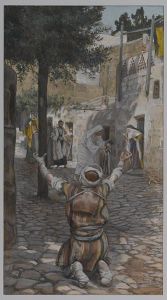
So it was this routine medical screening. The scary-looking machine had an open window that said “Laser aperture: do not stare at beam.” Someone had taped a Yankees emblem on the superstructure as well, and I wondered if that caused anybody additional anxiety. Mortality doesn’t scare me, but medical tests bother me a lot. I was glad to get outside, even if it was cold and icy. There’s quite a few medical facilities in our town, so I had walked to this one. On the way home, watching out for ice on the sidewalk, I passed a bus stop. A woman said “Excuse me, but could you spare a dollar or two?” I’d just come from a medical office, I was wearing sweatpants (which I never do unless I’m jogging) and I had no pockets. “Sorry,” I said, “I just came from the doctor, I don’t have anything on me.”

“I’m a missionary,” she said. Without giving me a chance to get away in the chilly air she began to preach a sermon just for me. It was after morning rush hour and nobody else was around. I wondered when her bus would come. I nodded politely and agreed, and took two steps away. Still she continued. After a few minutes I wondered how long this would go on. I’d already told her I agreed with her. She was insistent that Jesus would give me anything I wanted if I confessed my sins every day. “Money, cars, houses…” I had to wonder why she was taking the bus, then. Besides, all I wanted was to get home, and she was preventing that from happening.

Finally I had to turn and leave her mid-homily. I try never to be rude to religious folks. They’re only doing what they’ve been told to do by others. I did wonder what it was about my appearance that didn’t make her believe me. It had been a while since I’d had a haircut. Was it the beard? The sweatpants? The fact I was wearing a black jacket? Ice was everywhere on the sidewalk. This neighborhood is middle aged—sagging a little, with drainage issues. Mortality doesn’t scare me, but sometimes being accosted by religion when you just want to get indoors on a winter’s day, you think even a begging missionary might understand that. I thought back to the scary machine with its little warning sign. Some people are tempted to stare too long into the light. It can affect the way you see. Indeed, if you let your gaze linger, you might just possibly even go blind.

Image credit: Torsten Henning, Wikimedia Commons


Down the Road

First of all, thank you to my regular readers. I’ve been making daily posts on this blog since July 2009—nearly nine years of illustrated commentary. It seems, however, that I’ve reached my limit. My storage limit, that is, on Word Press. As a result I’m going to be upgrading my account. Now, I’m enough of a Luddite to be uncertain of how this might impact any auto-updates (I flatter myself to think there are some) or links to this blog. I’m planning on continuing Sects and Violence in the Ancient World, but it will be but one page on a website that will offer the opportunity for me to go into more detail about my books. I don’t know how it will look yet, but it shouldn’t be disappearing from cyberspace.

Timing, as they say, is everything. It’s never been my strong suit, however. My current book still has no final title, so it’s a little difficult to promote it properly. Oh, it’s finished, and in the hands of the publishers, and although I can give it its own page, I can’t really title it yet. Perhaps in the height of hubris, the new layout will have pages for my previous two books, A Reassessment of Asherah and Weathering the Psalms. These were both academic titles with very limited sales, but they represent a significant portion of my life and I’d rather not have them completely forgotten. My latest book is for a more popular readership, but I don’t have the platform to interest agents (not for lack of trying), so I’m incorporating it into a website that will allow for its self-serving promotion. So embarrassing. You can imagine how red my face must be.

By the way, there’s another book about half-written. (Actually, there are several, but this one looks like it might actually appear.) A new series has been announced—I’ll write about it once I learn if my proposal has been accepted—that follows my own aesthetic closely. In conversation with the series editors, I’ve put together a proposed book based on my current work. If it happens, a new page will pop up on this future website I’m envisioning. Since I’m no Luddite, I can see possibilities for these pages. The blog will continue with its daily babbling. I’ve been doing this so long I wouldn’t know any other way to start my day. Combined with the hubris of those who spend too much time in supernatural headspace, this could be interesting. If you’re search brings you to what looks like the wrong page, please persist. Sects and Violence will be only a click away.


Panthers and Prophets

Prophetic is a word I seldom use for movies. Prophetic, by the way, doesn’t mean predicting the future. Prophecy was about establishing rightness on the earth. Dress it up with God or dress it down to a girl being shot for wanting an education, prophecy is a necessary ingredient in being human. Black Panther is a prophetic movie. I don’t keep up with comic books, and many regions of the Marvel Universe are unexplored by me. I have no idea if the comics bear the strong message of social justice that this film does, but I left the theater blown away. If those who have the power could only be interested in good rather than personal gain, what a world we could have.

The message of not making race, but humanity, central is one that we have yet to learn. It is so basic, so simple that a child understands it. Somehow world leaders don’t. Any secret advantage is kept in order to make things better for ourselves. To make us feel more secure. To put us in the place of making decisions for others. In Black Panther even the enemy isn’t evil. Humanity is it’s own enemy. We sometimes forget that we have it within our ability to make life fair and equitable. We can share what we have and end jealousy. The Gospel of Adam Smith, however, has supplanted that of Jesus Christ. Just ask the one-percent. The one percent who haven’t most assuredly seen this movie.

I had no idea what to expect when I walked into that theater, but it was nothing short of an epiphany. As it has been from ancient times, one can always tell when they’ve been in the company of a prophet. We’ve come to dislike prophets because they make us uncomfortable. They possess something we can’t have. Integrity. The dignity of the conviction of what anyone can see is rightness. Such things can’t simply be taken, crammed onto a boat, and sold. Prophets bear the burden of speaking the truth. Black Panther may be unlike most prophets in that it is reaching a huge audience. And rightfully so. It is the antidote to the poison that’s surging through the veins of this country for far too long. Even those who will dismiss it simply as another fantasy—it’s a superhero movie—need to see this vision of what a world can be. It’s not very often that a prophetic movie appears, but the days of prophecy, it seems, aren’t over yet.