Justice for All

One of the perks of working for a publisher is author talks. I’ve worked for three publishers now, and the last two have made great efforts to bring authors to their New York offices to present their work, in a kind of dry run, to those in the industry. When an author (whose book will eventually feature on this blog, so I don’t want to provide any spoilers just yet) was to speak on misogyny this week, I quickly signed up for a seat. Perhaps it’s a lack of imagination, but I could never understand how one human being could ever feel superior to another. As a child with no father around, my experience suggested that women were the strong ones. Yet when out in society I saw men always stepping in to take charge. What was wrong here?

I realize that I view life through male lenses. I’m also aware that gender isn’t nearly as definitive as we tend to think it is. Biology fits us with bits and pieces, and some of those constructed somewhat like me assume this gives them the right to dominate others. And they say we’re better than animals. Better at what, I ask? No, this isn’t about chauvinism—a man stepping in to support weaker women. This is about justice, plain and simple. We’re all born human. Humanity is nothing without those of both genders as well as those somewhere between. What should separate humankind from the vicissitudes of nature is the inherent commitment to fairness. Life is harsh and not all receive fair treatment. Do not listen to the narrative coming out of Washington, DC! The father of lies dwells there. And yes, I mean “father.”

We used to take pride in having climbed above the mere animals. We have constructed something that used to be known as democracy. Lawmakers, while fighting against women’s rights in word, nevertheless tacitly supported them at home. Now our government has declared open war on women. Men who have no idea what it is like to be viewed as and treated like an object every single day of their lives are making laws to punish those who do. I feel as though the sky is about to crack open and that blind principle we call justice is about to shout “Enough!” That’s not, however, the way that nature works. It is only when women are treated equally with men that we’ll ever be able to call ourselves civilized. Or even human. Until that day we’ll hunker down in our caves and await lawmakers who have any inkling at all of what fairness, what justice, even means.


Hiding Out

It’s seen better days. The spine is coming unglued and the pages are brittle, fracturing into tan snowflakes as I turn the pages. Still, this unusual little book is crowded with memories. I recall the used book store where I bought it—the Boston Book Annex, now sadly defunct. Unlike any other paperback I’d purchased, this one has gray-dyed page edges, adding an appropriate October gloom to the reading. Friedrich Duerrenmatt may not be properly among the existentialist novels, but that’s where he lives on my bookshelf. I picked up The Quarry three decades ago when “Der Besuch der alten Dame” was still relatively fresh in my mind. If I were a younger man I might’ve tried to find an edition in German, but the internet didn’t exist in those days and after a few years of no use, my Deutsch was dusty. It had been my gateway language.

As I read The Quarry I wondered why I had waited so long to do so. The story is brief but intense. And like novels of the period, it is philosophical and theological. (Like many translations it is sold under different titles; this one is also known as Suspicion, but The Quarry captures the duality nicely.) Hans Bärlach, a Swiss police commissioner, is on the trail of a Nazi war criminal. Suffering from cancer, Bärlach is bed-ridden but his quarry is a doctor and he finds a plausible excuse to become his patient. To help him set the trap, he enlists the aid of Gulliver, a Jewish concentration camp survivor. Their dialogue is what makes this brief story so theologically pregnant. Gulliver calls Bärlach “Christian” and reflects on how that feels to a Jew who was intended to be exterminated. I won’t spoil the ending here, but when Bärlach meets his quarry and realizes that he is also the quarry, the conversation once again turns to religion.

There’s an honesty to such novels as this. Writers were not yet afraid to invoke philosophical dialogue. A friend at the time I purchased the book once told me “nobody writes like that anymore.” Since his father-in-law was a novelist, I supposed he was right. I should have instead relied on my memories from high school German. We read “Der Besuch der alten Dame” and even went to see a stage adaption at the local community college. I’d shortly discover the existentialists. Their views on the absurdity of life mingled so readily with a theology becoming broken, tired, and top-heavy. Those ideas I’d met in class such as, if memory serves, Ilse Aichinger’s “Wo Ich Wohne,” became a part of my young psyche and, not surprisingly, many years later I’m finding myself their quarry.


Trained Witnesses

The problem with lying is that it generally doesn’t hold up. Eventually people will figure out that a falsehood is exactly that and the liar will be scorned. In other words, truth is determined by witnesses. This is tested and confirmed every day in our legal system. The witness is invaluable (except in the hands of lawyers). Since no one person can see everything, we rely on others to help us fill in the blanks. Think of it; when you see something unusual don’t you ask whoever’s with you “did you see that?” We witness the world around us, and unless we’re untruthful that observation becomes part of the collective narrative of what the world is like.

A story from IFL Science! sent by a friend describes “Ancient Legends And Myths That Were Later Proven True By Science.” Apparently this is part of an annual series. What the article lays out are recorded myths later confirmed by science. Scientists are trained witnesses. Taught to silo information, they separate belief (so they say) and eschew non-natural causation. They peer into the mirror each morning with Occam’s razor firmly in hand. Then everybody seems to be surprised when non-scientists have actually observed something correctly. This is the ancient bickering between religion and science—you can’t have it both ways, the reasoning goes. This is a zero-sum game. The winner takes it all. Reality, we observe, is seldom so simple. Articles like this one express surprise that non-scientists can get it right once in a while. The fact is, we’re all witnesses to what happens on this planet. Some of us are just taken more seriously than others.

Don’t get me wrong—I’m not equating religion and science. Nor am I suggesting that all people are equally good observers. It’s just that sometimes things happen when there’s no scientist in the room. Or if there is there’s no time to wire everything up appropriately. The events in the IFL Science! piece are all like this. Observed by people before science was invented—some of them before civilization was invented—events were called myths until scientists came round with their notebooks and validated the long-departed witnesses. The problem with occasional phenomena is that they don’t come on cue. The universe isn’t here to please us or satisfy our curiosity. It’s just that sometimes we see things that don’t match up with the textbook. Whether you call an exorcist or a scientist depends entirely on your point of view.


Infinite but Expanding

What could be more humbling than living in an infinite but expanding universe? Since the days of Copernicus, Brahe, Kepler, Galileo, and Newton we’ve known that the apparent reality of both our own lives and that portrayed in Holy Writ is inaccurate. The earth doesn’t hold still, and the sun doesn’t rise or set. The universe isn’t a layer-cake with Heaven above and Hell beneath. Instead it’s mind-numbingly massive. The only appropriate response, it would seem, would be silent awe. Marcelo Gleiser, whose work I’ve mentioned before, is a rare scientist. Rather than continually slapping the rationalist card on the table and declaring science the trump suit, he brings an element of humility to his writing. So much so that he’s willing, almost eager, to engage religion. Not in debate, but in conversation.

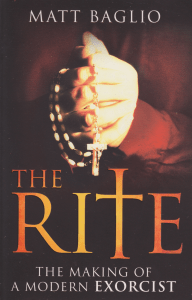
The Prophet and the Astronomer is a wide-ranging book that is tied together around the theme of the end of the world. A few weeks back we had yet another brush with a biblical literalist declaring the end of all things. Gleiser, although his book was published over a decade ago, was called in to comment in various places. This book opens by discussing ancient ideas of the end of the world. These are necessarily religious ideas. We don’t fully understand ancient concepts, but enough remains for us to see that apocalypses have their origins in Zoroastrian thought. Judaism encountered such thinking and the book of Daniel ran with it. Early Christians also had the world’s end on their minds, and the book of Revelation developed into a full-blown apocalypse. The world, or at least the western hemisphere, has never been the same since. Centuries of living under the threat of a cataclysm that could come at any second surely takes its toll.

Gleiser then shifts to the real harbingers of potential apocalypses. Comets and asteroids still exist and could theoretically deliver what the Bible implies might happen—a fiery end to the planet. This is sobering stuff. But the book doesn’t stop there. Bidding adieu to the dinosaurs, The Prophet and the Astronomer sweeps us into this great, expanding universe and how it may end, scientifically. Black holes and the heat death of the universe can be truly terrify. What is remarkable about the book, however, is that Gleiser openly acknowledges that science can’t give the comfort and meaning that religion can. Instead of saying, “be tough, face facts” he suggests that scientists might consider a narrative that adds value to a cold, dark universe. That’s not to say some of the story isn’t technical and some of the concepts aren’t difficult to grasp, but it is to suggest that science and religion should sit down and talk sometime. Hopefully before the end of the world.


Milkweed and Honey

I’ve never thought of bugs as an ethical concern. Well, not directly anyway. I had some truly frightening encounters with insects and arachnids as a child, so I tended to avoid bugs when I could. At times, I hesitate to admit, I took advantage of my size and smooched them. I did, however, mature out of that. Many years ago I stopped killing bugs that got inside, choosing instead to favor capture and release. I’d trap them in one of a variety of empty peanut-butter jars we kept around the house expressly for that purpose. The imprisoned intruder is then escorted outside and released. It seemed the only fair way to handle the situation—I don’t believe in exploiting size, and hating things with too many legs is prejudicial. Then I heard that insects are dying out.

Public domain, from Wikimedia Commons

Instead of bringing glee, this instilled a kind of panic. According to a story in the Washington Post, scientists have noted a 75% drop in bug biomass over the past several years. Stop and think about that. Insects contribute so much to our lives that we barely pay them any mind. Everything from pollination to breaking down decomposing organic matter, bugs do it. We need our insects. As with most things these days, it seems that we humans are the likely culprits. We destroy habitat, we spread pesticides everywhere, we try to take all kinds of land and make it in our own image. And we’ve sacrificed our insects along the way. As the article states—driving around country lanes on a summer night doesn’t bring up the windshield splatter that it used to. I stopped to think about that. It seems to be true.

The tiny members of the animal kingdom do a tremendous amount of work. I know they’re not doing it for us, but the things they do we don’t have to—and oftentimes can’t—do. All fruits and vegetables are pollinated by insects. Honey has been the main place where some of this shortage has been felt most directly. Bees have been disappearing. So have monarch butterflies. The fact is, we can’t live in a world without bugs. This does make it an ethical issue. If we’re going to claim dominion over all things we have no right to overlook the smallest creatures. Sure, they can, well, bug you. They fly in your face or bite you while you’re sleeping. They’re only doing what they evolved to do. I don’t mean to bug you about it, but we need to look after the minuscule and vulnerable among us.


How to Talk to an Editor

There are right ways and wrong ways to get your book published. When approaching an editor, there are a few things to keep in mind. For one thing, we’re human. Yes, I know that I have something you want. The usual career track for an academic is Brown, Harvard, dissertation published by a certain academic press with which I’m familiar. I get that. The internet, however, has made publishing into something different than what it used to be. First of all, you can self-publish. Sorting through all the self-proclaimed experts can be a full-time job when you’re trying to find the latest authoritative treatment of a subject. Also, the internet has made research into publishers much easier than it used to be. My first book, back in the day, was simply sent off to a European publisher that specialized in academic monographs in my subject area and then I moved on. Today authors see flashy first books online and want just that. You can have it all, they’re told.

My LinkedIn profile took a definite boost once I became an editor. Now I often think it would be great if someone asking to connect actually knew me. But I digress. One way not to get your book published is to state right on your LinkedIn profile—or other social media—that you have a great book and you’re letting all publishers know. You then invite them to connect on LinkedIn and your book announcement, like a peacock’s tail, is supposed to attract the hungry editor. In reality what attracts an editor is professionalism. Research publishers, find out what they actually publish. That’s pretty easy these days; there’s more than funny videos on the internet. Even browsing titles similar to your own on Amazon can help. Pay attention to the publishers of the books you’re using for your research. If a publisher has done several books in your area they are more likely to be interested in your proposal than a publisher who’s never ventured into those waters.

It may be easy to think of us editors as sitting bored in our lonely cubicles, awaiting the next great thing. The fact is we receive plenty of submissions and we have to sort through them. Treat the subject professionally. Many of us hold doctorates and are keenly aware of hyperbole when we see it. You don’t need to tell the editor your book is ground-breaking. They will make that decision based on the evidence before them. And trust your editor when it comes to things like how a book should be titled or placed or marketed. Publishers—some of which have been around for centuries—daily face the harsh realities of producing books in an era of YouTube and online television. We know it’s difficult out there. Many of us want to help. Some of us write books and have to go through the same travails as other authors in finding publishers of our own. Do your research on publishers. When an editor offers free advice, take it. A little bit of extra work by an author goes a long way in helping a book proposal succeed.


Uncomfortable Truth

Ugly. That’s not a word I use lightly. The phenomenon of racism is ugly. More than that, it’s insidious. I recently attended a community course on racism sponsored by the Central Jersey Community Coalition. Since our government won’t condemn racism our communities must. This five-hour course was an eye-opener for me. I had known that race was a social construct with no basis in biology or any kind of science. What I hadn’t realized is that race was invented as a means of maintaining “white” power. And it was done so deliberately. The course leaders outlined the history of the modern concept of race and showed how it is primarily an American phenomenon (not exclusively, but it was intentionally orchestrated here). The idea was to keep property in the hands of wealthy whites.

During the discussion many topics came to mind. The primary two, for me, were capitalism and the Bible. These strange bedfellows are far too comfortable with one another. Both can be made to participate in the racism narrative. Capitalism appeals to the basest and most vulgar aspects of being human. Greed and selfishness. Wanting more for me and less for you. As one participant put it, it’s a zero-sum game. Your loss is my gain. We support this system every time we buy into the myth that life is about consuming. Buying more. Contributing to the economy. That which is lost is mere humanity. This is the narrative our government has adopted. The election of one of the uber-wealthy has demonstrated that with a nuclear missile shot heard round the world.

And what of the Bible? As the story of the flood unfolds in the book of Genesis, Noah develops a drinking problem. Naked in his tent, his shame is seen by his son Ham. Hungover the next morning, the only righteous man alive curses his son’s progeny. Then after the tower of Babel story, those cursed races, in biblical geography, end up in Africa. Christian preachers long used this myth as the justification of slavery. Races, after all, were decreed by God at that very tower. The tower shows us for who we truly are. Human hubris led to divine folly. And now we have a nation of liberty built on the basic premise of inequality. Racism is beyond ugly. It’s evil. The Bible may be complicit, but we need to take over the narrative. Race does not exist. Scientifically there is no such thing. Although race doesn’t exist, racism most assuredly does. Like all evils we must bring it to the light to make it disappear.


Colleagues

The death of a colleague is a shocking grief. Although my teaching career was cut short at Nashotah House, the faculty there was always small, and often close-knit in a way that an insular school promotes. I had been teaching there for about eight years when Daniel Westberg was hired to teach ethics and moral theology. Dan was kind, gentle, and non-political. At first he was part-time, but eventually he became a regular member of the faculty at some personal expense. We came to know him and appreciate his wisdom and patience. Dan was a priest and had earned his doctorate at Oxford University. Just over a decade my elder (the faculty from which I left was generally at his age; I was the youngster), Dan kept in good physical shape, as befits a truly spiritual person.

Nashotah House takes its name from the lake by which it was built. Colleagues sometimes joked about the fact that the seminary was wooded, lake-front property and implied that recreation time belied research time. It was, however, a place of intense study for the faculty. It did also offer the opportunity to experience nature. Dan drowned in a boating accident on Upper Nashotah Lake this past week. The image of that lake is etched forever in my mind. The night before I learned of my colleague’s death I was reflecting how I stood on the shore of that very lake late one night to photograph comet Hale-Bopp burning in the western sky. I had been reading about comets and that night by the lake stands out in my mind as a numinous moment. The lake, it seemed, had always been there.

After I left Nashotah House I let my colleagues fall into the safe mental compartments of memories. A few of my students kept in touch, but in general I heard from my colleagues only very rarely. Some may assume I spend more time on Facebook than I do. There are painful memories associated with the seminary. Now one more painful memory is added to the rest. I ate with Dan and his wife. Talked with him. Attended chapel with him. We had that distance that always separates clergy from laity, but I considered him a man that could be trusted. A priest with integrity. We went through quite a lot together in that small community on the lake. The death of a colleague comes with a guilt for not having kept in touch. A sadness for an opportunity missed. A life of kindness extinguished is a shocking grief.


Amityville

Surely one of the most controversial haunting stories of my own lifetime was that which came to be known as The Amityville Horror. After the tragic deaths of the DeFeo family in 1974, the next occupants of the fatal house, the Lutz family, claimed to have experienced 28 days of terror before moving out in the middle of winter and taking no belongings with them. Their story, written by Jay Anson, became a sensational bestseller. Published just four years after the unexpected cinematic success of The Exorcist, a movie was quickly signed and it was all the talk of my high school before I was quite at the stage of watching real horror films. By the time I got around to seeing the DVD, the tropes were so well known that it wasn’t really that scary. I realized that I had never read the book.

Whether you find Anson’s account scary or not probably depends on your level of belief in demons. Although he concludes his book with the suggestion that a combination of ghosts and a demon plagued the Lutzes and their priest, the focus of the narrative is clearly on the demonic. Fr. Mancuso suffers because the demon wants to keep him out of the house. The multiplication of flies, the constant waking up just after 3:00 a.m., and the smell of excrement all point to demonic activity. The book does have its share of historical inaccuracies and embellishments. It has been declared a complete hoax by some while others claim that at least some of what was described in the book happened to the blended family that called it home for less than a month. If you don’t accept demons, there’s little here to frighten you beyond a couple of benign ghosts.

As with any story claiming supernatural activity, we’ll never really know what happened. The Amityville Horror is often classified as a novel now. Our minds are conditioned to reject anything so terribly out of the ordinary that it is difficult to accept what you’re reading. The DeFeo family was undoubtedly murdered in the house by one of their own. The Lutz family did buy and then abandon the house in fairly short order for such an expensive purchase. There was a priest involved. The question marks hover about the supernatural elements, as they generally do. These are the ghosts and demons of the rational world which we inhabit. We safely confine them to fiction. Then we sleep at night with the lights left on.


The Deity Electric

The title set me back. “Deus ex machina: former Google engineer is developing an AI god.” The article in The Guardian is surprising in several ways. Firstly, technocrats tend to suggest that since there is no deity, worship of said non-entity is a waste of precious time. Is this, then, an acknowledgement that those of us who’ve spent our lives on religion may have had at least an inkling of the truth after all? Scientific studies have repeatedly shown that religion is an inherent, and perhaps unavoidable, aspect of being human. Whether you call it inspiration or superstition, we think in religious terms. It’s entirely natural. Perhaps it’s evolved behavior. It’s anything but absent.

Another aspect of the article that generates wonder is the idea that we can create God. Yes, analysts have long claimed that we humans made God in our own image. Traditionally, however, the very concept of God was based on the idea that there was something non-human about the deity. Artificial Intelligence, however, makes the hubristic assertion that human intelligence knows enough to create a god. We don’t even know enough to elect a sane person as president. Looking at the wider world—let alone the universe—there is so much we don’t know. Our five senses are limited. There are realities which we have no way to measure. Is is perhaps not dangerous to make a divinity when our own way of looking at the universe is so terribly limited? What if I don’t like the god you build? At least with the old fashioned one we can shrug our shoulders and sigh, “that’s just the God there is.”

Any fulfilled future humanist will need to find an outlet for this need to worship. Can we truly respect a deity whose transistors we’ve manufactured? This Godhead will be, at the end of the day, only 0s and 1s. And what’s more, we will know that. Traditional religions have given us gods from the outside. Some of them are flawed, some are perfect, but they all have this in common—we didn’t make them. The universe imposed them upon us. Throughout history people have attempted, in various ways, to build their own gods. It generally doesn’t end well. It’d be like designing your own parents. They made you what you are and what would you be if you could somehow reverse engineer them into more perfect versions of themselves? Can we invent gods? Oh yes. We do it all the time. But when we set about making one that our disembodied, downloaded consciousness can worship we might want to consider the history of such attempts.


Scared Space

Ghosts appear whether they exist or not. People have seen them, we know, since as early as written records permit us to know. I first ran into Colin Dickey’s name in a review of the new Ghostbusters movie. The bio made mention of his book, Ghostland: An American History in Haunted Places. Then it was a matter of waiting until autumn to read it. It’s a book that will long stay with me. Dickey’s not out to prove or disprove ghosts—they are simply there (and sometimes not). Ghosts, however, teach us quite a lot about the living. What we value. What we fear. What we disdain. Some of the ghost stories in this book are famous and familiar, others obscure and pedestrian. What they all have in common is a sense of place.

This book is primarily about place. Ghosts seem to be generated by the fact that people have lived here before us. Focusing on the United States, Dickey points out that land stolen from others has inhabitants already. On top of Native American sites, we now have a few hundred years of European and African and Asian building. Lives lived on top of other lives. And although we can’t say for sure what ghosts are, they do seem to be associated with buildings, or at least places. Organized in a kind of concentric structure, the book describes ghosts of haunted houses, then haunted businesses and public buildings, including haunted outdoor spaces. And finally haunted cities. These hauntings are residue of our own making. We build, we inhabit, we die. Whether ghosts are just memories or uncanny feelings, they are ghosts nevertheless.

Combining a couple of my favorite ideas—ghosts and the sense of space—Ghostland is a rare blend of history and folklore. The architecture of our constructions functions like tombs for our imagination. We are spiritual beings, whether religious or not. Even if we’re in denial of that spirituality, we sense that somehow life doesn’t simply end. We’ve left a mark, a scratch, a dent. As long as those who’ve known us live, we continue on in their minds and lives. And some, it seems, remain beyond even that to be seen by strangers centuries later, maintaining the sacredness of space once familiar while living. Ghost stories are human stories, and Dickey is a sure guide along the way. He doesn’t tell you what to believe, but he tells you something you already may know but not realize. No matter whether they’re ever proven, or whether they even really exist, as long as there are human beings there will also be ghosts.


Contrary Living

“Where, o where, are you tonight?” If your mind has supplied the tune and pitchfork, you know just what I’m talking about. Or perhaps you too remember this old chestnut: “Gloom, despair, and agony on me…” Those who know me often think I’m just another middle-class professor-wannabe like all the others. The truth of the matter is that I grew up culturally backward, living in a place that looked up to hillbillies as our sophisticated superiors. I’m no classist. When I say blue collar I may be exaggerating the shade of gray working-class outerwear actually represents. The myth when I was young was that getting an education meant you’d improve your lot in life. Yet here I am with a car in the garage that won’t start and a president who courts my kind for reelection when he should be thinking about trying to govern.

Now that we’ve got a Beverley Hillbilly White House, I think we ought to bring Hee Haw back. For those who might secretly doubt my redneck pedigree, I was raised on a steady diet of the country-western music and comedy variety show and WWF Wrestling. And there was, at least in the former, some wisdom to be had. Reading the headlines I see that what the Democrats need is somebody that people like. Celebrities are the political future. We’ve seen enough Ronald Reagans, Sonny Bonos, Jesse Venturas, and Arnold Schwarzeneggers to tell us that. Ironically, many entertainers are Democrats. The problem is our party likes intellectuals to run the country. It’s not a bad idea, really it isn’t. The electoral college has become the Nielsen ratings board.

No matter how many times I watched the “Where, o where, are you tonight” sketch, I always turned my attention to the TV when it came on. You never knew who the second singer would be, or how the verse might change for the week. And the down and outs on the dilapidated front porch with their moonshine always sang of “deep dark depression, excessive misery.” What I didn’t know then is that Hee Haw was ahead of its time. Of course, back then the rural south tended to vote Democrat. Why, even the opening title card had a donkey on it. Perhaps I’m stretching for a little too much sophistication here. I wouldn’t know, because I grew up with back-woods sensibilities. I just wish that since Jed is in the White House we might have a little comedy once in a while to lighten things up on the way to World War III.


Which Window?

October slipped in this year, and now I find myself unexpectedly in the season of ghosts, monsters, and witches. Given the number of posts on this blog about horror movies, it stands to reason that these are a few of my favorite things. The nights are longer now and since I work in a cubicle all year round, I miss the daylight from 8 to 4 on most days. Judging by the billboards along highway 22, others have noticed that Halloween’s approaching as well. One of the odd things about being on the internet myself is that I don’t spend much time web browsing. Who has time? But when a friend sent me a story on witch windows, I had to take a look.

I’ve only been to Vermont twice. Of all the New England states, it, along with Rhode Island, are kind of out of the way for the areas I tend to visit. I’ve enjoyed my time in Vermont (and Rhode Island), but there just hasn’t been much of it. The article “Witch Windows Are Still A Thing And Here’s Why They Actually Exist” by R. J. Wilson points out an architectural feature I didn’t notice during my brief Vermont visits. Confined to the Green Mountain State, for the most part, are slanted windows in line with the slope of the roof. When I saw the photos in the article my first thought was that they were for admitting more light. Vermont is a northern state and already in September days are getting a little lean on light. These windows, however, are commonly called “witch windows.” Nobody really knows why they’re called that. As the Urbo article points out, nobody really believed that witches couldn’t enter through crooked windows.

People are quick to posit supernatural explanations for mundane things. It’s one of the more charming things about the witching season. We need not believe the explanations for them to convey some kind of meaning. Ghosts, monsters, and witches survive because they provide such meaning for us. They symbolize the things against which we have to struggle. Looking for light as the nights lengthen is a very human thing to do. We often house our monsters in the dark. There is utility in taking them out in the daytime to give them a closer look. Now that October’s here, of course, there’s less daylight in which we might easily see. If I were in Vermont I think I’d want a witch window too.


Haunting Toyland

Although it hasn’t always been this way, one of the most characteristic aspects of the modern horror film is the sequel. Some franchises spin into countless sequels and remakes, until their iconic anti-heroes become household names. The Conjuring diegesis participates in this somewhat, but instead of having a repeat fiend, it’s a theme that comes up time and again, tied together by the work of Ed and Lorraine Warren. I’ve written about The Conjuring before, as well as The Conjuring 2. Prior to the sequel there was a prequel of sorts—more properly a spinoff—Annabelle. Not attaining the critical regard as its originator, Annabelle nonetheless did quite well at the box office, as horror movies often do. The idea behind the movie was to give some backstory to the doll that appeared in The Conjuring.

According to the Warrens, there really is such a haunted doll. Technically it’s not haunted. They call it a conduit through which a demon seeks to entrap a human soul. This past summer a prequel to the prequel, Annabelle: Creation, received higher critical marks than its initial installment. All of this is to say that I had to see the original Annabelle in order to try to make sense of this whole series. Despite its failings, the movie once again shows the interlaced nature of horror and religion. It opens in a church and the priest, Fr. Perez, makes several appearances in the story as the Form couple struggles with the demon inside the doll. Pregnant and vulnerable, Mia Form is traumatized when two cult members invade and then die in her home. Annabelle Higgins, one the intruders, dies holding the doll, bleeding into it. She and her accomplice are satanists, trying to raise a demon for nefarious purposes. (I suppose those are the only kinds of purposes to raise a demon, actually.)

The plot takes various twists and turns, never veering far from the main conceit that the demon wants Mia’s soul. I won’t give any spoilers in case any readers are even further behind in their movie viewing than me. Suffice it to say, this is one of the most thoroughly religious horror films I’ve seen. The Conjuring 2 will pick up the story again with the Warrens and a demon disguised as a nun (and a sequel to both The Conjuring universe and the nun are in the works). Critics are certain religion is dying. If popular culture is any measure, that conclusion is far from certain. Sometimes it’s a bit preachy, but it’s there in horror. Even a possessed doll knows that.


Novelty Religion

Religion is dead. So they say. They have been wrong before. One of the great things the web has given us is book fan sites. There are a number of them, and my wife frequently sends me stories from BookRiot. Often they are lists, and the most recent one is Teresa Preston’s “100 Must-Read Novels about Religion.” As I scanned through the tons of tomes to see which I’d read, it struck me once again just how many novels touch on—at the very least—religion. Many are based on it. That’s because religion is an inherently fascinating phenomenon. We don’t really understand it, and even the staunchest of atheists believe something, no matter how secular. Novelists are those who, successfully finding a publisher, express their views of living on this planet in terms of fiction. It’s often factual fiction.

One of the best bits of advice I can give to academics who want to write for a wider readership is this: read fiction. There’s been a time-honored stigma, of course, outside literary studies, of academics reading fiction. Once, at a conference, I was awaiting an author meeting. It was a small conference so I had taken a book to read between appointments. When my author came up, he asked what I was reading. (I’d cautiously removed the book jacket before taking my novel along, not wanting this topic to come up.) “Just some fiction,” I explained. His eyebrows shot up and he questioned why an academic should be reading fiction at all. I have known academics successful in the fiction market, but they’ve had to use a pseudonym because their real name might discredit their scholarship. We are a divided, perhaps schizophrenic, society.

Not all academic novels, of course, are cases involving religion. Still, it’s often there. I recently finished Annie Proulx’s The Shipping News and Neil Gaiman’s The Ocean at the End of the Lane. Both involved religious themes at various points. This is so much the case that unless it’s really obvious or unusual I don’t always discuss such tropes on this blog. (Although I do register the books I read on Goodreads, yet another excellent book fan site.) If they want to appeal to the deepest of human needs, novels must address religion from time to time. Paying respect to the dead is, after all, a very human thing to do. And should it prove true that rumors of its demise have been greatly exaggerated, we shouldn’t be surprised. Like they say, reading is fundamental.