Before and After

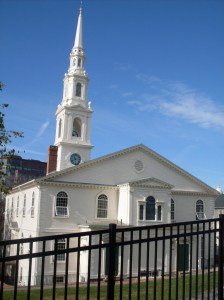
Fresh from seminary with a head full of historical-critical theory competing against my immortal soul, I was lost in the Church of the Holy Sepulcher. I’d learned enough in class and in my own reading to know that the association of Jesus’ burial here only dates back to the fourth century. And also that the identification was made by a politician—Helena was the mother of Constantine—and not a archaeologist, or even a theologian (God help us!). The location was, in other words, hearsay. Three hundred years is a long time to keep track of where something happened. I sit on a bus trundling through Weehawken every day and ponder that we don’t really know where Alexander Hamilton was shot. Such are the ravages of time. I was young and, presciently didn’t know if I’d ever return to Israel, so I wanted to make sure at the time. It was holy confusion. Finally an elderly Coptic monk beaconed me into his edicule to touch the stone. He gave me a cheap rosary and asked for a donation.

churchoftheholysepulcher1885

The scene returned to me when a friend sent me a story about the “discovery” of the actual chamber behind the build-up. The report by Fiona MacDonald in Science Alert briefly tells the background to the location and describes the hurried excavation. Still, we have no idea if, as Indiana Jones might say, “They’re digging in the wrong place.” Tradition has nevertheless hallowed the spot. For seventeen-hundred years some people have suggested this is where it all happened, and where many of the liturgical churches agree. Some Protestant groups, attuned to the Bible a bit more than tradition, have suggested The Garden Tomb is the correct location. The years ago when an academic future seemed in store, I stopped by there too, just in case. There were no crowds.

An enormous amount of effort was poured into building and maintaining the Church of the Holy Sepulcher. Crowded with tourists and various orders of clergy, I wondered how anyone might find such an experience spiritual. Territories are marked out between the various denominations seeking legitimacy in stone. Who wouldn’t want to own the spot where it actually happened? Wouldn’t that be the ultimate truth claim? So more money is being spent. More digging is taking place. Science, some believe, might come to the rescue of religion. From my experience, brief though it was, trying to make sense of the Holy Sepulcher, I have my doubts. But what do I know? I’m not even sure if Copts use rosaries.


Rule Book

gamespeopleplayMirrors can be such deceptive things. In my head I’m a much younger man than the one I see staring at me. And I have to remind myself that other people see what the mirror sees, and not what I really am. Things age. A friend who aged so much that she’s no longer alive recommended to me years ago Games People Play, by Eric Berne. Of course I’d heard of it before—I wasn’t born yesterday. I do enjoy reading psychological books. Psychology like having a window in someone’s forehead. If you could really master it you’d understand so much of what seems a mystery to people like me. But it is an old book. When Berne casually cites the year he was writing it as the year I was born, I began to suspect that some of the data might be outdated. The guy in the mirror certainly seems to be.

We still play games, though. The hope Berne expresses in the last chapter is that we might get beyond this endless game playing to true awareness, spontaneity, and intimacy—the things psychological games are meant to mask. I also have to confess to recognizing myself at several points and then reading that games are played by disturbed people. “So that’s why I x, y, or z,” I found myself thinking. Disturbing thought. And these ideas are as old as I am. Probably older.

Reading this book from ‘60s, I noticed a strong sense of certainty that is now lacking. I can’t imagine too many psychiatrists or psychologists making quite so many declarative statements these days. I know it’s a classic in the field, and I know there are some valuable insights here, but we don’t call people “squares” any more, and a good deal of the analyses point to assumed gender roles that we now know are as much fabrications as the games themselves. I was looking for a game that my departed friend had pointed out to me. We both knew a man who was apparently picking fights because he wanted to leave his job but he couldn’t bring himself to do it. “Stamp collecting,” she called it. She may have been right, and I have to wonder if many of us really know why we do the things we do. Maybe I could use a window into my own forehead. Of course, I would need the mirror to see it. It’s a little game I play.


The Least of These

Despite criticisms to the contrary, the pre-Reformation church did have concerns about the average person. About the poor. In those days church offices commanded a good deal more esteem than they currently do among the populace, and being a priest was a position of power. The concern for the quotidian human—at least of the Christian variety—was demonstrated in All Souls’ Day. Although the date migrated around the calendar before settling on November 2, it came part of one of the very serious (days of obligation) annual celebrations along with All Saints’ Day, November 1. It was recognized that not everybody could be a saint, and all the faithful departed deserved a special day of commemoration. Through a complicated history this two-day celebration came to be associated with Celtic beliefs about the crossover day between worlds, samhain, giving birth to Halloween. It seems appropriate on All Souls’ Day to think about the poor.

An article in the Washington Post reports on findings that poor children, in their words, “that do everything right don’t do as well as rich kids who do everything wrong.” There are indeed deficits that attend the poor all their lives. Those of us who began in such circumstances can sometimes break through in a system that favors the upper classes, but it is rare. Good paying jobs are reserved for friends of the wealthy or to those who might pay them back in some way. The poor have little to offer beyond their souls. Our system, the so-called “free market” deals in souls. The poor are, make no mistake, chattels. Even in higher education, where we’d like to think thinkers think, positions are granted based on privilege. The loftier music and liturgy is, after all, reserved for All Saints’ Day.

dorothealangemigrantworkerschildren

Like many raised in humble circumstances, I grew up hearing about the American dream. If you work hard you can succeed. But that really depends on who you know and how much they’re willing to help out. Stats are now beginning to back up what those of us who have lived experience in the lower register already knew. Having faced it throughout my career, I know I’m not alone. Just the other day I met someone else who grew up poor who’d hit the bullet-proof ceiling carefully installed by children of privilege. Not ambitious beyond desiring the basic comforts of a job that covers the bills and allows for some reasonable amount of surplus against lean times is, it seems, more than the wealthy are willing to grant. After all, All Saints’ must come before All Souls’, for even Heaven has its hierarchies.


Tis a Season

halloweenI always seem to be running late. Still, I wanted to be reading a book about Halloween on Halloween. If I might be pardoned for bleeding over into All Saints’ Day, I’ll share some thoughts this November on Nicholas Rogers’ Halloween: From Pagan Ritual to Party Night. Academic treatments of holidays, I fear, often suffer because of dispassion. Academics tend to emulate Spock in their writing, and I think that those who write about Halloween should really “get” Halloween. Oh, one can discourse about its quaint history in this ever so rational world, but one might just miss what the whole thing is about. To be fair, Rogers was writing his book during the trauma of 9/11. He wonders if Halloween may be fading. Nashotah House was suffering under an evangelical administration at that time, and the usual Halloween spirit was muted. Some fifteen years on it seems that Halloween earns yet more money and people admit that it’s hip to be scared.

Rogers gives a brief treatment of the early, but hidden, history of the holiday. The Celts weren’t much into writing about their festivals and invaders didn’t think much of their quotidian life to begin with. Trying to understand Halloween from modern times, piecing the puzzle together back over time, doesn’t really help much either. Treating the day in its British context, then in its American context, Rogers favors a thematic approach. His section on Halloween movies is interesting. Like most modern treatments of the holiday, his book makes comparison with el Dia de los Muertos, and the usual complaints of cultural imperialism. Maybe Halloween is just too much fun to pass up. It also means this post isn’t that outdated.

Nobody owns Halloween. It is taken as a serious holiday by some Wiccans, but liturgical Christians are far more intense about today, All Saints’ Day. It isn’t a national holiday and no national government decides the correct day for trick-or-treating. Perhaps prophetically Chris Christie cancelled Halloween the year of Hurricane Sandy, but did he really? Sitting in the dark for a few days with evenings lit by candles—some of them in Halloween holders—felt pretty spooky to me. Halloween may be a source of intellectual curiosity, but it is a holiday you either get or you don’t. October is its prelude, November is its aftermath. It is, as the Celts used to believe, when cold weather seriously begins to take over and light is a rapidly vanishing commodity. I may be a day late, but Halloween isn’t quite over yet.


Hallow’s Eve

img_2982

Halloween is finally here, and I’m on my way to work. Over the weekend I noticed youngsters about in costume, heading to a local business that was holding, apparently, some kind of ghostly do. For me it’s just another day—Halloween isn’t an official holiday in any government’s book. Business as usual. Still, I can’t think of Halloween without recalling Nashotah House. I began, and effectively ended, my academic career at Nashotah. Idyllically located in the woods, it was a seminary that knew how to celebrate Halloween well. We were expected—required, actually—to be in church for a good part of the next two days for All Saints’ and All Souls’ days. But Halloween night we were allowed to be afraid.

Gothic writers often used to focus on places like monasteries and churches for moody frights. Nashotah began its life as a monastery, but soon turned into a seminary. The stone buildings were old—for this country—and gothic in design. We had an on-campus cemetery with a bona fide black monk. Students reported seeing ghosts, and with such a small population of religiously devoted people the imagination grew like toadstools. One morning at around 5 a.m. the door handle to my apartment rattled loudly. I’m sure it was just someone trying to get into a forbidden chapel whose only access was through my rooms. Thunderstorms echoing through the kettle moraines that surrounded the Wisconsin campus could be impressive indeed. On Halloween the maintenance man drove a hayride through harvested corn fields and the cemetery where opportunistic ghouls would pop out to frighten the slow-moving, exposed riders.

Since those days Halloween has instead become just a day of work. No more the grandeur of All Saints’ Day being an actual holiday, holy day, followed closely by All Souls’. This is just another day except for the kids who can come around and get some candy if I’m not too tired to hand it out later. I suspect this is why I spend so much of October reading about monsters and ghosts and scary movies. I no longer have a Halloween to focus my energies. So here it is Halloween. It’s dark outside and I’ll be standing in that dark, waiting for a bus. When I climb off at the end of the day, I’ll be sharing the nighttime streets with children who are perhaps the only ones who celebrate holidays as they should be commemorated. Already a month ago I began noticing the Christmas displays in local stores. It was my first real scare this season.


Reveries of the Fall

Just a quarter of an hour, studies show, of time in the woods can reduce stress. I suspect that if those fifteen minutes are spent running from a bear the opposite might result, but in general time in nature is an incredible solace. The weather hasn’t been particularly cooperative for October walks in the woods around here, but yesterday my wife and I managed to spend some time, along with many others, in Hacklebarney State Park, one of New Jersey’s gems. Living in the most densely populated state, to gather from the number of hikers we saw, encourages time in the woods. It was good to be reminded of the compelling scent of autumn leaves, the wonder of seeing their colors in the daylight when daily commutes begin and end in the dark. When work days are spent in the grayness of the city. Being out with nature, to borrow words from the Good Book, restoreth our souls.

img_2989

I suppose there’s nothing really logical about it. We’ve built civilization to protect ourselves from nature. Solid walls to keep predators out. Heat, running water, and electricity so that we can surf the internet without ever going outdoors. Permanent settlement always within reach of cell phone service and work email, we are the scions of civilization. Being unplugged just for an hour or two—even fifteen minutes—can feel like salvation. If that fifteen minutes is spent among rocks, trees, and the peculiar light that reflects off a lazy river. The internet will always wait, won’t it? Thoughts of work can be suspended until Monday, can’t they?

Hiking among the other expatriates of civilization in what used to be the Garden State contrasts so sharply with the image we project to the world. The Chris Christies and Donald Trumps who bluster that nature is there to be exploited. They may not say so with words, but lifestyles speak so much louder than syllables. Gaining wealth requires putting one’s own agenda first. We’re out here picking our way carefully over a rocky path. We have to stop frequently to let others go by the other way, or to let those faster than us pass by. But we’re all out here for the same reason. It’s a beautiful autumn day and spending it indoors feels wrong. I know that even getting online now feels like my time is being demanded by a million distractions. Unplugging, walking at a moderate pace, feeling the cool air and breathing the aroma of fall deeply into tired lungs, I can feel the stress draining away. If only for a day.


Paying off College

img_2985
“Want College to Pay off?” the headline asks. It depresses me. I’m an unapologetic idealist. Cost-benefit analysis has its place, but that’s not all there is to education. Or better yet, cost-benefit analysis isn’t just about money. The article has suggestions for finding good paying jobs, which is what higher education is all about these days. Getting an education to increase knowledge and to benefit society in that way has become the mark of true naivety. We tell our kids not to study the arts, humanities, or literature since there are no jobs in these fields. We want them to be able to survive in a culture that has cool devices but which has lost its soul. Pretty strange for an institution (or “industry”) that began primarily to study theology.

The earliest universities focused on the then-related fields of law and theology. Since people took religion seriously, this was not the mere diversion that it is today. There are those counter-cultural warriors who study theology to take parishes to combat their increasing irrelevance, but really, the study of law and theology parted ways long ago. Neither one guarantees the return on investment that they used to. Society’s interests are in racing ahead with technology—discovering even faster ways to text while driving, or better ways to ignore those walking down the street with you. Or making money so you can build large towers in major cities and name them after yourself. We call that success. Thinking deeply about an issue, looking at it from multiple angles, and critically assessing it, these are “luxuries” that aren’t “worth” studying. College must, as the headlines say, pay off.

The rapidity with which this has transpired is truly amazing. We allow electronics to drive our culture. Who has time to keep up with all the posts, tweets, and grams that populate every second of every hour? We crowd-sourced knowledge into some great wikipedia of human experience that substitutes for taking time to look closely and think through the implications. It’s not that I despise technology—I use it quite happily daily—it’s just that I think there’s something more. I studied ancient religions and I see many of those archaic patterns beginning to repeat themselves in electronic format. It’s as if by replacing theology with technology we’ve lost sight of just a piece of what kept progress moving forward. Maybe I need to go back to college. I’m just not sure of the cost-benefit analysis.


House of Unsure

DSCN0216

It’s that spooky time of year when nights have surpassed days and the chill in the air suggests an oncoming period of bleakness. Leaves are raining down off the trees and strange sounds fill the dark. So when a friend sent me an article on The Vintage News entitled “Website ‘Died in House’ can tell you how many people have died in your home & how” I had to look. At the story, I mean, not the actual website. You see, I’m not sure if I want to know too much about those who lived here before me—or died here before me. Like many people near a major city, we rent. I’ve never owned property (never had a job that paid well enough to do so) and as a renter you’re limited in what you know about your home. We’ve lived in our current situation a decade now. Of the four families in the two houses that make up the property, we’ve been here by far the longest. The house, however, has been here even longer. Has someone we’ve not met?

We live in a rational age, but we still fear ghosts. Belief in the lingering spirits of the departed goes back to the earliest written records and, we have every reason to suppose, far before that as well. We just can’t seem to shake that feeling, no matter what our rationality tells us. I didn’t go to the actual website, but Vintage News reports that it is a paid service. You want to check your address, you’re going to pay. And the results only go back to 1980. I don’t know about you, but to me it seems there’s a lot of years before that to wonder about. I mean, I was in high school in 1980 and there were lots of houses in my town that looked pretty old even then. If you’re going to pay to learn about ghosts, you want to be sure you’ve got the older periods covered as well.

I’ve lost track of the number of places I’ve lived. Some of them have been fairly old and some I have been curious about. Would I want to know if anyone had actually died there? I’m not so sure. One of the seminary houses I lived in had a spooky, neglected feel. I never saw anything that most people would characterize as a ghost, but I knew nothing of the history of the place when I moved in. It never occurred to me to ask. Now you can ask. A few keystrokes and a few dollars and you can learn if your house has “that kind” of history. The question is, with the increasing hours of darkness, and the wind whistling through the gaps around the windows, do you really want to know?


Frightening Faith

sacred-terrorBack when I first started this blog, I regretted that I had read Douglas E. Cowan’s Sacred Terror: Religion and Horror on the Silver Screen so long ago. You see, I try hard to post on a specific book only once—there’s really no rule about that, but I read a lot and don’t like to play favorites. Since it had been a year or two since I’d read it, my memory was a touch hazy about the details at the time. I did a post anyway. Now that we’re in the thick of fall, and my daily commute both begins and ends in darkness, I decided to read it again. This particular book is validating for a guy like me. Many scholars feel they need to apologize for such low brow peccadilloes as watching horror movies. I mean, don’t scholars read all the time? And when they’re not reading, surely they have better things to do with their time than watch cheesy exploitation films? My generation, however, has started to come to terms with this basic disconnect. A few of us have somehow made it past the bouncers.

Cowan’s book is the one I first read that dared make explicit what many of us feel—religion and horror are not so different. As a sociologist of religion Cowan brings a specific lens to the subject, and his book analyzes different societal fears (sociophobics) that these movies address. And even though he admits being a bit squeamish, he brings an impressive number of films to the table. The fears of hoi polloi, it turns out, are often the very same ones religion seeks to redress. After reading his book the first time, my list of must see DVDs grew. The same happened this time around.

It requires a certain maturity of character to both realize and admit that horror meets a deep need. We don’t like to feel vulnerable. More than once, armed with my Ph.D. and years of training my rational faculties, I’ve still ended up sleeping with the lights on. I can tell fact from fiction, but there’s an itch that horror scratches which other genres just can’t reach. As much as I enjoy science fiction on the screen, its debased little brother has fingernails just the right length. As Cowan points out, fear is one of the primal human emotions. The world we’ve constructed hasn’t eliminated fear—although I can’t recall the last time I saw a cougar or wolf in the wild—but has constructed it as more of our own making. In our own image, I might suggest. And since nobody likes to be alone during a scary movie, it gives me some comfort to know that Dr. Cowan is out there, somewhere, watching with me.


Ritual Rent

Rituals frequently outlive their purposes. Some skeptics may claim that rituals—particularly of the religious sort—really don’t mean anything at all, but in fact they do. Rituals have logical origins, or at least that seemed logical at the time. Atlas Obscura ran a piece by Sarah Laskow on “London Is Still Paying Rent to the Queen on a Property Leased in 1211.” Such a story invites commentary on many levels. One is that the items payed in rent—6 horseshoes, an axe, a knife, and 61 nails—don’t seem to be commodities her royal highness actually needs, or could even make use of. Still, it’s easy to see how this ritual rent has a logical origin. Axes, knives, nails, and shoes for six-legged horses were all quite practical in the Middle Ages, one assumes. They won’t help you get onto the internet any faster, though, so one wonders how they might be of use now.

Another question a story like this raises is that of government itself. Rulers both in monarchies and democracies have a habit of skimming off the top. It’s been some time since we’ve had a president who purchased his own loaf of bread or could even guess how much it costs the rest of us to do so. In Britain the question may be even more salient—the royal family is among the richest in the world and yet they still take an axe, a knife, horseshoes, and nails for a property that, as the article states, nobody even knows where is? I guess it’s the price we pay for feeling safe under the watchful eye of those who already have too much. The property itself may be a legal fiction, but the payment is real enough.

Wonder what the rent on this place is?

Wonder what the rent on this place is?

There are those who declare rituals empty, and therefore meaningless. To me that seems a hasty judgment. Our rituals reflect what we’ve historically believed. Those beliefs may have changed over the years, while the rituals continued in their own way. But they are reminders. Reminders of something once held to be significant enough to take time and resources in order to ensure the smooth running of—in the case of religious rituals—the universe itself. On the smaller scale, however, our secular rituals contribute to a system that always has favored the rich. It likely always will. You see, rituals are not easily broken. And even if all they can extract are items of little practical use, those who already have will be glad to accept even more. This is the reality behind rituals and rites.


Colorful Leaves

Weekends, it seems, are incomplete without being among books. You might think that someone who works in publishing might want to get away from books in the off hours, but quite the contrary. I love a good walk in the woods in autumn. Especially if it’s followed by a trip to the local independent bookstore. It just feels right being among books. I realize that I’m in the minority by expressing such an opinion, and that the book buying (and book publishing industry) is (are) small compared to other forms of passing one’s time, but they are significant beyond their size. My wife and I have scoped out the various indie book sellers all around. When we have to take the car in for service, we drop it off, have lunch at a diner, and stroll down to the bookshop. It’s a pleasant way to spend an afternoon.

img_2984

Here’s the sign on our Clinton indie. In case you can’t make it out, the legend says “This is a book shop. Cross-roads of civilization. Refuge of all the arts. Against the ravages of time. Armoury of fearless truth. Against whispering rumour. Incessant trumpet of trade. From this place words may fly abroad not to perish as digital waves but fixed in time. Not corrupted by the hurrying hand but verified in truth. Friend, you stand on sacred ground. This is a book shop.” I especially appreciate the sentiment of sacred ground. Indeed, sanctuaries of all sorts often house books. As libraries experience funding difficulties, civilizations are in the throes of collapse. Just to have books around me makes me feel secure.

Some months ago we had to have a refrigerator replaced. Our apartment has a strange, offset back door that makes getting anything of size in or out difficult. The front door is a fairly straight shot, but just beyond the entryway I had set up a bookshelf after we moved in. The appliance guys came in, jaws literally dropping. “I’ve never seen so many books in one place,” one of them said. They then complained and told me they couldn’t get the old fridge out as the landlord had said they’d be able too. “Your books are in the way,” they complained with accusatory tones. I had to unload the books from two shelves and move them while they watched. I, the lover of books, was duly chastened. I’m afraid my love affair with reading has only become more passionate since that day. The books are back on their shelves and they’ve been joined by more friends. What is a weekend without books but a wasted opportunity?


Sects These Days

fisherreligionNew Religious Movements (NRMs) have long fascinated me. As a natural historian, looking back over where we’ve been has been my usual source of orientation. The idea that a new religious truth could emerge used to strike me as unlikely, especially in the western hemisphere. All major religions of ancient times have come from Asia. (I’m using “major” here only in terms of numbers, not importance.) I wasn’t sure if Mary Pat Fisher’s Religion in the Twenty-first Century was going to be about those traditional religions or NRMs. Both, it turns out. This little book, spun off of a bigger book, looks at very brief histories and contemporary expressions of traditional religions as well as some newer expressions of the spiritual quest. As such, it really doesn’t strive to reveal too much that’s new, but I found it interesting nevertheless.

To begin with Fisher reveals a bit of her own spiritual journey. This may be the first time I’ve ever read of a major textbook author (her larger world religions books are bestsellers) admit to having had a near death experience (NDE, as long as we’re using abbreviations). I know for a fact that Fisher is not the only academic to have experienced such, but trying to get anyone to admit as much requires, well, the confidence of a bestselling textbook, I guess. The fact is, human beings have a spiritual sense. Even academics. It can be effaced, sublimated, buried, or neglected, but it is there. There’s no other way to explain the persistence of religion. Even Nones, to update the discussion a little, often list themselves as spiritual, but not religious. It is part of the human condition, and it is well worth trying to understand.

This little spin-off text, at seventeen years old, does look a bit dated. Some of the predictions for the then coming new millennium were a touch optimistic. I suppose that’s the danger of any description of contemporary developments. Interfaith dialogues and initiatives, I suspect, still continue although we hear little of them. We continue to use religions as a way to divide between insiders and outsiders. Although our common yearning for spirituality has great potential to bring people together, historically it has wrenched them apart. I’m not sure that this particular book by Fisher is still available any more. Or it may have been updated. As one who tends to look back over history, however, I find the optimism refreshing. Perhaps as we continue to struggle with what it means to be human we will come to realize that religion is about what is inside, not out.


Signed, Sealed, Forgotten

the_seventh_sign

I’m a little ashamed to admit it. With such a long list of moody horror movies out there, I gave in to watching The Seventh Sign again. 1988 was a momentous year. I had graduated from Boston University School of Theology the year before and had been functionally unemployed, as befits a future adjunct professor. I had joined the Episcopal Church, cutting off my chances of ordination in my previous United Methodist sect. I’d been accepted into doctoral programs at Oxford, St Andrews, Aberdeen, and Edinburgh but couldn’t afford any of them. I proposed to my future wife and by the end of the year had married her. In the midst of it all a friend convinced me to go see The Seventh Sign, then in theaters. A typical end of the world movie, The Seventh Sign was a “see once” movie to me, but I guess I’m weaker than I thought.

The movie got me to thinking about the end of the world. Not literally, but rather how we came to have such a strange idea. As creatures conscious of our own deaths, I suppose it’s natural that we think everything comes to an end. The mythical scenario of “the end of days,” however, is cobbled together from various pieces of the Bible, like some distorted, religious picture puzzle. The Book of Revelation doesn’t give a coherent story of the future. In seminary I learned that it was because Revelation is actually about what was happening in the Roman Empire in the first century, not about what would happen in the days when I happened to find myself conscious and eating Kraft macaroni and cheese, mixed with water instead of milk and working for Ritz Camera. I was sleeping on the floor of a friend’s apartment. That was my own kind of personal apocalypse, I guess.

The Seventh Sign is unusual in that a Jewish boy, Avi, and a lapsed Christian woman, Abby (who rents a room to the new incarnation of Jesus who lives, apparently, quite a lot like I did at the time) have to figure this out together. Tying in several other mythological motifs, the number of seals broken is, if I count correctly, only five. The world is saved by self-sacrifice, as is generally expected, and everyone ends up feeling let down. It is a downer of a movie, and not very scary for a horror film. What struck me was how many scenes I remembered so precisely. So I guess it did manage to impress me on some level, back in 1988. I selected Edinburgh University and now once again, find myself outside the institution I covet. I’m still waiting to see what happens with those two last seals.


Subterranean Homesick Blues

When Bob Dylan was changing American music I wasn’t really in a place to notice. I was too young, living in a small town, and the member of a church suspicious of that kind of music. We didn’t listen to the radio at home, so I only really discovered who he was when I was in college. I’d heard many of his songs by then, of course, I just didn’t know the persona. So when the news broke that Dylan had been selected for a Nobel Prize in poetry he stunned me yet again. As someone who has always wondered if he’s made any contribution at all, let alone a significant one, this seemed like one of those roads a man walks down before he’s called a man. A mensch. A person who matters. I was pleased, then, to learn that I’m only 37 degrees of separation from the great man himself.

It was probably something like this desire to be significant that led me to genealogy in the first place. My wife had done significant work on her family tree, and apart from a college project in anthropology I’d done little. While at Nashotah House I began to work on it. I managed to make some connections and take many of my lineages (pedestrian, all of them) back a ways. One of the results of this was I posted some information on WikiTree. I had intended to put much more there, but since leaving academia I also seem to have misplaced anything resembling free time. The loss of summer is the hardest to bear for a man whose very pulse is divided into semesters. In any case, I received an email from WikiTree this week with the following chart, showing how I’m attached to Bob Dylan.

screen-shot-2016-10-22-at-5-22-00-am

Now, I didn’t ask for this connection to fame. I received the email unsolicited, blowing in the wind, as it were. I’m not sure I’ll be able to handle all the hits that are sure to follow such a public revelation. Fame, I’m told, can be quite a burden. The one important thing this chart tells me, however, is that we’re all connected. I suspect there are some famous people much closer than 37 degrees from me. Melvin Purvis, “the man who shot John Dillinger” was married to one of my great aunt’s sisters or something like that. Some of my southern cousins even got to visit his gun-lined house. Fame, as it will, rests rather on the side of John Dillinger. And Bob Dylan. If we were to cast the net wide enough we’d see that we’re all related and therefore shouldn’t hate one another. I would say “we are family” but I think that might be a different artist’s song.


Tell It Straight

Apparently there is a burgeoning interest in swearing. Not necessarily in doing it, but in studying it. Over the past couple of years I’ve easily found a book every twelve months that devotes itself to the topic. After I finished reading the most recent one, my wife pointed me to a story on The Guardian that deals with the same topic. The story by Benjamin Bergen, “Well, I’ll be… There’s a real science to cussing and blaspheming but beware,” springs from his book on the subject, which I’ve not yet read. Interestingly, Bergen points out that there are four main classes of “bad words:” those that misuse religious concepts and names, those dealing with sex, words that denote various bodily effluvia, and finally, slurs. Today the final category, particularly when it comes to prejudicial slurs, is often considered the most offensive. Religious swears aren’t what they used to be.

800px-rembrandt_harmensz-_van_rijn_079

Why concern ourselves with such things? For me, I suspect, it is because of laws. Yes, laws. The religion in which I was raised was all about what you could or couldn’t do. One of those species of forbidden activities was swearing. Problem was, I didn’t know what all the words were. How could I not say them if I didn’t know them? And how could I know them if somebody didn’t say them? This vexed my young mind. I thought perhaps I should keep a written list, but this would be hard to explain if anyone ever found it. To make matters worse, some of the words were not swears sometimes and other times they were. “Hell,” referring to the fiery place, was not swearing unless you instructed someone to go there. Other uses beyond the literal were swearing. An ass was fine if it was an animal, but not if it was on an animal. And if you added one consonant that you couldn’t even hear onto a structure built to hold back water you were in hot water. Who made up these rules? The Bible didn’t say much about it.

In high school I heard there were seven words that you couldn’t say on television. Since we didn’t watch George Carlin I didn’t know what they were, but by this point I had collected more than seven. When I finally did hear his shtick (quite recently, at that) it contained some words I didn’t expect which, while rude, were never considered “swearing” on my canonical list. So it is we find ourselves with no definitive rules about what not to say. Professors are writing books about such things and even after having read some I’m no closer to my definitive list than when I started. It’s all a matter of laws, I suppose. Only the rules keep shifting. Best just to keep my mouth shut.