All Relative

Among the most compelling questions raised by consciousness is “where am I from?” Humans are a species of widely traveled individuals and despite the fiction that we all derive from happily married couples, we often end up distant from our relatives. Over time we may forget who they were. Our descendants, however, may be very curious. I have spent some time, over the years, climbing my family tree. It’s endlessly fascinating because you find that the research is about people’s stories, not just who was coupling with whom. Those of us of non-American ancestry who live in America often wonder how we came to be here. Families preserve stories, and sometimes those stories are embellished over time. I’ve spent more than an afternoon or two in county clerks’ offices thumbing through records to try to push things back just one more generation. Who were these people who led to me?

The Mormons, among other aspects of their theology, have contributed greatly to genealogical research. It is an American religion indeed. My family recently gave me a DNA tracing kit, run by ancestry.com, as a gift. Although it wouldn’t answer all the questions about my background, I suspected it would either confirm or deny some of the stories. The results just came in, and, amazingly, family stories were right about on the mark. I’ve always called myself an “American mutt” but it would have been more accurate to say a “northern European mutt.” Mostly Germanic, English, and Irish, I fit into the typical early settler paradigm. There are minor traces in there that I’m not sure I understand, maybe less than one or two percent—some Asian, some African. All of this will take more research. You never really find out who you are. Completely.

Image credit: Zephyris, Wikimedia Commons

Image credit: Zephyris, Wikimedia Commons

DNA testing is the stuff of science. It isn’t a precise science in that it can’t tell the stories of those ancestors. It takes family tradition to do that. I know that one Irish ancestor stowed away on a ship and she arrived in America not as a paying passenger. I know another branch came as a German engineer and his wife, and that their son opened a bakery. Some of the branches have been here since the Revolutionary War, but they were also germanic—were we Hessians? I haven’t had time to read through all that the Mormons have discovered about me, but I’ve got a pretty good idea that family tradition hasn’t failed me here. While the stories can’t themselves be confirmed by the science, they are not inconsistent with the results. And when it comes to finding out who’s your daddy, the answer really depends on how far back you look.


One Flew Over Cthulhu’s Nest

Pluto is a metaphor for the ultimate of outer limits. Just one of many largish objects in the Kuiper Belt, Pluto for a while held the status of the final planet in the solar system. With the photos from New Horizons coming in, we’re discovering a world more complex than most have imagined. It’s not just a snowball after all. With discovery, of course, comes naming. The planets are all named after Roman gods, just as our weekdays are named after Germanic deities. The features on our celestial neighbors often bear more prosaic names, such as those of astronomers or decidedly non-mythological human beings. As the rules of nomenclature go, the first to find claims the privilege to christen. What shall the new features of Pluto be called?

I was gratified when the New York Times photos displayed the informal names by the New Horizons’ team. There is a large area called “the Heart,” but lurking to the lower left there’s a feature being called “the Whale,” or, more appropriately, “Cthulhu.” The internet breathed new life into H. P. Lovecraft’s literary fame. Like most writers, he remained obscure for his entire life, finding really only one publisher who favored his work. Genre fiction has always been considered the bargain basement of literary artists, and Lovecraft wrote in the lowest part of that basement, horror. (Okay, well, romance might be further down, on purely literary grounds.) Only within the last few years has horror literature begun to be recognized by academics as worthy of serious exploration. Nevertheless, it was as the Monster Boomers grew up—or failed to—that Lovecraft reemerged. The world-wide web has become the lair of Cthulhu and of his minions.

Far out in the most remote reaches of our solar system, Cthulhu awaits. Lovecraft fans know Cthulhu is one of the Old Gods, but that he is also a being from the stars. His murky, dark presence has thrived on the underworld of the internet, and now has fired imagination on the darkest planet of an obscure solar system. What more could a writer dream? A fictional creation being suggested as the name of a planetary feature. H. P. Lovecraft lies decomposing under the loam of Providence, Rhode Island. His imagination, however, has reached as far as, at least to date, humanity can possibly go and find some kind of land beneath our feet. And that land, appropriately enough, is peopled with monsters. The Old Gods lie dead but dreaming, and they will rise again.

15-152


God’s Wormhole

Can God and science mix? I suppose that the third season of Through the Wormhole would be the place to look. The entire season has a distinctly metaphysical feel to it, so it is no surprise that the final episode is entitled “Did We Invent God?” It’s also no surprise that, like the other metaphysical issues explored, no resolution is really offered. Interviewing psychologists and neurologists, the show attempts to parse how scientists might address the question of God’s reality. God, of course, being immaterial, is normally understood not to be a subject discerned by science. So instead of putting God under the microscope, human perceptions of God will have to do. Everything from theory of mind to magical beliefs are probed to find hints of whence this strange idea of God might have come. The answer: we don’t know.

The more I pondered this, the more the same result reflected on science itself. When I was growing up I thought science was the truth. If science “proved” something, there was no arguing the point. I have come to realize, however, that science must be falsifiable to be science. That means it is potentially wrong. Not that it goes as far as Creationists take it to say that something is “only a theory,” but rather that science is the best explanation that we have at the moment. Future discoveries could falsify what we now know and the science textbooks would have to be rewritten. The difference here with religion is that most belief systems do not admit of this possibility. The truth has already been revealed, and there is no adding to or taking from it. God is not falsifiable. As stated above, God is not subject to science.

I don’t expect these observations of mind to change anybody’s ideas of the world. I do hope, however, that they make clear that science and metaphysics find themselves in similar situations. Both strive to know the truth. Neither can know if they’ve arrived. Both can believe it. The final episode of the season raises this point starkly. People are hardwired to believe. What they believe in is open to many possibilities, but believe they will. From my earliest days I have taken belief very seriously. What I have believed has changed over the decades, but at each step along the way I believed it was the truth at that time. I don’t know the truth. Nobody does. We all, whether scientist or religious, believe that we have found it. At the moment.

Image credit: CorvinZahn, Wikimedia Commons

Image credit: CorvinZahn, Wikimedia Commons


For the Sake of Fighting

Different opinions can be used for discussion or destruction. In the formal context of government, the declaration of war is—or should be—an option of last resort. Increasingly language of belligerence is status quo ante when religion is the topic. “Culture Wars” is a thinly veiled reference to the profound disagreement between social conservatism, associated with Evangelical Christianity, and progressive policies, often affiliated with nones and mainline Christian traditions that don’t wish to be left behind. For years, decades, no one side can declare victory, for example, in the debate over whether America was founded as a Christian nation. Two news stories I saw this past week addressed just that question. Fox News ran a story about a Baptist Church in Shelby, North Carolina, that has decided to fly the Christian flag over the stars and bars until, well, I guess the Second Coming. Protesting the legalization of gay marriage, the congregation wants the message, aided by Fox News, to spread that in at least this corner of the country, God comes first.

The other story, on CNN, asks the question directly: “Was American Founded as a Christian Nation?” With five professors answering the question there’s bound to be differing opinions but all agree that this isn’t a simple yes or no answer. The even larger question, it seems, is how can the founders’ religious orientations help us to avoid cultural wars? Isn’t the fact that we’re still searching historical documentation over two centuries later an answer in itself? Maybe they didn’t tell us directly because it was none of our business. Washington, Franklin, and Jefferson are quoted on both sides of the debate. Their cultural context was Christian, but as all the five scholars agree, the question didn’t become a live one until the nineteenth century. Seems that we got along a century without knowing.

The “Culture Wars” may have been there, of course, but the need for a term only arose in the late 1980’s and early ’90’s. The divide had been simmering since the end of the ’50’s, however. Leave it to Beaver versus Star Trek: the Next Generation. The media has never been shy about telling us what to think. Difference of opinion is as natural as a pre-frontal cortex. Peaceful coexistence, however, doesn’t sell newspaper or commercial airtime or space. We want the thrill of danger, the chance to declare that, unlike the adversary, we are clearly in the right. Maybe if we changed the metaphor the rhetoric might catch up. In the meanwhile, battle comes to mind. Ironically, the Bible is a place that suggests peaceful solutions to many disagreements, but neither side thinks to look there for guidance.

438px-Husité_-_Jenský_kodex


Night Terrors

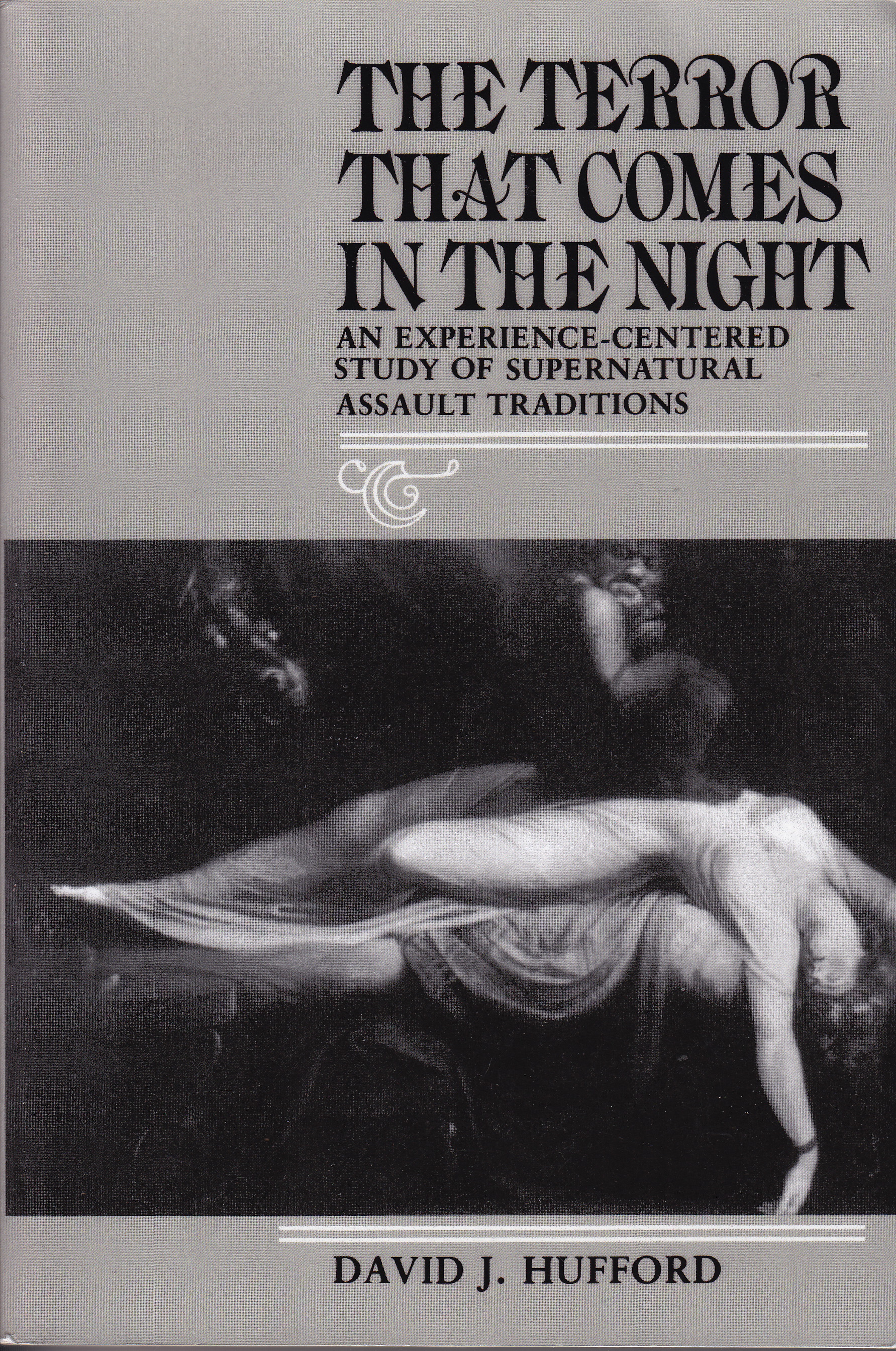
TerrorInTheNightNightmares are the stuff dreams are made of. Or maybe I’ve got that the wrong way around. Having grown up subject to frequent nightmares, I still occasionally have them. I suppose it is easy enough to assume someone who reads about monsters and watches horror films should not find this unexpected, however, I’m not sure they’re related. My nightmares visit issues that horror films avoid, and most of my monster reading is, well, academic. Surely the scientific study of nightmares has advanced since David J. Hufford’s The Terror That Comes in the Night: An Experience-Centered Study of Supernatural Assault Traditions, but it remains a very important book. As someone familiar with the phenomenon, I found Hufford’s study somewhat therapeutic, and it certainly does raise some interesting questions.

Apart from the unfortunately, inherently sexist, folk-title “the old hag,” Hufford is addressing a universal experience of people of all ages. Using his original setting in remote Newfoundland where his work began, Hufford collected tales of what might technically be called sleep paralysis with a specific hypnogogic hallucination of being attacked. A designation, he acknowledges, that is quite awkward for repeated use. Back in the early 1980’s, when the book was published, these accounts of nighttime attacks—a person waking up, or not having yet fallen asleep, sensing a presence in the room, finding her- or himself unable to move, and sometimes seeing or hearing an entity and feeling it on his or her chest—were rarely discussed. Especially in scientific literature. They seem a kind of embarrassing medievalism related to the ancient concepts of incubi and succubi, and even vampires. Having “the old hag” (a moniker relating to witches) is what the experience is known as in Newfoundland. Hufford, taking these accounts seriously, investigated what the sufferers had experienced. Unwilling to judge whether the event “actually happened,” Hufford’s scientific objectivity is truly admirable. Since the time of his book, the concept has become widely known and the argument is often made that having heard of sleep paralysis episodes feeds those with hypnogogic hallucinations the idea of a supernatural oppressor. In other words, now that we know about it, we don’t have to take it seriously.

Hufford is one of a small number of academics that is willing to engage with the supernatural on its own terms. Religion scholars do, of course, but we are generally dismissed from the starting block anyway. Most scientists disregard the possibility of anything beyond deluded brains and say nightmares are normal. Just deal with it. Those who’ve experienced the nighttime attack know that it feels very different than a garden variety nightmare. You can tell when you’re awake. Of course, we’re of the generation who’ve seen The Matrix and Inception, and we know that, at least in popular thought, reality has become negotiable. Nobody is much surprised any more by the idea of such an attack in the night. Waking nightmares have become as common as the headlines. If only more scholars would take human experience as more than just “old wives tales” we might all be surprised at how just rolling over can change everything for the better.


Detoxing God

There’s some pretty weird stuff in the Bible. Those who are only familiar with all the “thou shalt not”s are missing a great deal. Some of the material is strange enough to rival Alice’s tumble down the rabbit-hole (Charles Dodgson was, after all, a deacon). Anyone who’s read Ezekiel, or Daniel, or Revelation, knows the feeling of having been slipped into some kind of alternate state of consciousness. As students of the Bible have been saying for decades, “What was Ezekiel on?” I’ve always tried to put these unusual writings into context for my students. Nevertheless, some scholars still explore the possibilities that something more than revelation was going on in the desert. A friend of mine pointed out the website Time Wheel, which has a story about Moses and his experience of the burning bush. Time Wheel is an artistic collective, and the story about Moses is richly illustrated. The title, however, is the attention-grabber: “The Bible’s Moses Was On DMT Says Hebrew Professor.”

The article explores the thesis of Benny Shanon, who suggests Moses may have found DMT in the natural store of psychedelics available in nature. As the piece suggests, you have to accept a literal Moses for this to make any sense. Nevertheless, it does raise an interesting question: did ancient people use hallucinogens for religious purposes? We do know that cultures throughout the world have found alternate states of consciousness to be religious in nature. Before the days of controlled substances certain plants and fungi were known to distort reality. Alcohol was one of the earliest inventions of civilization, or perhaps even predating it. When other views of the world are available, it is possible to say that one is by default the true one? It’s a question we face every morning, to some degree. The dream, another biblical favorite for alternate realities, can be just as real as waking.

Controlled substances are dangerous in large groups of people. Not only have modern scientific techniques refined the active ingredients, but we live very close to one another and erratic behavior, perhaps fine isolated in the desert with a cognizant adult, can lead to problems when other people live right next door. Anthropologists assure us that the use of natural “drugs” is/was not uncommon among many peoples who don’t fall under the rubric of powerful centralized government. But was Moses among them? To me, the burning bush hardly seems fantastic enough to require a chemical explanation. In fact, detailed study of even such books as Ezekiel and Revelation often reveal a much more mundane reality behind the writing. Still, imagination is often the key to unveiling realities left hidden to more prosaic minds. So why not see what might happen when the religious are left to their own devices in the desert? The results could change the world.

278px-William_Blake_-_Moses_Receiving_the_Law_-_Google_Art_Project


The Last First

Pluto_by_LORRI_and_Ralph,_13_July_2015

Pluto used to be a planet. Humans, in our unfaltering confidence, have downgraded it to a sub-planet, a dwarf planet, as if we know how big a planet ought to be. Even so, the arrival of New Horizons at the mysterious ice world has us all interested once again in the has-been wanderer. For ancients looking into the fixed stars of the night, the planets were all mysterious. They move against the backdrop of the stars that always maintain their places. When the planets came to be named, the gods suggested themselves. Our modern names, of course, reflect the Roman borrowings of Greek gods. Many of the Greek deities go back to ancient West Asia, where even Zeus has a strong counterpart in Hadad, or Baal, and Aphrodite is recognizable as an aspect of Ishtar.

Pluto, or Hades, was the ruler of the underworld. He was known to be decidedly rich since, well, if you can’t take it with you, someone has to inherit. Pluto, like the devourers of Ugaritic mythology, was forever hungry. Insatiable. This association of wealth and death gives us our word “plutocracy,” rule by the rich. As Bruce Springsteen sang, the poor want to be rich, and the rich want to be kings. “And a king ain’t satisfied til he rules everything.” Who says mythology isn’t true? As New Horizons flies by, we will learn more about the hellish world perpetually frozen so far from the sun. We wonder if perhaps we’ll learn more about ourselves by peering into the farthest rock from our star, Sol’s youngest child. Hades was the brother of Zeus, the king of the gods. Even Zeus had to dispose of the Titans to claim that title. In a scenario going back to ancient times, the younger generation—those we recognize as gods—struggled to make it to the top. As the paper describes it, Pluto is the last first—the last “planet” that is being closely examined the first time.

I grew up in a nine-planet solar system. I recall learning of Clyde Tombaugh’s discovery of Pluto, marveling at the math and patience required. Now that we’ve reached the outer fringes of our solar system, our little piece of the galaxy, we’re still uncertain how to occupy the earth. Many claim that science will vanquish religion completely, and that those who believe are hopelessly superstitious and uncritical in their thought. And yet, if we were to take a close look inside New Horizons, this technological wonder that has reached the farthest point of our sun’s gravitational influence, we would discover a small package of Clyde Tombaugh’s ashes inside. The man who discovered Pluto is the first to actually go there, although he’s been dead for nearly two decades. Even the most stoic of scientific minds must pause for a moment and appreciate the profound symbolism of this illogical gesture.


Tales of Wonder

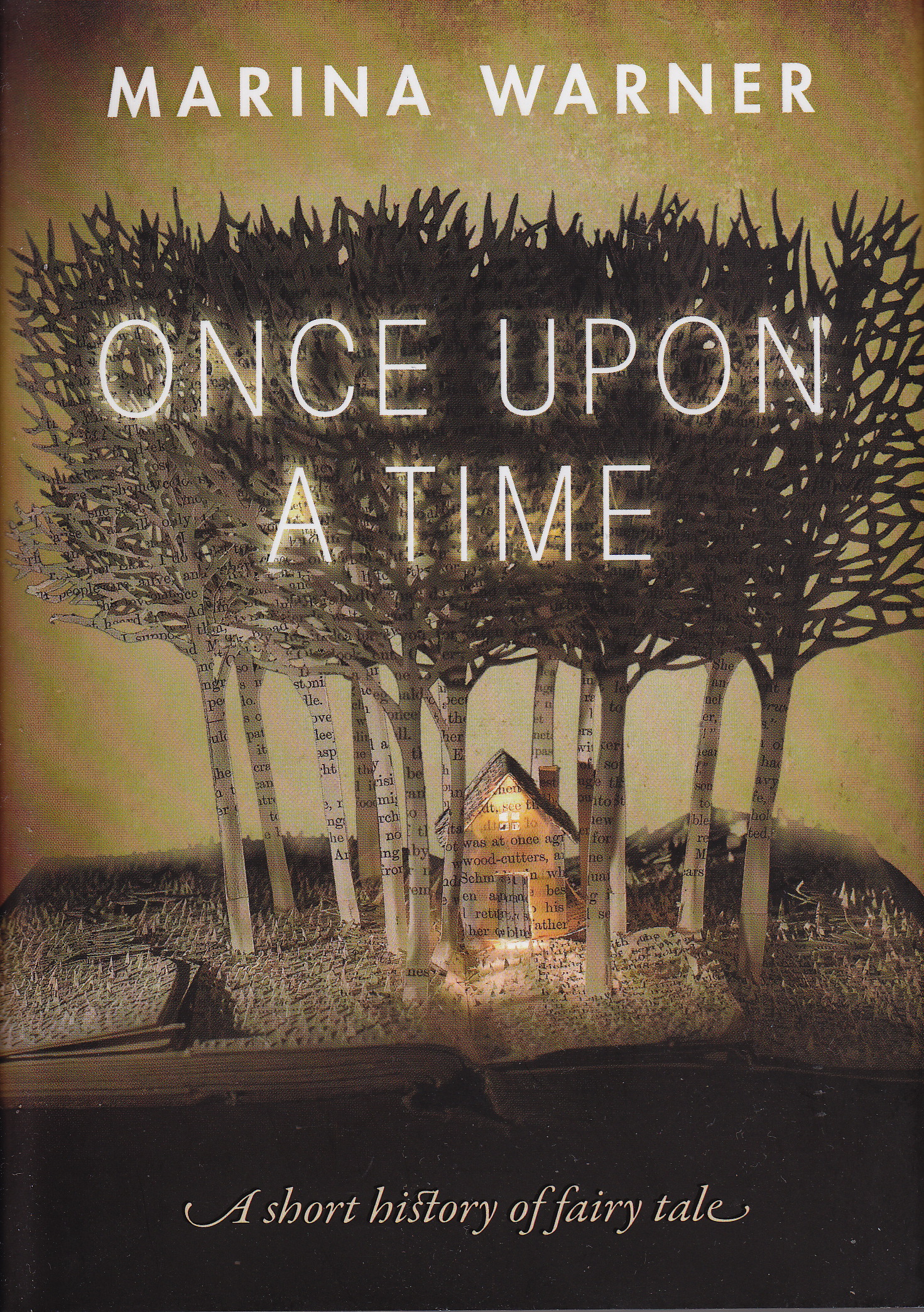
OnceUponATimeI knew of fairy tales as a child, but I recall them mostly being mediated through the Wonderful World of Disney on Sunday nights, just before bath time.  I don’t recall experiencing them in written form, and although I may have experienced them as narrated versions from time to time, my memory is mostly of the animated variety.  I’ve been reading about fairy tales lately since folklore clearly relates to many sacred narratives.  My most recent book on the subject is Marina Warner’s Once Upon a Time: A Short History of the Fairy Tale.  Like most of Warner’s books, this is a unique telling, one which takes into account modern and some post-modern concerns.  Addressing what fairy tales tell us about the supernatural, gender, psychology, and growing up, this is a little book with big thoughts.
 
Unlike the polished literature of the elites, fairy tales come from the folk, the common person.  In this sense they are often truer than the establishment version of things.  Life can be violent and magical, and nobody raises an eyebrow when something supernatural occurs.  These tales often contain uncomfortable truths.  Fairy tales may help children to cope with eventualities, but they also unsettle along the way.  Rare is the tale where someone doesn’t die before it’s all over.  Like many disenchanted adults who’ve discovered the promises society makes to be false and hollow, I find returning to fairy tales as an adult somewhat therapeutic.  Long ago in a land far away often sounds much better than here and now.  Nor is it pure escapism.
 
As Warner points out in the very final thoughts of the book, fairy tales have come to be treated as scriptures.  Like scriptures, they turn into myths.  Myths may be retold, deconstructed, reassembled, and applied to many situations to inform us of the human thing to do.  We sell ourselves short by not recognizing the other scriptures that wisdom has provided down the ages.  While most of the folk wisdom we have preserved in the canon of fairy tales don’t go back to the Bible, they do retread some of the same territory.  By calling some of it scripture and other secular, we might miss that very many of the truths are similar indeed.  The assumption that growing up means leaving truths of childhood behind may, on occasion, bear reexamination.  If we look closely at our fairy tales we may discover that we should keep them close at hand, no matter what our age.


Ever on a Monday

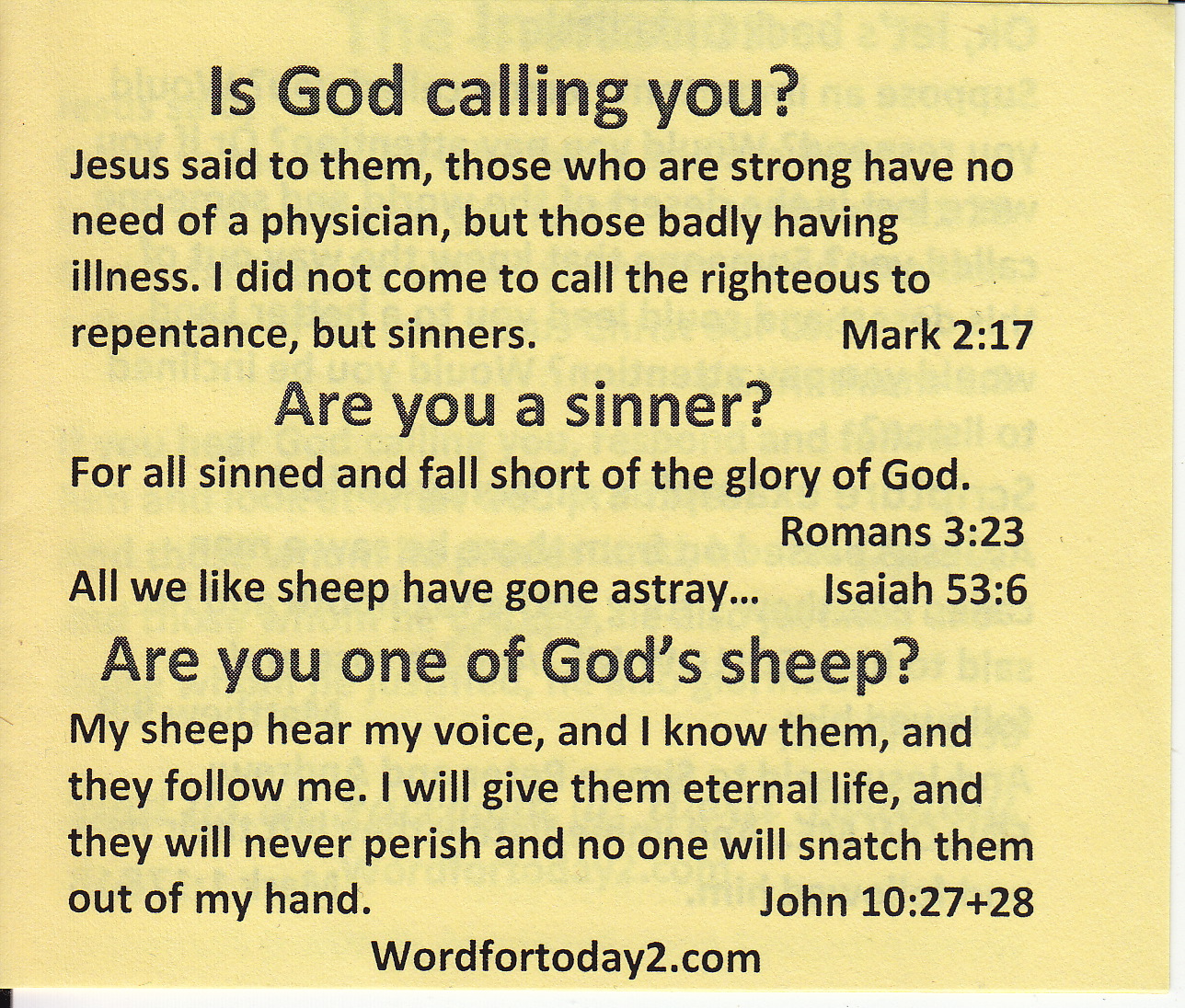
No matter how early you go to bed on Sunday night, Monday morning comes too early.  The only thing that makes my long, penitential commute survivable is the book that will take me away for an hour or more on the way to the city.  At the Port Authority Bus Terminal it’s pretty obvious that people are in no hurry to get to work as they shuffle along at a speed that says, “I’m taking the subway, so why rush?”  The subway doesn’t go near where I’m headed and it is a small hike in the concrete forest.  Actually, parts of Midtown smell more like a zoo on a Monday morning.  I try to get through as quickly as possible.  So when I guy steps in front of me I try to dodge around to catch the light across 8th Avenue.  He doesn’t move, but hands me a slip of paper and recites, “I believe in Jesus Christ.”  First thing on a Monday morning.  He got out of bed to tell frustrated commuters his personal credo.  I stuff the yellow paper in my pocket and try to avoid kamikaze taxis all the way across town.

Word4Today_0002
 
I’m always curious about those who brave the crowds of New Babylon with the news that they have the truth. I pull the paper from my pocket.  I decided to check out the website on the cheap tract.  It seems that the Church of Bible Understanding (it seemed to be all in small caps) has formed a splinter group and is wondering why, despite the grace of God, it isn’t growing like in New Testament times.  I did notice that I was visitor 2429, according to their web counter.  There seemed to be a lot of complicated history to wade through and this was a Monday morning, after all.  The main point seems to be that you don’t need all this churchy stuff, but just belief in Jesus.  Over this, it seems, churches split.
 
I have to wonder about the constantly splintering composition of the Christian tradition.  Recent scholarship suggests that there was no unity at the very beginning.  According to the Bible even Peter and Paul didn’t always agree.  Although there may have been a very roughly unified church under Constantine, the outer-lying reaches started developing ideas that didn’t always sit well with Rome.  And this was well before the Reformation.  Since Luther’s theses, the number seems to have grown exponentially.  Well, maybe not exponentially, but I am concerned for the spiritual well being of my fellow hive animals on this island made of schist.  It might be easier, though, if we agreed to disagree.  Nobody has the truth that will convince all others.  And for evangelization purposes, getting in somebody’s way on a Monday morning may not be the best proselytizing technique.


Headliners

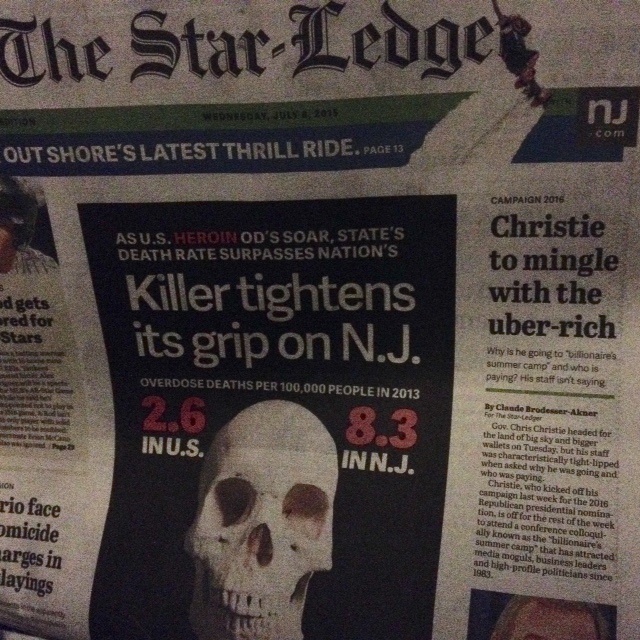
I sometimes wish I was a journalist. Just this past week a couple of people questioned my journalistic skills for an opinion piece I wrote for Religion Dispatches. I’m fully capable of professional research, but who has the time? Still, being a journalist might be fun. Thinking up clever headlines would be challenging day after day, but nevertheless, it might be enjoyable. Editors who lay the articles next to each other on the page must have a sense of irony. This past week in the New Jersey Star Ledger the central headline read “Killer tightens its grip on N.J.” The column to the right began “Christie to mingle with the uber-rich.” Having lived in New Jersey under Christie’s entire reign, I’m no fan. I’ve despised bullies since I was a kid, and rich bullies are worse than the working class variety. New Jersey certainly seems no better off to me. Now he wants to be President.

FullSizeRender

The real headline, however, about the killer in New Jersey is not yet another prison-break story. It deals with heroin overdose deaths. According to the article, per 100,000 people in the U.S. 2.6 deaths are from heroin overdose. In New Jersey the figure is 8.3. New Jersey, as the most densely populated state (1200 people per square mile, I once read) has its share of problems. Most of us like to pretend that drugs are somebody else’s issue, but I’ve known addicts and they are not evil. When life offers you unrelenting recession after recession and all attempts to better yourself run up against the 1 percent, frustration is inevitable. Even earning a doctorate will only lead to jobless misery. What more can you do than get an education? Heroin is dangerously addictive and it makes the user feel great, I’m told. Society doesn’t offer many other options. At least in Rome they had bread and circuses.

He who would be President, however, can’t be concerned about that. The uber-rich must be fed. And fed. And fed. Those whose ambition to high public office is naked power would be foolish to ignore their fellow plutocrats. Down here on the streets, things look a little dicier. Although I think I understand why many turn to chemical relief, I’ve never been tempted by drugs myself. One of the reasons I turned to religion was the prevalence of drug use in the town where I grew up. There seemed to be no future in substance abuse. I may not have chosen the most promising of ways to move ahead either, in retrospect. Now I find myself living with a governor who represents all that’s wrong with government. And if you’re going to die of drug-related despair, it seems like his particular state is the place it’s most likely to happen. Long live the king!


Law of Rule

Anyone who believes in the rule of law has never been on a broken down NYC commuter bus. There’s a rare kind of tension among the early morning commuter crowd. To put this in context I should say that I awake at 4 a.m. to catch the first us through town, five days a week. I’m usually somewhere between four and six on the passenger count, but if lots of people need to be in New York before sun-up, I may be as far down as 10. I select my seat with care. I tend to sit two seats behind the driver. I prefer the right-hand side of the bus, but there’s a regular who sits there and, I’m given to understand, she’s been doing this for over a decade. So I sit left. It’s never a good portent when I end up having to go four or more rows back. You see, the buses usually unload in a fairly orderly way, the front rows get out first, and each row takes its turn. Since too early is never early enough to be at work, I sit near the front because in the back you can lose precious minutes waiting for those who are sleeping to rouse themselves enough to find their feet and stumble off. If it sounds like I’m overthinking this, it’s because I’ve been awake since before four and how you start your day sets the tone. Where’d I put my coffee? Arriving at the office frantic and sweating isn’t the best way to impress anyone.

There’s a kind of comfort at being at the end of the line of service. Of course, the commute home means you’re on the bus longer than people who can afford to live closer to the City. First on, last off. Although I easily fall prey to motion sickness, I have taught myself to read on the bus. An hour in and two hours out are goodly amounts of time to really get into a book. I hate to waste time.

IMG_2304

You can smell a bus breaking down. I always hope the driver doesn’t catch a whiff, because s/he’ll call the control center and lawyers will dictate that the bus be stopped. By definition, you’ll be late to work that day. So when I smelled something burning, I hoped I was the only one. Luck has never been my strong suit. The driver pulled over and announced, in a soft voice, that we’d have to wait for the next bus. That means I could’ve slept in for ten more minutes.

The next bus is an “express”—that is local compared to my bus. The driver said, “Just stay in your seats, and I’ll call you.” Of course, people started to get off to form a line, despite the captain’s words. In a universal display of self-importance, those who just got on immediately hurry to get off first. They’ll be first in line to get seats on the next bus. Those who obey the driver are penalized. When it became clear that I could hear crickets chirping on the bus, I decided to put away my book and join the line. After quite a wait, the local came. That would get us to the City in time for work tomorrow. Several minutes later the express came. Those at the back of the line behind me hurried over. By the time I’d gotten there, still trying to honor the most ancient of queuing honor codes—the line—all the seats were taken. Those in the front of the line, now the back, headed over to take first place again, since they had expected the rescue bus to pull in front of our smoking wreck instead of behind, where it did. They weren’t shy about elbowing their unrighteous way to the front when the next bus came. I’d been on the abandoned bus since before 6 a.m. I made the third bus. The guy in my row on the adopted bus tried hard not to make room for a new passenger next to him. I was headed to New York where, I know, all the rules are off.


A Hollow Man

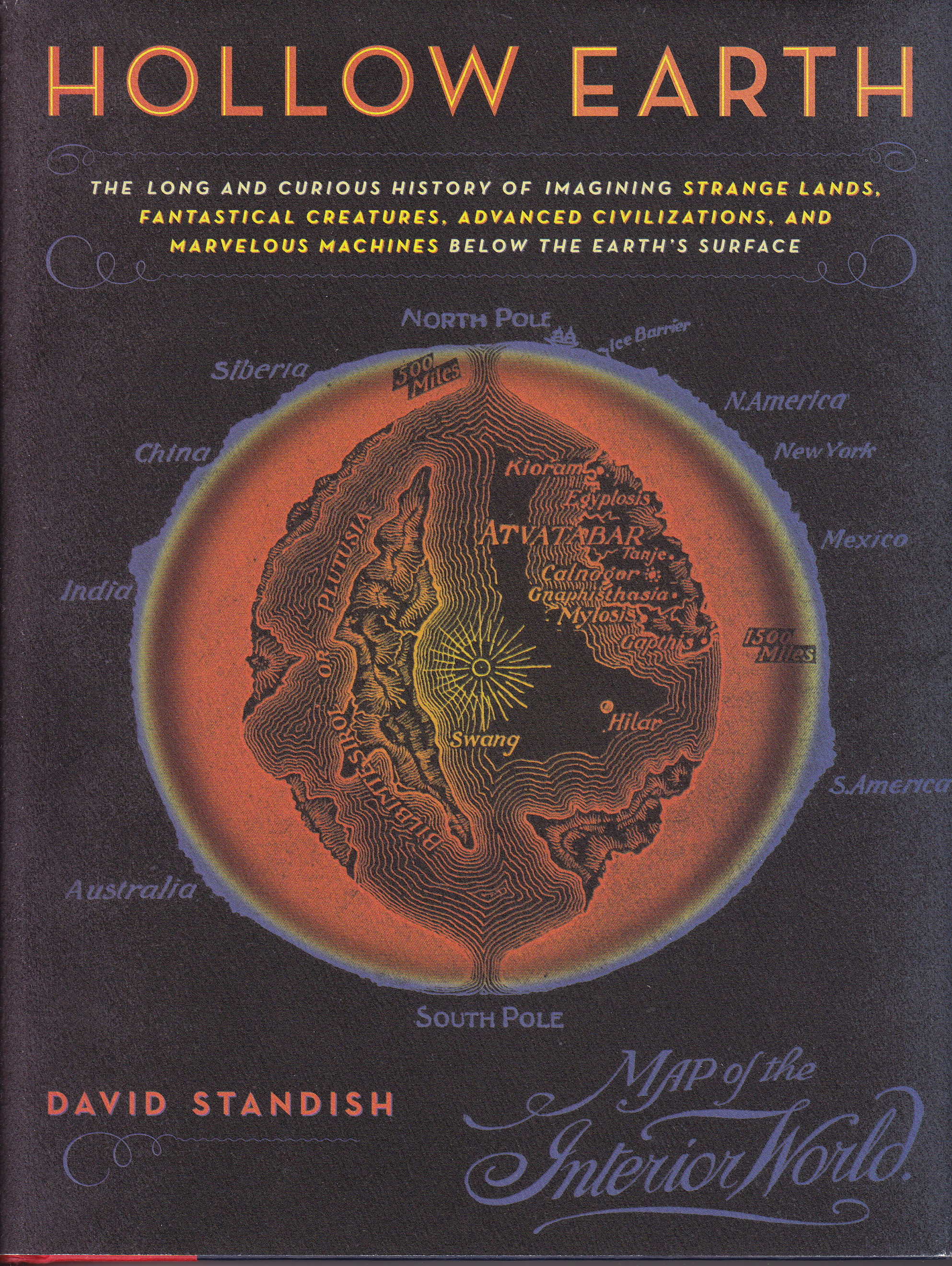
HollowEarthQuirky ideas stimulate the intellect. I’ve always had a fondness for the outré, those ideas slightly beyond the pale of normalcy. Sometimes taken dead seriously by intelligent people, these ideas have cultural staying power. David Standish’s Hollow Earth is a cheeky tribute to those who’ve taken the idea of the underworld to literal and literary depths. Ideas that the world might be hollow have been around for some time. Not everyone, it seems, was convinced by Copernicus and Galileo. Standish traces the more modern exemplars of those who have, with stone-faced sincerity, declared that the earth is hollow. Of course, some, such as Edgar Allan Poe, were hoaxers, but they were building on those who appear to have seriously believed it. The character after whom the mythical polar entrances to the world inside is named is John Cleves Symmes. An otherwise rational fellow, it seems, Symmes decided that the earth was like a globe and that a world much like the outside awaited those intrepid enough to get to the inside. There would be light, plants, oceans—a veritable paradise found within the earth. This strange idea survived Symmes and even the exploration of the poles could not dissuade those who believed large caverns, fed by warm, arctic oceans, awaited those who would patiently explore.

Standish notes the womb-like ideals of many of these thinkers, twisting fictional accounts together with the more deluded factual kind. In popular, and not so popular, fiction the hollow earth had a particular resonance. Jules Verne and Edgar Rice Burroughs were among its most ardent fans, using the literal underworld as a setting of strange realms. Others used the hollow planet as the location of a kind of utopia, unspoiled by humanity. Unspoiled, that is, until people arrive on the scene and do what they inevitably do to paradises. It’s in the news every day. Even Alice in Wonderland gets a nod here, as she does fall an awfully long way down that rabbit hole. Fiction writers have made a boon of this bogus idea.

The most interesting, to me, character in this story is Cyrus Reed Teed. A denizen of the Burnt Over District in New York, Teed restyled himself Koresh (yes, there were others) and made the hollow earth one of the doctrines of his new religion. Distantly related to Joseph Smith, his new faith was not as successful as that of his cousin, but nevertheless, Koresh did manage to gain a following of a few hundred and establish a compound to himself where he influenced local politics to his wishes. The story has a sad ending, however, as local ruffians (including the sheriff, like in a bad western) roughed him up so badly that as an older gentleman he died perhaps as a result of his injuries. His movement fell apart and the world grew solid once again. The world really has no place for dreamers, and yes, at such times it seems to be made of very unyielding stuff indeed.


Forbidden Words

800px-Norsemen_Landing_in_Iceland

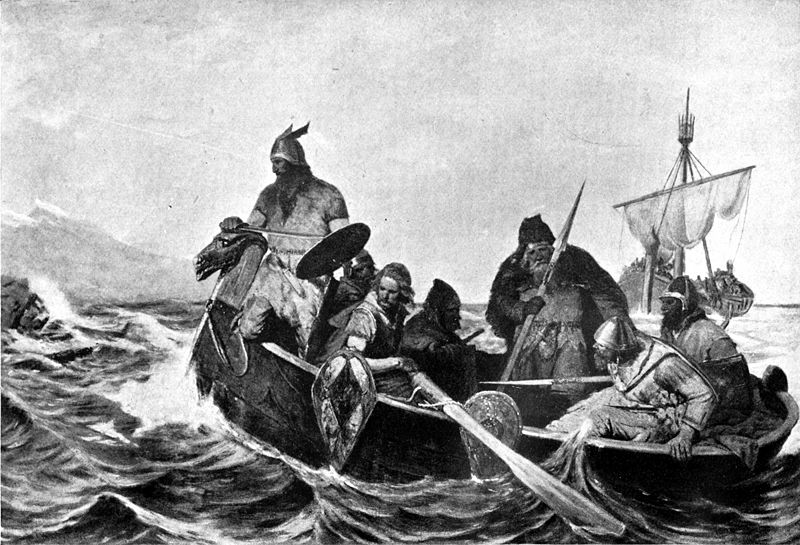
In keeping with the spirit of freedom, just before July 4 the BBC broke the story of Iceland’s blasphemy laws having been struck down. Although the state Church of Iceland (Lutheran by denomination) supported the move, other churches have been grumbling. It’s an odd notion, that blasphemy should be illegal. Part of the oddity revolves around disagreement of what blasphemy is. Even if taking the name of God in vain is used to define it, several questions remain. Which name of God? Certainly “God” is not a name, but a title. Is taking the title of God in vain blasphemy? What does it mean to take a name in vain? If you don’t mean it? I’ve surely heard many invoking the divine in curses that were most certainly sincere. Were they blaspheming? Does blasphemy really mean failing to believe in God? And, pertinent to Iceland, which god is protected under such laws?

Religious pluralism is the clearest threat to those supporting blasphemy laws. Underlying to very proposition is the idea that there is only one true God and that is the God of Christianity. Judaism might be tacked on there, as might a reluctant Islam, but the notion of blasphemy does not seem to bother the deities of other cultures as much. Honoring and respecting belief in deities is fine and good. In fact, it is the decorous way to behave. Still, privileging one deity as the “true god” protected by state statutes is to bring politics into theology. Since when have elected officials really ever understood what hoi polloi believe? In Iceland the old Norse gods have recently come back into favor. Should they be respected to? Why not as much as the Christian God?

It is perhaps ironic that the Pirate Party put forward the successful bid to strike down the law on blasphemy. According to the BBC, the Pirate Party began in Sweden and has now established itself in 60 countries. Since it’s fight for accountability and transparency in government, it’s sure to have a hard time in the United States where bullies can run for President unashamed. What is clear is that although governments make and enforce laws, the will of the people seldom makes itself heard. We may have won some victories in recent days, but there are many entrenched ideas that benefit those in power and not their underlings. Sounds like the Pirate Party may become the Democratic Party of tomorrow. If it does, however, when it loses sight of the ideals that launched it, we may need a new party to board the ship and ask for the people to be heard. Politely, and without swearing, of course.


Contacting Faith

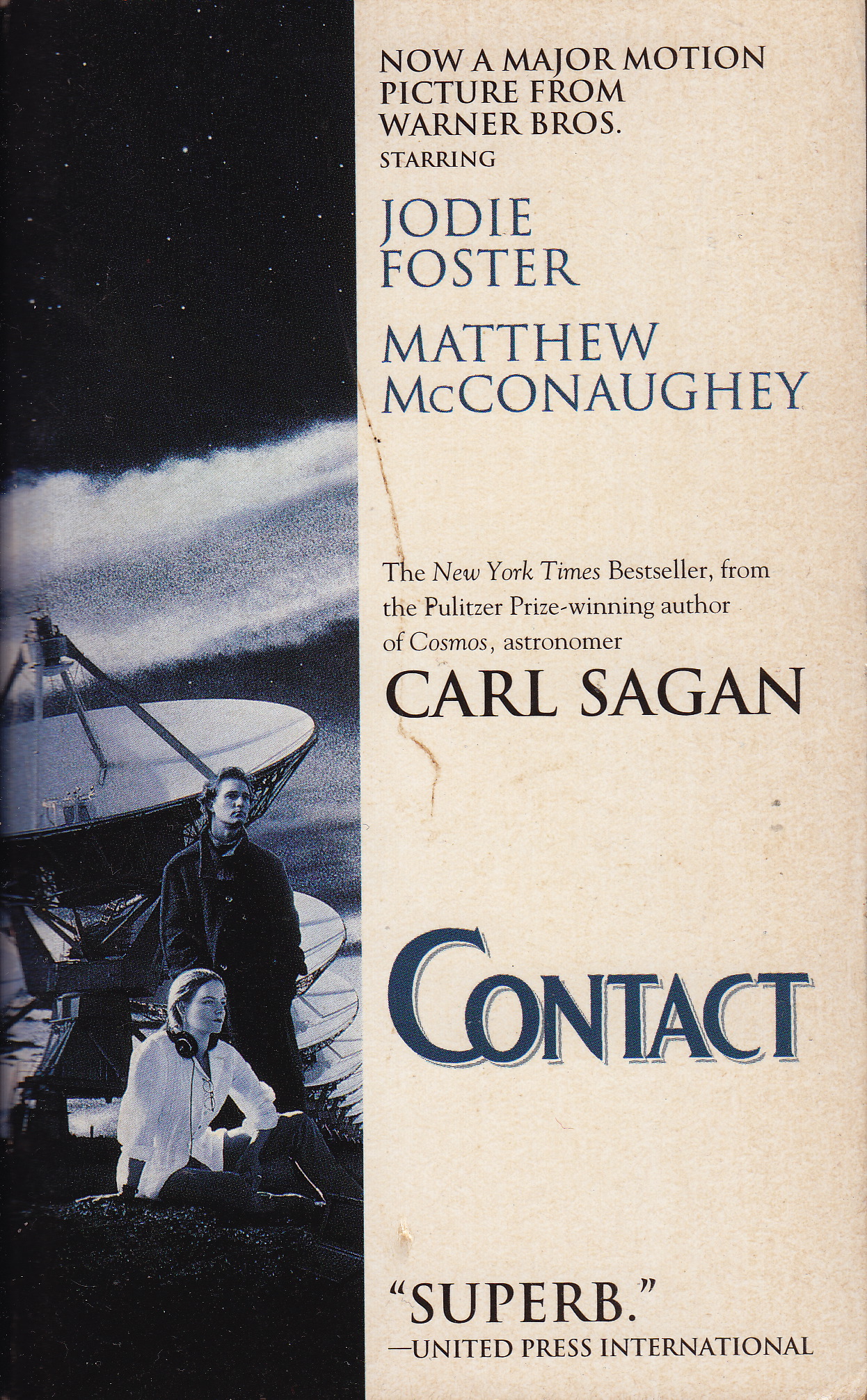
Contact_0001Sometime after the movie Contact came out, I saw it while on a flight to somewhere here or there. As with most movies on airplanes, it didn’t receive my full attention and I seem to recall not hearing a lot of the sound. Having always been intrigued by the possibility of aliens, however, I told myself I’d watch it again. Several months ago I did just that, but as Carl Sagan hoped, much of the story had become somewhat dated. I finally finished reading the novel, and this was a case of the book being better than the movie (as is frequently the case). A number of things surprised me about the story, the primary one being just how prominent religion is in the plot. In the movie some crazy preacher sabotages the first machine just as it’s nearing completion, and even though Ellie Arroway is long connected to Palmer Joss, their relationship doesn’t seem to dominate the script the way it does the book.

Almost immediately upon reading about adult Ellie, it became clear that religion was a major interest that Carl Sagan had. While the chiliasts receive many scathing comments throughout the novel, thoughtful Christian thinkers, such as Palmer, find a way of being taken seriously by Ellie, despite her own personal unbelief. Unable to understand how someone could not accept the evidence before their eyes, she wants to belittle religion but can’t when serious thinkers like Palmer remind her that they have a sophisticated worldview as well. The story represents a long struggle between alternative outlooks. While as a novel it doesn’t always flow, it pulls the reader along, partly based on the intriguing character of Sagan himself.

Carl Sagan believed in life on other planets. He was less sanguine about the possibility of either ancient astronauts or current-day visitors from space, but he kept an open mind. While he was the respected author of numerous scientific papers, other astronomers didn’t always know what to make of such a popularizer. Of course I never knew him, but I have to wonder if his true beliefs didn’t appear in his fiction rather than in his factual writing. At times I found the novel slow and plodding, and as the machine gives ambiguous results, I wondered where the rest of the story could go. Sagan profoundly brings the end back to belief. Without evidence, Ellie finds herself in the place of the religious who believe on the basis of experience and faith alone. And she finds her best friend is a clergyman. Contact, with its God-like aliens, is really a story of finding oneself a place in an infinite universe. To do that well, Sagan seems to have believed, requires both science and religion.


God, As a Hobby

Just as I was awaking from a night of loud fireworks and multicultural bonhomie, my wife showed me a full-page ad in the New Jersey Star-Ledger. A red, white, and blue page entitled “In God We Trust,” the ad wants nothing more than to convert the nation to conservative Christianity. It is sponsored by Hobby Lobby after all. Dividing the quotes that spangle the page into “Founding Fathers,” “Presidents,” “Supreme Court Justices,” “Supreme Court Rulings,” “Congress,” “Education,” and “Foreign Opinion,” prooftexted quotes are given inadvertently showing by their grasping nature that America is a godly country. The Hobby Lobby is not known for its critical reading of either Scripture or history. George Washington, Thomas Jefferson, and Benjamin Franklin, Deists all, are quoted at the height of their rhetoric, making it seem as if they were evangelicals out to build a Christian nation.

new doc 10_1

When I was growing up, there were no Hobby Lobby stores in my area. Although I was a religious child, I would have found it a bit odd that hobbyists were not focusing all their attention on the weighty matter of eternity. Instead, making money seems to be the name of the game, and once you’re comfortably over-compensated the Lobby part of the name comes to play and God reenters the picture. We all know that the Hobbyists wish to have the Bible right next to the capital, if they can’t get it prominently placed in the Oval Office. Policy (the ad cites all three branches of government, as well as education) should be based on the Bible, although we think of ourselves as a land of opportunity. Opportunity for whom?

Starting with a quote ripped from the context of Psalm 33 (“blessed is the nation whose God is the Lord”), the ad doesn’t exegete this at all. Nationalism as we know it did not exist when this Psalm was penned. The author had what would become Judaism in mind, not evangelical Christianity. But then, appropriation of other peoples’ pasts is kind of a hobby. Pick and choose. Take what you find attractive and leave the rest behind. It works for history as well as for the Bible. After all, it doesn’t take historical probity to lobby the government. All that’s required is a surfeit of money. And the best way to achieve that, it seems, is to take up a hobby rather than trying to think through the issues with a mind honed by a solid education in Bible and history.