The Price of Flags

As a child, Memorial Day signaled the start of summer. Most of the time it announced that the obligations of school were nearly over and that was sufficient cause to celebrate. It was not until well into adulthood that I realized the holiday commemorated those who’d died in the armed services. I’d noticed the flags in cemeteries, of course, and we often visited the graves of civilian ancestors buried close enough to reach. The message did not penetrate my head, however, that all of those little flags should be telling me something. I grew up not knowing my father, but I did know he was a veteran. When all his children gathered for a (mostly) impromptu picnic yesterday, for the first time in well over thirty years, I realized how much of a mystery he was to me. At his funeral the flag on his coffin was presented to my older brother as part of military tradition, although he had died in peacetime, and pretty much isolated from all his progeny. It is a somber thought even now, although it was eleven years ago.

I have been a pacifist since my youngest days. Sure, I played with toy guns and G. I. Joe, but that was the culture of kids growing up during the Vietnam War. Only vaguely did we realize the actual horrors that were happening daily thousands of miles away. In my mind there was no reason to go to war. In Sunday School we were taught to settle our differences nicely, even if it meant that you had to be cheated or take less for yourself. This always seemed the central tenet of Christianity to me, and I wondered why the most conservative of Christian presidents seemed the most hawkish, the most ready to sacrifice the fathers, sons, brothers, and now mothers, sisters, and daughters of others for so little. The number of flags even in that little country graveyard where my grandparents were buried haunt me.

We still have members of the armed forces over seas. The military budget of one of the most prosperous nations on the planet is astronomical. We can now kill with drones so that we don’t even have to see the carnage we create. When did the lives of young adults become small change? I know it’s idealistic of me, and probably terribly naive, but I still can’t make sense of our cultural perception of how cheap human life can be. Maybe I’m just a little overly sentimental about a father I never really knew. But looking over my siblings, I see that he produced some nice, generous, and peace-loving children over half a century ago. And while we have our picnics and enjoy a rare day off of work or school, thousands of silent flags will be flapping in cemeteries all across this country reminding us that better ways exist to resolve our differences. If only we could take a holiday from war and violence we might see fewer flags and even more holidays.

Photo credit: Remember.

Photo credit: Remember.


Buttons and Bows

I don’t remember what year it was, but I remember precisely where. On one of my countless trips out back—to or from school, to burn the paper garbage, pet the dog, or wander in the woods—I noticed something poking out of the dirt. The path between my step-father’s house and garage was well-traversed, and a little rise there was bald at the top, and what I saw emerging from its underground lair was round and dull. I’ve always had fantasies of buried treasure, so it is difficult to pass by anything suggesting a coin on the ground. This turned out to be a button. Not a regular, button, however. This was clearly military, and old. It was just appearing from a long rest under the ground and I didn’t know how long my step-father had lived in that house, but it had obviously been many years. There was no internet those days, but it soon became clear from my amateur researches that this was a Civil War era button. It still had a scraggly bit of dark blue thread attached. I never bothered to dig to see if the rest of the soldier was there.

Western Pennsylvania, while far from the striking Revolutionary history of the eastern part of the state, had seen its share of military transients. George Washington had established a fort in nearby Franklin, where I was born, and I was sure that more than a few Civli War soldiers had tromped through this area, although it was far from Gettysburg. I treasured that button and kept it with the very small coin collection I had amassed. It just so happened that our minister was also a coin collector. He took me to coin shows and we would sometimes exchange old pennies. One day he told me about his button collection. I mentioned my find, and he showed a great interest. In fact, he promised he’d complete my wheat-back collection from 1909 to 1958 in trade for my button. He ended up with my button, but never finished my penny series before some bishop shipped him off to another parish. History had slipped through my fingers.

Repeating patterns

Repeating patterns

Patterns are reinforced by repetition. One of the severe beauties of Manhattan is the rows and rows of identical windows. Patterns also persist in time. I stopped collecting coins ages ago, but I still squirrel away any wheat-back that lands in my pocket. Even in average condition a “wheatie” is worth double its face value. But face value is not always what it seems. Value lies in that in which we invest ourselves. I followed my mentor to seminary only to find myself traded off for many a finer specimen. Uncirculated, likely. This particular piece had been scuffed and banged against others so long that the patina warned that more might be hidden than meets the casual eye. And somewhere in rural western Pennsylvania there may be a dusty corpse just waiting to be discovered. Victims of war come are sometimes just beneath the surface.


Victorian Secret

VictorianAmericaPerhaps it’s because the Steampunk World’s Fair is still on my mind, or perhaps because I’m increasingly curious about the way we came to be how we are, I read Victorian America: Transformations in Everyday Life 1876-1915. In this study Thomas J. Schlereth surveys the main aspects of daily existence during the turn of the nineteenth century into the twentieth. It is sobering to consider how quickly change has accelerated since then. Still, so much of what seems normal today was novel just a century or so ago. Although Schlereth doesn’t devote a chapter specifically to religion, he does tie it in with its natural analogue, education. We quickly forget that education was largely established because of religious principles. You can’t tell it today, but one of the main impulses behind higher education was the desire to educate people about the truths of religion so as to improve society.

Also developing in the late part of the nineteenth century was a new religious movement that considered five principles to be fundamental to Christianity. What’s more, those who promulgated this outlook also claimed it was true from the beginning of Christianity, although we know this is decidedly false. The inerrancy of Scripture, the virgin birth, Jesus’ divinity, the second coming, and atonement through Jesus’ sacrificial death—a few concepts that had rudimentary form earlier in the religion’s history—became non-negotiable. Fundamentalism, a new religion, was born in this era and claimed a right to parse true Christianity from false Christianity. This virulent form of belief quickly became politicized, and the relationship between religion and politics clearly impressed Americans from early days. We still reap its whirlwind.

Ironically, the Victorian Era, as designated by Schlereth, saw the birth of the Social Gospel. Doctrine wasn’t the first question on the minds of these reformers, but the human condition was. Yes, they tended towards Fundamentalism, but those who believed in the Social Gospel wanted first of all to eliminate human suffering and misery. It was they, not the Fundamentalists, who came up with the question, “what would Jesus do?” Education and religion eventually divorced, and the Fundamentalist children grew ever stronger in their conviction that they alone were right. The First World War brought a crisis to an optimistic culture that believed the second coming was just around the corner. Of course, we’re still waiting. In the meantime, if you’d like to learn how we got here, Victorian America is not a bad way to pass the time.


Double Blind

When I read Isaac Asimov’s three laws of robotics as a child, I assumed that I’d not live to worry about them in real life. What we don’t know can indeed hurt us. Time magazine frightens me sometimes. This week’s offerings include a small blurb about drones. When I was a kid, a drone was a bee—dangerous in its own right—or it was a verb used to describe an uninspired teacher or preacher’s monotoned wisdom. Now drones are robotic planes that can operate themselves without human input. Time reveals that technology has been developed that would allow drones to kill without human input. Asimov’s laws have become truly science fiction. Proponents argue that “collateral damage” might be minimized if we allow robots to kill with precision, and some have argued that the research should be prohibited. The fact that it has been developed, however, means the line in the sand has been crossed. If it has been done once, it will be done again.

800px-MQ-9_Reaper_in_flight_(2007)

Even as a daily user of technology, a deep ambivalence besets me. Maybe if it weren’t for the fact that every once in a while my computer (most often at work) freezes up and issues a command I can’t understand, I might feel a little more secure. Instead I issue a ticket for IT and when they call on me sometimes even a specialist can’t figure out what went wrong. Once the bullets are flying it’s a little too late to reboot. Maybe I’m just not yet ready to crawl into bed with a technology that might kill me, without feeling.

Just five pages earlier Time notes that 1 in 5 is the “Ratio of people who would have sex with a robot, according to a U.K. study.” All things are fair, it seems, in love and war. The part of the equation that we haven’t accounted for in our artificial intelligence is that thought requires emotion—which we don’t understand—as much as it requires reason, upon which we have only a toddler’s grasp. And yet we continue to build more and more powerful devices that might kill us with ease. Isaac Asimov was a prescient writer and a forward thinker. He was from the generation that aspired to ethics being in place before technology was implemented. At least as an ideal. We’ve reversed the order in our world, where ethics is continually playing catch-up to the new technologies we’ve invented. Now it’s time to decide whether to make love to it or to say our final prayers.


Greece Lightning Rod

Eds and op-eds are popping over the Supreme Court decision to allow sectarian prayer at Greece, New York town council meetings. Some citizens complained that the prayers made them feel disrespected and excluded. Who hasn’t from time to time? I’m no advocate of government-sponsored religion, but I do wonder how we can live in a society in which the mere mention of God offends some as much as the “f word” offends others. Are we, perchance, getting a little thin-skinned? After several long years of neo-con rule, we have learned that opposition is a form of treason, and that conflicting opinions cannot coexist. As an erstwhile teacher of religion, the implications make me shiver. Isn’t the point of learning about religion to train people in toleration? If I sued every time I was offended, I’d be the richest man in the country.

Ironically, the United States is one of the rare cases of a developed, “first world” nation where skirmishes over religion often and vocally take center stage. We have, as a society, dismantled the apparatus of dispassionate, scholarly discussion of religion (“no need for it,” “budget can’t afford it,” “superstition and nonsense”) and wonder why it always brings us to verbal blows. Religion is that which we can’t define, but we can surely fight about. We’re offended by public prayers, the wearing of hijab, and idols to the Ten Commandments on the courthouse lawn. Religion, like sex, is relegated to private places only, but for diametrically opposed reasons. What are we so afraid of?

Lost in the clutter.

Lost in the clutter.

We have no trouble when someone with private money spends it to introduce religion into the public sphere. You can walk down the street in Manhattan and see crosses outside churches and “Jesus saves” scrawled in the cement of well-trod sidewalks. Nobody seems to be offended. Finding practitioners of the “exotic” religions of Hinduism, Buddhism, Sikhism, Vodou, Theosophy, and Scientology is hardly a challenge in a city of millions. Over what is there anything to be offended? I’m offended by those with too much money keeping everyone else below them because the law says that they can. I’m offended by those who pollute our common environment because they can afford lawyers to find loopholes. I’m offended by those who use their religion to oppress women and non-believers. Those who want to pray to a god, any god, before a civil meeting, as long as that god demands nothing from non-believers, aren’t hurting anyone but those who never learned to agree to disagree.


Akedah

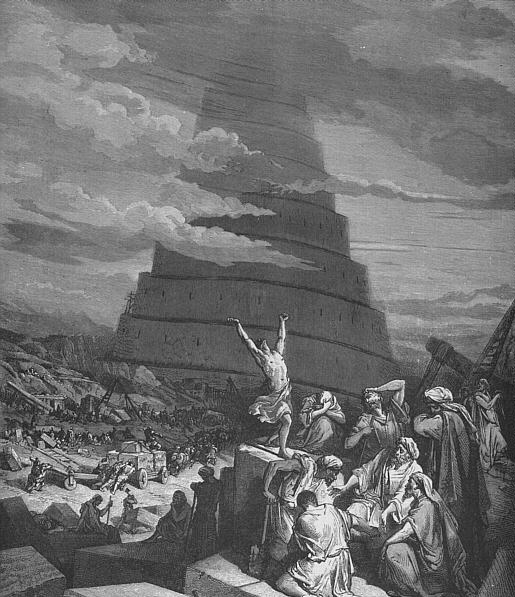
AbrahamsCurseViolence, in its most basic form, is to be blamed on evolution. Not the theory of evolution, but the fact of it. More precisely, violence is a reflex of the struggle for existence. To live animals have to eat and to eat, many have evolved to kill. While violence is endemic in the world, it isn’t so rampant that species overkill their own kind. That’s rather rare, actually. Human beings have engaged in violence against one another for our entire history, and it is only within the last century or so that we’ve made any concerted efforts to stop violence against those who are different than ourselves. Among the impulses both advocating and quelling violence is religion. Bruce Chilton’s important study, Abraham’s Curse, scours the monotheistic family tree for information on why all three major Abrahamic faiths advocate martyrdom. Or more disturbingly, why they insist on sacrifice, even of our own species.

Chilton begins with the story of Abraham and Isaac. The Akedah—the binding—or near-sacrifice of the beloved son. Since Judaism, Christianity, and Islam all share this story, and since it sets the tone of a God who seemingly demands human sacrifice, Chilton explores its implications and possible origins in sacred violence. Sacrifice predates any written records, although, as Abraham’s Curse points out, it became an established fixture in urban culture when temples began to play an important role in ancient society. No one knows why we sacrifice. By the time writing came along, it was already an established part of the picture. When the book of Genesis was penned, the story of the binding of Isaac became sacred scripture. Even in the earliest days of biblical interpretation scholars puzzled over what was going on here and its chilling implications. God, after all, comes up with the idea that Abraham should be tested with the cruelest of tests. Although the Bible isn’t explicit on the point, Abraham and Isaac never appear together again after the incident until Abraham is safely dead.

Building on this common story, Chilton takes the reader through the stories of the Maccabees where Judaism develops the concept of martyrdom, through Christianity where some actually begged for it early on, and into Islam, which still practices animal sacrifice. The idea that it is noble to lay down your life, and worse, the lives of others, points to a guilty Abraham who is a paradigm of faith. An Anglican priest, Chilton is no angry atheist. He does not, however, pull any punches. If monotheistic traditions gave us a violent heritage, they can also work to dismantle it. Ironically, it is when religions are in the ascendent that they exercise their power to perpetrate violence. All three major monotheistic religions officially advocate peace and justice. But somewhere in our deepest human experience, we know what it is to feel hunger and what an opportunistic animal does about it. Abraham’s Curse does offer solutions, however, if only we could get human beings to put down their spears and read.


Future Shock

The Jehovah’s Witnesses are nothing if not persistent. Unemployed and huddling fearfully at home during the day a few years back, I answered the door and had a talk with the local missionaries. I explained that I was a biblical scholar and not open to be swayed to new religious sensibilities, but that didn’t stop them from trying to convince me otherwise. They were oh so polite, however, and sending them away seemed like the height of rudeness. The Witnesses have roots in my home territory, and I have a soft spot for religions originating in Pittsburgh. Despite the fact that I’ve had a day job now for about three years, they still routinely stop by and leave tracts behind. One of the most recent ran a headline “Can Anyone See the Future?”

JWatchtower

Of course the story inside quickly turns to prophecy and the age-old, if false, idea that biblical prophets were fortune tellers. Still, the popular conception among the public is just that: prophets see the future. In the Bible prophets are primarily social critics. They cry out against injustice, exploitation, and false religion (!). One thing they don’t do is see the future clearly. Isaiah had to be revised at least three times in the writing. Nevertheless, prophets are engaging figures. They are non-conformists who rail against a system that takes advantage of those who are helpless—not weak, but helpless. Many people are rendered helpless by society. One size can’t possibly fit all. And yet we keep the cover closed on those nattering prophets and pump our money into a capitalist engine that is fueled by human effort and spews the helpless out as exhaust. We could use a good prophet now and again.

The question about seeing the future, however, keeps coming back to me. It might have been a good talent to have some thirty years ago as I was pondering a college major and a career that would take me deep into the Bible. If I could see the future—renting an apartment for an extortionate amount of money for the privilege of living near a city where all my efforts would be poured out to help others make money off religion while asking people with the same degrees I have to write the books that I should be authoring—would I have taken this route? Or would I, as a local boy, have taken the warning of Charles Taze Russell and made my living through haberdashery. Is it any different than balderdashery? Would I have even opened the door? Only a prophet can tell.


Gorilla Whale

Monster Boomers grew up with Godzilla. Among the many monsters on offer on a Saturday afternoon, Godzilla was one of the most obvious fakes, but also among the most poignant of realities. Even as kids in the 1960s we knew about the atomic bombs that had been dropped on Japan. We knew, at some level, that we had come to a point where one species could destroy its entire habitat and that we had obliterated millions of our own kind in just the past half-century, let alone the millennia prior to that. Godzilla represented not just a man in a rubber suit, but the fear of what we could bring upon ourselves. Radiation, burning, the terror of Japanese citizens, and yet, that odd sympathy for the monster. Metaphors were growing much faster than the half-life was decaying. Godzilla became a lasting symbol of both childhood and adult awareness.

I haven’t seen the Godzilla that opened in theaters this past weekend. Inevitably, I eventually will. The 1998 version came pretty cheaply on DVD at a local video store a decade after its release, and I saw then that the monster had lost its emotional appeal. The original, compelling Godzilla was now just another monster to be destroyed. Instead of representing the environment fighting back, it was the environment waiting to be exploited. A shift had taken place and Godzilla was less godlike than before, but more terrifying. Monsters can be lovable, too.

MCDGODZ EC052

H. R. Giger, Time reports, died this past week. Giger was involved in creature design for the new Godzilla, and the memorial by Richard Corliss notes that he was inspired by H. P. Lovecraft, among others. Lovecraft gave us the old gods, and although the original Godzilla was about the horrors of nuclear war, there is a streak of Lovecraftian righteousness to it. The universe does not care for us. We invent gods, or monsters, or both, for that. Godzilla, as originally conceived, was never really that scary. What people could do to each other, and their planet, was. Sometime in the next decade, I’ll watch the newest Godzilla, and in the meantime, I hope that the message of the original somehow manages to sink in. We Monster Boomers can be quite naive that way.


In Our Own Backyard

That monk walking towards me looks a little suspicious. Perhaps it’s that guy with a top hat and weird gun strolling next to him with a waxed mustache and carefully sculpted beard. Like a page ripped from ComicCon, the Steampunk World’s Fair draws people from all across the east coast (perhaps even further afield) to Piscataway, New Jersey, or some venue near Rutgers, every spring. In a world where work routinely stifles creativity, a weekend of subculture is about as good as it gets. As a veteran of over two decades of Society of Biblical Literature meetings, I’m used to large conferences. Only this is much more fun. The Steampunk World’s Fair draws some 4,000 people, most of them baroquely costumed, to a sleepy corner of an overly developed industrial corridor, courtesy of Jeff Mach and Widdershins LLC. I met Jeff Mach at Steampunk City last October. A natural promoter, he has a way of getting events noticed.

Steampunk is more than a literary genre. It has become an eclectic mix of the technical and supernatural, the scientific and the absinthe-laced dreams of fantasy. An element of H. P. Lovecraft fandom is clearly present at the World’s Fair, as is an interest in Victorian spiritualism. Indeed, it would not be difficult to concoct a religion out of this heady brew. Like most human cultures, there is no pure form here. Vendors will be glad to accept your money, but true artists put great effort into unique pieces of creativity and style. I’m here, not feeling entirely safe surrounded by such strangeness, wondering if this isn’t a natural outgrowth of what happens when a technically oriented society too long denies its emotional subtext.

Role-playing is catharsis. Many of us spend our days feeling relatively powerless in a capitalistic system that is overwhelming and stifling. Thomas Piketty meanwhile suggests that extreme economic inequality leads to a breakdown of a system that favors too few. Although restraining himself from the economic implications, Frans de Waal notes the same phenomenon among primates that we insist on calling lower than ourselves. Bread and circuses, we know, only kept imperial Rome going for so long before it collapsed under the weight of inherited greed. Under great pressure, the people will play. This feels a bit heavy for the Steampunk World’s Fair, however. I can’t recall the last time I saw robots rubbing elbows with bearded, cross-dressing nuns, and nobody thought any of this was out of the ordinary. Or maybe it’s just the absinthe-flavored truffles talking. I know where I will be, in any case, come next May.

A typical sight.

A typical sight.


Genizah Bible

Overproduction is a survival strategy among many animal and plant populations. Just consider the number of acorns under one oak tree, or “propellers” under a maple in the spring. Swarms of ants or the legendary multiplication of rabbits. It’s as if nature knows most won’t survive, so you’d better prepare plenty. The same applies in the publishing industry. Every book is a gamble, and you can’t know which one will sell out and which one will collect the dust of ages on a warehouse shelf—a shelf you have to pay dearly to lease. This applies to best-sellers as well, such as the Bible. By almost any standard the Bible is among the best selling books of all time. Literally more than a billion have been printed. It exists in multiple translations and in many languages. And many copies end up sitting on the shelf. So many, in fact, that eventually a kind of limit is reached and you either need to rent another warehouse or thin the stock a bit. In my position, knowing what other publishers are doing is vital, so buying their Bibles is important. Then someone else needs your shelf-space.

A genizah is a repository for “retired” sacred scripture featured in some synagogues. Texts that are too sacred to toss into the garbage when they’re worn out may be buried among others of their kind in a genizah. Well, a storage room at work isn’t exactly a genizah, but it is a room where hundreds of out of print Bibles lie forgotten. Salvation in dry storage. As the new kid in the department, I get to clean the closet. Our own Bibles we are able to sell, but the hundreds amassed from other publishers over the years, well, we aren’t running a genizah here.

My instructions are: “see that dumpster over there?” For a kid who grew up believing that it was an order of sin even to place another book on top of a Bible, the idea of filling a dumpster with the good book presents a crisis of a greater magnitude. The simply is no room in the inn. Besides, I’ve lost a job or two already. And I’ve seen the damage that Bibles can wreak in the wrong hands. Still, I followed the Bible through three degrees, and in some form or another my entire life has revolved around that book. But I’m talking like an idolator. Bibles are big business. Few Bible publishers can’t turn a profit. And profits, we all know, lead us to produce even more.

IMG_1364


Real Life

WiredForStoryThe brain, it seems to me, holds all of the cards. After all, what we call “reality” is actually a perception of what’s “really” there mediated by our brains. Philosophers and scientists have long warned us that direct participation with the universe is a figment of the, um, brain. This kind of thinking may have led me to trouble in certain jobs I’ve held, but there is no escaping it, unless we posit that there is another thinking center in the body. If there is, it must be invisible. As a dabbler in the literary arts, I couldn’t therefore pass up Lisa Cron’s Wired for Story. The premise spawns one of those “aha” moments so large that you wonder why nobody had tripped upon it before: brain science can reveal what makes a good story. For example, were I smarter, I would’ve begun with that wonderfully witty story told by Uncle Frank that kept us engrossed as kids, and left us roaring with leonine laughter. Only I don’t have an Uncle Frank, and the stories I grew up with were of the written species.

Cron, however, reminds us of a very important point: if it weren’t for feeling, thought would not be possible. This isn’t telling tales out of school. Even the most Spock-like rationalists know it’s true: emotions are essential to the thought process. Even the most proficient of thinkers can be stopped by the vague, “I don’t feel like—” (fill in the blank). To think well, we must feel that we can. When we greet someone we don’t lead with “how are you thinking?” but with “how are you feeling?” (often apocopated to “how are you?”). We interpret our world through a combination of reason and emotion. Both are necessary for survival. Think about it: does the world really make sense?

In writing, emotion plays an essential role. We lay aside the story that makes us feel nothing. Reductionistic materialists often espouse that getting down to the smallest piece of the smallest particle will eventually explain it all. The more spiritually inclined will ask them how it makes them feel. Emotion is the under-appreciated of these twins. While great ideas may come through in a novel (I can’t help but mention Moby Dick again), it is the feeling of the protagonist—the spiritual (call it what you will) struggle—that draws us in and keeps us reading. It may be secular or religious, but the realm of emotion reminds us that to be human is to feel. And if by chance you’re still reading this, I have a feeling that you might agree.


Sacred Education

A recent story in the New Jersey Star-Ledger describes the dynastic culture of some of the newer evangelical colleges. Presidents of such “universities” as Bob Jones, Oral Roberts, and Liberty, were drawn from the sons (not daughters) of the founders. Mostly they seem to prefer to name their schools after themselves, it seems. What strikes me as odd is not the dynastic succession—after all that is common in both business and Bible—but that society seems so content to see the explosion of evangelical colleges while holding traditional higher education in a strangle-hold. According to the article by Mark Oppenheimer, combined enrollment (online and in-person) at Liberty is over 100,000. For comparison, the full-time equivalent at Arizona State University (recently the numerically largest university in the country) is shy of 77,000. We bemoan the conservative evangelical impact in government and stop the flow of money to mainstream scholars of religion (among other disciplines) and wonder what’s wrong.

Education is costly. There can be no doubt about it. Still, most academics (apart from a few who’ve learned to sponge cynically off the system) are willing to work for modest wages. We don’t get into this field for the money. No matter how tall they build their towers in New York, or Dubai, some of us will believe it’s all vanity and that the life of the mind is more than a myth. But we will be the ones shouted down by the majority welcomed with open arms at Bob Jones, Oral Roberts, or Liberty. And it’s not with justice for all. Exclusion has always been the name of the game.

Higher education was established (largely by churches) with the premise that an educated society would be a prosperous, forward-looking one. And while some of those church-monied ventures took off (who can catch up with Harvard or Princeton?) they’ve left their Protestant roots far behind. In a society where bigger is, by definition, better, what hopes do universities founded with education in mind really have? You can put Ph.D. after your names whether you studied at Harvard or Bob Jones. Ours is a society of great equalization. Unless you happen to have one of those degrees from a suspect, secular university. You can see pretty far from atop the Mound in Edinburgh. Far off into the Kingdom of Fife and your mind is free to wander far beyond that. You can’t see as far as America’s shores, however, and if you want to get ahead here the safer money is invested in the dynastic colleges of the recently departed.

Evangelist at Arizona State

Evangelist at Arizona State


Underwater Zombies

Z-BoatOne of the (many) benefits of blogging about zombies from time to time, is being sent books to read on the subject. Just as I cracked open The Zombie Bible volume What Our Eyes Have Witnessed, Permuted Press sent me an ebook of Suzanne Robb’s Z-Boat for comment. Z-Boat is an action novel with a strong female protagonist, that sets two naturally phobia-ridden subjects together: submarines and zombies. Since zombies, whether they acquire their undead status by vodou or by infection, are inherently a religious creation, they find their way onto this blog often. Unlike Stant Litore’s zombie universe, Robb’s is solidly secular, no mention of deities or demons anywhere. Set in a post-apocalyptic future (aren’t they all post-apocalyptic these days? We have difficulty envisioning anything much better), the crew of the submarine Betty Loo has to fight off a host of zombies intent on eating, and yes, converting, the living.

Zombies, whether conjured by spells and concoctions or by a contagious organism, while unthinking, always appreciate converts. The age-old human fear of being overwhelmed by swarms pertains just as well to the undead. We tend to avoid cemeteries at night, but death has a way of seeking us out in any case. I knew when my wife received a rather unsubtle flier in the mail advertising a local mausoleum that I too was likely on the list. Isn’t being a zombie all about the desire to survive, no matter what the cost? Still, it’s nice to know your custom is valued, right down to the end.

As I’ve mentioned before, zombie stories are difficult to take seriously in any rational world. Why a corpse with no stomach and no tongue would want to eat baffles the quasi-scientific mind I’ve installed. The Zombie Bible suggests that it’s hunger, and a metaphor is always appreciated in a room full of zombies. In Z-Boat the drive is more along the lines of the plot. You wouldn’t have a story without the undead. A potboiler, this is a page-turner, or, if you’re reading an ebook, a page-swiper. And although the function of a submarine is inherently like an ark—the preservation of breathing animals when overwhelmed by water—when the zombie organism eats its way into the crew, the only safety is found in escaping that ark. Robb’s tale is rollicking and rough, but her female Noah gives us all ground for hope.


Nothing to Do with Pigs

Pseudepigrapha is not a word that flows mellifluously off the tongue, and the first time reader stops to give pause over its awkward beginning and several syllables. It comes from a couple of words meaning “false” and “letters” and it designates a book, usually ancient, falsely attributed to somebody important. Since most people in our post-modern world don’t even read the regular Bible (many Fundamentalists among them), throwing a false gospel out there and telling everyone what it says is a fairly safe bet for getting some attention. A friend sent me a link to a web story about the “Gospel of Barnabas” based on an allegedly clandestine Turkish manuscript, that has been circulating for a few years now. Let’s face it: how is a non-specialist supposed to find a copy of the Gospel of Barnabas, and how is the public going to know how to weigh one ancient document against another? After all, we as a society have determined that biblical scholars are more than useless, and they should be employed doing odd jobs just above minimum wage, the unbelievers!

Dante making Scripture

Dante making Scripture

The story on the promisingly named Liberaland website makes a Bill Maher of mistakes regarding the ancient document, however. Citing only vague “religious experts and specialists located in Tehram,” (after all, we all know that there are no religious specialists in North America or Europe) the article claims with an unattributed quote, that this 23-million-dollar gospel has been squirreled away for safe keeping because of its scandalous claims about early Christianity. Any biblical scholar knows, however, that truly original scandalous claims are difficult to come by. The Gospel of Barnabas has been known since the seventeenth century and it is likely a document with Muslim sympathies. It doesn’t help that actual ancient documents are sometimes held in secret (I know of one being kept in a Turkish monastery that is being held, literally, for ransom to help finance the place), and the general public is ill-equipped to know who’s telling tales outside of school.

There’s no point in denying that religions have made a plethora of mistakes and missteps over the centuries. New religions are emerging all the time and new mistakes and missteps will be made. Given that people are, according to the best evidence, programmed to believe, it would seem to this insignificant former scholar that keeping a few religion specialists on the payroll might not be such a bad idea. Of course, I am an interested party, and that makes me suspect from the beginning. I spent my early adulthood years learning to read a dozen dead languages and that has landed me in an obscure job that barely covers the rent. One thing it did prevent, however, is being taken in by claims of mysterious gospels that seem to surface several times a year. There will be those who dispute what I write, but then any document these days is liable to be called pseudepigrapha.


Witches in History

History of WitchcraftIn a rationalistic society, the concept of witches has no place. If only we knew what witches were. Sadly fascinated by the unfortunate—evil would be the more appropriate word—victimization of women in the late Middle Ages as partners of the Devil, I read Jeffrey B. Russell and Brooks Alexander’s time-honored study, A History of Witchcraft: Sorcerers, Heretics and Pagans. With its bold pentagram on the cover, I’d been afraid to take this on the bus, and so it sat in my reading pile until I figured out a way of keeping the cover from view while I perused the contents. The authors wisely spend the introduction with definitions. We define our world through lenses. For the most part, people today use the lens of science, as if that were the only way to view the universe. Still, even with that polished glass in hand, we have a difficult time knowing what “witch” is supposed to designate. Russell and Alexander suggest that it changes over time.

No doubt, witches still exist. The recognition of Wicca as an authentic religion (for tax purposes, the only true measure of a religion’s bona fides) demonstrates that. The problem is that Wicca is not in any sense a direct continuation of the witch hysteria that swept Europe, and parts of New England, centuries ago. As A History of Witchcraft demonstrates, this was a religion practiced by no one, but imagined, and feared, by many. Particularly men. Particularly religious men who had problems with women harboring hidden powers. It was a full-blown and horrible fantasy that led to many thousands dying for a religion that didn’t even exist. Modern witchcraft began in the 1930s and has become a nature religion that sees itself connected to that past, but which really only touches at the very edges.

Witchcraft was a way of looking at the world that saw all things as intimately connected. Russell and Alexander point out the similarity to chaos theory with its butterfly effect. We do see effects at a distance. Science tries to make them less spooky. Those who practiced witchcraft in ancient times, before the Middle Ages could even be dreamed, tried to bring such forces under human control. If some anthropologists are to be believed, some may have succeeded. This idea pulls at our darkest fears. Can we accept a world where we are manipulated by others in unseen ways? It happens every day. Not by spells or incantations, but by forces far more powerful than that. You don’t need to be a witch to see it. You only need to open your eyes.