Brave Old World

WorldFromBeginningsAs we continue to evolve, it is helpful to learn where we’ve been. Besides, the title, The World from Beginnings to 4000 BCE is difficult for an old Genesis reader to pass up. I knew Ian Tattersall’s book was about human evolution—a subject that has made me feel naughty ever since being raised to believe, quite opposite of reality, that evolution was a myth and Genesis fact. I remember the strange disconnect from my earliest years. Standing under the 13th Street Bridge, just before French Creek joins the Allegheny River, the main tributary of the Ohio, and, in turn, the Mississippi, my brothers and I would look for fossils. And find them we did. If you found the right kind of rock, preferably with a recent fracture, you could find the impressions of dozens of sea shells jumbled together in a glorious, fluted profusion. These were the exoskeletons of animals dead for millions of years, and thinking myself a budding scientist, I stared at them in awe, not quite sure what to make of it all. At church I learned the earth was young—not even a teenager in geologic terms—and yet, in my hand, encased in rock, contrary evidence.

Indeed, Tattersall begins his book, as many college-level texts do, apologizing to the culture that still somehow believes that the earth is just 6000 years old, despite the Tyrannosaurus towering over your head at the Carnegie Museum. Humans are latecomers on this scene, however. Tattersall gives a solid introduction to the current human family tree. Instead of being ashamed of our heritage, I’m more inclined to feel a little pride. Our ancestors, prey to large carnivores, took a distinctive evolutionary track that enlarged our brains to help us outwit our natural enemies and learn how to destroy the very planet we inhabit. Well, maybe pride is a little too strong a word. Good and evil, it seems, always stroll hand-in-hand. So we evolved, but not yet to perfection.

Evolution always makes me think of the future. A strange sense of accomplishment makes prominent thinkers, particularly those who declare themselves bright, marvel at our greatness. I can’t help but to think that something better must lie ahead. We’re told that evolution has no direction in mind—traits that help to survive until reproduction are all that really count—and yet, having the minds we do, it seems that something more might be going on. Have we built all this merely to have sex and die? Glorified May-flies? Isn’t the future a wonder of what we might become? Evolution takes so long, even with punctuated equilibrium, that we’ll never live to see it. I have a suspicion, however, that if we give it enough time, we might offer our as yet unimagined offspring a world as full of wonder as it always has been. And they’ll still be standing by the river, staring in amazement at animals made of stone.


Jesus of Hollywood

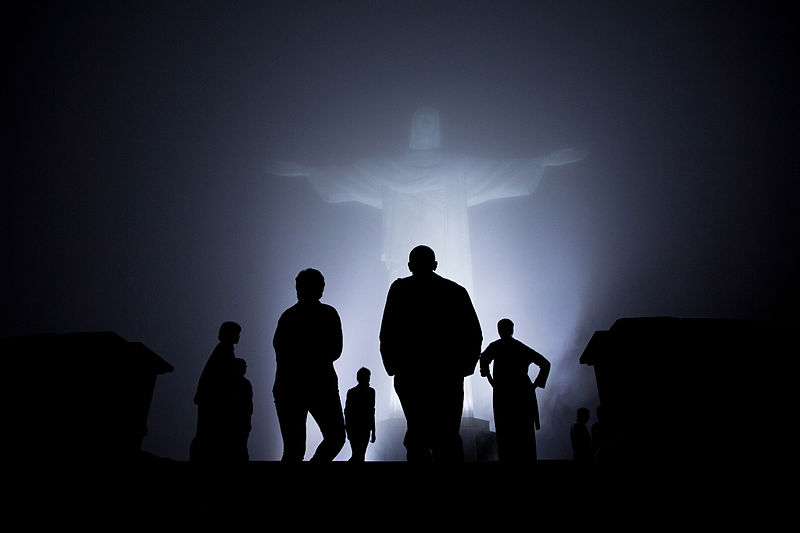
What hath Hollywood to do with Boston? Not enough, apparently. In this week’s Time magazine, an article entitled “Films Are His Flock” by Josh Sanburn revisits the ark. Actually, it throws the doors open a little wider—it looks at Hollywood’s effort to woo the religious. Ironically, although universities all across the country offer courses in religion in popular culture and the Bible in popular media, they are constantly trying to rid themselves of the detritus known as biblical scholars. High brow is in, while Hollywood makes no secret of its love to the common people. For Americans the common person is religious, or at least doesn’t block out religion like the educated crowd does. And they come with pockets lined. Religious movies, if marketed well, can be phenomenal successes. In my four years teaching at a secular state university, my Bible classes were filled to capacity each semester. Still, Rutgers coyly refused to hire me full-time. “There’s no interest,” they seemed to say. “Nobody reads the Bible.”

Meanwhile, according to the article, Jonathan Bock, founder of Grace Hill Media, a marketing firm that sells the Bible to Hollywood, knows a good thing when he sees it. Noah is about to come splashing into theaters. Son of God has already incarnated. Exodus is yet to come. And those are only the movies that are explicitly religious. I had no trouble pointing out to my long-suffering January term classes that religion plays a role in many movies, most of them explicitly secular. Those in Hollywood know that religious themes—the Bible even—resonate with the general public. Having grown up in, or maybe even below, John Q. Public, I have always known that the Bible makes good movies. Doubt it? Ask E.T. As he appeared risen, ascended, and glorified, the stranger from above wearing a white shroud and backlit with a nimbus, many of us squirmed in our seats for we had seen a clever representation of our Lord.

Perhaps it is resistance to the McCarthyism of the 1950s that so many intellectuals associate with religion, but academics just can’t seem to understand that this is important. The Bible business is a multi-million dollar industry, and yet, universities would prefer to ignore the implications. Meanwhile in Hollywood, they’re trying to make sure they get the blend just right. Theatrics and theology. You’ve got to be careful whom you choose to offend. The Last Temptation of Christ, based on a novel written by a devout Nikos Kazantzakis, just didn’t perform as a Scorsese movie. It is the job of people like Jonathan Bock to figure out why. And it isn’t hard to see that it’s a buyers market on America’s left coast. Indeed, without a hint of cynicism the Bible will bring in a flood. But that’s just academic. Or it should be.

Noah looks down over Times Square

Noah looks down over Times Square


Apes and Atheists

Bonobo&AtheistFrans de Waal is among the sanest of popular science writers. I’ve been following his non-technical work since Our Inner Ape through The Age of Empathy to The Bonobo and the Atheist. As de Waal himself explains, he tended to leave religion out of his earlier works since, for a scientist such topics are generally taboo. His direct address to religion in The Bonobo and the Atheist is refreshing and enlightened. As he notes, de Waal does not believe in God, but he doesn’t believe in the abolition of religion either. This sets him against his fellow biologist Richard Dawkins, who is so bright that the rest of us are burnt out dimmer bulbs by comparison. As de Waal soberly asks: what does science offer in place of religion? What is the point of taking away something that has evolved from our early primate days without offering anything to fill its spot? Even an ape would object.

What makes The Bonobo and the Atheist so engaging, apart from de Waal’s writing, is the openness of his outlook. De Waal suggests that the origins of morality and empathy can be glimpsed in apes and monkeys. He cites the reaction of chimpanzees to rain storms and even waterfalls that hint at early religious development. As I’ve suggested on this forum before, religion may even be allowed to animals. Their experience of religion is certainly not the same as ours, but there is evidence of both thought and feeling. When these are brought together they form religious belief in Homo sapiens. Why not in our ancestors and fellow animals? No, animals don’t develop elaborate doctrines or precious rituals. They do, however, reverence the powerful, ponder death, and feel emotion. Some of our great thinkers are ready to cast all that aside in the name of progress. More humbly, and circumspectly, de Waal considers that evolution is telling us something. And when evolution speaks, its children should pay attention.

Descriptions of reactions and behaviors that we consider unique to humans among the animal world draw me to de Waal’s books. As a scientist de Waal has to draw logical conclusions, and those conclusions point to an inner world that is not so much unique in humans as it is evolved. Religion, I believe, is one of those traits. If animals show some of the early stages of religious development, including a basic form of ethics, how does that devalue our human efforts to explain our universe? Religion is in good company, along with opposable thumbs and basic language comprehension. Looking at how we treat each other, I consider being related to animals a compliment most of the time. Without a doubt some of the ethics Frans de Waal illustrates among the bonobos exceed those I’ve experienced at the hands of many who think of themselves as made in the image of God.


42 Shots

Many of us were raised with the figure of a divine father who is ready to whip off the belt for any infraction we may make, intended or not. On a more human scale, our criminal justice system locks people in prison often on the basis of race rather than purely objective considerations. The infographic below demonstrates this clearly. African-Americans are disproportionately represented in the prison population in a society that is still reluctant to offer true justice to all citizens. When these numbers are wrenched from statistics and brought down to personal levels, the results are distressing indeed. I recently read of the case of a promising youth who was in the wrong place at the wrong time. His lawyer, a prominent African-American, pled with the judge for leniency for this young man who had great potential. Time in jail, even in one for youth, would probably scuttle this boy’s hopes for a productive future. Being an American, though, I had no hope that this might end well for the boy. Still I read on as the judge sentenced him to jail.

None of us likes to be reduced to statistics. At the same time, some social-justice disparities are easily overlooked until they are placed in such stark terms. Xenophobia is a normal human reaction. In fact, it is displayed in apes and other social animals as well as in people. Its biological function seems to be group cohesion and safety. We’ve evolved beyond that, however. The great promise of the New World was freedom. Unless you were imported as a slave. The Bible, being a document of its time, lent its voice to the approval of keeping slaves and those who wanted to justify their horrid treatment of fellow humans in the name of God relied heavily on the Good Book. We still put considerable roadblocks in the way of African-Americans and others of minority status, believing that we are somehow justified in the myth of Caucasian superiority. Humans are humans. Society benefits from the gifts that different traditions bring to the cultural table. And yet, we continue to lock up those who look different.

Justice shouldn’t be a distant dream. We know that for those who do commit crimes reformation is a possibility. Critics cite the expense, but I have to wonder whose bank account is being audited. As a society as a whole we could all benefit from some reform. The profession from which I have been repeatedly blocked is one of the few that has taken demographic configuration seriously. Some must pay the cost for others to be given an opportunity. Of course, opportunity itself is a rare commodity these days of hoarding and one-percenters. Perhaps those who build towers and remove themselves from the rest of society have put themselves in a kind of luxurious arrest. Until they are forced to share, however, those of us on the street level have to do our best to help each other out. Take a look at this infographic from arrestrecords.com and see if I’m right.


For Love or Money

IMG_1258The Council for Christian Colleges and Universities is seeking a Christian way out of a contract. It seems, according to a recent Chronicle of Higher Education article, that Edward Blews was released from his $300,000 position “without cause” (I know how that feels—not the $300K part, but the “without cause” aspect), and he wants this resolved “in a Christian manner.” To the tune of two million dollars. That’s Christian if anything is. Christian higher education counts for a fair proportion of schools in the United States, while the CCCU, defining itself as “Christ centered” has only 120 members in North America at the moment. It was founded in 1976. Ironically, my old alma mater does not find itself on the list, although Grove City College often proclaimed itself as God’s Country Club during my years on campus. Among the services listed on the CCCU website is advocacy and public policy, that will allow them the “crucial right” to hire “only persons who profess faith in Jesus Christ.” And perhaps, who can’t afford a lawyer.

Academic freedom has been on my mind a lot lately. Conservative Christian views seldom benefit from academic inquiry. These views, most of which are decidedly modern, are passed along as a package with political riders, and strive to see themselves as counter-cultural, although, in fact, they resemble the 1950s more than the 2010s. I have no idea why Blews was let go, but I do know that “without cause” hides a multitude of sins. In my case, it was shorthand, I think, for just being too liberal. I was doing a great job, but endangering the morals of majors, I guess. Teaching critical thinking does have a price tag. I don’t see seminaries on the CCCU member’s A-list at all.

It is becoming increasingly obvious that we need to understand more about human religious motivations. Reason alone cannot satisfy brains where emotion may be just as critical to thinking as logic is. I know that when I’m depressed all thoughts seem to flee, except the most dismal of the lot. Reason can’t penetrate this fog. Yet reason itself cannot be ignored. The facts it teaches are frequently uncomfortable—to scientists as well as religionists. There’s nothing fair about it. When it comes to legal agreements, however, we are at the mercy of lawyers. Ironically, those who head Christian coalitions of various sorts feel the need for financial compensation. A little lucre to wash down the humility of dismissal. “Without cause” can be the most unkindest cut of all, eh Marcus? Even Judas got his 30 pieces of silver, but the cash never satisfies.


Holy Cows

Back in the days when a book was a luxury item, great care was taken in its production and protection. Having your investment lying around with flimsy paper covers that would begin to grow blunt and roll back even before you finished reading would have seemed irresponsible. To shield the vital contents from the weather and other dangers, leather was used as a kind of skin—come to think of it, it really is skin—and safely the words were housed. Many of these volumes were, naturally, Bibles. Leather and the good book became synonymous for some—even with onionskin paper a book’s not a Bible with just a printed case hardcover. Paperback? How can you take that seriously? To make a Bible authoritative, it seems, cattle must be harvested. After all, sacrifice is at the center of it all.

Being a long-time vegetarian, this often gives me pause. My belt and watch-band are made of canvas, and I try my best to avoid leather shoes (although this is often difficult). I’m pretty sure that my leather Bibles are faux skin. Even though my family respected the Bible to the point of bibliolatry at times, we really couldn’t afford genuine cowhide. Now I take a more circumspect look at the cost of appearances. We’ve outlived the need for animal-bound Bibles. It has become more of an expectation than a necessity. An affectation. There is, however, still a big business in leather Bibles, and Italian leather seems the best fit for a Semitic savior.

What troubles me the most is the idea that animals—deemed not conscious by the very religion that allows their slaughter—are made to pay the cost for human foibles. The whole sacrificial system is built around a radical inequality. Humans domesticated cattle for their own exploitation, and their skins, when no longer needed by their hosts, came to clothe holy books of their masters. In any shade or hue of the rainbow. We can make it less grim by dying it a cheerful color and declaring its progenitor had no thoughts in its vacuous head. It lived a life of servitude and when it paid the ultimate price, it received the martyr’s gift of becoming part of the Bible. The end result? We should feel less qualms about our peccadillos and atrocities. We’ve wired their brains to trust us—we are not the predators to fear. Try not to take it personally. It’s just what our religion demands of us, for we too are a domesticated herd.

From the herd of purple cows...

From the herd of purple cows…


Flood of Fancy

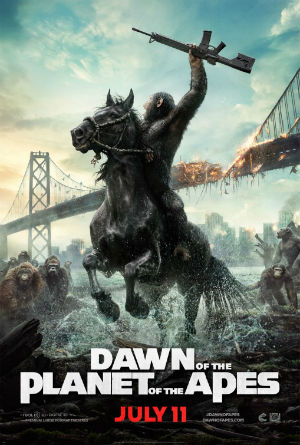
Years ago I was approached to write a book about Noah. There was still some hope at that time that I might find a university job and that my words would have more credibility than just any old internet hack. At the time I’d read just about every book about Noah that had been written—and there weren’t that many. Biblical scholars, beyond tying the story to its obvious Mesopotamian sources, have long relegated the tale to the nursery school of biblical drama. Sure, it’s a great story, but what serious scholar takes an interest in a great story? Well, I outlived my academic job and it looks like Noah is going to have the last laugh. We’re told that the Pope has been tweeted about the movie by Russell Crowe and that several Islamic nations have already banned it. According to Today Darren Aronofsky, the director, is more interested in getting non-believers into the theater than trying to please the faithful. Well, let’s face it. A movie based strictly on the Bible would have to be pretty preachy.

The bigger draw seems to be this: our society is simultaneously deemed secular and religious. Americans go to church. They also respond to surveys that they believe in God, the Devil, Heaven, and Hell. They also act as if none of this were true. Business practices tend to be anything but caring, and we show no concerted effort to make sure basic healthcare is offered to all our citizens, let alone the millions who are daily suffering and dying elsewhere in the world. We don’t want to reduce our emissions as a real flood—a literal flood—is on the rise on a global scale. Maybe we’re waiting for a biblical-scale miracle to save us. Noah’s face stares out at you all across Midtown. Judgment is upon us.

NoahMovie

Action films draw male viewers. Religious movies draw females. Aronofsky and Crowe have the winning combination. No gender-bias for a secular-religious nation that has enough loose change to spend a weekend at the movies. The biggest complaint is that it isn’t the Bible. I have to admit I’m kind of enjoying the hype, despite the fact that I never received the chance to write that Noah book that was next on my agenda. If I had, now it might have enjoyed the sales that Irving Finkel’s The Ark Before Noah—scheduled for release three days before the movie—surely will. Timing has never been my strong suit. Of course, money can be its own sort of flood, and many more drown in it than in the literal waters of a secular-religious society. According to Genesis a raven was released to fly about looking for land. The Crowe might have been a better choice since movies, as we all know, improve upon the book.


Flatland

ThePowerOfPlaceThe world is flat—not.  Harm de Blij’s The Power of Place: Geography, Destiny, and Globalization’s Rough Landscape is, despite the author’s hope of improvement, a sobering read.  Geography is one of those subjects that studies show Americans consistently failing.  But de Blij begins and ends with one of my favorite themes: that place defines a person.  One of the realities with which all humans must reckon is that we have no control over where we’re born.  As de Blij demonstrates, not fatalistically, that place will determine to a great extent what life has to offer us.  Chances are that most of you reading this were born in what social geographers call “the core.”  The core is that affluent part of the globe that encompasses successful states with relatively good prospects for their citizens.  It is, numerically, the smaller part of the world’s population and it is the base of claims for the world’s flatness—that is, its apparent sameness across borders.  De Blij, who has crossed one or two of those borders, knows that there is a roughness inherent in this world, and those outside the core pay the highest price.

Among the many factors de Blij examines one—religion as an accident of birth—comes up repeatedly.  Religions quickly complicate efforts at fairness and equal distribution with various theologies of why the poor are poor and that we can justify leaving them that way.  Or worse, a religion may decide, since it alone is right, that those believing otherwise ought to be destroyed.  Internecine as well as international rancor is a commonplace of the news as religions compete for the alpha male spot on the human (actually man-made, gender distinction intended) hierarchy.  The religion you’re born into, for most of the world’s population, is the correct one.  Missionaries, by definition, disagree.  Theirs is the true correct religion and even if it doesn’t improve the lot in life of the poverty-stricken, it will at least make for a better afterlife, cold comfort though it may be.

One issue that de Blij touches upon only minimally is the sacredness of place.  Of course, that is often the ground for conflict, but in smaller ways we often feel an attachment to the place we enter the world.  Beyond visiting the relatives still near my hometown, sometimes I just want to go there and linger, pondering what this world intended for such as me.  The distress I feel when I see that the hospital where I was born has been closed down, the houses in which I grew up razed, and even my first school remodeled, touches something deep and undefinable.  It is a small part of who I am that has been erased, the silencing of the clock’s ticking.  Those rough hills were my home for the two most formative decades of my time on earth and I belong to them.  I owe them who I am.  This is the mystery of sacred geography.  The refinery fires, the childhood friendships, the Christian bookstore that propelled me in a direction I may alter but not eradicate.  It’s not rational, I know.  But like many animals, I feel the draw, and de Blij points out the many benefits and frightening realities that attend it.


Frozen Few

It’s that time of year, neither winter nor spring, when ambivalence is in the air. Gray skies with just the first damp aromas of a change in the season, followed by another snow storm and icy winds custom-made in the arctic. So we turn to movies. Frozen is continuing to make headlines and break records. And although the critics voice strong opinions, ambivalence about a powerful message still rocks a society that can’t decide if a woman director having success is an anomaly or an idea far past its time. Stories about the animated feature crop up on the internet on a daily basis, five months after its theatrical release. Some claim it is the most Christian movie in years while others claim it has homosexual marriage at its core. The queen doesn’t need a man and the world’s most conservative, progressive society is in a muddle.

Perhaps I’m just showing my age, but I noticed what I thought was an older child in the sauna when Anna first meets Kristoff. The movie didn’t give me any clues as to his being a gay partner to the shopkeeper, although it’s none of my business if he is. Disney movies have had subtle clues to a kind of radical equality that I’ve noticed over the years, from Edgar’s license plate that reads RU-1 in The Aristocats to two masculine creatures sharing a pad in Monsters Inc. I even remember some people staring suspiciously at Ernie and Bert while the insanely ambiguous Teletubbies were faulted for carrying purses and dressing in primary colors. (Even Judas Iscariot kept a purse, according to the Bible.) A good, empowering story is suspect if we think something more is going on when the lights go out in cartoon-land. Our culture can seem to think of little else beyond mores and how to enforce them.

Globalization has repeatedly demonstrated that there are many different ways of being in the world. And yet, when worlds collide the more conservative culture inevitably makes claims on its more “progressive” neighbor. We see this happening as the church in Africa, now larger than the church in America, drives social policy through denominations that somehow feel guilt at promoting equality. Perhaps proselytization is, at the core, of our fear of difference. What if the other guy is right and we are wrong? Read that back into all our misguided ancestors and we feel chilled indeed. How far do we really trust objective truth? My guess is that ice ages have come and gone that have forged the truth of the moment. Only when the cold faces us do we really admit just how slippery truth might be.

The beauty of ice.

The beauty of ice.


Wee People

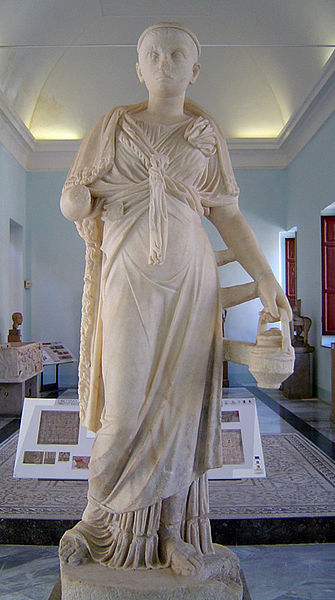
Whence we come influences our outlook. Sometimes invisibly, at other time quite consciously. I remember as a child, wanting to be honest about the wearing of the green on St Patrick’s Day, asking whether we were Irish or not. Of course, for many Americans being Irish, German, or Swedish really means having ancestors long ago from a different country. Most of my ancestors had been in America for some time—a couple hundred years at least. In New Jersey, where many people are literally from elsewhere, that can seem exotic. Great-great-grandparents in one of my lines can be traced to another country, but most of my ancestry is already settled in the United States long before that. Unknown to my mother at the time of that question, one of my ancestors was indeed from Ireland, a stowaway, as I understand it, and thus I could wear green without being dishonest. (Children can be so parsimonious.) When I saw the locals walking away from yesterday’s St. Patrick’s Day parade in my local town it was obvious that not all of them were Irish (or American with an Irish ancestor), but they nevertheless came out on a cheerless, chilly day to join in the Celtic spirit of celebration. St Patrick’s Day is all about belonging.

Photo credit: Andreas F. Borchert, Wikicommons

Photo credit: Andreas F. Borchert, Wikicommons

The rich mythology of Ireland was never supplanted completely by the Catholic influence that became synonymous with many parts of the country. Leprechauns, the little people with their pots of gold, have been fused into a mythology of St Patrick and his magical clover that somehow explained the Trinity, while it is the four-leaved variety that brings good luck. And Ireland’s snake-free evolution was attributed to sacred innovation rather than the Ice Age, the true culprit. It is our myths who make us who we are, however. Where would Ireland be with a massive chunk of ice preventing snakes from evolving in a land where a genetic variation sometimes leads to a fourth leaf on a common grass of the field? And where is that pot of gold anyway?

And yet, within the last year construction on a highway was halted in Iceland (I know I’ve island-hopped here, despite the difference of a single consonant) because locals protested that it would disturb the habitat of the little people. While a post-graduate representative to the Faculty of Divinity in Edinburgh (switching islands yet again), one of the faculty admitted to a fascination with Celtic folklore. A more rational theologian challenged him saying, “what about the farmer who loses valuable space in his field because he leaves a ‘magical’ tree standing—isn’t that tragic?” The renegade faculty member allowed that this too was especially wonderful. A world enchanted is swiftly disappearing beneath the unrelenting tires and blades of scraper and cold planer, or the axe-bearing lord of ultimate efficiency. The soul is just another casualty on the road to enlightenment. And yet yesterday, those with ancestry from Africa, India, China, Italy, and even England, gathered to watch the parade where the mythology of an island that never had an empire nevertheless draws together people of all ancestries to wear a bit of green and to celebrate whence we came. St Patrick’s is a day to celebrate whoever we are. And to leave the door ajar for the wee folk that might still be around.


Today’s Truth

I spend a lot of time on Amazon. My job is one of those where it is a legitimate form of research—finding authors, seeing what’s already available on any given topic, checking prices. It’s kind of like those old, heavy tomes, Books in Print. Only lighter and faster. Of course, Amazon also lets anyone become an author. Often I’ll spy a name that I don’t recognize even after years of being in biblical studies. Many of these books are written by someone with a keyboard and an ego, but no real training. Then I came across what is surely a death-knell to civilization: books that are collected and printed articles from Wikipedia. Yes, that’s right—the source your professors told you never to cite is now available in book form. University Press (university-press.org) sounds like a reputable publisher, but as the website explains, this is a place to get Wikipedia articles on related subjects bound in book form. Author not included.

I don’t wish to single out University Press; many individuals and small-time publishers exploit the fact that just about anyone can generate enough words to constitute a “book.” Long before Johannes Gutenberg was an ink-blot in his parents’ eyes, books were hand-written. That was a form of natural selection since most of the populace was illiterate. A thousand pages written by hand are authoritative by any measure. The printing press gave rise to publishers—the gatekeepers of wisdom. The publisher decided whether ideas were worthy of print or not. Of course, I’m a bit of a hypocrite for writing such things, since most of what I’ve published has been declined a time or two before being accepted. In any case, the role of the publisher was to ensure the accuracy and orthodoxy of the book. Thus it was from Gutenberg to Wales.

Wikipedia is the first stop on many a quest for new information. With a high search engine optimization, and a built-in collective corrective, in theory Wikipedia should be mostly accurate. Depending on when you access it. A few years back I was researching a historical individual when I came across a sophomoric comment about said individual’s paternity. Since anyone can edit, I deleted the statement and read on. Still, since that time, doubts have haunted me about the combined wisdom of the human race. To hear politicians tell it, universities are merely liberal propaganda tools and the truth resides in politicians’ mouths only. I shudder at the implications. It used to be on Amazon that I knew the books had been vetted by some kind of expert reader (although they even let such as me work as an editor in the industry). Now each item has to be examined closely. For depending on the day and hour, the great wiki of truth is ever changing.

From Wikipedia, of course.

From Wikipedia, of course.


Credo Universitas

DeclineSecularUniversity“I am a Christian gentleman and I teach my course as a Christian gentleman.” The quote was made to me by a colleague at a state university, regarding a former professor of Hebrew Bible, or, in this instance, “Old Testament.” The idea rankled me a bit. You see, religion departments come under pretty constant attack for such things, since in the secular university—especially one that receives state funding—the disestablishment clause looms large. How can one simply bring one’s personal beliefs into the classroom as if normative? I suppose that’s why C. John Sommerville’s The Decline of the Secular University gave me pause. Sommerville, an emeritus professor of History at the University of Florida is no crackpot. He raises some major questions that universities, of all places, should be debating.

While Sommerville is not a scholar of religion per se, he has written about religion before, and he raises some vital questions regarding the secular enterprise. It should be no surprise that secularism can become a kind of religion, especially since the definition of “religion” is anything but fixed. We still don’t relally understand what religion is, except that every human seems to have it. Some call it rationalism or science, but it is essentially belief. None of us has direct access to reality as a Ding an sich, and we all choose to believe senses, reason, and tradition, to varying degrees. Our universities should teach us to be skeptical, but can they excise belief all together? To do so would be to reduce students (and that endangered breed, faculty) to sub-human.

What is it that makes the educated so afraid of belief? I suppose it must feel like weakness to a harsh rationality. Like the implacable Romans of celluloid fame, unmoved by human emotion. Mr. Spock in charge of the nursery. Religion is quite at home in the realm of emotion, and like it or not, humans cannot survive by reason alone. We need our feelings—survival instinct, by itself, is not always rational. As a society, however, we’ve downgraded religion to the point that universities have trouble taking it seriously. I’m sure it would open a few administrators’ eyes very wide to sit in on the religion classes I’ve taught at secular schools. Although most of the students are not majors, all, in some sense of the word, are believers. Sommerville’s book contains much that is challenging, but I think his thesis is absolutely correct: any institution that claims to be human, but removes the possibility of belief, is deluding itself and all its customers.


Backyard Archaeology

Among safe topics for discussion among strangers and casual acquaintances, the weather tops the list. It affects each and every one of us continually, and there’s nothing we can do about it. The ideal neutral subject. In fact, however, the weather is highly freighted with religious thinking, deeply sublimated. If you listen closely, you will hear it. Well, this year, at least in the northeast of the United States, winter has been the topic. We still have snow on the ground in New Jersey, and it has been here continually since January. The thaw has begun, however, and when I went to fetch the paper I noticed a newly melted item on the lawn—an archaic newspaper. Obviously the paper-deliverer missed the front steps that day, and by the time I stepped outside it had already been buried. Curious, I brought it inside to get a first-hand look at the past. It was the Monday, February 3 paper. The day after the Super Bowl. Apparently nothing much else was happening in the world a month ago. I don’t even know who played in the game.

IMG_1237

Religion and sports have a long pedigree. One of the first books I signed up at Routledge was on religion and sports in American culture. Routledge decided to sack me before the book was published, so I haven’t had the opportunity to see it yet. Nevertheless, it is clear that the meaning once provided by the strong arm of the Lord is now covered by the stronger arm of the athlete. I’ve watched in fascination as reporters question the players after the game, panning for bits of wisdom as if they might actually get us up off the couch and lead us to a few minutes of physical glory. Instead cliches trickle out: “we saw what needed to be done and did it.” “I took it to the next level.” “First of all, I want to thank Jesus.” Each one like a nugget of pure gold. I still don’t even know who was playing.

On my kitchen table, however, sits a soggy newspaper with the answers to that. The news is old news. And damp. We’ve had an entire Olympics since then, and war seems to be breaking out in the Crimea. Wait a minute, what century is this again? It seems that no matter how old the news is, it still isn’t old enough. One of the oldest news flashes received by humankind, if the Mesopotamians are to be believed, is that there is a huge flood coming. I turn on my browser and lo, a flood indeed! Noah will be released later this month. Posters began to appear in Manhattan as soon as the Super Bowl cleared out. Move on to the next big thing. And, unbeknownst to me, a newspaper laid buried beneath the snow, containing all the information I needed to know. I’m still wondering how that flood turned out.


High School All Over

“Jungle calls around the corner!”  This shout was followed by hoots, grunts, and squeals as the bus turned, intended to madden the driver of infamous bus 18. My high school bus had a reputation for driving its drivers—driving them to drink, anyway.  Some of the more memorable replacements had unflattering nicknames hurled at them: Wedgehead and Illiterate Bob are two I remember well.  I arrived at school smelling of pot and slightly deaf from the shouting more than once. Then we got a driver who fought back. One day he expelled all the boys from the bus for the remainder of the week. Being a Bible-reading, church-going youth who sat quietly up front, I felt that I didn’t deserve this punitive measure. Still, I felt sorry for the drivers.  And I’d learned a valuable lesson—being responsible for the safe arrival of fifty people is a lot of pressure.

Yesterday I climbed aboard the adult NJ Transit bus 117. Only later did I ominously realize that if the first digit were added to the final digit, you would get bus 18.  Or was it really the Pequod?

Those of us who stumble aboard the bus before 6 am are a docile, sleepy crowd, for the most part.  I open my book, and if someone insists on talking, plug my buds into the white noise app on my phone.  This is how I get my reading done.  Some of the regulars like to argue with the drivers. “You’re too early,” one woman says (although she’s ironically on the bus at the time). Or “Why didn’t you stop for me? I had to chase the bus!” The latter was the complaint yesterday.

For being soporfiric, the early crowd is pretty tightly wound. Daily we spend about 4 hours commuting for 7 hours of work.  We catch the early bus because traffic going into Manhattan meets the dictionary definition of Hell. Well, the complainer chose a tightly wound driver to challenge yesterday.  The complainer wouldn’t let up. I could hear the yelling through my static-filled earbuds.  In a move that would’ve done Illiterate Bob proud, the driver slammed on the brakes right on the highway and pulled over.  He demanded the lady off the bus.  She wouldn’t leave. He got off the bus and called his supervisor for 30 minutes. At the dawn of rush hour. The passengers began to grumble, not least of which was the complainer.  Held hostage, we all knew we were going to be late for work. I put away my book.  I’d been here before. I knew what would come next. I braced myself.  “Jungle calls around the corner!”

In the belly of the whale.

In the belly of the whale.


Any Witch Way

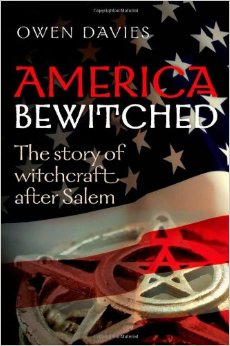
Witches&WitchHuntsIt’s easy to feel smug over the past. At every moment of human civilization we deem ourselves higher than those who came before. There’s no doubt that the eradication of the thought-processes that led to the witch hunts of past centuries seems decidedly positive for all parties involved. Wolfgang Behringer’s Witches and Witch-Hunts, however, is a surprising book. I’ve read a fair number of studies of those dark ages when people were cruelly tortured and murdered in horrendous ways because they were deemed to be in league with Satan. As usual in such books, Behringer begins with that history. What makes his study surprising, however, is that he doesn’t stop in the eighteenth century when, in what we’re usually told, the witch trials ended. Behringer points out that witch hunts are still happening, and that the rates of those killed perhaps rival those, per capita, of the numbers during the Middle Ages. How can this be? In an era of global awareness, we sometimes forget that the focus isn’t always on Europe or America.

In many parts of the world, witches are still part of local belief systems. Not all of these are women, by the way. Many cultures favor the male witch. What these cultures do have in common, however, is their natural fear of black magic being suppressed by colonialism. More “civilized” westerners came and enacted laws which, to the minds of the locals, protected the witches! Local tradition of eradicating those who practice black magic was considered righteous, and now the government forbids it? That seems strange, especially when many of the colonizing forces were also interested in Christianizing as well. Missionaries wanted to affirm belief in the supernatural, and, ironically, often became the vehicles that allowed beliefs in witchcraft to continue. As Behringer points out, some populations converted to Christianity precisely because it allowed the continued belief in physical evil—therefore witches—and the eradication thereof.

This creates a vexing problem. When cultures meet they inevitably attempt to assert their values. When the technologically superior force their ways of life on those behind on that front, a kind of pressure of misunderstanding builds. Instead of bringing witches to trial, they lynch them instead. It seems we may have underestimated the pull that belief in witches has on people. Traditional societies uninfluenced by the developments in Europe also came up with the idea of witchcraft independently. Witches, it seems, stand for the classic issue of theodicy—explaining why things go wrong in a world that should be ordered by deities. Coincidence is always cold comfort in explaining loss. Even the rule of law breaks down. At the same time, how can it be right to allow the murdering of those suspected of witchery even in the enlightened twenty-first century? This fear is one of our most abiding demons, and the solution remains out of reach, unless, of course, we allow ourselves to resort to magic.