Facebook Apocalypse

Facebook can be a fickle friend. Oh yes, there are rules that we know everyone doesn’t quite obey. You are not allowed to falsify evidence about yourself on the great FB, although characters like Jesus have their own pages. The Chronicle of Higher Education this week followed the efforts of a University of Nevada at Reno librarian who tried to use Facebook for educational purposes. Donnelyn Curtis had set up Facebook accounts for two students early in the twentieth century to give current students an idea of how times had changed. The pages were summarily removed by Facebook staff, leading to the unfortunate second deaths of Joe McDonald and Leola Lewis. Second deaths always get me thinking about the book of Revelation. After all, we are now into the fatal year of 2012.

My Mayan Calendar

Few events elicit religious fervor like the end of the world. In the most highly touted end-of-the-world scenario since 2000, 2012 has emerged as the great contender for wrapping up the show we call life on earth. When I spotted a calendar to prepare the user for the end of the world, well, how could I resist? Each month on this terminal calendar features facts pointing to the culmination of this strange experiment that evolution hath wrought. If we can’t pull off a good, old-fashioned Evangelical rapture (sorry Rev. Camping), maybe the Maya can get the job done. They certainly managed to pull off an impressive vanishing act a few centuries back. Or did they? Despite the overrunning of enthusiastically avaricious Christian invaders, the Maya accommodated themselves to less-than-ideal circumstances and survived. They are still among us. Their culture, however, didn’t fare so well at the hand of the church. Nobody’s asking them about any of this.

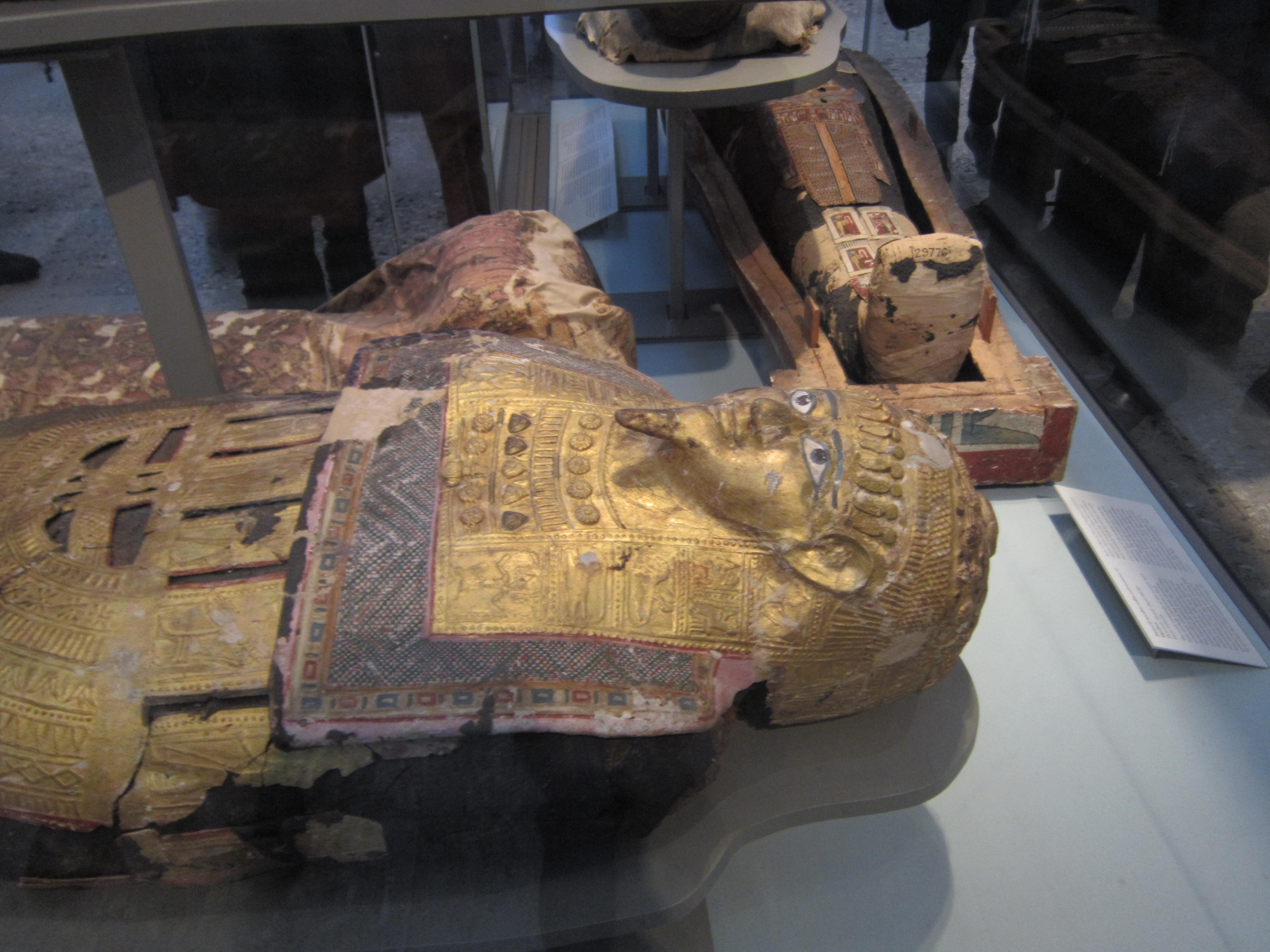
Apocalyses occur all the time. When religions meet, one inevitably tries to vanquish the other. No one walks out of that arena without a limp. And the winners look over their shoulders for ever after. To prepare for this apocalypse, the January on my new calendar narrates how the Mayans and Egyptians shared some cultural secrets—such as how to build pyramids. How did they know about one another? My calendar says they could have walked across Atlantis, or they might have been carried by giant, domesticated condors. Either alternative seems as likely as the other. Either alternative seems about as likely as the world ending this year. But then again, already in 2012 a couple of promising young people have already been kicked off of Facebook for being dead. I think I feel the apocalypse beginning already.


Political Insantorum

Some weeks it is Thursday before I get a look at Tuesday’s newspaper. It has been one of those weeks. On the op-ed page of the New Jersey Star-Ledger is a piece by Harvard professor Noah Feldman on the somewhat surprising rise of Rick Santorum in the melee otherwise known as the GOP nomination process. The intolerant Catholic (Santorum, not Feldman) has surprised many with his appeal to the Evangelical Protestant camp, the traditional enemies of anything popish. As Feldman points out, if you add up Santorum, Bachmann and Perry, you get the equivalent of a 2008 Iowa Huckabee with Romney staying about where he was back then. This calculus of political doublespeak points to a very basic, fundamental lie at the heart of it all: none of the candidates is a theologian, but they act one on TV. Santorum’s Catholicism is blurring with Huckabee’s Baptist sensibilities in a way that should make even the most profane Reformer shudder. Baptists supporting a Catholic? This marriage can’t end happily.

I am no politician. I’m not even a political science student. As someone who has kept a weather eye on religion for over forty years, however, it is clear that “Christianity” in America is a house built on shifting sands. For a nation founded on the notion of religious freedom, an awfully large number of citizens sure want to limit the options. Freedom of religion is the choice whether to sit on the right hand side of the aisle, or the left (with the former being strongly urged). Freedom of religion can be frightening because no one has all the answers. And politicians, who regularly distance themselves from the rest of us, send their children to private schools to underscore the fact. Is it not so, Mr. Santorum?

Those who want to take their dogma to the White House should make sure it’s at least paper-trained first. Feldman notes that Roe v Wade gave the initial push of Evangelical toward Catholic. I am reminded of the excellent book Republican Gomorrah by Max Blumenthal—those who are interested in the real roots of the overly emotional secret lives of blastoplasts should read this book. Suffice it to say that some very interested parties really didn’t care much until a particular quasi-celebrity decided to make a cause célèbre of the issue. Now the way to the seat of power is paved with unwanted pregnancies. It is high time politicians got their hands out of their pockets and off their Bibles and started using them to help the average person again. In fact, it might not hurt if they had to be an average person before running to represent them. But then, they wouldn’t be able to afford private school for their kids, would they? Mixing with hoi polloi takes more fortitude than a congress full of representatives can muster after all their pampered rearings.


Doubting Peter

As a student at that university across the river from Harvard, it was clearly a matter of institutional pride that Boston University could claim Peter Berger. He was one that Harvard didn’t manage to get. Of course, I never took any courses with Professor Berger, but his work on sociology of religion is still considered the standard in the field. When his recent book, In Praise of Doubt, appeared a couple of years back, I knew that I had to read it. Originally published by an academic press, it was unnecessarily expensive (well, as the minion of an academic publisher I now realize the rationale for the prices, but I still get spasms in my wallet every time). When it appeared in paperback I finally located a copy that I could justify buying. I was not disappointed.

This little book begins innocuously enough, but by the end you find yourself realizing that you’ve just downed a potent draught. We are all familiar with doubt, but what many of us do not stop to consider is its role in different religious perspectives. Moving us through absolutism and relativism, In Praise of Doubt demonstrates how either position may lead to a “fundamentalism” of sorts, and for the same basic reason: neither position professes enough doubt. Having been raised in a fundamentalist environment, I knew that doubt was the great enemy. Certainty was the only true sign of faithfulness. The problem, for me, is that I’ve always harbored doubts. The more I learned, the less certain I became. Doubt had acquired the stench of sin, and I tried to avoid the very element that constituted my personality. Berger has finally given doubt its due.

In a world of extremists—extreme religionists and extreme atheists—the still, small voice of doubt is frequently drowned out. Doubt, however, has a noble pedigree and even more remarkable progeny: tolerance. Those who are certain tend to have little tolerance for those who differ, or worse, those who challenge their views. The doubter, as Berger (and co-author Anton Zijderveld) asserts, is less spineless than s/he appears, being open to the fact that no one has all the answers. No matter how eloquently Hitchens, Harris, or Dawkins may grow, they do not have all the answers any more than (god help us) Pat Robertson, Rick Warren or Tim Tebow. Probability and logic tend to suggest the former are closer (much closer) to the evidence than the latter, but who knows? It might even be possible that the Evangelical camp may one day learn the virtue of a little uncertainty by reading this book. But frankly, I doubt it.


Chronicle Illness

In a completely innocent blog post on the Chronicle of Higher Education, Geoffrey Pullum wrote about the use of singular “they.” I won’t try to summarize his work here—it is quite fine the way he writes it. What I would like to note, however, is what was likely an unintentional grammatical association that is quite profound. In two consecutive paragraphs, Pullum requires a synonym for someone who is unwilling to listen because they’ve already made up their mind. His choices are those who believe in “unquestioned dogma” and those who hold a “resolutely and hermetically theological view.” Both phrases indicate those who unswervingly accept religious belief. The article is lightheartedly written, and quite witty, but there is something serious here. Religion has built itself into the great bastion of intolerance.

The more I contemplated this correlation, the more it became clear—when we need to express someone’s complete devotion to unquestioned propositions, even when reason dictates conclusively that they are wrong, we are in the realm of religion. Religions may accept one another, but as long as truth is at stake, and as long as truth is one, there will always abide that smug satisfaction of knowing that my religion is at least a smidgeon closer to that truth than yours. Such thoughts, when matured and fully-grown, are bound to cast the seeds of intolerance abroad. Religions don’t take prisoners. Having spent a lifetime studying religions I’m not so crass as to put them all in the same cage together (that would be cruel), but history has demonstrated that when properly provoked any religion will turn intolerant. The provocation is mostly just daily life.

Literary folks have thousands of tomes full of words and ideas from which to draw. One of the joys of reading is finding so many ways of expressing that which we experience in fresh and insightful ways. With all these words and concepts from which to choose, the most immediately recognized to express unwillingness to listen belong to religion. Listening to Pat Robertson or Pope Benedict XVI, it is not hard to see why. Religions give the world much more than reasons to fear, distrust, and hate others. But they do include these components as well. The only way to change this image is replacing the arrogance of dogma with the willingness to listen with humility. If religions would do this, there would be room for everyone in this conversation; they’d like that, wouldn’t they?


Close Commandments

Okay, so I’ll admit that Jeffrey Kripal’s Authors of the Impossible put me in the mood for Close Encounters of the Third Kind. Watching this movie always calls for an investment of time and some emotional energy since it does drag a bit and there are some ponderously majestic scenes that simply make me want to scream. As I powered up the old DVD player this weekend, however, I received an epiphany while watching the movie for the first time in years. Early on during Richard Dreyfuss’s breakdown, the kids (incongruously) gather around the television with excitement to watch the Ten Commandments. The reason, clearly, is that they want to stay up late, and even having to watch Cecil B. DeMille’s warhorse is an adequate excuse. I’ll admit that it was one of my motivations for watching the lush, but equally dull, Ten Commandments as a child. Yes, I took it to be a pious attempt to render God’s literally true memoirs into celluloid, but its 4-hour running time did promise to keep me out of bed until after ten.

Young Moses experiences a theophany.

As my wife and I watched Close Encounters over the weekend, I realized for the first time that much of the cinematography is based on the Ten Commandments. Dreyfuss is a visionary, a prophet, if you will. He is drawn to a sacred mountain (Devil’s Tower) where, like Moses, he makes his way up and down, unable to decide whether to enter the divine presence or not. One of the pacing problems in the book of Exodus is the mental image of an 80 year-old Moses laboriously making his way up and down Sinai as God sends him on various errands. I imagine the children of Israel having time to cast a whole herd of golden cattle. As the UFOs make their grand appearance somewhat near the end of Close Encounters Roy Neary (Dreyfuss) and Jillian Guiler climb the mountain, see the theophanic display, and start back down. Only to go up again. On their way to Devil’s Tower they drive by several dead animals, like those struck down in the fifth plague of Exodus. The army forcing the people out of the area is itself an exodus. The return of those kidnapped by the aliens is a kind of letting go of those held captive. Apparently the Egyptians and aliens have a long history anyway.

I have no idea if Steven Spielberg was intentionally modeling Close Encounters on the Ten Commandments, but corollaries are clearly there. 1977 had not yet witnessed the decline of Erich von Däniken’s star, catapulted into orbit by Chariots of the Gods? where once again we find God driving spaceships and giving the Egyptians a hand with those pesky pyramids. Even the surnames of the characters seem to be a play on their biblical roles. Roy Neary, the one who draws near to God, the only one selected to literally ascend to heaven at the end, and Jillian Guiler, whose suspicion keeps her earthbound with her son Barry, who bears an eerie resemblance to the childlike aliens whom he befriends. Berry is the movie’s Joshua, the one who will keep the faith alive for the next generation. The story came to Spielberg, according to the media, when he saw a meteor shower in New Jersey as a youth. I missed last week’s meteor shower in New Jersey, and my baby ark on the Nile never sailed.


Paranormal Activity

Once in a great while books with the potential to shift paradigms come along. These rare books often deal with taboo subjects, those areas of inquiry forbidden even to the most educated sectors of society. One of those books is Jeffrey Kripal’s Authors of the Impossible. I bought this book because of its subtitle: The Paranormal and the Sacred. I have argued before that paranormal subjects are very closely related to religion, but it is so unusual to find another scholar who openly takes on this question that I was shocked at finding Authors of the Impossible. Kripal is an academic who is willing to consider what is, as he admits, impossible. Those who’ve read deeply in the record of human experience, however, know that weirdness has accompanied us from the time we could write it down. It stands to reason that the uncanny stretches back before even that singular hallmark of human development. I have suggested elsewhere that it might even be the origin of religion itself.

Universities are establishment institutions. Free inquiry is not free, as I’m sure advocates of the National Security Act are glad to know. Most university professors who’ve seen a ghost or some unidentified object in the sky or an anomalous creature will never admit it. The easy equation of such things with mental instability keeps establishment people in line. It also cuts off honest inquiry into things people have experienced for centuries. Kripal is unafraid. In this book he considers the works of explorers most academics refuse to take seriously, despite their obvious intellectual ability: Frederic Meyrs, Charles Fort, Jacques Vallee, and Bertrand Méheust. Let’s have a show of hands: who has heard of any of them, except maybe Charles Fort? Each of these explorers was/is very educated. Each takes an aspect of the paranormal seriously. As Kripal points out, we will accept a physicist from CERN telling us that the impossible happens at the quantum level, but if you see a UFO you belong in an asylum. Is it because the paranormal violates not only the laws of physics, but also the laws of religion?

Life is too large to take it all in. We don’t even know what consciousness is. This is a question to which Kripal returns to conclude his book. His suggestion is that the paranormal is a literary hermeneutic—we are written by forces and powers outside our knowledge. Without denying science, indeed, while advocating it, Kripal suggests that it is not the whole picture. We are animals with two brains fused into one, and even scientists and materialists feel the sting and caress of emotion. Kripal is brave enough to assert that the emotive, imaginary side is just as real as the rational, materialist side. Noone can seriously doubt science and step onto a jet, Kripal shows that one need not doubt science to step onto a UFO either. If we are willing to participate in the reality our minds generate, the potential for human evolution really explodes. The only problem with Authors of the Impossible is that it is too short. An extremely deft writer, Kripal makes you laugh and think at the same time. And when you’re done, you’ll realize just how weird the world really is.


Send in the Robots

The FIRST Robotics kickoff is an event that is difficult to describe for those who’ve never attended. First, it must be noted that FIRST Robotics is sometimes described as “the varsity sport for the brain.” While engineering students with a penchant for athletics are not unheard of, the majority of robotics team students are not cut from the same cloth as the athlete. The FIRST kickoff, the first Saturday in January, is the opportunity for these kids to be told it is cool to be smart and that application of brain power is not the liability that many of the electorate seem to think it is. At this event the competition for the year is unveiled, and the kids (with some adult help) have six weeks to design and build and program a robot to do some very complex tasks. It is a season of sleep deprivation, programmed Saturdays, and the celebration of learning. Before NASA shows the game animation—the competition for the year—celebrities and other people in the public eye endorse the program. It is a time for praising the benefits of science.

Yesterday’s kickoff, however, was marred by the appearance of one of the guest celebrities. When George W. Bush was announced as a supporter of the program, a sense of disbelief fell over the room. This man who advocated for creationism in the classroom, who fought to stop research in cutting edge disease control, who began a war as a personal vendetta, was showing his dully beneficent face on the big screen telling the kids what a great program it was. A chance, as he said, to use your “God-given talents.” He ended his brief—and obviously scripted—sound-byte with his characteristic “God bless you.” I could not stomach the hypocrisy. I’ve blogged about religion and the science of robotics before, but to have a president who did nothing to strengthen the cause of higher education and fought science with eight years at his idle hands was just too much. If I was Dean Kamen, I would have insisted that that clip be left on the cutting room floor.

The former W represented religion in its guise as the enemy of science. It should be clear to my readers that I do not believe science has all the answers, but I also believe it is wrong for religion to stand in the way of knowledge. Science is something that we shouldn’t give lip-service without backing it up with programs and funding. That one minute of disingenuous, religion-riddled speech trumped all the other endorsements, including the sensible one by Bill Clinton who emphasized the need to work together even with those who are your opponents. This was a point W obviously missed. There comes a time when some public figures, like overused cattle, should be put out to pasture. There are some cowboys that should just stay on the ranch. I understand that presidential endorsements are important to FIRST, but in this case integrity should not be compromised. Especially when most of the teenagers watching the kickoff possess far greater potential than a mere politician elected on religious sentiment and dubious counting.

Does this face inspire science?


Loaded Symbolism

Perhaps it’s all the politics in the news, or perhaps it’s the very long nights of January, but death comes to mind during the winter. One of the enduring preoccupations of religion is the issue of death. Christianities teach of wonderful rewards or horrendous punishments after the sloughing off of this mortal coil. Many eastern religions suggest the even scarier idea of reincarnation—we are doomed to repeat this sideshow over and over until we get it right. Since the universe has billions of years to go, that’s plenty of time for errors. When we finally depart, however, we leave our loved ones with the dilemma of how to handle our remains. Burial goes back to the Paleolithic Era—simple, effective, little fuss. Nature reclaims what we have borrowed for a century or less. This is the preferred Christian end, for, believing in the resurrection of the body, a body must remain. In some form. Other religions, noting the cleansing power of fire, prefer cremation. Those original Zoroastrians still prefer exposure of the dead to carnivores. It is, however, generally our religion that dictates our final disposal.

Enter the entrepreneur. The corpse becomes a commodity. You’ve got a problem and you’ll pay well for a satisfying solution. Some years back I saw ads for a company with the scientific, yet romantic concept that, as carbon, our corpses could be pressurized into diamonds. It is a costly procedure, but you could wear your beloved around your neck or on your finger as a chunk of the hardest substance on earth. A few weeks ago I found a more affordable solution on the website of Holy Smoke. Once you have made the decision to go with cremation, what do you want to do with that urn of ashes? Holy Smoke offers a solution: you can have your loved one’s remains loaded into ammunition shells. Taking care to handle the ash with profound respect, Holy Smoke will place the remains into either rifle or shotgun shells (one pound of human ash fills about 250 shotgun shells). You can then be shot toward eternity by loving relatives at their convenience. Gunpowder-propelled toward Heaven itself. Holy Smoke is located in Alabama.

Welcome to eternity

The problem of human remains is perhaps the most religious one of all. Our faiths give us the hermeneutic we need to face that great portal. As we consider the number of useless deaths brought on by Bush’s personal war in the Middle East, a kind of macabre closure can be seen through the smoke. After all, the NRA endorses the Republican Party. So does the Religious Right (unless, of course, they nominate a Mormon). Perhaps if we loaded our guns with our dead instead of live ammunition, the symbolism might finally hit its target. Holy Smoke could be offering a valuable service here to be shared between religious enemies. Instead of the kiss of peace, well, use your imagination. Perhaps it’s the very long nights of January, or perhaps it’s all the politics in the news.


Which God?

In Sunday’s newspaper (that’s the kind of week it’s been) an op-ed piece ran with the title “Is God real? Putting the idea on trial.” Written by a priest, Geno Sylva, the article tells how a Wisconsin church set up a mock trial where the litigants argued the case. The trial did not reach a consensus on the matter, even when a great deal of “money” was at stake. Rev. Sylva is okay with that, noting that the main thing is to keep the conversation around God going.

The article brought to mind the Scopes Monkey Trial, another case where God ended up, indirectly, in the dock. It also occurred to me that the real issue is not the existence of God. Juries, and even—gasp!—lawyers don’t demonstrate the truth. The lawyer’s job is to convince people to approve of his (or her) argument—many famous cases are known where the lawyer knew his (less often her) client committed the crime. The argument gets shifted to guilt (one of the favorite tactics of the God of the Bible)—is the defendant guilty or not? Not did the defendant do it. Now let’s put God in the equation. God is not on trial here—remember, it is God’s reality that is being debated.

It appears that God, as an abstract, does not and cannot matter. The mere existence of God proves nothing. Rev. Sylva mentions Einstein as a believer. Well, in a very qualified way. Einstein’s “God” was non-interventionist; the laws of relativity ran the universe. Enter the atomic bomb. QED. The existence of God is not meaningful to believers if God does nothing. The purpose of worship is, after all, to please and interact with God. If God exists like an ancient, unmoving statue, nobody’s happy. The kind of God that worshippers want must be at least able to hear prayers, and must be able to do something about them. Their God is interventionist. This is not Einstein’s god.

Arguing whether God exists proves nothing. It would be like arguing that the universe exists. If it does, so what? What Rev. Sylva’s faithful need to know is does God do stuff. Is there promise of heaven or threat of hell? Or, less crassly, does the ethic of God compel me to do good? Is God, as the old hymn says, “mighty to save”? A god who merely exists is an academic or intellectual curiosity. No more. Will Rev. Sylva’s congregation be happy with that? It seems likely that if the verdict denied God’s existence the party on the side of the Lord would simply appeal to a higher court.

What's really at stake?


Political Games

The Lord is in a changeable mood these days. So many GOP wannabes and so many disappointing results in Iowa. The fact that politicians now routinely rely on religion to get elected is bad enough, but the very mockery they make of the faith of their followers is criminal. This is the surreal paradox of a nation based on religious freedom—we are free to believe, well, whatever. It never fails that as the weekend rolls around newspapers trot out the religious stories. Men and women who live otherwise secular lives wash into churches like a spiritual tsunami, and by the time the rinse cycle comes, they’ve already got their sights set on the post-game show. In everyday life religion seldom enters, but when it comes to the polls, it counts for everything. Maybe if god didn’t have so many golden boys (the one golden girl dropped out of the race) all of this would be a little easier to bear.

The problem, speaking from the point-of-view of someone experiencing a little too much Christianity at the moment, is that the early form of the faith was a bandaid solution. You see, Jesus’ early followers thought the world was about to end at any minute. This was before the Republican Party even formed, and long before Joseph Smith made up a story about rose-colored glasses and an Italian angel named Moroni. The religion had no longevity plans. All the faithful were supposed to be gone by the end of that first century, and now, some twenty centuries later, they’re running for office in a nation equipped to bully the world. The logic of the situation dictates that if any one candidate is telling the truth of god’s sanction the rest are all pathetic liars.

When politicians began courting religious conservatives in an unconscionably cynical act of sympathy, they were taking out a promissory note they never intended to pay. The nature of religion, however, is to accept even what is improbable—even better—what is impossible. This faith, even after eight years of Bush failing to keep his promises to deliver on the issues they so crave, remains intact. The substance of things hoped for, the evidence of things not seen. Now, less than four years later, they are ready to believe all over again. And as long as we are looking for the impossible, is it too much to ask that religion be left out of politics so that the business of running the nation might be done with at least a modicum of rationality? Now that deserves to be called faith!

GOP's favorite game?


Unorthodox Accreditation

While going about my editorial duties, I found myself directed to the webpage of the Antioch School of Church Planting in Ames, Iowa. Okay, I’ll admit that the fact that I spent the holidays in Ames may have been what actually motivated me to look. Over the past twenty-some years I’ve spent many holidays in Ames, but I never knew of this particular institution. I had been checking up on somebody’s status when I found the Distance Education and Training Council. The DETC is an accrediting body. In a world where we can’t take anyone’s word for it—especially not a bunch of academics’ many words for anything—we have invented accrediting bodies. These watchdog groups maintain the high academic standards that we like to mix well with our beer and football to make the American college experience. The DETC, however, scopes out remote education programs. Often these schools have no campus. The ASCP is accredited by the DETC.

So I poked around Antioch for a while. The name is taken from the ancient Syrian city where the early Christians first earned their title. It became clear in a fraction of a second that this accredited program is an ultra-conservative answer to seminary education. How to get what looks like a regular degree to improve your indoctrination. Instead of being bemused (one seemingly appropriate response), I was actually a little bit disturbed. Education occurs every day in non-structured ways. I can get a whole life lesson just walking across Times Square. When we want standards of comparison, however, we rely on tried and tested schools to offer us degrees. When a program that supports opinions that run counter to the educational system’s standards gets accreditation, we all need to watch out. Somebody call the Bureau of Weights and Measures!

The distrust of academia often does not apply to such self-promoting schools. Americans tend to love self-made doyens who bring education down-home. As far as I could tell from the website, the Antioch School is an extension of a local Bible Church that is intended to provide future clergy with home-baked degrees. That in itself isn’t a problem, of course, but when the wider public doesn’t know the inner workings of higher education, and generally distrusts it, who’s to say whether any degree is valid or not? Aren’t all bachelors created equal? Not really. Accrediting doesn’t prevent abuses from slipping through the system—I’ve seen it happen firsthand, right under accrediting teams’ noses. It is a game we play. You can earn a master’s degree or a doctorate in planting churches. And if you ask me, that’s the same thing as getting a degree in planting corn, only much less scientific.

No way through this maze.


God in the Machine

“O brave new world! That has such people in it!” Or at least such software. A couple of days ago my wife pointed out a news story on MSNBC rounding up the year (2011) in science. The story contains eleven science videos that challenge our perceptions and show us directions we are going, whether we want to or not. The first video shows what happens when Cornell University researchers connected two Chatbots to each other and allowed them to carry on a conversation. Like my own experience with Cleverbot last year, the conversation soon turned to God. Even artificial intelligence seems interested in the eternal questions. I should put a finer point on it: artificial intelligence derived from the dubious wisdom of the Internet. We are getting closer and closer to replicating the human brain electronically—even my iPhone scares me at times—and yet, to engage in conversations with humans (or each other) these intelligences must know about God.

Many theories exist about the origins of the god concept. Scientists argue that it is hardwired in our brains, that it is genetic, or that it is merely socialization that gives us this idea. The truth is that nobody really knows. The religious take this as license to claim that territory for the god of the gaps—if we can’t answer a question, God rushes in where angels (or logic) fear to tread. The truth is more likely that we don’t yet have the tools to flesh out (or psych out) our theories on why the supernatural is an indispensable component of our thoughts. If artificial intelligence takes its cues from human intelligence, however, it is a certainty that god will be part of the equation.

People possess a deep need to feel unique. Our uniqueness is part of our religion. Humans are “the crown of creation,” the only animals (debatable to some) with souls (debatable to others). Even the Chatbots get confused when God-talk comes up. Mentioning God leads one Cleverbot to ask the other if it is Christian. God is not limited to Christianity, of course, nor is the divine limited to monotheism. The old science fiction chestnut of a robot takeover, however, seems to have missed a salient point: if robots are programmed by humans, they will have God in their silicon chips just as surely as we do in our carbon-based brains. The god in the machine. Many atheists have declared the death of god, but we have placed the divine into our apps and devices and software. When the robot apocalypse comes it will include at least some Cleverbots declaring that the rationale to eliminate humans is heresy. Torquemada meets Iron Man. Already 2012 feels less safe than 2011.

Robot preacher of the iron age?


Persistence of Demons

Although released in April, Insidious is a film for the long nights of winter. At least with my schedule of keeping up with a culture that is moving too fast, this feels like a reasonable rationale for having just watched it. I tried not to read reviews of the movie when it came out since I prefer to experience the thrills first hand when I watch a film. Like many horror movies, Insidious revolves around the supernatural. Specifically, Insidious takes on the specter of the afterlife. Unlike The Exorcist, the demon in Insidious is not expelled by a priest, but by a psychic, borrowing a few celluloid feet from Poltergeist. Adding a couple of ghost hunters to the plot reinforces the idea of the secular demon that so often appears in the learned discussions of the TAPS team as they tilt with unseen entities on SyFy.

In an increasingly secular society, the fear of the dead is very much alive. Even a casual stroll through Barnes & Noble (the only show in town now) will demonstrate the popularity of the paranormal. Somehow sitting in pews listening to a sweaty orator go on about what he (sometimes she) thinks God is wanting us to do has disconnected us from the realm of the dead. Paul Tillich famously declared that God is a person’s “ultimate concern.” In an age when technology is hovering on the edge of keeping consciousness alive forever, people wonder what happens to the self when the body dies. Call it soul, consciousness, mind, or personality, we can’t deny—no matter how secular—that something inside makes each of us unique. The myth of flying about with angels playing harps doesn’t match everyone’s expectation of an afterlife any more. At least some of us hope for electric guitars.

Insidious opts for a realm like Limbo known as “the Further.” This is a place we have been before. The hopelessly corny The Seventh Sign gave us “the Guf” as a now empty federal reserve of souls. The Greeks gave us Tartarus and the Zoroastrians “the place of worst existence.” No matter what we call it, our brains like to believe there is some place out there that we go when the biomass we drive each day finally hits the wall. Increasingly it has become a negative place where darkness reigns. Insidious’s “the Further” is a hopeless realm of the dead, acting out their evil intent. There are no angels, but demons abide. It seems that we’ve outgrown the concept that angels are watching over us, but we can’t escape the creeping sensation that diabolical entities are peering at us from the shadows. During these long nights of winter, Insidious invites us to take a journey to where there is no heaven, but hell is surely not hard to find. All we have to do is close our eyes.


Alas, 2012

Having just survived a year with two purported Christian apocalypses, we now enter 2012 with its more potent Mayan apocalypse. The mysterious Mayan people, we are led to believe, could not foresee a world beyond 2012, and many otherwise rational people are seriously nervous about it. Whether it is the unread pages of the Bible or some stone inscription in a language most people have no hope of verifying, we venerate ancient wisdom. Especially when that wisdom indicates the dissolution of the entire world. I would suggest that the reason we do this has to do with the society the Bible built.

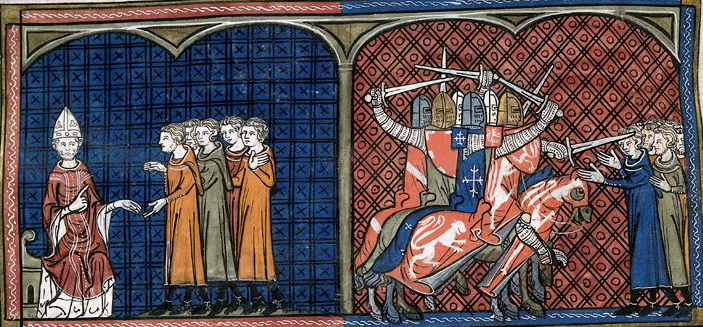
All the available evidence suggests that many early Christianities existed. Even the early disciples couldn’t always agree among themselves. Serious research over the past several years has indicated that what won out as “orthodox” Christianity was but one stream of the many faiths inspired by Jesus’ life and teaching. Gnosticism, surviving only in very small pockets today, was equally deserving of the title “Christian” and perhaps even outnumbered the “orthodox” variety early on. Other sects and splinter groups counted themselves among the followers of Jesus only to be labeled “heretics” by more dominant groups. Eventually one branch received government sanction and became the official copyright holder of the title “Christianity.” Amid all this confusion brewed a concern of correct teaching. The main reason was that many early Christianities believed the end of the world was imminent.

Gathering the writings to prove their point (more or less) into the Bible, this “orthodox” variety continued to grow and splinter. By the end of the First World War, technology had revealed just how much damage people could do to one another. “The war to end all wars” proved to be anything but, launching the world into a sequel within less than two decades. These wars were apocalypses in the own right for millions of people. Armchair theologians yearned for that old time religion and since saints and apostles were all long gone, the Bible was the only thing tangible left. Throughout the twentieth century the Bible grew in grace and stature until it became a god itself. Because of the veneration of this now ancient document, other ancient texts became sacred by association. Enter and exit the Mayans. These people would have been forcibly converted to Christianity, had they hung about. Because their writings are old, however, they are treated like Scripture. Therefore we tremble.

You don't have to read it to believe it!

We have lost our fluency with ancient rhetoric. Our finesse with self-destruction has underscored the point. 2012 will not see the end of the world unless it is caused by our own death-wish that has grown from the Mayan earth heavily fertilized by misinterpreted writings of early Christianities.