Naming Birds

I’m no Jane Goodall, but I grew up loving animals.  I still do.  I’d spend many hours poring over animal identification books.  When I was young I could tell a crab from a lobster from a crayfish.  I knew moths from butterflies.  Megafauna?  I had it covered.  One thing, however, eluded me.  Bird identification.  Now, I can tell the obvious ones apart, but ornithology seems to delight in making the trade difficult.  For example, I was on a walk with a couple friends in May.  We spotted a small bird—smaller than finch size but larger than a hummingbird.  Short tail.  Its coloration was an unusual shade of brown.  We got a good look at it.  Back home I pulled out my bird identification books.  Nothing like it.  I tried online, even Cornell’s famed ornithology lab website.  According to all the specs what we saw doesn’t exist.

The problem with birds is that they come in different colorations.  Most bird identification books and sites focus on the males.  They tend to be more colorful and their identification is easier.  Not only that, but young birds’ plumage often changes as they mature.  This is such an issue that some bird books warn the would-be watcher not to try to identify by the color.  You should look for things like eye-rings, beak shapes, and that tiny spot on the tip of the tail, when seen in flight.  Right.  After a couple of days of searching in my spare time, I gave up.  Given how small it was, this was likely a juvenile.  Which sex I have no idea.  It bothers me when I can’t identify what I see.  The world is full of such wonderful things!

Many years ago in Scotland, some friends willingly crawled to a cliff’s edge with us on a rainy day in the Orkney Islands.  We’d come here to see the puffins.  Puffins nest on cliffs overlooking the sea.  They have colorful bills and are similar in looks (but not physiognomy) to penguins.  We were rewarded with a view of a cliff-full of sea-birds, including puffins.  I often ponder, living inland now, why the bright, colorful birds tend to hide.  I know, I know—predators.  But still, I can count on one hand the number of times I’ve seen an adult male oriel with their bright orange plumage, despite living in an area where they’re listed as common.  Birds can be so coy.  Maybe that’s why dedicated bird watchers have such passion.  I love animals.  The problem with birds is, despite hours with books and websites, some of them I just can’t identify.

Loco Locusts

It really used to bother me.  Other kids in kindergarten or first grade called them “crabs.”  The picture, however, clearly showed a lobster.  Quiet and introverted, at least I knew how to tell apart basic body plans.  It’s a weakness I’ve always had—the need to correctly identify.  This didn’t come from my family, who really seem not to be bothered about such things.  It came from somewhere deep inside.  A lobster is not a crab.  The same applied to toads and frogs, or any number of other fine distinctions.  Now I confess that I try to stay away from Nextdoor.com.  It seems that no matter what anyone writes the comments immediately turn political and belligerent.  Such is our world.  But when someone can’t identify an animal, that’s clickbait to me.  I just have to take a peek.

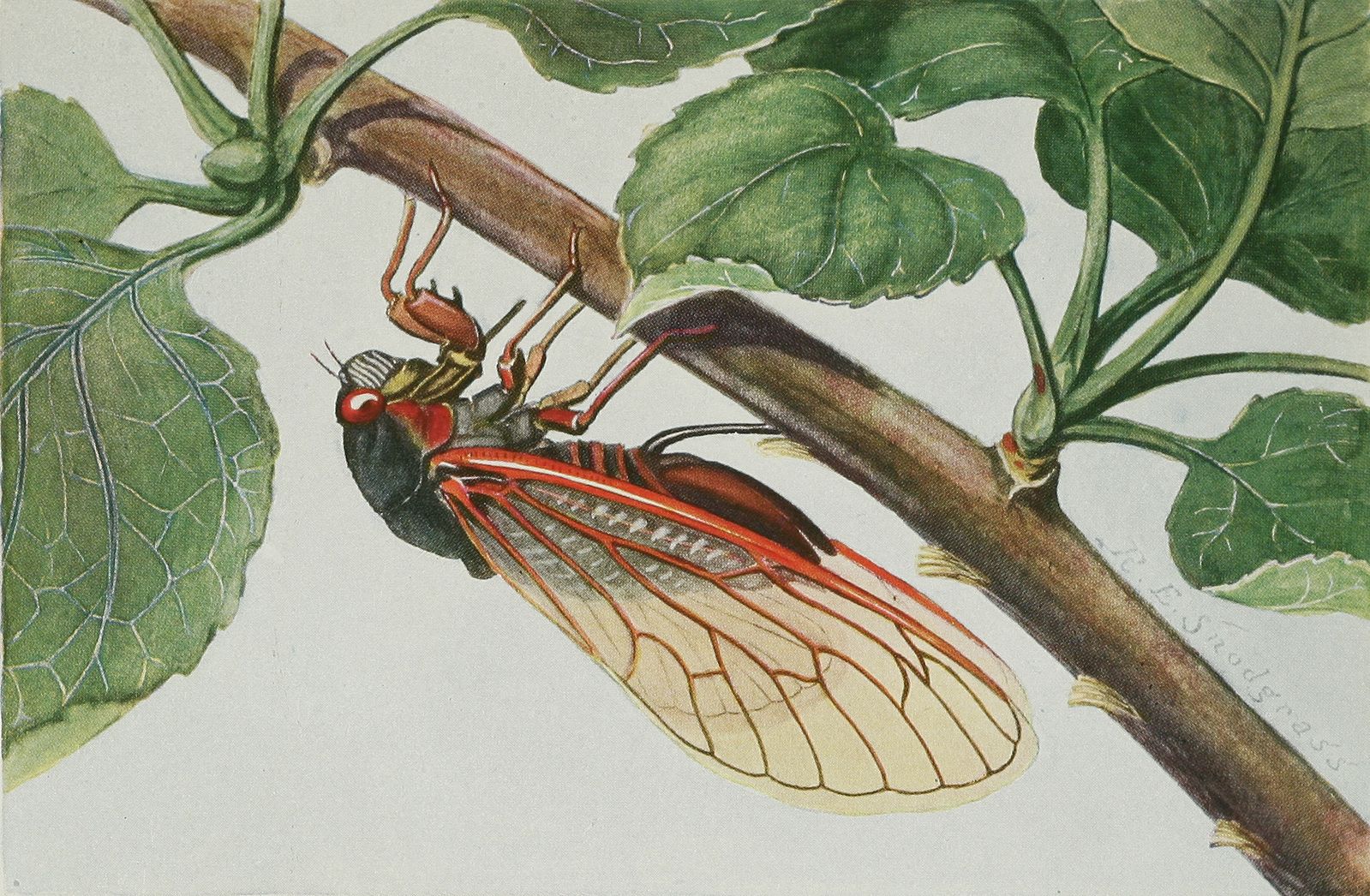
A couple of months back a woman posted a photo of a cicada.  I didn’t chime in because at least thirty other people already had.  The thing was, several locals said it was a locust.  Even after previous commenters had sent helpful links showing the difference between a cicada and a locust.  Probably it comes from many years of teaching biblical studies, but I couldn’t believe anyone would misidentify a locust.  Mind you, when I taught the book of Joel we talked quite a bit about locusts—they are amazing creatures.  In a pre-market economy, they were also deadly.  They don’t attack people like they do in horror films, but they will eat every green leaf for as far as the eye can see.  They travel in huge swarms, capable of blocking out the sun when they fly overhead.  Cicadas are harmless.  Noisy but harmless.

Cicada. Image credit: R. E. Snodgrass, public domain, vía Wikimedia Commons

How someone can live in the world and not care to know the other things that surround them I cannot fathom.  I can understand mistaking similar creatures—some animal mimics can be incredibly effective.  A locust, however, looks nothing like a cicada.  They’re both insects, yes, and they both have wings.  The similarity stops there.  Life is complicated, I know.  There’s a lot to learn.  As a writer one of the things constantly using up my time is trying to find the right name for a thing I know by sight but have never heard called by its noun.  With the internet, identification of critters has become somewhat easier.  But only somewhat.  You have to know where to start.  I still have the well-thumbed animal identification books from my childhood.  Outdated, yes.  Coming apart at the spine?  Definitely.  Full of childhood memories of learning what things are?  Of course.