The Price Is Wrong

The costs for academic books can seem criminal.  Don’t get me wrong; I work in academic publishing and I know the reasons—or at least the reasons publishers seem to believe—for such pricing.  Still, when I see a book that my little public library will never be able to convince its network that it should be able to borrow, I look at the prices and blanche.  At least the pallor looks good with my skin type, or so at least I’m led to believe.  Why are books so very expensive when so few of them retain any resale value?  Publishing—the information business—is unlike any other.  In fact, it could be argued that the printing press was the earliest internet.  Ideas could be spread more quickly, among those who were able to read, than they could have previously.

These days books are the handmaidens to the internet.  The problem, of course, is that the web contains ideas that haven’t been vetted.  Publishers offer that service, but you have to pay for it.  Books don’t sell like they used to—physical books, I mean.  Inflation, however, ensures that the cost of paying employees is constantly going up.  This is the hidden factor of “overhead”—the cost of doing business.  You need to sell a lot of books to pay a staff.  Not only that, but unlike most “commodities”—I shuddered as I typed that word—books can be returned to a publisher if they don’t sell.  It’s like an entire business model run on consignment.  And the honest truth is—academic authors may want to cover their eyes for this part—very few books sell more that a couple hundred copies.  That means that the per unit cost has to go up.  Next thing you know you’re selling a kidney to continue your research.

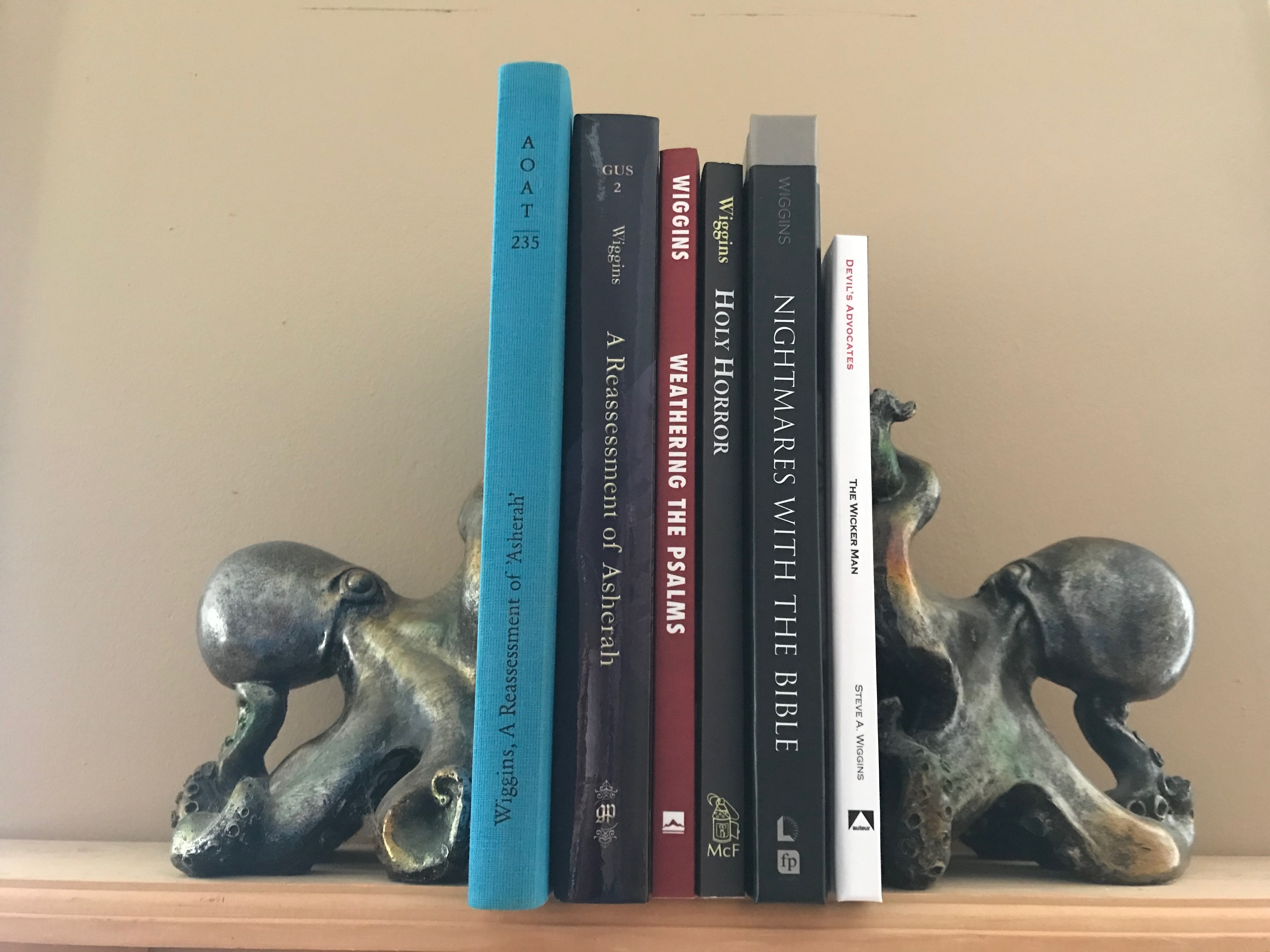
I keep a running list of books I’d like.  Some are for research and some are for other pleasures.  The list grows quite lengthy when more and more interesting books get published.  I look at academic books and I wonder if maybe there’s another way.  If they were priced down in the range of mere mortals, would they sell enough copies to meet their costs?  I’m well aware that Holy Horror is priced at $45.  Believe it or not, that’s on the lower end of academic extortion pricing.  Many books on my “must read” list cost three times as much.  Are we paying the price for keeping knowledge solvent?  Or is all of this just criminal?


Care and Keeping of Books

I take good care of books.  It’s my personal goal that after I’ve read a book you won’t be able to tell.  I used to mark books up, but it occurred to me that I want the books to outlast me and if someone else is to get the full benefit of them I shouldn’t be doing such scribbling.  Of course, when a book has to commute with you there’s bound to be some scuffing from being put into a briefcase along with other necessities.  On the days I don’t commute, I try to replicate bus time for reading.  I curl up in a chair with my book and a cup of coffee to warm my fingers, and read.  The other day as I did this, a drop of coffee made its way from my mug onto the open page.  I was aghast.

Reading a marred book page is eternally distracting.  My eye is immediately drawn to the imperfection and I sometimes can’t even make sense of the sentence in which the blemish occurs.  Not because I can’t read it, but because I can’t get beyond the hurt.  Coffee rings are chic, I know, on the cover of a book or a notebook page.  It’s one of the truest clichés of the literary crowd.  Coffee and a good book.  Not coffee in a good book!  I tried to get back into the flow of the narrative.  My eye kept wandering back to the spot I’d unintentionally marred—I’d violated my own principles.  Unintentionally of course—this isn’t Starbucks where the heat is set at a reasonable level and you don’t have to scrunch up to keep warm.  But still.  But still.

After many minutes of feeling like I’d shot a friend, I managed to move on.  I kept turning back to my coffee page to see if the damage was as distracting as I thought it was.  After work that night when I picked my book up again—commuting is a twice a day activity—I turned back to the damaged page and frowned.  Books are, to some of us, friends.  I want to treat them right.  I line them up in order on their shelves, knowing just where to find them when I need them again.  One careless drop of coffee had taken its eternal toll on an innocent tome.  I realize this world lacks perfection; I’m not naive.  Still, this book, which wasn’t cheap, now bears a scar that I dealt it.  Will I ever comprehend what that one page says?  I hope my silent friend will forgive.


Bookish Dreams

Driving into upstate New York via interstate 81 you’ll find a remarkable rest stop.  To put this into context, I should say that my wife and I have driven from Maine to Washington (not on a single trip) and from Wisconsin to Louisiana and South Carolina.  We’ve laid down considerable mileage together, and never have we encountered such a nice rest stop.  Clean, modern, and featuring local goods for sale, it’s a loving homage to the southern tier, the New York outside the city.  One of the features of this unusual facility is a terrazzo floor fresco highlighting the various points of interest within a couple hours’ drive.  Mostly when we stop here we look toward Binghamton and Ithaca, the cities we most frequently visit.  We stop to use the restroom and then drive on.

When we stopped over the holidays, however, we lingered a little bit.  There’s a display on Mark Twain—he lived in Elmira, New York for a time—and there’s an in-ground plaque outside to Rod Serling.  I spent some time looking over the points of interest in the floor map when my wife pointed out a site listed as Hobart Book Village of the Catskills.  I couldn’t believe that I’d been in this building dozens of times but had never bothered to look that far east.  Curious, I did a web search once we reached out destination.  There is, it turns out, a village in upstate known for its main street of book stores.  What perhaps impressed me even more was that it was considered significant enough to be given a kind of “Hollywood star” treatment in what is an often overlooked part of the state.

Now I can’t say what my impressions of Hobart are.  I’ve never been there, having just learned of it on a recent roadtrip.  What I can say is that my world suddenly began to feel just a bit more friendly knowing that such a place exists.  We live in a country that could indeed use a bit more positive influence.  Some of my happiest memories involve bookstores.  Back in my teaching days we made regular autumnal literary weekend trips, visiting sites haunted by writers.  Often we’d find an independent bookstore near such sacred places.  To many, I realize, this would smack of nonsense, but to those ensconced in literary dreams, it created pleasant memories.  You feel something in the air as you stand near the house or grave of an author.  Places are made sacred by what transpires within them.  The writing of books shapes the very space-time around them.  At least it does for those who even find inspiration in an interstate rest stop.


Yearn Books

While this blog ranges over an outdated map of my mind, one of the two common elements that hold it together is books.  I don’t have many bibliophile followers, but for any who happen upon my pages, welcome.  Each year at this time I look back over the year in books.  I started doing this when I joined Goodreads.  I don’t put every single book in Goodreads, but it’s a fair register of what I’ve been up to.  This year I set a reduced goal of 65 books (I knew I’d be moving and commuting less, and I do most of my reading on the bus).  Happily I ended the year with 83 officially read, but then the first five months of the year were still spent in daily commutes.

Three years ago my wife discovered the Modern Mrs. Darcy’s reading challenge.  I can’t say just how much I look forward to the new year just to begin reading the books I select to meet that challenge.  The reason I do this is to force myself into reading things I might not feel like reading, or often, books I’ve been putting off for some reason or another.  It only amounts to a dozen books and if I can’t get through twelve in a year, something’s terribly wrong.  Margaret Atwood once said something like “Show me a person who’s read a thousand books and I’ll show you an interesting person.”  I didn’t really need that quote to set a goal, and I don’t think of it as bragging for readers to share their experience with books.  I started getting into books in middle school, and although I didn’t keep track in those days I likely read a thousand books before I graduated from high school.  Branches begin to bend to the light early on.

So, were there memorable books this year?  My reading, due to contractual obligations (I brought them on myself), has tended to be dark.  There were, nevertheless, spots of light.  Thomas Hardy’s Jude the Obscure and Paul Bogard’s The Ground Beneath Us were early favorites.  I managed to stop my ears enough to miss spoilers from Jeff Vandermeer’s wonderful Annihilation.  Carl Sagan’s The Demon-Haunted World was artfully done, and Gregory Alan Thornbury’s Why Should the Devil Have All the Good Music? was a saunter down memory lane.  Selections from my reading challenge fiction that I really enjoyed were Anne Tyler’s Vinegar Girl, and Emily Fridlund’s History of Wolves. And Lee Irby’s Unreliable.  And and Carlos Ruiz Zafón’s The Shadow of the Wind.  The last inspired non-fiction title I read was Susan Fair’s American Witches.  I always appreciate suggestions, just sayin’.  Reading is the balm in my personal Gilead, and I look forward to a 2019 full of books, even if I can’t keep the pace of years past.


Masses and Markets

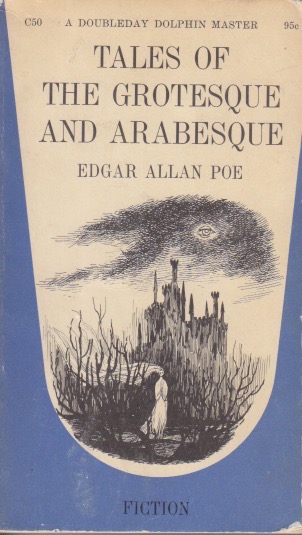
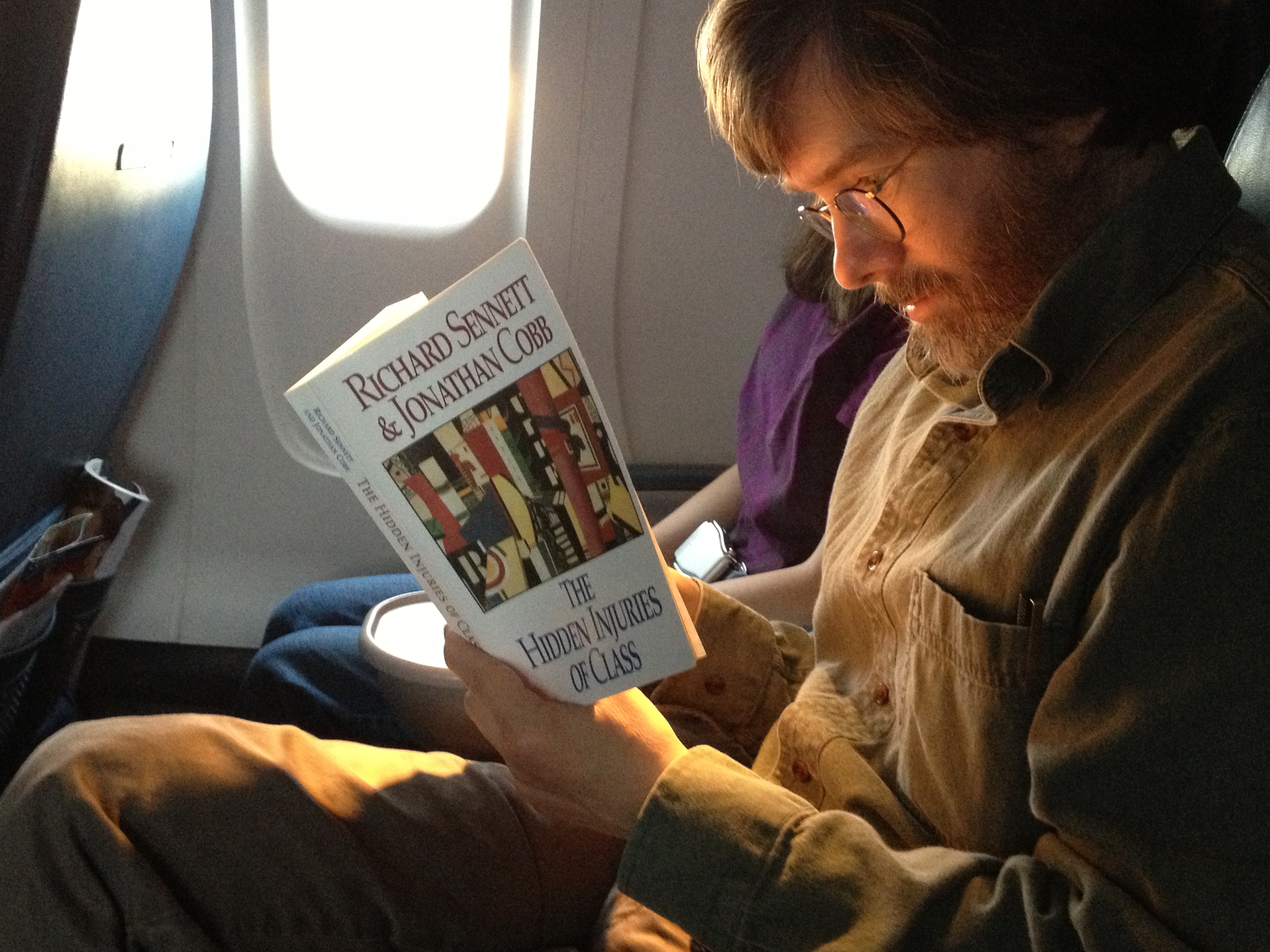
The other day I had to go somewhere that I knew would involve a wait.  I’ve always thought of waiting as a theological problem—time is very limited and I don’t have it to squander while dallying about for my turn.  That’s why I take a book.  The problem is that many books I read, I feel, require explanation.  That’s because many of them are the 6-by-9 format preferred by publishers these days.  The idea behind the paperback that fit into your pocket—the “mass market paperback”—was that it was essentially disposable.  Cheap, easily printed in large quantities, it was handy for taking along while on a bus, plane, or submarine.  It didn’t take up too much space.  It was easy to keep private.  I miss the mass market paperback.

The majority of my books—fiction as well as non—are larger than the mass market.  That’s the price you pay for reading books that don’t sell in those quantities.  If your interests aren’t the lowest common denominator, you have to buy a copy that won’t easily slip into a pocket.  And everybody can see what you’re reading.  I work in publishing, so I get it.  The idea is that the book cover is a form of advertisement.  The thing is, reading is generally a private activity.  I post on this blog most of the books I read (but not all!).  I want to support those who write and actually manage to find publishers to advocate their work.  But I’d really like to be able to put the book into my pocket between appointments.  

The waiting room is a kind of torture chamber of daytime television and insipid magazines.  Most of the people in here are looking at their phones anyway.  I have a book with me, and I’m vulnerable with everyone freely able to read my preferences.  I want to explain—“I’m writing a book about demons, you see.  It’s not that I believe all this stuff…” and so on.  It would be so much easier if the book were small enough to be concealed by my hands.  If others want to know what I’ve been reading, they can consult this blog.  Well, the stats show they haven’t been doing that.  They might, however, if my own books had been published in mass market format.  Available in the wire-rack at the drug store or vape-shop.  Then the readers could easily hide their interest by putting it into their pocket.  None would be the wiser.


Free Reading

I think I was driving through Montclair, New Jersey when I first noticed one.  A “little free library” in someone’s front yard.  Then I began to notice them around elsewhere.  Neat little outdoor kiosks filled with books.  Despite my love of literacy I’m not inclined to take books from such places.  For one thing my reading tastes are odd, and for another I want other people to catch the interest in reading.  And “free” is a great motivator.  The idea is simple: set up a little free library on your property, seed it with books, and watch it work.  People are encouraged to take what’s there for free.  And leave books they want to donate, if so inclined.  Now that we’re in Pennsylvania we discovered one in a nearby park.  A community feels more homey with books.

Searching for the concept online, I came to LittleFreeLibrary.org.  I’m not sure if they started the trend, but it provides the basic idea.  They even have plans for how to build your own and get your neighborhood reading.  If anyone wants a clue for making America great, here’s a free hint: it will involve books.  They’re a commodity unlike any other.  Mass-produced (often too enthusiastically so) they are generally inexpensive and can be used over and over again.  One of the biggest headaches for publishers is the used book market—since a book is a handful of ideas, once they’re released they’re difficult to control.  They can be sold again for less than market value, and yes, even given away.  Those who read see the value in giveaways, even if there’s no personal profit in it.

Early in our tenure here we decided to take a book to donate each time we go to the park.  Sometimes we forget, of course.  Our first donation was there for two weeks, but then found a new home.  A strange kind of joy accompanied finding the book gone.  Perhaps we’d done some good simply by opening a door and leaving something we were no longer using.  Then something unexpected happened—I saw a book from my reading list in the local.  Should I take it?  I have a list of books to seek in used bookstores, for, to the chagrin of my own industry, I participate in the used book market.  I had been looking for this tome for a few years, reluctant to pay full market value since it has been around since the sixties.  In the end I couldn’t resist.  Next week, I told myself, I’ll take two books to give back.  Literacy’s that way—it’s something even introverts can share.


Book Naked

Alogotransiphobia doesn’t just strike me when I’m on the bus.  Whenever I travel anywhere I try to take a book along.  To the DMV.  To movie theaters.  To take the paper to the shredding truck.  Anywhere there might be a line.  There comes a time when you realize every second is a gift, and time runs swiftly through the glass.  Life’s too short not to read.  So it is that I find myself in a hotel for a night.  Feeling somewhat like taking a risk, I’ve only brought three books.  Will I read them all tonight?  Most likely not.  But just in case…

Alogotransiphobia is real.  In my long-distance commuting days—in a past still very recent—I tried to calculate carefully.  Would I finish this book in the three hours I knew I’d have on New Jersey Transit?  If even a chance seemed to exist that I would, I would add another book to my bag.  But then that occasional Monday morning would arrive when somehow Sunday night seemed to slip away unbidden, leaving me bleary eyed and foggy brained to face pre-dawn alone on a deserted street corner.  And I neglected to calculate the chances.  Once in a great while, on such a day I would finish a book only to face a very long ride home without another.  Alogotransiphobia would kick in.  I would squirm in my seat as well as in my mind, anxious to get off that bus, as if I needed to shower to wash the feeling of wasted time off me.  A commute without a book was remaindered, unrecoverable time.  Lost time.  Squandered.

For two months now I’ve been delivered from the daily commuting life.  Now I find the opposite phobia.  That which entails staying at home and having so much to do that time to read is stolen back by that cosmic trickster we call fate.  I try to carve out time for reading, but the funny thing about work is that when you do it from home you feel you have to prove yourself.  I suspect employers know that.  A certain type of worker—perhaps one who’s lost a job or two in recent years—will always reach for supererogation.  And such a one will even sacrifice literacy on the altar of an assured paycheck.  Until recent days I was like a hermit on the bus.  Those around me may have been going in the same direction but we were in completely separate places.  I was, during the commute, lost in a book.  Alogotransiphobia was in the seat right beside me.


Homework

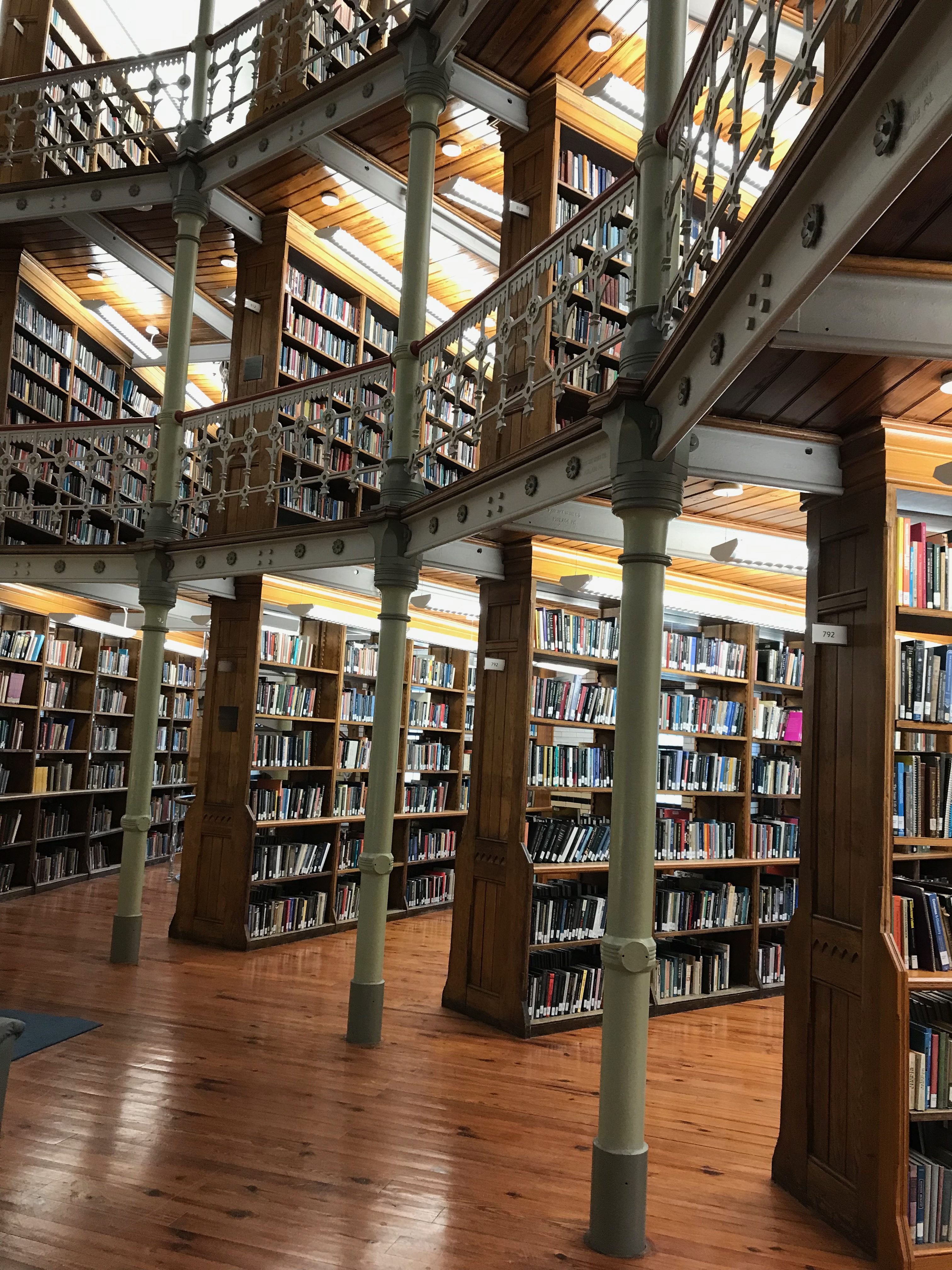
I’m trying to organize a home office.  Gone are the days that this meant a stapler and mug full of pencils.  The office is essentially a laptop since work is essentially virtual.  Oh, there are days when I have to haul myself into New York City, but even making traditional print books is an exercise done largely online.  The office is a place conducive to work.  In the case of an editor, a room of books that can be used for reference.  In our apartment we had bookshelves (mostly homemade) around the inside perimeter, covering all wall space that wasn’t claimed by more necessary furniture.  We realized, as we were packing, that no free wall space reached to the floor.  We didn’t plan it that way, but a reading life can be a complicated one.  To write books you need to read books.

Our house has some built-in bookshelves.  Not enough to hold our surviving books, but it’s a start.  My office, however, is a spartan room.  Over the weekend I unpacked my “work books.”  That meant, for the most part, books about the Bible.  I filled three large bookshelves then ran out of room.  Not only was there that embarrassment, but there was the fact that a large number of “religion” books remained unshelved.  You see, I was a religion editor for a few years before being more narrowly slotted into the Good Book.  Some might say I should jettison these books since my career has moved on.  Those who suggest such heresy don’t understand the career of a displaced professor at all.  These books are still work books.  Job descriptions aren’t as stable as they used to be.

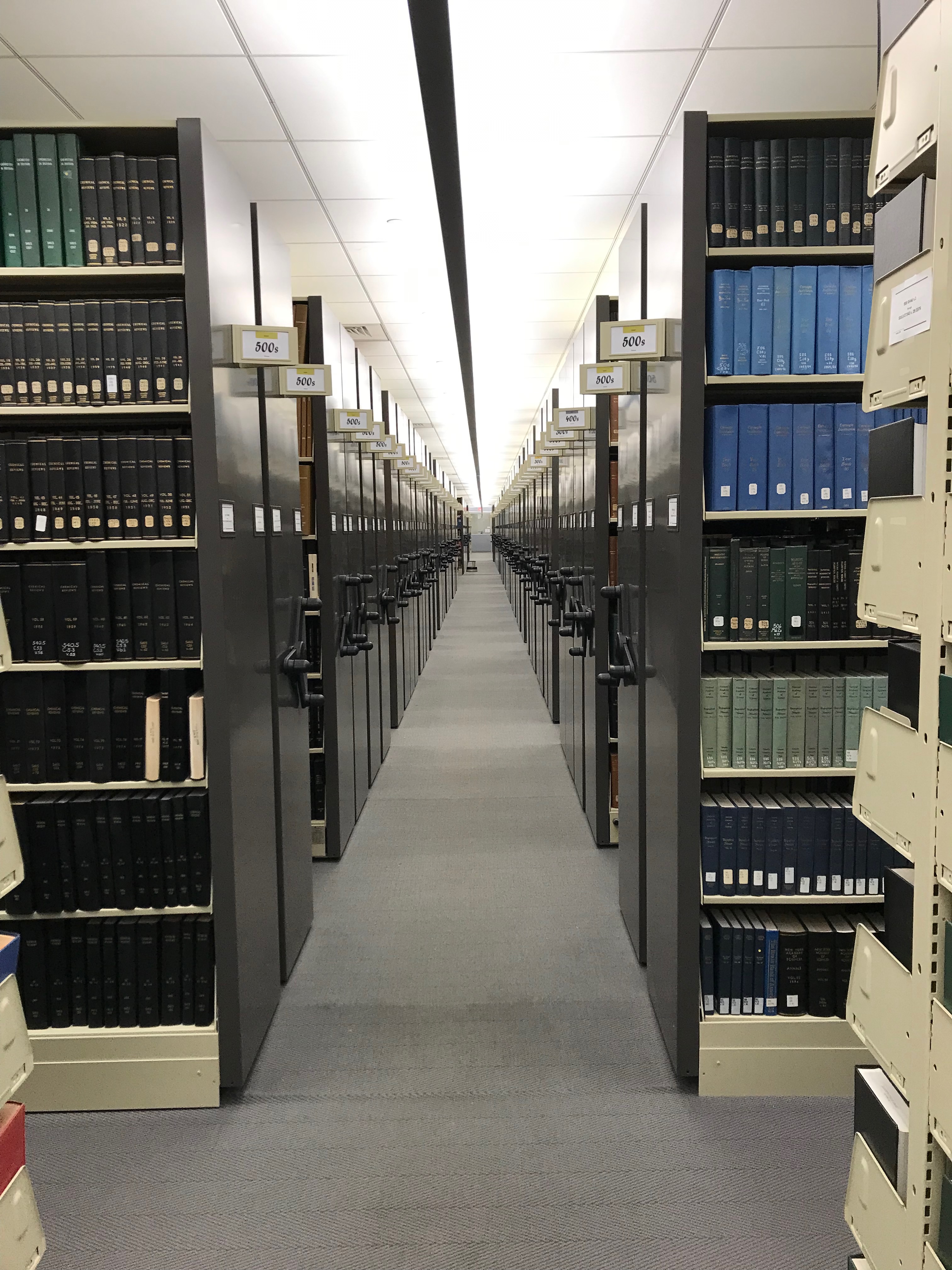
The complaint is an old one, at least to my wife’s ears.  In my mind I’m still a professor.  I still write—strictly on my own time—and I still research.  I do so without access to a university library so I have, over the past several years, made my own library.  This office, now out of bookshelves, is that amateur academic library.  My research has shifted from ancient Near Eastern studies (and that’s another whole discipline’s worth of books, some unfortunately washed away in the flood) to religion more broadly.  Not only is that reflected on this blog, but also in my publications.  The office isn’t done yet.  There’s a desk and a chair.  More importantly, there’s internet access.  There are some shelves, but in coming days there will need to be more.  Libraries are like minds; if they shrink they become less functional.  All books, no matter how dry, began in someone’s imagination.  That’s virtual reality.


Be It Resolved

I’m not a believer in New Years Resolutions.  A constant and critical self-monitor, when I notice a bad behavior I try to correct it right away.  Sometimes I’m actually successful.  Now that I’ve finally removed all books from the garage—some were being held high above the water-line on plastic boxes—I’ve started to sort through systematically what is beyond redemption.  A comment of occasional visitors, however, has goaded me into a resolution; you see, people sometimes ask “Are you going to read those again?”  While aching to address the mindset betrayed by that very question, I cede a point; if I’m going to the expense of replacing a non-reference book, I should want to read it again.  My resolution—when I buy another copy, I will read it then and there.

One of the stinging parts of this resolution is that some of the books were read by me just this past year, or even earlier this year.  Jude the Obscure, although I enjoyed it, cost me a quarter year of my life of evening reading time.  On that basis alone I should replace it, but if I’m not going to reread it why should I incur the expense?  (Moving is anything but cheap.)   I will also face rereading old favorites that have been put aside for a while.  No house, for example, should be without Emily Brönte’s Wuthering Heights, although I read it again just months back, or so it feels.  

This is perhaps a way of making lemonade from a cloud.  Or finding the silver lining on a lemon.  Whichever it is, I sense that it will figure toward my reading goal for next year.  As I’ve spent the rainy weekend unpacking books, literacy is on my mind.  For those who see my literomania as some kind of disease, I was cheered to note just how many of the books on display I had indeed read.  The same goes true for a number of the academic books in the study, but, I must confess, while pulling them from their boxes I thought how boring most of them are.  Boring, however, doesn’t equate to useless when it comes to books.  Given their price points some of them may take years to replace.  That’s the point of a resolution, in any case.  It can cause some pain.  As I stuff the moldy, distorted tomes into their body-bags I hope that rereading their replacements will bring them back to life.  After all, resolution and resurrection are not so far apart.


Chaoskampf

It’s a poignant thing to hold a dying book in your hands.  What was once, straight, flat, and dry, now dissolves into a pulpy mess that, if it ever recovers, will be warped and distorted out of shape forever.  The loss of dozens of books hit me hard.  I think one of the many reasons for this is that books represent, for me, order.  They stand at attention all in a row, many on shelves I built lovingly for them.  I remember where I purchased them, the thoughts and feelings of that time.  In a world that’s far too bumpy and lumpy, books represented the ultimate in orderly array.  Now The Golden Bough is melting in my palm, smearing my fingers royal blue.  The forecast for the week—more rain.

The story of creation in the Bible—more properly, stories, for there are many—is not creation out of nothing.  Creation is the making of order out of chaos.  Ancient people, including the Israelites, believed that water was chaos, if not an actual dragon, that constantly worked against order.  You can’t build on water, it attacks the shoreline, it drowns those who fall in.  Never a seafaring people, Israel equated big water with evil.  God, then, fought constantly this unruly foe.  Whether it was with word or sword, the Almighty vanquished that sloshing, thrashing element that tries to tear apart everything we build.  Read Genesis 1 closely; the water is already there when the creating starts.

Life has a way of getting out of control.  It’s not without irony, however.  A person buys a house to store their books, and before the books can be moved in, they’re destroyed.  It’s rather like a parable, don’t you think?  If that person unfortunately thinks of him or herself as a summation of the books s/he’s read then the loss is like losing a limb or two in that endless battle against the forces of confusion that attempt to overcome our world.  When this happens some of us turn to books for comfort.  The books, however, are disintegrating in our hands.  My Amazon account, it seems, is mocking me at the moment with it’s mover’s discount.  Why buy something that will only hurt me when the water gets in once again?  The people of ancient times knew that the waters of chaos had to be held in check constantly.  They look for any opportunity to get in and destroy.  Ancient writers knew that in order to defeat them, only the most powerful gods will do.  


High Places

I have gotten me away unto an high place.  No, that’s no biblical, but it sure sounds psalm-like.  Part of the anxiety I felt about the literary loss over the past few days is that it happened just before a long anticipated, and paid for, vacation.  As Thursday dawned, I knew I had only two days to try to rearrange the undamaged books and try to salvage what I could of those that were soaked.  And I had to do it quickly and then leave, only to see the results when I returned.  Not yet having met any neighbors, and not really being in a position to prevail upon their presumed good will, it was a test of personal endurance.  Our garage has an upper floor that remained dry.  I made well over an hundred trips up those stairs, book boxes in hand.  One cares for ones friends.

For now, however, I am at my favorite high place, in the mountains.  On a lake.  I’m having to reconcile myself with my old foe H2O, for here it is placid welcoming.  It stays outside the cabin and we remain friends.  And truth be told, there is a kind of idolatrous element involved in my visits to the lake.  You see, I covet peace.  Since childhood violence and bullies have led me to a quasi-monastic life—Paul Simon reflected that perfectly in his early song “I am a Rock.”  Even Superman had to have his fortress of solitude.  Some fear being alone with their thoughts.  Although I struggle with them, they are, like my books, who I am.

Dawn’s early light; and it only got worse as the day went on.

Prophets and deuteronomists railed against high places.  Such were locations where the God of Israel grew jealous of the attention lavished on other deities.  Perhaps religious promiscuity comes naturally to people, but we need our high places to regain perspective.  To breathe pine-scented air and feel the chill of a July morning at altitude.  Yes, even to reconcile with the splash of water that is here to make life possible rather than to destroy that which you have worked to acquire.  Ironically some of the destroyed books had been with me since college—theological classics such as Niebuhr, Gutiérrez, and Tillich, lying on the unmown grass beneath a healing sun.  Perhaps they were trying to warn me of the idolatry of such retreat.  But here I am, reflecting on loss and hope, and praying that somehow we might just all get along.


Prelude to Chaos

Liquids are the enemy.  Don’t let the cuteness of this little guy fool you—there’s collusion here.  For as well as creating life, and being necessary to sustain it, water destroys.  Creator, annihilator.  We moved during a time when neither of us had vacation and we told the over-tired movers that it was okay to put our boxes in the garage.  We planned to move them soon, but, you know, work.  Then the rains came.  Not just sprinkles, but downpours.  The garage isn’t water-tight.  Boxes were soaked.  Many books were damaged.  This wasn’t a flood that can be claimed on insurance, it was simply rain pooling where people usually park their (normally waterproof) cars.  In their place sat our books.

We both worked the day after the rains.  When we discovered the damage the next evening, it looked manageable.  I had to work the next day, of course, and a few breaks sufficed to get the many, many boxes of damaged books out into the sun.  It was carnage.  We don’t have much in the way of material goods; we spend a bit of money on books, however.  Now they’ve become the victims laid out on this altar of home ownership which, at the time, seemed like a good idea.  We needed a house for our books.  We needed time to move them from the garage to the house.  Yes, old friend Morpheus, “Time is always against us.”  

Job sat upon his ash-heap and pondered why he’d paid the movers so much only to have his moved goods destroyed.  And in a manner in which insurance assessors are trained to point to the fine print.  Those who store their goods in the garage reap the wrath of liquid.  You see, when water reaches cardboard, or paper, the wood pulp sucks it up.  Carefully dried, the paper remembers the compelling nature of water.  Too little, and you die.  Too much, and you die.  No wonder the ancients thought that water was a deity.  It claims all—tries to get in through your roof.  Lays insouciantly on your basement floor.  And the garage—yes, who thought of the garage when the immediate concern was to shut the windows to keep Leviathan out of the house?  I spent weeks carefully packing those books against shipping damage.  Used up my vacation days doing so.  Chaos has claimed them.  I would weep, but that would be collusion with the enemy, even if nobody sees.


Net Worth

Net worth—a strange concept for human beings—is calculated on the basis of how much cash you’re “worth.”  While on that lonely task of sorting through the attic, I came across many boxes of books for which we didn’t have room in our apartment.  Our guests, who’ve been few, feel obligated to comment on how many books we have, as if it’s an infirmity to be delicately broached.  Or for which something might be prescribed.  I grew up believing that what we call “net worth” should be assessed in how much a person knows.  Knowledge, not money, in my fantasy moments, would drive the world forward.  Books are cheap (generally, but you don’t want to know what I’ve paid for some of these volumes when I really needed them!) and don’t retain resale value, except perhaps in the textbook market.  They’re considered a throwaway commodity.

Although I didn’t read it, a recent bestseller claimed you could find happiness by removing clutter, and high on the priority list of things to ditch was books.  Will you ever read that again?  For me the question is rather, will I ever need to look something up in there again?  Surprisingly often the answer is yes.  Considering the fact that books are knowledge, they’re a remarkably good bargain for the price.  Regardless of clutter.  Perhaps that’s a kind of wisdom itself.  Books are heavy, though, especially in any numbers.  Weight means something.  What they contain has the potential of being priceless, even though it’s available to anyone else with a copy.

I used to watch Antiques Roadshow, back in the days when you could still get television reception with just an antenna.   You always felt bad for the poor hopeful who’d brought an old book, dreaming of riches.  Apart from handwritten manuscripts, books are mass produced, almost by definition.  The printing press, after all, was designed to produce multiple copies.  Sure, if you go back far enough, or you have a tome rare enough, you might get a nice price for it.  Everyone I saw on the Roadshow left with their disappointment worn obviously on their faces.  You’re better off buying a vase.  That’s only if your bottom line is your net worth, though.  If you want to strive for what’s really important in life, I’d go for the book almost every time.  Of course, while up there moving those boxes around I began to wonder about the net worth of a good back brace as well.


Extra Baggage

So, I’m packing.  Have been, on and off, since January.  One of the most dreaded moments of packing is the closets.  You know how in horror movies the villain often hides in closets?  We have no danger of that.  Any monster foolish enough to try it would be suffocated under tons of stuff.  Some houses may have walk-in closets, but I am inclined to call a mining company whenever I need to find anything in ours.  Our closets have led full lives.  It’s almost 100 degrees outside and I’m excavating.  We’re at that stage of “absolutely need to keep?” instead of “do we want this?”  Then I came upon it.  The layer of SBL tote bags.  Like a paleontologist of ancient academia.

If you’ve been a member of the Society of Biblical Literature you know what I mean.  Every year the Society wants you to realize value for your money, and they give you a tote-bag to help you haul home the books you’re going to buy.  Long-time attendees know to pack an empty suitcase inside their regular one just to accommodate the books.  (That could also account for about ninety percent of my packing—we have more books than a small town public library.)  But it’s not the books that are the problem today, it’s the bags.  I’ve been attending SBL since 1991.  Do the math.  I seem to recall that they didn’t do tote bags back in Kansas City, but soon after they became part of the agenda.  And I have an impressive pile of them in my closet.

Too small for groceries—especially in the early editions, back when we could meet in smaller venues—and too impractical for anything other than books, they multiply in our closets.  What professor doesn’t have his or her iconic briefcase already?  Reduce, reuse, recycle they say.  At least half of my totes have never been reused.  Zippers?  Who thought of that?  Pulling handfuls out of the closet, I marvel at their colors.  I can’t remember everyone walking around with a red bag—what year was that?  (San Francisco, 2011.)  The black leather edition—remember that one?  (SBL, n.d.)  The bags aren’t really useful for packing, on a movers’ scale.  You can imagine the burly guys outside their truck scratching their heads at this impractical conveyance.  Like so much else in life they’ve become mere souvenirs.  From the French word for something like “remembrance,” souvenirs are meant to take us back to the place in vivid detail.  I fear that many past meetings have run together into a blend of biblical arcana.  I’m sure that’s just me.  Still, I’m responsible for this new discovery.  I’d I’ll need shortly to decide whether these totes go into the museum or back into the landfill that moving inevitably creates in a throw-away world.


Book Recommendations

Working in publishing has its perils. One from my personal experience is that you run into many books you just have to read. Not necessarily for work, but because you want to. This varies from publisher to publisher, of course. There weren’t too many Gorgias Press titles I felt compelled to read, although there were a few. Since then, however, my employers have transported me back to that kid in a candy store feeling time and again. Friends will sometimes send me book recommendations—I always appreciate that. Often the books are from the very publisher for whom I work. In some cases I was actually in the editorial board meeting where the book was approved. It makes me feel like my small contribution matters when someone recommends a book on which I voiced an opinion.

In these days when thoughtful approaches to life are under constant duress, it’s nice to be reminded that people pay attention to books. Relatively few buy them, of course, but books are the storehouse of our knowledge. We all turn to the internet to get information quickly. If you linger, however, you find that much of the web fall into the “opinion” column rather than that of factual reporting. Books from established publishers are vetted on at least one or two levels before a press makes a commitment to print them. Self-publishing has muddied those clear waters a bit, but the seal of approval of a reputable publisher is what makes a book. For example, if a publisher discovers a serious error in a work it will often be pulled from the market. We don’t like to spread errors.

The problem is volume. We long ago surpassed the point during which one individual could read every known book in her or his lifetime. In fact, those who were credited with doing so in the past are given a pass because many ancient texts lay undiscovered under the soil during their times. For all our foibles we are a prolific species when it comes to writing things down. For academics, publishing is often a requirement for tenure and promotion. There are a lot of books out there. This is one surplus, however, that isn’t as celebrated as it should be. I have had people suggest we have too many books in our home. Unlike too much food in the fridge, however, these pieces of intellectual nourishment don’t go bad. And if you point me to a book about which I’m already aware, I always appreciate the conversation anyway. Of some good things you can’t have too much.