Overlooked Scripture

In this great Trump Tower of capitalism in which we all live, I often wonder about the overlooked Bible. Fundamentalist Trump supporters certainly know how to thump it, but do they know how to read it? This thought occurred to me as I was rereading the story of Ananias and Sapphira in Acts 5 recently. The narrative isn’t hidden or obscure. Here’s how it goes: the earliest Christians were communists. Literally. Peter himself was involved. After Jesus’ ascension, his followers pooled their resources and divided them up by how much each person needed. Ananias and Sapphira, a husband and wife duo, sold their property and presented the money to Peter and the collective. They held a little back, though, just in case. The result? Peter saw through the lie and they died instantly. The point was pretty clear—Christians don’t hold anything back for themselves. They live communally.

Obviously, this didn’t last very long. Let the one without a savings account cast the first stone. In fact, by half-way through Acts the holy experiment is already forgotten. Nevertheless, it was the ideal. Christians were people who took care of one another, especially the poor. By the time communist governments (which didn’t work because people are people) took hold, Christians were dead-set against them. Okay, well, they were godless—but the idea behind them was biblical. Today any form of socialism is soundly condemned by most evangelicals. Apparently they don’t read the book of Acts any more. There was no moment when this commune was castigated in Holy Writ. It simply vanishes without a whimper to be condemned as utterly evil in these latter days.

The wedding between capitalism and Christianity has proven an enduring one. Capitalism allows, indeed pretty much mandates, selfishness. It’s difficult to live in such a system and not feel entitled to more than you already have. Who ever says, “No thanks, I don’t need a raise. I have enough”? Those who attempt communal living are generally called “cults” and the suspicion is omnipresent that the leader isn’t holding (usually) himself to the same standards as the pedestrian members. The story in Acts 5, however, is even more extreme. After Ananias lies to Peter and dies on the spot, his wife Sapphira comes in just as those who buried her husband are returning. Peter baits her with a question about how much money they received for their property and when she concurs with her late husband, the undertakers have a second job for the day. This is a faith taken seriously. It was bound not to last.


Noah’s Parable

I write a lot about Noah. For those who didn’t know me before this blog, I was once invited to write a book on Noah for a series ironically published by Oxford University Press. I had been researching Noah for years, and I intended to write the book. Then, as the kids are saying these days, life happened. My interest in Noah has never waned, however. And part of the reason is that it is perhaps the most influential story in the entire Bible. I realize I’ll need to explain that, but stop and think about it—Evangelicals seldom talk about Jesus any more. Their concerns are with unborn babies, people making babies outside wedlock, and destroying our environment in the name of capitalism. It is the last of these that brings us back to Noah.

A friend recently sent me a story on Splinter by Brendan O’Connor titled “How Fossil Fuel Money Made Climate Change Denial the Word of God.” O’Connor is looking at the history of how a pro-environmentalism-inclined evangelical movement decided to shift its base to align with climate-change deniers. Behind the scenes are fundamentalist clergy. Oh, we like to laugh at them and their ways, but they are the power behind the throne and we should really not let them out of our sight. You see, as O’Connor points out, they believe that the God of Noah can protect the world from the worst that we can throw at it. It’s perfectly okay to try to destroy the planet because the magic man upstairs can fix everything right back up if he needs to before sending his son back to town on the final business meeting. Laugh if you will. These people are dead serious and many who hold power in Washington believe every lie they utter.

As a nation—perhaps as an entire western culture—we’ve laughed off religion. Secure that there’s no God up there to rain down, well, rain, we laugh and jeer at Noah. It’s a children’s story, after all, isn’t it? Okay, forget about the part where everyone in the entire world drowns, except eight people. And when he gets drunk and lays naked in his tent after it’s all over. Other than that, it’s a kid’s story, right? The story of the flood is one of the oldest myths in the world. It has been part of human story-telling for millennia. We now have very powerful people with smart phones in their pockets and access to vast hordes of money who believe it literally happened. And since God took care of his own once, he can do it again. The educated smirk. The smart start building arks.


Berrying Perspective

Two people looking at the same thing see something different. Since we’re living with a government of distorted perspective this truth appears refreshed daily. I was reminded of this while picking huckleberries. Huckleberries, according to the local edible berry guide, are called many different things. In this part of the country you know them when you see them. And if you see them you pick them. They appeal to the frustrated hunter-gatherer left in us city-dwellers. As I was trying my best to fill my bucket, I kept thinking of those who only see nature’s bounty as a means of turning a profit. In my mind they’re meanies—those who take all the fun out of the few freedoms we have left—although I realize that it’s a matter of perspective. Consider the huckleberry.

I’m a mere seasonal visitor to these parts. Since not too many of my own species make this location their permanent domicile, that’s perfectly natural. Many of the berry pickers I’ve encountered have been seasonal guests as well. There are the more “industrial” pickers, though. In a good year huckleberries can command fifty dollars a gallon on the local market. Unless you know an unfrequented secret site, a gallon can take several hours to pick even in a promising location. Overall, you need to arrive before anyone else and get the most productive bushes so that you don’t have to wander around the mountainside in search of a more lucrative locale. Not to mention that, like most berries, they have a limited shelf life. Nature prefers sharers to hoarders.

While I’m picking I generally think of bears. Unlike my species they don’t have the grocery store option. These berries are their survival, I suppose. Nature does provide. That’s how evolution works—we form symbiotic relationships with our environment. The meanies, however, can’t see beyond the self. What nature provides must be accumulated for my own benefit and not that of others. There are never enough huckleberries to go around, the industrial mind thinks, and so I’d better control the availability and set my price. You don’t even have to like huckleberries to do it. Ironically we call this having a gift. Standing here on this isolated mountainside, bent over a bush offering nature’s abundance, I believe that I’ve found a gift. I have to remind myself, however, that this too is a matter of perspective. It is a perspective that tastes right to me.


Clean Sweep

The other day I was reading about cleaner wrasses. These are the fish, usually in coral reef community, that establish a place of business, and other fishes who want to be rid of parasites come onto location to be cleaned. They allow the wrasses to nip them all over to get the pests taken care of, even allowing the smaller fish to swim into their mouths to work their specialization there. Kind of a mix between a visit to the dentist and the car wash. Documentary makers have filmed the process multiple times, and, being humans, we project onto the piscine scene a kind of business template—an exchange of goods for services. Then we turn back to our own lives and forget the underwater world.

Image credit: Robbie N. Cada, courtesy FishBase, courtesy Wikimedia Commons

Still, I have to wonder about what’s going on here in the realm of consciousness. We do not yet know what consciousness is, but we all recognize it in ourselves. We know we’re alive and conscious—except when we’re dreaming when we don’t seem to realize what’s going on in our brains isn’t really happening. Most of the time, however, we set our goals, have our intentions, and go about our business accordingly. What is the motive force that drives a fish to the cleaner wrasse’s studio? Isn’t there a level of consciousness involved to know that this fish’s house is where you need to be for this kind of treatment? Don’t the larger, predator fish know that if they eat the wrasse in their mouth they’ll have to find a new service provider? Are they aware of this or are they, as some scientists like to tell us, simply biological machines following their programming?

I’m not a scientist, but I see consciousness all around me. I watch the interactions of land animals—I generally don’t take trips under the sea, no matter what Sebastian says—and they are anything but simple. The birds on the wire and in the chokecherry trees have complex interactions. All you have to do is watch a single individual for a few minutes. They make decisions—the sky is a vast, open template with no obstacles, surely they have to decide why they want to go this direction and not that! And bowerbirds build nests as elaborate as Victorian mansions. Not that there are bowerbirds at my bus stop, or even in New Jersey. There are limits to how far even nature will go. As I stand here, waiting for my bus, I can’t help but think how like a cleaner wrasse I am. And I’m sure they must be conscious of what they’re doing since life’s all about the exchanges of goods and services.


Capital Carol

The idea of exchanging presents on a holiday emerges from the impenetrable veil of time. We don’t know when the practice began—the idea of copying the Zoroastrian wise men in Matthew is a bit of a stretch and the date of Christmas wasn’t settled until much later in time. However and whenever it started, giving gifts at this time of year has become one of the defining features of late capitalism—it’s almost as if Jesus of Nazareth was born for this. An economy that measures self-worth in terms of money is just the place to have God-incarnate celebrated by giving lavish gifts. Those of us who make no money off the holidays can’t deny that it feels good to give someone something. People like, in general, to make each other happy.

This year my wife asked for a non-material gift. We made our way to the McCarter Theater in Princeton to see their acclaimed performance of Charles Dickens’ A Christmas Carol. A gift of a memorable family time and a truly spectacular play. Seeing this story in 2016 felt especially important. Dickens was a famous advocate for the poor and was well aware of how they suffered at the hands of the wealthy. Indeed, those with too much money lose their humanity almost completely. The story is focused around Christmas, but the message is needed for every day, especially in over-long years such as this. Capitalism is a form of social evil. Anything that lowers humans to mere ciphers on a page is the very definition of sin.

christmas-carol

We all know how the story goes, but to see accomplished actors undergoing conversion is nevertheless a strangely hopeful experience. As the story makes abundantly clear, it requires so very little to make others happy. The point of having money, after all, is to use it for the good of others. Seeing one man facing his own mortality only to realize that he has isolated himself from the care of others is a powerful experience. As we move forward into the long and dark days ahead, there is a reminder here that we need to keep close to our hearts. There may be fewer presents under the tree this year, but we are all the richer for it. This is the kind of gift that we need to share with the entire world.


Solstice Blues

The relief is so real that you can feel it with your fingers. Or brushing your cheek. The feeling of being done with another semester, and knowing you’ve got some time for recovery after the intensity of going flat-out for months at a time. I miss that feeling. As a guy who has often been accused of being “too intense” I tend to run pretty near the red line all the time. Pit stops are few and very far between. Once this vehicle’s in drive, there’s no stopping until the destination is reached. What do you do when there’s no clear destination? That’s what working for mere money is like. How do you know when you have enough? Just ask Mr. Trump. Too much is always too little. That’s the kind of world we live in.

Higher education, it used to be, was a place for people who believed in higher values than mere lucre. There was a time, historically, when we took transcendence seriously. The price (if you’ll pardon the analogy) that we’ve paid for letting transcendence go will become apparent. Those who believe only in what they see miss most of reality that swirls by them like a river under the ice. Yes, it still flows. Just ask the fish. There’s a wisdom outside our paltry economic efforts, if we’d only just get out to inquire of it.

Work is built around the foolish concept that you can never have enough. I have to think that our fear of a year of drought has deeply impressed itself on our psyche. Back in biblical times and up until just a couple of centuries ago people considered work to be farm work. Growing your own food. Building your own house. Knowing what to do in an emergency. If nature didn’t cooperate with that scheme what choice had you? Now, however, we labor for a concept as abstract as transcendence. When’s the last time you were paid with actual cash? What wouldn’t you pay for a little more time off? Time to stay in your pajamas all day and ponder what’s really real? Perhaps sleep until you’re not tired rather than awaking at the sound of a factory bell? The sun hasn’t risen by the time I reach my windowless office. When I step out again it’s already set. The solstice reminds me of the semester break that no longer exists. I have to believe, however, that under the ice the river’s still flowing.

dscn5944


Are There Not Workhouses?

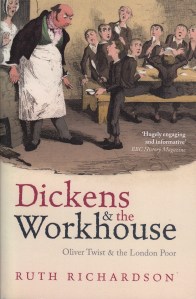
dickensworkhouseAs colder days settle in I add layers and sit in our under-heated apartment and think about the lot of the poor. I don’t think billionaires really understand the plight of those who, no matter how hard they work, just can’t get ahead in a society that values class above individual welfare. I’ve noticed the increasing number of homeless on New York City streets. Many are clearly those who’ve lost jobs and can’t afford to pay the rent of even a modest apartment in the city, let alone Trump Towers. Having lost jobs myself after a lifetime of hard work, my sympathies are with the street dwellers. Ruth Richardson’s Dickens and the Workhouse: Oliver Twist and the London Poor reminded me that this is not just an American phenomenon. The book begins as kind of a detective story to locate the workhouse that Dickens features, if fictionalized, in Oliver Twist. Richardson makes a strong case that this workhouse has been found and that relics of Dickens’ under-acknowledged London residence just a few doors down from it influenced much of his first-hand knowledge of the life of the poor.

In the case of London, poor laws were put in effect to punish those who couldn’t fend for themselves. Inmates at poor houses were kept on a legally mandated starvation diet (literally) with inadequate medical care. Instead of censuring this injustice, the Church of England stood behind it. The perverted thinking was that if anyone knew how bad it was in such places they would try doubly hard not to be poor. The funny thing about living in poverty (I have some experience of this) is that it isn’t a choice. I didn’t particularly get along with my step-father. I can say, however, that he was one of the hardest working men I ever knew. Long hours spent at work, sometimes the whole night through, to support a family of six on just above minimum wage. This was his daily existence. I must’ve looked soft in his eyes.

Richardson’s book, although fascinating, is also distressing. The idea that a society thinks the most humane way to deal with those who are struggling is to punish them further, for me, defines evil. One of the characteristics of our species, according to biologists, is that humans often show extraordinary care for other creatures, often of other species. For our own, however, we feel that if you’ve “earned” something by exploiting others it is your “right” to keep it and let them suffer. This economic system is rotten to the core. We may have come a long way since Dickens’ time. We don’t have such exploitative workhouses in Manhattan. Instead, we have so many people sleeping in the streets that a walk to work has become very Dickensian indeed. Somehow I don’t see the situation improving in the next four years.


Frozen Over

The_Blob_poster

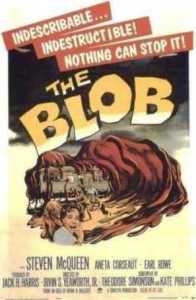
For reasons that may eventually become clear, I was watching The Blob. It seems that each generation’s fears are unique to its time—let the reader understand. For whatever reasons, star-appeal I expect, Steve McQueen was cast as the teenage Steve Andrews. A little unbelievable as a twenty-eight-year-old teen (Sissy Spacek was a more convincing teenage Carrie at twenty-six) Steve drives around his small town trying to find and stop the Blob. What is the Blob? Nobody really knows. Emerging from a meteorite, it seems to be an EBE (Extraterrestrial Biological Entity) that encompasses, dissolves, and assimilates animal life forms, getting bigger all the time. In a day when the Russians were actual enemies, this is hardly an intentional vision of capitalism but an apt description nevertheless. If it touches you, you’re dead. Since it can ooze through air vents, there aren’t too many places at hide. It forces itself upon you.

Steve’s love interest, Jane Martin, has a lisping little brother named Danny. While big sister is out on a date battling the jello-monster, Danny—a future NRA member—charges outside in his pajamas shooting at the thing with his cap gun. Can this be? One capitalist shooting at another? Don’t be fooled. This is the nature of the free market. Either the Blob ends up on a dinner plate, or Danny does. We know that prior to 1960s monsters seldom kill little children (but don’t get me started on Frankenstein), so it is the Blob that will succumb. As the town’s teens combat the goo with fire extinguishers, freezing it, Jane, Danny, and Steve escape to go hunting another day.

Those of you who’ve read my blog for any time know that subtext is often the point. I’m counting on you following along with me here—think of what day it is. The small town police chief, Dave, calls in the Feds. No wall will keep this alien out. It has to be deported. To some place that will never thaw. Like all good monsters, the Blob never really finally dies. It must be kept frozen to keep humanity safe. The final words Steve utters are indeed chilling, “As long as the Arctic stays cold.” Getting on sixty years later our “industriousness” has begun to melt the ice caps and the friends of the Blob deny global warming. I’ve seen The Thing from Outer Space too, and I know the last thing you want to do is thaw the Arctic. Remember what day it is, and do the right thing.


The Least of These

Despite criticisms to the contrary, the pre-Reformation church did have concerns about the average person. About the poor. In those days church offices commanded a good deal more esteem than they currently do among the populace, and being a priest was a position of power. The concern for the quotidian human—at least of the Christian variety—was demonstrated in All Souls’ Day. Although the date migrated around the calendar before settling on November 2, it came part of one of the very serious (days of obligation) annual celebrations along with All Saints’ Day, November 1. It was recognized that not everybody could be a saint, and all the faithful departed deserved a special day of commemoration. Through a complicated history this two-day celebration came to be associated with Celtic beliefs about the crossover day between worlds, samhain, giving birth to Halloween. It seems appropriate on All Souls’ Day to think about the poor.

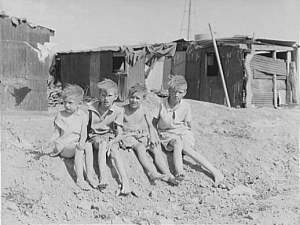
An article in the Washington Post reports on findings that poor children, in their words, “that do everything right don’t do as well as rich kids who do everything wrong.” There are indeed deficits that attend the poor all their lives. Those of us who began in such circumstances can sometimes break through in a system that favors the upper classes, but it is rare. Good paying jobs are reserved for friends of the wealthy or to those who might pay them back in some way. The poor have little to offer beyond their souls. Our system, the so-called “free market” deals in souls. The poor are, make no mistake, chattels. Even in higher education, where we’d like to think thinkers think, positions are granted based on privilege. The loftier music and liturgy is, after all, reserved for All Saints’ Day.

dorothealangemigrantworkerschildren

Like many raised in humble circumstances, I grew up hearing about the American dream. If you work hard you can succeed. But that really depends on who you know and how much they’re willing to help out. Stats are now beginning to back up what those of us who have lived experience in the lower register already knew. Having faced it throughout my career, I know I’m not alone. Just the other day I met someone else who grew up poor who’d hit the bullet-proof ceiling carefully installed by children of privilege. Not ambitious beyond desiring the basic comforts of a job that covers the bills and allows for some reasonable amount of surplus against lean times is, it seems, more than the wealthy are willing to grant. After all, All Saints’ must come before All Souls’, for even Heaven has its hierarchies.


Reveries of the Fall

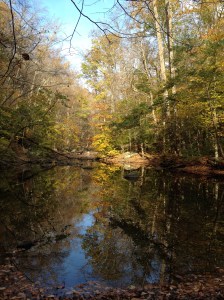
Just a quarter of an hour, studies show, of time in the woods can reduce stress. I suspect that if those fifteen minutes are spent running from a bear the opposite might result, but in general time in nature is an incredible solace. The weather hasn’t been particularly cooperative for October walks in the woods around here, but yesterday my wife and I managed to spend some time, along with many others, in Hacklebarney State Park, one of New Jersey’s gems. Living in the most densely populated state, to gather from the number of hikers we saw, encourages time in the woods. It was good to be reminded of the compelling scent of autumn leaves, the wonder of seeing their colors in the daylight when daily commutes begin and end in the dark. When work days are spent in the grayness of the city. Being out with nature, to borrow words from the Good Book, restoreth our souls.

img_2989

I suppose there’s nothing really logical about it. We’ve built civilization to protect ourselves from nature. Solid walls to keep predators out. Heat, running water, and electricity so that we can surf the internet without ever going outdoors. Permanent settlement always within reach of cell phone service and work email, we are the scions of civilization. Being unplugged just for an hour or two—even fifteen minutes—can feel like salvation. If that fifteen minutes is spent among rocks, trees, and the peculiar light that reflects off a lazy river. The internet will always wait, won’t it? Thoughts of work can be suspended until Monday, can’t they?

Hiking among the other expatriates of civilization in what used to be the Garden State contrasts so sharply with the image we project to the world. The Chris Christies and Donald Trumps who bluster that nature is there to be exploited. They may not say so with words, but lifestyles speak so much louder than syllables. Gaining wealth requires putting one’s own agenda first. We’re out here picking our way carefully over a rocky path. We have to stop frequently to let others go by the other way, or to let those faster than us pass by. But we’re all out here for the same reason. It’s a beautiful autumn day and spending it indoors feels wrong. I know that even getting online now feels like my time is being demanded by a million distractions. Unplugging, walking at a moderate pace, feeling the cool air and breathing the aroma of fall deeply into tired lungs, I can feel the stress draining away. If only for a day.


Life As We Knew It

The government does funny things when your back is turned. Back in January, reading Scott W. Gustafson’s At the Altar of Wall Street, I learned that the government treats corporations as people. It assigns certain rights and privileges to these collectives so that business can thrive without interference. A recent article by Chip Colwell in The Conversation asks, “What if nature, like corporations, had the rights and protections of a person?” This isn’t merely an academic question. As Colwell points out, New Zealand has recently accorded a natural area personhood status to protect it from exploitation. Meanwhile we in the United States live in a country where companies—those nasty people—are chomping to get their teeth into the “natural resources” of our national parks and wilderness areas. Not because it’s best for the planet, but because their corporate person has one of humanity’s greatest evils—greed. Gluttony used to be a deadly sin. Now it’s called economy.

One thing this corporate person doesn’t understand: we have only one planet and it belongs to everyone. Or no one. Our capitalist outlook has given an undue sense of entitlement to those who have the means to take without asking. They can frack the ground under your feet and you’ll never know it. Until the earthquakes or sink holes come. Meanwhile natural areas—as Colwell indicates, considered sacred by many Native Americans—are unprotected from fictional persons that have immensely more power than any individual. We know what happens when the sacred is engaged in battle by the economic. It’s an unfair fight.

img_2476

When the crush of work stress gets to be too much, nature is our balm. Many times my wife and I will head to the woods on a weekend just to regain the balance that is stolen by what we call civilization. Manhattan has its wonders, to be sure, but they pale next to a simple stretch of “undeveloped” land and a path to walk through it. There’s a reason that corporate executives have their vacation houses far from the towers they build. It’s not a question of whether the sacred forests are valuable, but rather who gets to own them. With the legalization of fiction—corporations are not people, no matter how logic may be distorted—we have doomed fact. The earth is our fact, and, at this moment our only fact. As Colwell suggests, if it were treated like a person we’d have to show it some respect. And with respect true civility can thrive.


October Weekend

img_2973

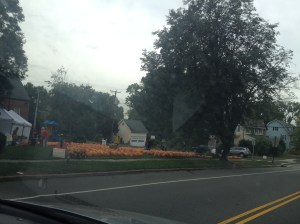
Bright orange pumpkins under a cloudy gray sky. October is surely here. But this is an urban area of the kind in which northeast New Jersey specializes. As I approach I see that it’s a church. A church that has made a truce with Halloween. Judging from the number of people here, it’s a cordial detente. So much of American society lies mired in contradiction that I have to ponder this. Halloween in an age of nones may be simply fun. An opportunity to spend money on pumpkins that won’t be eaten and gourds that can’t be. Decorations for a mildly scary night that somehow makes us feel comfortable and snug at home. October is like that.

Churches have been struggling to maintain active memberships. And although the antagonism has been overblown, Halloween has been an uneasy part of the church calendar. It has, however, become a major commercial opportunity. Depending on the commodity, only Christmas or Easter will draw more lucre from people. The devils and demons and ghosts of Halloween sit awkwardly in the pew next to the victory over death that is the main draw to traditional Christianity. But people will predictably spend their cash for the privilege of carving a pumpkin. Just the memory of the scent, the feel, the contentment of creating a jack-o-lantern makes me want to stop and support whatever denomination this might be.

It is a weekend, however, and I have many errands yet to do. I content myself knowing there are happy people in this temporary pumpkin-patch. The faith of Linus is a powerful thing. To get ready for the week ahead in which I’ll have time only for working, commuting, and sleeping, I keep moving. The orange fades from sight. The cheerful memories of childhood pass. I go on to my next stop. My first errand began at 6 a.m.this morning. Noon is fast approaching. I need a tiny piece of hardware that can only be found in a big box store. I prefer to support the local economy but that shop is all the way across town. Inside the Depot plastic Christmas trees of every description fill the front of the store with winter dreams of even more spending. I forget what I came in here for.


Day Labor

It’s difficult to believe in Labor Day. Don’t get me wrong—I’m glad for the day off. It’s just that I don’t think people really believe in the idea any more. It’s hard to take professed goodwill for workers seriously in a plutocracy. Especially when money’s a fiction. When pay was in coin, although abstracted, you were literally handed something of value for your work. Now technicalities and loopholes and utter abstractions make some—including would be and actual politicians—wealthy. These are all tricks on paper, affirmed by accountants, and we watch like the audience of a magic show as the improbable is made out to be actual fact. And these who hold this imaginary wealth control the lion’s share of the waking hours of the rest of us. We’re given Labor Day off with a pat on the head and we’re told to go enjoy ourselves before summer is up and we really have to get back down to work.

DSCN5084

Many of us—I know because I can see the cars—use the holiday to travel. It’s not really so much a day of rest as it is a day of trying to get back home so we can be to work bright and early tomorrow. Since it’s the last break before Thanksgiving you’d better enjoy it. If there were really money in that pay envelope—not even real envelopes are used any more—it might be easier to buy the illusion. Like Amazon I take a small cut of the transactions between employer and debts I owe just to live near where I work, which isn’t really so near but as close as I can afford. At least today I can not go into the office. I can spend the day getting home instead.

I often wonder why we’ve let ourselves be fooled by a system that will only ever allow the very few to truly find financial independence. Like lemmings we run right after them, thinking that just beyond that cliff true prosperity lies. A chicken in every pot. A car in every garage. Right now all those cars are actually out on the road—I can see them—and they’re not really paid for because they cost too much to buy outright. Most of us need them to get us to and from work. Or to and from vacation. Summer’s winding down. Hurricanes are already spinning away in the Atlantic. I’ve grateful for the day off. I really am. I only wish I could believe that it meant something deeper about human nature.


Twitter Me This

Techoncrat I’m not. At least I understand that to be authentic in this world you need to be on social media. I have a Twitter account. Have had for years. I don’t follow it religiously, but then, I don’t treat any social media like holy writ. The other day I noticed a disturbing trend. Donald Trump’s tweets end up on my bird feed. No, I didn’t accidentally follow him—I have a natural aversion to fascists with delusions of divinity—but nevertheless his mug shows up so frequently that I tend not to follow the bird maybe as much as maybe I should. I wonder how someone thinks s/he has the right to buy part of my consciousness.

Tweet or honk?

Tweet or honk?

The world-wide web is without laws, like the subconscious mind. Thoughts from around the world—at least the affluent part of it—milling, swirling about in an electronic soup thickened by irony. It’s addictive. The opiate of the masses. Perhaps it is a religion after all. Tweets are micro prayers. Blogs are sermons. Facebook is coffee hour. All these connected minds have created a consciousness of their own. Like Victor Frankenstein, we too know what it feels like to be God. It’s not a particularly joyous place to be. Does God, I wonder, lack the control that we experience on the Internet?

I like Twitter. It doesn’t demand much. The only problem is that to stay on top of things you have to have it going all the time. I turn it off and when I come back on I’ve missed hundreds of tweets. And then there’s Donald Trump again. I can come up with my own nightmares, thank you. I don’t need Twitter to suggest any.

Perhaps this is the apotheosis of capitalism. The ability to buy anything, including space on somebody else’s bird feed. Buy the most powerful office in the country, if not the world. Buy hatred and distribute it freely. One thing you can’t buy is intelligence. At least, up until now, some universities still understand that. It has taken me years to gather Twitter followers, like Mrs. Partridge the family band-mates fall behind in a neat, technicolor line. I have no money. I have very little influence. I’m really not a very good capitalist at all. I give away for free what universities charge for. Just like in the classroom, few pay attention. What do I expect? Who really listens to sermons anyway?


Food for Thought

You probably know the ritual. On a given day of the week (often the weekend—your “time off” for good behavior) you troop to the grocery store. You toss the items you’ll need for the week into a cart and trundle home to fit them into the interstices of a crowded kitchen or pantry. Then you start to notice that funky smell when you open the fridge. Or you eat a snack chip and find it gives no resistance to your teeth. Something’s gone off and needs to be tossed again, but this time into the landfill (or hopefully, compost). We’re all so busy that we don’t really have time to ponder this much. After all, the work’s the thing, and we only have a few hours at home anyway, and we can go shopping again soon. Now here’s where it starts to get ironic: we subscribe to Consumer Reports. I’m about the least consuming person you’ll be likely to meet (or not meet), unless, of course, the topic is books. I don’t buy stuff unless I have to. My jobs have been financially disappointing since earning a doctorate and I’ve got tuition bills of my own to pay. Every penny counts. But I digress.

Consumer Reports, in its September issue, discusses the problem of food wastage. Since I’m a simple man statistics impress me. 52 percent, for example, of the produce Americans purchase is thrown away. Math class was some time in the past, but even I can see that’s over half. This is something we’ve paid for and we simply jettison because it’s gone bad before we use it. This particular figure hit me because I like to have fresh produce with my boringly consistent lunch. When they’re in season I buy snow peas. Problem is, our grocery store only sells snow peas in massive packages, hermetically sealed. I can’t get through them before they go bad, and I can’t buy just what I need. For my convenience, I’m told, these tasty greens are prepackaged and pre-priced (at the cost of a small automobile) so I don’t have to dip my grubby hand in the basket and weigh out just what I need. And it’s not just peas. I can’t remember how to make a salad any more because, well, they come in bags, right? The natural habitat of greens.

Free-range peppers

Free-range peppers

The problem goes further than that. Here’s where the stats get scary. According to the article 28 percent of the agricultural land of the world generates food that isn’t consumed. Over a quarter, if memory serves, is ultimately wasted space. A full quarter of our freshwater usage is for stuff we throw away. In the land of overabundance we’ve learned to squander our resources and think nothing of it. It’s just food, after all. It’s not like there are starving people in the world. Perhaps the greatest ethical crimes are those that are so ordinary as to become forgettable, like that trip to the grocery store. Let someone else do the packaging. Anything I don’t eat I can always throw away. We can grow more. It’s a ritual, after all.