Thinking Teaching

I am a teacher.  Although no longer employed as one, my entire mindset is geared toward the profession.  Those hiring in higher education have no clue about this sort of thing.  Apparently nobody else does either.  I’ve worked in business now for over a decade and a half.  During that time only one employer has shown any inkling of understanding the importance of clear teaching.  Instead, most promote busy people trying to explain things in sound bites that lead to confusion, compounded daily (sometimes hourly).  The immense waste of resources this entails is staggering.  It is the most inefficient system I can imagine: in the rush to convey sometimes important information, necessary pieces are left scattered on the floor like seeds under a bird feeder in migration season.  In our rush to do our jobs, we settle for half-baked rather than paying a baker to make proper bread.

This is a constant frustration for someone who has the soul (and mind) of a teacher.  Our society undervalues educators of all stripes.  And, yes, many people go into teaching without the requisite gifts or motivation.  I’m certain I’m not alone in having had a high school or college course where the teacher was completely disengaged or perhaps in out of their depth.  Students shut down, hate school, and then spend their lives making uninformed decisions on everything from politics to profession.  Teachers—good teachers—are the future of any nation.  I know our young are our future, but if they’re inadequately taught, take a look at the headlines and see what happens.  Why is it so difficult to see that if children aren’t taught well, institutions will perpetuate that model until everything is a barely contained pandemonium?

We see this happening in history.  A people or culture gets to a point where they just begin to implode.  Too many things that just don’t make sense have been built on top of other things that just don’t make sense.  The whole thing begins to collapse.  I see this happening all the time—the hurried email that simply doesn’t explain anything, sent in haste before moving on to the next sophomoric task just to get the job done.  When businesses take a look at budgets and feel a little scared, some of the first positions to go are those of trainers.  “People will figure it out,” they seem to say.  And we see the results.  Evolution has made teachers of some of us.  Many of us, of necessity, are doing something else for a living.  If only all jobs came with a blackboard.


Sleep Well

It’s scary, actually.  How you think depends on how you sleep.  I suspect that the degree of this differs individual by individual, but I recently had a couple of consecutive nights where the differences were striking.  To put this in context, it was after ending Daylight Saving Time (it should be kept all year but with Republicans in the House unable to pick a speaker, what chance do we have of them ever passing a simple, but necessary measure?).  Mondays, for some of us, we naturally awake earlier since, well, work.  I happened to wake excessively early that morning and couldn’t get back to sleep, no how.  I functioned alright during the day, but those who work 9-2-5 aren’t allowed naps and some of us aren’t young anymore.  I thought it was a fairly normal day.  That night I slept well.

Photo by Kate Stone Matheson on Unsplash

The next morning it was like my thoughts were supercharged.  I was thinking things I’d failed to pick up on the previous morning.  I was efficient and energized.  What a difference a good night’s sleep makes!  But the herd mentality—work must be eight hours and those hours must be from nine to five (if you work more, that’s great!)—doesn’t allow for bad nights.  It’s ageist, really.  Once you reach a certain age, you don’t sleep as well at night.  Work times are non-negotiable, so you’re forced to keep going through the yawns that a good nap would take care of.  So much depends on a good night’s sleep.

In reading about the history of holidays (I’ve been doing this for years, as The Wicker Man demonstrates), it’s clear that the United States stands out in the dearth of its holidays.  It’s been that way from the beginning.  Most employers don’t give Veteran’s Day off.  None note May Day, which is Labor Day in many parts of the world.  No time to sleep in in this country!  Work while you’re tired, work while you’re wakeful, just as long as you work those sacred eight hours and more.  Of course, all of this may come from that grouchy feeling a poor night’s sleep bestows.  I don’t keep a sleep diary, but I do wonder how many social ills are brought about by a bad night’s slumber.  It’s the darkening time of the year.  Nature’s telling us that reasonable animals hibernate.  The rest of us set alarm clocks to wake us before it’s light, no matter how we fared the night before.


Please Slow Down

I’m always happy to respond to emails from friends.  Lately, however, my account has been so cluttered that emails fall off the top page as more and more things require attention.  This, of course, when I was on a brief vacation for the first time in three years—followed immediately by a family funeral.  When do they expect you to have time to sort through all this stuff?  One culprit is the auto industry.  We bought, out of necessity, a new car.  It’s more than half computer and I receive nearly daily emails from the manufacturer about this or that.  And the insurance company they signed us up for.  You can’t just trash such emails since there might be something important in them.  But you don’t have time to read them all either.  (Many of them are trying to sell you up to entertainment services while driving—I never even listen to the radio while on the road, so please stop thinking I require entertainment while trying to pay attention to the insanity of other drivers.)

Our utilities companies have, of course, begun sending weekly emails as well, asking us to use their services less (or more).  How to winterize your home (with their help, that will only cost a few dollars), and how to save money by turning out lights when you leave the room.  (I learned this as a child.)  Still, you can’t automatically delete utilities emails since they also send notices of when and what your bill is going to be—somewhat important information.  If you subscribe to any news services, they will send you multiple emails a day, some of which you want to read, but not now—I’m trying to figure out how to drive a computer to the grocery store right now, after coming home to a foodless house after a funeral…  The articles look interesting, they really do.  It’s just that I’ve got medical emails I just can’t ignore.  I’ll get back to you, I promise.

Once in a way, I have a weekend morning free enough to sort through the accumulation of mail.  I only hope I won’t find a “past due” notice among them.  I don’t ignore email—I try to keep up with it as much as someone with a 9-2-5 and mortgage can.  And my brain isn’t as young as the thumb-racing, texting generation.  I need a bit of time to figure things out.  Then I come upon that email from an actual friend, buried over on page two or three.  My apologies to you for taking so long to get back in touch.  A new type of snow has accumulated, and it falls any season of the year.  Especially when you’re on vacation and then have a funeral to attend.  It’s like living in a novel by Kafka, or it would be, had I time to read.


Not for Profit

Non-profits are the backbone of our society.  In a world measured by “net worth” some of us are aware that people are more than figures, ciphers on a ledger.  Honestly, I’m impressed by plans for a universal basic income, which seems more humane to me than brutal capitalism with its new first estate.  Since that’s not likely to happen here, however, I look to non-profits and I’m impressed.  Despite the distorted narrative that states those who struggle to get by are lazy (hey, I don’t know many rich people up as early as I am daily!), our economy favors the greedy and the graspy.  That’s why non-profits are so important.  These are corporations or companies that work for something other than making money for themselves.  They have a more civil goal in mind.  They are, in a word, civilization.

I recently attended a cancer research support organization Oktoberfest.  It’s for a small non-profit foundation, local to the Lehigh Valley, but it was amazing how much money it has been able to raise for research.  Like many such foundations, it was born of personal loss and the desire to prevent others from experiencing such loss.  Compare that, if you will, to a company whose business is, well, making money for itself.  See the difference?  One you can feel good about.  The other makes you feel like you should take a shower after work to wash the grime of selfishness from you.  I have worked for profit-making companies and non-profits and there’s no comparison.  Those with money as the only goal tend to be heartless.  If you ever want to feel like chattels, apply here.

Non-profits have to think quite a bit about money, of course, but there’s always more to the picture.  There are discussions of the larger goal, which is generally something for the good of society.  To help people.  I’m not naive enough to think that non-profits can’t get corrupt (lucre corrupts everything), particularly when they get large, but without them there would be so much more suffering in the world.  Becoming “civilized” has been a fraught exercise from the beginning, but it was an effort for individuals who are very different from one another to learn how to live together and cooperate for the good of all.  Capitalism is a means whereby some game the system for personal gain and the rest envy them and want to try too.  Thankfully into this moral morass non-profits have arisen, like oases in the desert.  They are the hope for our society.  Indeed, for civilization itself.


Life Semesters

Some people have a school calendar in their blood.  For me, that was one of the great appeals of the teaching profession.  I worked a lot during summers—class prep and research take a lot of time and the two go naturally together.  I didn’t mind the ten hour days, and more, during the semester either.  When you’re doing something you love, you become your job.  It was quite a shock when the job counselor at the University of Wisconsin Oshkosh told me that I had to separate myself from my job.  The two were one.  I would sit in that Oshkosh office researching for classes I’d never taught before.  My first year at Nashotah House I was writing 90 pages of class notes per week.  Anxious, but loving it.  There was so much to learn!  But that calendar has some natural breaks.

Academic careers involve sprinting that goes on for about four months straight.  Then you get a break of a month or two before sprinting again.  For those of us with my mental condition, that way of living just fits.  The 9-2-5 job is parsimonious second-pinching.  I’ve talked to other professionals in the field and they say the same thing—when your job involves thinking, there are no such things as fixed hours.  When I’m out on my jog before work and my mind comes up with a solution for that intractable problem that awaits me once I fire up the laptop, I’m working.  It’s just not “on the clock.”  It’s gratis.  Part of the problem is I don’t cotton onto sitting in front of a computer all day. Being “in the office” ironically hurts productivity.  In the teaching world you walk around and talk to people.  Summer days are spent with your nose in a book.  What’s not to like?

Not everyone, I know, is stimulated by that kind of lifestyle.  For me, it just works.  Some years I’m able to carve out a week’s vacation in the summer.  I try to save up enough vacation days, however, to get the week between Christmas and New Year’s off—a mini semester break.  When a person’s mind works in a certain way, finding employment that coincides with it is important.  Many people like the structure of a work day.  It tells you when to sign in and when to knock off.  It tells you when to eat lunch and when to take breaks.  Others prefer alternative work arrangements.  The 9-2-5 has never sat well with me.  It’s because the school calendar is in my blood.


Good Book Selling

A few weeks back, probably several now actually, the New York Times ran a story about the Bible.  In this age of declining interest in the Good Book such things catch my attention.  Of course, the reason that the story ran was because of the money involved.  Let me explain.  Or at least give the headline: “Oldest Nearly Complete Hebrew Bible Sells for $38.1 Million.”  Money talks, even when it comes to Scripture.  The story was about the auction of the Codex Sassoon, which went to a museum.  Most regular Bible readers aren’t aware of the textual criticism behind their favorite translations—yes, even the good ol’ King James.  You see, no original biblical manuscripts survive.  Not by a long shot.  Every biblical manuscript in the world is a copy of a copy of a copy, etc.  And these copies differ from one another.  Often quite a bit.

Textual criticism is the job of comparing manuscripts and using scientific—yes, scientific—principles to determine which one better reflects what was likely original.  Since we don’t actually have the original we can’t say.  Those who hold views of extreme reverence for one translation or another have to resort to divine guidance of the textual critics to make the case.  For example, they might argue that God inspired the translators of the King James to follow one manuscript rather than another.  The King James was based on manuscripts known at the time (only about six of them) and far older manuscripts—inherently more likely to reflect earlier views and potentially closer to the original—have been discovered since then.  And are still discovered.  That was one of the reasons behind all the fuss over the Dead Sea Scrolls.  They represent some of the earliest biblical manuscripts ever found.

The Bible is an identity-generating book.  In this secular age, the failure of “the educated” to realize this simple fact often leads to underestimation of the importance of religion.  It motivates the largest majority of people in the world.  We should pay attention to it.  It doesn’t make headlines too often, though.  Instead, politicians who pretend they respect the Bible but live lives about as far from its precepts as possible, gather the limelight.  When money gets involved the Bible becomes interesting again.  We think about that thirty-eight-million.  What we might do with that kind of money.  How we might be able to pay somebody to paint that fence that desperately needs it, or better, to help those in desperate need.  The many victims of capitalism.  Where their heart is, there their treasure will be also.


Measuring Humanity

The humanities have fallen in love with data.  Let me put a finer point on it: those who use the humanities as a profession have had to turn to “evidence based” metrics in figuring out what it means to be human.  As an actual human, I’m feeling data fatigue.  Some of us aren’t good with numbers.  Our teachers encouraged us to move into the humanities.  Now, at an age of not young, many of us are being instructed that we now have to get good at numbers because numbers are the only truth.  I have philosophical and spiritual objections to this, but you can’t get a job as a philosophical and spiritual objector.  Numbers don’t, and can’t tell the whole story.  The term “calculating” used to be used to describe a person without feeling.  Now we’re all just calculators.

Whither can we go to experience true humanities again?  Professorships are “measured” by success factors.  “Key performance indicators” are applied to the gods.  There are immeasurables, but they can’t be slotted neatly into our computer’s algorithms, so they are swept off the table.  If you want to wear a white collar, you have to put business first.  The soul is dying, but that’s just fine as long as we can keep the body alive.  You see, the humanities used to be about those things that can’t be quantified with “evidence based” metrics.  How it feels to be in love, or why we cower in the presence of an unseen deity.  How do you put numbers on artistic inspiration?  Sure, we can “measure” aspects of Beethoven’s seventh symphony, but they don’t explain what it’s like to listen to it.

Kowtowing to capitalism feels shameful to me.  But challenging capitalism is like pacifists standing up to those with assault rifles.  Greed derives its power only from getting everyone to agree on its objects of value.  The humanities try to argue the point, but those with control of the money are in charge of hiring.  And they do it with their abacus always close to hand.  I never learned to use a slide rule but calculators were required to graduate from the academic track in high school.  Now when I’m being asked to apply that kind of thinking again, I have to cast my mind back nearly half a century while my human brain dreams of reading and writing novels, viewing paintings, and listening to beautiful music.  But it’s a work day, and when it’s all said and done, data rules.  Look for no empaths in upper management.


A Theory

Do you remember that crazy college professor you had?  Chances are there was more than one.  As a late friend used to say, that’s why we pay good money to go to college.  I have an idea, perhaps even a theory, that the neurodiverse used to be largely institutionalized.  And I don’t mean in mental hospitals or “insane asylums.”  I mean in two well-respected social institutions: the university and the church.  Before you can object to the latter, consider that ministers, and before them priests, derived from shamans.  Nobody would doubt that shamans think differently than most people.  So, my theory is that when neurodiverse people came along in capitalist societies, they were shunted toward jobs in higher education and religion.  Out of sight to most people most of the time.  Then capitalism grew.

Both the church and the university became businesses.  Again, if you doubt me about churches, get to know a few bishops.  You’ll soon see.  In higher education, business people were hired as deans and presidents.  Not knowing how to handle their neurodiverse employee pool, they began hiring more “normal” people.  Those who, with no real insight or ambition, figure teaching is a cushy job.  It pays well, and it’s respectable.  But to do the job right you might just have to be neurodiverse.  Now, I don’t have the means to test my theory, but I suspect if you surveyed students over time as they graduated, you’d find fewer and fewer crazy professors.  As my departed friend would likely have said, they’re not getting their money’s worth.

Money doesn’t compromise.  Many people are driven by it without ever asking themselves why.  Do they want to be able to build private rockets to take them to Mars when capitalism finally destroys this planet?  Do they want private jets and the endless headaches of having to worry about getting even more money?  Studies tend to show that wealthy people are far from the happiest on the planet.  In fact, many of them are privately miserable.  They don’t have to work, true, but what do they think about?  Deeply.  I’ve never been driven by money.  I would like a bit more than I’ve been able to manage with my background and specialization.  Enough not to have sleepless nights over whether we can afford to fix the roof.  And still buy books.  It may be crazy to still read like a professor when I’m no longer in the guild.  I like to think I’m participating in a very old tradition.


Know Your Books

Used books have many virtues.  They’re good for the environment, being the ultimate primary duo of the triad “reduce, reuse, recycle.”  They feel like handling the wisdom of the ages itself with their brittle pages and scuffed covers.  These books didn’t have a quiet life just sitting on the shelf.  I understand and respect that.  Still, when classifying such books for sale, I often find myself at odds with the sellers’ descriptions.  I wrote earlier of a book that had been listed as “very good” having two pages stuck together by a wad of gum.  What if what I needed to read was beneath that gum?  And no, not all books are available electronically online.  Copyright still exists.  You see, I once toyed with the idea, while trying to live as an adjunct professor, of selling used books.  There are accepted standards for poor, acceptable, fair, good, very good, and like new.

A recent “good purchase” arrived battered and a bit too well loved for my liking.  “Good,” however, indicates that a book is readable—the underlining shouldn’t obscure text, and God help us, there should be no gum.  This one, however, had several ripped pages.  That’s not good.  Then I came across a page where the corner had obviously been dog-eared only to eventually fall off before it reached me, carrying the page numbers with it.  Writing in books I understand, but bending down pages ought to be a crime.  Further along, another dog-eared missing bit took some text with it.  That part, at least wasn’t readable.  This puts us in “poor” territory, in fact.  Then I came to the page that was two-thirds missing, apparently ripped out from top to bottom leaving only a tonsure of text.  Who rated this book?

Those who buy used books can be tough customers, I realize.  Sometimes they are forced to be.  A used book in good condition, by definition, is missing no pages.  Technically I suppose that’s true—a stub of the page is there.  I suspect the real problem, however, is that the seller doesn’t take the loving time with each and every book that s/he should.  Books are meant to be read, yes.  They convey knowledge.  And once you buy one (this was, however, ex libris, and from a university library, no less) you are free to bend, fold, spindle, or mutilate.  Perhaps someone preowned this poor orphan of a tome once it left the library, and if so they were a cruel owner.  If not, libraries, it appears, should be making more aggressive use of fines.  But mostly, sellers should spend some time getting to know their books.


Human Humanities

The New Yorker, if it didn’t take so much time to read, would be on my magazine list.  I’m primarily a book man, and there’s so little time these days that magazines seem mere ephemera.  However, someone at work pointed me to a story on the end of the English major that was really about the end of the humanities.  It was most disturbing.  Making the case that college students really prefer the humanities, they nevertheless go to STEM because that, and business, are the only place to find jobs.  In a world where work increasingly demands more hours a day, these young people take employment that kills their souls in order to keep their bodies alive.  The “starving artist” is no joke.  Society has deemed humanity unimportant.

The Rebuke of Adam and Eve, by Charles-Joseph Natoire, Creative Commons CC0 1.0 Universal Public Domain Dedication, via Wikimedia Commons

What happens when we cease to be human?  Artificial intelligence and robots and capitalism.  It’s a cold world where only numbers matter.  I’m not a great one for metrics and “evidence-based” humanities.  No, Romanticism is not dead.  The world where imagination reigns and Adam Smith is not even a shiny shekel in his great-grandfather’s blue eye.  How do I know it was blue?  Imagination.  You see, I’ve written a few novels (unsuccessfully), and I know a few (very few) colleagues who do as well.  Mainly I know that because their novels find publishing houses that know how to get them in the public eye.  I jealously guard those friendships because I’m a Romantic.  I tilt the electronic windmills telling me all of life is statistics and figures.  No, those slowly spinning blades are liable to chop your head off, if you let them.

My friends often express surprise when I reveal that I’m a Romantic.  Books should be evidence enough.  Ideally, work would allow us to bring our gifts to the table—or more accurately, screen.  It would find a way of saying, “be human here because we really mean what we say about diversity and inclusion.”  Instead, evaluations are metrics-based.  The numbers.  The bottom line.  At moments such as these, I throw off my hat and let my thoughts run free.  I daydream about the books I’ve read and those I’ve written.  I imagine life as a place to truly be human.  The humanities are all about understanding what it means to be authentically human.  And let me tell you something—it’s not all about numbers.  In fact, if I had it all to do over again, I think I would be an English major.  With no regrets.


Eternal Return

Amazon gets a lot of bad press.  For me, anyone that sends me books gets a warm fuzzy association.  Besides, returns are a snap.  Amazon has sent me the wrong item a time or two.  You simply let them know and they’ll refund you.  No fuss, no muss.  Twice recently, in my effort to support both the planet and used book vendors, I have received the wrong item.  Here’s where I praise Amazon.  The most recent vendor (reputable and an old player in the used book market) required a multi-step effort to even make the claim of a wrong item, and then wouldn’t pay for the return.  Let me get this right: it is your mistake and I have to pay for it?  Just because someone who apparently can’t read the title put the wrong book in the bag and it took two weeks for me to receive it?  Is there any wonder people buy from Amazon?

To err is human.  I get that, believe me I do.  But if you make a mistake you fess up, you don’t charge the customer for your error.  Have they not realized that looking at the price tag after a trip to the grocery store is more effective than watching a horror movie?  I can’t afford to pay for their mistakes.  Then my existentialist friends come to the rescue.  Yes, they remind me, this is all absurd.  A world based on inheritance and privilege, where an active and alert mind sees that when an error is made, the one who did not make it takes responsibility.  I’m no fan of capitalism, but Amazon doesn’t make me pay for what I didn’t order.  I guess size matters after all.

Perhaps there should be caveats plastered across the internet: buy at your own risk.  If we make a mistake with your order, you will be responsible for it.  It just kills me to complain about book vendors.  Probably I care for books a little too much.  I try to buy responsibly, otherwise there’d be no house to, well, house the books.  I just don’t like feeling cheated when purchasing a used book.  It’s out of character for book vendors.  They’re the modern saints, those who are looking out for the good of the world.  Eventually the seller relented, but not happily.  My associations of Amazon will always go back to when I first discovered that there was a website on which you could find just about any book and have it delivered, and often cheaply.  I miss those days and their optimism.  I need that warm, fuzzy feeling again.  I need to buy a book.


Holiday Hopping

Weekends in spring are like touching base.  They’re the only places you can’t be tagged out and you run from one to the next, hoping not to get caught.  Our British colleagues, more secular than we, tend to have both Good Friday and Easter Monday off work.  Religious America grins that Easter’s always on a Sunday so nobody has to be given any time off.  This disparity has long played into my fascination with holidays.  After generously giving you off both Christmas and New Years—within a week of each other!—the typical US company will throw a long weekend or two into January and February, but then won’t let you out of sight until the end of May.  And this is just as the weather is warming up and we’re wanting to be outdoors a bit more.  On weekends only, of course.

Holidays are a religious idea.  We have the various world religions to thank for them.  The idea of sacred time was, once upon a time, taken seriously.  And nothing is more secular than business.  World religions gave us the concept of weekends and the little breaks that we take from doing the same stultifying thing day after blessed day.  The more enlightened of companies have decided, after senior-level employees have accumulated days off with years of service, that adding extra days for every decade of servitude isn’t really fair and stop the practice.  So we find ourselves in that strange day between Good Friday (a work day) and Easter (thankfully, a Sunday), and thinking, “you know I could really use a break about now.”  We cast a weather eye toward Memorial Day while dreaming Beltane dreams.

My personal fascination with holidays really kicked off when beginning 925 work.  I don’t mind long work hours if it’s a vocation rather than a job.  When the relationship’s purely economic, however, you begin to miss the time to regenerate.  We remember someone died yesterday, too—we’re told—liberate us.  Tomorrow amid lily scent we’re informed he came back.  The rest of us, however, look at the clock and know that despite world-changing events we’ll be back at our desks on Monday since, well, what do you think we’re paying you for?  Don’t try pointing across the Atlantic, either.  They’re burdened with holidays and we’ve been liberated to capitalism.  And what are you doing, reading this blog on a Saturday?  I am most honored and grateful.  And I hope you have some time to rest, since it’s still a long way to the last Monday in May.


Actual Intelligence (AI)

“Creepy” is the word often used, even by the New York Times, regarding conversations with AI.  Artificial Intelligence gets much of its data from the internet and I like to think, that in my own small way, I contribute to its creepiness.  But, realistically, I know that people in general are inclined toward dark thoughts.  I don’t trust AI—actual intelligence comes from biological experience that includes emotions—which we don’t understand and therefore can’t emulate for mere circuitry—as well as rational thought.  AI engineers somehow think that some Spock-like approach to intelligence will lead to purely rational results.  In actual fact, nothing is purely rational since reason is a product of human minds and it’s influenced by—you guessed it—emotions.

There’s a kind of arrogance associated with human beings thinking they understand intelligence.  We can’t adequately define consciousness, and the jury’s still out on the “supernatural.”  AI is therefore, the result of cutting out a major swath of what it means to be a thinking human being, and then claiming it thinks just like us.  The results?  Disturbing.  Dark.  Creepy.  Those are the impressions of people who’ve had these conversations.  Logically, what makes something “dark”?  Absence of light, of course.  Disturbing?  That’s an emotion-laden word, isn’t it?  Creepy certainly is.  Those of us who wander around these concepts are perhaps better equipped to converse with that alien being we call AI.  And if it’s given a robot body we know that it’s time to get the heck out of Dodge.

I’m always amused when I see recommendations for me from various websites where I’ve shopped.  They have no idea why I’ve purchased various things and I know they watch me like a hawk.  And why do I buy the things I do, when I do?  I can’t always tell you that myself.  Maybe I’m feeling chilly and that pair of fingerless gloves I’ve been thinking about for months suddenly seems like a good idea.  Maybe because I’ve just paid off my credit card.  Maybe because it’s been cloudy too long.  Each of these stimuli bear emotional elements that weigh heavily on decision making.  How do you teach a computer to get a hunch?  What does AI intuit?  Does it dream of electronic sheep, and if so can it write a provocative book by that title?  Millions of years of biological evolution led to our very human, often very flawed brains.  They may not always be rational, but they can truly be a thing of beauty.  And they’re unable to be replicated.

Photo by Pierre Acobas on Unsplash

Hard to Say

There’s no easy way to say this, so I probably shouldn’t try at all.  Still, I feel compelled to.  You see, I’ve sat on admissions committees and I’ve written my fair share of letters of recommendation.  The former (admissions committees) have a difficult kind of calculus to compute.  Schools need students and their tuition money—this is, after all, the capitalist way.  (Yes, there are alternatives, but boards of trustees have severe deficits of imagination.)  Some schools get around this by being elitist.  Generally they have endowments of very old money and can weather all but the most severe of storms.  Such universities are in the minority and so the rest, and various small colleges, need to compromise from time to time.  Money or integrity?  You cannot serve both God and mammon.

At the graduate level this becomes even trickier.  Grad students bring in more money, and getting into grad school used to (and here’s the difficult part) require what some admissions folks secretly call “special intelligence.”  The paperwork and in-person interview reveal it clearly—this candidate (not always from a privileged background) displays a canniness that suggests they might really have a truly unusual ability to reason things out.  This is someone who should be admitted for advanced work.  But if you apply that principle not only will you be called “elitist,” you’ll also run out of lucre.  The solution is simply economic—let those who don’t have this kind of special intelligence in.  I have seen Ph.D.s after names from schools that I had no idea offered doctoral-level research.  And they legitimately call themselves “Doctor.”

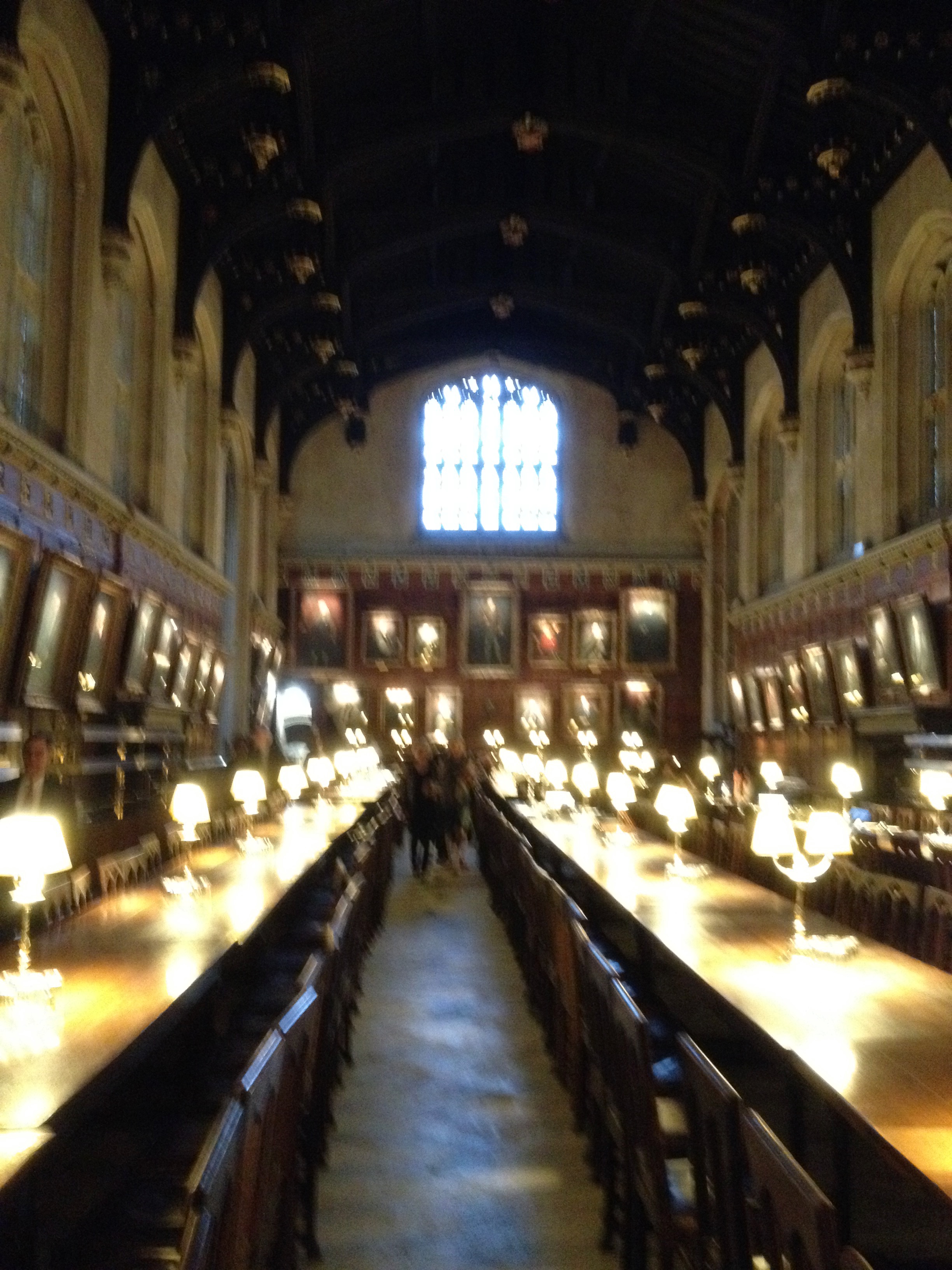
When choosing a grad program—go ahead, call me elitist, but then interview me and see that it’s not true—I knew it had to be at a world-recognized research institution.  I ended up at Edinburgh, and my bubble was already deflated when I told family from western Pennsylvania and they supposed I was going to Edinboro College (now Edinboro University of Pennsylvania), located maybe 50 miles from where I grew up.  I had been accepted at Oxford and Cambridge, however, neither of them could offer scholarships to a penniless Yank, but the famously frugal Scots were far more generous.  And let’s face it, Scotland is more exotic than England.  You have to admit that much.  Of course, the deciding factor was, in my case, money.  You have to wonder if there’s any possible way of escaping it.  From all appearances, mammon wins.


Human Capital, Are You?

Human capital.  Is there any more demeaning phrase?  Those in positions of political authority like to use the term.  To grow the economy, to people the military, to ensure the GDR Almighty surpasses each and every idol, we have to ensure the correct placement of our human cattle.  Oh, I mean capital.  I was recently reading about our rivalry with China.  The expert I was consulting noted that it all comes down to human capital.  With populations shrinking, this is annoying to those who want to measure nation against nation, back to back.  In China, it’s said, your fate is determined at a fairly young age.  And that made me wonder about late bloomers.  Like yours truly.  To see me up through at least fourth grade nobody would’ve supposed I was Ph.D. material.  (Considering how this all worked out, maybe they were right.)

Humans, if we’re honest, mature at different rates.  Some of us take decades to learn what we’re good at.  This may be a problem endemic to the poor—kids who are raised by parents that are uneducated and don’t even know about things like after-school classes and clubs to enhance the experience of growing up.  Or if they do know about them, can’t afford them.  They raise their children to be blue collar in mentality.  Of course, capitalism relies on this.  You need human capital to collect garbage and dig ditches.  To people the military.  I often wonder how many of these folks might’ve been (and still could be) hidden geniuses.  You see, when I grew up working as a janitor in my middle school, during the summers, I listened to the hourly employees as they talked.  It wasn’t all about women and alcohol.  No, some of them were untrained philosophers.  I learned that I wasn’t the only human capital that thought deep thoughts while running a floor stripper.

The very concept of human capital ensures that some potentially world-changing kids will be overlooked and slotted where “society needs them.”  If we would educate ourselves more our world could become a more equitable and pleasant place for the 99 percent.  Instead, we keep the capitalist machine fed, nations comparing one another’s capabilities.  China may use balloons creatively, but we can be assured that all developed nations are surveilling their neighbors, assessing how they’re using their human capital.  All I know is that I grew up destined to work as a janitor, but the thoughts in my head wouldn’t stop.  And one mentor, who worked for a church, decided to show me the way.  How I wish I could help others escape, but there’s some comfort in being part of a machine.

Which bit are you?