Holiday Hopping

Weekends in spring are like touching base.  They’re the only places you can’t be tagged out and you run from one to the next, hoping not to get caught.  Our British colleagues, more secular than we, tend to have both Good Friday and Easter Monday off work.  Religious America grins that Easter’s always on a Sunday so nobody has to be given any time off.  This disparity has long played into my fascination with holidays.  After generously giving you off both Christmas and New Years—within a week of each other!—the typical US company will throw a long weekend or two into January and February, but then won’t let you out of sight until the end of May.  And this is just as the weather is warming up and we’re wanting to be outdoors a bit more.  On weekends only, of course.

Holidays are a religious idea.  We have the various world religions to thank for them.  The idea of sacred time was, once upon a time, taken seriously.  And nothing is more secular than business.  World religions gave us the concept of weekends and the little breaks that we take from doing the same stultifying thing day after blessed day.  The more enlightened of companies have decided, after senior-level employees have accumulated days off with years of service, that adding extra days for every decade of servitude isn’t really fair and stop the practice.  So we find ourselves in that strange day between Good Friday (a work day) and Easter (thankfully, a Sunday), and thinking, “you know I could really use a break about now.”  We cast a weather eye toward Memorial Day while dreaming Beltane dreams.

My personal fascination with holidays really kicked off when beginning 925 work.  I don’t mind long work hours if it’s a vocation rather than a job.  When the relationship’s purely economic, however, you begin to miss the time to regenerate.  We remember someone died yesterday, too—we’re told—liberate us.  Tomorrow amid lily scent we’re informed he came back.  The rest of us, however, look at the clock and know that despite world-changing events we’ll be back at our desks on Monday since, well, what do you think we’re paying you for?  Don’t try pointing across the Atlantic, either.  They’re burdened with holidays and we’ve been liberated to capitalism.  And what are you doing, reading this blog on a Saturday?  I am most honored and grateful.  And I hope you have some time to rest, since it’s still a long way to the last Monday in May.


Actual Intelligence (AI)

“Creepy” is the word often used, even by the New York Times, regarding conversations with AI.  Artificial Intelligence gets much of its data from the internet and I like to think, that in my own small way, I contribute to its creepiness.  But, realistically, I know that people in general are inclined toward dark thoughts.  I don’t trust AI—actual intelligence comes from biological experience that includes emotions—which we don’t understand and therefore can’t emulate for mere circuitry—as well as rational thought.  AI engineers somehow think that some Spock-like approach to intelligence will lead to purely rational results.  In actual fact, nothing is purely rational since reason is a product of human minds and it’s influenced by—you guessed it—emotions.

There’s a kind of arrogance associated with human beings thinking they understand intelligence.  We can’t adequately define consciousness, and the jury’s still out on the “supernatural.”  AI is therefore, the result of cutting out a major swath of what it means to be a thinking human being, and then claiming it thinks just like us.  The results?  Disturbing.  Dark.  Creepy.  Those are the impressions of people who’ve had these conversations.  Logically, what makes something “dark”?  Absence of light, of course.  Disturbing?  That’s an emotion-laden word, isn’t it?  Creepy certainly is.  Those of us who wander around these concepts are perhaps better equipped to converse with that alien being we call AI.  And if it’s given a robot body we know that it’s time to get the heck out of Dodge.

I’m always amused when I see recommendations for me from various websites where I’ve shopped.  They have no idea why I’ve purchased various things and I know they watch me like a hawk.  And why do I buy the things I do, when I do?  I can’t always tell you that myself.  Maybe I’m feeling chilly and that pair of fingerless gloves I’ve been thinking about for months suddenly seems like a good idea.  Maybe because I’ve just paid off my credit card.  Maybe because it’s been cloudy too long.  Each of these stimuli bear emotional elements that weigh heavily on decision making.  How do you teach a computer to get a hunch?  What does AI intuit?  Does it dream of electronic sheep, and if so can it write a provocative book by that title?  Millions of years of biological evolution led to our very human, often very flawed brains.  They may not always be rational, but they can truly be a thing of beauty.  And they’re unable to be replicated.

Photo by Pierre Acobas on Unsplash

Hard to Say

There’s no easy way to say this, so I probably shouldn’t try at all.  Still, I feel compelled to.  You see, I’ve sat on admissions committees and I’ve written my fair share of letters of recommendation.  The former (admissions committees) have a difficult kind of calculus to compute.  Schools need students and their tuition money—this is, after all, the capitalist way.  (Yes, there are alternatives, but boards of trustees have severe deficits of imagination.)  Some schools get around this by being elitist.  Generally they have endowments of very old money and can weather all but the most severe of storms.  Such universities are in the minority and so the rest, and various small colleges, need to compromise from time to time.  Money or integrity?  You cannot serve both God and mammon.

At the graduate level this becomes even trickier.  Grad students bring in more money, and getting into grad school used to (and here’s the difficult part) require what some admissions folks secretly call “special intelligence.”  The paperwork and in-person interview reveal it clearly—this candidate (not always from a privileged background) displays a canniness that suggests they might really have a truly unusual ability to reason things out.  This is someone who should be admitted for advanced work.  But if you apply that principle not only will you be called “elitist,” you’ll also run out of lucre.  The solution is simply economic—let those who don’t have this kind of special intelligence in.  I have seen Ph.D.s after names from schools that I had no idea offered doctoral-level research.  And they legitimately call themselves “Doctor.”

When choosing a grad program—go ahead, call me elitist, but then interview me and see that it’s not true—I knew it had to be at a world-recognized research institution.  I ended up at Edinburgh, and my bubble was already deflated when I told family from western Pennsylvania and they supposed I was going to Edinboro College (now Edinboro University of Pennsylvania), located maybe 50 miles from where I grew up.  I had been accepted at Oxford and Cambridge, however, neither of them could offer scholarships to a penniless Yank, but the famously frugal Scots were far more generous.  And let’s face it, Scotland is more exotic than England.  You have to admit that much.  Of course, the deciding factor was, in my case, money.  You have to wonder if there’s any possible way of escaping it.  From all appearances, mammon wins.


Human Capital, Are You?

Human capital.  Is there any more demeaning phrase?  Those in positions of political authority like to use the term.  To grow the economy, to people the military, to ensure the GDR Almighty surpasses each and every idol, we have to ensure the correct placement of our human cattle.  Oh, I mean capital.  I was recently reading about our rivalry with China.  The expert I was consulting noted that it all comes down to human capital.  With populations shrinking, this is annoying to those who want to measure nation against nation, back to back.  In China, it’s said, your fate is determined at a fairly young age.  And that made me wonder about late bloomers.  Like yours truly.  To see me up through at least fourth grade nobody would’ve supposed I was Ph.D. material.  (Considering how this all worked out, maybe they were right.)

Humans, if we’re honest, mature at different rates.  Some of us take decades to learn what we’re good at.  This may be a problem endemic to the poor—kids who are raised by parents that are uneducated and don’t even know about things like after-school classes and clubs to enhance the experience of growing up.  Or if they do know about them, can’t afford them.  They raise their children to be blue collar in mentality.  Of course, capitalism relies on this.  You need human capital to collect garbage and dig ditches.  To people the military.  I often wonder how many of these folks might’ve been (and still could be) hidden geniuses.  You see, when I grew up working as a janitor in my middle school, during the summers, I listened to the hourly employees as they talked.  It wasn’t all about women and alcohol.  No, some of them were untrained philosophers.  I learned that I wasn’t the only human capital that thought deep thoughts while running a floor stripper.

The very concept of human capital ensures that some potentially world-changing kids will be overlooked and slotted where “society needs them.”  If we would educate ourselves more our world could become a more equitable and pleasant place for the 99 percent.  Instead, we keep the capitalist machine fed, nations comparing one another’s capabilities.  China may use balloons creatively, but we can be assured that all developed nations are surveilling their neighbors, assessing how they’re using their human capital.  All I know is that I grew up destined to work as a janitor, but the thoughts in my head wouldn’t stop.  And one mentor, who worked for a church, decided to show me the way.  How I wish I could help others escape, but there’s some comfort in being part of a machine.

Which bit are you?

Sunk Costs

The other day, in a fit of post-holiday tiding up, my wife found something that she couldn’t reach to put away.  As I took the thing and dutifully began to return it to its high cubbyhole, I realized that it was something we no longer needed.  Now, we’re very careful about not just throwing things away—this attitude of disposability has led to far too many landfills and rampant pollution.  So what was this thing?  It’s a dryer vent brush. After a couple years in our house, and with the awareness that the previous owners clearly ignored things like lint build-up in dryer vents, I purchased this brush to weasel in through the outdoor vent and try to get as much lint out as I could.  The old dryer died a couple years later, and we bought a more environmentally friendly heat-pump dryer.  Heat pumps require no vents, so the brush, in its high cubby hole, had simply been forgotten until it got in the way of something else.

This is an example of a “sunk cost.”  Economists, those purveyors of the dismal science, tell us never to worry about sunk costs since you can’t get your money back.  I suppose this is the impetus behind yard sales.  We’ve always been careful with money—we have to be—so purchases like this brush are calculated to meet a current need.  An investment.  Looking around, I see a number of sunk costs—there’s an extraneous office chair just a few feet from me at the moment, made superfluous when Gorgias Press moved offices and gave away office furniture that wouldn’t fit into the new place.  That’s the chair I’m sitting in at the moment.  The other, cheaper chair, however, is still functional.  Something’s telling me a yard sale might not be a bad idea.

But do I want neighbors to see the things we’ve accumulated over the years (and there seem suddenly to have been so many years)?  Some of the stuff obviously could have a future life.  The dryer vent brush was only used for a couple of cleanings and still has much life left, for an inanimate object.  Much of the technology that we’ve sunk money into would serve only as museum pieces, however.  And those costs tend to be much higher.  We try very hard to reduce, reuse, and recycle.  We give books away to little free libraries, if it’s clear they’ll never be opened again in this house.  But I can’t help wonder if sunk costs are a plague of capitalism and consumerism.  There’s got to be a better way.  And while I’m pondering it, I have a funky blue brush to use for scratching my head.


Of Ewes and Groundhogs

I need more time to prepare for Imbolc.  Or Groundhog Day, whichever you prefer.  Candlemas for you Catholic holdouts.  February 2 has the trappings of a major holiday, but it lacks the commercial potential.  Too many people are still working their way out from under Christmas overspending and tax season is just around the corner.  Still, I think it should be a national holiday.  My reasoning goes like this: since the pandemic our bosses now have our constant attention.  They’re in our bedrooms, our living rooms, our kitchens.  I see those midnight email time stamps!  We’re giving them a lot more time than we used to and seriously, can they not think about giving us a few more days off?  Some companies strictly limit holidays to ten.  

Can’t recall where I found this one…

Others, more progressive, have simply dropped the limits on paid time off.  And guess what?  The work still gets done.  I could use a day to curl up with a groundhog, or to go milk my ewes.  (Being a vegan, perhaps I could just pet them instead.)  What’s wrong with maybe two holidays a month?  (We don’t even average out to one per month, currently.)  I always look at that long stretch from March, April, and nearly all of May with some trepidation.  That’s an awful lot of “on” time.  (Our UK colleagues, of course, get Easter-related days and a variety of bank holidays.  Their bosses, I understand, would rather go with the more heartless American model, but tradition is tradition, you know.)  What if I see my shadow and get scared?  What am I to do then?

Imbolc is part of an old system for dividing the year into quarters that fall roughly half-way between equinoxes and solstices.  I go into this a bit in my book, The Wicker Man, due out in September.  That movie, of course, focuses on Beltane, or May Day, but the point is the same.  Look at what happens when you deny your people their holidays!  You’d think that the message that showing employees that you value them makes them more loyal might actually get through.  Businesses, however, have trouble thinking outside the box.  Take as much as you can and then ask for more.  What have they got to lose by giving out a few more holidays?  Otherwise each day becomes a repetition of a dulling sense of sameness.  Rather like another movie that focuses on this most peculiar holiday.


The Point of It

It’s not difficult to feel overwhelmed by the scope of the problem.  Race was a construct developed to oppress.  The intention was to keep those of non-European, especially non-northern European, ancestry in servitude.  The rationale for doing so was part capitalistic, but also largely religious.  Convinced that Jesus was white, and that the “New Israel” had passed to Christianized Europe, it didn’t take much theological maneuvering to get to the point that others can be—in that mindset, should be—brought into line.  And since this religion comes with a built-in body-soul dualism, it’s not difficult to claim you’re trying to save a soul by destroying a body.  That way you can still sleep at night while doing something everyone knows is wrong.

Martin Luther King, Jr. stood up to such ideas.  His understanding of Christianity was more in alignment with what Jesus said and that threatened those in the establishment who found any challenge to profit heresy.  There can be no denying that racism is one more attempt to keep wealth centralized.  It’s something not to share, which, strangely enough, is presented as gospel.  There are many people still trying to correct this wrong.  It is wrong when a religion distorts its central message in order to exploit marginalized people.  The key word here is “people.”  Black people are people.  Their lives matter and every time this is said others try to counter with “all lives matter, ” a platitude that misses the point.  We need Martin Luther King Day.  We need to be reminded that we’re still not where we should be.  We’re still held in thrall to a capitalism that rewards those who use oppression to enrich themselves.

I was born in the civil rights era.  I suppose I mistakenly reasoned that others had learned the message as well.  All people deserve fair treatment.  Today we remember a Black leader, but we still have the blood of many oppressed peoples on our hands.  Those who first came to live in this country, whose land was stolen in the name of religion.  Those whose gender and sex put them at threat by those who believe control of resources is more important that care of fellow human beings.  It’s easy to feel overwhelmed, but in King’s words, “the arc of the moral universe is long, but it bends toward justice.”   If we believe that, and if we can act on it, there remains the possibility that we might actually achieve the reason we set this day aside to reflect.

Photo by Katt Yukawa on Unsplash

Ideal Christmas

This blog is even open on Christmas.  I’m enough of a pragmatist to realize that few read it today, but even Carl Sagan knew that launching the Pioneer plaques into the void was the smallest spark of hope.  A quark in a universe so vast that we suppose it infinite.  And even so, it makes room for us.  So, if nobody reads this on Christmas I’ll certainly understand.  If you do, and if you celebrate Christmas, a merry one to you.  Thanks for stopping by.  For some folks, I know, Christmas is a time for gathering together.  A British colleague recently remarked to me, “But Thanksgiving is the big American holiday.”  I think he meant both for family gathering and for time off work—it’s the only regular four-day weekend capitalism deigns to give to those who live between the anvil and hammer of nine and five.  But today’s Christmas, we don’t have to think about that.

For me the ideal Christmas is one hunkered down with my family and when we don’t ever have to get out of our pajamas.  A bohemian holiday when you don’t have to go outside to check the mail.  As cold as it is this year, that’s really a relief.  And it’s also a time for stories.  Most of the Christmas gifts I give require explanation.  Even if they don’t, I like to tell stories about them.  That’s the way writers roll, even us obscure ones.  Holidays are based on stories and are made up of stories.  Those we tell only to our families are the most intimate kind.  You see, the brain doesn’t stop working just because it’s a holiday.  So all the books bear witness.

Although it’s too early to tell (the sun isn’t up yet), we might just eke out a white Christmas around here.  In eastern Pennsylvania we managed to avoid the worst of the massive storm that ruined holiday plans for many.  At the tail end of the rain, and at the knife’s edge of the frigid air, come a dusting of snow.  The temperatures have kept low, so if the sun hasn’t managed to warm the still green grass enough, we may see some white today.  It seems we have Bing Crosby to blame for this particular dream.  Christmas isn’t predictably white around here, and global warming only makes it less so.  But this is a holiday, and we don’t need to think about that.  I know not many will read this post, but if you are one of the few, and if this day is special to you, celebrate it for all it’s worth.


Space Ads

So, I’ve got enough stuff to worry about down here—the chimney needs some attention, that backyard gate still doesn’t hang right, and Giant keeps on running out of the cereal I buy—to have to turn my attention to space.  I love outer space, although, unlike some people I’ve never been there.  One of the simple pleasures in life is to be outdoors at the lake and watching the night sky where there’s no light interference.  Then I learned about space advertising.  You see, as an editor you get to read about all kinds of topics, and this came up in a proposal one time.  I had no idea that companies had been proposing billboards in space to fly across our nighttime skies.  It’s hard enough to use the internet anymore without hacking your way through a jungle of ads, and now they want to clutter our view of the nighttime sky so there’s no escaping capitalism.

“Space, the final frontier.”  This is a mantra that many of us grew up with in the sixties.  Most of us can’t afford to, and really have no desire to, go into space.  Born down here, we’re content to stay down here.  That doesn’t mean we can’t look at the sky with wonder.  Already you can’t go to the beach or a stadium event without planes flying banners trying to draw your mind back to the commercial world.  Even in remote forests you can find litter stamped with some company’s logo, trying to sell you more.  It’s enough to make you want to get to space to get away from it all.  Now that companies can afford to fly people to space as tourists—this is pretty strictly limited to the top one percent, of course—they feel they have the right to clutter the nighttime skies so that you’ll have that midnight urge to go buy a Tesla.

The original space advertising?

At this time of year we look to the nighttime sky in hopes of seeing a special star.  People with too much money cause so many unnecessary problems for the rest of us.  This has been apparent throughout history, but has been brought into sharper focus in the days of late capitalism.  Having too much only makes you want more, it seems.  And since other people have some you need to flash your company in their faces constantly.  From what I’ve read the only reason space advertising hasn’t really taken off is that it costs millions to get your ad up there.  Despite inflation it seems that these kinds of costs always come down.  And yet you can’t even get a contractor to come out and do something about that deck that’s falling apart.  And I do hope that they’ll have my cereal at the store this week.


Yule Tidings

Happy Yule!  One of the things my British colleagues find hard to believe is how Dickensian American employers are about days off around the holidays.  Corporations tend to give one day for Christmas, and you can hear them grumbling, “I suppose you must have the whole day?” even as they give it.  Christmas is, however, a season.  The twelve days begin on the 25th, but Yule starts today.  Yule marks the solstice—the fewest hours (minutes) of daylight occur today.  Tomorrow daylight will start to grow longer, although it will take many days before we begin to notice any difference.  I know this reflects a northern hemisphere bias, but having read about how less time is necessary for work, given technology, I wonder if there might not be a more equitable solution to this hemispheric focus.

What if we regularly gave generous time off around the holidays to recharge our batteries—renew our spirits—for both hemispheres?  What if we gave our southern neighbors the benefit of, say, a week off in June, after the summer solstice?  And what if we joined them as well?  Only the most uninformed believe that Jesus of Nazareth was born on December 25.  The best that those facile with calendars and history  can do is that he was likely born in the spring, so why not split the difference and offer rest and respite in both December and June?  Bean counters who equate every second in front of the screen as adding to the bottom line (a fable as sure as anything the brothers Grimm recorded) might need to be the ones leading the way.  Rest is important.  Time to think about something else.

Yule is an ancient celebration.  We don’t know how far back in history it goes because there are no records of its earliest celebration.  Before computers, before the industrial revolution, it was recognized that little truly productive outdoor work could be done during the winter months.  Obviously we can’t sit around and do nothing all the way til March, but these very short days bridging the end and beginning of what we now recognize as the new year, are custom-made for reflection and renewal.  Why not encourage it?  Perhaps the bean counters could use it to read A Christmas Carol.  Maybe they could set aside their abacuses and reflect on the wonder of the seasons that suggest to us that now is the time to rest and wait for the light to return.  Let’s truly celebrate Yule.


Split Personality

This may be the way to develop a split personality.  For the majority of my waking hours of the week I’m a biblical studies editor.  I do the usual, boring editorial work associated with that job.  Academics contact me supposing I’m just some Joe who majored in English and who has to pay the consequences.  Once in a very great while the person contacting me knows that I once was a professor as well, but that’s rare.  So I have one part of my life.  When I’m not at work I continue to research (in my own way) and write books, as well as this blog.  Being in “the biz,” I have a fair idea about how to get published in the academic realm.  Ever since Weathering the Psalms came out I realized I could use that knowledge to steer my books toward appropriate publishers, but all of this is very separate from my day job.

A third compartment of this personality is as the closet fiction writer.  I’ve had thirty short stories published (under a pseudonym, for work purposes) and anyone curious about that pseudonym’s life can’t really tap into this one because I have to keep them separate.  I’m also involved in a faith community.  Most of the people there are surprised that I watch horror and write about it, and even write it.  Only two have expressed any interest in reading what I write.  So it is that each of these discrete elements—and they’re not all!—prevent me from being an integrated personality.  I know other religion scholars who watch and write about horror.  Because they’re academics they can integrate it into their profiles in a way a mere editor can’t.  To be fair, they’re misunderstood too.

The possibility of living an integrated life is limited in the workaday world of capitalism.  Companies want you to spend as much time as humanly possible making money for them.  You shouldn’t try to shine any light on yourself, and if you do, well, keep the company name out of it!  Who wants to be associated with some horror pariah?  And yet, statistics reveal about half the population of the United States enjoys horror movies.  A significant number of those people attend religious services or belong to religious bodies.  So what’s a graphomaniac to do?  I write because that’s what I do, and have always done.  I started in fiction and moved to academic and now I blog.  Somewhere in there there’s a person and someday I may discover who he is.


Past Knowing

It’s like watching a fall in a movie in slow motion.  You know you can’t really stop it, as much as you’d like to.  We see the collective world pieces moving into place for a third world war and thinking people worldwide are wondering why countries such as Italy and Sweden are electing hard right candidates.  Especially when Russia is invading countries at will.  I’m no politician and I resent having to be drawn into political topics, but at times you just have to say something.  Even if it won’t change anything.  Parts of the Bible are like that—witnesses simply wanting it to be noted.  Something seen, something said.

My family wasn’t political as I was growing up.  They pretty much just voted Republican, being in a rather Pennsyltuckyish county.  When I was nearing voting age I asked my mother about the political parties.  We’d learned about hawks and doves in school, and having been taught that Republicans tended to be those who started wars I wondered why Christians voted for them.  She really didn’t have an answer for me and I later came to realize that as a certain segment of Protestantism is actively attempting to bring about the second coming, this fits the plan.  One way to do so is by initiating wars—environmental degradation is another—because they believe it’s all going to end soon anyway.  Although Jesus advocated for peace, they choose war, ironically, to bring Jesus back.  That was the start of my journey to the Democratic party.  War serves no purpose.

In democracies worldwide right-wing parties are propagandizing heavily to urge nationalism.  Separatism.  Fear of the stranger.  Many in Russia believe Putin’s rhetoric that Ukraine is a dangerous threat to the largest country in the world.  China, the largest country in terms of population, feels threatened by the small island nation of Taiwan.  Borders around much of India are disputed.  The control of resources, in thrall to capitalism, makes people want to close borders and watch out for their own.  At least their own that are members of their party.  From my perspective it’s difficult to see a peaceful way out of this.  Even the world’s oldest democracy falls prey to the propaganda of a known swindler.  Human society is complex.  We have enough resources to meet the needs of all except the greedy, but it’s the greedy who run for office.  We have, it seems, forgotten the last century entirely.

Photo credit: Remember, public domain via Wikimedia Commons

Banning Together

Banned Book Week starts today.  As the political situation in this country continues to deteriorate into a Republican fascination with fascism, we find books challenged and banned for suggesting real fascists were anything other than nice, white boys misunderstood.  It will take decades, if not another World War to undo the damage Trump unleashed.  Instead of sitting in my corner worrying about the future, I read.  Banned books make up quite a bit of my reading, but I do try to read one every September intentionally in honor of the occasion of Banned Book Week.  It’s misguided to suggest children shouldn’t grow up.  A deep-seated fear of education reveals the hypocrisy at the very heart of book banning.  Adults should know better.  They should read.

I love America, but nationalism is poison.  Just like those who believe that only their religion can be right, many believe only their nation can.  Divide that up among the almost 200 nations of the world, with individuals in each thinking this way, and conflict logically arises.  Those who look at other cultures—read about them—and try to understand them, realize we each have our own way.  One of the major problems is that capitalism insists all must trade and barter the way that we do.  We think of people in terms of their “net worth”—which is, in reality, infinite—and want to know who owns more and is therefore more powerful.  Lackeys will always follow the wealthy, kissing posteriors and professing loyalty until they have enough of their own to challenge the more wealthy.  It’s enough to send any Bible-reader back to Ecclesiastes.

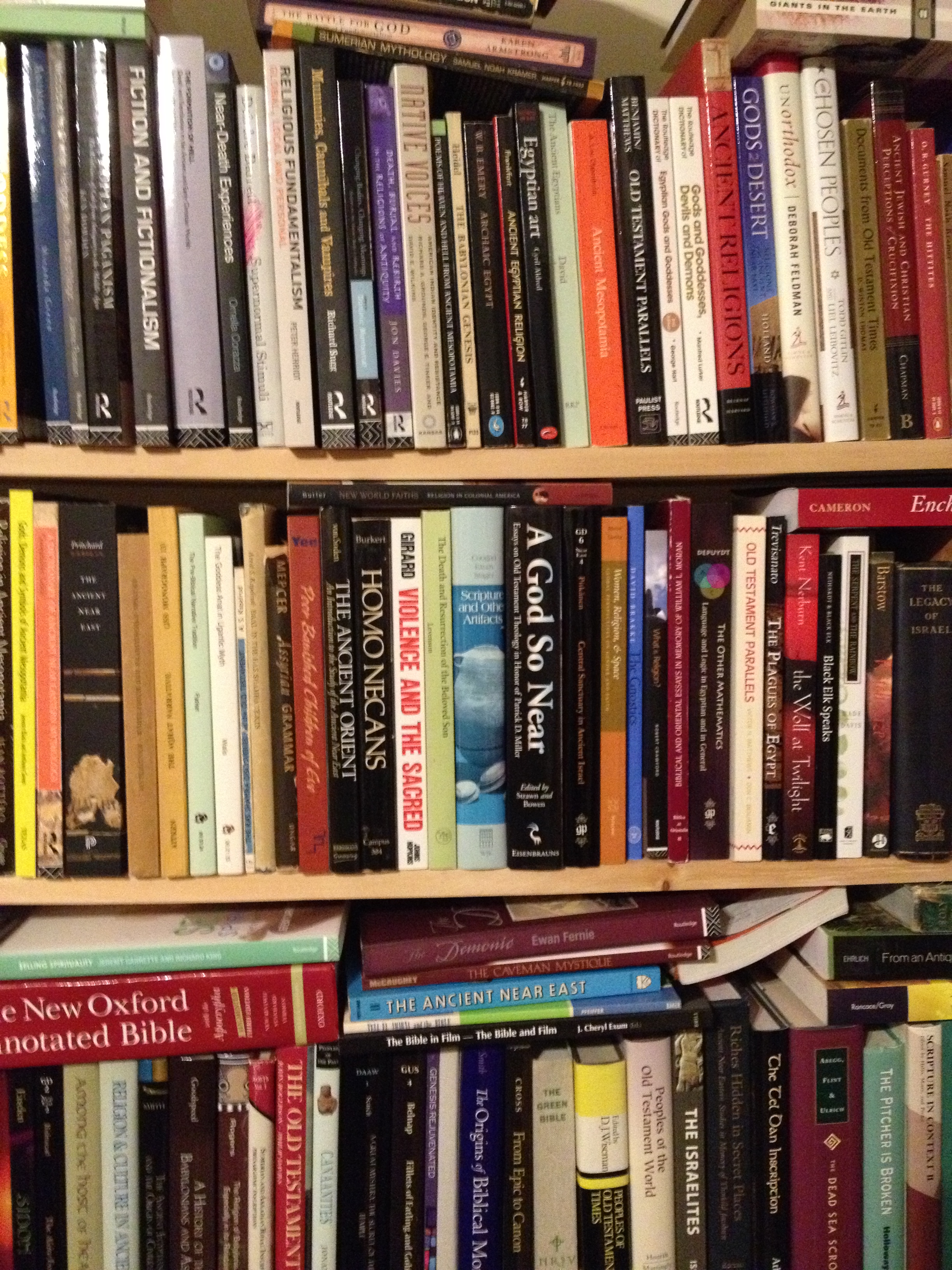
Books have stirred up ideas ever since they were invented.  The Bible wasn’t the first book, but it too appears on Banned Book lists.  Many of those who thump it read it with the acumen of a kindergartener.  That’s not why it’s sometimes banned, however.  It is full of sex and violence.  The bits about love and hope are far outweighed by it.  Books contain ideas and ideas will get out.  There’s a reason I surround myself with books.  They are a strange sort of castle that invites others in even as it protects.  It’s not comfortable to challenge the way that you think, but nothing fascinates like a new idea taking root and growing.  One of the best ways to meet people far distant and explore the way they think is to read.  Banning reflects our small-mindedness, and even worse, our desire to keep that small-mindedness intact.


Social Horror

Some books get you thinking in ways you don’t expect.  That’s one of the pleasures of reading.  Lindsey Decker’s Transnationalism and Genre Hybridity in New British Horror Cinema may sound terribly specific—there are a lot of qualifiers in that title—but it actually has some very broad implications.  I was reading it specifically from the horror angle for a project I’m currently working on, but I was surprised at the social commentary I found while doing so.  One of Decker’s main ideas is to show that British horror is, well, transnational while maintaining its Britishness.  She focuses mainly on five films in the book, only two of which I’ve seen.  Very aware of the history of British cinema, she points out many characteristic features and situations that make British horror what it is.

The social commentary comes in when discussing “hoodie” horror films.  These are movies showing how the working class, particularly the youth, are dangerous and anti-society.  The more I read the more it occurred to me that imperialist, capitalist systems are built on the corpses of the poor.  Even good kids from bad situations have difficulty getting ahead in life and those above them on the “social ladder” more or less despise them and make policies to keep them in poverty.  This leads to anger and resentment, and often, in reality, this spills over into violence.  It all comes down to those who benefit from the system refusing to make it more equitable.  When the inevitable happens—those pressured without sufficient means boil over—they are blamed for their own circumstances.

Having grown up in a working class system and having struggled all my life to somehow maintain a comfortable existence for my family, I know the kinds of obstacles faced.  In my particular case, retirement is not a likely outcome.  I’ve worked, except for (and often even) when I was in higher education, since fourteen.  I’ve seen others with connections, educated parents or influential friends, get ahead.  I’ve also watched while many of us get shunted aside because, well, who are you?  Some people wonder why I watch horror.  There are many reasons for it, and at times I think maybe I’ve seen enough.  But then I look around at the corpse-strewn foundations of our current system and I see how reality plays into that fear.  Decker, I’m pretty sure, was meaning for her words to apply to mainly the fiction of horror, but there was a different kind of hybridity there as well, at least for me.


The Truth, for Free

The Book of Common Prayer, reaching back to my Anglican days, is and always has been in the public domain.  Although the poetic language and culturally relevant phrases could by charged for use, they’re not.  The idea seems right-headed to me.  Although the Church of England, like many other religious bodies, has its own specific theology and approach to things, which it believes is right, as opposed to all other belief systems, it shows its conviction in making its sacred text free.  Copyright exists to protect intellectual property.  If an individual or an institution, or a company, creates something, copyright assures them that nobody else can monetize it without the creator’s permission, and often such permission involves a royalty.  The C of E has foregone that.  Print away!

I tarried many years among the Episcopalians before it became clear to me that I wasn’t exactly the kind of saint they were looking for.  I’ve had to move on, but I very deeply appreciate the integrity of an institution that says, “I made this, but you can have it.  I really believe in it.”  If you’ve decided to print and sell religious books, however, beware the Bible.  Most of the common translations in circulation (apart from the good old King James) are covered by copyright.  Unlike the Church of England, the bodies that sponsor Bible translations expect to be paid for the use of said translation.  This is, in part, a business decision.  They have valuable property—for many the keys of salvation itself—and if you want it you should be willing to pay for it.

This contrast has often struck me as very odd.  How capitalist religion has become!  In what do Bible translating bodies really believe?  Believe me, I know that any large publishing effort requires a lot of work.  Resources.  Still, those who do the translating generally have church or university jobs.  They’ve already got a steady stream of income, no?  And yet they will expect to be paid their billed hours for bringing the truth to the world.  I’m not a good investment thinker.  Money doesn’t really motivate me.  This is one of the reasons I have tried several times to find acceptance as a clergy person.  My values seem out of sync with the rest of the world.  I even bothered to learn the original languages in which the Bible was written, the better to read, mark, and inwardly digest them.  Still, I wonder if those who truly believe would not feel more authentic giving away all they have in order to attain the kingdom of Heaven.