Slow and Spry

Businesses seem to want to move at light speed.  At least some do.  When I see that happening I think, “their strategy must be to make a fortune quickly so that when the unthought-through idea collapses they can move on to the next thing.  When I hear words like “agile” being tossed around I translate “reckless.”  Just over a century ago my ancestors were scraping out a living farming, and they got along okay.  Our acquisitiveness has outstripped our sense.  I read quite a bit about being satisfied with little.  Of course, I work in the “business world” where such ideas are anathema.  Even universities have decided to jump on the Titanic.  What could possibly go wrong?  My experience at Nashotah House was decidedly mixed.  One thing I always appreciated was the contemplative (i.e. slow) pace of things.  I may not be orthodox but I’m hardly reckless.

Perhaps buying the farm isn’t such a bad idea.  I’m afraid that I don’t have enough practical knowledge to raise my own food, even though I’m a vegan.  You see, for the things you can’t raise in the soil you need to sell surplus so that you can buy things.  Or rent movies.  And that takes business sense.  And businesses want to move at the speed of light.  I may be neurodiverse, but it takes me a while to process things.  I watch older movies.  I read slowly.  I think things through.  I do believe that businesses that last a long time have survived by moving a bit more slowly.  Like a tree.  By thinking things through.  The Vatican has been in business for a couple thousand years and they seem to be doing okay.  I could be Catholic were it not for doctrine.

I’m not the smartest guy around—not by a long shot—but I am a strategic thinker.  Strategic thought can be deep.  And counterintuitive.  And it doesn’t always lead to the desired results.  (I don’t even have a small college post, so that much is obvious.)  I’m content to let people pass me on the highway.  I don’t have to be first to market, as the saying goes.  I’m more in it for the long haul.  It hasn’t landed me wealth or fame, but I can spend a little time writing every day.  I get to watch movies that make me feel good.  I even get a book or two out the door.  Being agile is fine, but only, imho, if you think it through.


Free Word

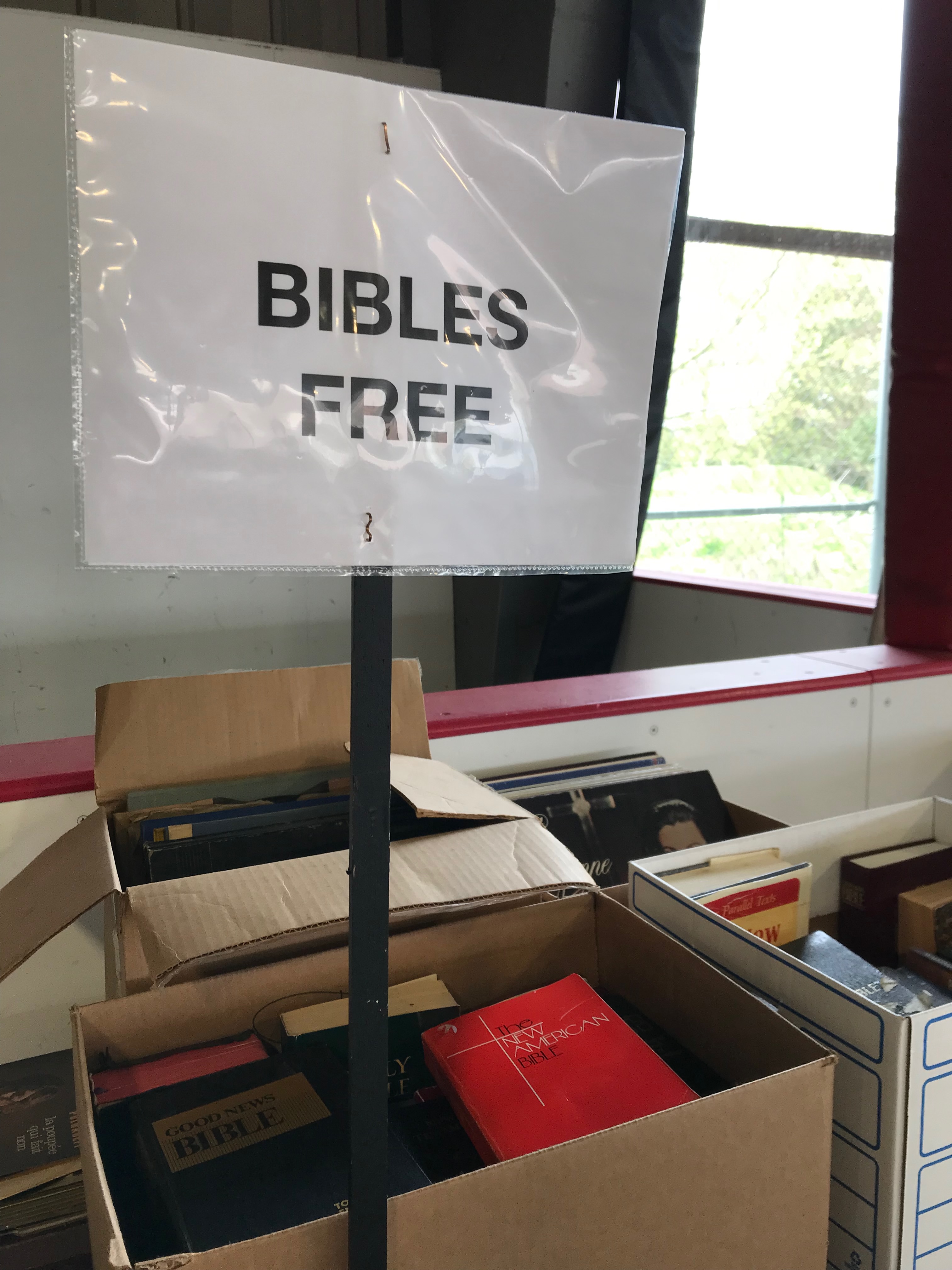
“Anything free is worth saving up for.”  That’s a line from one of my favorite movies of all time.   Free, though, can mean many things.  The “free cookie” is something good to entice you to buy more.  It often works.  Free, for a person, indicates the ability to do what we want (within the constraints of capitalism, of course).  But “free” can often mean cheap, overly abundant.  I like to decorate our lawn with rocks, which are often free, but if you want decorative rocks you’ve got to pay for even the ground beneath your feet.  So it is that when I attend book sales I marvel about the fact that Bibles are nearly always free.  It occurred to me again when I attended a spring book sale a few months back.  I always look through what’s on offer—call it an occupational hazard.

I used to attend the Friends of the Hunterdon County Library book sale in New Jersey.  I believe it is the largest I ever visited.  I used to get there early opening day to stand in line.  One year, one of the volunteer friends came out and announced that they had a really old Bible (only 1800s) that would be $100.  People do, however, tend to donate Bibles to book sales in great numbers.  I suspect organizers are reluctant to put Bibles in the trash.  They also know that people aren’t going to shell out money for them, so they try to give them away.  What does this say about being free?  Is it desirable to be so abundant that you’re left on that table in the back while everyone else is leaning over the more exciting items on offer?  There’s perhaps a message here.

Of course, Trump is selling Bibles for $60.  That’s a bit steep, even for an academic Bible (which his is not).  It might be suggested that this $60 is cheaper than free.  Now, I work with Bibles that are sold at a profit.  One thing I’ve learned is that Bibles sold are always for profit. Those who are honest admit what they do with the lucre.  Although he’s tried to keep it under cover, the Trump Bible does funnel profits to the GOP hopeful.  Yes, he is making money off the Bible and wants to be elected.  If that happens, freedom will disappear.  He’s said as much at his rallies.  Looks like stormy weather to me.  There are organizations that give away Bibles.  Somebody, however, pays for them.  In this strange experiment of a country, anything free is worth pondering.  Nothing, it seems, comes with no strings attached.


Mad Homework

Watching movies can be studying.  It’s all a matter of what the exams are.  I studied enough when I was young to know that Vincent Price was a horror star.  Probably I had no conscious idea what “horror” was yet, contenting myself with terms such as “scary movies” or “monster shows.”  The Mad Magician was one of his earlier efforts and not really a great film.  The Prestige, of course, makes any magician film pale in comparison.  Still, many special effects were new in 1954 and gimmicks could be used to lure audiences in.  Many of these movies, such as Mad Magician, are ironically difficult to locate these days, having had their distribution rights bought up by various companies who know that some of us still have homework to do.

Although classified as a horror movie, there are really only a few tense moments in the whole.  It seems pretty clear who’s going to be magiced to death before it happens.  One does wonder how you avoid massive blood splatter when cutting someone’s head off with a buzz-saw.  (It might’ve made quite a 3-D effect, had they decided to put it on camera.)  Audience tolerance (and the Hays Code) wasn’t up to that level in the fifties.  It seems there was a lot of learning going on in the day.  How to make a movie frightening without violating strict rules regarding what might be shown?  Of course, the combination of writers, directors, producers, and actors have to combine just right to make a winning film and stories that rely too much on 3-D tend to show.

The villain in this case, as is often true in early Price movies, has justification.  The murders begin because his sponsor insists that any trick he invents, on or off company time, belongs to him.   Many modern employers try to institute similar terms—their salary buys you, in essence—while claiming to offer a good work/life balance.  That’s a new and foreign concept to our farming ancestors, I suspect.  People (and corporations) like to own other people to do the hard work for them.  Our awareness of this too-human tendency led to the necessity of unionization and other ways for employees to push back against the machine.  In other words, there is a bit of pathos in this early Price horror film.  There isn’t much horror but there is some social commentary.  And, of course, Price would move on to other films that could better showcase his talents.  Not all studying feels rewarding, but it’s necessary.


Discovering Ordinary

I wasn’t quite sure what sense of ordinariness to expect from Robert J. Wicks’ The Tao of Ordinariness.  I would say as a whole it is about becoming ordinary you.  I found the whole interesting, but it was chapter four that really caught my attention.  It’s here that Wicks starts to address those whose damaged childhoods have created a false (and frequently re-affirmed) sense of our ordinary selves.  I’ve always known I have issues—it’s pretty obvious that I’m not quite like other people I know.  I often lack confidence and, thanks to my career and publishing history, have had that sense pounded in even as an adult.  (Poundedness is not a protected category, however, and it won’t get you any special consideration.)  Up until that chapter I was thinking, “This is nice, but it just doesn’t match my experience of things.”  Then I learned why.

It is possible to change your outlook, of course.  It’s not an easy thing to do.  Our culture isn’t set up to allow for it, what with 9-2-5s and all that.  You see, my personality really fit the teaching mode and lifestyle.  I loved the work, although it was hard.  And I loved the fact that if you had free time during the day you could, if you needed to, run an errand or two.  I guess I’ve never been one to invest in that capitalistic idea that your employer is buying your time.  For some jobs, yes.  In fact, my first employment experiences were of that sort.  I started at nine, did physical work until five, with a lunch break in the middle.  Now work begins early and doesn’t really end.  Days off are few and they fly by quickly.  Changing your outlook requires time to think.  That, it seems, is what’s missing.  It makes it difficult to find out what my ordinary is.

Wicks’ book is a hopeful one.  His optimism comes through page after page.  He gives practical advice.  The subtitle reveals why the book is important: Humility and Simplicity in a Narcissistic Age.  (That last adjective is so common now that spell-check completes it automatically.)  Politicians have frequently been narcissists, but Trump has made it into a high art—care only for yourself and tell people the lies they want to hear.  You can see the calculating cynicism in every glance and gesture.  And yet, here we are.  Books like this are important.  We need to be told that there’s another way.  If only it were also possible to get your horse to drink.


The Teenth of June

It’s only really when they have no choice.  The Wednesday holiday, that is.  No convenient weekend a day away.  So Juneteenth is actually celebrated on Juneteenth.  I believe in holidays.  I think they’re more than just time off work, and Juneteenth celebrates freedom.  And it reminds us that our African-American siblings aren’t yet truly free.  We still have much to learn and having a holiday to underscore that is important.  Capitalism does a good job of disguising freedom, of course.  Your worth is weighed by how much value you add to the company.  Taking a day off from that is an opportunity to reflect on how daily living could be improved for all.  Juneteenth is a necessary holiday.  We need constant reminding.

I don’t see many African-Americans flying flags on their houses declaring themselves “not woke.”  We prefer to believe we’ve reached perfection already.  Capitalism is great at spreading myths like that.  The basic premise behind it is greed, and people are easily divided into groups because of skin tone.  It’s a dangerous combination.  Somewhere along the way, “justice” came to be a swear word.  Particularly among one political party that has decided power, at any cost, is the sine qua non of human existence.  If that means oppressing others systemically, or if it means invading a neighboring sovereign state because you have nukes with which to threaten the rest of the world, it’s all the same.  Power is far more addictive than any opiate, but we  don’t have any laws preventing those unsuited to holding it from doing so.  Juneteenth uncovers a host of problems still to address. 

Slavery was hard to let go because it cut into profits.  Human beings love wealth more than each other.  Ironically, without others to compare with, wealth means nothing.  If money makes someone happy I have no problem with that, but it has to come with responsibility.  One way to handle it responsibly is to insist that only so much can be had before the surplus goes to insure that all people have enough.  Of course, where Supreme Court justices openly accept bribes we can’t wonder that there are legal loopholes to help the wealthy circumvent their civic duty.  We need constant reminders.  We need holidays like Juneteenth.  We need to give our African-American siblings the same rights and privileges all people should have.  It’s appropriate to celebrate small steps in that direction.  Even if it means giving a Wednesday off of work.


Mystic Thoughts

Those who know me primarily from my writings on horror are perhaps whiplashed when I muse about spiritual matters.  I don’t mean just religion, but spirituality—the two are quite different.  If life had unfolded differently I would likely have ended up as a mystic.  The problem is “rational mystic” is an oxymoron in most minds.  Either you’re one or you’re the other.  To become a proper mystic, in any case, you can’t be bothered with such things as secular work.  Mysticism—direct encounters with the divine—requires development and practice.  You can’t always control when a trance or vision might hit you.  What if it comes during a meeting?  Say your performance and development review at work?  You see the problem.

I seriously considered becoming a monastic as a young man but I had a problem.  I was a Protestant.  Protestantism was based on the idea that Catholic practices, such as monasticism, were wrong by default.  Miracles don’t happen—haven’t done since New Testament times—and God is a biblical literalist.  Why spend valuable church funds, then, on establishing monasteries?  Still, mystical experiences happened to me.  (You’ll have to get to know me personally to find out more about that.)  I talked to my (Protestant) professors.  “You don’t want to become a mystic,” I was told.  “They always have trouble with the church.”  Eventually I became an Episcopalian, a tradition that was more open to mysticism.  It became clear in 2005, however, that the Episcopal Church wanted nothing more to do with me.  Besides, I’m a family man.

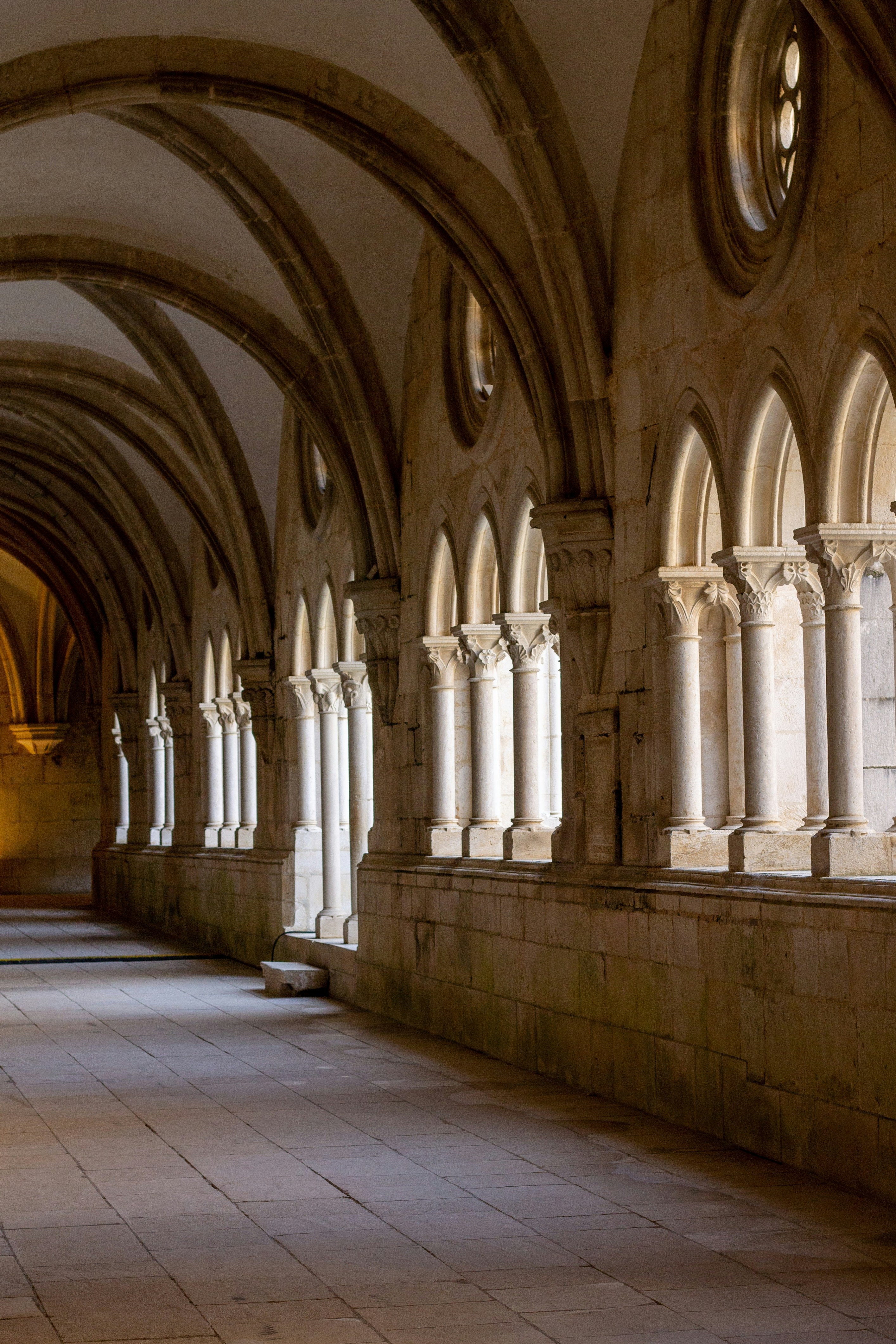
Monasteries for married folk is an idea whose time has come.  Monasticism is based on the idea that you need to isolate yourself from the world’s distractions to grow spiritually.  To me, as I noted recently regarding sacraments, the “distraction” of marriage isn’t the problem.  It’s the constant need to earn money.  More and more money.  Monasteries became wealthy because other people were glad to pay money so that someone else could do the spiritual heavy lifting for them.  You can get into Heaven on borrowed virtue.  (Even Protestants believe that.  If you doubt it, get a degree or two in theology and you’ll see.)  So why not provide monasteries for those poor souls that just don’t fit into the capitalistic ideal?  I have the vision that such places would become havens for artists of all stripes.  And that, with the goodwill of society, locations where your needs were met for an exchange of goods—building good spiritual karma for a world where most people are content with trying to get rich—might just work.  It’s an idea whose time has come.  Who’s with me?

Photo by Luís Feliciano on Unsplash

Planetary Thinking

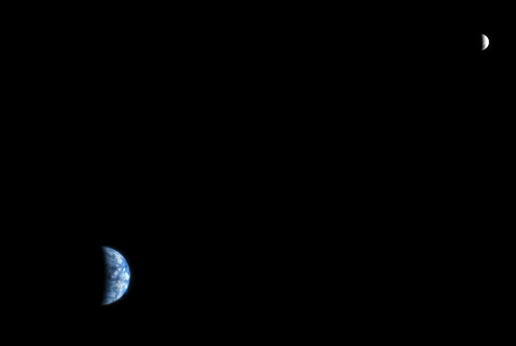
It’s Monday, and I’m feeling like a holiday.  Good thing it’s Earth Day.  Many businesses (who still don’t consider Earth Day important enough to make it a paid holiday) are emphasizing being green these days.  Really, with global warming proving itself no myth it’s just good business to try to adapt to sustainable practices.  Those of us who are vegan find more and more companies offering animal-free options—our dependence on beef is a major environmental hazard.  It’s still a challenge finding shoes that aren’t leather based, but things are improving.  And more and more hybrids and electric cars are on the roads.  We are making progress.  We still haven’t, however, gone so far as to declare a day dedicated to preserving our home an official holiday.

I’m not jaded or capitalistic enough to think our only hope is to find off-world parking.  To raise the future of humanity elsewhere.  It’s just that people fall in line after bullies and bullies only think of themselves.  And who, thinking that an afternoon on the links can be counted as work, would consider giving mere employees a day off?  A day when we might shut down commuting schedules to save power?  A day to rest from the brutality of constant commerce.  After all, a typical weekend consists of a day for chores and a day for church.  (Still, that is, for many people.)  And then back to the office not really feeling refreshed but knowing that you can’t long survive in a pandemic-ridden world without more cash coming into the coffers.  Inflation may be going down but grocery prices aren’t.

From NASA’s photo library (public domain)

A day to celebrate home seems like a no-brainer.  Especially when it comes on a Monday or Friday.  Ah well, we’ll do our best to celebrate it around work, shall we?  We’re moving late into April.  There’s been a bit of sun mixed in with April showers, as is typical around here on this planet.  Days are growing longer and the trees are leafing out.  Spring welcomes us back to the outdoors (after work, of course) where green now predominates over brown and gray.  While we may not have the day off, we can at least take a moment or two to consider how we might be better to our planet.  How we might drive less, use less electricity, generate less waste, spare a few cows.  Who knows, it might become a habit?  If that were to happen maybe every day would become Earth Day.


Adulting

Young professionals that I know often say adulting sucks.  Quite a bit of the time I tend to agree with them.  The 9-2-5 makes just getting along difficult, at times.  I’m sure there’s software to ease some of the woes, but you have to learn how to use it.  And that takes time.  Time I’d rather spend writing or reading.  For example, to get a small break on state taxes, if you work from home, you need to calculate your office space and then how much it costs to exist in your house for the year.  When I remember to do so, I can look utilities and mortgage up in Quicken.  Sometimes, however, when a book in my mind is distracting me I just tot all this up on the back of an envelope.  Then I need to type it in so my accountant can see it (taxes are far too complicated for mere mortals) and, I can’t underscore this too many times: numbers are adulting.

Photo by Tyler Easton on Unsplash

I’m an idea person.  The 9-2-5 (numbers!) that keeps you in front of a computer all week long means that things pile up.  Weekends seem too short to spend on numbers.  But you’ve got to balance that checkbook.  And even tot up the number of hours you give to “the man” each day.  What could be more adult than accounting?  Don’t get me wrong—at times numbers can be interesting.  Numbers, at their best, are philosophical.  One squared is one.  When you square any number greater than one, it increases.  One doesn’t.  And you can’t divide by zero and get zero for an answer, as handy as that’d be from time to time.  These abstract concepts come in useful but adulting involves serious numbers.  Numbers that imply liquidity.  Cash flow.  

Time is made up of numbers too.  If a social event comes up on a weekend, there goes your grocery and cleaning time.  And writing a book takes a tremendous amount of time.  It’s a second job on top of the other one you work 9-2-5.  All of this makes me think of those TIAA-CREF ads that showed prominent professors and captions that said “Because some people don’t have time to think of money.”  Or something similar.  That’s what I’m talking about.  Adulting is all about money.  And money must be taxed.  And you have to keep track of where it all goes.  I’m sure Quicken could help me with this, if I had time to learn it.  (We pay for it after all.)  But I’m kind of busy writing this book…


Learning to Write

It’s a reciprocal relationship.  Ideally a symbiosis.  The publisher has a reach, and know-how, that an author lacks.  An author provides content the publisher needs.  Yet publishing is a business in a capitalistic world and has to (unless subsidized) turn a profit.  As an author who works in publishing I’m skewered on the horns of this dilemma.  It’s heartbreaking to see the lengths some authors go to only to find out their book is priced the same as a week’s worth of groceries.  Or three tanks full of gas.  Who buys a $100 book?  Libraries.  Well, some libraries.  Occasionally a publisher will run sales, if you order direct, but by then interest in your book (which may be timely) has passed on.  You become just another name on the shelf in the Library of Congress.

I’m looking for a publisher for my sixth book.  This has to be someone who understands that even $45 is beyond the reach of most intelligent readers.  “What the market will bear” feels like the death sentence to the years of your life you’ve put into writing the thing.  A friend once asked me, “Why do you do it?”  For authors the real question is “How can you not do it?”  The need for the validation through publication runs very deeply in some people.  More deeply than our national love for Taylor Swift.  It has to do with meaning.  Purpose.  A sense of what we’re put on earth to do.  

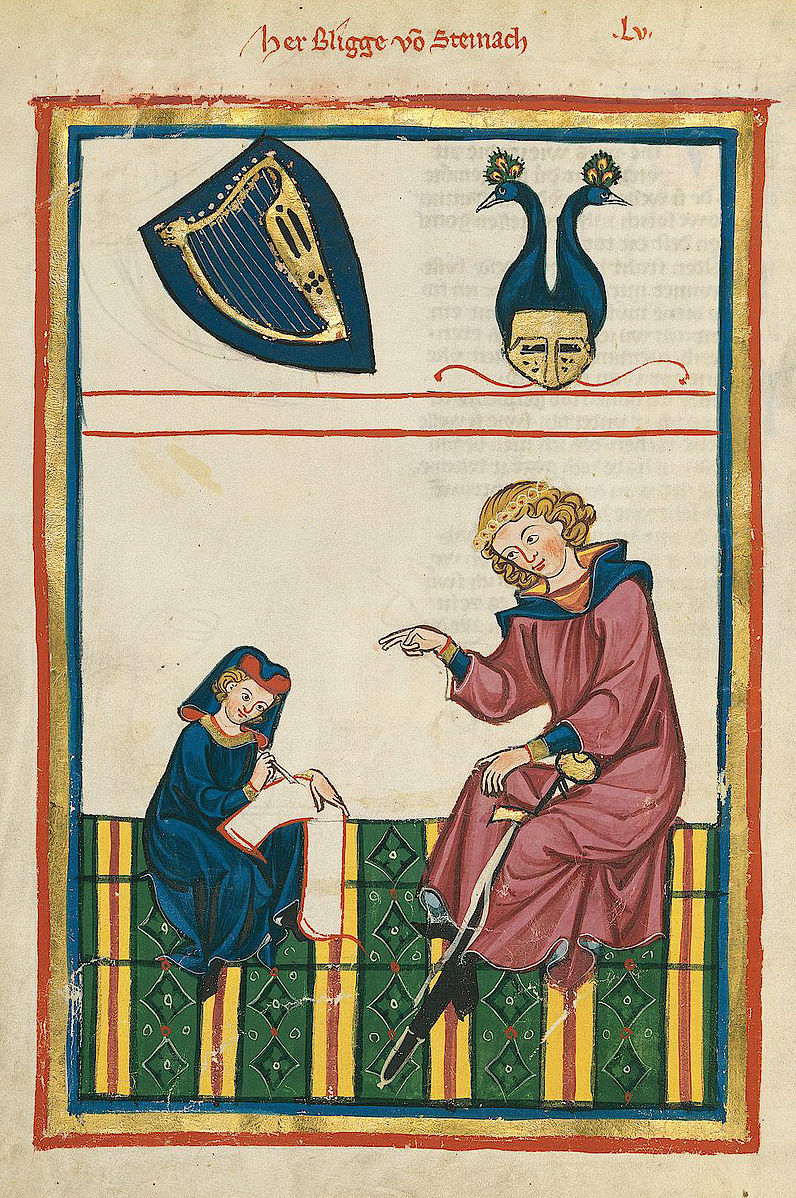
Image credit: Codex Manesse, public domain via Wikimedia Commons

The standard “wisdom,” and practice, is to publish in hardcover, priced for the library market, and if it sells well at $100, perhaps offer a paperback.  Hopefully priced lower than $45, but don’t hold your breath.  “What the market will bear,” should be your mantra.  It’s a wonder that civilized people ever got educated.  I grew up on cheap books from Goodwill, which is all I could afford.  College, on borrowed money, taught me the price of reading seriously.  It was a lesson I never forgot.  I’d begun my faltering steps to writing books while in high school.  I started writing short stories even earlier than that.  It has been a life of writing.  Even series books, I’ve come to see, are too easily exploited in this way.  My shortest book is priced at $40.  At least I know that I’ve written some collectors’ items.  Take heart, my fellow writers trying to emerge from academe.  There are other ways of being in the world.  And some of them may even be symbiotic.


What Would Ostara Say?

Easter is an uneven holiday.  In Britain it leads to days off work.  In the US, which prides itself on being religious, it’s business as usual.  Nobody closes for any days surrounding the holiest day of the Christian year.  That irony has always struck me about this season.  Of course, going to college there were breaks in the spring, and at a Christian school, special observances for sacred times.  In seminary it goes without saying.  In my case, working on a doctorate in the UK (an activity with few true breaks), we experienced the British sense of holidays surrounding Easter.  At Nashotah House you simply couldn’t miss it.  In fact, the Triduum was a contest of endurance with late night services and hours and hours in chapel.  Once I was forced into secular life, the shift was blinding.

Capitalism rolls right over Easter without even slowing down.  Who brakes for a Sunday holiday?  I am a believer in significant days.  I write about holiday horror, and holidays in general, because I’m certain of their importance.  The relentless pursuit of gain that is the American way is wearying.  Most everyone I know who isn’t retired is just plain tired.  Tired all the time.  We’re given few pauses and fed many worries.  So much so that resurrection from the dead can feel like something scary indeed.  Will work in the afterlife be as unrelenting as it is in this one?  All of this becomes especially evident to me on years like this one where Easter creeps up on me.  Not a fixed day in the calendar, sometimes you don’t even look up until you’re practically on top of it.

I remember in high school spending practically all day on Good Friday in church.  When working at Ritz Camera (after seminary, trying to stay ahead of student loan payments), managers looked at you funny if you asked for it off.  You see, I need spiritual time to recover from the onslaught of work.  Easter, however, is just another Sunday.  Watched on Zoom, with maybe special music.  If you’re able to be there in person there may be lilies with their distinctive Pascal scent.  Then the next day it’s back to work as usual.  Thinking about Easter always make me think about hearts being where the treasure is located.  When we take treasure too literally, it leads to too much work.  My mind, I fear, is that of a professor, with built in spring break.  And semester breaks.  Not exactly holidays, but unstructured time to catch up on work.  Holy days.


Showing Gratitude

Stealing is something that we all, except some capitalists, know is wrong.  I think quite a lot about the land that was stolen to make America possible and I know that simply giving it back isn’t an option.  Nevertheless, I do believe that we should listen, and listen attentively to those who’ve been here longer than Europeans.  Robin Wall Kimmerer’s Braiding Sweetgrass is an important reflection of this dilemma.  Kimmerer is Potawatomi and she’s also a professor of Environmental Biology.  The book is a series of essays that focus mostly on plants and what we can learn from them.  It also brings in indigenous teaching, contrasting the outlook of gratitude against that of greed.  By turns sad, funny, and profound, Braiding Sweetgrass contains a message that is vital to counter climate change.  To correct our attitude before it’s too late.

There’s so much in this book that it’s difficult to know what to touch on in this brief notice.  Throughout, Kimmerer notes that the First Nations viewed life as a gift.  The earth is constantly giving and the native way was to be thankful and to accept the responsibility of being given a gift.  Seeing how the European attitude was “take until there’s no more to take,” she points out that taking what you need and leaving for others is a way out of our current dilemma.  She does this, most strikingly, by the story of the windigo.  The windigo has become popular among monster fans as a consuming beast, but Kimmerer shows how the story has a profound point.  If all you do is consume you become a monster.  You stop a windigo by showing gratitude.

Perhaps the most striking thing, to me, was how Kimmerer describes her own experience becoming a scientist.  How standard academics refused to believe they had anything to learn from Native American outlooks, especially when borne by a woman.  How she was told she couldn’t be a scientist, not with that outlook.  And how she learned the European way but didn’t give up her native understanding.  How she brings two worlds together and does so with a sense of urgency and hope.  Things have gone too far simply to turn back the calendar and say that our ancestors had it all wrong, but it’s not too late to learn from those who lived for millennia on this land and were untainted by ideas of private ownership.  Those who knew how to live sustainably with nature.  Those who knew, and still know, how to defeat monsters.


Keeping Time

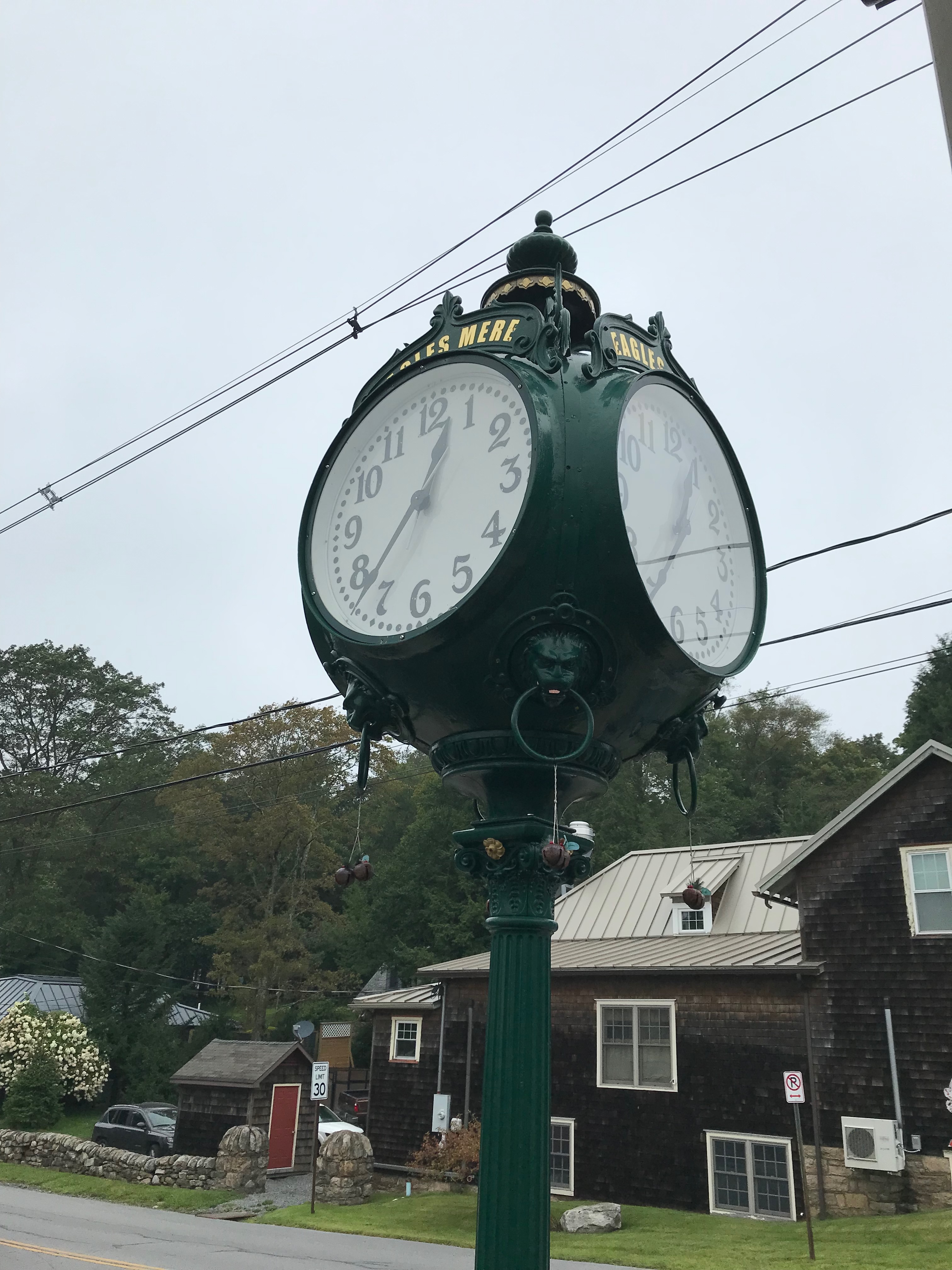
How we keep time (or better, mark time) is fascinating to me.  Unlike our concept of schedules, the earth’s revolution and rotation do not give us evenly long days or years.  Yet we still work 9-2-5 and even though many studies show a four-day work week is more productive, we just can’t give up old ways of marking time.  A weekend (a fairly new development) is two days only.  A leap year, however, contains an extra day for “the man.”  That’s because today is not a holiday.  It’s a necessary day to keep months in sync with years, otherwise March would slowly have September weather.  All of this is human convention, of course.  As is capitalism and its “more is always better” outlook.

Our lives have changed with both the internet and the pandemic.  We work more, not less.  And I, for one, think we need to give working stiffs another day off.  We could start with today.  (I know, big man, that you fear losing money—I realize this is important to you!  What I’m suggesting might make you wealthier, however.)  After all, today is a gimme.  What would we do with a whole other day if we had one?  I know, our standard answer is work, but what if life were more than just what you were paid to do?  It would be a holiday.  The thing about holidays is that we don’t know what ancient events prompted the origins of some of them.  Those for solstices and equinoxes are obvious enough, but other days became special for unknown reasons.  Why can’t February 29th be such a day?

Some employers make up the difference by making election day a holiday.  That one should be a national holiday, really.  And since presidential elections fall on leap years, I guess we get February 29 off on the first Tuesday in November.  Holidays have always fascinated me since they project an aura of something special happening on that particular day.  Something that makes it different from other days.  People born on this day joke about aging four times slower or faster, depending on your perspective.  Doesn’t that seem enough to qualify as a special day?  For most of us, however, today is just another Thursday, and for many it’s just another Thursday at the office.  And it propels other marked days in the year ahead so your birthday next time around skips a day.  There’s a kind of magic to today.  Maybe we should mark it in some way.


Work for Good

You learn a lot as a primary caregiver.  Since dealing with a family cancer diagnosis last year I joined a local support network for caregivers.  Three things I’ve learned: healthcare is very uneven, we ended up in a good facility, and finding a social worker on your own is very difficult.  I see lots of messages on the support boards from people in poor facilities that can’t find the help they need.  I know what social workers do—I had several friends who majored in social work in college—but in this age of all the information in the world at your fingertips, just try to find a social worker!  I was trying to find a website to suggest to a person on my board who didn’t know where to turn.  Searches bring up links to places trying to sell you their services to find a social worker.  Are we really that callous?  

People tend not to try to find a social worker unless they really need one.  Many people, I suspect, wait until they feel pretty desperate.  This is not when you need some salesperson trying to sell you something.  Medical care can be very expensive—devastatingly so—and there are professionals out there who specialize in helping you get through such things.  Why are they so difficult to find?  I tried government sites that seem more interested in telling you how to become a social worker than how to find one.  If we’re in such a state that we don’t have enough social workers why don’t we pay them more?  Here’s a hint, most politicians could stand a salary cut.  My college friends all said they knew it didn’t pay well, but social work was a way to help people. Saints still walk among us.

We have the means to help everyone.  What we lack is the will.  We continue to let capitalism and the hope of individual wealth run our economy.  Economy means nothing without people.  And we have many people who are willing to receive less personally to help others get by.  Why do we have to hide them behind a pay wall?  What does that say about us?  We’ve been fortunate.  Our medical facility immediately put us in touch with a social worker.  If, however, you end up where healthcare choices are limited, or don’t know how to find a social worker on your own, the internet’s not a great resource, unless you want to pay someone to help you find help.  What have we become?


Movies, Paused

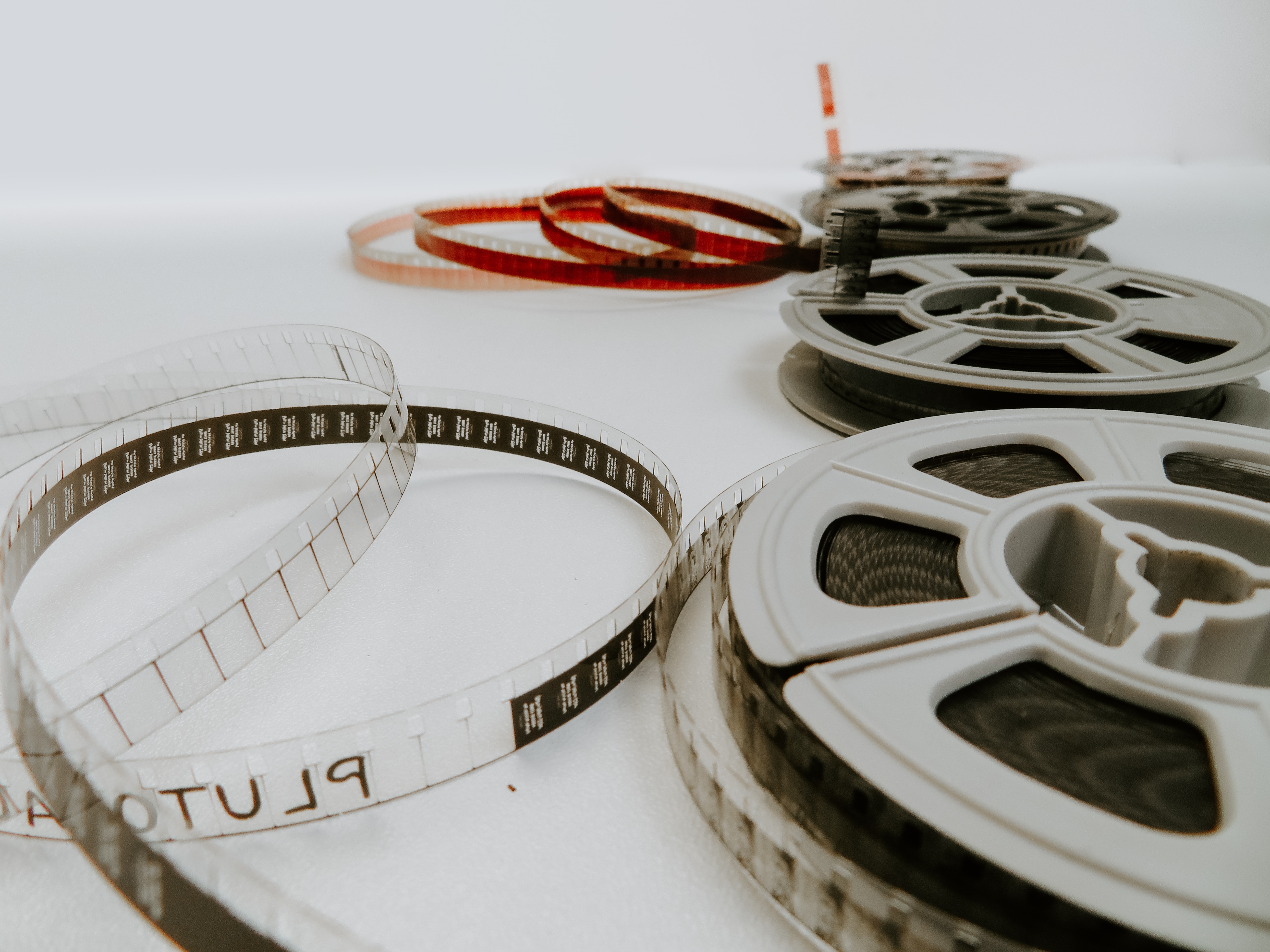
Technology breaks the world into bits.  It’s not just pixels, or 1s and 0s, it’s culture.  And we let it happen.  I was thinking this when I should’ve been watching a movie.  I don’t have much time for films, nor do I have money to see everything in a theater.  Or even to pay on a streaming service so that I can watch without commercials.  So like any zombie, I just let it happen.  Recently I was watching a movie—it’s here on this blog someplace—that was uncommonly unified by mood.  Edgar Allan Poe was of the opinion, and I think he was right, that short stories should be brief enough to finish in a single sitting.  Poe opined that such a reading allowed for the continuation of a mood set by the writer.  He was a master at doing this himself.  Breaking up movies with commercials reminds us of his wisdom.

Photo by Ramon Kagie on Unsplash

So I was watching a film where the dread builds up slowly.  The shadows, the music, the unspooling plot—try this new toothpaste!  Here’s a silly television show that you can watch on our network!  What was the mood I was in?  It was shattered by people pushing stuff I’ll never buy.  (I’ve got sensitive teeth, Mr. Commercial, and my dentist has recommended a brand that keeps me from gnawing my tongue off.  And that television show, Ms. Commercial, has no appeal to me.  I won’t watch it.)  Back to the mood you were trying to enjoy.  This isn’t anything new, of course.  I grew up watching Saturday afternoon monster movies and they were constantly interrupted by commercials.  You have to endure the sermon if you want the fun of coffee hour.  But still, but still…

Yes, I know the rules.  Subscribe to a service (I use two) and you can watch what we’ve got.  Only some of it will be interrupted by commercials.  Companies as large as ours didn’t get this way by accident, you know.  We had to show the average person what market research indicates they want—whiter teeth, more entertainment.  Forget what you’re watching at the moment.  Isn’t that mood just a little intense?  Don’t you need a little break just about now?  I don’t know how you see these posts, but I pay extra not to have advertising on my website.  I do hope that’s the case, if you see it from a device other than mine.  Besides


A Year of Hope

The older I get the more I appreciate New Year’s Day as a holiday.  Part of the reason is that, although I saw no hint of religion in it as a child, I have come to realize that holidays are for reflecting.  As a self-critical individual, I don’t wait for any date to make resolutions, preferring to do that in real time as soon as I learn about my bad behavior.  Still, although it’s a somewhat artificial marker, January 1 is a time of hope.  It seems that since 2016 years have been something of a slump.  Trump certainly has something to do with it, but Covid has become a monster in its own right and it’s hard to know when we might be able to get back to feeling comfortable in large gatherings of people.  Even as an introvert I miss that from time to time.  Still, optimism comes out with the start of a new year.  Who doesn’t like new things?

Technology has made us hyper-aware of bad things happening elsewhere.  This evolution of a hive mind has caught us unaware, it seems.  We do have a desire to improve (with some exceptions, such as politicians only in it for themselves) and that focus makes our next steps optimistic.  What greater hope can there be that an entire year stretching out in front of us, yet to be written?  There’s the old saw about a blank sheet being a source of fear, but why not do our best to write our own futures on it?  Put our good intentions into the mix to try to balance out the negativity that some others seem intent on dragging the rest of us through.  New Year’s can become almost religious in that way.  We consciously reject the bad that has grown on us throughout the previous twelve months.  We can do better.  We can be smarter.  We only need to believe.

I know that I keep hoping every year that HR will see the wisdom of allocating holidays.  We work more efficiently now, and people smarter than the rest of us suggest that we should not be stressing ourselves so much over things like work.  My own outlook is that days given off work for reflection are increasingly important.  Capitalism with its worship of mammon is, hopefully, entering its late stages.  I can see a future that’s better than what we’ve managed so far.  Let’s hope the wisdom exists to make 2024 a year of avoiding disaster.  A year of hope.