
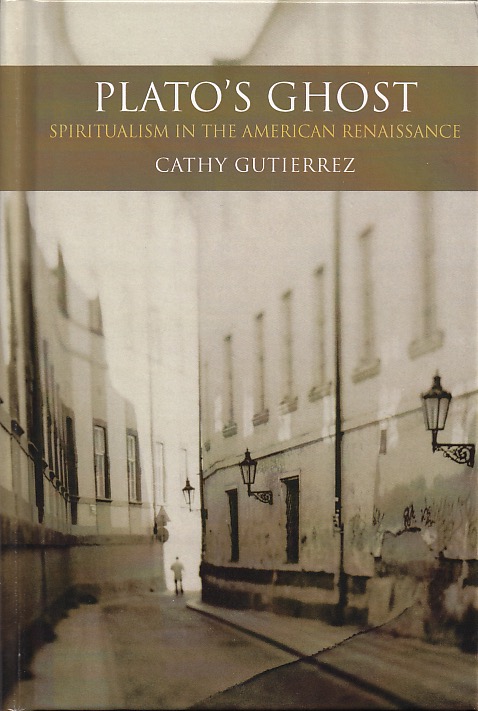
I haven’t read Plato since I was a college student. It’s not that I don’t want to read more, but as with most things it comes down to a matter of time. If I’m honest I’ll confess Plato wasn’t the reason I read Cathy Gutierrez’s Plato’s Ghost. It was the second word. And the subtitle: Spiritualism in the American Renaissance. I’ve always been interested in Spiritualism. In fact, Lily Dale is on my bucket-list of places to visit. The idea that ghosts can inform our spirituality is an intriguing concept. While Gutierrez’s book is an academic one, it contains many stimulating ideas and shows that the Spiritualists were perhaps the truest progressives of their era. And they had their heyday during the Victorian Period. I enjoyed learning more about their theology and social views. And, of course, ghosts.
When academics venture into esoterica, some amazing things can result. I occasionally discuss Jeff Kripal’s books—he’s on the forefront of this movement—and now and again the books of other academics who engage the unusual. Ghosts have, of course, been noted and believed in since the earliest humans who wrote. Probably before. They are still reported and chasing them has become a business model by which one might make a living. A religion foregrounding the departed, however, is fascinating. As Gutierrez demonstrates, Spiritualists were very forward-looking while keeping an eye firmly on the past. While reading her book I kept stumbling upon astonishing observations that made me stop and wonder. Spiritualists supported abolition, feminism, fair treatment for all, and, at least some of them, free love. Numerous historical asides also brought me to a halt. The idea, for example, that patients with multiple personality disorders might benefit from putting a non-dominant personality in charge. There are Easter eggs like that throughout the book.
While Plato’s Ghost is academic, and there are parts that require some careful reading, it is the kind of book that laity interested in Spiritualism could benefit from picking up. There are sections that enlightened me, and I’ve been studying religion for many decades now. In general I’ve been steering away from reading academic tomes in my time off. When I go to do my own writing it tends to veer back toward getting published only in academic presses, which I’m also trying to avoid. I’ll make exceptions for books like this one, however. I was drawn in by the promise of ghosts, and while they weren’t exactly what I was expecting, they were a rich feast nevertheless.

