Fear of Religions

There’s a narrative of fear in Christianity that seems to have been absent at the beginning.  This is evident when driving the highways of America where you’ll see billboards (which are meant for selling things) advertising the truth of a kind of biblical Fundamentalism.  On my recent trip across Pennsylvania this fear stood out in some rather obvious ways.  And it doesn’t reflect the Christianity reflected in the Good Book.  Stop and think about it: although the persecution of early believers was probably never as widespread as the usual narrative says it was, the writings we have describe facing persecution with joy.  Believing that they would be delivered, the oppressed welcomed the opportunity to prove their faith.  The Chick tracts I read as a child, however, focused intently on how scary the future persecution would be.  Fear, not joy, was the motivation for belief.

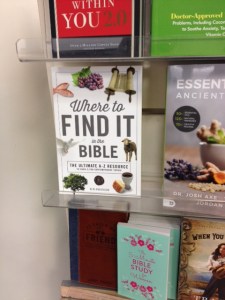
As we stopped in a turnpike rest area, we noticed a kiosk of Christian books amid snacks both salty and sweet.  The only other reading material available had to do with tourist attractions and finding directions.  It was, upon retrospect, odd.  Pondering this I recalled the narrative I heard repeatedly in my youth—a time was coming when it would be illegal to be Christian.  There would be persecution and the only proper response was a faith borne of fear.  This was not a religion of love thy neighbor.  No, this was a religion of armed survival based not on turning the other cheek, but on asserting itself with a show of firepower.  This kind of weaponized evangelicalism has taken over the narrative of Christianity.  Paul of Tarsus, knowing he would likely be executed, wrote of his joy from prison.  In the land of plenty we tremble.

The more cynical side of my experience suggests that politicians—who have learned that fear gets them elected—found in this form of Christianity a convenient set of sheep without a shepherd.  There’s fear in these billboards.  Fear that another religion may take over.  Or that secularism may make cherished beliefs illegal.  This isn’t cause for celebration, as the sermon on the mount proclaims it should be, but rather a call to arms.  In this country we have more than enough.  Among those left out, however, this fear grows just as rapidly as among those who fear they may lose the abundance they have.  They try to convert the weary traveler whose eye is drawn to the billboard.  And even those who stop for a drink of cold water which, the Bible suggests, should be freely given.


When Like Rome

Among the constant topics of discussion, both in the academy and in its publishing ancillaries, is the loss of interest in religion.  After a period of growth early in the new millennium, as measured by college majors, interest has dropped off and Nones are set to replace evangelical Christians as the largest religious group in America.  The corresponding lack of interest in religion is extremely dangerous.  I’ve often posted on the necessity of looking back to see where we might be going, and the further back we go the more we understand how essential religion is to the human psyche.  My own academic goals were to get back to the origins of religion itself—something I continue to try to do—and I discovered that they rest in the bosom of fear.  I’m not the first to notice that, nor have others been shy about using it to their advantage.

Lack of classical education, by which I mean reading the classics, has led us to an extremely tenuous place.  More interested in the Bible, I followed the track to another ancient system of thought, but as I find out more about the religion of classical Greece and Rome, the more I tremble.  You see, ancient Roman writers (especially) were extremely conscious of the fact that fear motivated people.  In order to construct a steady state, they infused it with a religion based on fear and supported by said state.  An overly simplified view would suggest that the Jews and Christians took their religion too seriously and refused to play the Roman game.  When they wouldn’t worship the emperor (who surely knew he wasn’t a god) they threatened the empire.  The response?  A good, old-fashioned dose of fear.  Crucifixion oughta cure ‘em.

See what I mean?

The thing is, our American form of government, buoyed up by an intentional courting of evangelical Christians as a voting bloc, manipulates that fear even more stealthily than the Romans did.  People ask me why I “like” horror.  I don’t so much like it as I see its role as a key.  It is a key to understanding religion and it has long turned the tumblers of the state.  Ancient societies kept religion under state control—something the Republican Party has been advocating as of late.  Why?  Religion, based on fear, ensures the continuance of power.  Those of us who watch horror are doing more than indulging in a lowbrow pastime.  We are probing the very origins of religion.  And we are bringing to light the machinations with deus.  Let those who read understand.


Love, Not Fear

How do we celebrate Valentine’s Day when our governments advocate hate?  You have to wonder when the autocrats last fell in love.  Building entire polities on hatred harshes the elevated feelings of letting love, well, love.  The only time Republicans seem to smile is when they’re taking advantage of someone else.  But it’s Valentine’s Day, so I’ll try to think charitable thoughts about even them.  

My reading recently has been taking me into the realm of sin.  Let me rephrase that—I’ve been reading a lot about sin recently.  One of the more striking aspects about badness is that it seems closely related to love, or at least lust.  I’ve often pondered why Christianity especially has tended to treat sex as bad.  While all religions take an interest in sexuality, not all of them declare it a negative aspect of life.  In fact, many see as it quite the opposite.  Since I like to trace things to their origins, I wonder why this might be.  Why did Christianity, whose putative founder declared the greatness of love, decide that although love is well and good that making it is problematic?

Paul of Tarsus, whom some credit with being the actual founder of Christianity, considered his celibate lifestyle to be superior.  While he didn’t mandate it of his followers, he highly recommended keeping their commitments to divine causes rather than to prurient human ones.  He believed a second coming was going to occur any day now, and that was nearly two millennia ago.  He was also, through no fault of his own, an inheritor of an incorrect understanding of gender and sexuality.  Even today there’s much about these that we don’t understand, but we do have more evidence-based ideas about what’s going on.  And not surprisingly, we tend to find that love is good and expressing it (appropriately) is also good.  Valentine, after all, was a saint.

Looking out my window, it’s still clearly winter.  There’s snow on the ground from the most recent storm and I’m aching from the upper-body workout that it required to get it off the walk.  But still, in the pre-dawn hours I start to hear—rarely but clearly—the birds begin to sing.  The amaryllis on the sill has sprung into full bloom.  The thing about love is that there’s enough to go around.  It’s a renewable resource.  If only our leaders showed a fraction of interest in it as they show in hate and fear. 


Epistle Writer

I’ve been reading about Paul.  You know, that Paul.  What has struck me from this reading is that if he weren’t in the Bible rational people would likely think Paul was writing nonsense.  Getting into the Good Book is a big score, for sure, but a close look at what this particular apostle wrote does raise eyebrows, as well as questions.  Over my editing years I’ve discovered quite a few methods of dealing with the saint from Tarsus, but what they really point to is the elephant in the room—we don’t really know what Paul was on about.  A few basic facts stand out: the Paul of Acts doesn’t match the Paul of the authentic letters, and although Paul never met Jesus he became the architect of much of Christianity.

There’s a reason that I focused my doctoral work on the Hebrew Bible rather than the New Testament.  Still, it remains fascinating to look closely at Paul’s claims.  At some points he sounds downright modern.  Like a Republican he declares that he can be tried by no human power.  Specially selected by God himself, he can’t be judged by the standards of normal people.  This is dangerous territory even for those who eventually end up in the Good Book, especially since it wasn’t written as an abstraction, but to a specific readership in a specific place dealing with specific issues.  Galatia wasn’t the same as Corinth.  The issues at Philippi weren’t the same as those in Rome.  Yet, being in Scripture makes all his musings equally inspired.

The more we learn about Scripture the more difficult it becomes.  Perceptions evolve over time, and we know nothing about how various books were selected.  There are no committee minutes.  We don’t even know the committee’s name or if it was ad hoc or standing.  With repeated and long-term use these books became Bible.  Take Paul’s letters—it’s virtually certain that we don’t have them all.  He makes reference to letters that we don’t have.  What might he have written therein?  Is part of divine revelation missing?  The discovery of other gospels and many contemporary religious texts to those that made the Bible cut raises questions that can only be resolved with the category “inspiration.”  Christianity isn’t unified enough to add any more books, although some sects do nevertheless.  Paul is very much like that—an example of not being subject to human trial.  For a founder of a major religion we know surprisingly little about him.


Look Both Ways

One of the things I miss the most about my teaching career is learning from the young.  While some professors in my experience believed the learning only went one way, I always found a kind of reciprocity in it.  I passed on what I learned from taking classes and having my face in a book all the time, and they taught me about popular culture.  Academics don’t get out much, you see.  It’s a basic issue of time—we all have a limited amount of it and research, if done right, takes an incredible chunk.  In fact, when hot on the trail of an idea, it’s difficult to think of anything else.  Pop culture, on the other hand, is what the majority of people share.  Now it’s largely mediated by the internet, a place that some academics get bored.

Speaking to a young person recently, I was initially surprised when he said that his generation was more interested in the Devil than in God.  Parents have always been concerned that their children not go astray, but this was, it seemed to me, more of an intellectual curiosity than any kind of devotion.  God, he averred, was thought of as aloof, pious, self-righteous; in a word, Evangelical.  The internet can be downright ecclesiastical in its affirmation that our inclinations can be what used to be called “sinful.”  Not that these things are always bad, but they are the kinds of things we’re taught to feel guilty about.  The divine response?  Anger.  Displeasure.  Shaming.  Young people, my interlocutor thought, found the Devil more understanding.

Perhaps this is the ultimate result of Evangelical thinking.  We’re watching in real time as the party of Jesus is becoming the party of intolerance for anyone different than ourselves.  Rather than turning the other cheek, it’s fire when ready.  Eager to retain the “brand” of “Christianity,” they slap the secular label on any outlook different than their own, although their own faith is without form and void.  It used to be that this was the realm of the Devil.  This sheds a different perspective on what my young colleague was saying.  Instead of bringing people to God, the Evangelical movement is driving them away.  Traditionally, the Devil was after the destruction of human souls.  That seems to be one of the new values of the right wing of the church.  There’s quite a bit to think about in this observation by this young one.  I’m glad to know that traffic still moves both directions on this street.


Russian Passions

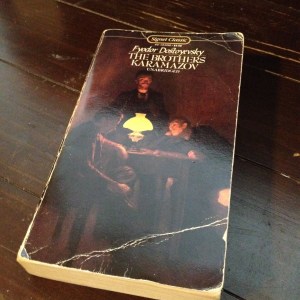
Dmitri didn’t do it; guilty anyway. That’s it in six words. I have to confess my tolerance for really long novels isn’t what it used to be. Blame it on being a child raised by television—every thirty minutes I’m ready for something new. I first read Fyodor Dostoyevsky’s classic The Brothers Karamazov when I was in seminary. Seminarians are an odd breed, and many of them relished the deep, ponderous novels with profound things to say about humankind. The Brothers Karamazov is such a novel. When you’re a student, reading’s part of the job description. As a writer Dostoyevsky gets away with things that’d lead to you failing composition class these days. Speeches that stretch on for chapters, characters taking 100 pages to die, and children talking like adults. It’s a heady mix.

I’ll have to admit that I remembered very little of the story from my last reading. I knew Fyodor Karamazov got killed. I couldn’t remember by whom. All the buzz in seminary was about the famous Grand Inquisitor scene. That’s the part where the Grand Inquisitor interrogates Christ and finds him wanting in the eyes of the church. So daring. So deep! And so early in the book. As I made my way through many heavy-lidded pages, with some dismay I realized that after I’d read the high point of the book I still had 457 pages to go, none of which I remembered from my reading three decades ago. I don’t mean to disparage the classic—I noted and underline several passages as I read. The blame is entirely on me. Still, the endless gloom of personal guilt that hangs on every character, even Alexei—whom Dostoyevsky states outright is his hero—become overbearing at times. This is a nation battened down by Christianity.

Often I’ve expressed the idea that we force children to read great novels before they’re ready to do so, ruining the classics for them for life. I first read Moby-Dick in seminary and I’ve read it several times since. It seems nobody’s really ready for Melville before their twenties. What is the age for Dostoyevsky? I think I comprehended more this time through. There were ideas here that, had I more time, I would likely have enjoyed lingering over. If life were so kind as to allow us the leisure to digest huge books I have no doubt that we would all be wiser, if not more satisfied. Fyodor Karamazov is dead. Alexei is cheered by the school boys. This long journey has itself been the goal.


Signs of the Times

America’s phallic affair with guns should give us pause to wonder what the true motivation is. My wife sent me an NPR story on the World Peace and Unification Sanctuary in Newfoundland, Pennsylvania. Congregants gathered carrying AR-15s, saying that the Bible’s rod of iron was really a semi-automatic. Did I say it was a phallic affair? According to the story by Scott Neuman, some of the faithful had substituted the crown of thorns for a crown of bullets. Literally. That man dying on the cross because of government overreach, I suspect, wishes he had his hands free so he could rub his eyes. He’s hanging here dying with the title prince of peace only to have grenade grannies praising his name with high explosives. This is what passes for Christianity these days.

Photo credit: Isabelle Grosjean ZA, Wikipedia

Sensible evangelicals have been in full retreat since November 2016. Stripped of their label by extremists who somehow mistake the lamb of God for Rambo, they no longer have a name of their own. Like worms on the sidewalk in the rain, there’s nowhere left to go. The same is true of rank and file Republicans. They wonder what has become of the (God help us!) party of Nixon. Watergate seems like a mere indiscretion compared to this. I’m sorry, were you waiting for Armageddon? Don’t worry, those who move the hands of the doomsday clock have shifted it closer to midnight than it’s ever been before. You’ll have your end times soon enough.

Among the ironies witnessed by the crucified one from his vantage point high on the cross is that it was his zealous followers who started all this. Religious experts tell us that all world religions depart significantly from the teachings of their founders within one generation. If you’ve read Paul’s letters you know this to be true. I grew up as a Fundamentalist. Even though for my career I specialized in the Hebrew Bible, my upbringing was focused on the red letter words of the other testament. Over and over and over again I read them. Think of others before yourself. Turn the other cheek. Walk the extra mile. Give away everything you own. The ones I don’t recall internalizing were: arm yourself with deadly force. Give your grannie an assault rifle. If someone slaps you on the cheek, blow him away. It is more blessed to destroy than to forgive. We sit beneath a giant clock with a commander in chief with an itchy nuclear button finger. Even a clock can be a crucifix, if you look at it in a certain way.


Jewish Annotated

A project with which I have some small acquaintance is the second edition of the Jewish Annotated New Testament (some of you may be noticing an annotated theme lately). The idea behind it is deceptively simple: most of the writers of the New Testament were Jews. What do modern day Jewish scholars see in the text? This annotated Bible gets adopted into both Christian and Jewish courses, and many seminaries have an interest in learning what the writers might have been thinking as they were composing “the other testament.” So far, so good. I was looking at the Amazon page for the book the other day, specifically for the Kindle edition. As usual, you can’t please everyone, and some of the negative comments had to do with functionality. Then one said simply, “There is no such thing as a Jewish New Testament.”

I’m not so naive that I don’t know what trolls are, but I got to thinking about this comment. It didn’t come from a “certified buyer,” so it could be an opinion piece. The mononymed reviewer might be Jewish, Christian, or neither. From a Jewish perspective s/he might mean: Jews don’t accept the New Testament as scripture, so what else is there to talk about? From a Christian perspective the point might be: this is a Christian document so it doesn’t matter what Jews think about it. Either way there’s a call for some exegesis here. Both perspectives can be argued against. Jews have a very real interest in what Christians say about them. And, like it or not, the first Christians, and even Jesus himself, fell squarely within Judaism.

Christianity has become a religion of privilege. That happens when you’re the biggest religious body in the world. Christians get a bit testy when Islam begins encroaching on its numbers. There’s still some hard feelings about the Muslim expansion of the seventh and eighth centuries, too. Being an imperial religion will do that to you. Thoughtful Christ-followers, however, have begun to look back and wonder how this whole thing got started in the first place. Without Jews there would’ve been no Christians. Nobody’s claiming the New Testament is Jewish scripture. Neither side wants that. It’s simply a recognition that we might have something to learn from each other. And that’s not a bad idea. In fact, if we were willing to listen a bit more than talk, who knows how much true understanding might come to pass? The Jewish Annotated New Testament is one possible place to start.


Hey Jude

Reading Jude the Obscure was, at times, like reading my own biography. Authors strive for that effect, to be sure, but Thomas Hardy hits close to home on this one. I don’t mean in the aspect of marrying the wrong woman and losing his true love, but rather in the sense of what Jude was meant to and couldn’t be. For any readers behind on their Hardy, Jude Fawley was an orphan who grew up with scholarly abilities but no connections to university folk. Teaching himself Greek and buying what books he can afford, he eventually moves to Christminster (Hardy’s version of Oxford) in order to begin his studies at the university there. His application is summarily rejected because he is a working-class nobody who would be happier not overreaching himself. He then decides to try to become a parson only to find that path blocked to him as well.

Okay, so that’s a bit brief for a 400-page novel, but you get the gist of it. Hardy, according to the introduction, added the university theme later since the novel’s main focus is on the hypocrisy of the church regarding marriage. Both Jude and his true love (and cousin) Sue end up marrying other people who make them miserable. They each separate and then live together and raise children until tragedy causes Sue to have a religious conversion and return to her first husband. Jude dies in obscurity, as the title warns. Hardy was famous for his anti-church sentiments and Jude the Obscure was one of his most criticized works. The university theme, however, was the part I just couldn’t let go.

Being from the working class you may not have any idea how higher education functions. Even with raw talent and ambition, there are so few places available that you can easily find yourself in the rejected pile. Jude fatefully moves back to Christminster, hoping on some deep level that he’ll be accepted. That never happens although his fellow stone-cutters know that he is just as learned as the professors who regularly parade through town. The author didn’t intend to write cheerful stories. The friend who first suggested I read Hardy’s work knew about that tendency. The world is a place of comfort for some and struggle for others. Like Jude, those on the outside just can’t see what’s wrong with their own earnest application to be counted among the educated. Like any country club, however, the real point of it all is to learn how to game the system. Like taking a sad song and making it, well, better.


Dominus Flevit

I couldn’t believe I was actually there. Ever since I was a child I’d read about this place. The city conquered by David and visited by Jesus. The city around which most of the Bible rotated. Jerusalem the golden. One of the perks of working on an archaeological dig was the opportunity for weekend travel, and here I was, amid camels and cars and churches and synagogues and mosques, in Jerusalem. No amount of reading prepares you for such an experience. Suffused with the rich mythologies of three major religions, this city is like a dream. So much had happened here. The church I was attending at the time was only the latest in a long succession that informed me that God himself had actually been killed here and had risen again. The ultimate game-changer. The once in forever event of all time had taken place right here.

Gnu Jerusalem from WikiCommons

But this was not a city at peace, despite its name. There was a bombing the first weekend I was there. Young men and women in military garb carried scary looking weapons openly in public. Even civilian bus drivers wore pistols. Jerusalem had a long history of violence, but that didn’t justify it. If God had really been here—in either Jewish, Christian, or Muslim contexts didn’t matter—how could this city be so prone to terror? In the old city old men sat around hookahs, placidly smoking. Tourists, many bearing crosses, thronged. Jerusalem, however, was also a very political place. The fragile, Christmas bulb-thin peace of the region involved the city being divided up and not being claimed by Israel alone. Even that man driving his goats through these ancient streets knew that.

Trump, to the cheers of evangelicals who want nothing so fervently as the end of the world, has said he’ll recognize Jerusalem as the capital of Israel. This political move of weaponized ignorance will almost certainly lead to war in the Middle East. Another war. An illegitimate presidency leaving a frothing sea of corpses in its wake. Negotiating in this part of the world is like haggling with that street vendor for a pair of sandals. You go back and forth on the price. You act insulted and walk away. You come back and haggle some more. It’s a delicate dance. This is no place for egomaniacs who can’t understand such subtleties. Just ask the last Caligula who wanted his statue set up as a god in this city. Jerusalem is home to too many jealous gods, and those who are self-appointed divinities will only leave the city, the world, in tears.


The Falls

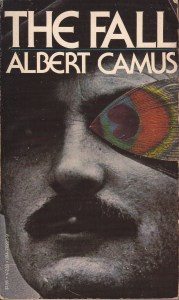
I can’t recall if I’ve been to Mexico City before. You see, back in the late 1980s I frequently read the novels of the existentialists, and although a copy of The Fall has been on my shelf since then, I don’t recall if I read this Camus classic. It’s sometimes that way with existentialists. In late 1980’s Back Bay, a used bookstore called the Boston Book Annex charmed my days. The Annex has sadly closed, but I do remember buying my Camus novels there. This one, however, I don’t remember reading.

So, unsure of my past, I decided to read it. Perhaps again. The existentialists make sense to me. I have to say that in today’s rushed and harried lifestyle it’s a little more difficult to find time to spend in Mexico City. Although the book is short, it’s not quick. There’s much to ponder as you wend your way through an evening bending elbows with Albert. Perhaps that’s an unwonted familiarity regarding a man who died before I was born, but existentialists know that kind of thing happens.

One of the more compelling aspects of this literature is that the existentialists often address religion. The Fall is a first person narrative throughout, and about four-fifths of the way through Jean-Baptiste Clamence begins to address Christianity explicitly. Since this is a retelling, in secular terms, of the biblical “fall,” this is not unexpected. Jean-Baptiste is a lawyer who is making his confession. He states that his clients “probably feared that heaven could not represent their interests as well as a lawyer invincible when it came to the code of law.” Genesis, of course, is attributed to Moses, himself a law-giver. From this point until the end of the chapter he reflects on the fact that although no one is innocent, all are glad to find the crime in others. He describes torture devices of the Middle Ages, exonerating God from their invention. He respects Jesus, but not what people have made of religion.

Reading, perhaps re-reading, this reminded me of why I found the existentialists so compelling as a seminarian. They force you to think. I read Kafka, Camus, and Duerrenmatt, pondering how much wisdom could be crammed into such brief books. Ironically, it takes time to read them. Our world is crowded with concerns about money over meaning. Matter over mind. Once in a while we need to step back, spend an evening or two in Mexico City, and consider how we’ve become a fallen race.


The Way, the Truth

It’s striking how similar world religions can be. Granted, the concept of “religion” as a separate sphere of life is a western one, but throughout the world thinkers have drawn similar conclusions. Until the World’s Congress of Religions of 1893 in Chicago, however, most Americans knew only of the monotheistic traditions. Jews and Muslims had been in this country almost as long as Christians. Nobody paid much mind to the indigenous religions of the original occupants. In any case, in 1893 other religions—those of eastern Asia—entered American consciousness. Buddhism and Hinduism were exotic, if pagan, belief systems. There wasn’t much of a conceptual foundation upon which to build, however, so early on people tended to focus on the differences between them rather than the commonalities.

For me, I first really learned about such traditions in a World Religions course in college. I’d never heard of Daoism (or Taoism) before. The Dao, or “way,” pervades ancient Chinese religious thought. There’s a sense of flow to it—one of the main ideas is not to resist the way, but to bring yourself in line with it. Doing so helps you to realize that you need not be rich to be happy. Sufficiency is, well, sufficient. Meanwhile in the west, Christianity mostly bought into greedy consumerism. Our happiness is measured by what we have. And having, we want more. I’ve been reading about Daoism recently, and it occurs to me perhaps there are some accidental Daoists here in the west. This reading made me think of my father.

I can’t speak much for who he was, since I barely knew him. I only saw him once as an adult, before he died. For a brief moment he took me into his apartment. He owned practically nothing. A television, a few things to sit on. A magazine or two. That was about it. Did he want to acquire more? I didn’t know him well enough to ask. He was raised as a Christian, and I do not know what his religious beliefs were, if any. Thinking back to that experience, however, was the result of reading about Daoism. Being content with little. Not all of us are cut out for monastic life, but my visits to such communities have always left me with the sense that having less is more than enough. I know I’m over-simplifying here. I’m not an expert on Daoism. I’m certainly not an expert on my father. I do believe, however, that things can weigh us down. And even Christianity, read in a certain light, agrees.


Pagan Values

“Pagan” used to be a pejorative term. If we’re honest we’ll have to admit that it is still used that way by many people. All the term really denotes, however, is a believer in “non-Christian” traditions. The classical pagan was someone who’d “never heard of Jesus,” and therefore hadn’t bowed to the obvious truth. In the current religious landscape a pagan is someone who makes a conscious choice to follow different gods. Looking over history, there are plenty to choose from. If you don’t limit yourself to monotheism, there’s no compunction to stop at just one. Paganism is a flourishing religious choice today. Getting over the stigma will require effort for a long time to come, as a video a friend sent me from Heat Street shows.

This video show pagans in the US Army at Fort Jackson. It’s worth the three minutes of your life that it’ll take you to watch it. Pay special attention to what the chaplain says. We’ve been acculturated, through monotheistic lenses, to ridicule those who believe in many gods. We’ve also evolved beyond the stage where E. B. Tylor could inform us that the most natural form of religion is animism and we have to be taught to unlearn it. We’ve also had the natural human tendency to believe in magic laughed out of us. We can’t accept that anything could exist that doesn’t conform to the laws of physics as we currently understand them. One size fits all. And many think even one god is one too many. As the chaplain says, religion takes on a whole new meaning when your job is asking you perhaps to sacrifice your life for others. You need to allow belief to thrive. The military is coming to grips with paganism.

Belief systems aren’t necessarily rational. I’m reminded of this whenever someone comments that, Mormons, say, believe strange things. I think of what Christianity asks of us and realize it’s only a matter of distancing. All religions ask their adherents to accept the unbelievable. To the great frustration of materialistic reductionists, it is human nature to accept a spiritual world. We are conscious beings and we see intention in the world. Apart from the Whitehouse, the universe seems to be filled with intelligence. We may call it different things. The labels may come in foreign languages. Deep down, however, we all know the feeling. We can teach ourselves to ignore or deny it, but believing is as natural as breathing. If the Army allows pagans—and there’s more than just a few—we should open up both our eyes and our minds. Entire worlds await those willing to do so.


Fishers of Cars

The car was drunkenly weaving across lanes in substantial traffic along Interstate 80. Erratic driving that, although not breathalyzer confirmed, suggested impaired operating. It’s something you never like to see. We stayed behind the vehicle, knowing that it was safer to keep such a car in view rather than attempting to overtake it when the driver veered into the left lane. Since the same muted colors recur on vehicles these days, we needed a quick way to identify this driver at a glance. The Jesus fish on the rear served the purpose well. This situation struck me as a kind of parable, although it really did happen. One of my brothers is a driver by profession. He often tells me that if someone cuts him off in heavy New Jersey traffic, more often than not the car bears a Jesus fish. WWFD?

The ostensible purpose of the Jesus fish is to witness to the world “here is what a true Christian does.” While the New Testament, if I recall, indicates that the true believer puts others before him or herself, the rule of the road is somewhat less spiritual than that. None of us are saints when we get behind the wheel. We’ve got places to go and the drive isn’t really much fun with thousands of other cars bunging things up constantly. Still, if you take the extra effort to put that Jesus fish on your car, aren’t you signaling that this driver holds her or himself to a higher standard? Or maybe the fish is a talisman, like “Baby on Board,” that will somehow protect from the careless, aggressive driver thinking only of self.

The irony here is not that the driver is making poor, or aggressive decisions behind the wheel—let the one without sin cast the first stone—but rather that s/he implicates Jesus in the act. There’s a ready, steady market in evangelical paraphernalia. The WWJD bracelet keeps the question within sight much of the time—but keep your eyes on the road! One of the main problems with the Ichthys symbol is that it is generally on the rump of your car. Out of sight, out of mind. As you finish that last drink before climbing in behind the wheel, the fact that your personal Lord and Savior is being announced to the world may just slip your sodden mind momentarily. The real question is whether a car is the best place to announce your religious commitments. It was the the man in front of the fish, after all, who said “do unto others as you would have others do unto you.” Except in heavy traffic, of course.


Sideliners

Sidelines can be interesting places to sit. You’re close to the action, and you’re privileged with a close view that few others have. You can’t, however, play the game. Sidelines are familiar to biblical scholars. I can’t count the number of times and/or ways the input of those who spend their lives trying to comprehend the Good Book are, well, sidelined. In the publishing world those who work with Bibles are simply ignored by most others, despite the enormous revenue Bible sales generate. In the academy religion departments overall are fair game for any potential budget cuts. And since what religion study survives tends to be intercultural, the Bible faculty are deemed somewhat less necessary than other sub-disciplines. It’s easy to forget that Christianity is the largest organized religion in the world and that some 2.2 billion persons claim that name. The Bible’s their foundational book. It tells us what motivates them. And yet, it’s easier simply to ignore the whole thing. Then something insane like an Evangelical-fueled Trump election, and everyone continues to say, “we can safely ignore this.”

I recently saw an article by scientists which explored why people engage in dangerous behaviors. The main idea was that although we know certain things are bad for us individually or as a planet, we still do them. We do them with the full knowledge that they’re deadly and will likely hasten our demise. Ignoring religion (and in the case at hand, the Bible) is very much like that. A well-armed true believer can ruin your day pretty quickly. Religion, in recent years, has generated over $82 billion in revenue per year. At least those in the dismal science ought to sit up and take notice of that! Hey, for once, the numbers are with us! Statistically, religion is very important. Sounds like a good thing to pretend doesn’t exist.

Having grown up a Fundamentalist, I often ponder this state of affairs. The Bible, we all knew, was the most important thing. Studying it formally does tend to force new ways of considering it, but few Bible scholars would want to dismiss the Good Book out of hand. It still means too much to too many people simply to ignore. Far safer is the proper handling of Holy Writ. This is much easier to instill when institutions support it. It really is a necessary kind of education. Still, it gets sidelined for industries with lesser profits and lesser baggage. I grew into a career defined by the Bible, but even if I hadn’t I’d hope that I’d be able to recognize that some things just shouldn’t be ignored. Yet I’m on the sidelines cheering on those who consider such a career a tragic mistake.