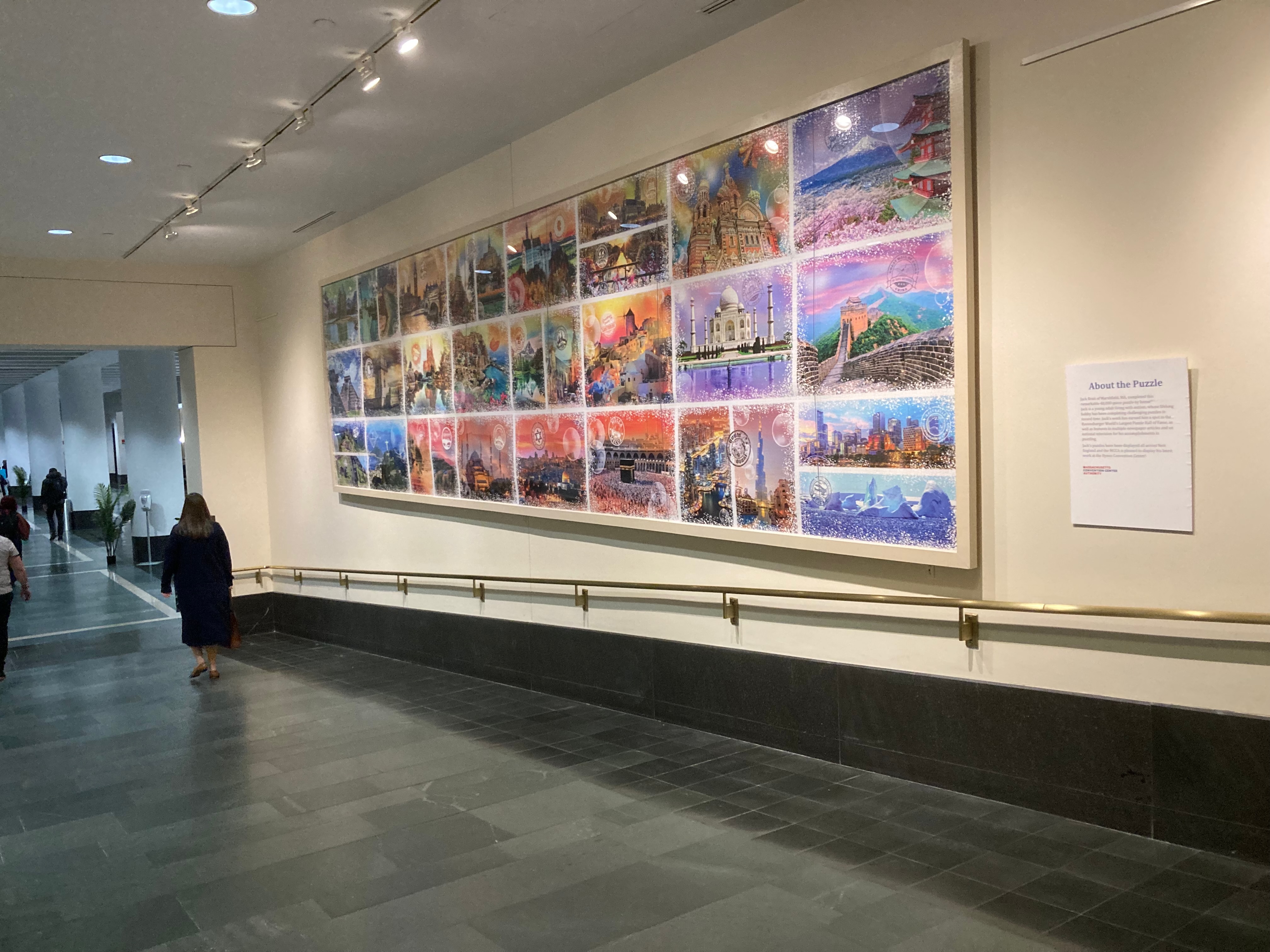
Those of us who write books are all working on putting together a puzzle. Even though we often disagree, it is part of the same puzzle. We’re trying to expand human knowledge. Some make a living doing it, most do not. As this thought initially occurred to me, I wondered if it applied only to nonfiction. It doesn’t. Even the novelist is participating in piecing together this immense, at least planet-sized, puzzle. We don’t understand consciousness. Some of us are convinced that it pervades other living beings as well. Philosophers far more brilliant than yours truly have suggested that if consciousness is emergent then it can be traced back to matter itself. Our human part of the picture is pieced together in libraries. Those collections of human thought.
Being raised in a literalist environment, I thought books (nonfiction) were researched and written leaving the author mostly in the background. I’ve come to realize that a nonfiction book is the author’s interpretation, having read the many interpretations of others. And that each tome is part of the larger conundrum of mapping out human consciousness. No matter how minor the publisher or how poor the sales, the book is, to some degree, a piece. The puzzle we’re trying to construct is missing many, many pieces. Long ago we surpassed the point at which one person could read every published piece of human knowledge. Now, lifetimes would be required, and even then no one person could put it all together. Consciousness is very slippery that way. Not to mention the many, many unpublished books. The task is immense and the end result is our contribution to the knowledge of how this universe works.
The humble contributions that I’ve attempted to add to the conversation may seem irrelevant. They certainly haven’t brought in fame or money. Those of us who write feel compelled to do so. Others have no such compulsion and each of us has our role to play. My thoughts go back to monks in the medieval period. Many of them copying, a few of them composing, sacred objects. Books were rare and all handwritten. Today those that survive are priceless treasures. They’re also pieces to a vast puzzle. As we try to understand this very strange, very weird world in which we find ourselves, many of us still turn to books. What we may not realize as we open the cover, is that we’re doing our part in a collaborative exercise in which we’re all involved. Even if the puzzle is never fully completed.