Thick Skin

Religion and folklore encapsulate what folk believe. Human beings, despite rationality, are ritualistic creatures. Psychologists have their work cut out trying to explain why we do this or that odd thing, and historians sometimes dig deep into the backstory to find some hint of a tradition’s origins. Although I lived in Edinburgh for over three years, and drove through South Queensferry in the shadow of the great Forth Bridge a number of times, I never heard of the Burryman. In case you haven’t either, here’s a link a friend sent to a brief video about him. In it Andrew Taylor explains the tradition. Each year, going back to South Queensferry’s pagan past, a citizen dresses in a suit of burrs to ensure a good harvest and bring good luck. What’s fascinating here is that burrs are something people generally avoid, although they are an ingenious method of seed dispersal. They stick to clothes, and even skin and can be annoying even singly. Why anyone would submit to an entire outfit of burrs is something only folklore can answer.
Anthropologists are in short supply. Universities don’t like to fund the study of folklore since it doesn’t lead to jobs. The end result is that what we know of many strange traditions is anecdotal. A few years back I got soundly dressed down in an academic setting for referring to a popular publication of Scottish ghost stories. You see, I was writing an article for publication in an academic journal. I wanted to document a story I’d memorized by dint of the fact that a ghost tour guide would stand beneath our window every night in Mylne’s Court and recite his tale. (I traced it back to a potential Ancient Near Eastern origin.) The problem was, no academic would deign to write about such decidedly low brow tripe. In order to find a written source, I had to cite a popular book. Academic reviewers responded with scorn that I would never pass on to an author, speaking as an editor. This was, however, in the old school days.

So, how would we find the backstory to the Burryman? Great Big Story went straight to the source. Andrew Taylor, the incumbent Burryman, tells what he knows of the tradition. You can’t even see the Burryman from high in your ivory tower where pure thought is your only companion. I’ve always been a street academic, though. Growing up blue collar, I find it much more interesting to see what people are doing out here where the professionals don’t tell them how to behave. The pagan past is still alive. We don’t need a wicker man to prove the point. All it takes is a bunch of dried burdock and some very thick skin.

Interior Theodicy

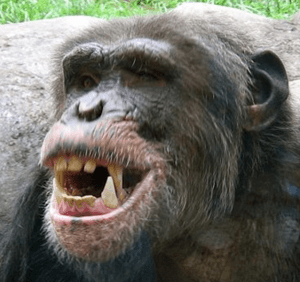
Photo credit: Richard from Canton, Wikipedia Commons

Speaking of theodicy, I have a dentist appointment today. Now, if you were raised with the Protestant guilt that used to be so pervasive in this nation, you’ll understand. I do brush my teeth twice a day. I even use floss and that mouthwash that burns away a layer of mouth lining every night. But there’s always more you could do. I’m not particularly good about visiting the dentist, though. Partially it’s a memory thing, partially it’s a pain thing, but mostly it’s a time thing. No matter how far back I jam the toothbrush, well beyond my gaging threshold, cavities seem to appear. And I don’t even have a sweet-tooth. What kind of deity allows cavities in a person who eats very little sugar and brushes so assiduously that last time the dentist told him to ease up a bit since he was scraping away the enamel? (People tell me I’m too intense.)

One of the real ironies of all this is that for all the trouble teeth give us during our lifetimes, they are our most durable parts after we die. Archaeologists find mostly teeth. In fact, it seems that Neanderthals might have practiced some primitive dentistry. I wonder what they thought of their neanderthal deity? So teeth are pretty useful, no matter whether the gray matter above them is dead or alive. I can explain this to my dentist, but he only seems interested in me as a specimen of carnassial curiosity. Maybe it all goes back to my belief that fillings were meant to last forever. Or all those root canals that seem to come in pairs that cost as much as a semester at a public university. Mostly it’s the memories.

In Edinburgh I had a tooth go bad. The Scottish dentist was surprised. “You’ve got a twelve-year molar erupting,” he said (you’ll have to imagine the accent). I asked if that was unusual. He owned that it was as I was a post-graduate student in his late twenties and the twelve-year molar was so precise in its timing that child labor laws used to be built around its presence. Years later in Wisconsin a different dentist asked about one of my fillings. I told him it was from Edinburgh. He called all the other dentists in announcing, “You wanna see a real Scottish filling?” Or maybe the fears go back to my earliest dental nightmares where the cheap doctor seemed unaware that teeth actually had nerves in them. I always left with a guilt trip. “You should brush —“ (more, better, longer, with a more gentle touch) you fill in the blank. I’m afraid of another kind of filling. And I know as it is with Protestant guilt, so it is with teeth. There’s always more you could be doing.


The One Who Seeks

Academics and social media are, at times, an uneasy fit. In my work as an editor I come across many of the professorate who have virtually no web presence at all. If you’re wanting to write a book these days and you aren’t yet famous, you need what they call a “platform.” That is to say, you need to be easily found on internet searches, you have to have “followers” on various social media, and people have to know where to look to find information about you. A starter site that does fairly well is the for-profit venture called academia.edu. Because of that final “edu” extension, many suppose this is an educational site with no money in mind, but that’s not really the case. Still, it’s free to post your academic papers there and many intellectuals, public and otherwise, have vested some of their effort on getting academia followers.

J. C. L. Gibson, someone, and Nicolas Wyatt

My own profile on academia, which has copies of most of my papers available for free downloads, at one time was in the top 2%. I felt so special. Being kept out of academia for so many years, one does begin to wonder. In any case, one of the features of the site is that when someone lands on your page you receive a notice telling you how they found you. More detailed information is available for a fee (this is one of the not not-for-profit aspects I was mentioning). Sometimes they will provide you with the search terms used and the paper found. My site has quite a bit about Asherah. I wrote a book on the goddess, still largely overlooked, and several discrete papers. The other day I received a notice that someone found my page with this notice of how:

Someone from India found “A Reassessment of Asherah:…” on Google with the keyword “sex photos hd com R A N ilaku.”

I have the feeling someone left my site keenly disappointed. Although my book does discuss sexuality a little—you kind of have to with Asherah—I did wonder about the “photos” and “hd” and “ilaku” parts of the equation. You must be pretty desperate in your pornography quest to stumble across my academia page. Not that I’ve replicated the search, but I must be thousands of pages down in the results. Still, someone found my first book that way. And that’s the lesson—an internet platform may bring your work unexpected fame. Whether or not that fame is ill, will, however, remain an open question.


Silence Fright

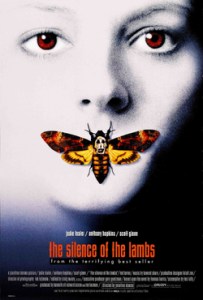
the_silence_of_the_lambs_poster

One of my first publications was a letter to the editor. The newspaper was The Scotsman, Edinburgh’s daily. We’d been hearing on the BBC that a new movie, The Silence of the Lambs, had inspired Milwaukee serial killer Jeffrey Dahmer in his gruesome habit of cannibalism. For whatever reason, the Dahmer case had a real fascination for the British. My letter, a rather young attempt to promote an important cause, suggested that such movies could be very dangerous. In the many years since then I’ve read quite a bit about horror films and their effects on people and have come to the conclusion that they don’t cause the crimes. The reasons are much more complex than simply watching a movie since most people who see them don’t “go and do likewise.” When I told friends in Edinburgh that I’d found a teaching job in Wisconsin they said “hopefully not near where that cannibal lived.” Of course Nashotah House is not far from Milwaukee.

My personal embargo of The Silence of the Lambs ran up against my current research project, which involves horror movies. Thinking it over in what I hope is a rational way, I decided that I needed to see my bête noire. Besides, while living in Wisconsin I had learned about Ed Gein, the local serial killer who’d inspired Psycho, a movie I had seen with no ill effects while in college. Movies are as much a part of life as cars and taxes and all kinds of things that impact our ways of thinking. I was surprised at how well done Silence is and the number of references it had spawned that I had missed for the past couple of decades. It won’t be my favorite film, but I’m not afraid of it any more.

The concept of relying on a criminal to catch a criminal is a classic theme, of course. And since the release of this movie some which are much worse have come across the silver screen. We play our anxieties out for all to see. Hannibal Lecter, the cultured killer, is an ambivalent character—a savior criminal. There’s a strange comfort in knowing he has the knowledge to save lives as much as he has the desire to take them. In fact, there’s an element of the divine in that. The capricious nature of a power that has the ability to give and to take is one with which religions constantly deal. Yes, The Silence of the Lambs is a scary movie. The reasons, however, lie more with implications than with imitations.


Powerful Movies

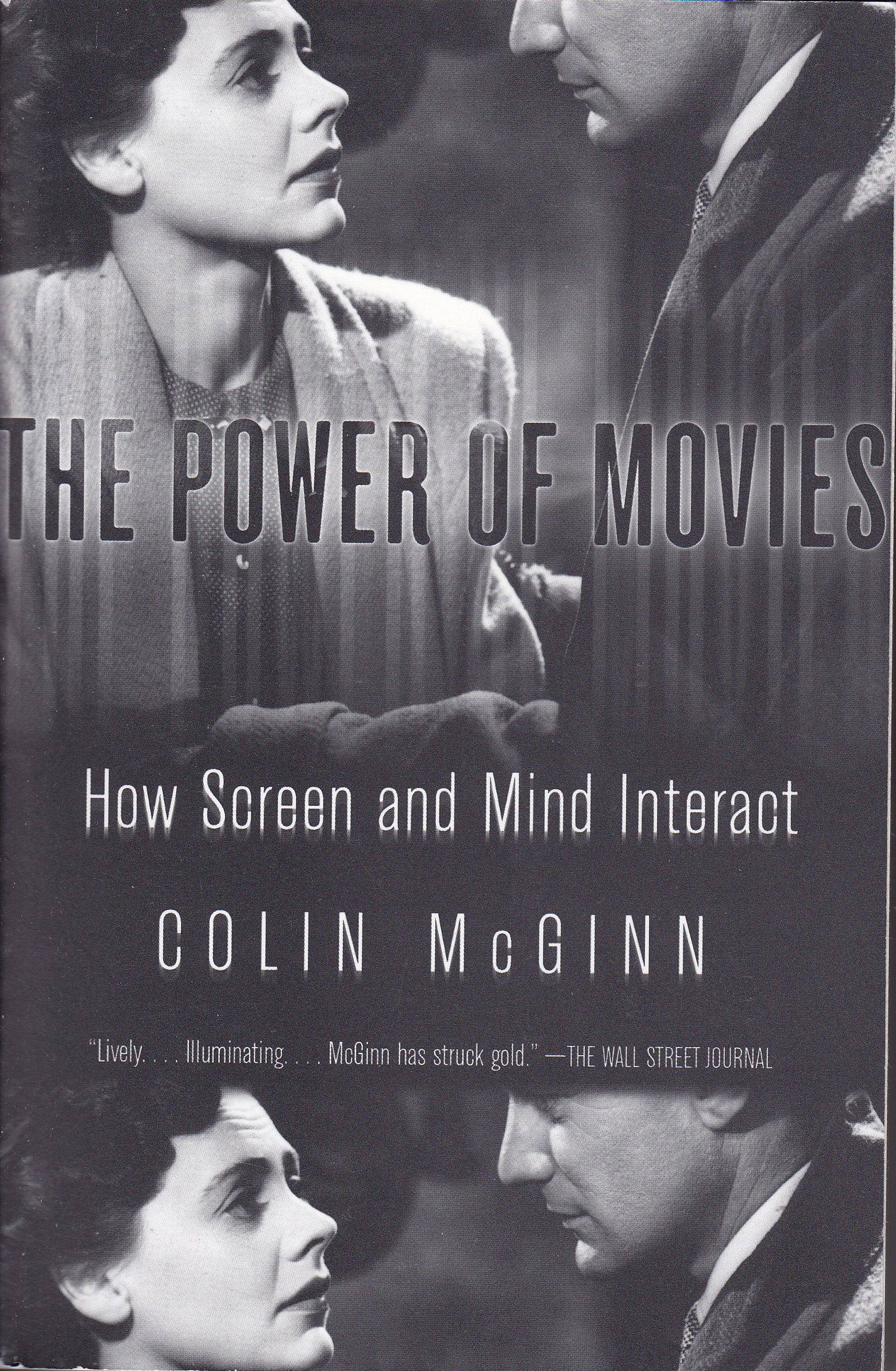
PowerOfMoviesOur friends were shocked. I don’t even remember the title of the movie, but they couldn’t believe we had gone to see it. Not because of the content of the film, but because it had been shown on a Sunday morning. Why hadn’t we been in church? This was back in Edinburgh when we had very little money—wait, we still have very little money. This was back in Edinburgh, and we had won free tickets to an early screening of a new movie. The showtime was on Sunday morning. So in our own version of weak-willed athletes from Chariots of Fire, we’d skipped church to go see the movie. I don’t remember the title and I remember very little of the film. It had something to do with Richard Wagner and a conductor. An art film. We didn’t really feel too guilty missing church to go, since at the time, it seemed like a rare opportunity and the movie was, in some sense, religious. Or at least mythological.

Movies have a way of really influencing people. Thus it has been since the invention of the art form. We’ve all had the experience, I suppose, of a movie hitting us with a profound impact. It never really occurred to me to ask why. That is, until I read Colin McGinn’s The Power of Movies: How Screen and Mind Interact. I’d always thought that movies were simply a successful form of entertainment, and scholars seldom take entertainment seriously. As McGinn makes clear, there’s a lot more than casual watching going on when we slip into the theater. As a philosopher, McGinn is duty-bound to look beyond the obvious. Time after time in this profound little book I found myself pausing to consider the implications of what he says. Ultimately, he suggests that movies access the same areas of the brain that dreams do, not only giving them dreamlike qualities, but also making films emotional experiences like dreams.

At one point, McGinn draws explicit connections between going to church and going to a movie. Beyond the superficial aspects of a darkened building with a performance meant to impact a person, there are clear parallels between going to the theater and going to church. Both can be transformative experiences. The Power of Movies is a powerful little book. As much as we like to think that we have custody of our minds, the realm beneath the surface—that which gives us dreams and syncs with movies—has more influence on us than we’d generally like to admit. More and more, scholars are beginning to realize that films do have a profound impact on viewers. This is not just entertainment. It may not be worship, but after reading McGinn I think it might not be too far from it. The mind able to dream, after all, is a mind that’s truly free.


Monster Impulse

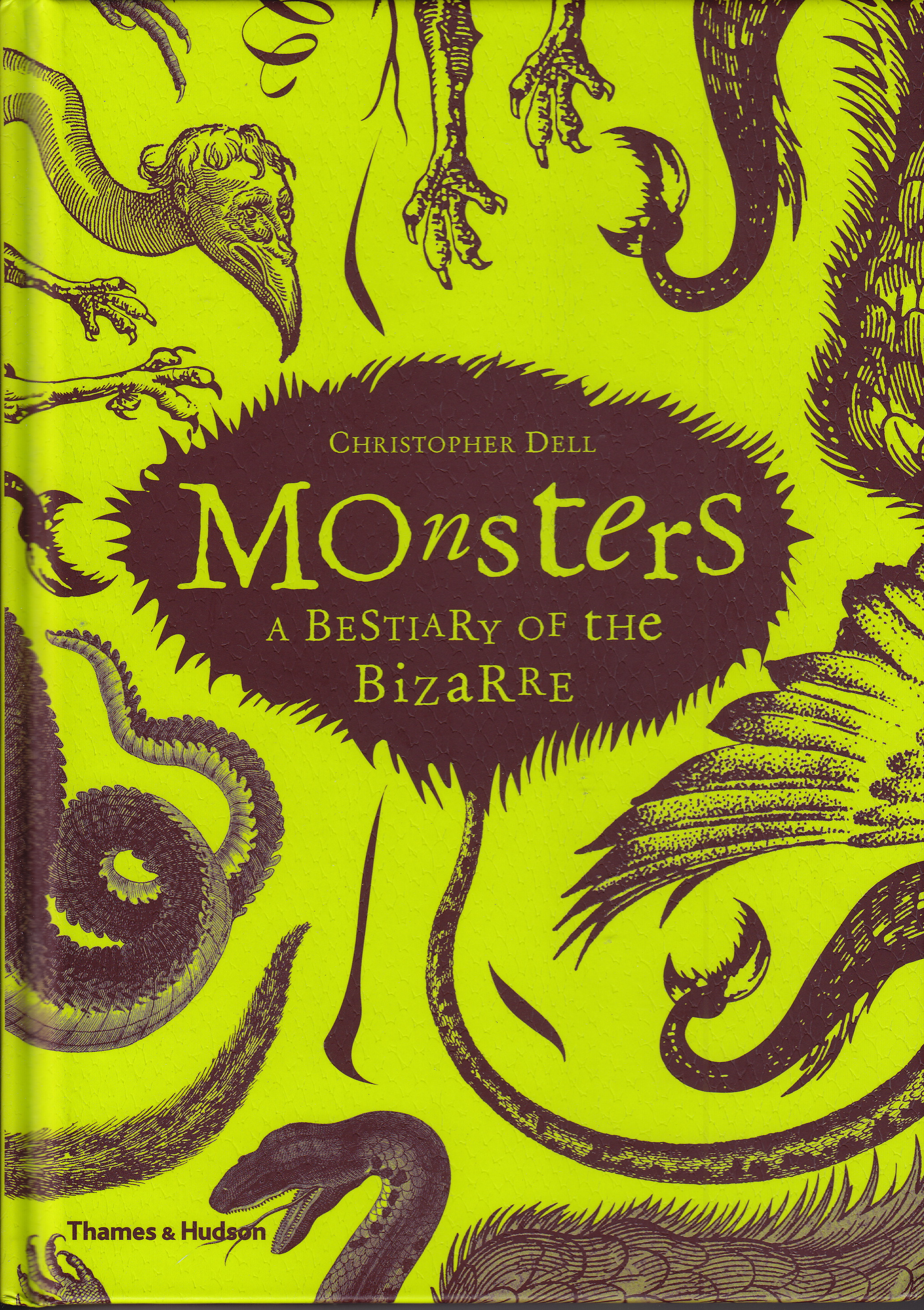
MonstersSome people are impulse buyers. In fact, retailers count on it. All those last-minute items next to the cash register while you wait your turn to consume—they beckon the unwary. I have to admit to being an impulse book buyer. I have to keep it under control, of course, since books are “durable goods” and last more than a single lifetime, with any luck at all. A few years ago I was in the shop of the National Museum of Scotland in Edinburgh. It was my last day in the city where I’d spent my post-graduate years and I didn’t know when I’d ever be back. What could help me remember this visit? A book, of course. Why I chose Monsters, by Christopher Dell, to mark this particular occasion, I don’t know. I love monsters, yes, but why here? Why now? Why in the last hours I had in my favorite European city? It was a heavy book, hardcover and unyielding in my luggage. I had to have it.

More of an extended essay than a narrative book, Dell’s Monsters begins with a premise that I never tire of contemplating: religions give us our monsters. At least historically, they have. There is an element of the divine as well as the diabolical in the world of monsters. As a student of art, what Dell has put together in this book is a full-color unlikely bestiary. These are the creatures that have haunted our imaginations since people began to draw, and probably before. One exception I would take to Dell’s narrative is that the Bible does have its share of monsters. He mentions Leviathan, Behemoth, and the beast of Revelation, but the Bible is populated with the bizarre and weird. Nebuchadnezzar becomes a monster. Demons caper through the New Testament. The Bible opens with a talking serpent. These may not be the monsters of a robust Medieval imagination, but they are strange creatures in their own rights. We have ghosts as well, and people rising from the dead. Monsters and religion are, it seems, very well acquainted.

The illustrations, of course, are what bring Dell’s book to market. Many classic and, in some cases, relatively unknown creatures populate his pages. They won’t keep you awake at night, for we have grown accustomed to a scientific world where monsters have been banished forever. And yet, we turn to books like Monsters to meet a need that persists into this technological age. About to get on a plane for vacation, I know I will be groped and prodded by a government that wants to know every detail of my body. Sometimes I’ll be forced into the private screening room for more intimate encounters. And for all this I know that William Shatner was on a plane at 20,000 feet when he saw a gremlin on the wing. Like our religions, our monsters never leave us. No matter how bright technology may make our lights.


The Lure of Lore

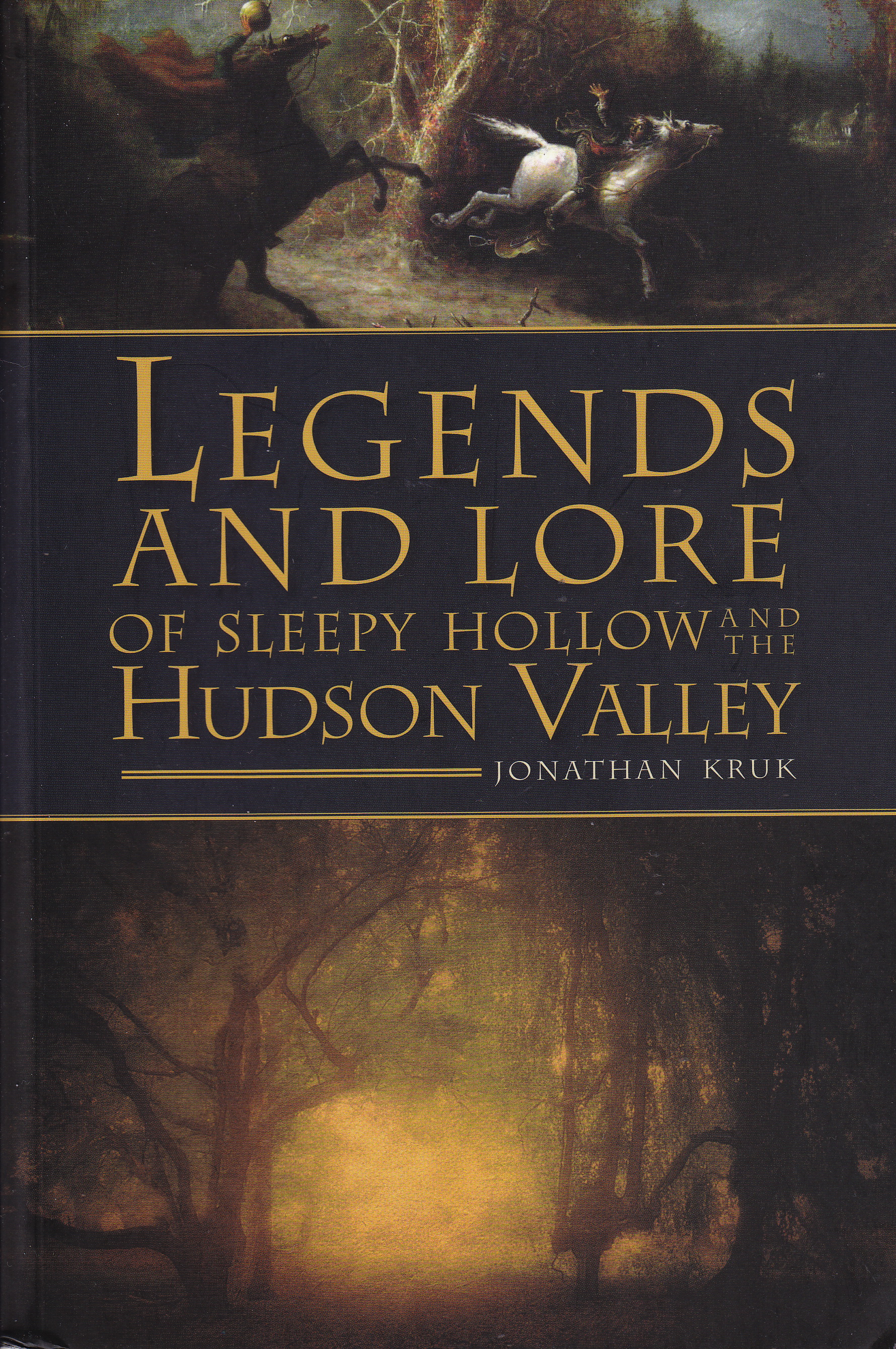
SleepyHollowOne of my doctoral advisers, Nick Wyatt, has become a friend over the years. I’m sure he would agree that he is often called a maverick, but in the best possible way. He is one of the brightest people I’ve ever known. When it was time for his Festschrift to appear, I had been unceremoniously tipped out of academia and left to my own devices. Being his first doctoral student, I had to contribute a piece, and so I settled on one I had written about an Edinburgh ghost story that seems to have roots in ancient Sumer.  Nick is the kind of scholar who can appreciate such ventures. This paper came to mind while reading Legends and Lore of Sleepy Hollow and the Hudson Valley by Jonathan Kruk.  Kruk labels himself a storyteller, and that was a venerable role in ancient times.  In fact it was a priestly one.  Kruk draws out the many tales of headless horsemen and other spirits mentioned in Washington Irving’s “Legend of Sleepy Hollow.” Nothing is proven here, but that’s not the point.

Headless ghosts were a staple of nineteenth-century lore not only in the Hudson Valley, but also in Scotland and Germany, as well as in many other locations.  How a spirit became decapitated is generally part of the draw to such ghoulish stories, and Kruk convincingly points to the tradition of the Wild Hunt as an element in Ichabod Crane’s famous ride.  The point is that stories often contain a truth that facts can’t match.  Case in point: the legend of Sleepy Hollow is alive and well. There have been periods, and will likely be more periods, when interest wanes, but we keep coming back to the story because it teaches us something about ourselves.  Empiricism is all fine and good until you find yourself facing a headless phantom on a nighttime highway.  Experience all of a sudden takes the wheel.

What does this have to do with Professor Wyatt?  My Festschrift article was reviewed, at a much earlier stage, by the journal Folklore.  I received a very sniffy rejection letter, citing, among other scholarly infractions, that I had referred to a popular publication (say it isn’t so!) as a source of the Edinburgh ghost story text. Where else was I to find it?  What scholar would bother to replicate an obviously—let’s just say it—uneducated tale?  Isn’t it beneath scholarly dignity? The stories we tell, I’ve always believed, make us who we are. It may be that materialists will have the last laugh.  When they are carted to the graveyard, however, I can guarantee that there will those among the common mourners who will be able to make a believable tale that their lives meant something after all.


Music Alone

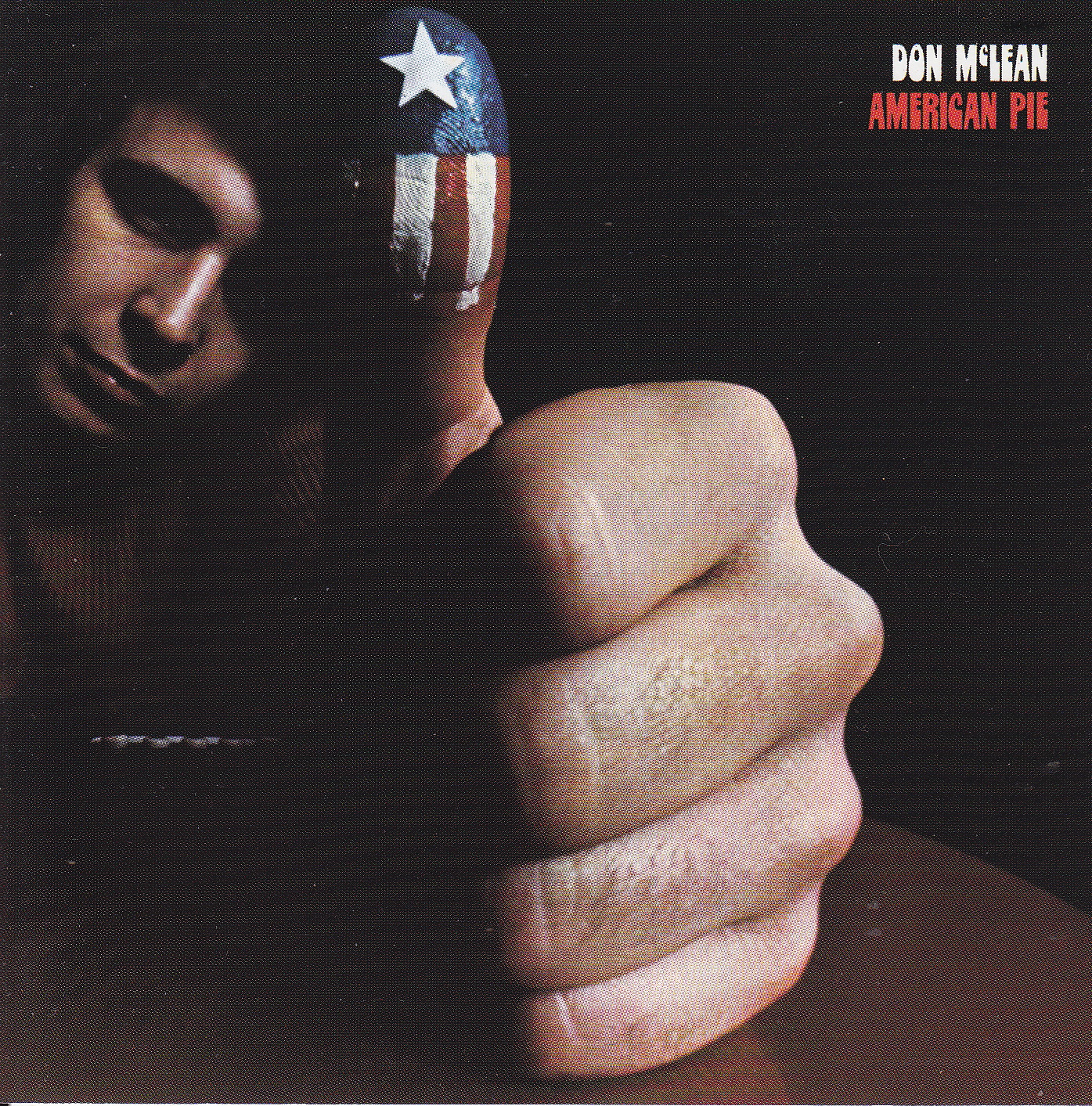
Thinking back to our days in Edinburgh, I had a song come to mind. I could remember only a word or two, but the tune and the cadence were still there. Not a singer, nor even a hummer, the best I could do was ask my wife if she remembered the song based on the two words I could recall. Amazingly, she did. When I went to download it on iTunes, I learned that it isn’t available in the US. Probably copyright laws—these can be quite bizarre. Music has a way of staying with you and one of the songs unforgettable to those of us growing up in the ‘60s is Don McLean’s “American Pie.” In a recent Bloomberg View piece, Stephen L. Carter, a professor at Yale, laments the fact that McLean’s original notes for the song are going up for bids and, after five decades of guessing, we may finally learn what the cryptic lyrics mean. Or will we?

AmericanPie

A colleague of mine used to say, “words don’t have meanings, they have usages.” In the literary technique known as reader-response criticism, it is the reader who has the final say in what a passage “means.” An author may intend one thing, but who is the author to control the meme once it’s out? (You can see why some biblical students get upset by such things since the same thing applies, even if the author is God.) While I’m not po-mo enough to accept this completely, it has introduced an edge of caution to my reading. After all, if an author is dead (ahem) we can’t question him or her to find out what they meant. Even if they remember. “American Pie” is notable for its lyrics with religious imagery which, fairly clearly, are not really religious. Or are they?

Carter laments the coming unveiling. The mystery will be gone. Don McLean, the ultimate one-hit wonder, will walk away with the goods yet again. I have no doubt that there will be analyses and hermeneutical disquisitions. The learned will claim that we finally have the answers. I’m not so sure. What if the “Father, Son, and Holy Ghost” turn out to be Buddy Holly, Big Bopper, and Richie Valens? What does that mean? Perhaps Don McLean, like any old prophet, was merely a vehicle for a message received from elsewhere. The questions go back in an endless regression, and no answer will ever be final. We all know the song is about “the day the music died.” As the old camp song says, “music alone shall live, never to die.” And as I sit here trying to remember how a song I last heard two decades ago goes, I’m pretty sure that the camp song is right, whatever it means.


Future of an Illusion

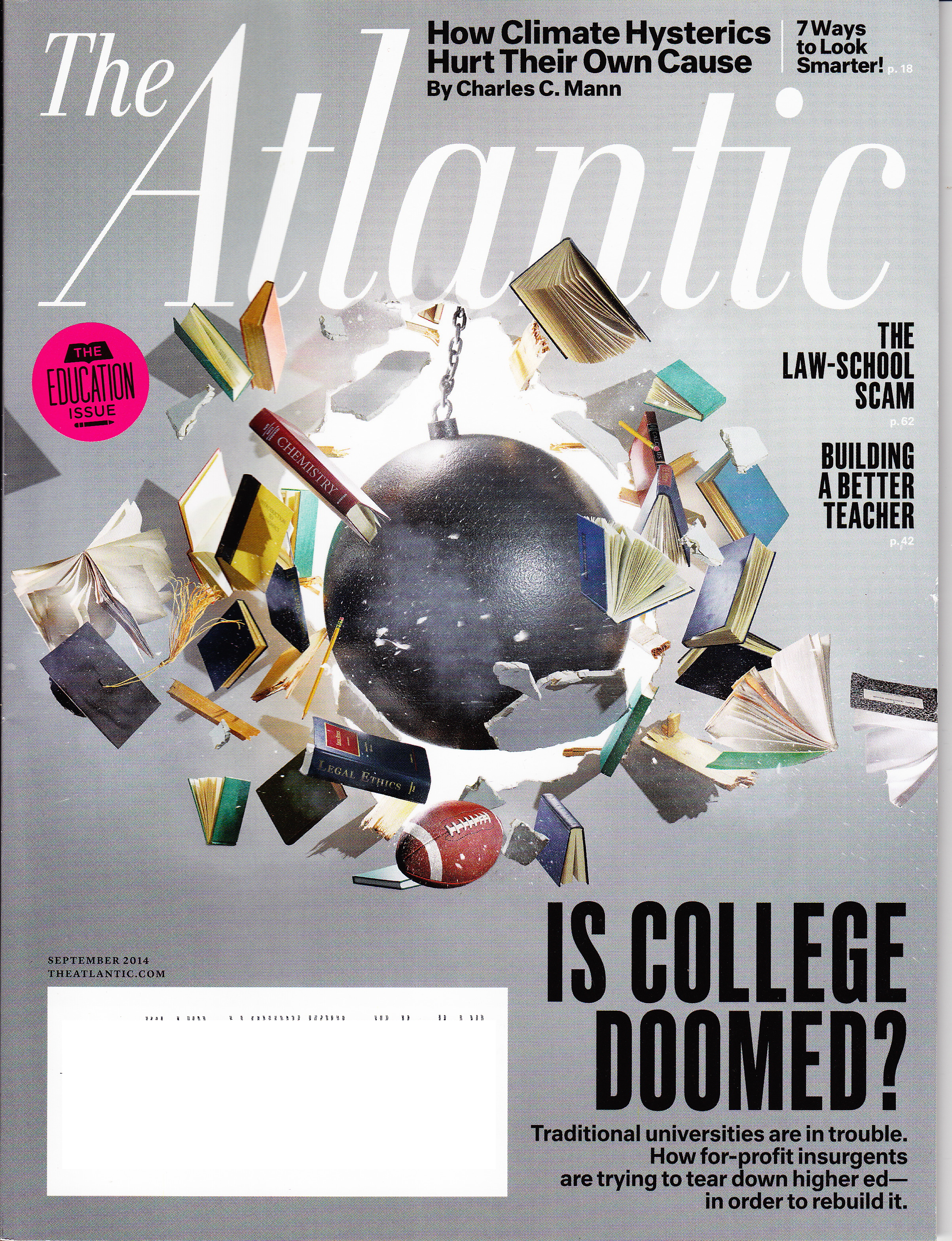
AtlanticHEIf anyone’s premature death has been announced more than Mark Twain’s, it is that of higher education. September’s The Atlantic arrived in my mailbox proclaiming itself the “Education Issue” leading with an article “Is College Doomed?” While I appreciate the headiness of Atlantic articles, they run long and my time runs in the opposite direction. I have to read selectively. Things like paying bills and work vie for my time as well. I flipped it open to the article actually entitled “The Future of College?” by Graeme Wood. Four words in, and I froze. The fourth word is “entrepreneur.” Don’t get me wrong; I’m open-minded. Having seen higher education showing its teeth and claws, I know it isn’t the nice pet that the dean will tell you that it is. Nevertheless, from my viewpoint, the main problem higher education is experiencing right now is entrepreneurial in character. Perhaps it’s old school to say, “if it ain’t broke, don’t fix it,” but it is perhaps the most apt phrase to apply to colleges and universities prior to the twenty-first century. And, in my humble opinion, today, while some vestiges can be salvaged.

Oh, I know I’m a dinosaur. I literally finished my formal higher education last century. Still, the experience worked well enough. I can’t express, even with daily posts on this little blog, how much I learned sitting through bachelors, masters, and doctoral programs. None of the institutions I attended was perfect (although Edinburgh came pretty close), but they were largely faculty led, and they all recognized that their primary function was to educate, not to prep for entrepreneurial enterprises. There were business schools for that. You couldn’t learn dead languages in business schools. Or even great ideas beyond those with an economic twist. What hath Nietzsche to do with supply-chain optimization? Oh yes, the death of God. My mistake.

In my younger years, I had no preconceived notion about higher education. My high school teachers and the clergy in my life encouraged me to go to college, despite the fact that nobody in my family ever had. Even though it was only Grove City College, as soon as I got over the homesickness, I realized I was home. Higher education—my assumptions were challenged. I had to learn to weigh the evidence. By the time I was finished, I had learned to create content as well. And then I started to hear that higher education had one purpose only—to prepare the young for the job market. A place that is too often unthinking and uninspiring. We aren’t educating, we are teaching conformity. And those who don’t have jobs don’t have healthcare coverage. Survival of the fittest. Entrepreneurs by definition. A quarter of a century ago I didn’t even know that higher education was sick, let alone dying. When the future begins with entrepreneurs, however, I’m going to side with Mark Twain, even if he is really dead.


Wee People

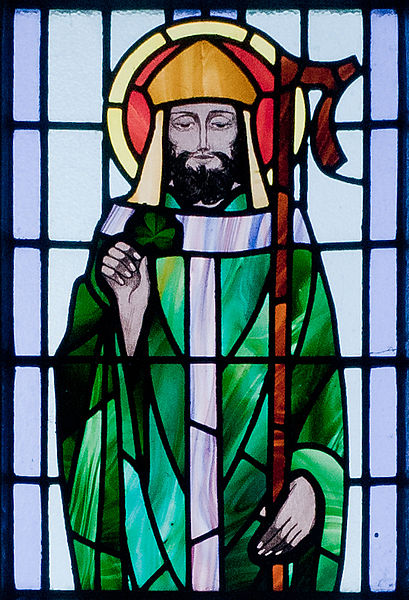
Whence we come influences our outlook. Sometimes invisibly, at other time quite consciously. I remember as a child, wanting to be honest about the wearing of the green on St Patrick’s Day, asking whether we were Irish or not. Of course, for many Americans being Irish, German, or Swedish really means having ancestors long ago from a different country. Most of my ancestors had been in America for some time—a couple hundred years at least. In New Jersey, where many people are literally from elsewhere, that can seem exotic. Great-great-grandparents in one of my lines can be traced to another country, but most of my ancestry is already settled in the United States long before that. Unknown to my mother at the time of that question, one of my ancestors was indeed from Ireland, a stowaway, as I understand it, and thus I could wear green without being dishonest. (Children can be so parsimonious.) When I saw the locals walking away from yesterday’s St. Patrick’s Day parade in my local town it was obvious that not all of them were Irish (or American with an Irish ancestor), but they nevertheless came out on a cheerless, chilly day to join in the Celtic spirit of celebration. St Patrick’s Day is all about belonging.

Photo credit: Andreas F. Borchert, Wikicommons

Photo credit: Andreas F. Borchert, Wikicommons

The rich mythology of Ireland was never supplanted completely by the Catholic influence that became synonymous with many parts of the country. Leprechauns, the little people with their pots of gold, have been fused into a mythology of St Patrick and his magical clover that somehow explained the Trinity, while it is the four-leaved variety that brings good luck. And Ireland’s snake-free evolution was attributed to sacred innovation rather than the Ice Age, the true culprit. It is our myths who make us who we are, however. Where would Ireland be with a massive chunk of ice preventing snakes from evolving in a land where a genetic variation sometimes leads to a fourth leaf on a common grass of the field? And where is that pot of gold anyway?

And yet, within the last year construction on a highway was halted in Iceland (I know I’ve island-hopped here, despite the difference of a single consonant) because locals protested that it would disturb the habitat of the little people. While a post-graduate representative to the Faculty of Divinity in Edinburgh (switching islands yet again), one of the faculty admitted to a fascination with Celtic folklore. A more rational theologian challenged him saying, “what about the farmer who loses valuable space in his field because he leaves a ‘magical’ tree standing—isn’t that tragic?” The renegade faculty member allowed that this too was especially wonderful. A world enchanted is swiftly disappearing beneath the unrelenting tires and blades of scraper and cold planer, or the axe-bearing lord of ultimate efficiency. The soul is just another casualty on the road to enlightenment. And yet yesterday, those with ancestry from Africa, India, China, Italy, and even England, gathered to watch the parade where the mythology of an island that never had an empire nevertheless draws together people of all ancestries to wear a bit of green and to celebrate whence we came. St Patrick’s is a day to celebrate whoever we are. And to leave the door ajar for the wee folk that might still be around.


Caledonia Dreamin’

“Edinburgh is a mad god’s dream.” So penned poet Hugh MacDiarmid with sentiments that could’ve been composed by H. P. Lovecraft. My association with Edinburgh seems accidental, but there is little in my life that compares to this mad god’s dream. The Gnostics used to believe that there was nothing in divinity that precluded a kind of divine madness. Philosophers, back when they still considered god a postulate, argued about whether the deity was good or evil. If they’d come to Edinburgh, I suspect, the debate would’ve taken on a whole new cast. In his poem “Edinburgh,” MacDiarmid captures the untamed nature of a city that has never been given the accolades of Paris, London, or New York, but is just as edgy and twice as beautiful.

Dreaming gods, of course, are nothing new. Vishnu, according to some strains of Hinduism, is the god whose dream is the universe. In the Ugaritic Baal Cycle, it is a dream that reveals to the ancient god El that Baal has returned from the land of death. And, of course, Cthulhu lies dead but dreaming in the city of R’lyeh. To me, Edinburgh is a wonderful alchemy of divine dreams. I was a young man, still so very naive when I moved here. Looking back at those old photos, I see a much younger face from the past, telling the camera that yes, he’d found paradise, the very place of God’s dreaming. Our human politics, however, trump divine dreams every time. Although I never wanted to leave, I was not permitted to remain. Yes, the camera does, at times, capture the soul.

DSCN3490

I am on the train that will take me from Edinburgh, having seen it anew through my daughter’s eyes. I came here penniless some twenty-four years ago, but with a head full of dreams. Life has taught me the cost of dreams since that time, and I have had to pay with wrecked careers and uncertain futures, trusting that the god who is dreaming all this is mad indeed. Nevertheless, like the gods, I refuse to stop dreaming. As much as Hugh MacDiarmid captures the spirit of Edinburgh, as I sit here, with a wee bit of mist in my eyes, my mind is on the words of another poet, Baroness Nairne. To her I will have to leave the last words, from this south-bound train. “Fareweel, Edinburgh, where happy we hae been.”


The Importance of Being Honest

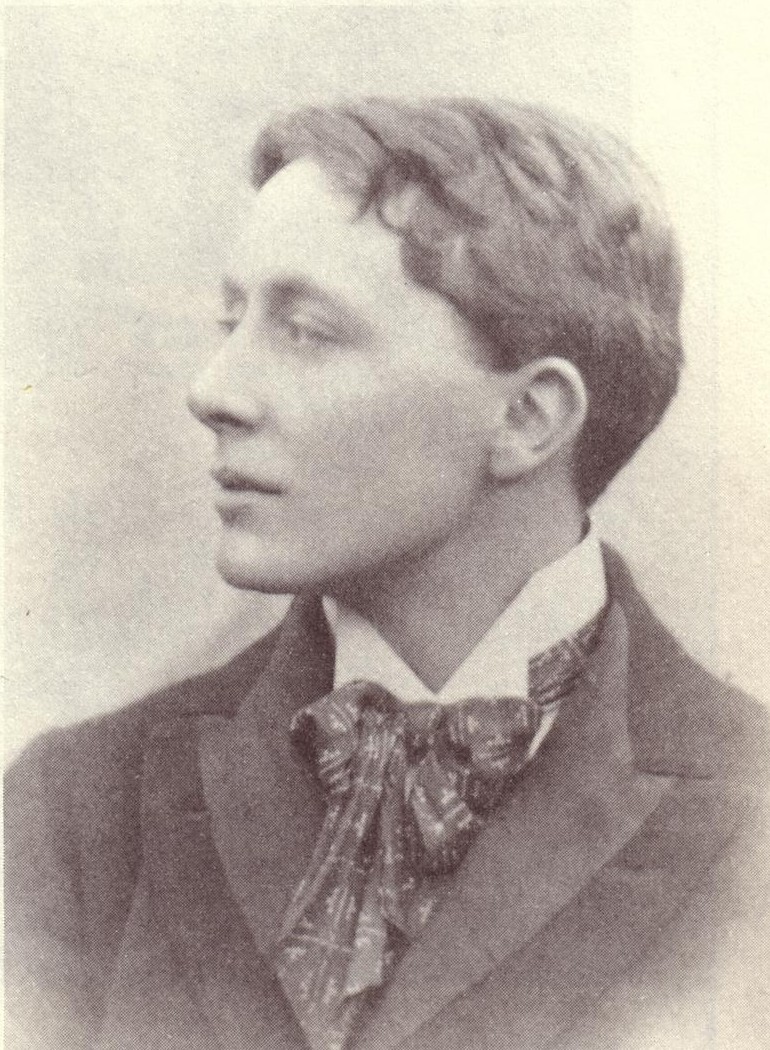
JohnGrayContinuing our quest to be a family out of sync with the modern world, we used part of our free day in Edinburgh to take the Book Lover’s Tour. Edinburgh has a long literary history that includes such writers as Sir Walter Scott, Robert Louis Stevenson, J. M. Barrie, and Sir Arthur Conan Doyle. A more recent star in that constellation is J. K. Rowling. The tour we took was led by the redoubtable Allan Foster, a geology student turned literary psychopomp. Although not associated personally with Edinburgh, Oscar Wilde had an unusual connection that made for an interesting tale. One of his male lovers, John Gray (a model for the eponymous Dorian) eventually became a Catholic priest, and lover of a wealthy Russian poet, Marc-André Raffalovich. When the Gray was assigned to St. Patrick’s in Edinburgh, Raffalovich was appalled at the state of the building and offered to finance a new church with the provision that his friend be appointed priest in charge. Thus the new building came to be and still stands on Cowgate.

Of course, nowhere is the priest or his lover, benefactor of the parish, mentioned in the church literature. Morality often parades as self-righteousness. Secret lives are not restricted to the clergy, of course. The fact is that people everywhere are human, and people are complex. So complex that we will sometimes carry on a charade to ensure religious respectability, to the point of having political candidates endorsed by clergy for issues that run counter to the very sources of their funding. Righteousness can be very costly, but self-righteousness comes cheap. Religious systems that demand standards that they can’t uphold either collapse or excel in duplicity.

When the tour was over, we walked by St. Patrick’s church. I wondered how many of the patrons knew the history of the lovely building they use for worship. Should they take a literary tour and learn the background of the church, would it make any difference? Ethics can be a matter of convenience, particularly when it is a matter of sexual propriety. Somebody else’s sexual propriety, that is. The real business of religion should be helping to improve authentic lives. Today it has often become the business of supporting the political system that bankrolls the special interests nearest to one’s heart. And reading, especially of unapproved materials, only gets in the way.


Persistence of Memory

I’ve posted before on sacred geography—the idea that a place is holy for some reason or other. That holiness is very personal, and although some locations seem to draw national, or even international, veneration, special places are intensely individualized. Edinburgh is one of those places for me. I haven’t been here for 21 years, after a stint as a post-graduate that lasted for three years and three months. Walking into Edinburgh from Waverley Station yesterday was overwhelming. Of course, it helped that the sun was shining (somewhat a rarity in these latitudes) and that my daughter was seeing it for the first time. Edinburgh is one of the truly beautiful cities of the world, but in my case, it is also invested with my personal history here. Once I called this city home.

DSCN3452

Wandering about, noticing the changes—Edinburgh has always drawn tourists during the summer—it was clear from the many languages and accents that people from all over the world were exploring the main touristed areas: the Royal Mile, Greyfriars Bobby, Princes Street Gardens-for me the experience seemed to run deeper. They will leave, I hope, with only positive memories of this mystical town, for a fair bit of medieval magic still hovers about it. For those of us who experience Edinburgh as sacred, however, there is good and bad mixed. I not only laughed here, but I cried, I worried, I was frustrated, sad, elated, depressed. I poured myself into a life here that I knew was ephemeral, temporary, destined to pass in the short hours that define one’s young adulthood. How could I have ever left? How can I ever leave again?

Away from the tourists, we wandered back to the places we used to live. How is it even possible, I wondered, staring up at the windows of our old flat, that I was ever bored there? Even the sacred, with constant exposure, becomes profane, I guess. And it requires an absence—perhaps two decades is far too long—to bring it back into focus. I am bursting open here. Some tourists are, I’m sure, busy falling in love with Edinburgh for the first time. For me, it is returning to an old friend. Twenty years of being heartlessly bounced about from job to job make the place I was born seem far less inviting than the streets and alleys that inspired Harry Potter and Waverley. This is the Nunc dimittis of my soul at this very moment. It comes to mind, Faust-like, whenever one enters paradise, knowing it will last for a few moments only.


Bonnie the Brave

As a preemptive warning to my regular readers (am I’m sure you both know who you are), I am off today for a stint in my old haunt of Scotland. Before you get out your congratulations, be advised that this trip is for work. The Society of Biblical Literature, in addition to the big meeting about which I sometimes post, holds an international meeting every year. Since my employers frequently want me out of the office, I am being sent to the fair city of St Andrews in the kingdom of Fife for a week. Although I studied across the Firth of Forth in the wondrous town of Edinburgh, I ventured to St Andrews a time or two during my postgraduate days. By that time anyone in tune with popular culture had seen Chariots of Fire, and it was almost a requirement of credibility to visit the famous beach on the North Sea where the actors iconically ran as the movie began. And as in Chariots of Fire, I’m not sure that wifi access will be readily available. Should I find access, I shall gladly update my blog with my customary observations. If I fall silent, you’ll know why.

Scotland had a tremendous draw for me as I was contemplating where to complete my studies of religion (as if one ever can). Not that I was Presbyterian, and not that I have Scottish ancestry (although Celtic is represented in the Irish stowaway on my father’s side a few generations back)—it was the antiquity that drew me. One of the mysteries, to me, of new religious movements, is how people can believe in a religion that recently began. Should there be a supernatural, I’ve always supposed, and should that supernatural be concerned that humans have the truth, why wait so late in the story to start? It was such thinking that drew me from Methodism to its estranged parent, the Episcopal Church. Among the Episcopalians are many who argue for a continuity with the Catholic tradition, separated, literally, only by a matter of divorce. And Catholics go back to Jesus himself, a member of a religion so old that even the Romans grudgingly respected it (Judaism). I guess I’m guilty of old-school bias.

Kim Traynor's Edinburgh, from Wikicommons

Kim Traynor’s Edinburgh, from Wikicommons

So it was that I came to spend some years among the Presbyterians at Edinburgh University. The Ph.D. that I earned there translated to an unfortunately brief career doing what I’m best at—teaching. My tenure at Nashotah House never offered the opportunity to travel back to Scotland, or even England with its Anglicans. And as I prepare to board a plane across the Atlantic, although strictly for work, I can’t help but to reflect on those years of intensive learning, hoping to do my Scottish alma mater proud. And returning to the States to have my career shipwrecked on the rocks of unforgiving religious dogma. It may be that once I’m back among the heather and thistles, I may cast my laptop aside and try to claim religious asylum in a past that I can only see through rose-coloured glasses.


Kermit’s Secret

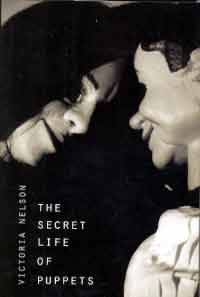
When I was a post-graduate student in that Gothic city of Edinburgh, I decided to spend some time reading Umberto Eco’s Foucault’s Pendulum. It was intended as harmless entertainment, but as anyone who has read it knows, the story soon unravels into an unbelievable world of dark religions that haunt a naive protagonist. While I was reading it, a packet, hand-addressed to me, with no return address, came to my student mailbox. The contents consisted of several tracts, in German, warming of the dangers of Satanism. No letter, no explanation. Foucault’ s Pendulum had me paranoid already, and this strange package completely unnerved me. Well, I’m still here to tell the tale. While reading Victoria Nelson’s brilliant The Secret Life of Puppets, I learned that she had a strange episode while reading the same novel. It was an apt synchronicity.

Nelson is a scholar who should be more widely known. I found her because her recent Gothicka was prominently displayed in the Brown University bookstore in May. I saw it after taking a personal walking tour of H. P. Lovecraft sites. Synchronicity. I had read, in a completely unrelated selection just a couple of months ago, Jeffrey Kripal’s Authors of the Impossible. Synchronicity. For many years I have honed my Aristotelean sensibilities, following devotedly in the footsteps of science. Problem is, I have an open mind. It seems to me that to discount that which defies conventional explanation is dirty pool in the lounge of reality seekers. I have always been haunted by reality.

I’m not ready to give up on science. Not by a long shot. Like Nelson, however, I believe that there may be more than material in this vast universe we inhabit. Indeed, if the universe is infinite it is the ultimate unquantifiable. The Secret Life of Puppets is alive with possibility and anyone who has ever wondered how we’ve come to be such monolithic thinkers should indulge a little. For me it was a journey of discovery as aspects of my academic and personal interest, strictly compartmentalized, were brought together by an adept, literary mind. Religion and its development play key roles in the uncanny world of puppets. Those who wish to traverse the realms they inhabit would do well to take along a guide like Nelson who has spent some time getting into the puppets’ heads.