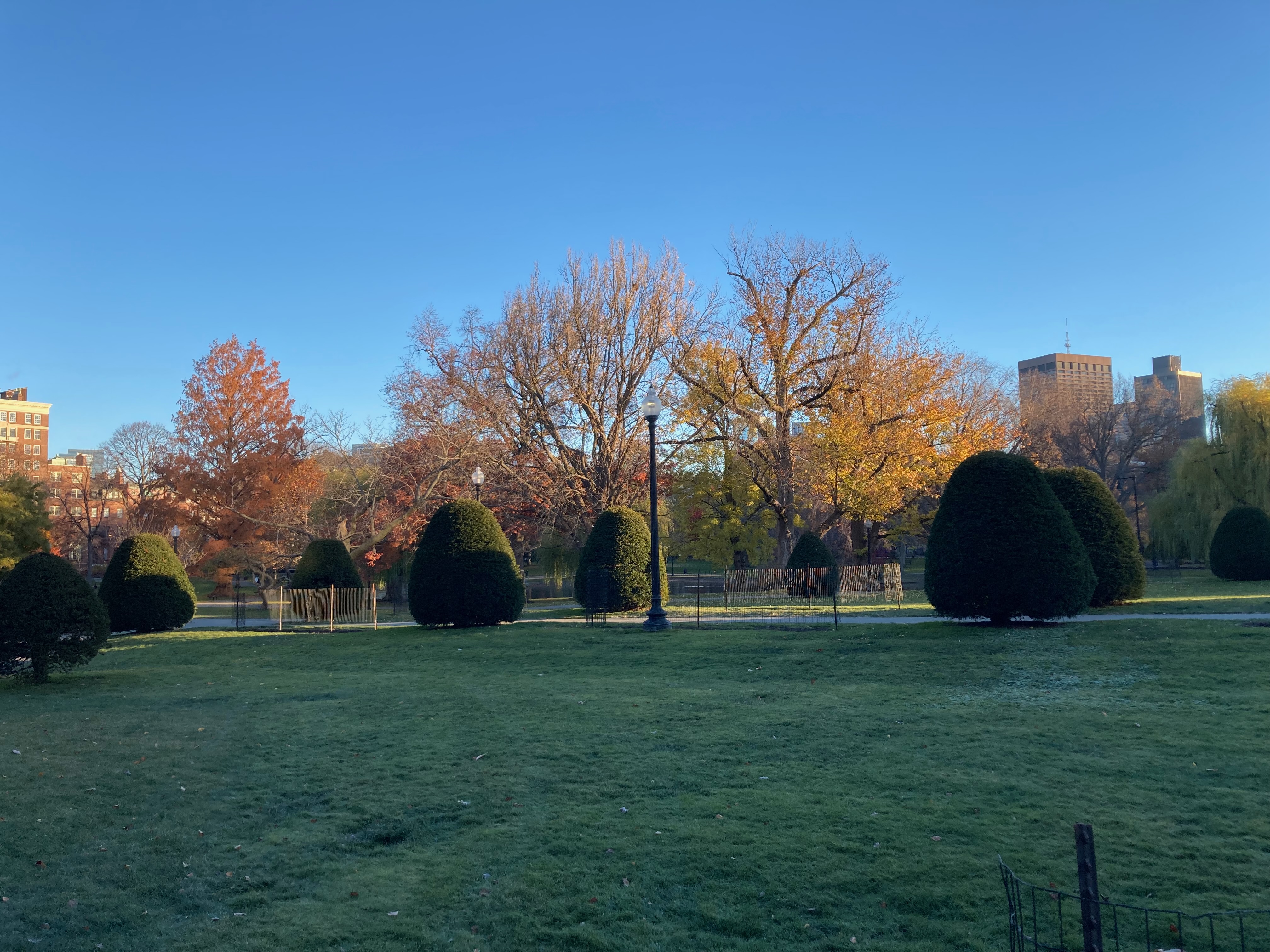
Nextdoor

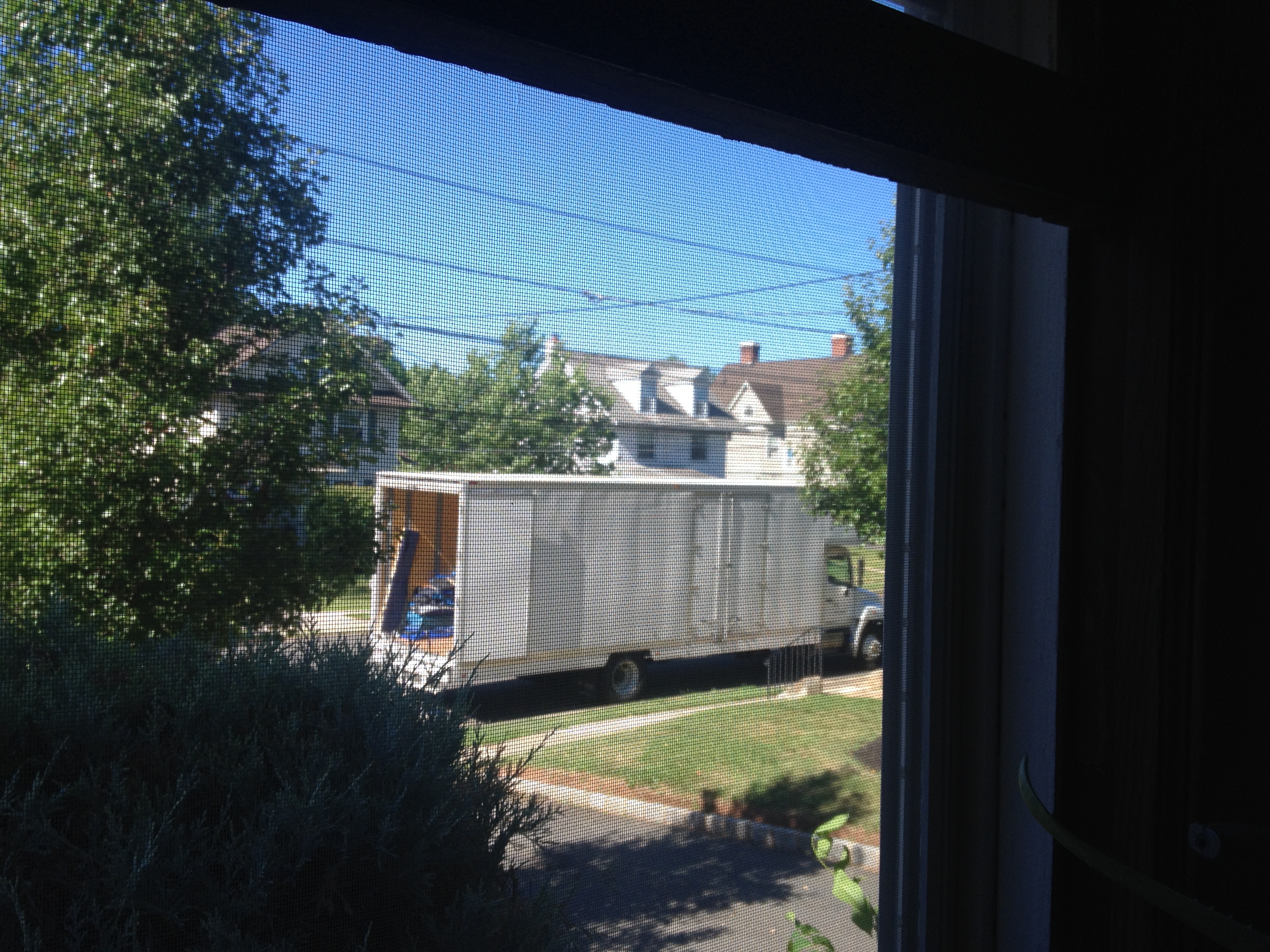
Eight years we’ve been in this house.  In that time the only neighbor’s name we knew was the guy who owned the house immediately next door.  He bought the house only a couple of months before we bought ours.  We were sad to see him move out over the winter, but when I saw new folks milling about in the spring I went over and introduced myself.  Thankfully, they’re nice folks.  While I was talking to them a neighbor across the street who’d seen me hundreds of times without a word called out and introduced herself to them as well.  She didn’t ask my name and apparently didn’t feel the need to know it.  She did say that she grew up in the house on the other side of ours.

That is the house we see from all our south-facing windows.  Four different sets of people have lived there in eight years.  Only the second set ever told us their names and talked with us.  To be fair, it is a rental property, owned by the real estate agent who sold us this house.  All day long at work I can see the tenants coming and going.  A married couple maybe a decade younger than us was there first.  Then a couple in their twenties/thirties—the friendly ones.  Then another couple with a couple of kids.  From overheard observations I gathered he worked in recruitment for Binghamton University (where my daughter went) and Rutgers (the last school at which I taught).  We have both Binghamton and Rutgers swag, but that never spurred any interest on their part.  Now I can’t figure out the renters.  They look like students to me, maybe from nearby Lehigh University.  There’s two men and two women (I think) but they never act like couples.  Who knows?

The other day I was out fighting the weeds when another neighbor across the street was outside.  She asked my name and this led to a conversation and learning, after all these years, hers and her husband’s names.  All of this brought to mind something I learned as a candidate for the ministry in the United Methodist Church.  Methodists practice itineracy—bishops move ministers every few years so that a “permanent” minister doesn’t become too settled.  It was then that I learned most congregations (neighborhoods?) don’t really feel comfortable with a minister until after about seven years, I think it was.  Seems like our timing is about right.  For the first time in eight years we know the names of two sets of homeowners in our immediate vicinity.  Welcome to the neighborhood.  

Photo by Tim Mossholder on Unsplash

250 Years

America doesn’t seem to be in a partying mood.  With more than the usual inanity coming from Foggy Bottom, and hot air being added to this heat dome, well, it might just be best to keep it simple.  Algae will grow, no matter what the self-appointed-divine say.  I remember a half century ago.  America seemed optimistic at its bicentennial.  Nixon was safely gone and Reagan hadn’t reared his fanged head yet.  It seemed like the country had a future.  These days, with more than regressive rhetoric, when emails from the Social Security Administration go out of their way to say how great Trump is, well, I think I’ll just stay home and watch a horror movie.  It’s less traumatic.

For me, as a kid, the Fourth of July was all about sparklers, black snakes, smoke bombs, and staying up late for fireworks.  Black snakes were these black discs about the size of a button coin battery that you lit with a match and the ash would fizz out the top into a “snake.”  It was an ephemeral thrill.  What we called “smoke bombs” were small colorful spheres that gushed colored smoke when you lit them.  We never played with anything explosive, but even the thought of these simple pleasures still brings a smile.  I haven’t seen anything like these trinkets (except sparklers) for many decades now.  I see from YouTube that they’re still being sold.  Almost as if the past fifty years never happened.  And staying up late to see fireworks only means being excessively sleepy at work on Monday morning.

I won’t be around for the tricentennial, presuming we survive what the Republican Party has up its sleeves.  I do hope things are more optimistic then.  I’ve been around long enough to notice the distinct difference in national outlook a mere fifty years can make.  I was born less than twenty years after the Second World War when everyone knew fascists were an evil to be avoided.  In just the last decade that has done a 180.  And we see what it’s like.  Our grocery bills are double what they were before our fearless leader took his post, claiming to make things better.  If I’m to believe the propaganda from the Social Security Administration things would be just rosy, could I afford to retire.  So our social experiment in democracy seems to have lasted only about two-hundred and fifty years.  Hopefully in another fifty what’s left of the United States will have come back to its senses or will have come up with something better than we have today.


Things Lost

Here’s an honest question, and if anyone can answer, please do. Why is it that software can’t keep track of the latest version of anything? Let me put some legs on that. I recently backed up my files to “the Cloud.” When I went to open one of them, the version that was backed up was several months old, not the one I’d worked on (and backed up) that very day.  I looked on my back-up hard drive, likewise backed up that day.  Both only showed files from several months ago.  This was for an app that doesn’t even have a “save” option because it saves automatically.  How can this happen?  I’m having trouble understanding.  Do I leave my files open too long?  (It takes quite some time to write a book.)

Then someone in my family used my laptop for a minute and closed my browser with all my tabs open.  No problem.  I went to “restore all tabs from last session.”  The tabs that appeared were over a month old.  No record anywhere of the tabs I’d kept open as reminders more recently.  What is it about software that makes this so very hard to do?  My laptop’s losing data like a sieve.  To make matters interesting, in a different context after all this, someone had moved and renamed a folder I’d created on a shared drive.  They didn’t bother telling me this, so to all appearances, the folder had been deleted.  I even did a windows search, and nothing showed up with the folder name at all.  I had to get IT involved.  While they were investigating someone finally (at my prompting) admitted that the file had been moved and renamed.  This, on top of my losing my own data at home was a lot for a single day.  (Of course, even bigger issues were about to show up that I had no idea were coming.  Expensive issues.)

Whatever my mental condition is (I don’t have an official label for it), I tend to get overwhelmed when I can’t find something.  My memory isn’t that of a thirty-year-old but I have excellent recall as to where I store important things (like my writing).  Not being able to find it drives me frantic.  I’m not wealthy and the only real asset I have is my mind and I write things down so that thoughts that mind has won’t get lost.  The Cloud seems pretty good at doing that for me.  I’m a believer in backing things up.  Data loss can be devastating.  I just wish I knew how to avoid it.

Photo by Markus Spiske on Unsplash

In the Genes

One of the easiest rabbit holes for me to trip into is genealogy.  Now, I know that other people’s ancestry quickly gets boring, so I’m not going to write about that.  But I will note some things that among the few real benefits of our electronic life—how the web has made the search much easier.  I have the advantage of having unusual ancestral names (back a few generations some Smiths enter in, but before that none of them are terribly common).  I first fell for genealogy in high school.  For a class project I had to sketch out a family tree, on paper.  I still prefer to look at them this way but you need a very large sheet.  The work was all done prior to computers (at least affordable ones).  My uncle had a copy of information my grandfather gathered and sent me a copy.  Then, when teaching full-time at Nashotah House, I’d occasionally make trips to Madison, Wisconsin to use the resources at the university library.  I wrote letters, met distant relatives, on paper.  Or microfiche.

About three years back, when my daughter was home for the holidays, we got to talking about family.  I’d searched for years for my maternal great-grandfather’s wife.  She died young and nobody in the family even knew her name.  While chatting, I logged in and was surprised to find that by using Find A Grave, I could quickly answer that question.  I’d been seeking that answer for decades, and there it was.  By that time I’d graduated to Reunion software.  The problem is, you have to keep rebuying it every time computer systems reach a certain upgrade-level.  We’ve purchased it at least three times, which seems predatory to me.  Time to put it all on paper again!  In any case, while reading about German immigration recently, I got curious.  I’d found that same great-grandfather’s parents’ names, but could go no further back without going to Germany.

I’m astonished at the work the Mormons have been doing behind the scenes for the past several years.  In seconds I was able, without paying, to get my ancestry back four generations further than ever before.  I know that Latter-day Saints have a theological motivation for what they do, but it is a real service for anyone interested in where they came from.  I’ve often heard that genealogy is a retiree’s habit.  I’m not sure I’ll ever be able to retire, but if I could, I could see how I would spend hours forgetting to eat or sleep, tracing roots, exploring rabbit holes.  I’ll need a very large sheet of paper, though.


Equal Women

It’s been so busy this year that Mother’s Day crept up on me.  We have a lot of spring birthdays in our extended family, and what with the weird weather this year and unexpected household expenses, it just kept slipping my mind.  I like to commemorate the day on this blog because I’ve considered myself a feminist for many years.  I’m very distraught that women still aren’t treated as equals to men.  This should’ve been a no-brainer over a century ago.  (Having an historian’s outlook, I realize that in the days when women tended to die young, in childbirth, it was difficult for many to rise to positions of social prominence.  Once we got to the stage that most women survived the experience, and then to the point that economics drove us to two-income families, the male-superiority charade should’ve been dropped.)  The fact is none of us would be here without our mothers.  Father’s day has never been a big deal for me, but Mother’s Day is important.

I did manage to remember to get my wife a card in advance, but this year the day itself kept slipping my mind.  Ironically, my wife and I had watched a biopic of Mother Ann Lee last night—I’ll post on that tomorrow—and it was only as I was preparing to write about it for today’s post that I thought, “Wait.  It’s Mother’s Day.”  (We do have plans for the day; I’m not a complete barbarian.)  My excuse is that we were set off yesterday by an early encounter with a brusque and condescending Verizon employee who would not help set up a new phone purchased elsewhere.  I hadn’t slept well the night before and it rained all day, none of which made for a productive Saturday.  The movie (tomorrow’s post) was longer than anticipated, keeping me up late.  Movies, strangely enough, are now starting to really influence my dreams.

My dream for today, however, is that women’s equality will become a reality rather than something we just keep talking about.  There can be little doubt that we’d be better off with a woman president than with the alternative.  A woman has traveled further from the earth than many billions of men have.  My doctor and dentist are both women.  They can do anything men in their professions can.  They are university presidents and CEOs.  Pilots, both civilian and military.  They are religious leaders.  And many of them do the job on top of being mothers.  I consider it a personal failing that it was only as I was about to post about Mother Ann Lee (tomorrow) that I finally realized today is a very important day.  Let’s make Mother’s Day count!


Snowballs in Spring

Things snowball sometimes, even in the spring.  Weekends are among the most sacred of times when you work a 9-2-5.  They do double-duty as recovery time as well as prep time for the coming week to do it all over again.  I’m a proponent of the three-day weekend; life has grown so complicated that two days hardly cover it any more.  So in April I had a Saturday that snowballed.  I awoke vaguely thinking I might have to cut the grass.  It’d actually been dry a few days and the sun was out.  Then things started to get out of hand.  A letter arrived from the IRS.  Now, this is seldom welcome, but although it wasn’t scary it involved having to go back to our tax preparer’s office and, since tax day was just a couple days off, scheduling that was tricky.

Photo by benjamin lehman on Unsplash

Then the power went out.  Under a clear blue sky.  Being the middle of the day, we couldn’t tell if neighbors were affected or not.  After leaving a message with PPL, I walked to a local store about a block away and they had power.  The owner and I chatted a little, then I went home to await the PPL call or visit.  Since the power was out I was keeping a close eye on my phone’s battery level.  It was our only means of communication with the outside world.  Meanwhile, all of what we’d planned to do that Saturday had to be put on hold.  The house was quiet with no fridge hum or any other sound.  Suddenly I heard a kind of airplane buzz, but it seemed to be coming from inside.  I followed my ears to the kitchen where a big old bumblebee was trying to get outside.  I grabbed one of our ubiquitous peanut butter jars and waited for it to land.  The phone rang.  PPL said everything was fine on their end and we had to call an electrician.  It was now 4 p.m. on a Saturday, I was being buzzed by a bee, and I had to find an emergency electrician with my phone charge dropping.

I called a company I’d used before.  After explaining everything they decided they no longer serviced our area.  I called a second 24/7 electrician.  They could get someone out to us on Friday.  This was Saturday.  My wife took the jar from my hand and went after the bee.  The third company, which I will gladly use again, said they could get someone out by 9 p.m., at the latest.  By now the entire afternoon was gone.  My wife let the bee go outdoors and when we came back into the kitchen she said, “Isn’t that the fridge?”  It was humming.  Lights were out elsewhere so I made my fifth trip to the breaker box in the basement, using a flashlight, and tripped all the switches again.  Power was back on.  The electricians were good about canceling but suggested a follow up visit, just to check things out.  The grass didn’t get cut.  It was a snowball in April.


The Dismal Science

I kind of resent it.  I was was having a conversation with a friend about retirement.  He knows our circumstances (my middling and muddling career) and suggested that we might retire, noting we’d need to ask ourselves “do we really need this?” before buying everything.  I don’t resent what my friend said, but rather the fact that economists get the final word on when we rest our weary bones.  Why do we insist on measuring an individual’s worth based on the amount of money they have?  There’s no denying that’s what we do.  And there’s no denying that we age the longer we maintain this mortal coil.  We are all slaves to capitalism.  We are owned by our jobs, and since corporations are legally people in this country, that means we are owned by a person.  Oh, we can quit, but there goes your food, shelter, and medical care.  Is it really a choice?

The problem is that many people, far smarter than yours truly, have proposed much better, more humane systems.  Universal living income, universal health care, fair use of tax money we pay.  Since governments have been suborned by the wealthy—both capitalist and communist—such fairness measures are unlikely to ever take place.  Why do we allow this to happen?  Sometimes such situations lead to revolutions, a new system that will be equitable takes hold.  Only to be taken over by those who have access to more resources and who hope to aggrandize themselves.  The other day when I was checking out from a department store, the person at the register had to be in her late seventies or early eighties.  Instead of enjoying retirement, she was scanning overpriced items for people who also wouldn’t likely retire.  Our system is broken.

Photo by Blogging Guide on Unsplash

More than a mere economic readjustment, we need a philosophical one.  Years ago the United States went off the gold standard.  Our system of values changed.  On the surface it stayed the same, but the slow eroding of services the government used to offer has led to the phenomenon of people who should be enjoying a rest from many decades of working continuing to work so that they can survive.  Should such a person’s ship come in, they’ll soon forget their concern, I’m guessing.  They may feel sorry for others, but they aren’t likely to be activists for change.  The friend I was talking with was retired.  He was younger than me.  And should he want to buy anything he doesn’t have to ask if he really needs it.  Some of us tire and others retire.


Optimistic Moves

I’ve been thinking about moving lately.  No, not planning to move, but just thinking about the process.  A family member recently moved, and we have new neighbors in the house next to ours that sat empty for a few months.  In both these cases the people moving are young and, I sincerely hope, optimistic.  Settling into a new place takes quite a lot of energy and pondering my own life, a serious motivation.  It wasn’t so hard when I was young and all I had acquired were books and records.  After moving to college I ended up shifting around quite a bit, each time looking for a better fit.  I moved five times in my three years in Boston.  When I moved to Ann Arbor to be with my betrothed, and then wife, I moved twice in a year.  Then in Scotland, three times within three years.  Each move was optimistic.

Back in the States, we moved four times in three years until we ended up in the house Nashotah, well, House provided.  That was our home for a decade or so and the move was optimistic.  Something happened after that, however.  The move from Nashotah was a step down.  And the move from the first apartment to the second was another step down.  Neither were optimistic moves.  They were middle-of-life, disrupted-life moves.  The perspective was hoping nothing tragic would happen.  The move to New Jersey was quasi-optimistic.  It was very difficult for me to give up my dream of a teaching career—something I had, and then lost.  Still, our place, a floor of a two-family house, was good enough for a dozen years.  Our last move, to our own house, was optimistic but fraught.

Home ownership is a shock to the system best absorbed by the young.  To make matters more interesting, I recently talked to somebody who knows about finance who said buying property isn’t always the best investment.  He urged us to go back to renting.  I have a hard time imagining that now.  Landlords are their own species of problem.  Yes, we’re responsible for repairs and insurance, and lately lots of snow shoveling, but we don’t have an owner telling us what we can’t do.  (Having finances tell us what we can’t do is another matter.)  I always look fondly on the young who move, trying to tap into their optimism.  This place, I very much hope, is better than the last one was.  There is no perfect place to live, I know, but when you start thinking about it, it should be a matter of hope.  And hope should be in greater supply these days.


Literalism

I struggle with literalism.  It may be naïveté.  I’m not sure there’s a difference.  I grew up being unsure of anything.  This isn’t unusual among those in an alcoholic family.  It’s probably the reason I spent my teenage years, praying as fervently as John Wesley for certainty with my faith.  My gray matter simply wouldn’t allow it.  I’m skeptical, with advanced training in critical thinking, but still terribly naive.  A family member recently told me something that sent me into a mini-panic.  It was only when I realized that he was being ironic that my ruffled feathers began to smooth out into flight readiness.  And that’s just one instance.  I used to tell my students, when we pick up something to read the first question in our minds is one of genre.  What is this?  Is it fact or fiction?  Serious or satire?  With interpersonal interactions it’s not always so clear.

People are natural actors.  They have to be.  Family time is quite different from alone time.  At least it is for me.  I try to shelter those I love from the darkness, but sometimes it surfaces.  I literally don’t know who I am.  There’s a certain continuity to the “Steveness” of my everyday existence, and that essence, for lack of a better word, accepts many things literally.  I trust people I know.  For the most part, I trust those I meet in their professional capacities—the store clerk, the mechanic, the professor.  I realize that they have inner lives as well, and they may or may not be unfurling the banner for all to see.  We all have filters.  Some use them more regularly than others.

My knee-jerk literalism generally lasts only a second or two.  My brain catches up and says, “this is where your critical thinking should kick in.”  Often that works, but it’s tied in with emotion as well.  The human thought process is certainly not all logic or reason.  Even the most Spock-like among us have emotion constantly feeding into our thoughts.  That’s one reason that artificial intelligence isn’t possible.  Those who think they can logic their way through falling in love are sadly mistaken.  We can’t explain it because we don’t understand it.  And we’re nowhere near being able to.  For business dealings we expect literalism.  But then there’s always the fine print.  I’m not that naive.  I do struggle with my literalism.  It’s set me on the wrong path before.  But certainty still eludes me.


Quiet Christmas

It has been a busy Christmas season this year.  Busy from my perspective, that is.  Introverts like to spend time alone, recharging.  Those with my kind of neurology, though, crave being with others when we crave it.  Even on a budget we’ve been able to anticipate the peace of Christmas Day.  For me, the rush began with attending my usual conference in November.  It always meets the weekend before Thanksgiving and Thanksgiving was late this year.  The weekend before the conference we attended the Lehigh Valley Vegan s’MAC Down on Sunday afternoon.  Friday I was on a train to Boston.  I returned and spent Thanksgiving with some good friends in New Jersey and December came with the following Monday.  Since work fills in the interstices between weekends I really didn’t have time to catch my introvert breath.

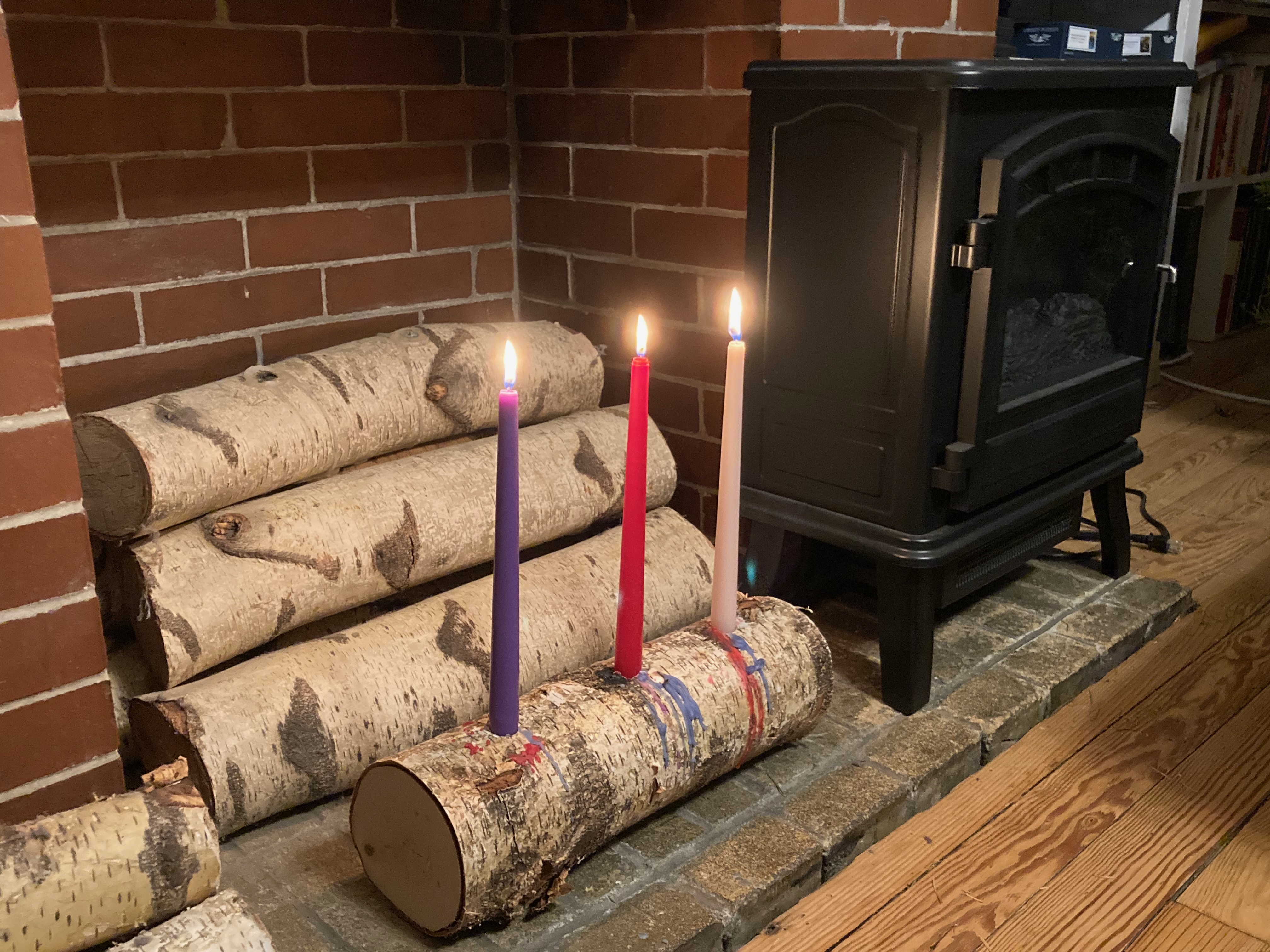
That first December weekend we attended the Lehigh University Christmas Vespers.  This free concert is a gift to the community and was a quiet way to enter the season.  We used to attend a similar event at Princeton University, but Lehigh’s much closer.  Living near Bethlehem (Christmas City), we like to spend a day in the historic downtown, looking for stocking stuffers mostly.  This was the next weekend.  We followed this up with our annual visit to Christkindlmarkt.  By the time I was done counting on my fingers, there was one weekend left before Christmas.  Friends had invited us to dinner that Sunday night, a day after the Lehigh Valley Vegan cookie exchange.  This level of activity is more than I’m accustomed to, although it did remind me of how socially busy the Christmas season was in Britain, even for post-grads.  My wife and I came home from dinner, lit our Yule log, and quietly acknowledged the winter solstice.

So now it’s Christmas Day.  I’m awake at 3 a.m., like a kid.  It is a day when I don’t have to go anywhere.  And, most of all, it’s quiet.  The only sound is a great horned owl hooting in the woods across the street.  I value this day for the opportunity to be still.  A day for recharging.  Before anybody else is awake, I listen.  There will be music later this morning and it will be fine.  And I’m thankful for all the activities that led up to this point.  Tomorrow, it seems, I’ll be out shoveling as yet another winter weather system makes it way here.  But for now it’s quiet.  And a Christmas owl agrees to cease hooting after letting me know I’m not alone.


Eve of Winter

“You must live like a monk!”  These were the words of one of my bosses.  I really couldn’t deny it.  I try to lead a quiet life of reading and writing and I do try to avoid extravagances.  My contemplative life suits me.  Every now and again, however, busy stretches come and distort my perspective.  Thinking back over this autumn on the eve of December, that season has been one of those times.  So much so that I haven’t been able to watch much horror, which is one of my usual seasonal avocations.  I suppose it started when a scammer emptied out our bank account in early September.  That entire month is a blur of fear, depression, and anxiety.  Those emotions have settled down, but the trauma and financial loss have remained.  

Toward the end of the month, my daughter moved.  Thankfully not too far away, but parents often feel the need to help when their only child is not yet well established in a new area.  October grew so busy that we had no time to decorate for Halloween.  We did manage to carve some pumpkins, but the weekends—the only time anything for real life actually gets done—were all eaten up and I entered November with that crowded head space that accompanies a monk lost in the secular world.  Looking back, I finished fewer books than usual and I’ve already mentioned about the movies.  This year I was pretty sure I’d be attending the American Academy of Religion and Society of Biblical Literature annual meeting in November.  I had missed the past two years, not really mourning the loss, but preparing for the trip occupied part of October.  Halloween came and went, taking the first weekend of November with it.

In November we had guests come and the second weekend disappeared.  The next weekend I had to get into high gear for my trip to Boston.  That was when I had the flu shot that wiped out a weekend.  I awoke groggily on Monday realizing that Friday I’d be on Amtrak’s Northeast Regional.  I’d never been to Metropark before and the conference itself ate up the fourth weekend in November.  After that, we turned around and spent Thanksgiving with some longtime friends in New Jersey.  Then we learned a Pennsylvania friend had spent the holiday alone and decided to make a celebration for them yesterday.  So here I find myself on the eve of winter with a fall that somehow disappeared.  Busy spells can be refreshing, even for the monkish.  But tomorrow is back to work as usual as December sets in.


Thanksgiving Reentry

One of the facets of attending AAR/SBL that I’d forgotten is how international attendees marvel at American Thanksgiving.  While it is far too focused on food for my liking, it is nevertheless an oddity among late capitalism’s sops.  I’m slowly becoming acclimated to the 9-2-5 environment I so desperately wanted to avoid in my career, but I’ve noticed that, at least in my case, the three publishers for which I’ve worked have this in common.  What is “this”?  The only four-day weekend in the entire year is Thanksgiving.  Probably that stems back to the fact that it falls on a Thursday and employers probably don’t want bloated, food-comatose employees trying to keep awake on Friday, and failing.  Perhaps there’s also the kinder motivation in realizing that by this point people have been working hard for many months and the US has comparatively few paid holidays.

I’m thankful for being home after the conference.  My trip to Boston underscored how much of a hermit I’ve become.  Afraid of crowds because of Covid, and not having ready cash as a result of being scammed, staying home has become a comfortable idea.  Being with others, I was glad to find, provided stimulation.  There are colleagues, both in publishing and in academia, that I look forward to seeing.  I’ve been slow to admit, I suppose, that my ouster from the latter is indeed permanent.  It’s wonderful to see friends who remember me when.  Looking back, I was very naive, even as a professor.  And I see many who, pardon my saying so, still are.  Unless you’ve been in the business world where a four-day weekend is a big deal, living in the ivory tower shelters you from much.

So I’m still in the “reentry phase” of conference recovery.  Although I was thankful to have been able to travel to Boston by train, getting home on a rainy night with heavy New Jersey traffic was a test of endurance.  In my hermit’s life I drink a lot of water and even rehydrating after shorting myself for five days takes an effort.  I’m thankful for the opportunity to have been in New England again.  And for friends on both ends of the trip who appear to welcome me for what I am.  What I’ve become.  Even though sleeping in a luxury hotel where the thermostat isn’t kept quite as chilly as we can afford to keep it at home, I’m thankful to sleep once again in my own bed knowing that there is a wider world out there and I can still function in it.


Boston Bound

Honestly, I’ve reached a stage where travel seems quite a burden.  I’m a creature of habit and I haven’t had to interrupt that habit for three years now.  I missed the last two years of the AAR/SBL conference due to a variety of issues.  I’m pleased that this meeting is in Boston, a city of which I have fond memories.  Still, getting there from here isn’t as easy as you might think.  It’s simple enough to catch a direct train from New York or Philadelphia, but I don’t live in either.  To be there in time for my meetings later today I have to catch a fairly early train.  That’s not a problem; I’m an early riser.  To get to a station where a car might safely be left for four nights is a bit more difficult.  It involves an hour’s drive no matter where you end up going.  I’ve driven in Philly enough to know that I don’t like driving in Philly.

Although Allentown is the third largest city in the state, there is no train service from it to the Amtrak lines that lead up and down the coast.  So I’ll be driving a while.  Once on the train at least I won’t have to worry about traffic.  At least for a few days.  In Boston I wasn’t able to get into one of the close hotels.  In warmer months that wouldn’t be much of an issue, but November in Massachusetts can be chilly.  I remember that from living there.  There are shuttles from my hotel to the conference center, but I like walking Boston.  It brings back memories.  Beantown is one of those places that many people fall in love with and want to stay after they get there.  Although I lingered three years that didn’t seem enough.

Photo by todd kent on Unsplash

I was a young man when I moved to Boston.  Looking back, I knew so very little.  Almost as little as I know now.  For this conference, I’ve stayed in this same distant hotel in the past.  It’s in a part of town I’d never explored as a student.  It isn’t far, however, from Edgar Allan Poe Square.  I’m hoping the weather allows for some photographic opportunities around there.  The conference itself, in my more familiar Back Bay, is work.  Not much time to relax and see the sights.  Still, I know that once I get there I’ll again feel the old attraction.  It happens every time I go.  Even it means a drive and a train ride into late November.


Migration

Since the American Academy of Religion and Society of Biblical Literature annual meeting (AAR/SBL) is coming up soon, I got to thinking about my experience of the event.  I went to some memorable meetings and missed a few for various reasons.  I’m at the point where I don’t really crave attending anymore, but when I should go, I do.  My first experience was in 1991, in Kansas City.  I flew back from Edinburgh for that one.  It was the last time it met in Kansas City.  It was obvious, however, that this would become an annual pilgrimage for me if I ever landed in academia.  My first couple of years teaching were part-time with a full-time load of courses but Nashotah House had some faculty development funds to help pay my way.  My wife would go and we’d stay with friends whenever possible.  It became an academic addiction.

I skipped the year my daughter was born, but when AAR/SBL met in New Orleans we drove down from Wisconsin.  In 1998 I attended the infamous meeting at Disney in Orlando.  Then in 2000 we met in Opryland in Nashville.  This was an experimental phase, I’m guessing, but themed locations weren’t popular with serious scholars and soon we were back to major cities without theme-park vibes.  Having lost my toehold in academia, I missed the 2005 meeting in Philadelphia, but was back for the Washington meeting, representing Gorgias Press.  The three-year separation that started in 2008 I missed, except for the first lonely year in Boston.  I was back for San Francisco in 2011, working for Routledge.  Two years later I was in Baltimore, staying off site, with my current employer. I drove down for that one.

In 2018 I missed the Denver meeting because of a snowstorm panic in Newark, after sleeping the night on the airport floor.  Then the pandemic kept me away for a couple of years, but one of those was virtual anyway.  The last one I attended was 2022 in Denver.  This year I’m scheduled to be in Boston.  Even when my career has slipped off the academic rails, this meeting has been a rather constant touch-stone for November.  Now that I no longer give papers—the last one was on Sleepy Hollow in Atlanta, I believe, ten years ago—the spark has gone out of it for me.  I am glad to be heading back to Boston, however, on somebody else’s dime.  I’ve got some Poe sights to see in my off hours there.  And some 33 years of history to recollect.


Naming the Dead

It probably just goes with the territory, but I’ve noticed something.  A big part of my job is searching for people on the internet.  (Academics, of course.)  Mostly these are folks I don’t know, some of them with very common names.  This presents special challenges, of course.  Every once in a while, though, you search for a name and pretty much every entry you find is an obituary.  I’m not talking about someone prominent who has died, but rather several people with the same name who’ve passed away.  The other day, after four or five pages of Google I found nobody alive.  That particular name wasn’t an “old fashioned” name either.  It could be (perhaps is) still a very common name.  It does get me pondering whether some names are “safer” than others.  Is anyone by this name still alive?

We place a lot of stock in our names.  Being the way that others get our attention, and identify us, they do have importance.  And many names are common—parents aren’t always the creative sort.  And the internet is a source of frustration when trying to narrow down a common name and attach it to someone you don’t already know.  Growing up, kids want to be like everyone else—no standing out in the herd.  “Wiggins,” where I grew up, was an unusual name.  We got teased for it quite a lot.  When my mother remarried, my brothers and I went by our stepfather’s common last name for a few years.  In seminary I decided to revert to my birth name—Wiggins.  I was wanting to do two things: reclaim my heritage, and stand out a little.  Even so, a web-search for Steve Wiggins will bring up at least four or five individuals not me, including an obituary or two.

Before the web, when trying to find a scholar you had to use letters.  (Or maybe the phone, but cold calls weren’t really professional). You’d send them a letter.  In a way, the web is a great equalizer.  But it favors those with names that are somewhat less common.  Some people change their names—performers and some authors do this to make their persona more to their liking—but this is a fraught activity.  I know from switching back to my birth name that the process is complex and if you try it after you’ve started to publish things it adds whole new layers of complications.  So I spend quite a bit of time searching for people who aren’t easily found.  Not infrequently I seem to be naming the dead.