Wolfing Hour

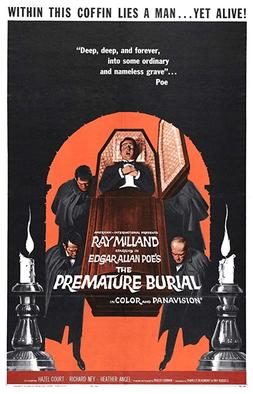
It’s not that I didn’t grow up watching horror; it’s that I didn’t grow up watching horror in theaters.  I’m sure Mom wouldn’t have had it, and besides, we could only afford movies spread apart by wide intervals.  You’d think that now I’m an earning adult (or so I’m told) that I’d have more control but watching is a kind of addiction and money’s still not abundant.  Every once in a while, however, I’ll splurge and pay for a film.  Mostly when they’re not available via any streaming service.  Like many Christians who’ve never read the whole Bible, I know the canon only piecemeal.  So I came to watch Hour of the Wolf, the Ingmar Bergman classic.  Now (at least then) streaming nowhere.  Intellectuals have always flocked to Bergman films since they’re full of symbols and not easy to understand.  (If you want to “get” Robert Eggers, though, you’ve got to do your homework.)

Hour of the Wolf is generally considered psychological horror.  It’s black and white—how scary can it be?  Pretty, depending.  The story of an artist’s wife (Alma) who lives with him in a small shack on an island in Sweden, it’s a tale of unraveling.  Nightmares become difficult to distinguish from waking realities.  The wife reads the artist’s diary, foreshadowing Wendy in The Shining, to discover that he seems to be going insane.  The island’s not abandoned, as they thought.  Soon Alma begins seeing other people too.  And attending their awkward dinner parties.  They speak freely of her husband’s previous affair.  There also seems to be an instance of a real person on the island that the artist keeps secret.

If this doesn’t give you enough to piece it together, well, it’s a Bergman film.  In college we watched The Seventh Seal.  And at least part of Wild Strawberries.  But in 1968 I wasn’t an intellectual and we were poor.  If I’d even heard of Ingmar Bergman it was via reference in some TV sitcom.   I knew to expect strangeness.  These days the box elder bugs are mostly gone from the house.  The weirdness started when, having never seen the film before, I began to pour a glass of water at the very second the artist picks up and begins to pour a glass of wine.  Strange coincidence, I thought.  Several minutes later I saw something edging around my glasses.  A box elder bug crawled right over my right glasses lens.  Like a scene in a Bergman movie.  I knew I’d have to ponder this for some time.


Wondering Wailing

You have to wonder, it seems to me, if the western, imperialistic gaze sometimes overcompensates for its past sins.  We remain reluctant to say we don’t understand something and sometimes even declare such things superior to what we produce.  That was the feeling that came over me upon reading about The Wailing.  Don’t get me wrong—I like K-horror well enough, but I’m not sure that I would say, with some critics, that it leaves American horror in the dust.  It’s good, yes, and it’s very long (two-and-a-half hours seems too long for a horror film).  The story doesn’t answer all the questions it raises and I was looking for some kind of religious message.  That’s why I watched it in the first place.  

What’s it about?  That’s hard to say.  The best that I can do is it’s about the doomed family of a Korean police officer in a small village.  As others have pointed out, this movie has ghosts, demons, zombies, exorcisms, and other horror standards.  There’s a considerable amount of Christian versus shamanism interplay.  And it seems okay, when someone else is doing it, to suggest a foreigner is the Devil.  None of this is intended to take away from the fact that the movie is effective.  I particularly found the shamanistic exorcism scene fascinating.  The thing is, you never really learn if the self-admitted Devil at the end is working with the shaman or not.  Or if the third potential villain, a woman named “No Name,” is in on it with them.  Or maybe I’m looking at this from the wrong angle.  Maybe the policeman’s family is simply doomed.  Nothing they can do changes that.

The movie suggests that such things are like fishing.  You can’t be certain who’s going to take the bait.  According to those who know, apparently a deleted scene at the end helps to clarify this a bit.  There is a lot of talk about belief, and a Christian clergyman confronting the Devil.  For me, however, I need to be able to follow a story well enough to figure out whether I’m misinterpreting or not.  The problem with a movie this long is finding the time to go back and rewatch it.  It opens with a quote from the Bible and it uses biblical tropes, such as the cock crowing three times, to make some strong points.  In fact, the opening quote from Luke 24.37-39 implies that the ghost may be God.  One thing is certain, I’ll be mulling over The Wailing for some time.  And maybe someday I’ll start to understand.  In the meanwhile, I’ll still watch and appreciate American horror, inferior though it may be.


Haunted Life

It’s funny what a difference that a few years can make.  I can’t seem to recall from where I sourced my movies in the noughties.  Streaming was extremely tenuous in our Somerville apartment—the plan didn’t include the required speed for it.  Like in the old days when it took twenty minutes to upload a photograph through dial-up.  In any case, I know I’ve watched The Haunting before.  I know it was in Somerville, but having watched it again I have to wonder if my mind is playing tricks on me.  I read Shirley Jackson’s The Haunting of Hill House there, and I saw the movie.  But how?  It’s all about mind games, but the mind games are played on a woman who has an abusive family, one that damages her psychologically.  Escape is important to her, even if it is to a haunted house.

I think the last time I watched this I was looking for something that might scare me.  That phase was one of thinking not much frightened me—but this movie is scary.  Even with its “G” rating, its lack of blood and gore, and black-and-white filming.  It scares.  One thing I’ve noticed when reading about these older movies after I watch them is that many improve with time.  Shirley Jackson was known during her life but you become a classic writer only AD—after death.  The Haunting has aged well.  I suspect it has something to do with Robert Wise, the director.  What must the psychology of a man be who directed The Sound of Music, The Day the Earth Stood Still, and The Haunting?  The latter is all about psychology.

Movies that make you think are those, I believe, that may become classics.  And perhaps there’s a bit of Eleanor inside all of us.  Wanting to be noticed but eschewing publicity.  Needing someone to love us, but pushing away those who try.  Children in bad environments learn unorthodox, and often unhealthy, coping techniques.  Eleanor has difficulty accepting that John is married when she thinks she’s finally found a place that accepts her for who she is.  Even if it’s a haunted house.  Especially if it’s a haunted house.  As a child I’d no doubt have found the movie boring.  There is, however, much for adults to absorb.  And, I expect, I’ll need to go back and read the novel again.  One of the reasons for watching horror is that the viewer is seeking something.  It’s not just thrills.  I didn’t write about the movie the last time I saw it so I don’t recollect when it was.  Or even how.  My thoughts now, however, are that I should’ve paid closer attention the first time.


Colorless Sunday

Growing up, my Saturday afternoon horror movies were catch as catch can.  I never really had a plan and I’m sure that there are several films I saw that I have forgotten.  I’m sure one of them wasn’t Black Sunday.  I knew nothing of directors and their reputations then and I was unaware that Mario Bava made quite a splash with this moody movie.  I can now understand why (thanks to Amazon Prime).  This is an unusual vampire and/or witch story, and one which had quite an impact on future films, including one of my favorites, Tim Burton’s Sleepy Hollow.  Indeed, Black Sunday is about as gothic as they come.  A witch is murdered as the film opens, along with her lover.  Two centuries later a couple of doctors stop for the night in the Moldovan town where this happened.  They find the corpse of the witch and accidentally reanimate it.

The monster the witch raises (her lover, initially) attacks people like a vampire does and the victims become vampires themselves.  The best (but not only) way to kill them is by driving a sharp spike through their left eye.  This is quite violent for a 1960 film, but it certainly cemented Bava’s reputation.  In any case, the younger doctor falls in love with the local princess, but the witch has designs on her too.  The older doctor and the princess’ father both get transformed into vampires and get killed off.  By the end, only the young doctor and the princess remain, along with an Orthodox priest who helps with deciphering how to take care of occult monsters.  The plot is more complex than that, and the film is now understood as a landmark.

At the time and place where and when I went to college, courses in horror films were not on offer.  (I was rather preoccupied with religion, in any case, and might not have taken one anyway.)  By the time I was in college, however, I viewed monster movies with nostalgia, but I was trying hard to be respectable.  You always have to be proving yourself when you grew up poor.  Learning how these early horror films fit together is a form of self-education.  And it’s fun.  And horror movies offer an escape from a world where you know you’re having trouble fitting in.  Many of the movies I watch are still catch and catch can, but I think it pays to be more intentional about them.  And I’m glad I caught Black Sunday at last.


More Omens

Brushing up on my eschatology, I watched The Omen again.  The original, that is.  One of the underrated aspects of cinema is that people learn their theology from it.  Movies tend to be more memorable than sermons.  It is opined among some that The Omen is responsible for the prevalence of dispensationalism among many Americans.  I’d put a bit of a finer point on it in that The Late Great Planet Earth was being raptured off the shelves all the way through the seventies (I personally bought two copies) and it caused a feedback loop with The Omen.  Many mainstream ministers, without benefit of a Fundamentalist upbringing, were caught unawares, I expect.  Scholars of religion have noted how several aspects of the narrative—the character of “the Antichrist,” the rapture, indeed, the Apocalypse—have been read back into the Bible by credulous believers.

What I found interesting in this viewing is the debt owed to The Exorcist.  Of the two there’s no doubt as to which is the superior film.  The name Damien in The Omen, I read somewhere once upon a time, was taken from Fr. Damien Karras.  During the late seventies and early eighties, unruly boys were routinely called “Damien” by frustrated camp counselors and others.  Apart from this nod, if true, is the fact that the abruptly introduced character Karl/Carl Bugenhagen is an archaeologist exorcist.  (He’s the guy who gives Robert Thorn the knives, if you haven’t seen it for a while.)  The scene shot in Jerusalem (said to be Megiddo) underscores that Fr. Merrin is also being channeled here.  I suspect that the film was getting a bit long in the tooth and some explanatory material on Bugenhagen was left out.

It has also been suggested that the number 666 entered popular culture because of The Omen.  I would temper that a bit with the fact that a lot of people were reading Hal Lindsey’s new apocalypse as well and the two of them got the job done.  There’s no doubt that after the film the evil number took off in a direction that would’ve left John of Patmos scratching his head.  This brings me back to the point that belief is influenced—sometimes constructed—by movies.  The Omen was a huge success at the time, despite the fact that many critics (also not raised Fundie) thought the premise was silly.  Most people aren’t film critics.  The Bible can be pretty impenetrable as well.  Preachers may not be inspiring.  Movies, however, wrap it up neatly and tell you what to believe.  Perhaps it’s some kind of sign.


They Come in Batches

There’s horror and there’s comedy horror.  And then there’s just plain silly.  Gremlins 2: The New Batch falls into that last category but with the strange factor that it’s silly without being funny.  There are a few smirk moments, and sometimes the self-parody approaches clever, nevertheless it’s bad.  It’s a big budget bad movie.  The idea that the gremlins try to take over New York City is funny, at first, but other than Phoebe Cates and Christopher Lee, they don’t seem to know this is a satire of Gremlins.  I guess not knowing about the plot—I tend not to read reviews about movies before I see them—I was expecting something more like the first one, which I thought was pretty good.  The only reason I knew the movie existed at all was that the Blu-Ray version of Gremlins comes with The New Batch.  The late eighties and early nineties I was spending holed up in Edinburgh working on a Ph.D.  We didn’t have much money and didn’t see many movies.  We had no television (there is, or was, a television tax in the UK), so I never heard of the sequel.  

I presume we all know the three rules of mogwai, and needless to say, they immediately get broken.  The eponymous new batch takes over the Manhattan tower of Daniel Clamp.  His high-tech building needs no gremlins because the technology already doesn’t work well.  The high rise houses, among other things, a genetics lab where Christopher Lee camps it up, but which means the gremlins have access to formulas that allow them to grow wings, tolerate sunlight, and become spiders.  Sound silly?  You betcha.  One of the gremlins is even able to talk.  I watched with increasing stupefaction. 

Bad movies and cult followings are the peanut butter and jelly of cinematography.  Some bad movies never attain cultdom, but I can see why this one has.  The big budget ensured glitz and special effects.  Even the self-awareness to have Hulk Hogan being able to control the gremlins in the theater with a threat almost gives the movie an art film feel.  The horror, mostly based on the fact that there are monsters, is tightly constrained.  Although I felt increasingly like I was wasting my time as the movie went on, upon reflection I can see why some people have glommed onto it.  It may just have edged over into the so bad it’s good category.  I’ll need to think about it.  And avoid eating after midnight.


Gather Round

The church has been keeping secrets.  That’s the basic premise behind a fair raft of horror films.  Apart from giving those of us watching religion and horror quite a bit to talk about, it reinforces just how close the two are.  The Gathering is a film I missed when it came out, but one which has an interesting, if unlikely premise.  At times it reminded me of The Reaping, and at other times, the prequels to The Exorcist.  Cassie is a young American woman who loses her memory after being hit by a car near Glastonbury, England.  At about this time a deliberately buried church is being explored by an art history professor.  He asserts that it is the church Joseph of Arimathea built and represents, in its altarpiece, the earliest rendition of the crucifixion.  The clergy seem quite disturbed by this.

Meanwhile, Cassie recovers and is taken on as an au pair for the art historian and his wife (the one who hit her with the car).  The people of Ashby Wake stare at Cassie, as if they know her.  She has premonitions of several local people dying violent deaths.  The clergy learn that the altarpiece depicts those who came to watch Jesus’ crucifixion, not out of love or devotion, but simply for spectacle.  Since then they’ve been cursed and show up to watch various historic tragedies.  The clergy want the church, the earliest representation of the spectators, reburied.  The people of Ashby Wake include those of “the gathering,” indicating tragedy is about to unfold in that small town.  There is a twist ending I won’t reveal, but this is one of those horror films that rely on religion to make them work. 

Critics tend to dislike the film while viewers are divided on the question.  I actually enjoyed it, personally.  The concept of the watchers committed to bloodlust seemed different, particularly when put in the context of nascent Christianity.  It doesn’t handle religion as well as some horror does, but it’s a serious effort.  Why Joseph of Arimathea would want to have portrayed gawkers rather than those loyal to Jesus is one of the bigger questions left unanswered.  After the ending some of the unusual scenes earlier on make more sense.  But still no reason is given why an early church would have portrayed those not to be emulated.  As a horror film with no jump startles, but a slowly building dread, it fits the bill for some of us.  The “church keeping secrets” theme is one that should be explored further.


Which Witch Where?

I like to think of myself as a kind critic.  I’ve been on the pointy end enough to know how it feels when those who don’t like my work are unkind.  I’ll try to find a nice way of saying Witches of Amityville, or Witches of Amityville Academy, must’ve been shot on a very modest budget.  It must’ve been written by someone who’s still working hard to master the craft.  And the actors are continuing to improve as the director gets better at that role.  Why did I watch it?  Amazon Prime gives it four stars.  The incongruity of Amityville and witches suggested it might be a bad movie, and in that regard it did not disappoint.  So what’s going on here?

There’s a witch academy in Amityville.  Although all the cars have steering wheels on the right, everyone speaks with American accents, apart from a couple of characters.  The interior shots, however, are also pretty British for the most part.  There does seem to be some awareness that Amityville is in the new world.  In any case, said academy is run by an evil coven that is seeking to release the demon Botis.  To do so they have to sacrifice college-age women (and no, it’s not that kind of movie).  One of their intended sacrifices escapes and is found by three white witch sisters who also live in Amityville.  They decide to train this young woman who, as it turns out, is a very powerful witch.  Problem is, the director of the academy can’t release the demon without sacrificing this particular victim.  So she kidnaps her back.  The three good witches burst on the scene, actually more like just walk on, and prevent the sacrifice.  The bad witch kills herself and releases the demon, but the young witch is so powerful that she destroys him.  In the end the witches must go to Salem.

What’s not to like?  Some of us, day by day, year by year, work to improve our writing skills.  We write stories that incorporate whatever ability we’ve managed to scrape together.  And we struggle to find publishers.  I like bad movies because they are a great place to find hope.  The world’s a big place.  Even the entertainment industry is large enough to absorb movies produced by Amazon, Hulu, and Netflix, among others, including the big studios.  They’ve got to be looking for content, right?  Those of us who channel our creativity towards writing, and who keep trying to get it published, have a chance, don’t we?  What’s the harm in believing in the power of magic?


Forewarning

The Devil’s Advocates series, as you learn from pitching and writing one, promotes alternative views on horror films.  Adrian Schober’s treatment of The Omen doesn’t disappoint.  Each time I read one of these little volumes I’m always amazed at how many ideas can be packed into such a small space.  Schober’s take on the film is that Damien’s role is left intentionally ambiguous.  There was disagreement between the screenwriter (David Seltzer) and the director (Richard Donner) on that point.  Donner wanted it to be left up to the audience whether Damien was the Antichrist or not.  Seltzer, not being a believer himself, wanted to be clear that the boy was evil.  As portrayed in the final film, however, Damien seems awfully vulnerable, in retrospect.  (I rewatched the movie before reading the book.)

I’ve seen The Omen a number of times.  It has never been my favorite movie and I actually read the book (a novelization) before I ever saw the film.  Having grown up as a fundamentalist, I believed that we were in the end times (which only really seemed likely starting in November 2016).  The movie had to wait until I was an adult (I read the novelization when the film first came out).  I can see the ambiguity now, having read this book.  There remain, however, some things difficult to explain about the presentation—how Fr. Brennan knows Katherine is pregnant and that Damien will be the cause of her miscarriage.  The extreme coincidence of both the priest and the boy having the same birthmark that looks like 666.  And that someone would go through the trouble of burying a jackal and Thorn’s actual son in an obscure Etruscan cemetery just in case the Ambassador ever got suspicious and wanted to check it out.  

Interestingly, different markets altered the ending, enhancing the ambiguity.  The final scene had originally been shot with three coffins rather than two, and that changes things, doesn’t it?  Movies are, of course, subject to interpretation.  Any form of media is.  The fact remains that many viewers flocked from theaters believing Damien was the Antichrist.  Schober’s book would give pause, however, about rushing to conclusions.  The idea for the movie was suggested initially by a marketer who was a true believer in premillennial dispensationalism (essentially the worldview of Keith Jennings in the movie), and some Catholic officials objected.  Different Christian sects have very different interpretations about the end of the world.  And this movie is subject to different interpretations.  This brief book might just change your mind.


Not a Peep

Time changes everything.  Peeping Tom, which has been on my list for some years, was castigated when it was released in 1960.  Now it’s considered a classic.  Indeed, it’s frequently discussed in books analyzing horror films, and it had a bit of influence on Alfred Hitchcock.  Films like this must be watched as period pieces, of course, but there’s so much psychology here to unpack that I wonder if it’s used in mental health courses.  Mark Lewis is a loner who inherited a spacious London house from his father.  He lets out the downstairs rooms but keeps to himself upstairs.  One of the reasons is that he realizes that he’s mentally unstable.  He’s a serial killer, in fact.  His young downstairs neighbor takes a shine to him and he reveals, via film, that his father tormented him as a child to film his fear reactions.

As an adult, Mark works in the film industry.  He also kills women while filming them to capture their fear reactions—taking his father’s work a step further.  Although shy, he is charming enough to others.  When he sees a fear reaction, however, he feels compelled to murder.  The neighbor downstairs doesn’t suspect him, but her ocularly challenged mother does.  Thinking back over it, many moments reminded me of a racier version of Hitch.  Racy because Mark picks up money on the side by taking boudoir photographs that the local news shop sells to certain customers.  This is a creepy film and perhaps the creepiest scene is where a local girl, well underage, comes into the news shop to buy a candy bar just after the owner sells an older man a pornography book.  We don’t like to admit that such things could happen.

There is so much going on in this movie that it’s clear, at least to me, why it has garnered such acclaim.  I spent the first twenty minutes or so wondering whether I should really be watching, but as I stayed with it I couldn’t look away (which is one of the very self-reflective issues that the film addresses).  The analyses I’ve read never really went into detail regarding the plot, so there were plenty of places where I wondered what would happen next.  The pacing is more in keeping with the turn of the sixties, but the mind work seems ahead of its time.  Some call it a precursor to slashers, but it doesn’t linger on the actual bloodshed (which is minimal, considering).  It does take its time to make you think while you watch.  And somehow it makes viewers complicit, it feels, with what they’ve seen.


Look Out Beneath

Rainy weekend afternoons were made for monster flicks.  That’s what I was thinking when I settled on The Devil Below.  I was also thinking, “this is free on Amazon Prime.”  The best word  I can think to describe it is lackluster.  Sometimes I’ll see a movie and a couple weeks later will have trouble remembering what it was about without severe prompting.  This may fall into that category.  We’ll see.  In any case, Arianne—is she Ariadne?—researches and leads groups to inaccessible locations for a fee.  She can find anywhere.  A group of “scientists” want to find a coal mine in Kentucky that caught fire (like Centralia), and explore it for possible high-grade anthracite.  What they don’t know is that monsters live in the mine and they escape from time to time.  The former mine owner has formed a ragtag group of helpers who keep the monsters at bay.  They don’t ask for help.

So far, nothing really stands out.  What makes this movie worth discussing is the dialogue about religion and science that the scientists have.  Unfortunately the writing is poor and that means the dialogue isn’t very sophisticated.  For example, one of the geologists argues that intelligent design isn’t opposed to science.  What said scientist doesn’t know is that intelligent design was intentionally invented by creationists as an alternative to science.  Its roots are clear and unambiguous.  This member of the team doesn’t believe they should really be doing this—the mine is behind an electrified fence and the locals keep trying to chase them off.  And he’s talking about God while there’s, well, devils below.

It’s never really explained why these creatures are considered devils, unless they live close to “Hell,” being underground and all.  We don’t get many clear views of these monsters but they eat what they can get, which makes you wonder what they survived on before miners showed up on the menu.  In the end, all the scientists get eaten—it turns out that their leader was actually working for big industry, not a university, as he’d claimed—and you don’t feel too bad for them.  Arianne survives and decides to stay with the locals to fight the monsters.  There’s some faith talk among them as well, which makes me wonder if the writers maybe had a hidden agenda.  Although the article does score a Wikipedia article, many of those involved, including the writer and the star, don’t have their own entries.  And who has the time to mine the internet for more answers?  There you might find the devil below, I suppose.


A Different Zone

I haven’t read Stephen King’s The Dead Zone yet, but it’s on my list.  That’s why I was a little reluctant to watch the movie.  It was free on Amazon Prime, however, and I reasoned to myself that I’d seen The Shining and Carrie before reading the books.  Indeed, my earliest introduction to Stephen King was through movies.  (Well, I did read one of his short stories in high school, but the novel side of things came later.)  When the opening credits revealed it was directed by David Cronenberg I wondered what I was in for.  I didn’t know the story, but I hadn’t heard of this as a Cronenberg body horror spectacle either.  It was quite cold outside and I was nodding off, so why not.

The thing is, it’s not always listed as horror.  That’s a faulty genre designation, as is sci-fi.  There’s one futuristic scene in the movie and it lasts for just over a minute.  Does that make it sci-fi?  Also, I  realized, it deals with clairvoyance and for similar reasons the X-Files are also listed as science fiction.  Paranormal, it seems, is permanently ruled out of the realm of possibility by assigning it an improbable genre.  Well, back to the zone.  I figure the title will be better explained by King, but there is a brief scene explaining what a dead zone is.  The story follows Johnny Smith, a schoolteacher who becomes clairvoyant, although it manifests itself only after a car accident and a coma.  The main purpose of this, at least through the movie lens, is to prevent a Trump-like populist from being elected president.  That is the horror part, I guess.  And it’s becoming clear to me that writers were warning about these things since the seventies.

Unlike many of my weekend movies, I’d actually heard of The Dead Zone before.  There are some horror tropes present.  It begins with Edgar Allan Poe’s “The Raven,” and has a few other horror references tossed in.  Still, it’s a very human story.  The movie probes the difficulties of a life with special abilities.  Johnny never gets over the woman he was going to marry before his coma, and he feels for those whose futures he sees.  The movie is fairly slowly paced and it drops a few threads, again, likely found in the novel.  In the book or movie debate I generally go for book first, but that often leads to disappointment on the silver screen.  Maybe this was the right order to go this time around.  Once I read the novel I guess I’ll know.  Or at least have an opinion.


Creeping Religion

In a disappointing email, Amazon Prime has announced that its free movie streaming of select titles for members will now be subject to commercials.  I suppose that’s little difference, actually, from the way I watched most movies growing up.  I watched them on television before cable, and commercials were a necessary evil then.  Speaking of evil, I decided to watch a film that I missed in my childhood.  It was better than expected.  The Creeping Flesh suggested itself by star power.  Although not a Hammer film, it features both Peter Cushing and Christopher Lee as a pair of mad scientists.  Interestingly enough, it struggles with the question of evil and, appropriately enough, has an ambiguous ending.  There’ll be spoilers below, but since the movie was released over a half-century ago, I’ll use them with a clear conscience.

Cushing’s character, Dr. Emmanuel Hildern, has discovered a skeleton of pure evil personified.  It will become the end of the world once it’s revivified.  Meanwhile his half-brother, Dr. James Hildern (Lee), runs an insane asylum where questionable treatments are performed.  The brothers are rivals and although not quite estranged, they don’t work together.  It’s actually late in the movie that the corpse of evil is resurrected, but in the meanwhile Emmanuel’s daughter goes insane, like her mother had, after being given a vaccine against evil that her father devised.  Her Ms. Hyde-like exploits make her dangerous to Victorian society and she has to be committed to her uncle’s asylum.  The being of evil attacks Emmanuel and we find him at last in his brother’s asylum.  James is explaining to his assistant that this madman thinks he is his brother and that another patient is his daughter.  The film has been a fantasy in an unbalanced mind.  Except for a suggestion in the final close-up that the story of the corpse may indeed have actually happened.

What particularly intrigues me is the discussion of evil in the film.  Emmanuel claims that it is like a virus, an actual physical pathogen.  He believes it can be prevented by a vaccine.  I’ve actually read some academic work in the past few years that suggests that “sin” is an actual, almost physical thing.  A kind of cosmic force.  More sophisticated, of course, but not entirely unlike what this horror film was suggesting fifty years ago.  The Creeping Flesh isn’t a great movie—it suffers from pacing and a somewhat convoluted plot, but still it demonstrates why I keep at this.  Horror often addresses the same questions religion scholars do.  And occasionally it even seems to anticipate more academic ideas, fed to a viewership making the same queries.  It’s worth watching, even with commercials.


Not The Sting

Why do we make the decisions we do?  Watch the movies we do?  I have to confess that for me a number of strange factors combine to make for some weird choices.  For example, Invasion of the Bee Girls is difficult to explain apart from compounding oddities.  One is that Amazon Prime auto-suggested it too me (for free).  Yes, I have a history of watching bad movies and this definitely fits that bill.  Fuzzy-headedness during my weekend afternoon slump time probably played into it.  Along with the fact that I’d been researching bees and that brought the movie The Wasp Woman back to mind.  Wasp woman, bee girls?  It’s free and I’m not going to be able to stay awake otherwise.  The movie is about what you’d expect from a low-budget 1970s sci-fi horror film.  It did make me think I should read about movies before I watch them rather than after.

Nevertheless, I’m trying to develop an aesthetic for bad movies.  If you’re a regular reader you’ll know that I have a fascination with Ed Wood and his films.  I even read a book about him and also read a book on why it’s okay to like movies that we tend to label as bad.  No matter how you parse Invasion of the Bee Girls, it’s bad.  The acting, the writing, the plot.  Still, some of us have a taste for films from the seventies—it’s kind of a nostalgia trip since I was really only becoming aware of the odd world of science fiction about then.  Nicholas Meyer, who wrote the initial screenplay wanted his name removed after he saw the changes that’d been made.  That should be telling you something.

Meyer, while not a household name writer, did pen some good detective stories about Sherlock Holmes, and wrote, uncredited, both Star Trek II: The Wrath of Khan and Fatal AttractionInvasion of the Bee Girls has a somewhat salacious plot that fits the Zeitgeist of the seventies of which I was unaware, growing up.  The seventies were my sci-fi high point, it was good escapist material for someone living in a situation less than ideal for day-to-day living.  I watched, for example, Killdozer about that time and thought it was great.  Now that streaming is how we watch, the amorphous internet has a record of what we’ve seen and then recommends products for us based on our record.  I really thought we outgrew being tracked all the time.  Little did any of us know that it was only getting started in high school.  And as long as you have a penny to spend, those who track us will try to figure out how to take it.  You could get stung.


One Demonic Night

I only discovered after watching Night of the Demons (2009) that it was a remake.  Eventually curiosity got the best of me and I had a spare moment to watch the 1988 original.  It’s still kind of a bad movie, but it is scarier than the remake.  It’s also a horror comedy, but the emphasis is a bit more on the horror here.  A group of ten high schoolers go to Hull House, which used to be a funeral home, for a Halloween party.  When the power goes out they decide to have a séance.  Unbeknownst to them, however, there is a real resident demon.  This demon gets passed on through kissing, and it animates the kids who’ve been killed along the way.  Although the final girl is pretty clear from the beginning, in a usual twist the only surviving guy is African-American, the son of a preacher.

The concept of demons here is explained as entities that were never human.  This is the explanation Ed and Lorraine Warren used, often without making reference to fallen angels.  Since the demons are using the physical bodies of the kids, they can be stopped by locked doors, but killing them doesn’t really help, since they keep coming back.  It seems that there’s really just one actual demon, a dragon-headed entity that lives in the crematorium.  Rodger, the Black man, brings the element of religion to the story.  He objects to the séance in the first place, and suggests that they pray as he and Judy, the final girl, are attempting to escape.

In-between all this is sandwiched the gore and violence that make it pretty typical horror.  The humor involved, however, makes it less intense than a typical slasher.  Although I didn’t walk away thinking this would be a favorite movie, I could see why it’s garnered a cult following.  As is often the case, the original is better than the remake.  For one thing, it understands that religion seasons horror quite well.  Demons are, by definition, religious monsters, at least traditionally.  And the two “good kids” who survive are uncomfortable with messing with spiritual forces to begin with.  Judy just wants to go to the dance, after all.  The movie went on into sequels as its cult fandom grew.  If I ever do a sequel to Nightmares with the Bible I’ll need to include this franchise, I guess.  For a sleepy weekend afternoon, there are worse bad movies to watch.