Jehovah’s Eden

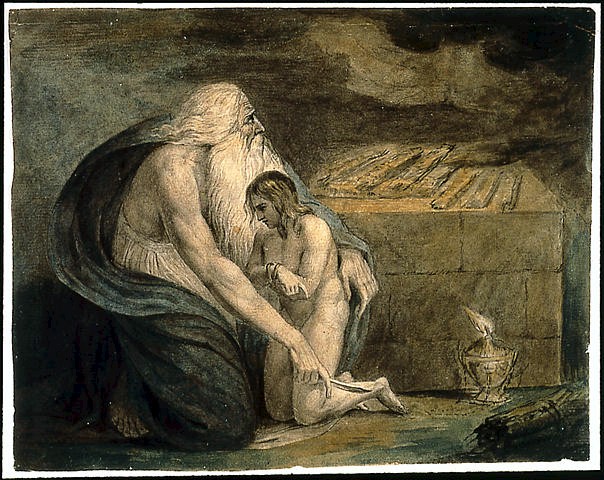
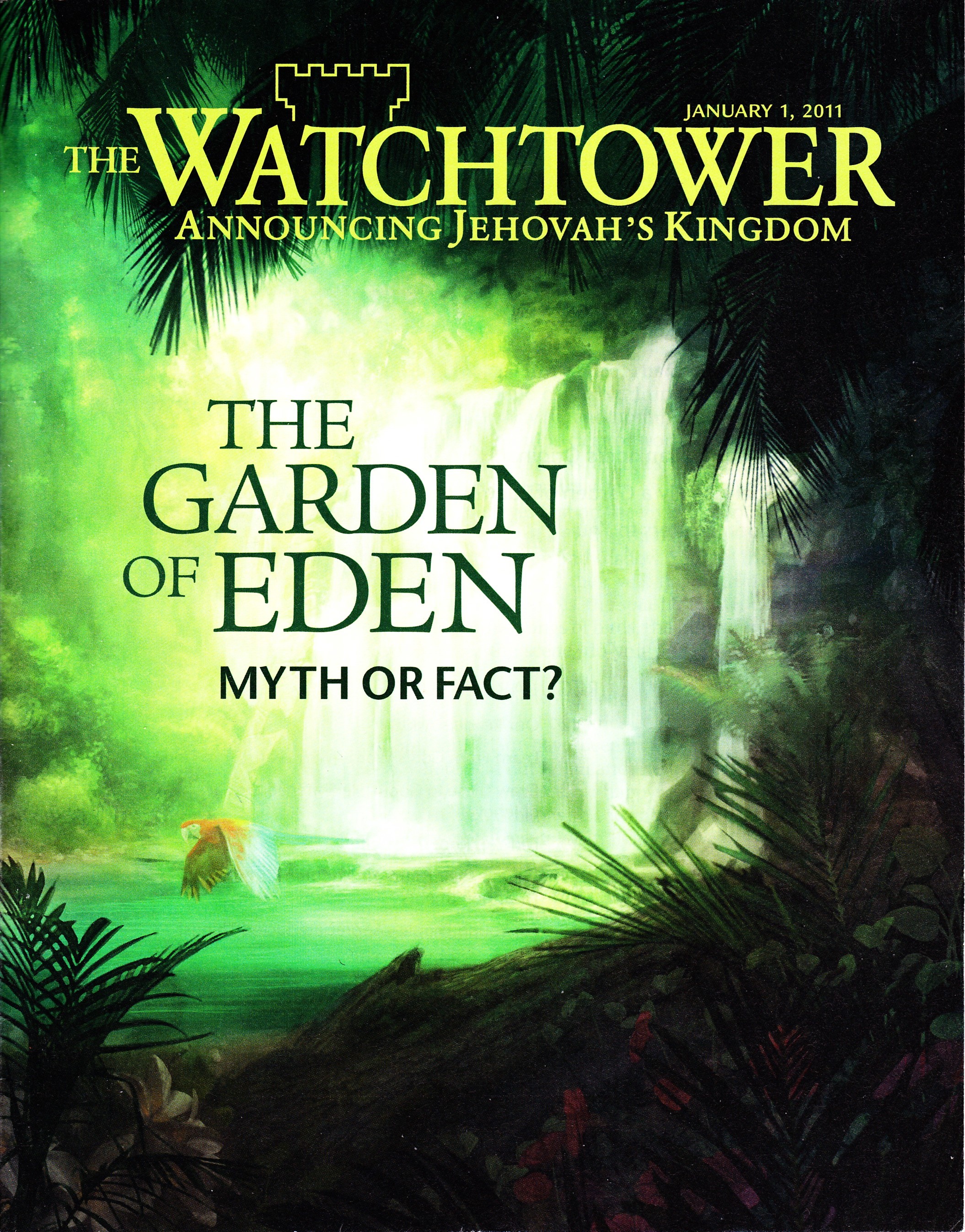
As a religious studies specialist, I inhabit a world where definitive answers are comparatively rare. It is clear that my assigned Jehovah’s Witnesses case-workers are not similarly constrained. While I was out earlier this week, they left a copy of the newest edition of the Watchtower for my edification. The cover shows an Edenic garden and bears the legend, “The Garden of Eden: Myth or Fact?” Now, I thought I knew the answer to that one. So I started to read. I learned that it was because of philosophers and their nonsense that people ceased to believe in Eden. Most people in world believe there was a paradisiacal garden, way back when, so it must be fact. I also learned that the reason we can’t find Eden today is that the Flood wiped it away. Seems a shame; with proper drainage it could be as dry as Aden and as rich as Dilmun.

The story in the magazine is set up as a series of objections raised as to why the Garden of Eden is rejected by skeptics. Literalist biblical answers to the objections are then offered. Ironically, one of the most obviously missing objections is that of geology. The article states that, prior to being destroyed by the flood, Eden would likely have suffered from the devastation of earthquakes. The area, it seems, is in the earthquake belt. Still, the garden was created “some 6,000 years ago,” despite what all those earthquake-toting geologists tell us. Somebody has forgotten to set their calendar back by a few billion years.

A more serious objection missing from the critique is that of mythology itself. Those who’ve studied the background to the story of Eden realize that most of the elements in the story are recycled myths known among the Mesopotamians. Special trees, crafty snakes, people being created from clay – all these are standard elements in Mesopotamian mythology that predates the Genesis creation accounts. If modern people understood that the point of mythology is to convey truths that are beyond the factual, perhaps we wouldn’t have such insistence that Eden is fact, despite the facts of science. The Garden of Eden: Myth or Fact? Clearly myth. And that rescues the story from the burden of bearing facts it was never intended to convey.


What Would Noah Do?

Unfortunately, religion and politics do mix. A story on POLITICO.com announced on Wednesday that the House Energy and Commerce Committee chair hopeful, Rep. John Shimkus has declared Genesis on the side of conservatives. Stating that the Noah myth (not his exact words) promises God won’t flood the earth again, Shimkus claims we have nothing to fear from global warming. In a twist that makes some of his fellow conservatives squirm, Shimkus admits global warming is a reality but suggests that we really don’t need to worry about it because “the Bible tells me so.” Time for Shimkus to go back to Sunday School.

Part of the problem lies in the concept of Bible itself. The Hebrew Bible isn’t too much of a self-referential work, claiming to be pure words of divine gold. Paul, on the other hand, found the Hebrew Bible useful to cite against enemies, and his admirer who wrote letters to Timothy in his name took the idea even further. For all that, the Bible wasn’t finally settled on for a couple more centuries. Once the concept took hold, however, the world could never be the same. A book written by humans had become direct revelation from the word of God himself. The Bible makes few such lofty boasts about itself, but its less conscientious followers are not nearly so shy. As I demonstrate repeatedly in my classes, the Bible has become a magic book.

Politicians now feel comfortable claiming God as their ally because “he said so.” Without having ever critically engaged Scripture, or even having read it in its original languages, those in positions of public trust know enough to flaunt it. And it always scores points with Americans. Liberals fear the ramifications of using the Bible while Neo-Cons charge bravely ahead to places Noah himself would fear to go. Maybe it’s time to put the Bible back in the schools. Only this time it should be taught by people who realize that the Enlightenment has taken place and that we can’t rely on magic to save us from dangerous situations we ourselves have created.

The lesson from the Cretaceous Period


Eve’s Orchard

One of the innocent pleasures of autumn is apple picking. Not living in the country, many of us rely on the local orchards that open their trees and furrows to the public during the fall so we can feel once again in touch with nature. It may be only temporary, but this farm life is authentic and revitalizing – especially under a cerulean blue October sky. So it was that we joined our anonymous friends to pluck fruit and feel a part of the organic world away from laptops, palms, and cells. Picking apples always brings Eden to mind. In fact, no matter how secular the class I teach, if I ask students what picking fruit from a tree – usually I have to throw in the snake as well – represents, invariably most guess Adam and Eve. Of course, in the patriarchal world of the Bible, Eve gets the rap for taking the first bite, but a more sensitive reading reveals maybe this was what God intended all along.

Tasty fruit of knowledge

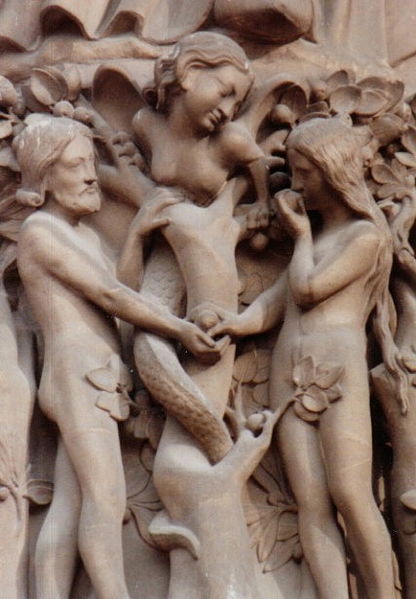
Within a generation of the origins of Christianity, a negative spin had been placed on that fateful fruit. This was the willful disobedience of sin rearing its ugly head in Eden. Of course, Genesis does not refer to the act as a “sin” – the word first occurs in the story of Cain and Abel. The human striving for knowledge, for the prerogative of the divine, the sadder but more informed life, was now a matter of blame. In the Greco-Roman cultural milieu where men set the standards, woman became the harbinger of sin and decay. Adam stood chastely by, happily clueless until Eve insisted he try this brand of iniquity. Pure fiction. And yet it is this version that has retained cultural currency in the western world. Blame it on Eve.

The patriarchal version


So much of our reading of the Bible is based on prior expectations. Even Bible translators know that they can’t go too far a field from the standard that the KJV set. When western Bible readers first cut their teeth on English prose, it was the dulcet tones of Elizabethan English that captured their attention. And the mores of Shakespearean England combined with the harsh repressions of a simmering Calvinism led to a Bible choked with sin to the point that a little fruit enraged the creator as much as fratricide just a chapter later. The fruit had rotted on the tree, and women were to blame. Perhaps it is time that we recognize the filters before our eyes when we approach the Bible. If we can understand that the patriarchalism is not the point, but merely the cultural shading of the time, we can release the message that the fruit is good. The temptation was not to become evil, but simply to become human.


Father Abraham

“Father Abraham had seven sons; seven sons had Father Abraham.” So began a camp song that I learned many years ago. The song always confused me because, no matter how I did the math, Abraham did not have seven sons. Abraham has a way of causing confusion. The story of Abraham contained in Genesis is complex and perplexing. He is presented as a man who experiences extraordinary occasions and then doubts what he learns from them. He is wealthy and timid, yet leads troops against an alliance of five armies. God speaks directly to him, and he remains in self-doubt. He always does what he is told, although he takes initiative once in a while as well. As Genesis tells it, he is the father of Ishmael and Isaac (and six others).

Historians have a somewhat different assessment. The only evidence we have for the historical existence of Abraham is Genesis. Although other ancient documents mention Abraham they clearly received their information from either Genesis itself or its oral sources. A prince powerful enough to route five kings might merit a reference in some clay annals somewhere, one might expect. Yet history is silent. Most historians require either multiple-source attestations or official, non-literary documents to support the historicity of ancient characters. Abraham simply doesn’t qualify. Those Genesis stories are foundation myths just like those common to all cultures. They represent self-understanding, not necessarily actual origins.

Nevertheless, religiously minded debates continue to flair around him. Abraham, through Isaac, is considered father of the Jews. Christians, courtesy of Paul, consider themselves adopted children who inherit over the natural born. Muslims sometimes trace their ancestry to Abraham’s first-born, according to Genesis, Ishmael. Abraham does not exit the stage as a single man, however. He bears in his person the promise of land, a very real commodity, granted by God himself. So the story goes. We have little trouble declaring other ancient (or not-so-ancient) characters legends or myths when they have no direct bearing on the historical origins of religion. Wars are not fought over Heracles or Theseus, after all. Because of Abraham’s inheritance, however, as the singly chosen ancestor receiving the divine favor, all major monotheistic religions wish to claim him. They are often willing to kill to make that claim real. Myths do have serious real-world applications. And I still haven’t figured out that bit about seven sons. Three seem to be far more than enough.

Abraham at sixes and sevens


Noah’s Newest Neighbor

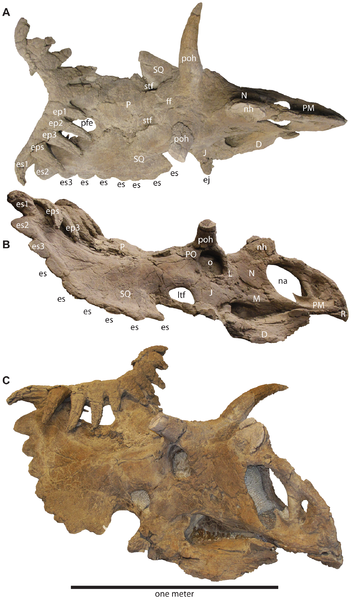
This week paleontologists announced the newest dinosaur discovery: Kosmoceratops, a plant-eating, three-ton beast with an improbable arrangement of fifteen horns on its head. Any beast arising from the sea would be jealous. As Kosmoceratops jostles its way onto the ark, scientists debate the utility of all those horns – placed incorrectly for defensive purposes, they seem to have functioned to attract mates. Isolated on a fairly compact land mass, these Cretaceous ceratopsids bloomed into a distinctive species as showy as any other so far discovered. As evolution continues to stir debate in this country, its evidence keeps marching along.

Every semester, four terms per year, I have students work on a project that includes (in part) evolution and the Hebrew Bible. Every semester as I overhear discussion, I realize just how deeply the anti-evolutionary front has its claws in the American psyche. Otherwise intelligent undergraduates studying a variety of subjects: science, business, engineering, psychology, express their doubts about evolution. The reason: the Bible doesn’t affirm it. Nor does the Bible affirm atomic theory, free market economics, or microchips. Evolution hits, perhaps, a little too close to home.

The dinosaurs stomp in the face of Creationism. As much as the fundies try to embrace them, dinosaurs are just too outlandish to fit in any world other than evolution. The God of the Bible doesn’t seem to have a surfeit of humor to have wasted so much creativity on dinosaurs that no human ever got to see. We reconstruct, with amazement, species after flamboyant species, and yet the foes of science keep a finger firmly tucked in Genesis. Serious Bible scholars seldom have difficulties with letting science do its job, including evolution. The agitation arises from another quarter. And with all those horns in front of us, that quarter might be the apocalyptic sea after all.


Star Trek Paradise

I am not now, nor have I ever been, a Trekkie. I did watch the reruns of the original series after school on our black-and-white television, but I have never owned “Spock ears” nor does my cell phone look like a communicator. To the best of my recollection, I haven’t even seen all the episodes. I’ve mentioned before that some generous in-laws purchased the first season of the series for a gift last year. Since then my wife (a convenient excuse) has been interested in watching the remaining two seasons. We found a reasonably priced second season set and have been working our way through over the weekends of the summer.

Paradise-busters?

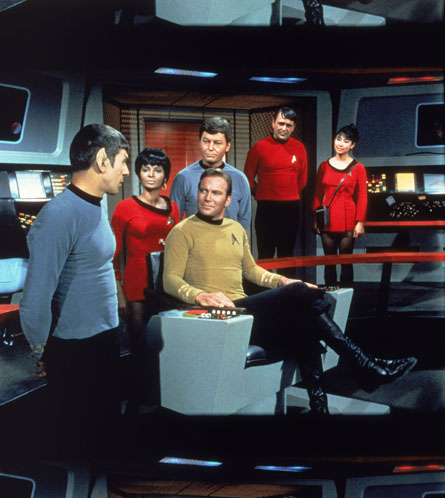
This weekend we watched the episode entitled “The Apple.” Even a fair-weather Star Trek watcher such as myself can’t help but notice that the series as a whole is biblically literate. Biblically literate, however, only in a popularist way. This became clear once again in “The Apple.” Stranded on a planet modeled after a troubled Garden of Eden, Captain Kirk and his landing party soon must destroy a serpentine “god” that keeps the luau-ready inhabitants in a state of perpetual ignorance. Diametrically opposed to Eden where it is the serpent who tempts with knowledge, this is a serpent that tempts with ignorance. Long, pleasant life without intellectual development and the “god” receives daily sacrifices. A world of status quo.

Back on the Enterprise, Kirk points out that the only one on the ship that bears resemblance to the Devil is, by implication, Spock. This is where the popularist interpretation grates most heavily. The Genesis version of Eden has no Devil, no Satan in it. Only a much later, revisionist re-reading, (certainly post-Zoroastrian) equates the snake with Satan. Genesis does not condemn the acquisition of knowledge. It comes with pain, true, but that is simply the way life is. Perhaps it would be easier for us all if some great Kirk might vanquish the inhibiting serpents of our apotheosis, but that’s simply not the way life works. In this instance, the Bible trumps Star Trek.


What’s Wrong with Eve?

Reading a newspaper film analysis by critic Stephen Witty on film noir, I was intrigued by how he represents the role of the femme fatale. Most produced and directed by men, the classic noir features a dangerous woman. Noting that there are “nice girls” in such movies, Witty states, “they’re not the ones who matter, the ones as essential to the plot as that serpent is to Genesis.” Naturally, this statement evokes the image of Eve, the seductress.

Eve has been much maligned by patriarchal religions. She is a convenient scapegoat for men’s uncontrollable urges, and by making her the gateway to sin itself the male spiritual psyche is unburdened; it is all her fault. It often comes as a surprise that Genesis does not use the word “sin” in the episode in Eden. Interpretations of the tree of knowledge are not universally negative, nor is Eve alone to blame. Scapegoats, however, are much more comfortable than admitting culpability. Religions have stropped this to a high art; the masculine religious establishment can repress the feminine threat with scriptural justification.

Eve is a misunderstood heroine. She is the mother of knowledge. Genesis does not forbid the tree of life; ignorant humanity was free to live forever. Without knowledge. Eve, while perhaps under the duress of temptation, nevertheless took the initiative to find wisdom. And she has been paying the price ever since. Film noir is a reflection of life, as is most art. In a world where men like to think they have the right to rule, the woman who sees a little farther is considered dangerous. All feeble theological attempts to forbid religious leadership to women have Eve to thank for their revisionist hermeneutics.


Robots and Divine Engineers

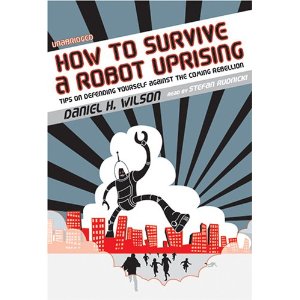
Pennsylvania seldom comes to mind when one thinks of a “big state” unless, that is, you have to drive across it. On the way to a family wedding in Ohio, I had to drive interstate 80 from the Delaware Water Gap to Sharon, Pennsylvania, and beyond. Having made this trip more times than I care to recount, I knew some diversion would be necessary. So it was that my family settled in to hear the audio version of Daniel H. Wilson’s How To Survive a Robot Uprising. Given my current status as a “Robot Dad” and my lifelong interest in both monsters and doomsday scenarios, this particular book was an apt choice.

Although the book is classified as humor, there was much that was thought-provoking in it (as there frequently is in quality humor). As Wilson systematically describes what makes robots tick, back five years ago, it became clear what it means to make a creature in one’s own image. Roboticists analyze how humans go about doing things and how we think in order to replicate these processes in mechanical formats. The results are machines that easily outperform humans, but which also have severe limitations – what Wilson frequently refers to as the benefits of evolution. Not only is the book funny, but it is also informative concerning what amazing robots are already in development. For those with the capital, there is little that robots can not be made to do.

All the while, I was also thinking of the human dilemma. Judeo-Christian tradition claims that we are made “in the image of God” without ever really explaining what that means. Perhaps it is the height of hubris to suggest that we are pale reflections of what we might have been, given a divine designer. When humans make robots, they are designed to surpass what we can do. Is there a reason people can’t see in the infrared or ultraviolet light ranges, like robots can? Why are we not able to hear all available sounds waves or smell all possible odors, such as our machines and dogs can? Could a team of human engineers have designed a better prototype than the God of Genesis?

While I do not really fear a robot uprising, I often ponder why things are the way they are and why human limitations often lead to such intense suffering. It is an idea that can be explored thoroughly when, after hours of driving, you realize that you still have 200 miles to go to the border.


The New Tetragrammaton

It all started with Genesis. I’ve been reading Genesis since before I was even a teenager. When I began teaching it in a seminary setting, the age-old question of how science and religion fit together had become an insistent preoccupation. I began reading books by scientists who hypothesized that belief itself has a biological basis. Of course, there will never be any convincing those who believe since it is a chicken-and-egg style argument whether the body has “faith structures” because God put them there, or if we believe in God because our bodies grew them. One thing seems fairly certain, humans are “programmed to receive” what has been labeled “divine input” through the very bodies we’ve evolved.


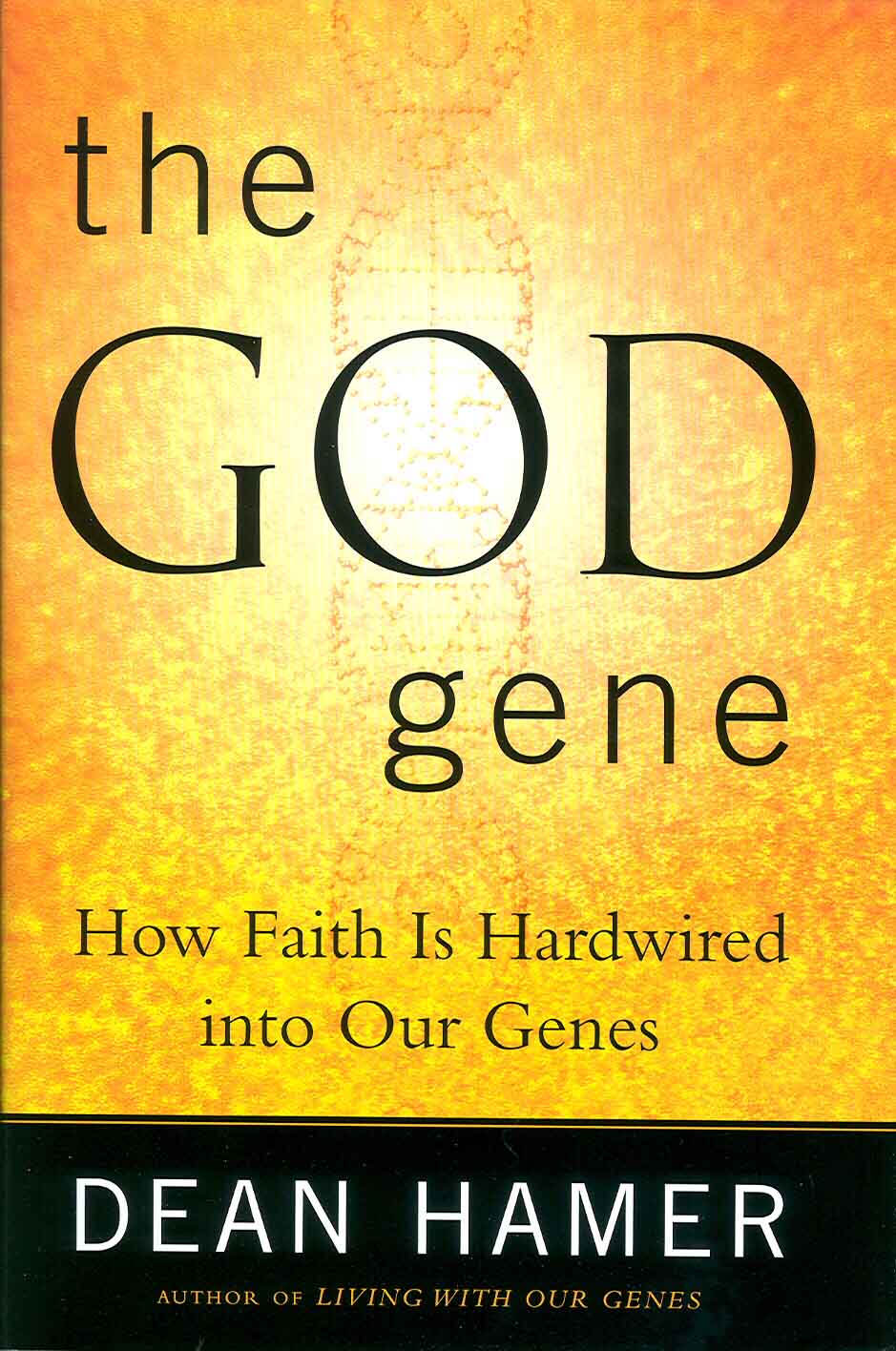
Last night I finished reading Dean Hamer’s The God Gene, the latest in a long series of such books I’ve picked up over the years. While much of the technical and statistical information was beyond the comprehension of a simple humanities scholar such as myself, it became clear that a genetic basis likely does exist for a sense of spirituality among people. Quantifying spirituality, obviously, is a task open to long and serious debate, but the general traits of spirituality are nevertheless instantly recognizable. If those recognized as spiritual share characteristics uncommon among the non-spiritual, that itch should be telling us something. Hamer tracks the culprit to the gene VMAT2, responsible in some way for the monoamines that trigger spiritual experiences. He displays the evidence for how he drew this conclusion in a scientific way, being careful to note that genetic predisposition to spirituality neither proves nor disproves God.

Since the traditional Judeo-Christian name for God consists of four letters known as the “tetragrammaton” and since the “God gene” also has four letters, VMAT, I wonder if we’re onto something here. God can’t be measured in the lab (yet), but the “receptors” for God can. Others scientists have analyzed “God nodules” in human brains that seem to react to spiritual influences. As long as religion does not object to the laboratory probing of its sacred cows, we may eventually find God in a test-tube or petri dish. Chances are he won’t be a bearded white man sitting on a golden throne, and the smart money says most people won’t worship him once he is found.


LOL Cat Bible Commentary, Part 1

It was bound to happen. Here is the first installment of the LOL Cat Bible Commentary.

Genesis 1.1 Oh hai! In teh beginning Ceiling Cat maded teh skys an teh Urfs, but he no eated them.

In teh beginnin
In teh beginnin ub teh dai — Ceiling Cat nawt wurk at nite, cuz datz wen
Basement Cat come owt to do ebil stuffz.
Ceiling Cat
Ceiling Cat writed da Bible. He’z the mos smartess an strongess kitteh ever. An him reely good — he no eat other kittehs fud, an he nebber jumpz on another kitteh in da middul ub teh nite (but for hoomuns dis ok).
maded teh skys
But first him taked a nap. Den Ceiling Cat maded teh skiez so him had place to liv. An den him putted a hole in da ceilin so him kood peep down on teh Urfs. Wait, him nawt maek teh Urfs yet! Ai sowwy, plz to furgive? Kthx.
an teh Urfs
K, nao Ceiling Cat maek teh Urfs. Urfs is where the hoomuns howse iz.
Ceiling Cat no maek teh udder Urfs, jus da wun wif da howse.
but he no eated them
Ceiling Cat can has a hunger after awl taht wurk, Aifinkso! But him no eated teh skiez, cuz den him fall owt, an den dere no moar kittehz to wurk on da Urfs. An him no eated teh Urfs howse, either. Him wanted to maek teh birdiez an teh moal an teh fishiez. An him also want to maek teh hoomuns for to maek his fud.

1.2 Teh Urfs has no shayps an has darwk fase, an Ceiling Cat roed invisible bike ovah teh wawters

Teh Urfs has no shayps
Cuz Ceiling Cat nawt evur maded a Urfs befoar. Him not no wut Urfs shayp iz!
an has darwk fase
Ceiling Cat can to seez in teh darwk, but dere nawt eny shayps to seez. The Urfs has dawrk fase liek teh howse wif no elec…elek…elekt…wif no lytes.
roed invisible bike
Liek him wuz dreemin. Invisible bike is hawrd to be finded in teh dawrk, but Ceiling Cat maded it an him finded it.
ovah teh wawters
Ceiling Cat nawt liek to get him feetz wet, so him no rided teh bike thru taht wawter. Wawters has see monsturs an stuffs.

1.3 At furst, has no lyte. An Ceiling Cat sez, “I can has lite?” An lite was.

At furst, has no lyte
Ceiling Cat nawt need lyte, but him noes taht hoomuns will to need lyte for to maek noms.
An Ceiling Cat sez
Ceiling Cat has to tawk to himself cuz of monokittehism. No udder kittehs arownd yet, not ebben Basement Cat.
I can has lite?
Ceiling Cat reely wanted a cheezburger. But him needed a hoomun for to maek cheezburger. So him has to maek teh lyte for to get noms.
An lite was.
Nao him can to see howse an da Urfs he maded. Den him maded lolz an udder stuffz, but first him taek moar napz.

(Translated into LOL Speek by the world’s greatest CATS! Fan Kthx)


I See You, This Time

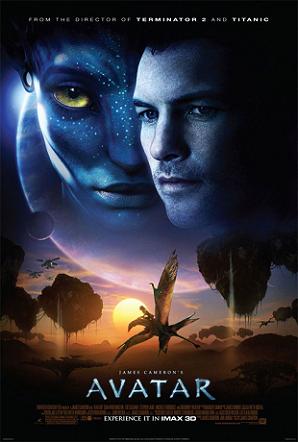
With the advent of Avatar on DVD, I finally had the opportunity to see the movie. This time there was no booming bass and overly active 3-D, and I didn’t end up feeling nauseous for days after. On a small screen it lacked the compelling sense of being in each scene that the first ten minutes of my theatrical experience of the movie had, before I had to seal my eyes tight for the rest of the film or be carried out on a stretcher. Nevertheless, I was able to follow the story this time.

I have posted several times on my affinity for old science fiction films; a large part of my boyhood was spent watching hours of improbable adventure on the black-and-white. Perhaps counter-intuitively, I ended up studying religion instead of science, or even literature. Religion, however, is deeply embedded in science fiction, probably because it is deeply embedded in people. And Avatar was no different. Early commentators noted the similarities of Pandora to Eden. Two trees in the garden (Hometree and the Tree of Souls) were easily borrowed from Genesis. The idea of nearly naked natives living in harmony with the world around them, the soft, graceful curves of the forest contrasted sharply with the angular, obtrusive construction vehicles intent on raping paradise. I’m a sucker for archetypes, I guess. The concept of Eywa as “All Mother,” a nurturing goddess rather than a frowning father deity, only enhanced the sense that Pardora’s box should not be violently wrenched open. Even the hideout of the protagonists was nestled among floating rocks called the Hallelujah Mountains – presumably the name given by earthlings.

Yes, the writing was at times trite, and the characters were caricatures of themselves, but in the tragic light of the Gulf of Mexico Oil Spill, Avatar’s world was pristine, uncomplicated by greed and corruption. The Na‘vi, like zealous Christians, are born twice; the metaphor of foolishly maintaining hope in the harsh light of uncaring entrepreneurs might lead to a limited salvation even for this tired old planet. I am an unrepentant tree-hugger. And if there is a film that, despite its limitations, says it is alright, even noble, to hug trees, then I say it is religious in the deepest possible sense.

All Mother is watching


Dinosaur Ark

Over the weekend I had a detailed comment left on my post about the discovery of Aardonyx celestae, found here. Since the comment is a lengthy rebuttal, my answer begged to become a post of its own, so I present it here. The first remark I have to make is that my commenter wrongly suggested two problematic assumptions: I “don’t care” about correctly representing Creationist viewpoints and that I “ridicule Christians.” For those many students who have taken my classes over the past 17 years, it is always clear that I respect all religious viewpoints; in fact, empathy is generally cited as one of my main characteristics. I vehemently defend the rights of individuals to believe the religion they believe to be right – e.g., I do care. As for the ridiculing Christians concern, I ridicule no person. I will, however, point out viewpoints that are ridiculous, “Creation Science” being one of the most obvious. As is clear to anyone who takes the time to survey Christianity, the large majority of Christians in the world have no problems with evolution. A small but vocal sub-sect of the religion, mainly based in America, is the main Christian group that supports Creationism.

My theological assailant tells me that the Hebrew word for “kind” in the Noachian account is “min” (the root, marked as “dubious” in the standard lexicon, is myn) and that it is “much broader” than the word translated “species.” The problem here is that the ancient Semitic viewpoint has been left unaddressed. For the ancient Israelite dog was dog and wolf was wolf, and ne’er would the twain meet. Arguing that a limited evolution has taken place in order to make room on the ark is a fatal flaw to the position. Once it has been admitted that the Noah story is not literally each and every species known, it is the equivalent to the ark springing a leak mid-deluge. The commenter’s examples of animals breeding only “within their kinds” is also problematic. Such “kinds” are not recognized by “nature” and numerous examples of viable offspring crossing species have been recorded. Nature simply doesn’t abide by the neat and tidy categories that the ancient Israelites recognized. Suggesting that two sauropods were all that was needed on the ark to produce everything from Titanosaurus to Anchisaurus is a stretch for even “day-age” theorists since the genetic differences between them are as immense as their body size differentials. This slippery use of the word “kind” has all the imprecision of a god-of-the-gaps.

Did God say to take seven pair of each clean animal? My Bible reads “two of each kind” in Genesis 6.19. But wait, the story changes in Genesis 7.3. Could it be that we have two separate sources (or “kinds”) here? My commenter does not inform me where the fresh-water fish came from; after God blew the water out of the cosmic dome (Genesis 8.1) they must have had time to evolve while the salt leeched out of the low-lying basins left behind by the flood and its marvelous geography-forming power. Good thing Noah had plenty of fresh water on the ark!

“Take time to consider what scientists have already said on the issue,” my debate partner adjures me. That’s just the problem, however. I do read what the scientists say. And all of them who write without a Genesis bias tell me that the ark story is not scientifically feasible. More than that, being a life-long Bible reader, I came to that conclusion as well, based on the genre of the story (myth). I never claim to be the first to find contradictions that prove problematic for the Bible – I simply try to make my readers consider the implications of the fact that such contradictions indeed exist.

What I find so interesting about such criticism is that the author of the comment has not tested his/her hypothesis about what I actually believe. On principle I do not share my personal religious beliefs on my blog, just as I do not share them in the classroom. What I believe is immaterial to the issue of Creationism; in this issue the facts speak for themselves. The fact is “Creation Science” is science fiction.


Heavenly Visitors

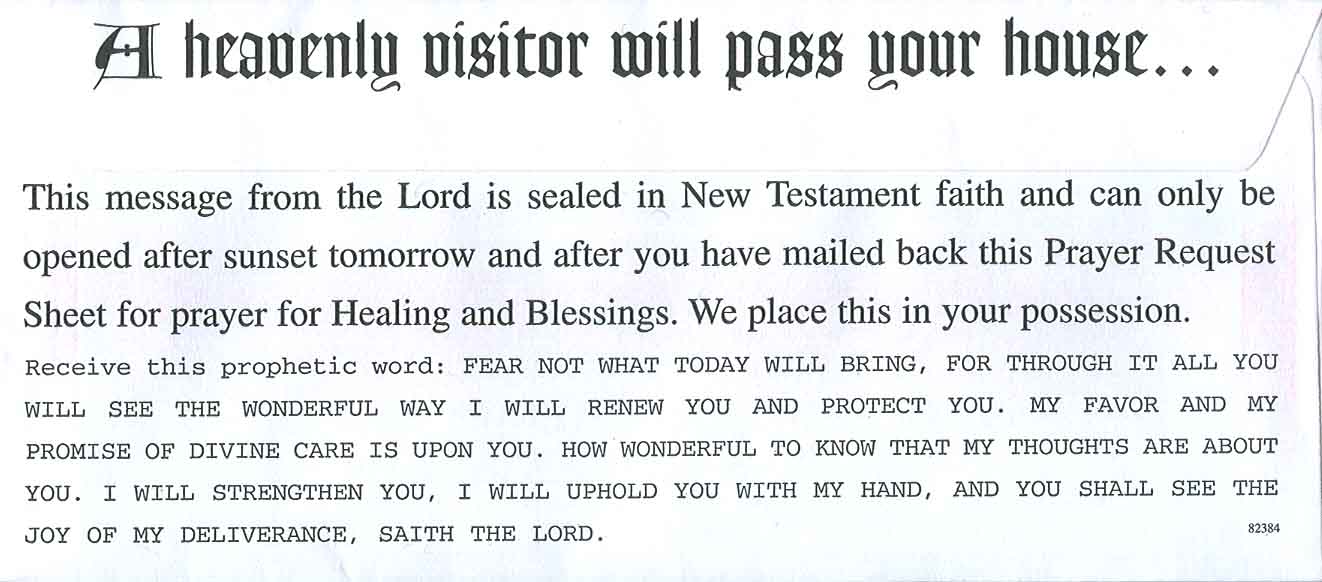
With Passover hard upon us, I was a little disturbed to receive a letter on Friday that read, “A heavenly visitor will pass your house…” Having been raised on the sturdy fare of Exodus, I knew that heavenly visitors more often take the form of marauding angels than of jocular Santa Clauses. It seemed an ominous warning. Of course, it came from the Saint Matthew’s Churches that sent me such good wishes of divine promises of prosperity some months back, so I had to assume it was a purely coincidental biblical reference. The folks at Saint Matthew’s Churches are, after all, Bible believers.

Perhaps because of that fateful letter, I dreamed, in good Genesis style, a dream two nights ago. I dreamed that I found a dollar coin on the ground at a family outing. A few feet away lay another. And another. Wherever we went in that Morpheus-bewitched town there were silver dollars unclaimed on the ground. My trousers were being dragged down with the weight of the lucre in my pockets. I couldn’t believe my good fortune! Then I awoke, still employed only part-time, still worrying every minute about whether we can meet all the bills. Perhaps the dream was a message? Should the Saint Matthew’s’ folks be right, prosperity was headed my way. Saturday’s powerball jackpot was in the double-digit millions. I very rarely play the lottery, but since state education in New Jersey needs all the help it can get, I offered up a dollar to see if Saint Matthew’s’ prosperity was at hand.

No. Not even one number came close. Perhaps there is a secret clause in the prosperity gospel contract. Perhaps those who prosper must hold certain conservative views on social issues. The views, say, my mother holds. Yet she lives in a trailer on a severely circumscribed income. That doesn’t seem to be it either. Last night I awaited another dream. Instead, the next-door neighbors were holding a loud party until 3 a.m. Perhaps celebrating Palm Sunday? Or perhaps that was the heavenly visitor passing over for Passover a couple of days early? Either way, I didn’t sleep well last night knowing that something was just outside my window.


The End of the World as We Know It

Well, that may be a bit dramatic, but my whole family is scratching its collective head over the news that our time on this planet has been foreshortened by the Chilean earthquake. Yes, scientists from NASA announced yesterday that Saturday’s 8.8 magnitude earthquake actually shook the earth three inches off its axis and has led to a loss of 1.26 milliseconds of time. Even for the gods this seems to be playing against the rules!

I wonder what the Fundamentalists are thinking about it? I do know that some extremely conservative types mess with time when trying to explain how the 4.5 billion-year-old world could have been manufactured in just 6 days — they call it the “day-age theory.” Or that the globe stopped spinning for 24 hours to give Joshua and his invaders more time to kill the Canaanites. I’ve even had students tell me that this latter case was scientifically proven. Time, however, ticks on despite our concerns with it.

It was my daughter who suggested the title for this post. After she said it, however, she noted, “Well, actually the world as we know it ended with the earthquake.” The world as we knew it. Radical changes have taken place with stunning rapidity on this old globe we call home, and some days the whole world changes. In 1815 the eruption of Mount Tambora led to the “year without a summer.” Wayward space rocks sometimes wipe out over 90 percent of all species on the planet. We live in a constantly changing environment. And it is my hunch that when that final disaster comes, those who’ve spent all their energy climbing the money mountain in the company of financial wizards, bank presidents, insurance profiteers, and oil company gods will come running to those who’ve spent their lives learning about religion seeking comfort in the face of the inevitable. We know we live in a temporary world; the wise spend their time contemplating the implications of that fact.

A little more to the left...


Bible Lite

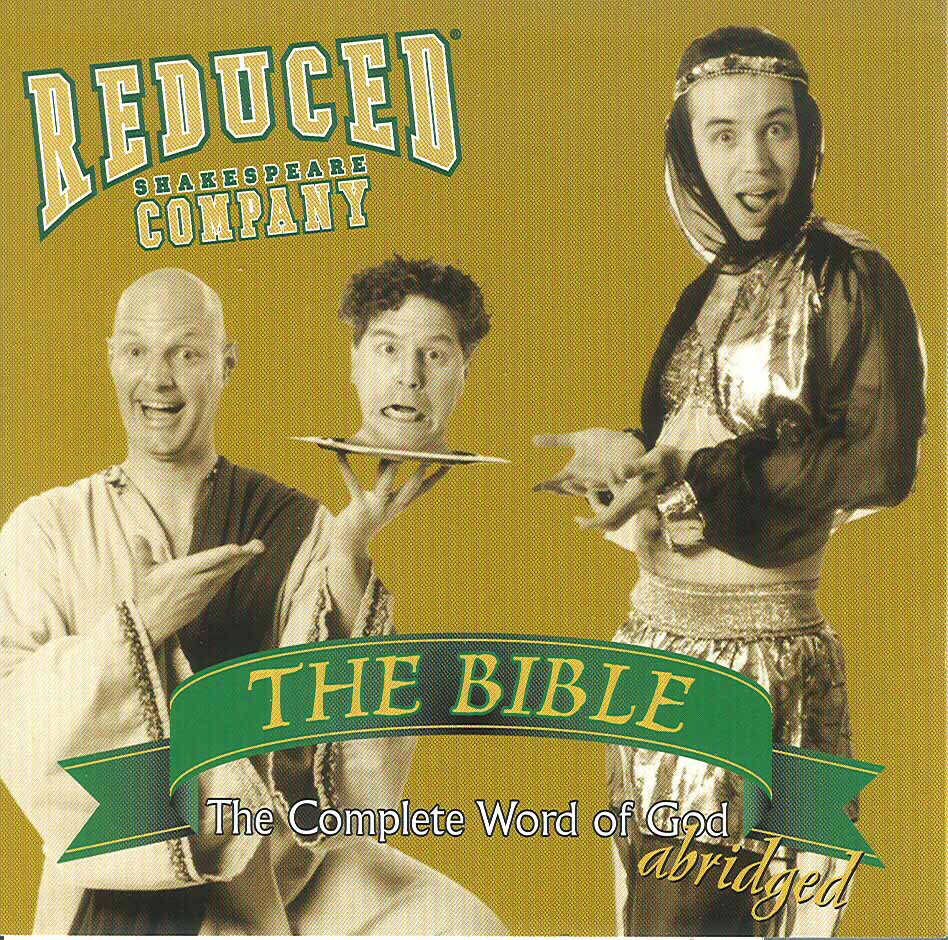
Over the holiday weekend I listened to an amusing recording my wife gave me as a holiday gift. A comedy troupe known as the Reduced Shakespeare Company produced a recording of their sketches entitled The Bible: The Complete Word of God, abridged. As might be expected from a comedic treatment of sacred writ, there were a few moments that were calculated to make those who take their religion very seriously tremble a bit, but overall the recording was quite funny. While listening to it, however, I became aware of just how much time the Company was spending on Genesis.

Not a sophisticated, exegetical approach to the Bible, a comedy album is not the place to assess the status of serious biblical study. Nevertheless, a deep truth emerges from this lighthearted treatment of the Bible — people today tend to focus too much on the beginning. Every semester I ask my students, “What is Genesis about?” and inevitably the answers begin with, “the creation of the world.” Genesis is not about the creation of the world, despite its unfortunate title. Genesis provides two of the many biblical creation accounts, but its primary purpose is to introduce the Israelites and the special relationship Yahweh has with them. Nearly four-fifths of Genesis deals with Abraham and the next two generations of proto-Israelites. Once Exodus is reached, we are fully within the realm of Israel’s story.

This misunderstanding of how to read the Bible has led to countless uninformed attempts to make the Bible into a narrative of the science of cosmology. Nobody was present for the creation of the cosmos, and the point of Genesis is not to state what actually happened. In borrowing mythic themes from Mesopotamia and Egypt, at the very least, the biblical writers start their account of Israel’s origins with a “a long ago in a land far away”-style introduction. Modern-day readers are trained to latch onto first sentences for vital clues as to what happens further along in the story. The Bible was never intended to be read this way. When we mix ancient ideas of setting the scene with modern attempts to understand our world, it might be better to listen to the Reduced Shakespeare Company than to pundits who claim that earth’s light was created before the sun.

In the beginning was a laugh