Noah Trumps Geology

Back in the days when I was still young enough to dream, but old enough not to change anything, I wanted to become a geologist. I was near the end of my teaching stint at Nashotah House at the time, and my life-long interest in fossils fired up like a liquid oxygen barbeque. My interest began in paleontology, since I’ve always loved dinosaurs, and grew to encompass all kinds of rocks and minerals. Geology promotes a literal groundedness that few other areas of study can rival – it embraces the stuff of the earth itself. Moving halfway across the continent with boxes full of rocks, however, dampens the rock-hounding ardor a bit. I still read about geology: it is the discipline that pounded the final, resounding nail into the coffin of the six-day creation myth. While still living in Wisconsin my family used to drive out to the mountainous north of Idaho across, among others, the vast state of Montana. It was geology in motion.

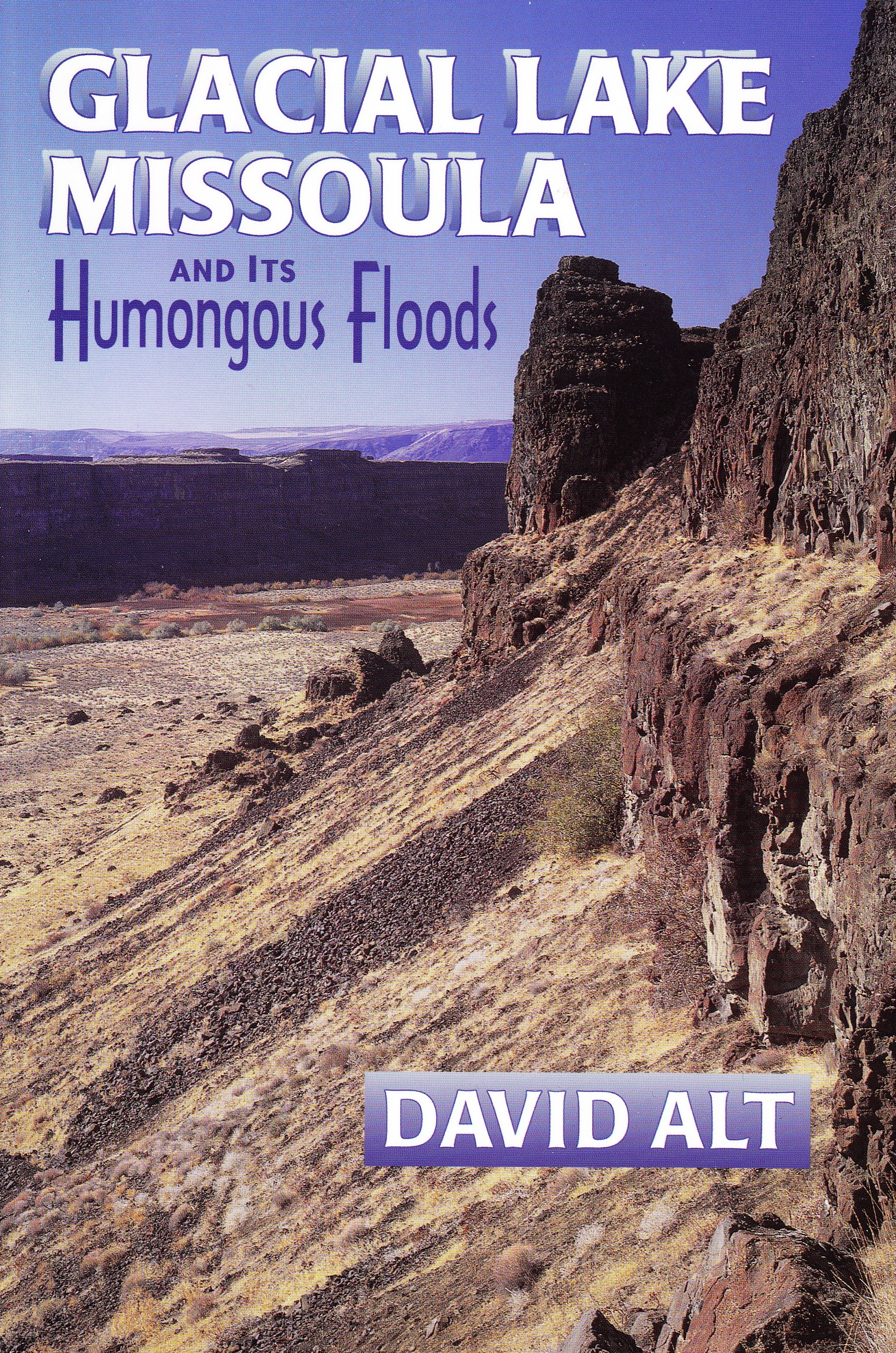
My in-laws soon learned of my geology bug, and I was pleasantly surprised with a book on the great flood two Christmases ago. Not the great flood of Noah, but that of J Harden Bretz. David Alt’s Glacial Lake Missoula and Its Humongous Floods provides an introduction to a series of great catastrophic floods in the western United States. Not that anyone remembers them; the last of the deluges drained into the Pacific about 13,000 years ago. What connects these floods to this blog is the reception history of this idea. When geologist J Harden Bretz discovered the unmistakable evidence for the floods in the landscape of Montana, Idaho, and Washington, geologists refused to accept it. The reason? Catastrophism was unacceptable to geologists of the turn of the twentieth century. Although Alt does not come right out and say it, clearly one reason that uniformitarianism prevailed was because of Noah’s flood.

Ironically, geologists had been forced into a conceptual stalemate because of a biblical myth. The story of Noah’s flood had been (still is, by some) used to explain everything from the Grand Canyon to the extinction of our beloved dinosaurs. In response, geologists posited a long, slow, gradual process behind the sculpting of the earth’s surface. By the day of Bretz, nothing moved fast in geology, not even floods. It required many decades for the science to recover from the stigma of biblical catastrophism. Today geologists largely acknowledge that at several points during the Ice Ages (yes, they did happen!), an ice dam flooded what would now be recognized as Missoula, Montana, under a gigantic lake. That lake burst its ice dam repeatedly and gushed down toward the Columbia River and out into the ocean long, long ago. Long before the putative Noahic flood of some 4000 years ago. The landscape it left behind is impressive to both geologists and biblical scholars. And the story of this flood’s rediscovery demonstrates once again the continuing influence of Noah on otherwise rational minds.


Jehovah’s Eden

As a religious studies specialist, I inhabit a world where definitive answers are comparatively rare. It is clear that my assigned Jehovah’s Witnesses case-workers are not similarly constrained. While I was out earlier this week, they left a copy of the newest edition of the Watchtower for my edification. The cover shows an Edenic garden and bears the legend, “The Garden of Eden: Myth or Fact?” Now, I thought I knew the answer to that one. So I started to read. I learned that it was because of philosophers and their nonsense that people ceased to believe in Eden. Most people in world believe there was a paradisiacal garden, way back when, so it must be fact. I also learned that the reason we can’t find Eden today is that the Flood wiped it away. Seems a shame; with proper drainage it could be as dry as Aden and as rich as Dilmun.

The story in the magazine is set up as a series of objections raised as to why the Garden of Eden is rejected by skeptics. Literalist biblical answers to the objections are then offered. Ironically, one of the most obviously missing objections is that of geology. The article states that, prior to being destroyed by the flood, Eden would likely have suffered from the devastation of earthquakes. The area, it seems, is in the earthquake belt. Still, the garden was created “some 6,000 years ago,” despite what all those earthquake-toting geologists tell us. Somebody has forgotten to set their calendar back by a few billion years.

A more serious objection missing from the critique is that of mythology itself. Those who’ve studied the background to the story of Eden realize that most of the elements in the story are recycled myths known among the Mesopotamians. Special trees, crafty snakes, people being created from clay – all these are standard elements in Mesopotamian mythology that predates the Genesis creation accounts. If modern people understood that the point of mythology is to convey truths that are beyond the factual, perhaps we wouldn’t have such insistence that Eden is fact, despite the facts of science. The Garden of Eden: Myth or Fact? Clearly myth. And that rescues the story from the burden of bearing facts it was never intended to convey.


The Power of Pyramids

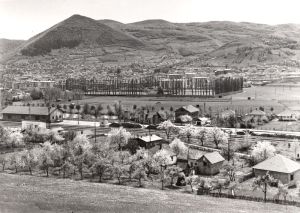
One of the benefits of teaching is the constant refreshment of ideas presented by students to air out the stuffy closets in minds that tend to close around academic orthodoxies. Each field of studies has its sacred shrines not to be disturbed, and none more so than the field of religious studies. That’s why I appreciate the openness of student minds. This summer I was introduced to the alleged Bosnian pyramid that I posted about some months back. Having reviewed the statements of both archaeologists and geologists it is easy to see how what looks like a pyramid might not be a pyramid at all. Some experts even theorize that the pyramids of Egypt took their inspiration from the shape of a natural desert mountain.

Wikipedia's photo of the "Bosnian Pyramid"

As we were winding up our classroom discussion of Egyptian mortuary cult and its awe-inspiring pyramids, another student asked me if I had heard of the Okinawa pyramids. I hadn’t. Back in my student days I recall a professor entering my Egyptian Religion course after having just read a book on the mystical power of pyramids wherein the author claimed that dull razors placed under a small-scale pyramid would come out sharpened the next morning and other such nonsense. We all had a good laugh and got onto the serious business of comprehending the fascinating world of Ptah and Atum. When I first heard the phrase “Okinawa Pyramids” I had to fight down the immediate flash of embarrassment of unrestrained academic laughter should I be found even considering such a proposal.

I have always, however, listened to those willing to ask about even the most anomalous incidents of history. Two years back I had a student share the “helicopter hieroglyphs” of ancient Egypt with me, despite a fully understandable reading of signs that can look like a helicopter to the uninitiated. The Okinawa Pyramids, however, were different. As the student whipped out his laptop and pulled the images up from the internet, I was intrigued. These were not pyramids, but rather monolithic blocks 60–100 feet below the surface of the ocean near Japan. My amateur study of geology has taught me that many species of rock naturally have squared fractures along various planes and facets, but the number of offset angles and the profusion of the squared edges forced my mind open just a bit. What is more striking yet is that there is no Wikipedia article on this formation at all, despite its discovery in the 1980s. Most intriguing of all is that the complex seems to have sunk at the end of the last ice age, thus predating even the pyramids of Egypt. Even the stepped pyramid of Djoser.

Is there evidence of a pre-civilization civilization under the coastal waters of Japan? I am not qualified to decide. I feel safe in saying that whatever is there is not a pyramid, but I am impressed by the photos and the relative silence about them even on the web. Since the best photos are copyright protected, I’ll provide a link for anyone wishing to creak open a dusty mind-closet and wonder about the implications.