Heaven Unawares

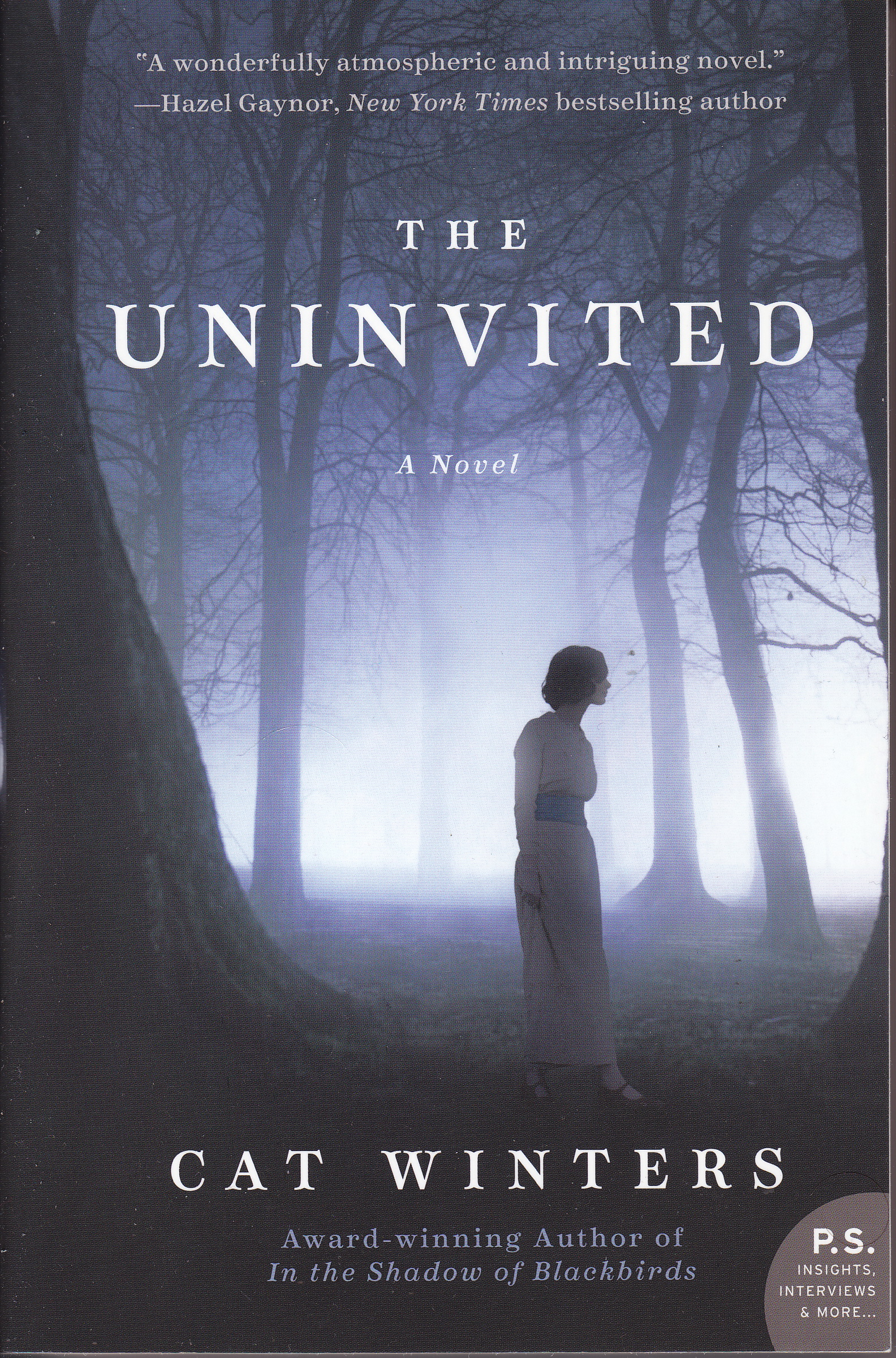
UninvitedIn order to have this book fit my blog, I’ll begin with a spoiler alert. If you plan to read Cat Winters’ The Uninvited, I will be giving away information below. Please believe me when I say it’s not intended to be persnickety by this preface, but I know what it’s like to enter a book knowing too much.

When autumn comes around I like to find a ghost story or two to read, to settle into what seems to be a primal urge connecting harvest with death. Sometimes the books I find are advertised in places like the Library Journal, or Publishers Weekly (which I see more like biannually). More often than not, however, they are books that I spy at a store. The Uninvited stared at me from a table. I picked it up, read the blurbs, and put it back. A week later I stopped in again and picked it up. It is a moody tale set during the First World War and the influenza epidemic. That was a time, I suspect, of great fear. And many ghosts. It’s easy to see why Winters chose such a time to set a tale. Still, the narrative is gentle and despite the places where the language sounds too modern, it is artfully told. Like most ghost stories it is a love story. Seriously folks, here come some spoilers!

The protagonist, Ivy, falls in love with Daniel, a German immigrant living in Buchanan, Illinois during the war. Germans have been under suspicion and lynchings have occurred. We come to learn, as in many ghost stories, that the protagonist and her lover were both victims—he of a lynching, she of the flu. He’s aware they’re dead, she’s not. The novel is one of Ivy’s growing self-realization that she’s deceased. While avoiding those who spy on Germans, she discovers the joys of an interracial, prohibition-free (being prior to prohibition, of course, but the idea was in the air) club where jazz is played all night long. She wants to bring her lover to the club, which is just across the street from his apartment, but he is German and feels he would not be welcome. The reader at this point doesn’t realize the two are dead. Once Ivy discovers the truth, she realizes that the club is actually Heaven. The reluctant ghosts, lost, stay away. She tries to convince them to come.

Heaven has been portrayed in many ways in literature. Although I find jazz very difficult to bear (it is like being inside a beehive without a bee suit, to me) the idea that Heaven is complete and utter acceptance of who we are is a compelling one. Religions are often all about change—how we must alter who we are to merit Heaven or Nirvana or whatever might await us at the end. Winters suggests that it is a place where people can be who they are and nobody will try to make you be any different than you were created. It is a comforting idea. It is my personal hope, however, that there might be a few different clubs in town and that some of them might be playing music other than jazz.


Ghost Rider

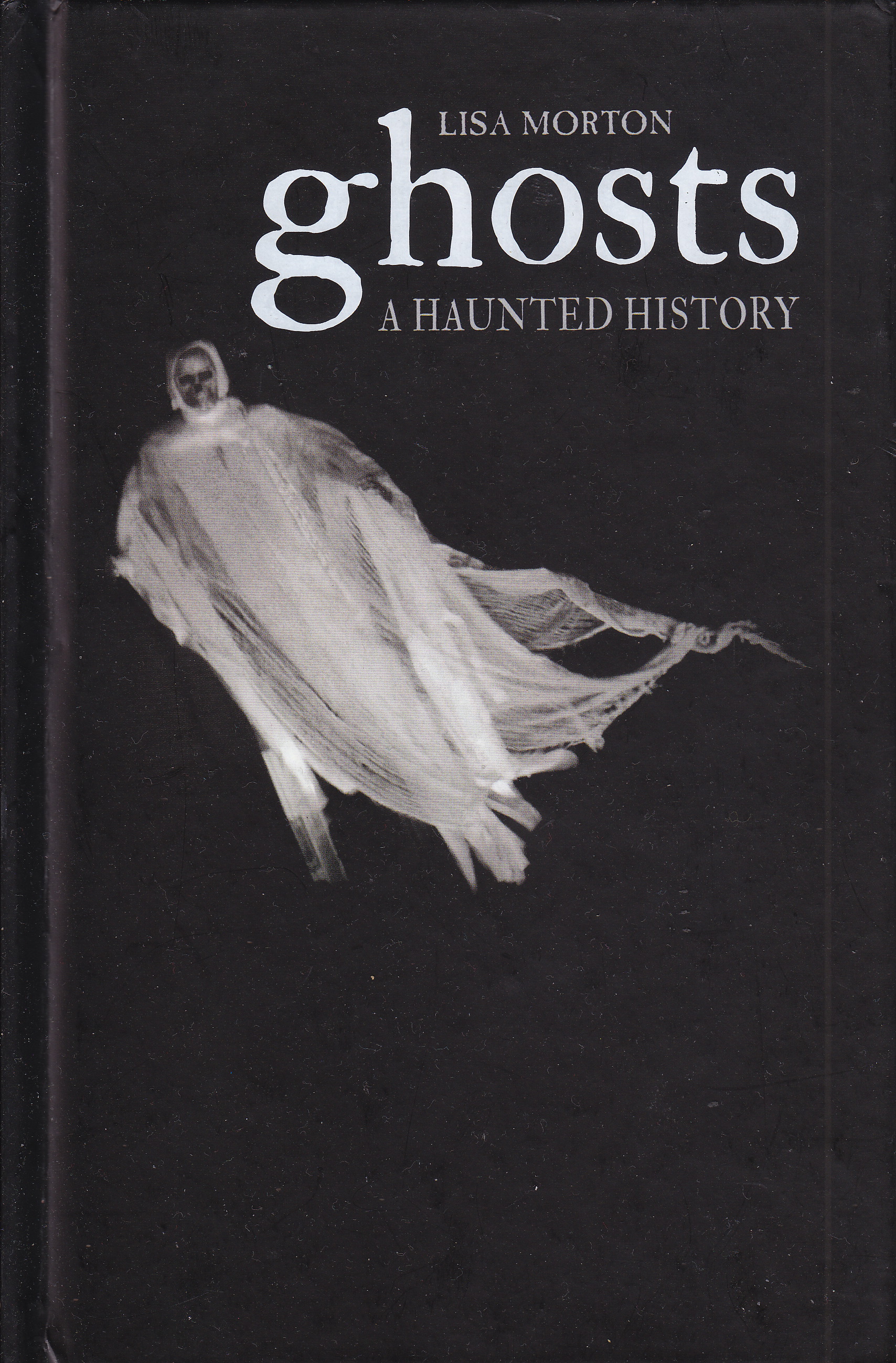
GhostsOf all frightening creatures, ghosts are by far the most ubiquitous. Believed in by every civilization ever recorded and throughout the world, not even science has been able to displace them. Lisa Morton’s Ghosts: A Haunted History offers a brief tour through the realm of the dead. With a sense of how ancient the phenomenon is, she also notes time and again how religions have an uneasy but steady relationship with disembodied spirits. After all, religions give us souls that science strives to take away. What makes Morton’s study so interesting is its restlessness. Not focusing on one culture or time period, the reader learns about Asian ghosts as well as the familiar translucent variety favored in the western world. Ghosts are everywhere.

Now that October has invited thoughts of long nights and falling leaves, I often ponder a world without ghosts. If rationalism of the materialistic variety had its way, this would be simply a natural season like any other. No need to be frightened as the sun takes on that quality that suggests some things should not be seen, and the air feels as if anything might happen. Spooky houses are merely wanting maintenance and every creak and rustle can be explained. There are no ghosts in the night and Halloween is only for children. It seems to me, rather, to be the season of belief. It’s more tangible now, the world where unanswered questions dwell. Ghosts, whether in our mind or in this physical world, are part of the ambiance without which autumn isn’t worth having.

Are ghosts real? I can’t say that I have any evidence one way or the other. We all die, and we all wish we didn’t have to. In this world some are lucky enough to make their wishes come true. Might it be that some have found a way to stay when the physical party is over? Religions are uncomfortable with ghosts since they refuse to be contained in any Heaven, Hell, or Purgatory. They simply are. People of every education level and social standing see them and some believe while others explain them away. Without going over to the other side we likely will never be able to prove whether they are really real or not. As Morton amply demonstrates in her thoughtful little book, they will never go away as long as consciousness and death coexist.


Plainly Ghosts

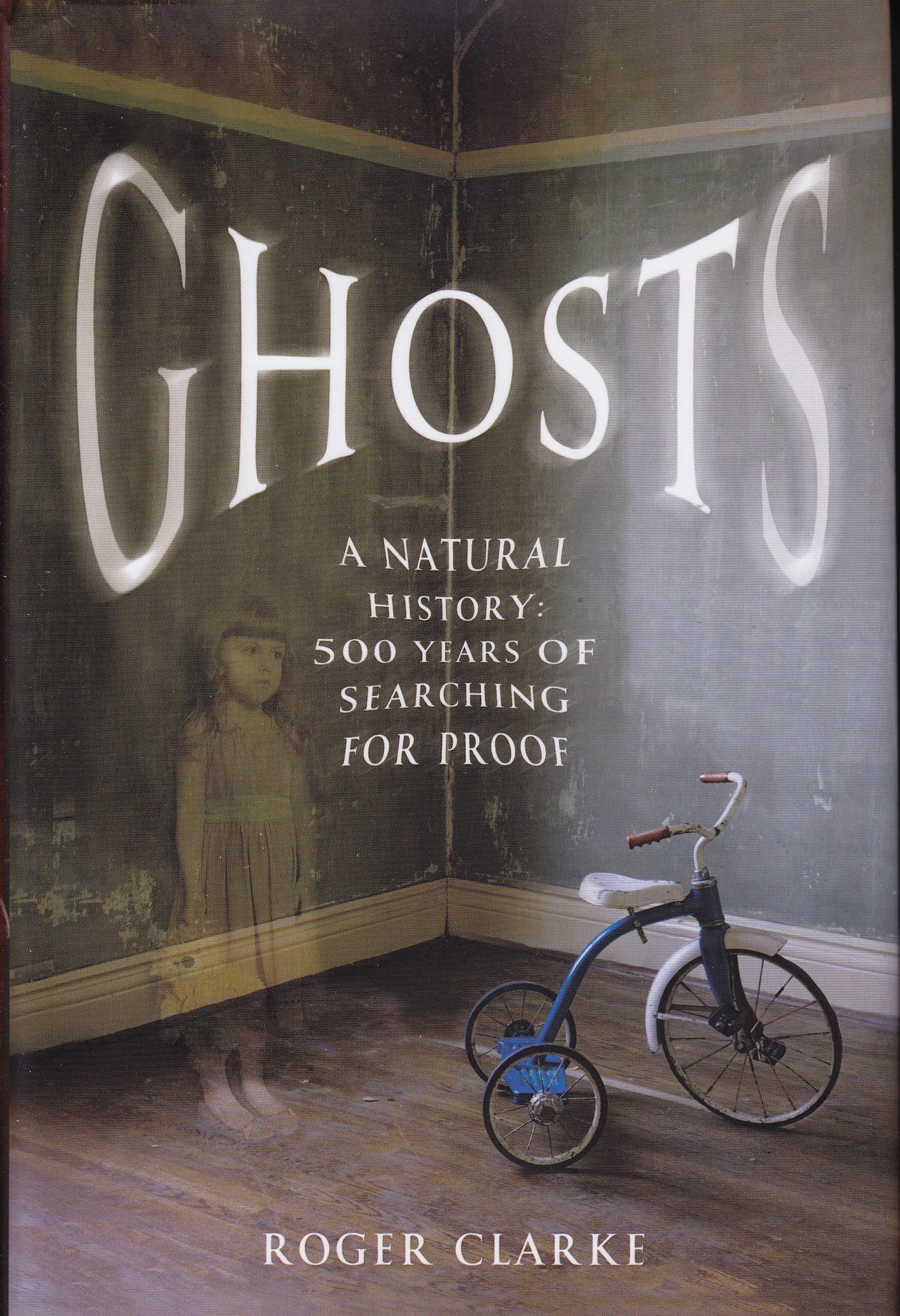
GhostsSometimes I’ll buy a book and secret it aside to read later as a kind of reward for making it through some heavier material. Research monographs don’t always do the job for which they are required in the commuter’s life—keeping me awake on a long and tiresome bus ride. I look forward to the book that has more appeal, and I don’t want to rush through it right away. I picked up Roger Clarke’s Ghosts, A Natural History: 500 Years of Searching for the Truth in Princeton’s wonderful Labyrinth just after Christmas (the traditional time, I learned, for telling ghost stories). Now that spring is more or less firmly in place, and I’ve gotten through some erudite studies that I might use for an academic paper or two, I picked it up to pass the time on my weary ride. As regular readers will know, ghosts have long been a preoccupation of mine, but one on which I’ve always been ambivalent. Clarke doesn’t set out to prove anything here. His book is more experiential than agenda-driven. He begins with the simple observation that people do see ghosts.

Lamenting that he himself has never seen one, Clarke sets out upon a partially autobiographical explanation of where this fascination began. Being from the United Kingdom—often cited as the most haunted country in the world—he goes through some of the more famous accounts with a sharp eye. Crying shenanigans when they’re obviously there, he questions how one can claim that any one country is more haunted than another. More importantly, he notes how seeing ghosts is a marker of class. Historically, the rise of the middle class led to the death of the ghosts. The rich and the poor see ghosts more often. Those in the middle associate such sightings with poor education, while those who are most educated and refined take ghosts for granted. It is only with the rise of reality television, the true opiate of the middle class, that ghost belief has become acceptable in the broad center.

Clarke also frames his work against the religious background that Catholics, with their belief in purgatory, had room for ghosts in their theology. Protestants tended to see anything reported as a ghost as a demon, since the soul either went to heaven or hell after death, meaning that there’s no ghost left to wander around. While doubtlessly skeptics exist, I have always been intrigued that even hard-nosed scientific views of the paranormal world tend to go a bit softer on ghosts than they do on cryptids and aliens. I suspect that’s because ghost reports have been around as long as written records and, presumably, long before. People have always seen ghosts, and in such large numbers that it is difficult to simply call them names and say they’re foolish. Yes, we may be a credulous lot, but we can still find books like Ghosts at a reputable bookstore. And we can tuck them away as guilty pleasures to take the chill off an otherwise very dull ride.


Evolution’s Snapshots

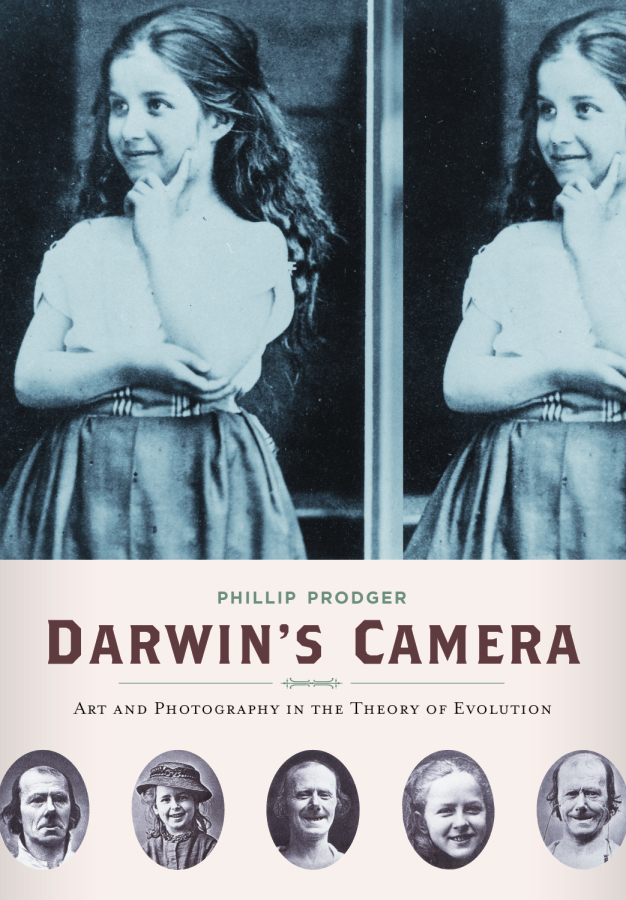
DarwinsCameraIn America’s political climate any book about Darwin takes on a religious cast. As strange as it may seem, an odd equation exists between Darwin, evolution, creation, and the Bible. We forget that Darwin was a retiring man with many interests and a very keen intellect. Erstwhile groomed for the clergy, he lived at a time when much of the world was known really only to the local inhabitants, and observations were still mostly made by the human eye in person. So it was that as photography developed, a new avenue into science opened up. Darwin’s Camera, by Phillip Prodger, is a rare look into, as the subtitle says, Art and Photography in the Theory of Evolution. Darwin wrote several books. Among them was The Expression of the Emotions in Man and Animals. This book was among the first scientific tomes published with photographic evidence to illustrate, if not prove, the points being made. Prodger takes us through the process by which Darwin procured and commissioned his photographs for the book and reveals some deeper truths about his life.

Interestingly, one of the sources of early photos was asylums. There was a belief, apparently, that photographs might be used diagnostically. One of the emotions that was presented to Darwin for his consideration was religious rapture. (Not that I can make any great claims here, but having experienced at least mild versions of such states—whatever their physiological cause—I know that they are powerful.) The observation comes through that religious rapture is difficult to distinguish from insanity, on the face of it. This may sound like an anti-religious slur, but it’s not. Ask around the mystics and you’ll see what I mean. Sanity has its uses, to be sure, but mysticism is all about letting go.

The only real religion in this book comes in the confrontations to Darwin’s evolutionary theory. Prodger does, however, briefly delve into Darwin’s late (and brief) concern about spirit photography. Shortly after cameras were developed, photographic tricks evolved. The Victorians, as we all know, had a very palpable sense of death’s nearness. It is no accident that Spiritualism developed during this time period when a reasonable lifespan was anything but assured. Spirit photographers claimed to capture ghosts of the dead revisiting the living. Darwin, who’d lost a beloved daughter prematurely, knew what grief was. He did not, however, allow it to interfere with his critical thinking. Photographs could be used to prove a point, but they could also be used to make a false claim. Darwin’s success in his book on emotions falls somewhere in the middle. He did have to have some staged shots to illustrate his point. Ever the gentleman, however, Darwin’s decisions were made to enlighten, not to deceive. One wonders whether creationism can even remotely make that same claim.


St. Ghost

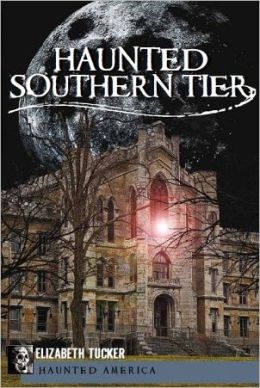
HauntedSouthernTierSince they combine two of my soft spots—local history and ghost stories—books telling the tales of home-town specters are compelling in a homespun way. On a visit to Binghamton, New York, I picked up Haunted Southern Tier by Elizabeth Tucker at the local bookstore (I have a hard time passing up an independent bookstore anywhere). Those of us at least a little familiar with upstate New York know that the southern tier is not strictly defined, but it is a recognizable section of the Empire State that runs just north of the Keystone. I was drawn to the book by Elizabeth Tucker’s name; she is the author of Haunted Halls, a book I reviewed earlier on this blog, about college campus ghosts. These local travel guides tend to focus on the weird and whimsical, and aren’t meant to be taken too seriously. Nevertheless, the connection between ghosts and religion is tangible in just about any part of the world, no matter what one believes.

This fun read brings a number of explicit religious points to the surface. One involves the strange phenomenon of haunted churches. Given that many varieties of Christianity offer Heaven as a reward immediately following death, having a ghost hanging around a church seems strangely disingenuous. Perhaps that’s why few churches admit to such things. Another interesting tie-in to religion comes in Tucker’s section on roadside ghosts. Stories of spectral hitchhikers are quite ancient, but I had never considered them biblical. Tucker mentions one such instance in the Book of Acts, and upon reflection I realized that she may be onto something. The account of Philip converting the Ethiopian eunuch is one of the odder tales of the early Christian movement. Philip explains Isaiah’s prophecies to the chariot-riding dignitary who gives him a lift, and baptizes the visiting Ethiopian before mysteriously disappearing. Could this be the prototype for the vanishing hitchhiker folklore theme?

Perhaps the most serious of the religious connections in the book, however, has to do with St. Bonaventure University. For those familiar with Thomas Merton’s life story, St. Bonaventure will not be unexpected. Merton taught at the school as he was struggling with his identity that led him to become one of the most renowned Trappist monks in the world—one who spoke approvingly of Buddhism, to boot. Merton is not said to haunt the university, but his presence there at one time has endowed this Catholic school with a sense of spiritual gravitas. The ghosts come from elsewhere.

Books on ghosts are a guilty pleasure with a serious undertone. End of life issues, once we move beyond the medical, are the unquestioned provenance of religion. Whether or not there are any ghosts out there, religion will claim the final word on afterlife. And only those who experience it will ever really know.


Poe Knows

CambridgeEdgarAllanPoeA recent trip to Baltimore prompted me to read Benjamin F. Fisher’s The Cambridge Introduction to Edgar Allan Poe. Well, that and the fact that I had purchased the book from an overstock table on a visit to a local indie bookstore (support your local!). Poe is a difficult writer to get to know. His personal life seems to have been largely an effort to find financial security while he knew his intellect was greater than those who employed him, and yet he was the one left without means. His literary talent, now considered one of the brightest constellations in the American writers’ heavens, was denigrated and demeaned and not fully appreciated until after he died of unknown causes in a city where he no longer lived. There is a profound sadness about Poe, and he seems a tragic figure. I do wonder, however, whether success would have ruined him. The more society woos you, the more you’re willing to lower your standards, I shouldn’t wonder. Not that I would know.

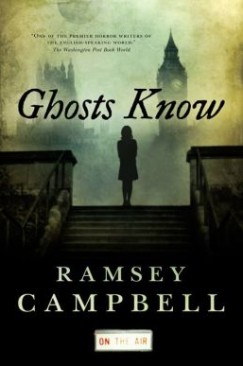
GhostsKnowFisher’s guide is a basic introduction that only toys here and there with Poe’s religious outlook. I’ve not run across much about Poe and religion, but there is a deep spiritual awareness, along with ratiocination, in his tales and poems. I suspect it might go back to the fact that religion and fear are so tightly intertwined. If a religious element is missing, it sometimes leaves a reader hungry. I’d also been reading Ramsey Campbell’s Ghosts Know concurrently with Fisher. This is a novel where a skeptical radio talk-show host takes on a stage psychic to see who really knows who might’ve killed a young girl. As the story unfolds it becomes less and less likely that the psychic is tapping into anything other than individuals’ wish projections.

While I found both of these books interesting, I pondered the fact that Poe referred to the scariest elements in his works as “terror of the soul.” The supernatural in Poe, as Fisher points out, is often really just a projection of an interior state of one of the characters—the eponymous tell-tale heart is guilt breaking through, not an undead heart beating. In an era where belief in the soul is waning, scary books seem less frightening. We’ve been robbed of both the supernatural and the soul, so what is left to fear? If death is only a more profound kind of sleep and morals are only a matter of social convention, then we are truly alone in this vast universe. Of what should we be afraid? Still, when the night stretches on for many long hours this December, I find myself inclined toward Poe and I wonder if ghosts truly do know.


Heilige Geist

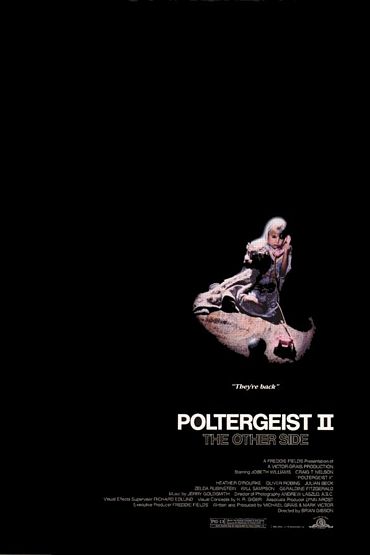
Poltergeist is one of those movies that evokes mixed emotions. Sure, it was one of the really scary ones when it just came out, and the rumors of a curse after the tragic early death of Heather O’Rourke probably added to the mystique. I actually didn’t see the movie until over a decade had passed since its release. It came out when I was in college, and I didn’t often splurge to see a movie in those days. VCRs were still expensive and your only real option was to rent a movie. In any case, a few years back I bought a cheap DVD and, after having seen many horror movies, it felt a little tame. And the ending was over-the-top. I have a theory that being unemployed makes you vulnerable to suggestion. Over the weekend I was looking for a movie I could watch for free on Amazon Prime, when Poltergeist II showed up. I hadn’t even realized that there had been a sequel, and after watching it, I think I understand why the movie was buried.

Poltergeist-2-the-other-side

Poltergeist II: The Other Side picks up where the original left off. An added character, Taylor, a Native American shaman, brings good spirits to the Freeling family as the original poltergeists start to haunt Diane’s mother’s house, where they are staying. Interestingly, the ghosts are revealed to be those of a traveling, apocalyptic preacher and his followers. The preacher, Henry Kane, led his group to the desert where they awaited the end of the world and then died after it did not come. They were apparently the ghosts haunting the original Freeling house, and not those of the “Indian burial ground” that the first movie touted. Taylor brings the healing, Native American spirits into the conflict and they win out over the Christian sect ghosts. All of this was becoming more unbelievably campy until Carol Anne was rescued by her now deceased grandmother, in the form of an angel. This mythological cocktail left me feeling a bit dizzy.

Some interesting subtexts floated through this film. Native Americans were now good, rather than the haunting spirits of the first movie. Kane’s sect, which had to be a veiled reference to the Latter Day Saints, showed Christian millennialists as the truly dangerous otherworldly residents. Kane is a preacher (and Mezcal worm) that doesn’t really want to pass over into the light. Why he travels all the way to Phoenix to try to pick up a nine-year-old girl isn’t really clearly explained. Horror movies, of course, frequently make use of religion as a vehicle for what truly frightens. Often it is religion misunderstood. Kane was not a believable character, in this case, without the abject cynicism of an unholy ghost who traveled to the desert southwest to set up a new religion. Once Mormonism breaks into the mainstream, perhaps I’ll have the stomach to watch Poltergeist III and see where the evil shifts the next time.


Conscientious Ghosts

It’s finally Halloween. In keeping with the spirit of the season, NPR recently ran a story on ghosts. I’ve posted on the topic of ghosts several times since they are inherently a religious phenomenon, whether they actually exist or not. Empirical method only takes us as far as that terminal border, but not beyond. Since we all face death, the question of ghosts is intriguing to many people. In some parts of the world, according to the NPR story, up to about 90 percent of the population believes in ghosts. They have been part of the religious thought of humanity since writing began. Ghosts have haunted us from earliest memory.

What makes the NPR story so interesting is that there is a kind of moral consciousness that runs through the story. An interview with Tok Thompson, an anthropologist at the University of Southern California, makes up part of the story. Thompson notes that ghost stories often concern unresolved justice issues. He cites the overused “Indian burial ground” motif as an example—where there is a collective guilt, ghosts tend to gather. Slavery is another such social injustice, and again, ghosts and slaves are no strangers. Christianity tended to push justice off into the afterlife. The fact is many people do not receive fair treatment in their lives. Some of them are very good folk who just never get a fair chance. That troubled early Christian thinkers into making Heaven into a place where the reward came. It also, unsuccessfully, tried to suppress the idea of ghosts. Ghosts problematize such easy theology. What are they still doing here when Heaven, Hell, or Purgatory should suffice?

Hammersmith_Ghost

The NPR story even addresses the idea of possessed dolls. Tok Thompson notes that the word “doll” derives from the word “idol.” This sheds a whole new light on Barbie, I suppose. An idol is an image representing a deity. In the Judeo-Christian tradition religious statuary was problematic at first. Again, Christianity bucked the trend by allowing images because people naturally want to see what it is they believe. Stories of haunted dolls and statues and other inanimate devices are difficult to accept. They are, however, deeply religious. That’s because ghosts represent what we really believe. Death is the most parsimonious of thresholds. We can’t look over at the other side, but, if ghosts exist, they may give us a glimpse beyond human sight. And that seems like an awful decent thing to do.


Graveyard Culture

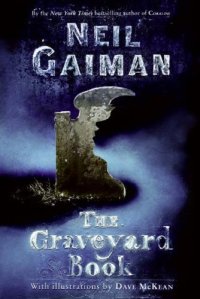
TheGraveyardBook During an Ancient Near Eastern Religions course a few years back, one of my students commented that something was like “in American Gods.” I suppose my quizzical look betrayed that I wasn’t familiar with the book, and, aghast, he said, “you’ve never heard of Neil Gaiman?” The funny thing about being a professional academic is, if you want to be good at it, there is little time to read. Popular culture is vast; I’ve never even heard of “Gangnam Style.” But I did subsequently read American Gods, and from then on I’ve been picking up Neil Gaiman books as a special treat in my literary diet. A couple years back another friend recommended The Graveyard Book, so I read it over my brief holiday break. It is the time of year for treats. Gaiman’s fantasy worlds, although seldom explicitly deity-populated, tangle the real world with the supernatural—just the juncture where religion emerges. Although defining religion is not as straightforward as looking it up in a dictionary, you can nevertheless feel when you’re in its realm.

Nobody Owens was raised in a graveyard among ghosts. Since science tells us there are no such things, religion steps up to the challenge with suggestions of an afterlife. Whether or not there’s a Heaven or Hell, ghosts partake in that uncanny milieu we call religion. And since this is fantasy, there are other mystical creatures as well. In Bod’s world werewolves are called “Hounds of God” and they are on the good side. Ironically, the only clergy mentioned (along with various political figures) are actually ghouls. The world of the dead involves a religion of its own where an altar and chalice lie deep beneath a special grave and a human sacrifice makes up the climax of the story.

Religion, of course, occurs where the supernatural meets regular people. We dismiss it at our own peril. When Bod attends school his teachers guess he must be from a religious family because he doesn’t have a computer or any electronic devices. Religion eschews such progress. And yet it touches on the real world. I recognized Highgate Cemetery almost from page one. It could be that my own visit there just last year was fresh enough in my mind that Gaiman’s descriptions naturally took over. Or it could be that since I walk that imaginary line that we recognize as religion every day I recognize its more familiar features. Neil Gaiman’s popularity is a testimonial to how we still need the hidden world unexplained by science. We may call it fiction but it is just as real in the human mind as anything in the quantum universe.


Creature Feature

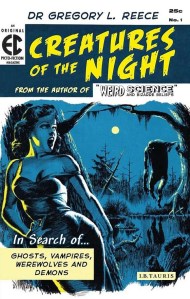
Gregory L. Reece’s Creatures of the Night is a strangely profound book. I picked it up to read on the plane home from Chicago and I wasn’t disappointed. Promising to explore ghosts, vampires, werewolves, demons and devils, Reece suggests that maybe the key to such fascination rests with the late Rudolf Otto. I had over a decade of students read Otto’s famous little book, The Idea of the Holy. Otto, whose palindromatic surname suggests something uncanny, characterized the holy as the fascinating mysterium tremendum, the wholly other. (I will refrain from calling it the wholly holy.) The mystery that makes us tremble. The monsters that haunt our nights and imaginations are aspects of this utterly other.

Along the way Reece proves an able tour guide. He recognizes, as I have repeatedly stated in this blog, that religion and fear are conjoined twins. He also knows how to get your skin crawling. For Reece there is no question that such things are real. Real doesn’t mean that they are physically lurking outside your window at night—for who is to say that only the physical is real?—but they are as real as religion. No doubt strange things have transpired in history and continue to occur. And the reason we go into church may ultimately be the same reason that we watch a horror film.

As Reece comes upon the topic of demons the air in the room (or plane, or bus) thickens. Here we have documented accounts of impossible events. No amount of rational training can remove the shudder from these stories. Explanations of epilepsy only go so far before terror takes over. By herding them together with vampires, werewolves, and ghosts, Reece stakes his claim that they all are real. Rational reductionists may shrink our world down so tightly that no room appears in the inn for our creatures of the night. But those who are honest, even among the reductionists, will admit to a mysterious tremor, even if unintentional, on a dark and stormy night.


Barely Departed

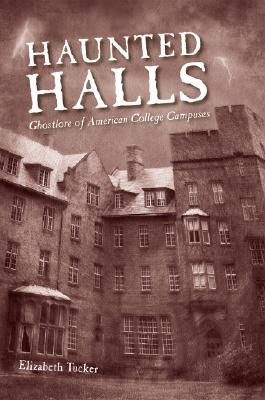
Back before any of us, or anyone we knew, had attended Grove City College, one tragic night a student on the basketball team crashed through the glass doors of the gym on west campus and bled to death. If you walked across that part of campus at night, it was said, you would see his ghost. Everyone knew his name was Jim, but I never saw him. Folklorist Elizabeth Tucker presents a rare treat of the anomalous and academic in her book Haunted Halls: Ghostlore of American College Campuses. Professors have traditionally shied away from the paranormal. It can be a risky way to spend your time since the supernatural has been banished from the academy for ages. That doesn’t mean that students and professors have stopped seeing ghosts, though. Tucker, like a good prof, doesn’t just tell us ghost stories and dismiss class. She tries to unpack a bit of what they might mean.

Ghost stories, even when entertaining, are able teachers. Kids going to college find themselves in liminal situations. Not really independent, not really supervised, they test the limits of what they’ve been told. Ghosts, not supposed to exist, are the ultimate rebels. They don’t even obey the laws of physics or biology. But what are ghosts if not the embodiment of the human spirit? We call them spirits, and they represent that part of us that stubbornly refuses to go gentle into that dark night.

Tucker’s book will not convince a skeptic that ghosts exist. It probably won’t cause you any sleepless nights (unless you are about to send your child off to college). Her book is more about what ghost stories say about the living, as would be expected of a folklorist. Although not a comprehensive survey, Haunted Halls may well bring back the ghostly tales of your own college years, for very few places are without their specters, especially on a rainy October night. And even though I never saw Jim as I cut across west campus in the dark, who am I to say that he’s not really there?


Deadly Morass

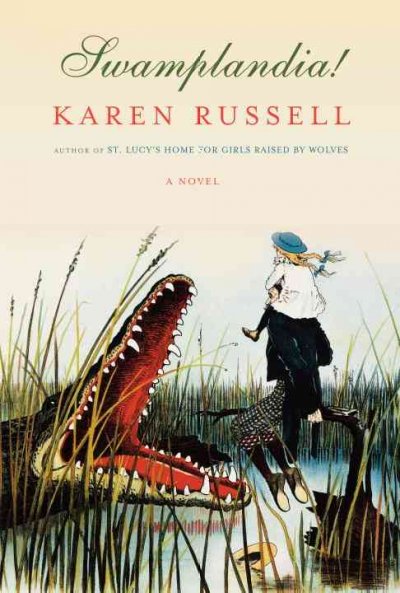
Swamplandia! is a novel ensconced in the reality of death. It is one of those books that I knew I would need to read as soon as I heard about it.  Alligator wrestlers, ghosts, and even a biblical-sounding Leviathan theme park based on hellish imagery create an eerie, almost supernatural feel to the narrative.  At the same time, it is a very human story of loss, assimilation, growing up, and more loss that might be gain.  I’ve read many novels where the characters and events faded relatively rapidly after I closed the back cover.  The cast of Karen Russell’s Swamplandia! has stayed with me, wraith-like, for several days.  As I’ve tried to work out why the story sticks so close at hand, and I think it may be because so many of the characters—the entire protagonistic family—are outsiders.  The loss of the mother spirals a carefree, largely off-the-grid family in a Floridian swamp into a forced confrontation with the mainland.  In these times of economic hardship, the loss of a dream is something too many people can understand.  I certainly can.
 
Death, in whatever form it may appear, is a religious issue because it deals with ultimates.  Paul Tillich, a theologian of the last century, famously declared that God was that on which a person staked their ultimate concern.  For many people today, by this rough definition, death has become a kind of god.  In the ancient world s/he was literally so. Of course, death is entirely natural.  Consciousness is the factor that makes it seem foreboding and dreary.  Swamplandia! deftly ties death and love, hope, and a kind of diminished redemption together in a tale where a young girl travels through an unlikely underworld to rescue a sister who saved her own life by her doubt.  It may not be the most profound novel, but it is certainly a moody one.
 
On my campus visits I’m increasingly hearing that novels are favored by some instructors to get at deep truths that textbooks miss.  Indeed, the analytical urge is strong, but not omnipotent.  Sometimes the truth can best be experienced by letting yourself go and just feeling what is happening rather than thinking it through.  Swamplandia! does a bit of that. Thinking back over my own long, academic tenure, I realize that the teachers I enjoyed most were those who had me read what were, at the time, unexpected things. In a world where education has become nothing but job training to produce satisfied cogs in the corporate machine, death as a character in our own stories can’t be far from the truth. Sometimes even alligators and ghosts aren’t the scariest features of our non-fictional landscape.


Ring

Absence of evidence is not evidence of absence. So goes a trite little statement meant to calm the fears of new students of biblical studies who worry that the historical record for biblical events is so sparse. The professor can head off many confrontations by declaring that such-and-such an event could have happened, but if it did it left no mark on the historical record. As I was watching the Japanese movie Ringu last night, I wondered about the apparent absence of religious imagery or themes. I am fully aware that not all horror movies have religious components, but the juxtaposition of religion and fear is so common in the western world that it often shows up in scary movies. I wondered if this translated to other cultures or not. Ringu is a decidedly creepy ghost story that creates considerable tension with little gore and not much in the way of special effects. The social commentary is evident even without the benefit of first-hand knowledge of the culture. The paranormal pervades the film.

Christianity is the matrix of many scary movies made in a North American, or even European, context. Although I have read about Buddhism and Shinto, and even occasionally taught courses on “World Religions,” my knowledge of eastern religious traditions is admittedly still quite basic. I can usually spot a biblical allusion a country mile away, but subtleties of foreign religions are harder to discern. Although many religions coexist in the United States the overall context is still Christian—there can be no doubt for anyone who follows politics. Japan is, like America, largely secular. The religious base, however, tends to involve both Shinto and Buddhism and I’m not sure which, if either, forms the recognizable “religious” basis of the collective consciousness. In many ways “religion” only applies to the Judeo-Christo-Islamic model. Much could have been transpiring in Ringu that I simply missed.

After the first mysterious death in the film a short sequence of a family in mourning is shown. Clearly this is what we in the western world would consider a religious context. The decision to try to calm the avenging ghost by uncovering her murdered corpse also conforms to what we might term religion. The fact is, these are very human concerns. Religions throughout the world treat death with a religious reverence since it is the great mystery of the living. Religion frustrates many scientists just for the fact of its mysteriousness. So, does Ringu revolve around religious fear? I don’t know. With the karmic implications of the story-line I would suggest that maybe it does. I’ll remain agnostic on the point, however. The same goes for the absence of evidence is not evidence of absence. Is it or isn’t it?


The Truth of Ghosts

Strange noises in the night. Objects moving of their own accord. Disembodied voices laughing fiendishly. It must be nearing autumn. After having a brief discussion on novel writing with Brent Monahan earlier this summer, I decided to read his book, The Bell Witch: An American Haunting. Setting the story in the “found manuscript” genre, Monahan tells this famous account through the eyes of Richard Powell, one-time elected official in the Tennessee House of Representatives. The can be no doubt that the story has some basis in actual events, but the serious study of “ghosts” is a taboo that serious scholars break at their own peril. On my long bus rides this week I read Monahan’s version of the story as the rain continued to fall. As I read I was continually reminded how dependent we’ve become on genre labels. The book purports to be an eyewitness account and there is no genre declaration on the back cover. The Library of Congress Cataloging in Publication (CIP) data declares it fiction. Where is truth to be found?

Human beings are capable of great and terrible acts. Working in a city the size of New York after having been raised in small towns, the amount of distrust is very blatant. Security is evident in many places with cleverly locked doors and guards surveying those who enter buildings. We simply can’t trust everyone. Or anyone. When it comes to literature, stories often blend fact and fiction. Guidelines on books or classifications in bookstores help us to decide if our reading material is conveying actual events or not. The Bell Witch is one of those reminders that sometimes the truth will never be known. Historical records can be searched, but even these are often subject to human error. If someone tells us a ghost story, we base the veracity on the teller’s reputation. At the end of the day, sometimes we just can’t know.

Perhaps the most poignant aspect of Monahan’s version of these events is his reconstruction of the history. Although the supernatural remains intact at the end, Powell is able to uncover the “fact” that Betsy Bell was abused as a child and that the poltergeist-style events that pervade the story are an extension of her trauma. Actually, the treatment is very closely tied to the religiosity of the Bell family, good church-going folk who ran afoul of a fine point of church teaching. In the end, it is this rejection by the church that pressures John Bell to the point of incest. Is the story true? Yes. Did it every really happen? Probably not. The two are very different questions. In a society that increasing seeks easy answers, stories like this remind us that we are all a blend of fiction and fact. Easy answers are inevitably wrong. The movie An American Haunting once again revived “the Bell witch” but also raised the specter of the ambiguity of truth. Is it out there? If it is, how will we know when we’ve found it?

What really happened here?


Two Ghosts

To escape the harsh realities of a fractured career, I turn to celluloid. Lest Hollywood distract me too much, I strictly limit my movie viewing to weekends when I can let down, for a few moments, my constant anxiety. Since my religious antennae are always prickling, I notice implications sometimes in unexpected places. So this weekend’s fare included two ghost stories. Both of them utilize religion to resolve the haunting, but in very different ways. An American Haunting purports to be based on real events involving the putative “Bell witch” of Tennessee. The movie takes many liberties with this scant folktale, including a church condemning a seemingly upstanding member and a Bible being dismembered as the angry spirit attacks the Bell family. In the end, the plot is confused by a revelation of family abuse and the viewer wonders who it is that tears apart Bibles.

The second part of my double-feature was The Screaming Skull, a 1958 horror film that fails to raise a single follicle in fear. Nevertheless, the moody movie does provide the Dies Irae for Stanley Kubrick’s opening theme of The Shining as well as a sense of isolation that would also inform the latter exemplar. The religious element comes in the form of a priest who is a close friend to a clandestine murderer. With the help of a ghostly screaming skull, the priest is the one who eventually solves the murder and rescues the intended victim of our erstwhile protagonist.

Nearly half a century separate these two ghost stories, and the role of religion in them has reversed. In the 1950s the clergy were society’s protectors. Even though Rev. Snow is the only main character who does not actually see the ghost, he is a safe haven for the victims of evil. Fifty years later, it is the church that sets up the haunting of the Bell family by its unyielding laws. The family quotes the Bible at the spirit and the ghost tears the Bible apart. There is no sanctuary here. Films, no doubt, reflect social attitudes. When the foundations have lost their hold, confusion results. Who is to blame for the suffering of Betsy Bell? The movie leaves that up to the viewer. There is no solid Rev. Snow to whiten the sins of this world. Only ghosts remain.