Around Us

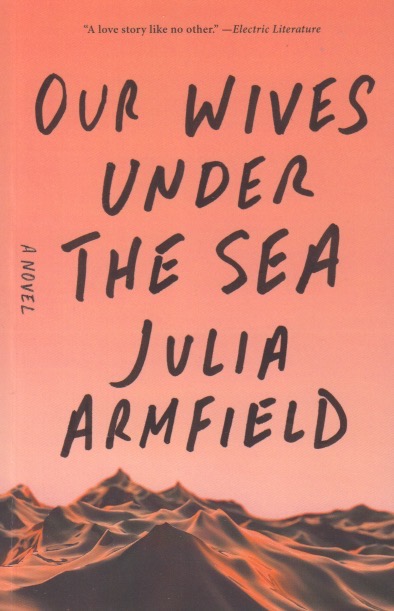
Our Wives Under the Sea is a gentle, but chilling horror story by Julia Armfield.  Two women are married and one of them is a marine biologist being sent on a submarine to explore deep ocean life.  A planned three-week voyage becomes six months and when the sub finally surfaces again, Leah, the biologist, has “come back wrong.”  She’s transforming.  Something happened to her under all that water.  Told alternately by Leah and Miri, the story is one of loss and mourning and lack of any reasonable explanation.  Haunting, in a word.  The writing is exceptional.  And probing.  I quite enjoyed this book.  I can’t recall how I first heard about it—it was published in 2022—but I knew I wanted to read it even then.  The sea is that way.  Moby-Dick, cited in an epigraph, has always been my favorite novel.  One of my early reading memories is Rachel Carson’s The Sea Around Us (also cited here).  The story is a winner.

There’s something about the ocean.  We, in reality, know little about it.  Penetrating the crushing depths requires a well-funded science, something we’ve moved away from in favor of personal greed.  Life takes unexpected forms deep under the surface, even as we deplete the resources we can reach—over-fishing and consuming.  We’re never told what it is Leah and her crew-mate see so far down.  We all know of lantern-fish (lately in the news) and other sub-surface terrors.  We don’t know the potential life we might discover if we only cared to look.  The company that sent Leah down, however, is as shadowy as the government.  Promising help but not answering the phone when you call.  Yes, this is a haunting book.

Mostly, however, at least in my reading, it is about coping.  We attach our lives to others and when something changes them we have to try to adjust, because love is that way.  Caregivers understand.  The novel evokes both the endless draw of the ocean and its mystery.  Even as a child I wanted to live on the stormy east coast, preferably in Maine.  I wanted to be near the water.  As my mother was in her final decline, one of her dearest wishes was to return to the ocean.  She’d spent a fair bit of her childhood in New Jersey and always felt the draw of the sea.  She was no swimmer, but just being near the ocean was something she loved.  And that has passed down, it seems, to my generation.  Fearful yet drawn.  It is the dilemma that can lead to effective horror stories that make you both think and feel.


Cuckoo’s Roost

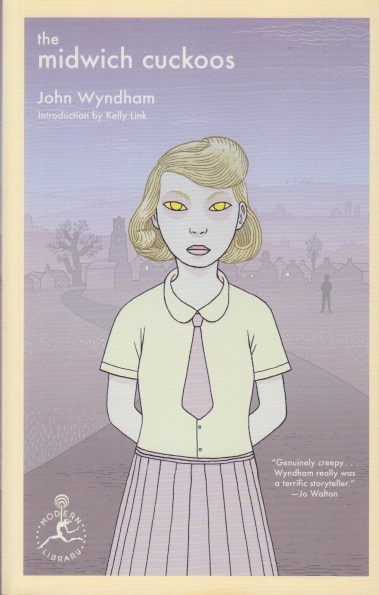
John Wyndham is someone I discovered through movies.  Often considered a science-fiction writer, his works cross over into horror, particularly on the silver screen.  Many years ago I read Day of the Triffids and, having seen Village of the Damned, wanted to read The Midwich Cuckoos.  It was a pretty long wait.  I kept thinking I might find a copy in a used bookstore, but it never happened.  When I saw a reprint edition I ordered it with some Christmas money.  There are some horror and sci-fi elements to the story, but there’s also a bit of thriller, as it’s called now, thrown in.  The book is quite philosophical because of the character Gordon Zellaby, a Midwich resident who keeps thinking about what is happening in terms that don’t match the expectations of other, more prosaic thinkers.  In case you’re not familiar:

Midwich becomes unapproachable for a period because an alien ship (the sci-fi part) has covered it.  Everyone in the village is asleep for a couple of days.  When they awake, generally no worse for wear, they soon discover that all the women of childbearing years are pregnant.  They all give birth about the same time to children that look eerily alike and have bright golden eyes.  The officials know this has happened but adopt a wait-and-see attitude.  Meanwhile, the locals get on with things but they discover these new children develop about twice as quickly as humans do and they can control people with their minds.  They also have collective minds so that their brainpower is quite above that of Homo sapiens.  Zellaby makes the connection with cuckoos—birds that lay their eggs in the nests of other birds and after they hatch shove the other chicks out of the nest.  Indeed, this is a story about what if cuckoos were humanoid aliens who tried the same thing with people.  Told with a British stiff upper lip.

The story slowly unfolds and gets scary as it grows.  I saw the movie quite a few years ago and the details were lost on me, so I was learning as I read.  I suspect that it differs from the book quite a bit.  Perhaps it’s the Britishisms that make this story less of a horror tale.  There’s a kind of jocularity to the style, at least for a good bit of it.  The serious issues of how governments and individuals interact is raised and discussed to a fair extent.  Even though the book is fairly short, there’s a lot going on here.  But now I need to watch the movie again.


and Seek

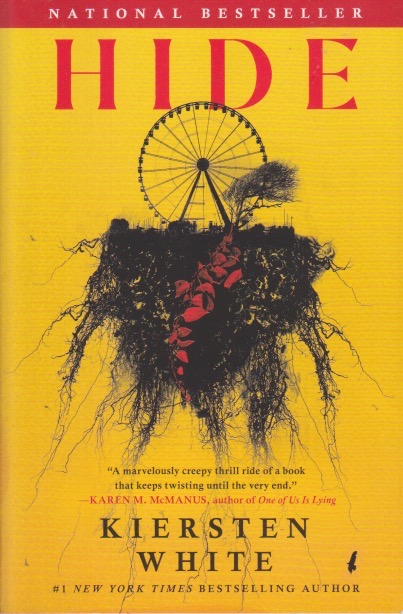
I’m afraid there may be spoilers—but not for the ending—below.  Discussing this story will be difficult without giving some things away.  Kiersten White’s Hide has given us an imaginative world with masterful misdirection.  Fourteen people a bit down on their luck, and strangers to each other, are offered an opportunity to win $50,000.  They have to hide in an abandoned amusement park for a week where two of them will be caught each day and the last person remaining wins.  The novel mostly follows Mack, a woman whose father killed her family while she survived by hiding.  Not only does she have survivor’s guilt, but she’s been homeless and the shelter director thinks she’ll have a chance at winning the prize.  There is a lot of social commentary here, as well as a monster.  Okay, spoilers below.

The minotaur is a most useful monster.  The backstory here isn’t in Greece (well, the deep backstory is, but that is only played out partially here) but in Asterion.  No state is given for the town, and the contestants can’t be given that information.  They’re locked in the park, with supplies, but very little information.  Then the contest starts.  After a couple of days Mack and a couple others begin to suspect that something’s wrong.  Those who get caught while they’re hiding leave personal effects behind, and since they all need the money that seems unlikely.  Then their host stops coming, leaving the bewildered contestants on their own.  Mack and those she’s befriended come to understand that being “out” is really being eaten by the minotaur.  Well, they don’t realize it’s the minotaur.  The one who does gets eaten before he can tell.

In any case, this is a tense horror story based on a classic tale.  There is, of course, a rationale for the murderous behavior in a modern setting.  White keeps you waiting quite a while to learn what it is, and there are plenty of places where I thought I’d figured out how it’d end only to be proven wrong.  And she gives believable character sketches and explores the kinds of motivations that drive different people who find themselves needing an income.  (One of the characters was raised in a religious cult—bonus!)  Those who are poor aren’t always at fault, but those who are wealthy will do anything to preserve their excess.  We see that playing out in daily life, even as it’s being explored in fiction.  The minotaur isn’t always what we think it is.  And the more you think about its insidious origin story provided here, the scarier it becomes.


Perhaps More?

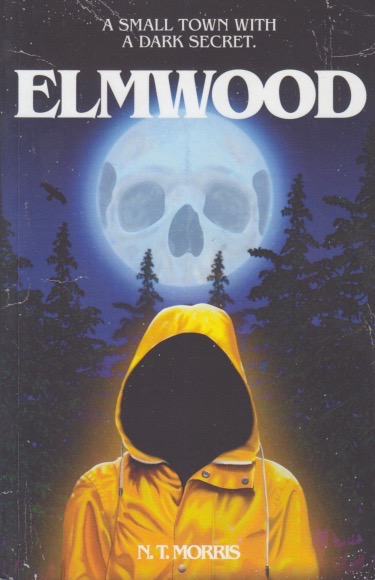
Publishers use the term “deep backlist” to refer to titles that they published long ago.  That’s always the phrase that comes to mind when I browse my “to read” list.  That list was started, in its current online repository, a decade-and-a-half ago.  When I delve into the “deep backlist” of items I placed on the list years ago I sometimes can’t remember where I learned about them.  Such was the case with N. T. Morris’ debut novel, Elmwood.  Someone recommended it years ago and I finally came into possession of it.  A moody tale about a town haunted by a cult, it is a nice effort as a self-published horror novel.  If you read a lot of fiction you start to notice some of the signs with self-published work (and there are many good reasons to go that route).  Morris offers a well-designed and aesthetically pleasing book.  The story does end with some loose threads, however.  There may be spoilers below.

Aidan Crain finds the victim of what appears to be a serial killer.  His difficulty coping with it leads his wife Laura to suggest that they get away from it all in the little town of Elmwood.  They rent out a house she found online, but it turns out to be haunted.  The people of Elmwood aren’t terribly friendly to strangers, but since the goal is to get away from city life, the young couple doesn’t much mind.  Except the ghosts in the house are accompanied by a dark presence in the woods that keeps calling to Aidan.  One of the tricky bits for me was determining what were dream scenes and how they related to waking scenes.  This is often part of speculative fiction, but a solid editor would lead you in the right direction in such situations.

The story tries to fit a lot in, leading me to think—rather uncharacteristically—that it needs to be longer.  The house was owned by a serial killer who’s part of the cult that killed the victim Aidan found many miles away.  The cult has been culling both locals and visitors for years and the police department appears to be complicit.  As do some local business owners.  The darkness in the woods, which is defined more or less as evil itself, seems to control the cult and it wants Aidan to join.  Some of the loose threads at the end suggest that Morris’ next novel will be a sequel to this one.  I can’t recall how I learned about Elmwood, but I’m glad to have finally read it.  It’s a good shot at becoming a horror writer from my personal deep backlist.


Lovecraftian Advice

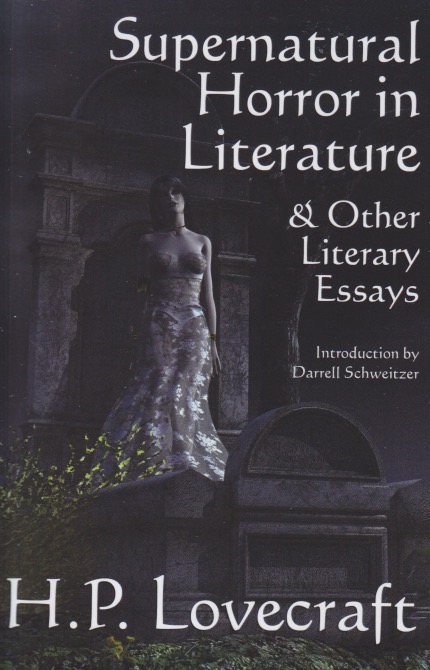
It seemed natural enough to follow up Stephen King’s On Writing with H. P. Lovecraft’s famous essay “Supernatural Horror in Literature.”  This piece, widely quoted, is available online but it is lengthy and I wanted the convenience of not reading it on a screen.  What can I say?  I like to turn pages.  I found a print copy, along with two other, shorter Lovecraft essays in Supernatural Horror in Literature & Other Literary Essays.  This was published by Wildside Press, which added a brief introduction by the speculative writer Darrell Schweitzer.  The text of the main essay was obviously computer-read—a couple reading errors remain—but it is clear enough to read.  Like Poe before him, and King following, Lovecraft put down some of his thoughts on the craft of writing.  Interestingly, Lovecraft is seldom considered as a producer of belles-lettres, but he is world famous as a horror writer now.

The essay itself is worth reading.  Mostly it is a summary of what Lovecraft felt was worthy weird fiction.  I tend to agree with much of what he says here, as would be evident were anyone to read my own fiction writing.  I can’t say that I learned this at Lovecraft’s knee.  I only discovered who he was when I was teaching at the University of Wisconsin Oshkosh.  I did not have literary friends growing up; my reading tastes were determined by myself, largely based on what was available at Goodwill any given week.  Nobody I knew read Lovecraft and although his books may have been in that bin, he wasn’t really someone I’d have known to keep an eye out for.  As a child I didn’t think of myself as a horror reader.  I liked monsters, and vampires were among the most immediately recognizable.  My brother, if I recall, got me started on Poe.

When I began writing fiction, probably around twelve or thirteen, it was weird fiction.  One of my other influences was Ray Bradbury.  I agree with Lovecraft that, to be interesting, fiction often requires a speculative element.  I do read realism, of course, but I really enjoy tales with a bit of supernatural.  It’s useful to read Lovecraft’s ideas about influential writers.  I’ve got my homework cut out for me.  I can certainly recommend this edition for anyone who wants to read this lengthy essay in print form.  The one thing that struck me as weird was the cover design.  It features a woman wearing a strapless dress in a cemetery.  Lovecraft famously didn’t really have women as one of his main themes, and his women characters are among his most inaccurately drawn.  Still, it’s best not to judge a book by its cover.


Dancing with King

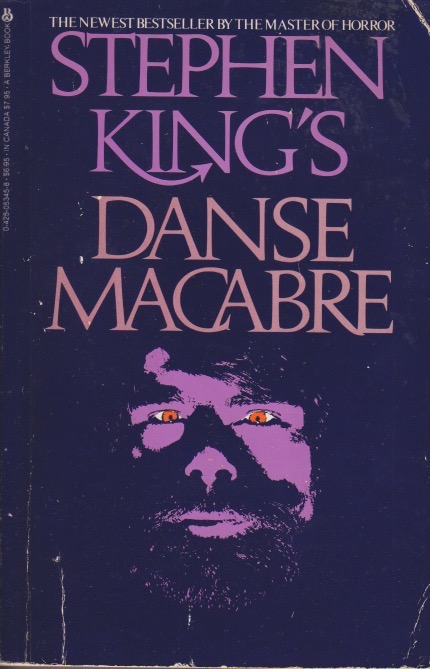
There are books you wait too late to read, but which you read at just the right time for you.  That’s how I feel about Stephen King’s Danse Macabre.  This book is endlessly cited in more academic treatments of horror and I knew I should read it.  And one thing I immediately appreciated is that even early in the eighties King expressed my long-term concern: many genres fall into horror.  He, perhaps rightly, considers horror a subspecies of fantasy.  Or course, fantasy has come to mean something quite different in the intervening half-century.  Still, the reader is treated to thrillers, sci-fi, and weird fiction.  There’s also a dose of the gothic and speculative as well.  King sets his four classes of monsters early: the vampire, the werewolf, the thing without a name (Frankenstein’s creature), and ghosts.  These are all very broadly conceived.

It will become clear in coming weeks, for anyone who’s interested, that the movies I “review” here have been influenced by King’s list.  And in the longer term, the books as well.  And I tend to agree with King’s antipathy toward television, although I disagree with his assessment of The Twilight ZoneDanse Macabre is a book of its time, of course.  I would be curious as to the master’s reaction to such more recent classics as The X-Files.  I loved that he treated Ray Bradbury as a sometime horror author and it becomes clear that each of us finds different things scary.  The thing was, I found myself anticipating my too scarce reading time each day for the month it took me to read the book.  I often start books that I soon find myself approaching with a kind of duty to finish.  Love him or not, King is a talented writer and will keep you coming back, just like birds to a feeder.

I learned that King, too, appreciates bad movies.  He grew up about a decade and a half before I did, but the small-town culture I experienced as a child was not so different, although Sputnik was already up and the Cold War already on.  I guess what I find so engaging here is that this is a guy who speaks my language.  My tastes differ, of course, but there’s something comforting about whiling away the pre-dawn hours with a guy who can say “The Thing” and you know immediately what that vague phrase means.  And it was strangely reassuring to be reminded that the world of the seventies, which I experienced as a teenager, was just as scary as the world is right now.  And if King ever looked me in the eyes, I think he’d recognize something about me, although a sometimes critical fan.


Return to the House

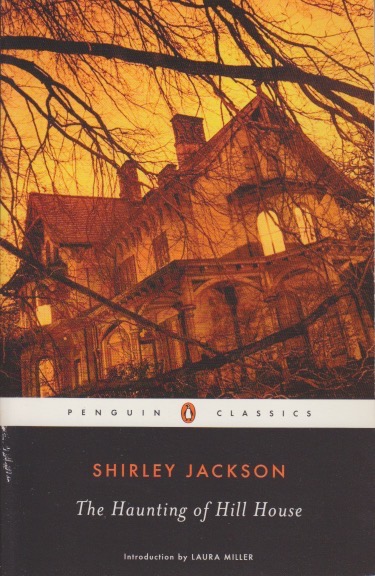
I’ve read Shirley Jackson’s The Haunting of Hill House before.  It might’ve been before I started this blog, or it might’ve been before I started writing about the books I’d read.  Either way, when I search for a post on it, I don’t find one.  This is a classic novel in the genre, but I found it rather sad both times I’ve read it.  Eleanor is such a compelling, abused and discarded character.  But in case you’re unfamiliar with this psychological horror story, here are the basics: Hill House is haunted.  A professor, Dr. John Montague, somewhat hapless, decides to gather a couple of sensitives to try to investigate the hauntings.  He plans to write a book about it.  The two women he invites, Eleanor and Theodora, both had some psychic or Fortean experiences.  The owner of Hill House insists that a member of the family be present, so Luke, a carefree young man, joins them.

The house “manifests” in various ways, but the occurrences while they’re there, center on Eleanor.  Eleanor lives with her domineering sister after having been a caregiver for her dominating mother.  She’s never been able to develop her own self, and she desperately wants to be accepted.  She’ll lie to make that happen, but not maliciously.  In fact, she’s quite childlike.  While the half-hearted investigation takes place, the others begin to suspect Eleanor may be behind the events, or some of them.  Then John’s insufferable wife arrives with her pretentious friend.  Eleanor acts out, doing a foolhardy stunt that leads the others to dismiss her from the house.  The story is creepy, but, like Mary Shelley’s Frankenstein, more like sad.

I decided to re-read it as autumn began to be felt in the air, and I had read a couple other of Jackson’s novels that I remembered better because they were more recent in my experience.  Quite often this story is compared to Henry James’ The Turn of the Screw, another ambiguous ghost story involving a young lady who wants to be accepted.  These characters are compelling in a  Poeseque kind of way.  Critics complained of my using Poe’s observations in Nightmares with the Bible, but these stories, by a woman and a man, are further exhibits in the case.  They add a poignancy to the events because even as we’ve made some progress in women’s rights we still have a long way to go.  No one doubts that Jackson’s writing is laced with metaphors.  None of her characters can be considered “normal.”  And yet, it’s the house that brings it all out.  It’s a story worth pondering again.


The Paw

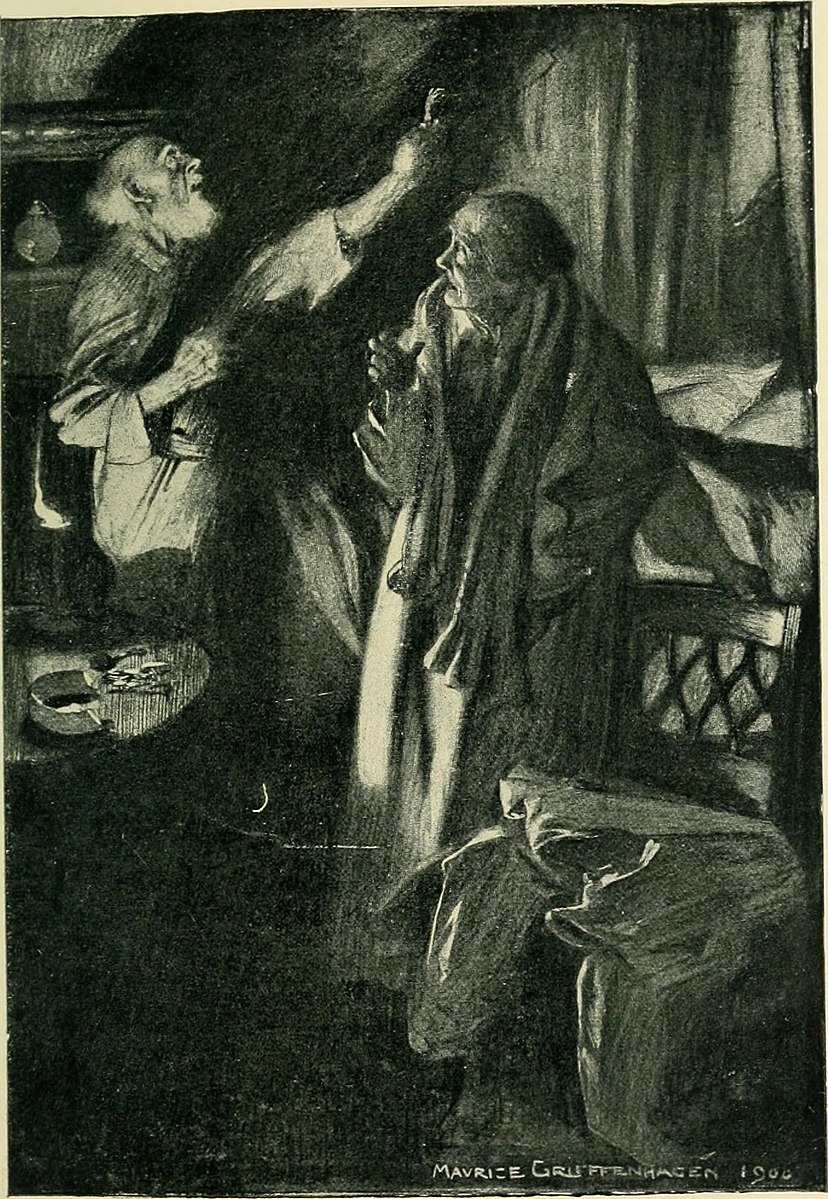
Okay, in the spirit of my epiphany that commenting may apply to short stories as well as to collections, I thought I’d muse on W. W. Jacobs’ “The Monkey’s Paw.”  Somewhat like Washington Irving, as a writer Jacobs was known primarily for this story.  Like “The Legend of Sleepy Hollow,” this tale has taken on a life of its own.  I recently read it for the first time, and I wasn’t exactly sure how it would end.  I knew the basic premise: somebody ends up with an exotic monkey paw that grants wishes, but the wishes, as is often the case, turn out poorly.  There’s a kind of morality to such stories, of course.  People shouldn’t rely on wishes for their happiness and any windfall has its consequences.  What makes this a horror story isn’t the magic, however.  It’s what we expect to see because of it.

Image credit: Maurice Greiffenhagen illustration from The Lady of the Barge, 1902; public domain via Wikimedia Commons.

If you haven’t read the tale yourself, it goes roughly like this: an older couple and their working age son have a guest stop by their hovel of a London home.  The guest served in the British Army in India and it was there that he acquired the eponymous paw.  He sadly tells his friend that no good can come of it and they should destroy it (they snatch it from the fire when the friend tosses it there).  Of course, they don’t really believe it will work.  The son suggests they wish for 200 pounds, to pay off their house.  He then leaves for work.  Later a stranger stops by to tell them that their son has been killed in an accident at the factory.  Denying responsibility, they nevertheless offer 200 pounds to help with the hardship.  The grief stricken mother then insists they wish their son would come back.

This is prime real estate for horror, of course.  The son had been badly mangled in the machinery at the factory.  I won’t spoil the third wish, and besides, you’ve probably read it before.  The story has been retold countless times, with changed settings but always the same message—be careful what you wish for.  Jacobs was able to make a living from his writing.  This is increasingly a rarity today, of course.  Nevertheless some eight decades after his death, outside the circle of literature scholars, he’s known for one short story.  Prior to reading it I couldn’t have even told you who wrote it.  This isn’t a bad way to make a mark on the world.  Those of us who write often put much of ourselves into our stories, and to have even one of them remembered would be an honor indeed.


Grotesque and Arabesque

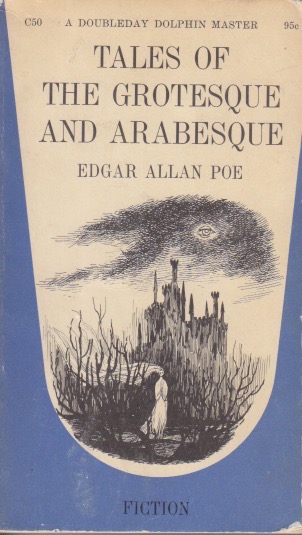
My last post about Edgar Allan Poe’s Tales of the Grotesque and Arabesque led a couple of readers pointing me to places where the missing tale (“The Visionary”) could be read online.  That fact is beside the point.  I have sitting next to me an omnibus edition that contains, in print form, all of Poe’s tales and poems.  Poe deserves to be read in print.  No, the point of that previous post was that I wanted to read a print version of Tales of the Grotesque and Arabesque through so that I could observe a couple of things: the stories Poe thought his best at the time, and to read several Poe stories I never had.  Also, it was an exercise of ratiocination.  So I found a used copy online that contains the full contents, unaltered, of the original printing.  Such a book may be still in print, but given the constraints mentioned in my previous post, it cannot easily be found.  So on to the stories.

A great number of the stories contained herein are funny.  Poe was quite capable of humorous writing.  Some of the stories verge on science fiction.  Others demonstrate his incredible breadth of reading.  He wrote smartly about ancient history—fictionalized, of course—and about astronomy.  He wrote a story about the end of the world, which adheres, in some measure, to the “biblical” account known even in his day.  The stories are erudite and often obscure.  They are seldom read, or at least discussed among Poe’s horror tales.  I’ve been pondering horror as a category quite a lot as of late.  It’s clear that during his lifetime Poe was not a “horror writer” as we know such authors today.  He was a brilliant, and imaginative interrogator of the world in which he lived.  Reading this book all the way through was an epiphany.

Poe’s writings are in the public domain.  There are websites, easily found, where all of his stories may be located for free.  There are some writers, however, that I believe have earned the honor of being read as they were published—on paper.  Until recently I had only a couple of editions of paperbacks of Poe’s stories.  They were mostly tales I had read multiple times, here and there.  I even break out the omnibus edition now and again when I want to read one of his stories that aren’t in the other collections.  Tales of the Grotesque and Arabesque has expanded my view, which often happens when I read Poe.  And that is a high compliment to any author, just like reading them in paper form.


Book or Movie?

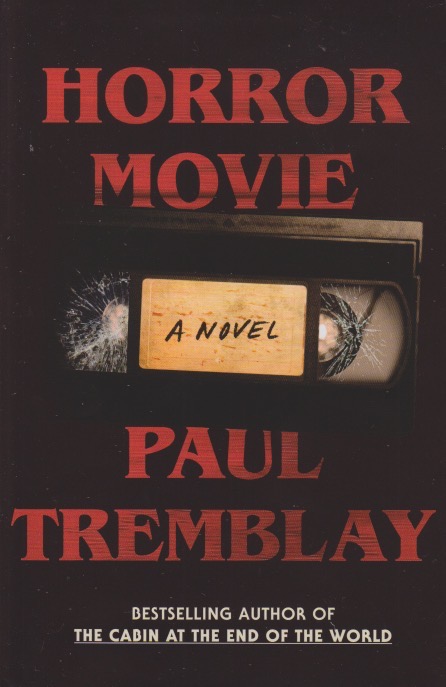
I’ve read a few of Paul Tremblay’s novels.  He’s a horror writer with literary style—often a tough sell (at least in my experience.)  Horror Movie is a compelling read.  The conceit is that a group of young people decide to film, well, a horror movie.  Things go awry, but not in a funny way.  The story unfolds interlaced with the screenplay and with the overlay of the modern remake in the works.  It’s easy to get lost between the narrative account of what happened in the original shoot and what’s happening in the script.  Tremblay uses this technique very well, blurring the reality and movie aspects in a way that’s got to be intentional.  I particularly like his asides about the redeeming value of monsters.  I won’t say too much about the plot since you may want to read it yourself. It does riff on the “cursed movie” trope.

The truly remarkable thing to my regular readers will be that I finished a new book within a month of publication.  Normally I run a couple to several years behind.  And this novel contains several winks and nods to other horror movies.  It pays to know the canon.  In that sense, it reminds me of the movie Scream, one of the more self-aware horror classics.  (I have had Scream out for watching again for several weeks now, but time has a way of slipping away.)  Tremblay, like Stephen King, taught before becoming established as a horror writer.  Maybe there’s hope for some of yet!  I started writing novels in middle school—perhaps there’s still time.  That seems to be one of the themes of Horror Movie, by the way.  It has many elements of a parable.

I found Tremblay’s first horror novel, A Head Full of Ghosts, about four years after it was published.  Indeed, I was working on Nightmares with the Bible at the time, so a book about possession was appropriate.  Horror Movie is more a monster tale but it’s also about movies and reality.  This is territory I often traverse since, it seems to me, movies are more than mere entertainment.  Good ones are, anyway.  And like some other books I’ve read lately, this one is also a reflection on fame (something I wouldn’t know about).  How it’s not what it’s made out to be.  In other words, if you’re willing, Horror Movie is the kind of novel that will make you think.  I appreciate that Tremblay is giving us thoughtful horror and I’m looking forward to trying to keep up.


Paperback Reader

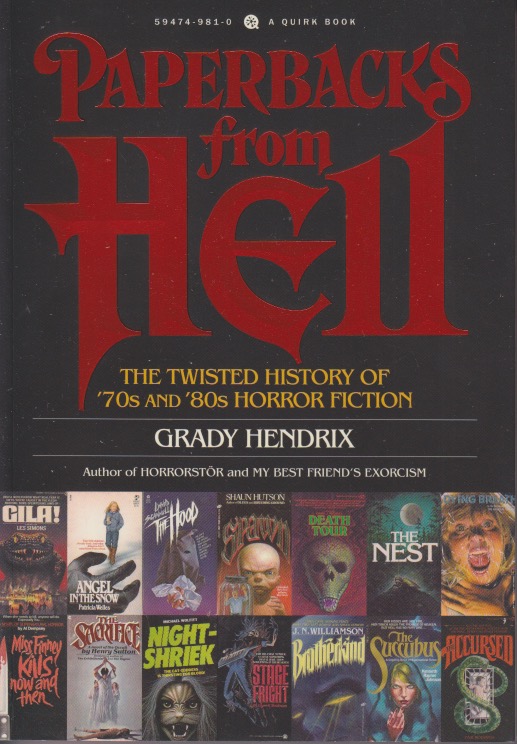
Sometimes I wonder why I do it.  Horror is a strange category for books and films, but one thing that may be a draw is that they take me back.  Life, it seems, is cyclical.  I liked monsters as a kid, and grew out of it when college and graduate school taught me to be serious.  As a working academic this genre can spell death to your career, so when my career died anyway, I was left grasping at my childhood to try to make any sense of this.  Grady Hendrix’s Paperbacks from Hell took me back.  Not that I’ve read all the books listed here—I came away with a list I want to read—but the lurid covers are a reminder of the kinds of things that caught my young imagination.

Subtitled The Twisted History of ‘70s and ‘80s Horror Fiction, this is actually a very fun book to read.  Hendrix has a light touch and had me nearly laughing out loud (quite an accomplishment) a time or two.  And I learned a lot.  Although I write books about horror, the genre is a large and sprawling one and this book takes a clear focus at the paperback market.  Just a reminder: paperback originals were designed to be sold and consumed quickly.  No waiting around for 18 months while profits from the hardcover roll in.  Hendrix really knows what he’s talking about when it comes to the history.  It also seems like he may have read more horror than is necessarily good for you.  He clearly knows how the publishing business works.

Several of these books were big enough that I knew about them.  He starts off with Rosemary’s Baby and The Exorcist.  (And The Other, which I’m now obligated to find and read.)  In fact, the first chapter focuses on religion-themed horror.  This is something that only began in earnest in the late ‘60s.  While the horror paperback market may have tanked in the ‘90s, the film side of the genre has been doing quite well and continues to do so.  The late sixties also got that kick-started.  It seems that when people stopped running from the fact that religion is scary, horror itself grew up.  I was shielded from that part as a child, but now, looking back, I can see that things weren’t quite what they seemed.  This full-color, grotesquely illustrated book has great curb appeal.  And if you’re not careful, you can learn a thing or two as well.