Another Host

Several months ago I wrote about The Host, a movie I enjoyed but had watched by mistake.  By that I mean that someone had recommended The Host (2006) and I watched the completely unrelated The Host (2020).  (You can’t copyright titles.)  I waited long enough that the right Host became available on a service I use so it was, in essence, “free.”  This one is a Korean monster movie, directed by Bong Joon-ho.  I’d previously seen his excellent Parasite, and The Host didn’t disappoint in either the social commentary department or in the heart-felt monster tale.  In the latter department it has some common ground with Godzilla Minus One.  The Host begins with chemicals poured in the Han River causing a mutation that becomes a big problem.  This monster kills many, but the story focuses on the Park family where a ne’er-do-well father (Gang-du) disappoints his daughter and siblings.  Then the monster carries off his daughter.
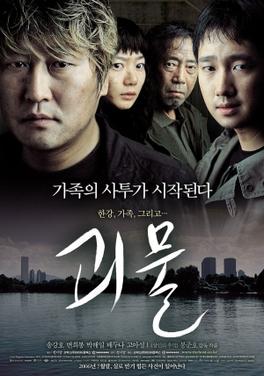
The government, wishing to hide the origins of the creature (an American military facility did the chemical dumping) invent a virus story to keep people away from the river where they have trouble locating the monster.  Meanwhile Gang-du learns that his daughter is still alive, being kept as a future meal in the creature’s lair.   His father, sister, and brother all come together to try to find her, having to work around the corrupt government response to the crisis.  In other words, there’s a lot going on here.  The monster is believably rendered and its interactions with crowds of people don’t strain the imagination.  I do have to wonder if the creators of Stranger Things were familiar with this film.  Again, there’s some overlap there.  There are some holes in the plot, or it may be that I didn’t quite get everything (quite likely regardless).

It’s easy to see why the movie won so many awards.  The question that haunts me is whether this is a horror movie or not.  There are definitely horror aspects, but the overall feel is a meaningful monster movie, which isn’t really a recognized genre.  Monsters sometimes—often, in fact—bring out the best in people.  Without giving too much away, we can say that about this movie.  A family torn apart is reunited by a monster.  It doesn’t end well for them, but they have learned something by the experience.  And the movie is impressive from a cinematic perspective as well.  So now I’ve had two Hosts and although quite different from each other, both are recommended.

Burial Zone

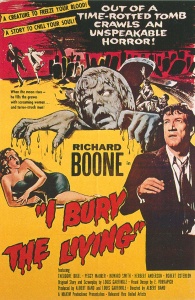
I don’t always believe the statistics.  Numerically, the number of horror films—depending on how the term is defined—declined into men (and sometimes women) in rubbery suits in the 1950s.  Indeed, it’s often opined that had not Hammer joined the horror business in the mid fifties that the genre born only twenty-something years earlier might’ve died out.  There seem to have been some good horror films made then, though, even if overlooked because of their B status.  A friend recently directed me to I Bury the Living, after reading my post about Carnival of Souls.  I have to confess to having never heard of I Bury the Living.  (Stephen King mentions it in Danse Macabre.)  Produced as a B movie it was itself buried among the various other efforts of the late fifties.  It’s not a bad movie, however.  In fact, it’s better than the title might lead you to believe.

The plot is something of a period piece—a well-respected department store supports a cemetery committee for Immortal Hills, the town’s graveyard.  Robert’s turn as chairman of the committee arises and he tries unsuccessfully to get out of the duty.  The caretaker, Andy, doesn’t want to retire, but he’s aging out.  The movie, however, revolves around the map.  The sold plots are marked with white pins while the plots already occupied have black.  When Robert accidentally puts black pins into newly purchased plots and the couple dies, he believes he’s cursed with an ability to kill those he black pins.  He substitutes a black pin for a white one at random.  The person dies.  In all, seven people succumb.  Convinced he’s murdered them, Robert decides to bring them back to life but putting the white pins back.  Only at this point does Andy confess that he’s been killing the victims in retaliation for being forcefully retired.

The ending is a little weak, but the psychological tension as it builds up is believable.  One critic compared it to an extended episode of The Twilight Zone, a comparison that has also been made for Carnival of Souls.  I would concur with that observation.  Although Twilight Zone wouldn’t air for another year, that kind of unsettling tale was already in the air.  No zombies appear, but the palpable belief that they might is what really makes the horror work in this instance.  The first half is an eerie story, but when Robert sticks in that first white pin a shift takes place.  Of course, modern viewers have been primed by Night of the Living Dead, so we know the possibilities.  Perhaps the power of Night gives life to older movies.  After all, anything can happen in the Twilight Zone.


Dancing with King

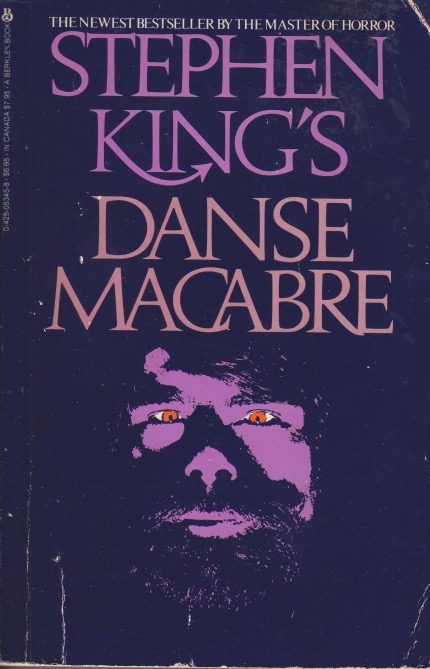
There are books you wait too late to read, but which you read at just the right time for you.  That’s how I feel about Stephen King’s Danse Macabre.  This book is endlessly cited in more academic treatments of horror and I knew I should read it.  And one thing I immediately appreciated is that even early in the eighties King expressed my long-term concern: many genres fall into horror.  He, perhaps rightly, considers horror a subspecies of fantasy.  Or course, fantasy has come to mean something quite different in the intervening half-century.  Still, the reader is treated to thrillers, sci-fi, and weird fiction.  There’s also a dose of the gothic and speculative as well.  King sets his four classes of monsters early: the vampire, the werewolf, the thing without a name (Frankenstein’s creature), and ghosts.  These are all very broadly conceived.

It will become clear in coming weeks, for anyone who’s interested, that the movies I “review” here have been influenced by King’s list.  And in the longer term, the books as well.  And I tend to agree with King’s antipathy toward television, although I disagree with his assessment of The Twilight Zone.  Danse Macabre is a book of its time, of course.  I would be curious as to the master’s reaction to such more recent classics as The X-Files.  I loved that he treated Ray Bradbury as a sometime horror author and it becomes clear that each of us finds different things scary.  The thing was, I found myself anticipating my too scarce reading time each day for the month it took me to read the book.  I often start books that I soon find myself approaching with a kind of duty to finish.  Love him or not, King is a talented writer and will keep you coming back, just like birds to a feeder.

I learned that King, too, appreciates bad movies.  He grew up about a decade and a half before I did, but the small-town culture I experienced as a child was not so different, although Sputnik was already up and the Cold War already on.  I guess what I find so engaging here is that this is a guy who speaks my language.  My tastes differ, of course, but there’s something comforting about whiling away the pre-dawn hours with a guy who can say “The Thing” and you know immediately what that vague phrase means.  And it was strangely reassuring to be reminded that the world of the seventies, which I experienced as a teenager, was just as scary as the world is right now.  And if King ever looked me in the eyes, I think he’d recognize something about me, although a sometimes critical fan.


Other Worlds

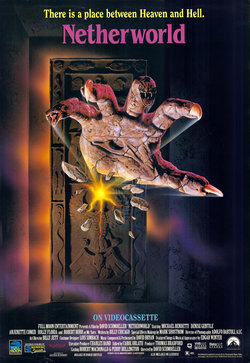
There are any number of movies out there, and you find some that have evaded much comment by checking out the freebies on Amazon Prime.  That’s how I found Netherworld.  It’s not a great movie.  In fact, it’s about the opposite, but it is more southern gothic and since I’ve been watching Louisiana horror, well, why not?  It was free.  The story doesn’t make a whole lot of sense, which is a pity because the ideas seem to have some potential.  So, Cory Thornton has inherited his father’s Louisiana estate.  He didn’t know his father and the estate is run by an improbable staff of one.  (One suspects a low budget had something to do with that.  For the film, not diegetically.)  The estate abuts a brothel where one of the employees turns evildoers into birds with the help of magic.

Meanwhile, the young master finds hints how to raise his estranged father from the dead, which, for some reason, he decides to do.  There are dream sequences and perhaps shades of Papageno.  Lots of birds in this film.  Cory—not very bright—only discovers late in the movie that his father was evil.  Hm, no hints of that in his admitted sexual dalliances and his desire to be resurrected.  No siree, none at all.  By the end I wasn’t surprised to learn that it was released directly to video.  But I was led down the rabbit hole by David Schmoeller, the director.  Schmoeller has received notice of such people as Stephen King, and has given the world some notable cult movies.  It’s fair to say he never made it big in Hollywood, but he worked on some films of repute, even drawing in Klaus Kinski at one point.

There are several tiers to the creative life.  There are those who attain fame, and layered down from them, those who produce movies, songs, novels—any kind of creative output—to those most of us have never heard of.  I find this profoundly hopeful.  Nobody is known to every single person on this planet.  Even the famous aren’t known by everyone.  I like to think I’m reasonably informed, but I keep on hearing about celebrities in art forms I don’t follow and have no idea who they are.  So before watching Netherworld I never paid attention to David Schmoeller, but then I learned he’d nevertheless made a career out of doing what he enjoyed, without becoming a famous director along the way.  There are some practical obstacles, of course.  Getting that first book published, or first movie distributed, but if you can get over that wall there may be a possibility of doing what you like.  It may not make you rich, but you’ll have accomplished something important.


Not What It Says

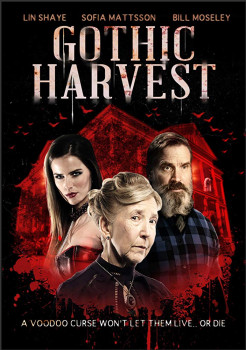
The title sounds promising.  Gothic Harvest.  But the movie in no way lives up to it, even with its vampires vs. voodoo theme.  So, during Mardi Gras a group of four coeds decides to party in New Orleans.  Of course, this is the capital of American voodoo.  While drinking themselves to oblivion, one of them gets picked up by a local and taken back to the family home.  There, of course, she’s kept as food for the “vampire.”  An aristocratic woman who fathered a child with a slave has received a curse—she and her child remain alive, she aging, while the rest of the family is arrested at their present age.  (Really, the story makes little sense, so don’t ask.)  They need young blood to keep the aristocrat alive so that they can continue living.  In the right hands such a story might’ve made a passable horror film.  These weren’t the right hands.

It’s a good thing I’m trying to develop an aesthetic for bad movies.  The acting is bad, the dialogue is bad, the writing is bad.  Is there a moral here?  Don’t go partying during Mardi Gras since you might get picked up by a family under an ancient curse?  And  would it really hurt to do a second take of scenes where an actor stumbles over their lines?  I don’t know about you, but to me the title Gothic Harvest suggests that lissome melancholy of October.  You can start to smell it in the air in August and you know something is coming.  Honestly, I’m not sure why more horror films don’t capture that successfully.  I’m always on the lookout for movies that will catch my breath in my throat with the beauty and sadness of the season.  They are few and far between.

So, like a clueless coed during Mardi Gras, I’m lured into movies whose titles promise such things.  One of the movies that I, inexplicably, saw when I was young was the James Bond flick, Live and Let Die.  Roger Moore had taken the reins from Sean Connery but that film set my expectations for both the Big Easy and voodoo.  I’ve only been to New Orleans once, and that during a conference.  It was before the revival of my interest in horror.  Successful horror has been set there, of course.  The one thing Gothic Harvest gets right is the evocative nature of Spanish moss.  And the opportunity to try to learn to appreciate bad movies.


Teaching Horror

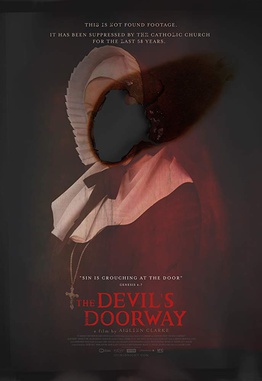
Critics who complain that Aislinn Clarke’s The Devil’s Doorway has nothing new really have no appreciation for parables.  An Irish found-footage film, The Devil’s Doorway is, as it clearly states, a lament over the Magdalene Laundries in Ireland.  I’d never heard of these institutions that existed until less than 30 years ago.  Founded by the Catholic Church, these “asylums” were places where women in trouble were essentially treated as slave labor.  Women, who often have difficulty hiding the results of sexual promiscuity (something men more easily get away with), were put to work in these reformatories.  I don’t know if the conditions were as bad as presented in the movie, but they provide a springboard into a perfectly serviceable horror film.  The horror tropes may be familiar, but that’s true of most horror of these days.

Two priests are sent to a Magdalene Laundry to investigate a reported miracle of a bleeding statue of Mary.  Please pardon my invocation of Alice Cooper here, but “Only Women Bleed” would be appropriate to consider.  Fr. Thomas, older and skeptical, doesn’t believe in miracles while Fr. John, the “techie” (it’s set in 1960) films the proceedings.  The priests uncover layer after layer of hypocrisy and deceit.  The Mother Superior, who shows no deference to the priests, insists that many of the pregnant women that have passed through the asylum were impregnated by clergy.  But there’s more.  As the statues bleed, a young woman, a pregnant virgin, is found kept in a dungeon.  Ghosts of murdered children cavort through the night.  A satanic niche for a black mass is discovered.  And the pregnant virgin is also possessed by a demon.  There’s a lot going on here.

To mistake all of this as “just a horror movie” is to miss the point.  Such is the way with parables.  Clarke, the director, was an unwed mother at 17 who realized that, had this happened a few years earlier, she could well have found herself confined to a Magdalene Laundry.  The movie doesn’t, it seems to me, condemn Catholicism per se.  For example, the two priests documenting the activities seem to be good people.  Fr. Thomas, as it turns out, had been born in this selfsame institution.  Raised as an orphan, he became a priest who, not surprisingly, doesn’t believe in miracles.  He too, was a victim.  Religious horror serves many purposes.  Often the very unfamiliarity of religion itself can drive the fear.  Another purpose, however, is to educate.  The Devil’s Doorway educated me, and I appreciate the parable.


Prey Again

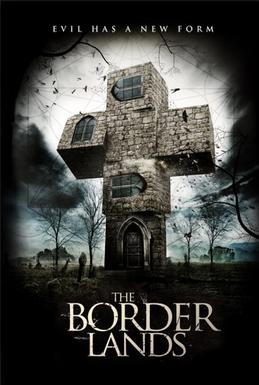
Let’s begin with the title.  Final Prayer was released in the United States as Borderlands.  I still found it on a free streaming service under its UK title, and I’m glad I did.  The movie falls under a a few different categories—cinéma vérité, found footage, and folk horror come immediately to mind.  The story follows a set of three very different Vatican-sent investigators, promotors of the faith, to check out a miracle claim in Devon.  I was a little confused at first, assuming this was an Anglican church, being in England.  One of the investigators, Deacon, a religious brother (monk not associated with a monastery), Gray, a techie who has some basic beliefs, and Mark, a priest technically in charge.  There’s tension between the men and between them and the locals.  The parish priest believes God appeared during a baptism at the parish that was being filmed by a family member.

The investigators come up with plausible explanations for the “miracles” caught on tape, but they also find some phenomena that are difficult to explain.  The local priest, distraught that they are disproving the “miracle,” jumps from the church tower, killing himself.  Mark, taking this as an admission of guilt for a hoax, closes the investigation.  Deacon, however, refuses to give up and calls in Fr. Calvino, who mentored both he and Mark.  Calvino believes the church was built on pagan sacred ground and it must be purified.  The ceremony, however, doesn’t end the way it was expected to.  All the while, the locals are—mostly passively, but at times overtly—hostile to the team.  Calvino’s revelation of the pagan background, however, makes clear that at least some of the locals haven’t given up pagan ways.

There are a number of elements worthy of commentary here.  It seems likely that a longer piece will be necessary to cover much of it.  A discussion in the local pub between Deacon and Gray, before calling in Calvino, raises the central question.  Gray, as a layman, suggests that pagans had to be worshipping something they believed was real before Christians came along.  He wonders if intruders (Christians, in this case) were unwelcome by this earlier deity.  Deacon, who is skeptical, but who’s come to believe that a former priest was involved in pagan worship, resists such thinking.  The ending makes clear what’s been going on, but getting to that point does involve quite a lot of religious discussion.  Horror and religion go naturally together, as I often opine, and this is a particularly good example of their common labor.


Plus One

When one of your oldest friends suggests a movie, it’s a good idea to watch it.  I began watching Godzilla movies when I was quite young but I stopped after seeing the 1998 Roland Emmerich version.  A friend from high school told me I should see Godzilla Minus One, and I took that advice seriously, if slowly.  It certainly raises the bar on kaiju movies.  An epic film of over two hours, it isn’t just a monster destroying towns—it may not be a standard horror movie but it is an exceptional Godzilla film.  Following the story of Kōichi Shikishima, a kamikaze pilot who couldn’t bring himself to suicide, it introduces the kaiju in the last days of World War Two.  There is a lot of political sensitivity in the movie.  Godzilla—by far the scariest I’ve seen—kills off the Japanese crew on a Pacific island.  Shikishima survives and returns home to find his family dead from bombing in Tokyo.  He is shamed by his neighbor for failing in his kamikaze duty.

Shikishima assists Noriko Ōishi, also without family, in raising an orphaned infant.  Meanwhile, Godzilla starts reappearing.  The problem is, tensions between the Soviet Union and United States means that outside help isn’t available.  Japan had been forced to disarm its military due to the war, and therefore it has to rely on civilians to organize and try to stop the monster.  They devise a plan to try to sink the monster far enough into an ocean trench to crush it, and barring that, raise it rapidly to the surface so the depressurization will be fatal.  Meanwhile, Shikishima, who believes Ōishi died in a Godzilla attack, discovers an experimental new plane that he then has made into a kamikaze-style fighter.  The plan is to fly it into Godzilla’s mouth, killing the monster.

As a movie this succeeds in making the human story poignant enough that the kaiju threat becomes a way of tying together the fragments of a life shattered by war.  Indeed, the condemnation of war is one the elements that makes the film exceptional.  Godzilla is, of course, radioactive, but the movie doesn’t make that a cudgel.  No, it explores how human foibles—beyond war, the national posturing—prevents humans from helping one another in time of need.  And how war itself destroys life among the survivors.  Like all Godzilla movies (and there are many), it leaves many holes in the story, but it has the feeling of a real movie.  I agree with my friend that it’s well worth seeing.


Ride the Ghost

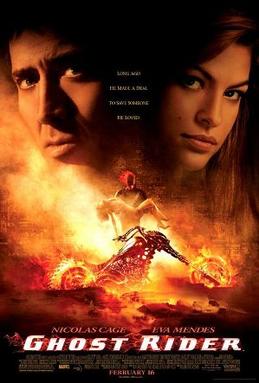
There’s a book in this, for some enterprising person.  You see, I watched Ghost Rider because I felt I had too.  I’m not familiar with the Marvel comic on which it’s based, but I’d seen many references to it and knew I had to catch up.  That having been said, I don’t think it’s as bad as the critics opine.  First about the movie, and then the book.  Johnny Blaze makes a deal with the Devil (Mephistopheles) to save his father from cancer.  The big M then has his father die in a failed stunt.  (Father and son are motorcycle stunt riders.)  Blaze is compelled to become “the Devil’s bounty hunter.”  He, like the biblical Satan, accuses evil-doers, only with his flaming skull head and super powers, he condemns said evil-doers without being evil himself.  He transforms at night and Mephistopheles wants him to take out his (M’s) son, Blackheart.  He ultimately does, but disses the Devil at the end.

One of the questions I have about metaphysical horror (or action/adventure) is how moviemakers have to make the fight scenes physical.  Shooting a non-corporeal entity with a shotgun, or wrapping said entity with a chain, should do nothing to it.  There’s no physical body to affect.  That’s the difference between movies like this, or Legion, or Constantine, or any number of others, versus The Exorcist and its kin.  The Exorcist portrayed an evil that was real, but non-corporeal.  It took over the body of Regan, yes, but nobody was running around with guns, swords, or chains to try to take the demon down.  I think that basic underlying fact is one that makes such movies falter with critics, if not at the box office (where they tend to do well).  This leads to the book.

One of the main points of Holy Horror is that many people learn their religion from pop culture.  That being the case, someone needs to write a book on how Hell is viewed by the average citizen.  The kind of person who watches movies like Ghost Rider.  Movies that have a definite idea of what Hell might be like.  Most people probably have little idea what a soul in torment might be.  (The rise of mental illness, however, may be changing that balance.)  They imagine physical pain inflicted by nasty weapons that people use on one another.  Someone should look at this idea from the perspective of what religions, such as Christianity, actually teach.  I’ve got my plate pretty full with potential books, but here’s an idea free for the taking, courtesy of Ghost Rider.


Dangerous Dreams

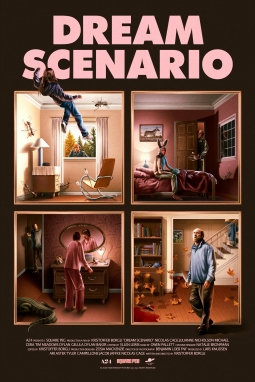
A friend wondered what I might make of Dream Scenario.  As much as I like movies I can’t keep up, what with a 9-2-5 job and writing my own books.  I’m really glad, however, that I learned about it.  It’s one of those movies with a difficult to define genre.  IMDb tags it as “comedy,” “drama,” and “fantasy.”  Rotten Tomatoes goes this route: “Comedy/ Drama/ Mystery & Thriller/ Horror.”  Is there anything this movie is not?  There are definitely some horror cues here, but it doesn’t feel especially like horror.  Except when it does.  Ari Aster, one of the producers, is associated with “art horror” films—think Hereditary.  Think Midsommar.  And it’s an A24 movie, but I’ve read that they’re moving a bit away from horror (the only kind of movie for which I know them).  So what is Dream Scenario?

In brief, it is the best I’ve seen from Nicholas Cage.  I’ve liked some of his films, but this one is incredible.  Certainly the story helps.  Paul Matthews (Cage) is an unremarkable biology professor who suddenly begins appearing in people’s dreams.  Nobody can figure out why, but when the story gets on social media he becomes famous.  Everyone loves him.  Then something happens.  The dreams become nightmares and everyone turns on him.  That summary doesn’t do justice to the film, but it’s essentially what goes on.  The telling of the tale, however, is masterful.  The nightmares, which are briefly shown, are what make this any kind of horror.  There’s no lingering over the fear.  It’s just part of Paul’s new life.

The closest I’ve come to encountering this idea is the novels by Hank Green: An Absolutely Remarkable Thing and A Beautifully Foolish Endeavor.  Of course, Green knows what fame is like—something few accomplish.  The movie explores how fickle it can be and how swiftly and viciously it can turn on those who find it.  In that regard Dream Scenario is also an exploration of life in the internet era.  It’s a time when the kids have to be asked to put down their phones for family time over a meal.  When the result of constant connection is “trauma.”  Unlike fame in the last millennium, “going viral” is just a matter of waiting until someone comes along with something that the net likes better.  And the commentary about how to merch shared dreams takes this in quite a different direction from Inception.  Dreams are strange, and remain poorly understood.  This is a movie that will make you ponder how much they are like the internet, and the results can sometimes be a nightmare.


One out of Three

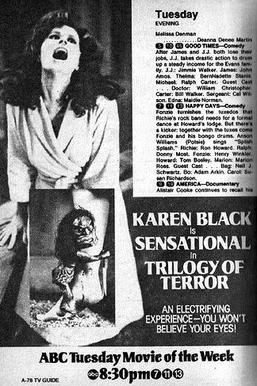
While reading about Dan Curtis, I became curious about Trilogy of Terror.  As a child subject to nightmares, my “horror” watching was limited to Saturday afternoon movies on television and Dark Shadows (also a Dan Curtis production).  In other words, I didn’t see Trilogy.  While we were allowed to watch The Twilight Zone from time to time, I understand my mother’s reluctance to let us watch scary content.  She was trying to raise three kids on her own, one of whom (yours truly) was plagued with bad dreams.  Why would you let them watch scary stuff, particularly before bed?  In any case, Trilogy was a made for television movie; Curtis did some theatrical films, but mostly stayed with television.  It consists of three segments starring Karen Black, based on stories by Richard Matheson.  Only the third one was scary.

Poster, from TV Guide, courtesy of Wikimedia Commons, copyright: TV Guide

The first two segments feature Black as either the apparent victim of blackmail or being controlled by a drug-addicted sister.  The stories, being Matheson, have twist endings, but they don’t really scare.  The final segment, for which the movie is remembered, involves the trope of the animated creepy doll.  That made people sit up and pay attention.  This wasn’t the first creepy doll exploited by horror, but it did predate Child’s Play and, of course, all those Annabelle movies.  The doll here was a Zuni fetish.  Its purpose is to enhance hunting skills and, of course, it comes with a warning.  Don’t take off its golden belt or the spirit trapped inside will be released.  The belt comes off, of course.  The doll naturally attacks Black and, not being really alive, can’t be killed.  The movie made an impression back in the day and is difficult to locate now without shelling out a lot for a Blu-ray disc.  (Diligent searching will lead to streaming options, however; trust me.)

Having inherited more realistic scary dolls in the franchises mentioned above, it takes a bit of imagination to realize how frightening this would’ve been in the mid-seventies.  Although a Zuni fetish isn’t a toy, killer toys had appeared before and would appear again.  They all seem to rely on the uncanny valley where things resemble people but we know they’re actually not.  We survive by being able to read other people and getting an idea of their intentions.  The fetish here has pretty clear violent intensions, being a hunter with pointy teeth.  We all know that there are some people like that.  Such television movies aren’t always easily found, and if they’ve become cult classics like Trilogy of Terror, discs are priced pretty outrageously.  If you’re unrelenting in your searching, you might just find your possessed doll.  And an early example of what’s still a pretty scary idea.


Mad Homework

Watching movies can be studying.  It’s all a matter of what the exams are.  I studied enough when I was young to know that Vincent Price was a horror star.  Probably I had no conscious idea what “horror” was yet, contenting myself with terms such as “scary movies” or “monster shows.”  The Mad Magician was one of his earlier efforts and not really a great film.  The Prestige, of course, makes any magician film pale in comparison.  Still, many special effects were new in 1954 and gimmicks could be used to lure audiences in.  Many of these movies, such as Mad Magician, are ironically difficult to locate these days, having had their distribution rights bought up by various companies who know that some of us still have homework to do.

Although classified as a horror movie, there are really only a few tense moments in the whole.  It seems pretty clear who’s going to be magiced to death before it happens.  One does wonder how you avoid massive blood splatter when cutting someone’s head off with a buzz-saw.  (It might’ve made quite a 3-D effect, had they decided to put it on camera.)  Audience tolerance (and the Hays Code) wasn’t up to that level in the fifties.  It seems there was a lot of learning going on in the day.  How to make a movie frightening without violating strict rules regarding what might be shown?  Of course, the combination of writers, directors, producers, and actors have to combine just right to make a winning film and stories that rely too much on 3-D tend to show.

The villain in this case, as is often true in early Price movies, has justification.  The murders begin because his sponsor insists that any trick he invents, on or off company time, belongs to him.   Many modern employers try to institute similar terms—their salary buys you, in essence—while claiming to offer a good work/life balance.  That’s a new and foreign concept to our farming ancestors, I suspect.  People (and corporations) like to own other people to do the hard work for them.  Our awareness of this too-human tendency led to the necessity of unionization and other ways for employees to push back against the machine.  In other words, there is a bit of pathos in this early Price horror film.  There isn’t much horror but there is some social commentary.  And, of course, Price would move on to other films that could better showcase his talents.  Not all studying feels rewarding, but it’s necessary.


Not Really Free

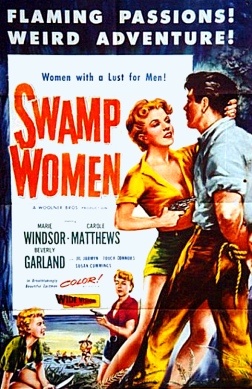
I admit that I’m a cheapskate.  When you grow up poor, that comes naturally.  For some of us the myth of scarcity is less of a fable than it is for others.  Perhaps that’s why I like Roger Corman movies.  Or usually do.  And it’s also the reason that I bought the Classic Features Horror Classics DVD set years ago.  50 movies!  And cheap!  Now, in my defense, I bought this collection before streaming was a thing.  I’d become somewhat addicted to horror movies and renting was pricey and hey, fifty movies!  Of course, they’re public domain.  Some of them are pretty bad.  You can stream most of them for free, but with commercials.  I was in the mood for my fellow cheapskate Roger, so I decided to try Swamp Women (it’s in the collection).  Now, why it was considered horror I don’t know.  It must be pretty difficult to find that many public domain movies in any category.  It was just over an hour and I thought of it as homework.

Three tough-talking cons break out of prison with the help of an undercover cop.  They’re all women, of course.  The cop is there to make sure the stolen diamonds they hid are found.  And to get out alive.  This was a very cheap movie.  The writing is puerile and there are plot holes large enough to row a boat through.  Still, it’s a Corman film.  The only real horror comes from an alligator and a snake—it seems that couldn’t afford more than one of each—and it ends up pretty much as you’ve pegged it will once the endless stock footage of Mardi Gras is over.  What I found interesting, after reading a history of American International Pictures, is that even though co-founder James Nicholson was helping Corman raise money for the film AIP didn’t serve as the production company.  After seeing it, it’s pretty clear why not.

The critics gave this a pretty tough time back in 1956, sometimes noting that it did at least attempt some female psychology.  Really the only psychology on display was who might end up with the one guy they decide to keep as a hostage.  When his girlfriend drowns after trying to steal the only boat, he barely frowns.  I was hoping (I try not to read about movies before watching them) that there might be a swamp monster or something.  I mean, swamps and monsters naturally go together, don’t they?  I guess even those putting together public domain movie collections might be a bit cheap from time to time.  All of us skinflints understand each other, I guess.


Pearl X

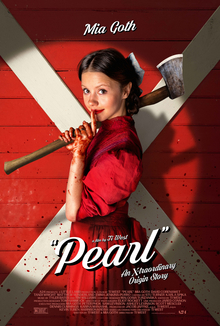
The danger to starting something new is that you’ll get hooked.  I watched the unusual horror film X because it was getting some good press, only to find out that by the time I saw it Pearl, the prequel, was underway.  It took some time before Pearl came to a streaming service within reach, so once it showed up I had to sit down and see it.  Like X, it has a strong element of religion in it but Pearl is really the exploration of a mental imbalance slowly taking over a life.  Set toward the end of World War I, Pearl lives with her parents while her young husband is “over there.”  Her father’s an invalid and her German mother is controlling and critical.  (My grandmother, also of Teutonic stock, had a similar outlook, I recall from her living with us.)  Pearl wants to be in show business, but down on the farm there are always chores and very little opportunity.

Along with her sister-in-law, she tries out for a dance troupe (auditions in the local church), but this is only after she has committed a triple homicide (one of them, arguably, accidental).  In her mind she’s brilliant, but the judges see it more like her late mother warned her.  Perhaps the most stunning shot is the long, uncut confession she makes to her sister-in-law.  Of course, she now has to kill her as well.  Her sister-in-law had won the dancing part, after all.  The progression of Pearl’s madness is set off against a retro filming style that borrows from The Wizard of Oz.  Bright colors and period costumes add to the feel and underscore that something just isn’t right.  In other words, it’s quite a disturbing movie.

I suppose this film might trigger those who feel uncertain of their grip on what we normally consider reality.  It also raises the danger of desiring something that is, in reality, out of reach.  For someone who’s longed for a career that those who know me have always declared the one best suited for me, I felt a tug or two.  My need doesn’t reach as far as murder.  As a pacifist and a vegan I’m not the best candidate for such things.  But I do know what it is to be denied a deeply held dream.  In fact, I do dream about it with some regularity.  (Teaching, for the sake of clarity, not murdering.)  The plot seems to line up a little crookedly with that of X, but the two movies are very different, yet similar.  I hear a third installment’s on the way, and that’s dangerous news.


Who Recommended?

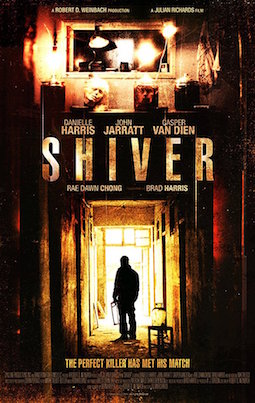
A couple of things: one-word titles can be confusing, and I need to start writing down where I get movie recommendations.  Trying to live reasonably on an editor’s salary, I can’t afford purchasing movies all the time, so I stream what’s free, now only when it’s on my list.  That’s how I had the misfortune of watching Shiver (2012).  I’m not sure it was the right movie, but I couldn’t find any others by that title near the top of IMDb and I couldn’t remember where I got the recommendation.  Although it uses many standard horror tropes, this flick veers a little too much into torture porn for my liking.  Also it’s very poorly written and many of the scenes are improbable (to put it mildly).  The police are totally incompetent (how many times can a serial killer’s intended victim be assured she’s safe by police when they can’t even get the perp to prison in good order?), almost to a Keystone degree.

And this isn’t some Hannibal Lector, either.  He’s kind of a psychopath that’s been making a living selling jewelry to his eventual victims.  Of course he’s a sexually frustrated guy who was bullied as a kid.  See, there are some moments of trying to establish some kind of social commentary, but the writing and most of the acting keep getting in the way.  The violence toward women goes unremarked, and that’s probably what most requires comment.  So I’m sitting here scratching my head trying to figure out who, or what, might’ve suggested this movie to me.  Or is there a different Shiver?  Did somebody leave the “s” off the end?  (I’ve already seen that one.)  I really do need to keep better records.

Bad movies come in many varieties.  This one was disturbing from any number of angles.  I don’t tend to watch serial killer movies.  Violence against women bothers me a lot.  Every main character had a bad childhood.  (One of the stories is simply told and then dropped.)  It’s a movie that might helpfully come with trigger warnings.  As I watched I wondered.  I wouldn’t been watching this if someone, or some respected publication, hadn’t recommended it to me.  Who and why?  Since I watch movies on weekend mornings, mostly, a bad one can start the day off on the wrong foot.  Someone, or some source, suggested Shiver.  Or maybe someone forgot a letter.  That’s the problem with one-word titles.