Spring Halloween

Being a lifelong fan of Halloween, it’s only dawning on me now that Walpurgis is almost precisely half-a-year from its October sibling.  This occurred to me this year for a couple of reasons.  Someone from Sweden emailed me on April 30, noting that Walpurgis was still celebrated there.  (In an amazing, almost superhuman, show of restraint I did not mention Midsommar).  I tucked that away.  Then one of the very few Facebook groups I follow (Halloween Madness) had lots of posts over the next day or so noting that Halloween is only half-a-year away.  The penny finally dropped.  Walpurgis is Halloween in April.  Well, not exactly, but it could be.  The idea of the autumn being a spooky time of year may trace its roots back to “The Legend of Sleepy Hollow,” as I point out elsewhere.  Traditionally, the scary season was around the winter solstice, now known as Christmastime.

Walpurgis Night in Sweden; image credit: David Castor, public domain via Wikimedia Commons

Now, I enjoy Christmas a lot.  It is family time.  It is time off work.  It is hunkering down cozy time.  I read a lot and watch movies without having to interrupt everything to stare at the computer for eight or more hours every day.  I also take a bit of horror with my holiday.  There are Christmas ghost stories from before when Christmas became a capitalistic enterprise, giving the warm glow of childhood memories of gifts and such.  I try to keep that tradition alive, without spoiling things for my family.  But things can also be spooky in the spring.

My strange schedule of awaking around 3 a.m. to do my writing means that I always wake up in the dark.  I jog when it is just light enough to see.  Yes, it can be spooky in April.  And the weather, which is still far from certain—the Germans have a saying, “April does what it wants”—can be downright scary.  And there is an extant tradition of a scary spring holiday.  Walpurgis Night (Walpurga was actually a saint) was the commemoration not only of Walpurga, but the driving out of pestilence, various diseases, and witchcraft.  Its spooky potential was realized by Disney in its first Fantasia, but it hasn’t really taken off here in the States as the second Halloween.  It is celebrated in some European countries and it seems to me that it could make a useful addition to paid holidays where Christmas is fueled by the lucre we labor to give to others all year.  If I can remember, I will try to post more about Walpurgis Night in a more timely way next year.

May’s Cool Start

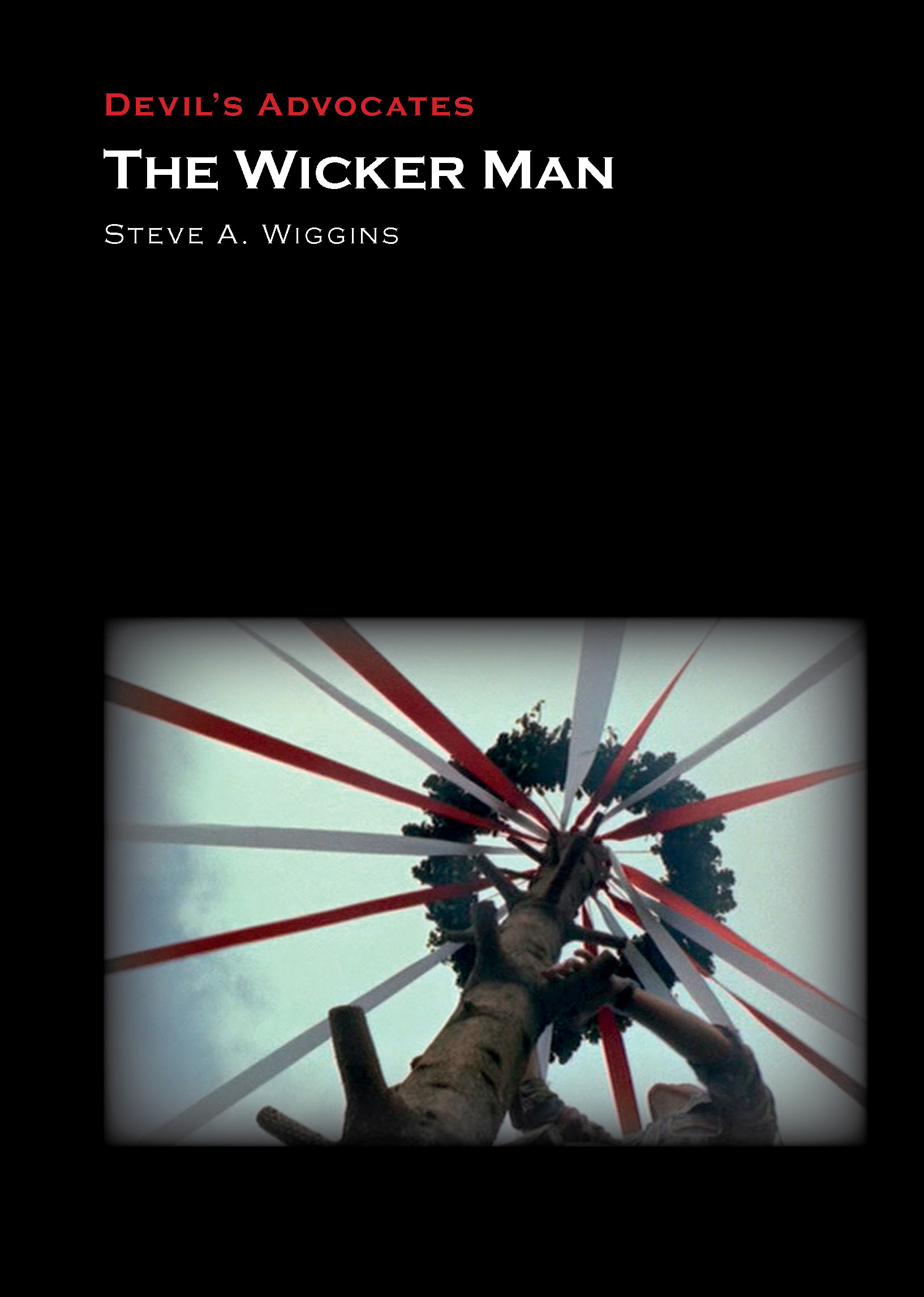
Beltane always makes me think of The Wicker Man, for some reason.  I recently got a royalty notice telling me sixteen copies had sold since the last statement.  (I never received that actual statement, but Worldcat shows that 419 libraries have a copy, making it my second best-selling book (maybe the best-selling; most royalty statements don’t include the total number sold, as much as authors would like to know that).  In any case, today is Beltane so I tip my hat to Sergeant Howie of the West Highland Constabulary and confess that I have two more books on the movie that have come out since I wrote mine that I haven’t read yet.  The reason is that I’m currently researching for a new book and Sleepy Hollow intervened.  But back to Summerisle.

The Wicker Man was a movie before its time.  The last of the three famous British films that spawned the sub-genre “folk horror,” it helped launch a new interest in ancient religions.  A friend pointed me to Children of the Stones (there will be a post on it in coming days), which was a British children’s television series with distinct folk horror undertones.  Maybe overtones.  It made me think of Wicker Man again.  And the way that folk horror has taken off in the past decade or two.  I’ve lost track of how many folk horror movies I’ve watched.  While discussing Christopher Lee with a friend lately, I was reminded how he once said that of the many movies he was in, The Wicker Man was the best.  It’s certainly a literate film.  Folk horror often tends to be.  Delving deep into what people (the folk) really believe can dredge up some very interesting possibilities.  I try to use them in my own horror writing.

Just because my book doesn’t explore the folk horror angle doesn’t mean I don’t think it’s not there.  (Sorry for the four-negative disclaimer.)  Devils Advocates at the time was looking for an approach that didn’t foreground folk horror.  Scholars tend to typecast Wicker Man.  I was working on a larger holiday horror project at the time—I may come back to it some day—and was surprised that nobody had approached the film from that angle.  The genre “horror” itself is a bit of a misnomer, and many of the sub-genres aren’t clearly defined.  For many people “horror” equates to “slasher,” but there’s a great deal more out there than that.  The Wicker Man stands witness to that on this somewhat cool May Day decades later.


Demonic Plot

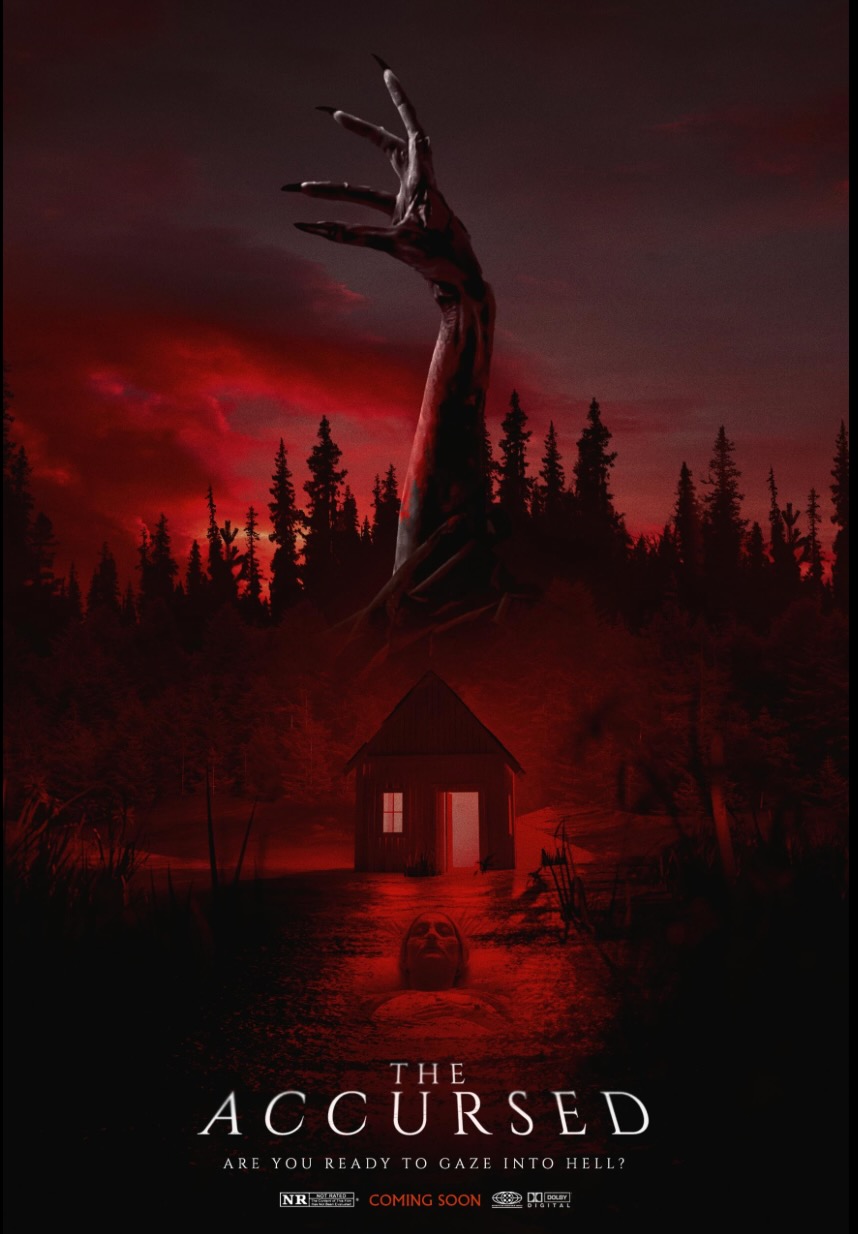
The problem with pithy titles is that many of them apply to more than one movie.  That’s true of The Accursed, so I’ll specify that I mean the 2022 film, directed by Kevin Lewis.  Other than attempting too much—it’s a bit too complex for the needs of the story—it’s not a bad movie.  The production values are pretty good and there’s none of the goofiness that sometimes slips into lower budget efforts.  There were a few moments when it was obvious that anyone else would’ve fled the scene—of course, that would’ve changed the outcome.  And it is a film that I could’ve included in both Holy Horror and Nightmares with the Bible.  Obviously, there’s demons involved.  So what’s it all about?

Well, there’s this woman who summons demons, for a price.  If you can’t pay then the demon accepts your child in lieu of cash.  The film starts with Mary Lynn, a local, attempting to kill the old woman, but a demon inhabits the medium and Mary Lynn knows she’ll have to come back to finish the job later.  Meanwhile, Elly, a nurse whose mother recently died by suicide, is offered a job watching a comatose elderly woman at her home until she can be transferred to the hospital.  The old woman, we soon learn, is the medium from the opening scenes.  She’s not in a coma, a demon is in her.  It becomes obvious that the demon is after Elly, but she’s devoted to her duty as a nurse.  Cut off from neighbors, except Mary Lynn, she has no way of knowing what’s going on until she discovers a grimoire, the Key of Solomon, in the basement.  By the time it’s over just about everyone except Elly, Mary Lynn, and her daughter has been killed.

A complicated plot underlies the story, but it is a good example of religion and horror.  It quotes from the Bible.  And makes use of apples as symbols of being fallen.  A bit of the horror is over the top and ceases to be scary, but overall it’s a good effort.  It could also have been about ten minutes shorter.  Some of the scenes go on just a bit too long, like when Elly is trying to warn a police officer that he’s facing a demon rather than an old lady.  The fear takes its fuel from religion gone wrong.  It does mistake the word “crucifix” for “cross” but it nevertheless gets a B for effort.  Not bad for a freebie on a streaming service.


A Sense of Scale

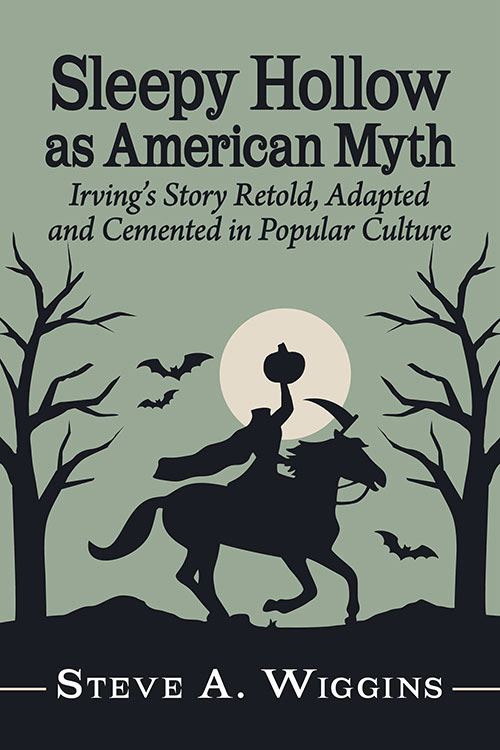
Most people have trouble imagining very large numbers.  The things we count, in daily life, seldom top the thousands.  To the human mind, a million is an almost impossibly large number to visualize.  This came to mind the other day when looking over a list of bestselling books of all time.  I glanced through one of Guinness’ lists, remarking some titles that I was surprised to find on the high millions list.  What really strikes me, however, is those on the other end of the scale.  Publishers Weekly estimates that four million new books were published in 2025.  Sleepy Hollow as American Myth was one of those.  Sales figures I’ve seen suggest it has sold less than a hundred copies.  I’d feel bad, but I’m in very good company.  Many books sell very few copies.  Unlike many that are simply churned out, mine take a lot of time and research to write, and, interestingly, those kinds of books just don’t sell.

I lack a sense of scale.  For example, Frankenstein (which was what I was curious about), sells about 40,000 copies a year.  That doesn’t make it one of the best selling books of all time.  Most authors today dream of selling 40,000 copies.  Successful books often sell about a quarter of that.  Authors need a sense of scale.  The few people who’ve read my Sleepy Hollow book have said good things about it.  It really seems to have caught the attention of AI only.  I advertised it with the Horror Writers’ Association, taught a class on it at the Miskatonic Institute, and contacted bookstores and libraries in Sleepy Hollow itself about the book.  Scale.  

Perhaps I’m odd in that I find books a treasure.  They really don’t appreciate in value until after some kind of apocalypse, or if centuries pass and only one or two survive.  Or, rarely, a first edition of a book that later becomes famous.  Such as Frankenstein, which had an initial printing of only 500 copies.  If you own one of those copies today (I don’t, just for the record), you must be quite well off.  Some of us write because we have ideas that boil over out of our heads and spill onto paper.  We do it although it doesn’t mean more money for us.  But we also do it because we want to share those ideas.  My timing was apparently off with Sleepy Hollow.  I wanted it to be out in time for a movie that was announced some three years or more ago.  I need a sense of the time scale for movies too.


Horror History

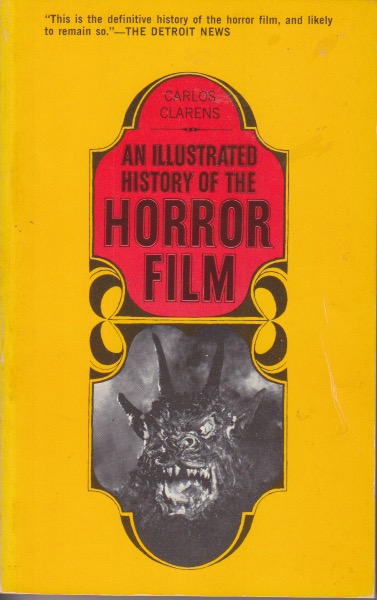
The problem with writing about the history of anything is that time keeps unspooling.  Published in 1967, Carlos Clarens’ An Illustrated History of the Horror Film has a certain innocence about it.  As a genre, horror had not been discussed much in book form yet at the time, thus part of the innocence.  Another part, however, derives from the fact that the very next year, 1968, is often considered the year horror “grew up.”  The reason for that is that both Night of the Living Dead and Rosemary’s Baby were released that year, forever changing the direction horror might go.  This book is a rare glimpse into what film critics thought of horror before it really came into its own.  There are many gems of horror history here and quite a lot of insight comes through.  On the very first page Clarens notes that horror meets some of the same needs as religion does.  At one point he states that horror avoids religious themes.  Then Rosemary’s Baby happened.

Another early insight in this book is that “horror” is a faulty title for the genre.  I’ve been suggesting this, quite independently, for years.  One of the alternatives Clarens mentions is “chiller,” which was common before “horror” took over in the 1930s.  Even today “thriller” and “horror” aren’t easily parsed.  Clarens tends to consider horror as involving the supernatural in some way.  He does discuss Peeping Tom, however, but not Psycho.  Hitchcock makes an entrance in the very last chapter where The Birds is discussed.  Turning back to the supernatural, this has largely been the draw to horror for me.  Something beyond the expected, whether it be vampires in the night or unnaturally enlarged animals that rise from the use of nuclear weapons.  I’ve never really been a fan of slashers; I’ve stopped watching one or two because they don’t really appeal.  Slashers, unless you count Psycho and Peeping Tom, were in the future when Clarens wrote.

This book does a good job with early precursors to horror, going back to George Méliès, and spending long, lingering moments over silent movies.  The chapter on Universal and its role in the development of horror is quite good.  The slipperiness of the label, however, comes with science fiction.  As is well known, America’s interest in the fantastic in cinema tended to slip toward sci-fi in the fifties.  Some of this was also horror, and crossovers are still common.  But at the end of this book, Clarens ends up discussing mostly sci-fi.  There was a big horror revival coming the next year, however, but books of history are caught up in history themselves.


Still Sleepy

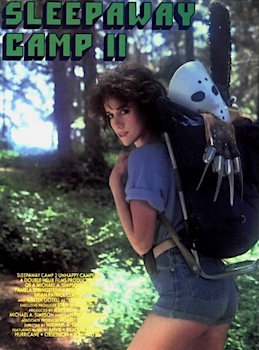
Being outside in the cold for several hours makes it difficult to think clearly.  That’s my official excuse for watching Sleepaway Camp 2: Unhappy Campers.  I’d just come home from the Lehigh Valley Book Festival and was having trouble warming up.  I threw on the blankets and figured I’d watch a horror movie—I’d just been talking to people about horror films for a few hours, and I don’t want to be untrue to my calling.  When I opened my streaming app the first movie suggested was the sequel to the truly bad Sleepaway Camp.  My mind was too muddled to make a critical decision, so I clicked play.  Now, not all sequels are created equal.  This one has a different director, different actors, and a different direction.  And also, Bruce Springsteen’s younger sister Pamela is the lead.  Okay, so time to sleep away again.

The plot is pretty straightforward.  Angela, the killer from the first movie, has been rehabilitated and has changed her name.  She’s a camp counselor again.  And she has a fervor for high moral standards.  She’s also insane.  By the way, this straight-to-video, low-budget release was shot as a comedy without really trying to be scary.  It is still very campy, but it is handled more ably than the first film.  Angela, who kills only bad kids, at least at first, is a kind of “angel of death,” according to lore that has grown about her since the first film.  Her methods for killing are both derivative and somewhat inventive.  Just the kind of film to watch when your brain is frozen from being outside in unseasonably cold weather all day.

It did make me wonder about a few things.  Those who make movies like this earn, presumably, at least some money off of them.  At this stage in my life, anyway, the opposite has been true of the books I write.  Maybe I’ve found my tribe—those who put their creative efforts out there without big corporate backing, hoping someone will understand what they’re trying to do.  Some of us do.  I can’t recall how I first learned about this franchise (maybe my head hasn’t thawed out enough yet to remember; we’re having yet another unseasonably cold Saturday) but it did step in as an easy choice when I needed one.  This isn’t a scary movie, but if you’ve ever been a camp counselor (I was for three of my college summers) it may bring some nostalgia with it.  And it’s no Friday the 13th part two.


Not Crystal Lake

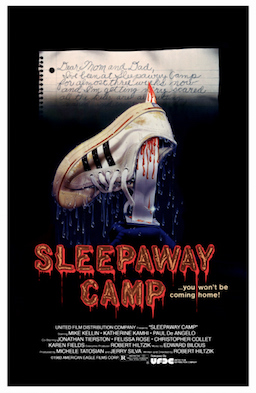
I’d heard just enough about Sleepaway Camp to wonder if it was so bad it was good.  I really knew nothing else going into it.  I won’t spoil the ending, but you might not thank me for that.  Two kids and their father are involved in a boating accident that leaves two of them dead.  Years later, an eccentric woman doctor is getting her son and his “cousin” ready for the summer at Camp Arawak.  Friday the 13th vibes begin immediately, but the tone and acting are way off.  This is camp in every sense of the word.  The cousins, Ricky and Angela, arrive, but Angela doesn’t talk and doesn’t join in any camp activities.  The other kids tease her, naturally.  Ricky defends her whenever he can, but some of the other girls are the worst tormenters.  Then the murders start.  A drowning that could be accidental.  Bees in a bathroom stall with a guy who’s allergic.  Is this accidental?

Then a stabbing in the shower, definitely not an accident.  Meanwhile clueless adults can’t seem to find any connections.  They’re concerned with adult matters like keeping the camp open (it’s a business, after all.)  They don’t pay much attention to the campers.  Nor do they seem to notice when all the guys sneak out to go skinny-dipping at night.  Or that the tormenting that Angela is undergoing could be called out.  Finally, after the camp’s owner is killed—in the one impressive special effect—the police are called in and the killer is found.  The movie is known for its twist ending, and although the movie was excoriated originally, critics have come around to appreciate at least some aspects of it.  I was curious enough to give it a try, but the performances, perhaps except for Angela’s, make taking it at all seriously impossible.

That having been said, the movie is strangely effective.  Perhaps it’s because even people my age can remember what it felt like to be an adolescent, along with all the confusion and vulnerability of that age.  On a rainy weekend afternoon a little escapism can go a long way.  And formulas, just like in math class, tend to work.  There’s a reason movies like Friday the 13th spin into so many sequels.  Even Sleepaway Camp ended up with four.  Although this was a groaner, I can’t be sure that in a moment of weakness, if I don’t have to pay for it, I might be tempted to go back to sleep-away camp with a sequel.


Glowing Television

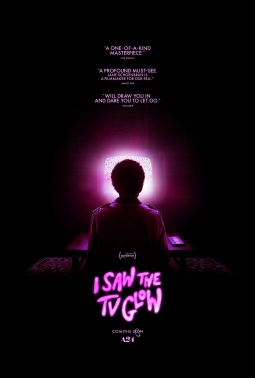
I saw some colleagues rather cagily recommending I Saw the TV Glow when it came out.  Considered psychological horror, it is a bewildering film.  This surreal story revolves around a television show, The Pink Opaque, which is ninth-grader Maddy’s favorite program.  She meets Owen, who’s in seventh grade, and asks if he’s watched it.  Since it’s on past his bedtime, he has to sneak to Maddy’s house to watch it with her.  Like her, he become hooked on it.  Maddy, however, has trouble distinguishing the show from real life.  Two years later she runs away from home, ostensibly to find reality in The Pink Opaque.  After a decade, Maddy finds Owen again.  He’s taken a dead-end job but feels that he knows what reality really is.  His parents dead, he carries on in his lackluster job.  Maddy tries to convince Owen that what he thinks is the real world is a television show and that The Pink Opaque is reality.  She wants to bury him alive so he can awaken to reality.

After twenty more years, Owen is still in the same degrading job, suffering in physical health and, apparently, mental as well.  After a breakdown at work, he discovers a television inside his chest.  It’s a bizarre tale, which is a clue that something more than meets the eye is going on.  A little reading reveals that Jane Schoenbrun, the writer/director, is trans and discovering that reality is what the film is about.  That does help make sense of it.  I tend not to read about movies before I see them, but I’d had this one recommended to me by a couple people whose judgment I trust.  Anyone who’s had an epiphany of self-discovery will probably be able to relate, at least in part.

There are some horror moments in the movie.  The implications of being buried alive—which comes up for four characters—is Edgar Allan Poe-nightmare material.  The ice cream man, in the original showing, is creepy.  And cutting open your chest to access a television inside is scary.  Also some characters have their hearts cut out.  All of this is surrounded by a pink glow and a pretty amazing soundtrack.  Unless a viewer has specific triggers though, I can’t see I Saw the TV Glow being especially frightening for anyone.  It’s not that kind of horror movie.  If, however, you are prone to existential horror, and sometimes wonder if reality is real, this could give you a bit of a jolt.


Row Your Boat

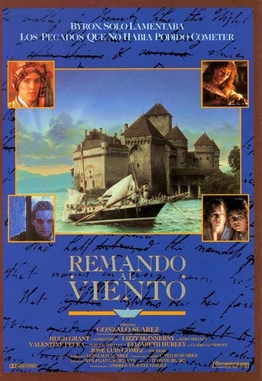
I’ve long wondered about what appear to be coincidences.  Specifically, about movies on the same topic that seem to come out at around the same time.  I saw Gothic about a year after it was released in 1986.  In 1988 two other versions of the Shelley-Godwin-Byron-Polidori-Clairmont meeting came out.  I’ve already written about Haunted Summer.  The third of these films was a Spanish production, Rowing with the Wind.  It is the most poetic of the three.  The dialogue is often poetic and it pulls out several historical details—some of which the other two films leave out.  Mary Godwin and Percy Shelley decide to elope, taking Claire Clairmont with them.  Lord Byron does not wish to see them.  He and John Polidori, his physician are out on a boat.  Boats play a large part in this movie.  Byron, played by Hugh Grant, soon comes to like Shelley.  Polidori’s role is underplayed and he dies by suicide before the party leaves Villa Diodati.

Mary Shelley’s monster, however, follows them.  Back in England it leads both Mary’s sister Fanny and Shelley’s wife Harriet to suicide.  Extending beyond the summer of 1816, the film follows the Shelleys and Clairmont to Italy.  They have their children with them.  When they come to Venice, they once again meet Byron, but Mary’s monster kills William Shelley (their son) and Allegra (Claire’s daughter).  Obviously, death is a major theme, along with boats.  (Historically, all of these people died, but not in such close time, but close enough to be tragic.)  The Shelleys stay with Edward Williams, a friend Percy met in Italy.  The monster then leads to Shelley’s death by drowning.  Byron’s death in Greece somewhat later is narrated by Mary but not shown.

The film is framed with a fictional arctic journey by Mary to pursue her monster.  Interestingly enough, no mention is made of Polidori’s story “The Vampyre.”  There’s not even any suggestion that he set out to write it.  Movies of this meeting often point out how the vampire and Frankenstein became famous because of it.  Rowing with the Wind is an arthouse movie rather than a studio blockbuster.  It isn’t a bad story.  It tries to tap into the sorrows of Mary, and again, historically she did suffer loss.  Her mother died shortly after she was born.  A child died before the first visit to Byron.  Percy’s first wife Harriet and Mary’s stepsister Fanny both died by suicide in 1816.  William died in Italy, as did her third child with Shelley.  Polidori poisoned himself.  Allegra died at five.  Shelley drowned in a storm at sea.  Byron died while trying to fight in Greece.  This film is a fitting tribute.


Alien Signs

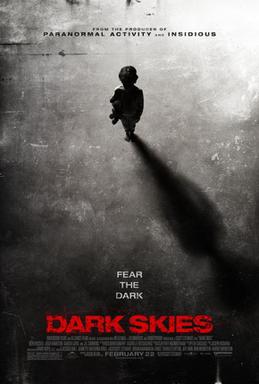
Personally, I find alien home invasion movies scary.  The combination of being awoken at night by a terror that seems plausible and the fact that there is nothing you can do to prevent it is genuinely terrifying.  Having said that, I wasn’t aware that was what Dark Skies was about when I decided to see it.  It does a good job of some things while others are less effective.  The Barrett family (parents, two sons) is going through a difficult patch when their younger son, Sammy, starts talking about “the sandman” visiting him at night.  At the same time, inexplicable events happen at night inside their locked house.  Daniel, the father, is unemployed and Lacy (mother) is having trouble at work.  The police think the kids are playing pranks but Lacy begins to realize they’re not alone in this.

Discovering the alien abductee phenomenon, she realizes that they have all the signs.  Having finally landed a job, Daniel doesn’t believe her.  Until he experiences it for himself.  The problem is nobody will believe them if they report it.  A fellow experiencer tells them they can fight back, but there is little they can hope to achieve.  The aliens, he says, take the one they first contact in a family.  When the aliens return, the Barretts try to protect Sammy, not realizing that Jesse, the older son, is really who they’re after.  There’s a lot of tension that works for this film but there’s also a number of questions raised.  The final reveal feels like a bit of a let down after all the build up.  The financial stress of Daniel’s unemployment seems to have done nothing for the plot.  And the burgeoning love between Jesse and a girl he likes simply drops.  As does the visit of child welfare.

Still, the ideas here are quite scary.  If you know something is happening and know nobody will believe you, that’s scary.  The idea that we are inferior to the technology of a more advanced race is also frightening.  The whole not knowing the motive of the monster works.  The tension build-up is good but the resolution leaves too much unaddressed.  Overall it isn’t a bad movie.  It did make me feel a bit paranoid after watching it, which is usually a good sign.  The acting is good, but the fatalism makes you wonder if there’s a point to the story other than to be afraid.  Dark Skies wasn’t bad for a last-minute pick for a rare free slot, if you can accept aliens as viable monsters.


Still Growing

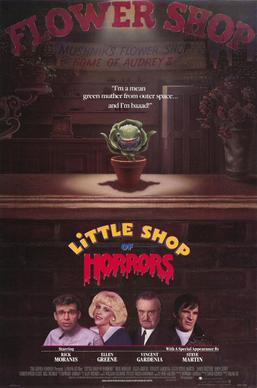
A couple of years ago I posted about Roger Corman’s Little Shop of Horrors.  Now life is so busy that when Friday rolls around my wife and I find ourselves at odds for deciding on a movie.  She’s not into horror and I’m often not in the mood for human drama after a week at work.  We recently compromised on the 1986 Little Shop of Horrors.  It has been many years since I’ve seen it although I watched it shortly after it came out.  Like Rocky Horror, the music makes the movie.  That and the appearances of Steve Martin, Bill Murray, Jim Belushi, and Christopher Guest.  The original was a comedy horror shot on a very short schedule but this Frank Oz production is a bit more lavish.  And the songs.  I’m a fan of classic rock-n-roll, and the show tunes here seem like a combination of Cats (the original) and Rocky Horror.  There’s an optimism to them.  And who couldn’t use a little hope?

Seeing the movie again brought home a phenomenon that’s been on my mind lately.  What you see first becomes your benchmark.  I only saw the 1960 version a couple years back.  Little Shop of Horrors was, to me, a musical.  It does use some classic horror tropes: thunderstorm at night, shadows of violence on the walls, and the ubiquitous fear of being eaten.  But unlike Roger Corman’s vision, this is primarily a love story about escaping Skid Row.  And, strangely, a feel-good film.  I suppose the lingering question is whether this is a horror movie or not.  Another phenomenon that’s been kicking through my gray matter lately is that “horror” really isn’t the best description for many movies so labeled.

My interest in origins led me to go back to the original a couple of summers ago.  That story developed because Corman had access to a set from a previous movie and wanted to shoot another using it.  The story took many forms before settling on a human-eating plant.  By the way, that still works for horror, as The Ruins shows.  Since his previous movie was a horror comedy, the movie I’m sitting down to watch on a Friday night was born.  Between the original and this one, the story was adapted into a stage play.  The movie version of the stage show was a box office success, and it still appeals to me on a night where we just have trouble deciding on a movie by which to unwind.


Leaving Soon

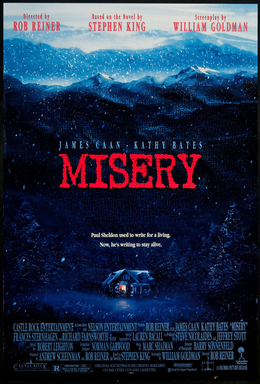
I’d been hoping to read the novel before seeing the movie, but there’s nothing like the words “leaving soon” on your streaming service to spur you into action.  So I watched Misery before I was ready to.  I remember the newspaper reviews from 1987, when the novel came out.  I didn’t read any Stephen King novels until those I’ve posted about on this blog.  There’s a full record here!  I do remember the reviews saying it was self-referential.  The protagonist, as in The Shining (is Jack Torrence a protagonist?), is a writer.  And the book is a writer’s nightmare.  When the movie came out in 1990, I had no interest in seeing it.  A couple of things changed my mind, however.  First of all, it is referenced all the time.  I didn’t even know how it ended.  Another factor was that it was a Rob Reiner horror movie.  And Reiner himself had been murdered a few weeks before I sat down to watch it.

I really wanted to read the novel first.  My reading pile is pretty high.  And currently the next Stephen King novel on it is The Dead Zone.  And yes, I have already seen the movie.  Unlike some critics, I think King is a substantial writer.  He has profound things to say, especially about religion.  And, of course, the movie Misery has plenty of that.  Annie Wilkes is a religious fanatic.  She’s also a fan of Paul Sheldon (the writer).  God tells her things.  She wears a cross.  She can’t stand swearing.  But even so, I wonder if King clearly had her religion in mind.  I would’ve guessed that, given her cinematic profile, she would’ve not been a wine drinker.  And I would’ve guessed that the Bible would appear in the movie.  She drinks and she doesn’t even quote the Good Book—at least not that I caught.

Some day, if I keep doing this long enough, I might make the connection between religion and horror plain.  I know scholars, not shackled by a 9-2-5 are working on that.  And like the books I have to read, there’s a waiting list for those I want to write.  One has my particular attention at this point, and I’ll be trying to put that to bed before starting on a new one.  Before working on such a book I’ll have to read Misery, the novel.  I do plan to do so.  I’m not a fast reader and I have quite a big stack.  In fact, I wouldn’t even be thinking about reading it now.  But my streaming service came up with those fatal words, “leaving soon.”


Don’t Look

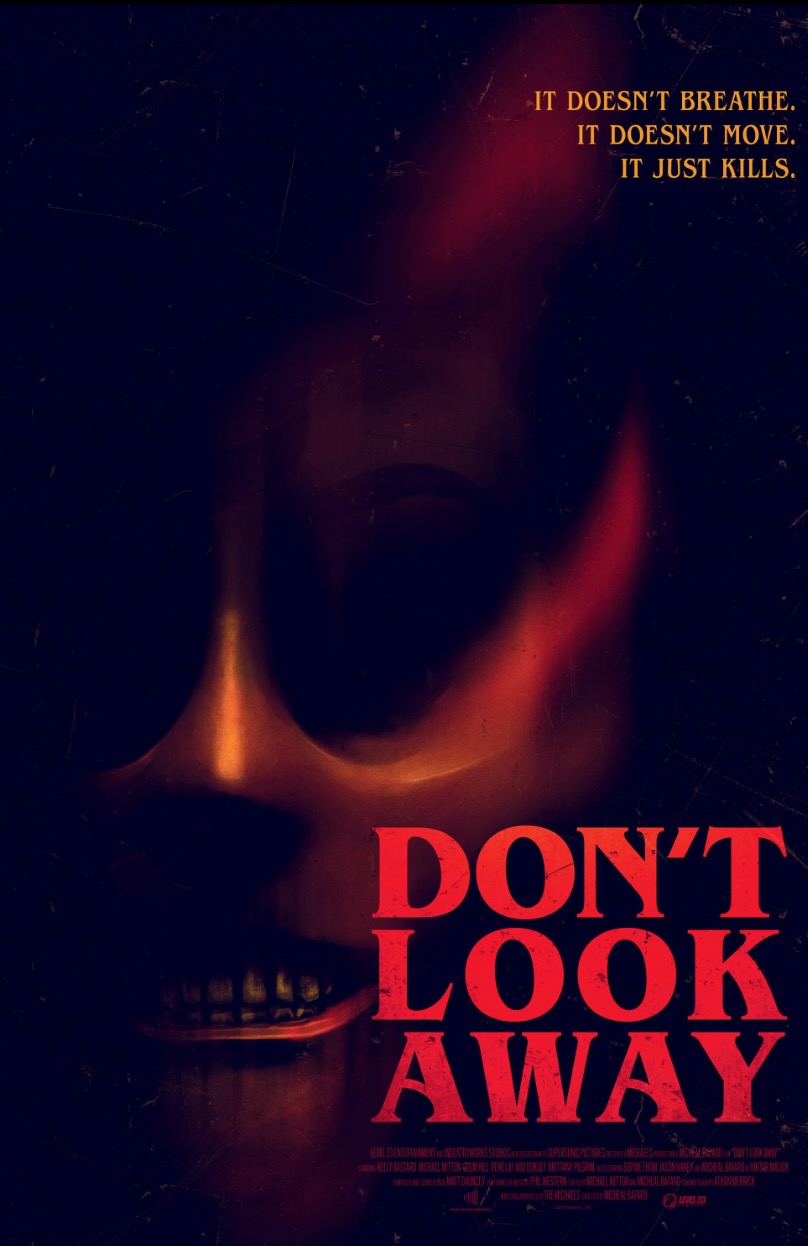
The title of this movie could stop one word shy.  Of course, I had been warned.  Don’t Look Away is a low-budget horror film.  A low budget in and of itself doesn’t make a movie bad.  Poor writing, poor acting, and poor directing do, however.  Since I’m learning to appreciate bad movies, this was an obvious candidate to watch because it was a freebie. So, a group of college-age friends fall afoul of a supernatural mannequin that kills.  Its origin is never really explained, except a vague reference to “the Devil.”  It is being hauled by long-distance freight so that its handler can bury it, rending it harmless.  But truck-jackers in New Jersey try to rob the truck and release the dummy.  It is seen by Frankie and begins following her, killing many of the people it encounters.  No reason is given—it just does.

Frankie’s boyfriend, Steve, is a rather clueless, and completely insufferable, grad student.  Her more reasonable friends realize that the menace is real, but the police don’t believe in killer mannequins.  After a considerable amount of time they realize that the mannequin can’t disappear if someone is looking at it.  They decide to stare at it until they can figure out how to dispose of it.  They need to prevent other people from seeing it, otherwise they will become its victims as well.  It’s all a rather silly premise.  Finally the handler shows up in New Jersey.  Since he’s blind he can’t see the mannequin but he figures if he kills the surviving friends, the menace will be stopped.  Frankie discovers that it’s almost impossible to hide or defend yourself against a blind man.

As far as the horror element goes, it really isn’t scary.  The face on the mannequin is decidedly creepy, but since no explanation is given of how it kills, there is no focus for any fears.  Yes, looking out your window at night and seeing a mannequin standing on your lawn would be frightening.  There’s so much not to like about this movie.  The pacing, the slipshod story, the soundtrack by one artist who is likely a friend of the director.  I’m glad to have seen it although Don’t Look Away isn’t one of those movies that’s so bad that it’s good.  When I next meet with the friend who recommended it, we can compare notes.  It gives you something to talk about.  If you do decide to look, you have been warned.


The Help

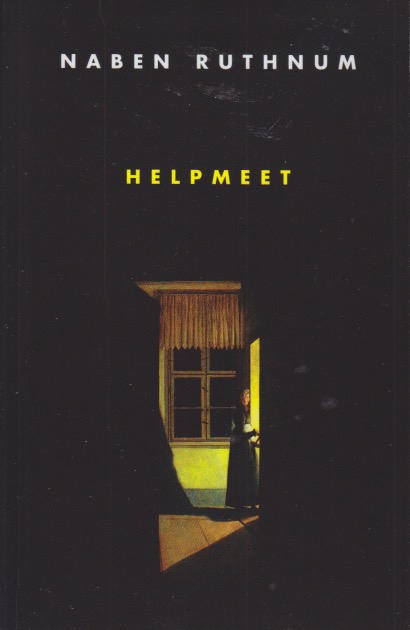
Helpmeet was recommended to me by a friend.  Since most of my reading these days seems to be in the form of long books, I welcomed a brief one.  And the story, which is gothic and distinctly creepy, unfolded quickly.  I’ll not give away the ending, but the premise is spooky enough.  Edward is a physician who is married to Louise.  This is in the late 1800s.  Louise is aware that Edward has been unfaithful, but she loves him nevertheless.  He is dying.  His request is to end his days in his ancestral home near Buffalo, New York.  Travel is difficult because his body is literally falling apart.  Other doctors don’t know what’s wrong with him.  Some acquaintances suggest a venereal disease, since, well, he hasn’t kept his love in one place.  Louise agrees to the move.  Edward has lost both his eyes and his nose, and some other extremities.

He has to be wrapped carefully for the move, which is by train.  In a private car.  Secrets are revealed.  The mysterious woman with whom he had an affair.  How she was able to reach inside his body.  And how she is coming to visit in their new location.  After all this the plot takes an unexpected twist, which I’ll leave out in case it’s a spoiler.  Atmospheric and melancholy, this is one of those horror stories that is easy to get into and difficult to put down.  Body horror is a sub-genre that can be disturbing since we all have to deal with bodies and their issues.  And bodies are tied to mortality.  We are pretty sure from the beginning that Edward is not long for this world.  His body has begun to decompose with him still in it.  Louise’s care for that body is also a factor that forces us to look at what we’d rather not see.  Out of love, in her case.  And maybe revenge.

Spare stories such as this can still be powerful.  There’s a supernatural element to the twist, but it doesn’t feel like a deus ex machina.  It has been there from the beginning, but the reader couldn’t see it.  Helpmeet also raises the question of how well we really can know another person.  Even couples have to spend much time apart and individual experiences can change a person.  Edward isn’t a sympathetic character here, but he’s not evil.  Louise has to accept him as a man with weaknesses, and one who requires, as the title suggests, a helpmeet.


No Reservations

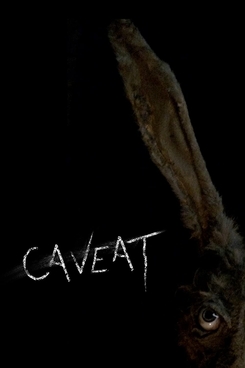
Having watched, and liked, Oddity some months ago, I was glad when a friend told me that Caveat was by the same writer/director, Damian McCarthy.  I don’t always pay close attention to director’s names unless I’m writing a book where that’s relevant.  I should pay more attention, since Caveat was also quite good.  And I found it on a streaming service for the price of watching commercials.  The premise is quite creepy.  Isaac is suffering from amnesia.  His landlord offers him good pay to watch his niece for a week.  She has a mental condition, he says, but she’s harmless.  She lives in a remote house and all he has to do is stay with her.  Distressed to learn that the house is the only one on an island, since he can’t swim, nevertheless he takes the job.  But there is a caveat.  He has to be chained in a harness that limits how far he can go.

Olga, the niece, is catatonic when they arrive.  When she starts walking and speaking she’s armed with a crossbow.  She tells Isaac that he was on the island before and that he locked her father in the basement where he shot himself with the crossbow.  His landlord, her uncle, is the one who sent him to do that.  He has no memory of it.  Isaac and Olga distrust each other, each attempting to get the upper hand.  Supernatural events take place while Isaac struggles to remember.  Isaac escapes the harness and locks Olga into it, but she shoots his leg with the crossbow.  There seems to be some indication that  Olga’s mother—killed by her father and uncle and buried behind a wall in the basement—is the source of the supernatural occurrences.  The landlord comes to the island and Olga shoots him and his dead sister-in-law stalks him in the dark.  Isaac manages to escape.

There is a bit of confusion about parts of the film, but it works as a distinctly unsettling horror story.  The toy bunny that Olga, and then Isaac, uses is very creepy.  Mostly it’s the premise that makes this folk horror scary.  Being left on an island with someone of questionable sanity while chained up in a house is already frightening.  The supernatural elements, which are few and brief, add enough fear to tie all of this together as a good example of Euro-horror that has elements of folk horror to it.  I will be adding Damian McCarthy to my list of horror directors to keep an eye on.