Sky of Hope

When I stepped out for my jog yesterday, I was given a little hope.  It was a clear morning and I glanced up to see if the spider (how seasonal!) I saw hanging from our porch roof Monday was still there.  Instead of the spider I spied the moon.  And just above it, looking as if it was falling into the bowl of its crescent, was Jupiter.  It was beautiful, but I know better than to try to photograph nighttime objects in the sky with a phone.  (I’ll show you the spider instead; after all, it’s October.)  What gave me hope, though, was when I stepped off the porch, I saw a neighbor about half a block away, outside with their children, all looking at the sky.  I presumed they were looking at the moon and Jupiter, because it was really a stunning sight.  This gives me hope because someone was showing their children the wonders of the sky.

I go jogging as soon as it’s light enough to do so.  I’m generally back home before the sun rises.  And I pay attention to other people I encounter in the twilight.  I’d never seen this family outside before.  I can only start my jog around 6:30 these days; in the summer it’s closer to 4:30.  Looking at the sky is cause for hope.  We need to teach our children to do so as well.  It’s been cloudy around here the past few days.  I had a later start on Monday, the day of the spider, because clouds kept it darker than the naked sky.  A clear firmament is a thing of wonder.  I don’t look at the sky nearly enough any more.  I stare at a screen for most of the waking day.  

Last October a colleague invited me to talk about Weathering the Psalms to her students at Princeton Seminary.  The class was held outside so we could see the sky.  That memory is one I treasure.  While writing that book I explored, not nearly enough, the idea that the sky has always been associated with the divine.  It holds more than we can imagine, despite all the “empty” space.  I took an astronomy course in high school.  When I took one in college the math stymied me.  But still, when it’s clear, I can be caught staring at the sky.  I don’t know who the neighbors were—we only know the names of the family next door—but I do know that we both have some kind of appreciation for the beauty of the heavens.  And that’s cause for hope.

Digging to Look up

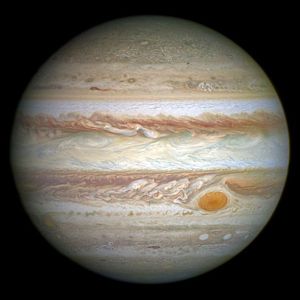
Ancient technology is a growing field of interest. A couple years back I gave a talk about ancient technology at a local Steampunk convention. The smallish audience that attended had lots of questions about how ancient people accomplished marvels such as the Antikythera Mechanism, or even the pyramids of Egypt. As new discoveries continue to show, our antique forebears had access to knowledge we have always assumed to be beyond them. An article in Gizmodo tells the story of how Matthieu Ossendrijver, an astroarchaeologist (and hey, this was simply not a job description I ever found in a college catalog, for the record!) at Humboldt University, has been studying an Akkadian clay tablet (the article doesn’t specify which one, beyond “text A”) that demonstrates that the Babylonians understood one of the principles that led to calculus. Tracking the movement of Jupiter, the Babylonian priests knew that measuring the area under a curve could provide the distance traveled by an object. This principle, in the annals of science, wasn’t discovered until about 1350, C.E. Babylonians knew it over a thousand years earlier.

Jupiter_and_its_shrunken_Great_Red_Spot

Although we marvel at the engineering of the ancients, we tend to think of them as superstitious. After all, they believed in gods and things like that. As Maddie Stone points out in her article, however, priests were also astronomers. Believing that messages from the gods existed among the stars, peoples of ancient times kept careful track of the heavens. Apart from romantic couples looking for time alone, how many people spend an evening under the stars, looking up at a universe that is so much larger than the internet that it can actually made you shudder? There is a wonder out there that can’t be replicated electronically. People knew that the sky and the gods somehow belonged together, and they knew this millennia ago.

Given that many of us hold doctorates in reading ancient, dead languages (too many, perhaps), you’d think all the clay tablets found would’ve been read, catalogued, and neatly stacked away by now. This is far from the truth. Tens of thousands of tablets were excavated back in the days before archaeology became an endangered practice in places like Iraq and Syria. Crates full of these tablets were shipped to museums and few have been transcribed, let alone translated. There is ancient knowledge stored away among the receipts and chronicles and myths of people who lived in the cradle of civilization, and now that information remains buried in museum basements because it is deemed not worth the money spent to provide jobs for those who can read them. As is often the case, however, when we are willing to listen to others, even long dead, we are amazed at what we can discover.


Myth Making

Beautiful.  Standing outside in the pre-dawn, looking up at the current alignment of Mars, Jupiter, and Venus in the east, I am struck by their presence.  The planets, “wanderers,” were known by the ancients to be gods.  Tales were told of how they came to have their places in the sky.  For those too busy to look up, Venus alone can take your breath away.  After the sun and moon, it is the third brightest natural object in the sky that can be seen on a quotidian basis.  It has been brilliant this month, and the peoples of ancient times were fascinated by how this morning and evening star rose high only to flee before the coming of the sun.  Myths were built around it.  Venus, it is no accident, was associated with the goddess of irresistible beauty.  She still is.

DSCN6017

Trailing behind is Jupiter. The Roman avatar of Zeus, Jupiter is the king of the gods, but not the brightest.  Following Venus, it is the fourth brightest object in the sky, followed by various stars in their unchanging positions.  Jupiter seems to be chasing Venus these days.  Sometimes I see the two of them cavorting in the light of the moon.  The object most desired by the king is no object at all, but a goddess who outshines even the power of the primal deity.  And then there’s Mars.  Mars lags farther behind, never quite the master of war, at least according to Homer, that he hoped to be.  He is nevertheless the consort of Venus, for strong emotions tend to go together.

I glance at my watch and I know I should be headed to the bus stop by now, but I dash inside for the camera.  It is a vain hope that I can capture what even these eyes can plainly see.  It is a drama acting out in the celestial sphere.  Three planets in a neat line, clear as Orion’s belt, within the length of my thumb held at arm’s distance.  I can hear the bus rumbling toward the corner, and I know I’ll have to rush, but even as I power-walk to the stop, I keep glancing over my shoulder to catch a few last glimpses of a myth in the making.  Is it any wonder that we’ve lost the magic in our lives, when we can’t even take the last moments of darkness to pay tribute to the gods?