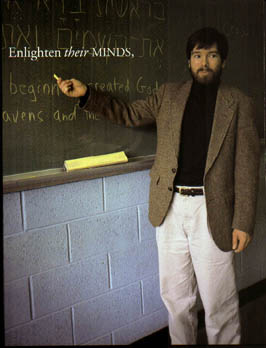
Let Me Explain

One of the reasons, I believe, that people said I was such a good teacher is that I explain things.  Clearly and thoroughly.  Living in a nation that has never really valued teachers, I have come to understand just how rare clear and thorough explanations are.  In April, within one week, we had two urgent household repairs that both required financing.  Even though I experienced sticker shock both times, I listened carefully as this was explained.  Both times it was explained poorly and I had to put multiple calls in to each of the lenders after the fact.  I can’t tell you what this does to my blood pressure, but I can say I’m glad I had Cheerios for breakfast.  One of the services wasn’t even performed in the way that it was explained.  In any case, I wrote all the more detailed explanations down.  I learned that companies don’t send you any verification that you’ve paid off a loan anymore.  At least we haven’t received one.

I was doing okay with this.  Blood pressure back to normal.  Then I received a letter from the IRS.  This always raises blood pressure, even before opening the envelope.  In my experience, it’s never good news.  In this case it was an identity verification request.  Okay, that I can handle.  But then I found something unexpected on our 1040.  You never want to find something unexpected there!  We’d paid a professional to do our taxes for us, and all we had to do was sign on the dotted line (actually, sign the screen with your finger).  I ticked taxes off my to do list back in March.  Here it was May and I was finding an irregularity on my professionally filed taxes.  I called the vendor.  I soon learned that how this was being handled simply hadn’t been clearly explained in the office.

I hope that I’m a reasonably intelligent Homo sapiens; I can tie my own shoes and I can figure out how to get to Manhattan on fairly short notice, from two states away.  What is obvious to me is that many people of my species are not good at explaining things clearly and thoroughly.  I’ve worked for employers who’d rather see costly inefficiencies remain in place for years rather than hire a trainer who can explain things clearly.  I’ve left more than one HR office more confused than I walked in.  Why is it that we eschew good explanations about things like financing and taxing?  Last year I was scammed by a guy who, despite his moral deficiencies, explained things clearly and thoroughly.  He was lying through his teeth, but he could and did explain things.  What I’m wondering is why legitimate businesses can’t do the same, only with the truth.
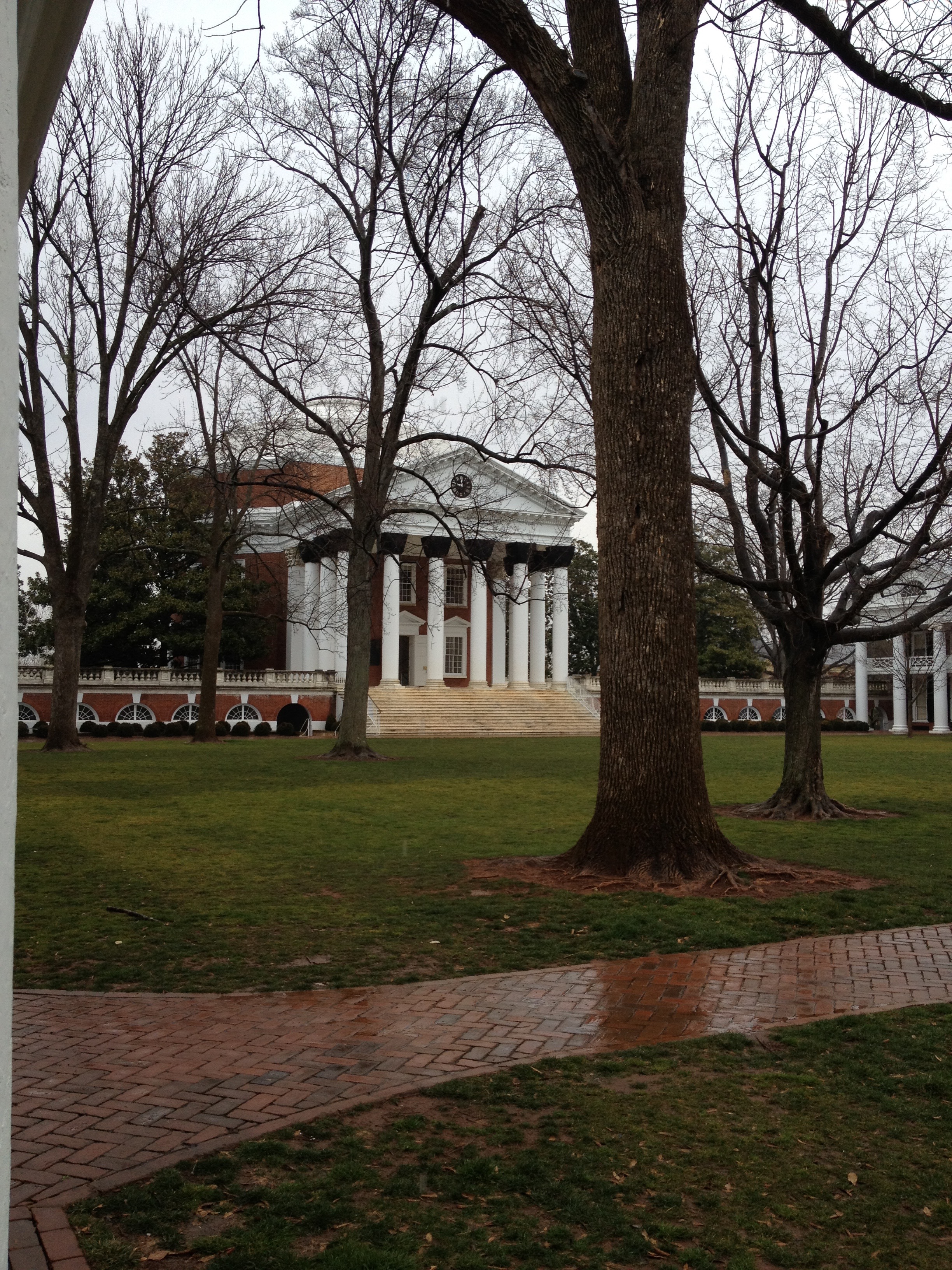

An Education

The point of education is to improve life for people.  Reading and studying and listening, we learn.  Travel is often an educational experience.  We gain knowledge, but it does no good if we hoard it.  That’s why some become teachers.  In a society that undervalues education, a self-fulfilling prophecy sets in.  Just look around you.  The usual path into becoming a teacher is education in education.  You can major in it.  You don’t have to be wise necessarily, since, like all things capitalistic, choice of career is economic.  You pick something for which you feel suited.  If you’re lucky, you get a job doing it.  For “higher education” it’s a bit different.  First of all, you need not study education at all.  You choose a field in which to become a specialist and, if you’re lucky, get a job teaching it.  And those jobs are dependent on, of course, the dismal science.

This is one of the main reasons I write.  When your intention is to be a lifelong learner, you know that if you don’t share what you’ve picked up over the years, it will simply be lost.  As a society, we really don’t encourage sages.  The motivation is to make money, to look out for yourself.  Education becomes a means for self-promotion rather than for sharing what you’ve learned.  In my case, I sometimes feel guilty for writing about horror.  Is it really helping anyone?  I have to believe that it might be.  A certain segment of the population finds horror therapeutic.  Psychologists are starting to explore how it’s actually good for your mentality.  I can only hope that if it means something to me, it will mean something to some others.  And I want to share it.

Religion, at least among the non-cynical, is meant to improve people’s lives.  There is a reason that I wanted to be a religion professor, as I was for a few short years.  My circumstances steered me toward horror as a form of self-care, and I think there’s something much deeper here that has to be mined.  Writing the books I do is more like speculating or prospecting rather than staking a claim and digging tunnels.  If they were causing more harm than good I wouldn’t publish them (or try to).  Life is an educational opportunity.  And if we learn from those who care for other people we might have a chance of improving the lot of many.  Look around you.  Is that where we are today?


No FOMO

Some fringe websites (of course I do!) present the case for reincarnation via past lives memories, particularly of children.  You see, adults hear/read/see a lot of things as the years weigh down and we might misremember something we encountered somewhere else.  Children have less exposure and therefore make more credible witnesses.  I know perfectly rational adults who believe in past lives as well.  I must confess, however, that this is one of the scariest things I can imagine.  I’m glad to have lived, most of the time, and I’m not in a hurry to end it prematurely, but the thought of doing it all over again is terrifying.  Even if it’s a different and better life.  You see, I entered life with a lot of questions and I have to say, over six decades later, I’m still uncertain about many of the answers.

If reincarnation means starting from scratch all over again, that scares me.  I’ve spent much of my life building walls to protect myself from the things that hurt me.  I avoid overly risky activities.  I handle sharp objects with great care.  I spend quite a bit of time by myself.  I don’t like being hurt.  That may be one reason that I watch horror movies.  They help to desensitize that particular phobia.  Still, I have to think of all the hard lessons I’ve learned in this life and have to think about how I might improve upon it all with another go-round.  In religions of East and Southeast Asia, where belief in reincarnation is common, the idea is often that you want to break out at the end.  Nirvana.  The place were you don’t have to queue up again.  Even Plato thought reincarnation might explain a lot.  But the very thought makes me feel weary.

If you could be rebooted with the knowledge of your previous life intact, that’d be one thing.  The idea of one day finding myself in another mother’s arms, not knowing anything, learning each microsecond, well, it’s frightening.  My parents weren’t educated people.  They taught me the blue-collar hard knocks of life (which I don’t want to have to learn again).  The white-collar hard knocks are sometimes even worse.  I tried to live this life as a clergyman, but that never really panned out.  I sometimes wonder if the Abrahamic religions/monotheistic traditions, didn’t develop Heaven and Hell out of fear of reincarnation.  The idea certainly makes sense, in some contexts.  And it’s one of the scariest things I can imagine.


Conference Voice

“Conference voice” is a phenomenon that began with my career malfunction.  While teaching I attended the AAR/SBL annual meeting every year but one.  Even the year that Nashotah House fired me I attended, through the generosity of a seminary colleague who’d left for a parish and who used discretionary funds to help me afford it.  (Churches can actually help people from time to time.)  In any case,  I always met many colleagues at the meeting itself, and had many conversations.  Besides, I taught a full docket of courses every year.  Then the malfunction.  I was eventually hired by Gorgias Press but I had to do adjunct teaching to make ends meet.  I taught up to about ten courses per year at Rutgers, all in the evening.  Then I was hired by Routledge.  The commute to NYC precluded any adjunct work, so I settled into the quiet world of editing.

I also began attending AAR/SBL again.  I came home with “conference voice.”  After going for days, or even weeks, with no substantial conversation, I’d lost my lecturing vocal stamina.  At the conference I had five days of back-to-back meetings, often in a crowded and noisy exhibit hall.  I’m a soft-spoken individual (I can project when teaching) and my larynx was stressed by the concentrated five days of constant conversation.  My voice had dropped in pitch by the time I got home and it took a few days to get better.  I would lapse into cenobic silence for another year.  After the conference I’d return every year with aching vocal cords.  My family sympathized, but I really just don’t talk that much.  Especially at work.

Recently I met a friend for lunch.  I hadn’t seen him to chat for a few years so we spent over two-and-a-half hours talking.  Part of it in a restaurant where I needed to raise my voice.   I awoke the next morning with conference voice.  This bothered me because I’d been invited to do a podcast episode about a horror movie and I faced an existential crisis: what does my real voice sound like?  In my mind, my profession is teaching.  The voice I had at Nashotah House, University of Wisconsin Oshkosh, Rutgers University and Montclair State, was my real sound, such as it was.  Life has landed me in a situation where I seldom speak, and almost never to groups where I need to project.  Conference voice is a reminder of what I was meant to do and what I, of necessity, must do.