Missing Books

I’ve written before about what we call “the flood.”  Just over seven years ago, we moved into our house.  The movers, complaining every inch of the way, lamented the number of boxes and the lateness of the hour.  Since their truck was just outside our garage, we told them that they could stack about 100 of the boxes in there and we’d haul them to the house ourselves.  This they did.  Torrential rains came a day or two later but being new to the house we didn’t realize the garage flooded in heavy rain.  Many, many books were ruined.  I started a list but haven’t had the time or heart to finish it.  Insurance didn’t cover it and most of the books were never replaced.  That’s not what I’m writing about, though.  I am writing about other missing books.  Often associated with moving.  And perhaps proof of an alternate universe.

I’ve moved a lot in my life, and if you know anything at all about me you know that I’m careful with books.  I never leave any behind.  And yet… yet some manage to disappear.  The first one I recall was my personally annotated copy of Nietzsche’s Thus Spake Zarathustra.  It disappeared between Boston and Ann Arbor, Michigan, when, no exaggeration, all of my worldly goods fit into the back of a rental car.  I unpacked, wondering where it’d gone.  Then moving back to the United States from Edinburgh, our annotated copy of Historic Scotland, the booklet describing all their sites, in which we’d written notes from when we visited, was gone.  Moving from Somerville, New Jersey to our current house, Godwired, by Rachel Wagner, disappeared.  Also, a new translation of The Odyssey that I’d received at work.

Now on this latest move there was nothing left in our Somerville apartment.  And despite the griping movers, there were no boxes left in the truck.  Every box has been opened and sorted and yet, Godwired and The Odyssey aren’t here.  The other day I was looking for Wilkie Collins’ The Woman in White.  I’m pretty sure it was lost in the flood (but it’s not on my list).  I distinctly remember buying it at a used bookstore to replace the one I purchased at Watchung Booksellers in New Jersey.  And it is not here.  I keep careful track of my books, and if one goes missing it’s like the parable of the lost sheep.  I can’t rest until I find it.  None of this helps me if there is an alternate universe that’s sucking select books every now and again.  If so, I’m sure it’s got one of the most amazing libraries in the multiverse.


Space Rocks

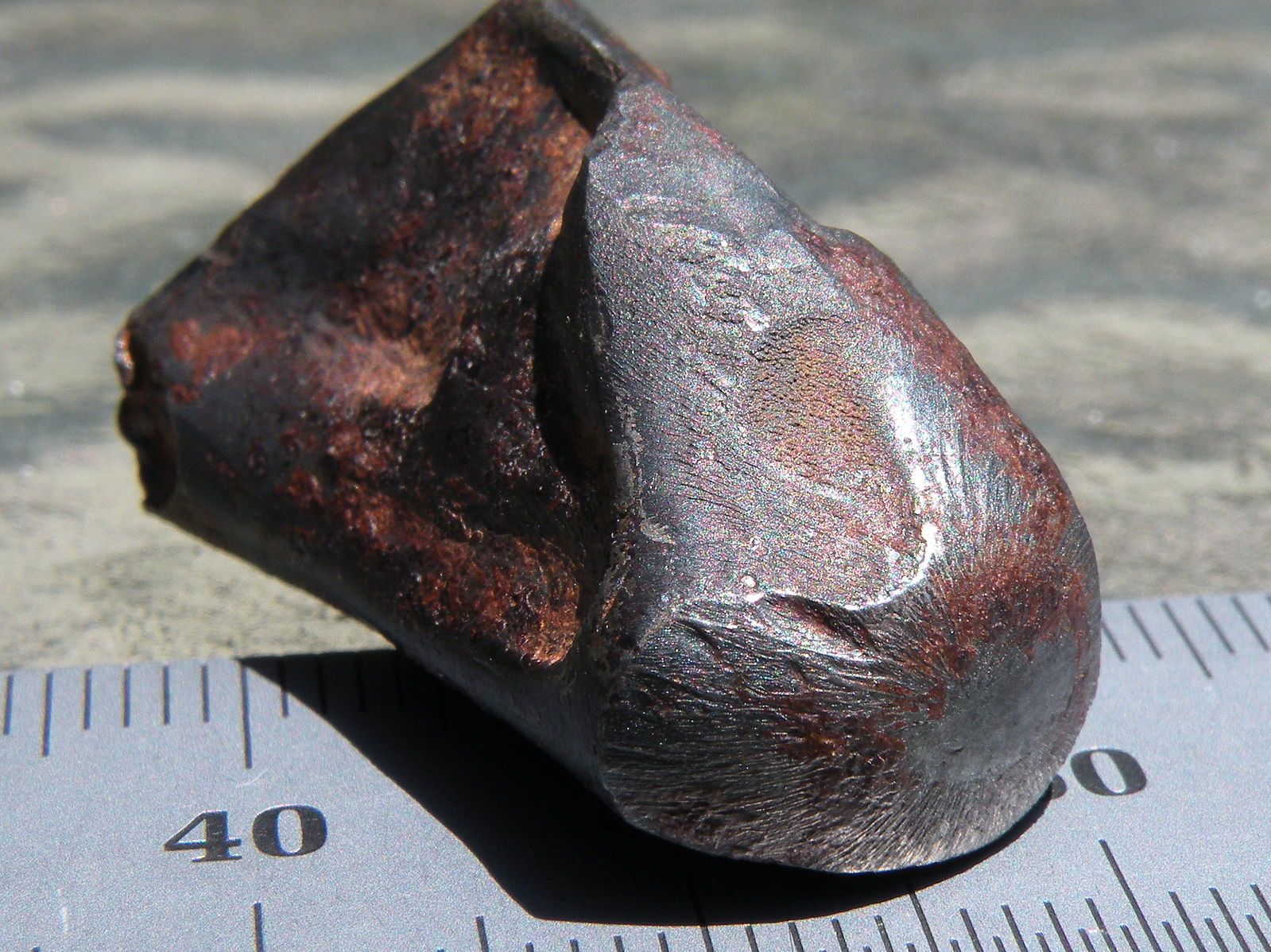
The thing from another world.  No, not the movie, but an artifact.  My recent post about the asteroid sent me looking for something.  When we lived in Wisconsin, we purchased a small piece of a meteorite while on a visit to the Yerkes Observatory.  It is, quite literally, a thing from another world.  The problem is, I can’t find it.  Our house isn’t that big but the fragment is quite small.  I’ve been told our house is like a museum—there are curios pretty much everywhere, and they each have some significance.  But the meteorite: where could it be?  I find that moving is one of the most disruptive activities known to those of us in the “developed” world.  As much as I wanted an organized move, the fact is that you can’t have such a move without taking at least a month off work in advance.

There are things (from this world) that I haven’t found in the six-plus years in this house.  Most often they’re like the meteorite in that I don’t think of them often, and when I do I wonder where I might’ve packed them.  Knowing where they might’ve been packed gives a clue to where they might’ve been unpacked.  And no matter what, some things get lost on every move.  There’s a book I had in New Jersey that is simply not here in Pennsylvania.  I’m sure I packed all our books.  One, at least, did not make it over the Delaware.   The fragment of meteorite, which is unique, is only about the size of a small ladybug.  Where might I have put it?  

That small fragment of rock traveled through the solar system.  It likely came from distances no human has ever gone.  Unimaginable distances.  Only to get lost in a house in Pennsylvania.  If it’s here at all.  Back when it was legal to pick up petrified wood, a family friend gave us two chunks from the petrified forest (for now, a National Park in Arizona).  One of them came to me and I treasured it for years.  I haven’t seen it since we moved to Pennsylvania.  There are boxes that haven’t been fully unpacked.  The squirrels make a mess of the garage every winter and I can’t go in there without feeling I should clean things up first, before emptying out the remaining boxes.  To a squirrel the thing from another world is just one more thing to ignore.  It has no value except for to an aging guy who remembers buying it at the very spot where Edwin Hubble worked and Albert Einstein visited.  Only to mislay it when moving fifty miles from state to state.

Not my meteorite. Image credit: Meteoritekid under the GNU Free Documentation License, via Wikimedia Commons


Locating Yourself

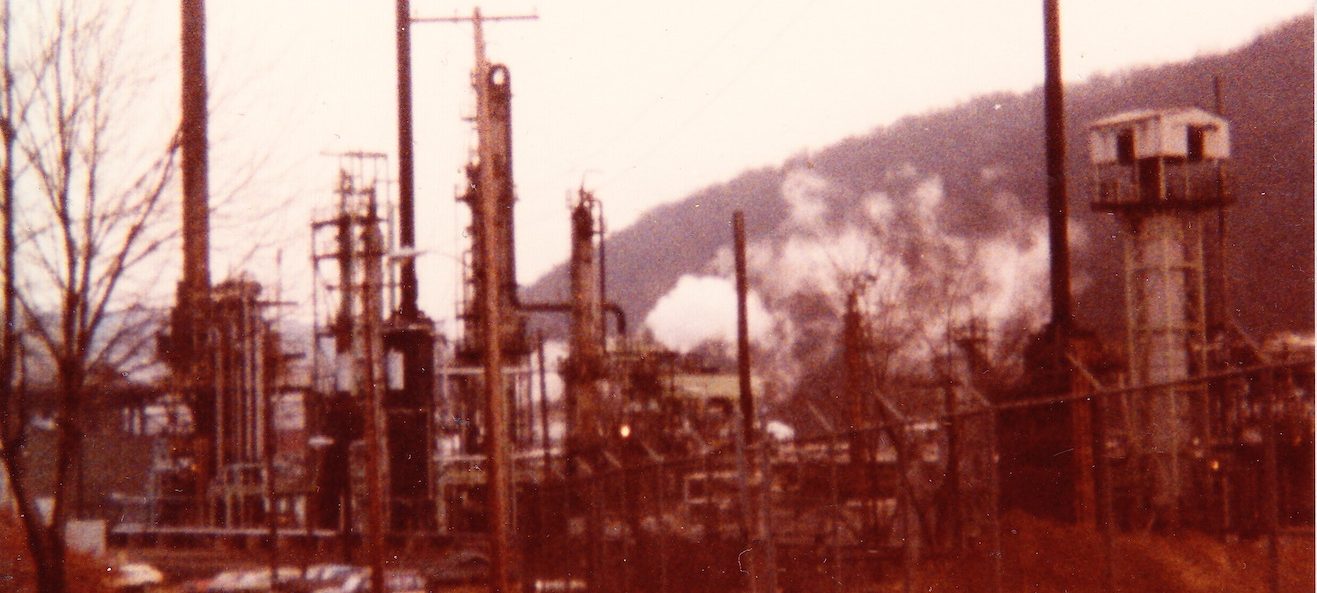
How do you come to where you spend your life?  It could be where you’re born.  I was born in Franklin, Pennsylvania.  Neither of my parents were.  On my mother’s side we had a tradition of wandering.  We eventually moved to Rouseville, a refinery town not too many miles from where I grew up initially, but very different in character.  I knew I wanted to get away.  I lived in Grove City next, only as a student.  For a short while I resided with some friends in the South Hills of Pittsburgh before moving to Boston to attend seminary.  Like many who go to Boston for school, I wanted to settle there.  I did so for about a year after graduation, making a living, such as it was, selling cameras.  My next move was precipitated by love.  I moved to Ann Arbor, Michigan to be with my fiancée, but I’d already been accepted to Edinburgh University, so an international move was imminent.

Roseville

Edinburgh, like Boston, is a spiderweb.  We would’ve stayed if we legally could have, but with a job market for academics already tanking, we headed back over the Atlantic.  My wife was a grad student at the University of Illinois, so we moved first to Tuscola (family there), then Savoy (on the outskirts of Champagne-Urbana).  Meanwhile I commuted to Delafield, Wisconsin, home of Nashotah House.  We eventually moved to Delafield and stayed until I was no longer wanted.  Our move to Oconomowoc was necessary to keep our daughter in the same school.  The possibility of full-time employment drew me to Somerville, New Jersey.  We would stay there until my daughter had a chance to graduate.  Depression convinced me that I’d run out the clock in that apartment, but a financial advisor suggested Pennsylvania, where I was born.  Thus we ended up in the Lehigh Valley.

I’ve liked every place I’ve lived.  If I had my druthers, however, I would’ve ended up teaching at a small college in Maine.  Several friends have moved to Maine as I’ve jealously watched.  The places we spend our lives, at least in my case, are determined by a measure of fate.  Nashotah House was the only job I was offered from Edinburgh.  Gorgias Press was the only job I was offered after the seminary.  Moving to my home state was volitional, of course.  As a couple we’d have been content in Massachusetts, Michigan, Wisconsin, or New Jersey.  Economics, of course, has a heavy hand in all of this.  I sometimes think that, if I could ever retire, moving to Franklin again would be a way of coming full circle.  But then, life is change and we end up, it seems, where we’re meant to be.  Perhaps Canada?


Moving Hope

We were young and recently engaged.  I had to move from Boston to Ann Arbor, and all my worldly possessions fit into the trunk and back seat of a rental car.  I don’t remember the model, but I know it was white.  It wasn’t a large car.  Details have escaped into the ether, but I was driven by the soul purpose to be with my fiancée, soon to be wife.  In those days sleep and food deprivation of an almost Lindberghian degree seemed negligible.  Google maps tells me it’s a twelve-hour drive, but back then the speed limit in Pennsylvania was still 55 so it had to’ve been more than that.  By myself, with little money (how did I pay for that rental car?  Probably credit card, borrowing against the future) I drove all day—or was it night?  I seem to recall arriving in the afternoon.

People are capable of great endurance feats, but they get a bit trickier as you age.  I like to think they’re compensated for by increased mental powers.  It takes time—many years—to learn how to be in the world.  To learn, as Morpheus indicates, which rules can be bent, and which broken.  If you pay attention you can see that there are events, incidents, not easily explained.  We influence the world as the world influences us.  And our minds influence our bodies just as our bodies influence our minds.  We seem to enjoy drawing sharp distinctions where fuzzy lines are more natural.  As I think back on my move to the Midwest, it seems to me that courage and conviction ran strong, despite the unlikeliness of success.

From Ann Arbor my wife and I moved to Edinburgh with, again, very little money and nothing but hopes to keep us going.  You see, when you grow up in a poor family there are no buffers.  Yet Edinburgh became a reality and after the Ph.D., still with little money, we managed a transAtlantic move to a job that proved as unreliable as the usual support systems for the poor.  Once again we found ourselves making yet another low-budget move across the miles.  We move to find our futures.  Wisconsin became our home for a decade and a half before the search for work brought us back east again.  Moves are filled with hope.  If we were convinced things would always be the way they are, why would we bother to move on?  Moving shows just how optimistic we can be.  Without hope, why would we ever move?


Independently

I’m feeling independent today, even if it’s only just temporary.  For the first time in four years it feels like I’m living in the United States again on our national holiday.  I’m actually spending this holiday weekend moving a family member.  That means drama—almost by definition.  It began two days before.  U-Haul sent us a text telling us our truck would be in the wrong city, over an hour away.  We called to correct the mistake and were told the truck would only be available five hours later than scheduled in the city where we actually were.  We had no choice but to accept.  The next day the saga continued.  We’d hired a local company to help us find a home for furniture no longer needed.  They arrived late, but there was a reason—the owner of the company had had a family tragedy that day and had to scramble to find help for the job.  They did a good job, though.  I’d use them again.

The day of the move our hired help called.  They were going to be late.  We went to U-Haul only to discover that their automated check-in software wasn’t working.  We had to stand in line for over an hour total before someone figured out they had to override the instructions so we could pick up the truck.  In the middle of this, the movers called again to tell us they still weren’t even in the state.  They were pre-paid a very pretty penny to help move the big items (we are small people, and I have a bad back; we need burly friends), but they would be several hours late.  We couldn’t put the smaller items on the truck when the big stuff was the unknown quantity, space-wise.  Hire-a-Helper, the company we’d used, sent a text saying our two hours were up and they were going to be billing a significant fee for extra hours.  The help had not yet arrived.

They turned up seven hours late.  We had arranged for help to unload on the other end, supposing that we wouldn’t have suddenly grown stronger or bigger in the intervening day.  Today, however, is our travel day—the one day we weren’t relying on others to do their job.  Our independence day, as it were.  We don’t need any fireworks.  Indeed, we hope for none.  All the careful planning collapsed under unforeseen circumstances.  But today we have the truck with the cool Colorado NASA image on the side and the open road. It’s quite cheering, actually. I’m always in the market for burley friends, but today it feels good to be independent.


Old Inspiration

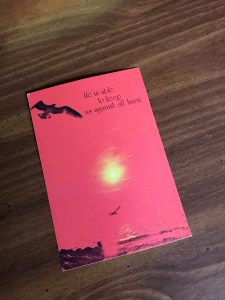
Moving is a process that really has no end.  I suppose if working folks took a few weeks of staycation and really concentrated, getting everything unpacked might be a possibility.  Although our move was nearly two years ago it didn’t happen that way, and the self-isolation of the pandemic has led to only more time drains, not fewer.  We still have boxes waiting to be unpacked, and, of course, like many people we store memories in boxes.  Life is an accumulation of things that aren’t valuable but somehow aren’t disposable either.  While putting some things away in my study after work recently I spied something that has been in storage probably since I graduated from college.  I stopped and stared at it because even glimpsing it took me back instantly to my childhood.  What was it?  A devotional card.

The memory it prompted was sad, in a way.  We didn’t have much money when I was growing up (some things never change), so what we could afford was inexpensive stuff.  My faith, rather than being the optimistic, happy kind of fundamentalism, was rather the fearful, wrath of God kind.  I was a scared little boy.  Phobias ran deep and wide.  I bought cards like this to assure me that things weren’t so bad.  This particular card has three reassuring verses from the Bible, all taken out of context, on the back.  Seeing the card reminded me of the several others I once had.  Our homelife wasn’t peaceful, and I often had to retreat to where I could look at my devotional cards for reassurance.  At college I started to grow optimistic only to have my career prove that I was right at the beginning—life is scary and insecure.

I picked up the card.  I put it on my desk.  My mother had returned it to me, I recalled, when she moved into the trailer park.  A box of my stuff had been left at home (unfortunately not the box with all the 1970s baseball cards I had as a kid).  And two or three of the devotional cards had been tucked into it.  When she gave me the box I didn’t have time to sort through it.  The vacation time was all used up by driving all the way there and back, and so it got loaded on the truck with everything else, the flotsam and jetsam of a childhood spent being afraid.  This card was only one of several, and if I’m honest I’ll admit that it has reopened a box that may have been left by Pandora.


Rock Solid

Old interests don’t die so much as they become sublimated.  As a child I picked up a cheap “gem display” in a small cardboard box at a yard sale, probably for a quarter.  A couple of the samples were missing, and those that remained were tiny, but I was fascinated that rocks came in such varieties, especially since the ones I tended to find on my own were all shades of gray.  Science education wasn’t especially great in my small town, and besides, I had a massive interest in not going to Hell, so religious study took precedence over my predilections toward scientific studies.  Still, as a child and later, I read a lot about science and I never doubted that it could teach us about the natural world.  Years later I rediscovered my love of rocks.  I joined the Wisconsin Geological Society.  I bought a rock hammer.  I began hounding.

One of the first truisms you learn about life is that movers don’t like heavy things.  Seems that if you are in the business of helping people move (for money, no less), you might be stoic about such matters.  But I have yet to move and not have the guys complain about all those boxes of books.  Well, the rock collection is even heavier.  I discreetly marked the boxes “heavy collection,” hoping nobody’d say “What you got in here, rocks?”  Because, well, yes.  I like rocks.  While in Wisconsin the collection grew—we lived in a house at Nashotah, and we had space.  I had a rock tumbler going in the basement.  We attended rock and gem shows.  Then we moved three times in three years.  I became embarrassed of my petrine peccadillo.

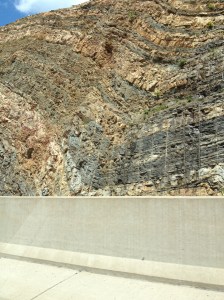
On my way out the door yesterday, I spied a fossil I’d picked up in Ithaca.  Immediately my old inclination to rocks returned.  I don’t know why I bought so many books on geology and seriously considered changing professions after my academic position fell apart.  Perhaps in a life so unstable rocks seemed solid, reliable.  Or maybe it was nostalgia for my young days when a cheap white box of neatly labeled specimens provided hours of transfixed wonder.  I still pick up interesting rocks, and even go to places where collecting is permitted.  This whole world under our feet is full of surprises and an interesting stone can send me into a reverie that is, if I’m honest, as spiritual as it is scientific.  


Capital Idea

Capitalism encourages a kind of racketeering among businesses, in my experience.  Take the case of utility companies after a move.  To date I have received well over a thousand dollars in bills for services not rendered.  These bills were from utility companies claiming that I owed them final amounts for bills that had been paid in full, on time, for over twelve years.  I should, it seems, be able to bill them for my time on the telephone setting their records straight.  The “final bill” is a racket.  And it is deployed just after a customer, formerly a “valued customer,” has entered into new financial obligations—moving is not cheap!  Most of these bills are for multiple hundreds of dollars for services, that when I used them, were generally billed at a mere fraction of that amount.

Corporations, according to the law, are people.  And like people, they are exceptionally greedy.  Just yesterday I received a bill from a heating oil company—which shall remain nameless for the moment—stating that I owed a multi-hundred dollar final balance.  I had notified them in April that we would be moving and that I had paid their final bill and no more deliveries should be made.  None were.  Fully five months later I receive a “final bill” politely reminding of an outstanding balance.  For what?  Heating oil delivered in July?  Have I suddenly switched hemispheres or is this some kind of racket?

Come to think of it, while unpacking I came across a budget book.  My accounting is pretty much in the range of horseshoes and hand-grenades—I know the regular bills and can guess how much they are likely to be.  I’ve got other things on my mind besides money.  The budget book had never been used.  Budgets, to my understanding, project a stable world.  That’s not like the capitalist world.  When we bought the budget book, some 30 years ago, could we have projected monthly expenses for the privileges of using an internet that at that time didn’t even exist?  Capitalism is creative in finding new things to make you pay for, even if they are only virtually real.  Like heating oil that was never pumped off the truck.  It’s always your word against theirs, and corporations are bullies, being bigger than regular people.  So I sit here with a blank budget book and a stack of “final bills” for things never delivered.  And I think to myself, what a crooked world.


Childhood’s End?

Writers are agents against chaos.  Those of you who read this blog frequently know that chaos has been one of my themes lately.  Moving, which is a process that takes months and months of time, is pure chaos.  Whenever I settle down to write, yet another moving-related task comes to me—this box needs to be unpacked, that gap in the fence must be mended, where did I put the toolbox?  Mundane things.  Writers like to think the world conforms, somehow, to their inner lives.  In reality, things are far more complex than that and don’t seem to be getting any easier.  Starting to learn about house ownership is something best left for the young, I suspect.  Every question (where should we put the television?) leads to a daisy-chain of other issues (but first we need to move that hutch, but it’s too heavy for either of us to lift, etc.).

In ancient times water symbolized chaos.  Before we left on vacation, the main issue was to get all boxes off the floor in the garage.  We haven’t had time to move them safely inside yet, what with planning for vacation and all, so plastic became the order of the day.  We do need, however, to get things inside eventually.  A slow process for two middle-aged people with full-time jobs, even without jet lag.  Writing feels like a luxury item, for what is most required is time—time to move things to their proper places.  Time to figure out what those proper places are.  Time to go to work again.

Had we thought this through, we might’ve used vacation this year to unpack.  We bought our plane tickets, however, before we bought the house.  This latter transaction is one of chaos embodied.  Who knew, for example, that the grass had to be cut so often?  That all roofs leak?  That chaos is constant, and not intermittent?  In biblical times, one of the signs of God’s greatness was the ability of the Almighty to hold chaos in constant check.  The waters were always lurking, looking for any opening—except when you need rain and it just won’t come.  Sitting here writing feels like the giddy irresponsibility of childhood where there’s so much to get done and so little time in which to do it.  And neighbors don’t appreciate the lawn being mowed before the sun is properly out of bed.  The renter pays a price for living with, for at least some stretches of time, chaos-free maintenance.  The home-owner quickly learns that any time left over for writing feels like being irresponsible, and a little bit divine.


Prelude to Chaos

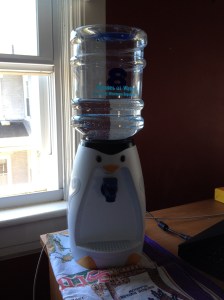
Liquids are the enemy.  Don’t let the cuteness of this little guy fool you—there’s collusion here.  For as well as creating life, and being necessary to sustain it, water destroys.  Creator, annihilator.  We moved during a time when neither of us had vacation and we told the over-tired movers that it was okay to put our boxes in the garage.  We planned to move them soon, but, you know, work.  Then the rains came.  Not just sprinkles, but downpours.  The garage isn’t water-tight.  Boxes were soaked.  Many books were damaged.  This wasn’t a flood that can be claimed on insurance, it was simply rain pooling where people usually park their (normally waterproof) cars.  In their place sat our books.

We both worked the day after the rains.  When we discovered the damage the next evening, it looked manageable.  I had to work the next day, of course, and a few breaks sufficed to get the many, many boxes of damaged books out into the sun.  It was carnage.  We don’t have much in the way of material goods; we spend a bit of money on books, however.  Now they’ve become the victims laid out on this altar of home ownership which, at the time, seemed like a good idea.  We needed a house for our books.  We needed time to move them from the garage to the house.  Yes, old friend Morpheus, “Time is always against us.”  

Job sat upon his ash-heap and pondered why he’d paid the movers so much only to have his moved goods destroyed.  And in a manner in which insurance assessors are trained to point to the fine print.  Those who store their goods in the garage reap the wrath of liquid.  You see, when water reaches cardboard, or paper, the wood pulp sucks it up.  Carefully dried, the paper remembers the compelling nature of water.  Too little, and you die.  Too much, and you die.  No wonder the ancients thought that water was a deity.  It claims all—tries to get in through your roof.  Lays insouciantly on your basement floor.  And the garage—yes, who thought of the garage when the immediate concern was to shut the windows to keep Leviathan out of the house?  I spent weeks carefully packing those books against shipping damage.  Used up my vacation days doing so.  Chaos has claimed them.  I would weep, but that would be collusion with the enemy, even if nobody sees.


Not Quite Eschatology

Realized eschatology, if you’ll pardon my French, is a term that describes the “already/not yet” aspect of the “end of the world.”  In other words, some theologians suggest that the eschaton—the end—has elements of both the present and the future in it.  The term came back to me yesterday as we returned to our old apartment to take care of things the movers left behind.  (And “left behind,” I realize, isn’t really a biblical eschatological concept at all.)  Joined by our daughter, I felt a bit resentful of her time being taken from our new home to spend in the old.  I felt an almost adulterous desire to leave the old and cleave to the new—hadn’t we already paid, and overpaid, for that apartment many times over?  The house, on the other hand, is new (to us) and still requires much attention.

As we organized the remaining items, broke down boxes we didn’t use this time around, and waited for the Got Junk guys to arrive and haul it away, I noticed our daughter gazing wistfully at the empty space that had once had our imprint all over it.  It dawned on me that she’d spent her teenage years here—after the Nashotah House debacle, this was the place she’d lived the longest.  This empty apartment was, for her, home.  I began to feel insensitive about my earlier anxiety to leave.  We all live between at least two worlds—our pasts make us who we are in the present.  The world of our teenage years is fraught with emotion and memory.  The world looked so different at that time, as I sometimes forget.

Moving is one of the most stressful situations human beings encounter.  We have a love/hate relationship with our past.  To me the apartment represented a place we occupied out of a kind of desperation.  Five states to the west, we had to move to New Jersey with little money and tons of boxes—one of them Pandora’s, with hope nestled inside.  We told ourselves the apartment was temporary—maybe a year—only until we could buy a house.  Twelve months turned into a decade, then more, with each year accreting memories in every crack and corner.  Part of us will always be in that apartment, for every place people have lived before is haunted.  On our way back to our new home at the end of the day, we were each lost in our thoughts.  Perhaps not so much realized eschatology as experienced reality, we’d spent a day in a present that will never fully arrive.


Awakening

Waking up for the first time in our new place, I felt a strange relief.   I hadn’t realized how much you feel owned when you have a landlord.  Slipping out of the bed while it’s still dark, vague shapes that eventually resolve into unpacked boxes lurk in the shadows.  They mean me no harm.  I go downstairs.  Downstairs!  Without revealing too much personal information here, I can say that I’ve always believed in sleeping upstairs.  In our several apartments my wife and I have lived on one floor.  Going to sleep meant walking down the hall into another room.  It lacked proper transition.  When we looked at houses it took some time before I could put my finger on it—we needed a two-story house.  You go “up to bed” for a reason.

The thing about writing is that it’s an activity of habit.  Not aware of the location of light switches yet, I shuffle slowly through my own personal towers of Babel.  Find the coffee maker.  Where do I go to write?  Not wanting to wake my wife, I decide it should be downstairs.  There’s the study, with its desk.  Seems pretty obvious.  Mug in hand, with no lights on, instinct drives me back to my usual chair in the living room.  Habits are seldom planned.  They happen.  I’ve become used to writing electronically, but as I wanted badly to explain to the movers, I grew up writing on paper.  Writers are readers and there are two things you don’t throw away—books and your old writings.  Carpenters don’t ditch saws and hammers just because they’re heavy and numerous.  There’s a kind of religious devotion here.

Don’t worry, I’ll soon be back to my more abstract topics on this blog.  Religion and all that.  Right now I’m in a transition and I’m wondering that if that means I’m now officially grown up.  If so, does that mean abandoning my childhood dream of being a writer and facing the fact that all these boxes were moved in vain?  Not having food in our new place, our first day we went to a Chinese restaurant for lunch.  The locals were talking.  Their concerns?  Lawn care and propane.  Everyday things.  Clean-cut and suntanned, they can tell at a glance that I’m a stranger with my unkempt hair and prophetic beard.  Is my writing fantasy just childhood gone to seed?  No.  Books and writings are my identity.  The movers may have mixed them in with saucepans and power tools, but I know at a glance which boxes contain books.  Soon they will be in every room of this house.  That will make anywhere feel like home, even if I can’t find the lights.  


Net Worth

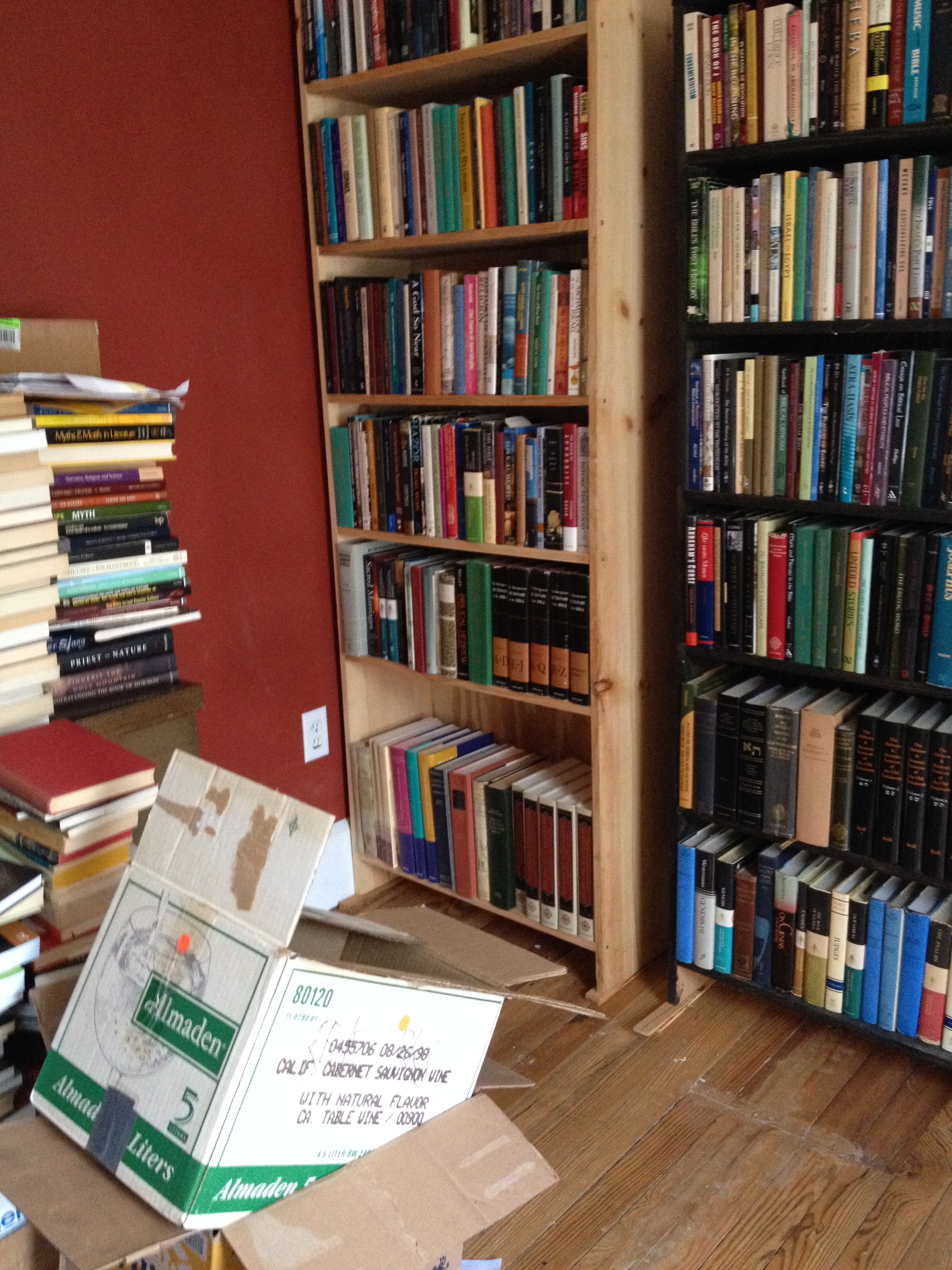
Net worth—a strange concept for human beings—is calculated on the basis of how much cash you’re “worth.”  While on that lonely task of sorting through the attic, I came across many boxes of books for which we didn’t have room in our apartment.  Our guests, who’ve been few, feel obligated to comment on how many books we have, as if it’s an infirmity to be delicately broached.  Or for which something might be prescribed.  I grew up believing that what we call “net worth” should be assessed in how much a person knows.  Knowledge, not money, in my fantasy moments, would drive the world forward.  Books are cheap (generally, but you don’t want to know what I’ve paid for some of these volumes when I really needed them!) and don’t retain resale value, except perhaps in the textbook market.  They’re considered a throwaway commodity.

Although I didn’t read it, a recent bestseller claimed you could find happiness by removing clutter, and high on the priority list of things to ditch was books.  Will you ever read that again?  For me the question is rather, will I ever need to look something up in there again?  Surprisingly often the answer is yes.  Considering the fact that books are knowledge, they’re a remarkably good bargain for the price.  Regardless of clutter.  Perhaps that’s a kind of wisdom itself.  Books are heavy, though, especially in any numbers.  Weight means something.  What they contain has the potential of being priceless, even though it’s available to anyone else with a copy.

I used to watch Antiques Roadshow, back in the days when you could still get television reception with just an antenna.   You always felt bad for the poor hopeful who’d brought an old book, dreaming of riches.  Apart from handwritten manuscripts, books are mass produced, almost by definition.  The printing press, after all, was designed to produce multiple copies.  Sure, if you go back far enough, or you have a tome rare enough, you might get a nice price for it.  Everyone I saw on the Roadshow left with their disappointment worn obviously on their faces.  You’re better off buying a vase.  That’s only if your bottom line is your net worth, though.  If you want to strive for what’s really important in life, I’d go for the book almost every time.  Of course, while up there moving those boxes around I began to wonder about the net worth of a good back brace as well.


The Moved Unmover

To say it was an easy move would be a lie.  I write this on a beautiful, cool, clear July morning.  Only I can’t even calculate the last time I slept.  Not new house syndrome, but that move!  Our personal account manager at International Van Lines was supposed to call us between 4 and 6 p.m. on Friday to confirm the time of the move.  She would also tell us how much money was needed, in cash, by the movers.  In cash?  She’d taken my deposit by credit card; why couldn’t the balance be paid that way?  She was supposed to call to clarify.  I suspect my tone makes it sufficiently clear that she didn’t.  I went to bed not knowing if we would be moved or not—I only reread her email after packing the last box (or so I thought) at 7 p.m.  The IVL offices were closed.

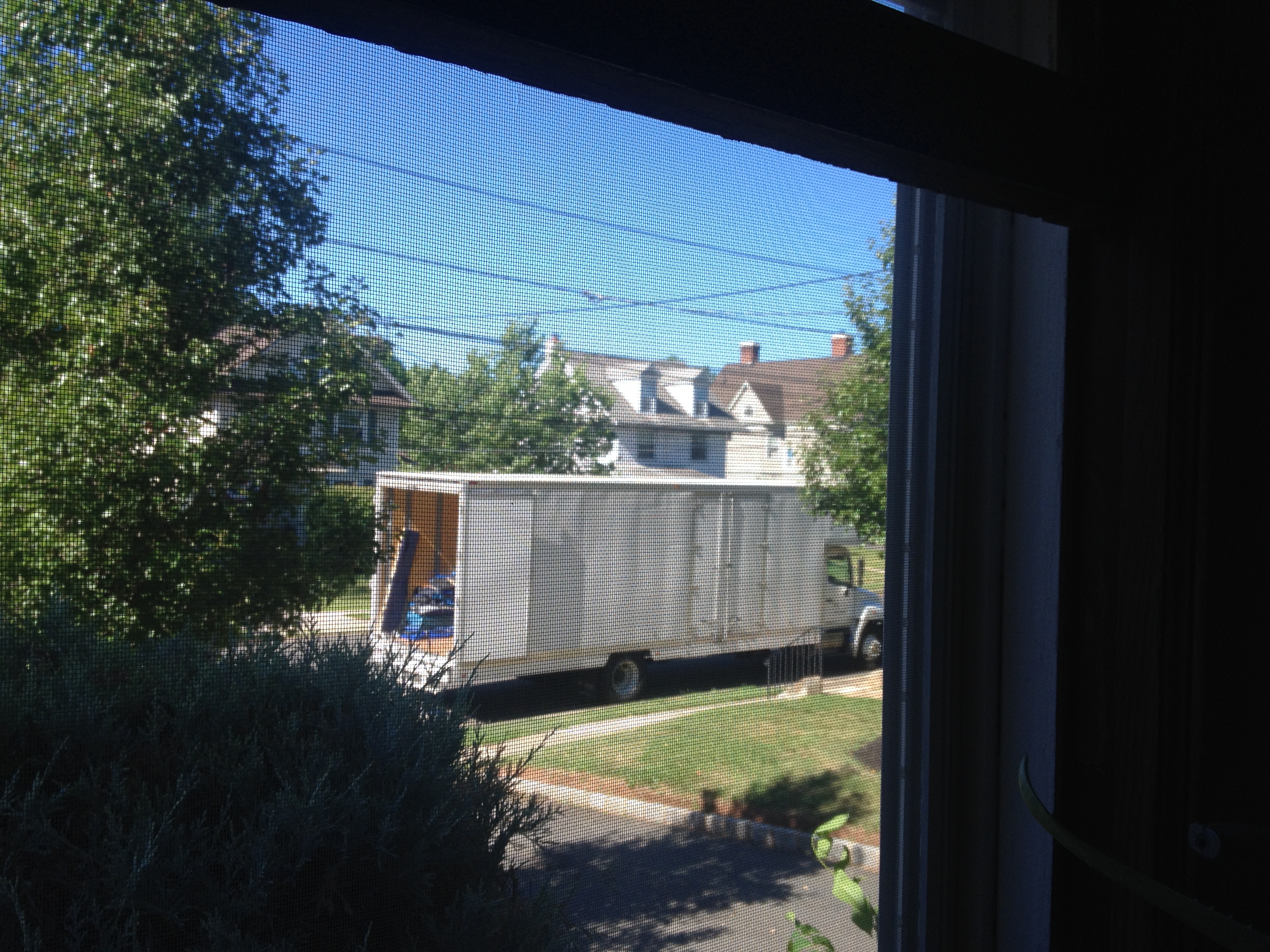
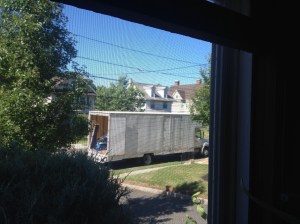
I awoke at 3:30 to an email saying they would be there between 9 and 11 a.m.  And they would be wanting an uncomfortably large amount of cash.  My wife went to get it, and three guys and a truck arrived at 9:15.  I could see their faces blanche at the walkthrough.  They’d been told it would be a ten-hour job.  It turned out to be seventeen.  Nothing makes you feel a cad quite like being thought a snake-oil salesman.  Our bill of lading was just a bit short of reality.  Packing the truck wasn’t finished until 9 p.m.  Unpacking until 2:30 a.m.  Our three guys were joined by two more for the unpacking.  Most everything went into the garage because, well, no stairs.

Twice during the day the amount of cash needed was upped by a significant amount.  This was one of those “we’re in it now” situations.  We paid what was requested.  The internet guy was arriving potentially by 8 a.m. this morning.  Who can sleep knowing the alarm is set for four hours from now?  And our labeling scheme was so arcane that, well, most everything ended up in the garage.  The movers themselves?  Absolutely fantastic!  I’m sure they’ll be talking about this move for months to come.  

Looking outside, the yard wants mowing.  The internet guy is coming.  Who needs sleep when my life of telecommuting begins tomorrow?  The good news is it took only half an hour and one trip to the garage to find the coffee filters.  I’m looking out at a beautiful, crisp morning.  Over an Everest of boxes.  But you won’t know any of this until the internet guy gets here.  Somehow I sense we just accomplished something quite extraordinary.


Moving Day

So, it’s moving day.  Amid all the packing and sorting—outside the regular 9 to 5—I realized that this was the first move I’ve made outside the constraints of academia.  Well, maybe not strictly so, but I left Nashotah House in the summer, and I was unemployed when I moved to New Jersey to start in the publishing world, so there was no office work involved.  The move without changing a job is a tricky thing.  And exhausting.

I didn’t write about the process early on, in case it didn’t happen.  Buying a house is an exercise fraught with peril and it can collapse at several junctures over the three-or-so months it takes to finalize things.  Then there’s the move itself.  Back in January I found myself setting books aside that I thought I might not need again in the next few months.  We started hauling boxes down from the attic to pack those books in February and March.  We finally made an offer on a house in May, and now, seven months after the process began, we’re ready to move.  Or so I tell myself.

Our last move didn’t go exactly as planned.  Like Bartleby and Loki, we were moving from Wisconsin to New Jersey, perhaps seeking our destiny.  Who knows—maybe undoing the universe?  We hired Two Men and a Truck to move us.  My brother in New Jersey said he’d meet the truck since it was going to take us a little longer to get there.  On arrival day, no truck.  We called the company to find that the said Two Men had actually abandoned said Truck in a parking lot in Chicago.  Although embarrassed, the big Two Men upstairs made no offer of a discount on the move, even if it cost my brother an extra day of work.  We’re hoping for better things this time around.

International Van Lines didn’t call the night before, like they said they would.  After a somewhat restless night (should I stay or should I go?) my usual 3 a.m. internal alarm kicked in.  An email, like a thief in the middle of the night, told us when to expect the big guys and their vehicle.  Moving is kind of like prophecy in that regard.  In any case, for those accustomed to early posts, there will be a delay tomorrow since the internet people are finishing the virtual move around 11 a.m.  Church time on Sunday.  If we pull this move off, I might have to admit there are miracles after all.