Wooly Sleuthing

The Sheep Detectives is a family-friendly movie (for the most part) and a sweet story.  I’ll try not to reveal whodunit.  George is a vegetarian shepherd.  He raises sheep for wool, not meat.  He lives just outside the small village of Denbrook, in England.  One night he’s murdered.  The local policeman (singular) doesn’t seem very bright and has to be shown that it’s murder.  The sheep, who loved George, decide to investigate.  (The sheep talk, among themselves.)  George used to read them detective novels in the evening, so they get quite good at deducting things.  Led by Lily they investigate.
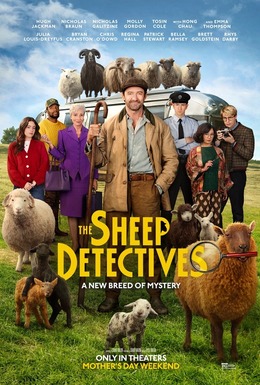
One day the sheep head to town.  They can roam freely with nobody suspecting them.  They initially decide on the wrong suspect.  They help the detective come up with a method of investigating by leaving hints for him.  Lily was George’s smartest sheep.  Sebastian is the most world-wise.  And Mopple is the sheep who never forgets anything.  As Sebastian leads Lily and Mopple into the churchyard for the first time, they have the following conversation:

Sebastian: This is the church, where someone named God lives.

Lily: Who’s God?

Sebastian: It’s a bit confusing, God is a shepherd.

Mopple: So he could be our shepherd?

Sebastian: No. Because he’s also a lamb.

Lily: What?

Sebastian: And he’s also invisible. And he’s made of bread. And he damns things.

Lily: Dams things? Like a beaver?

Sebastian: Yes.

Lily: So God is a big invisible lamb beaver, made of… bread?

Sebastian: Yes. And they eat him on Sundays.

The movie is a comedy, of course, but this passage should be exegeted.  Many people believe God lives in churches.  The 23rd Psalm is invoked (“the Lord is my shepherd”), but is complicated by Jesus—the lamb of God.  Of course, God can’t be seen and is therefore invisible.  Made of bread?  Communion, of course.  And the homonymous nature of “damn/dam,” which confuses kids, lead to the conclusion that God might be like a beaver.  This is a fair bit of theological humor for a lighthearted movie.  

The film was based on a novel, written originally in German, but I’m tempted to read it to see if this conversation comes from the book.  In any case, the movie is about acceptance and finding your place in the flock.  And learning not to be mindlessly led to your slaughter—one of the darker themes in the story.  I even enjoyed the good-natured use of “vegetarian” intended as slander.  A fun movie that leaves you with green pastures, it seems to me.  And a message worth considering.


CSI: Backyard Edition


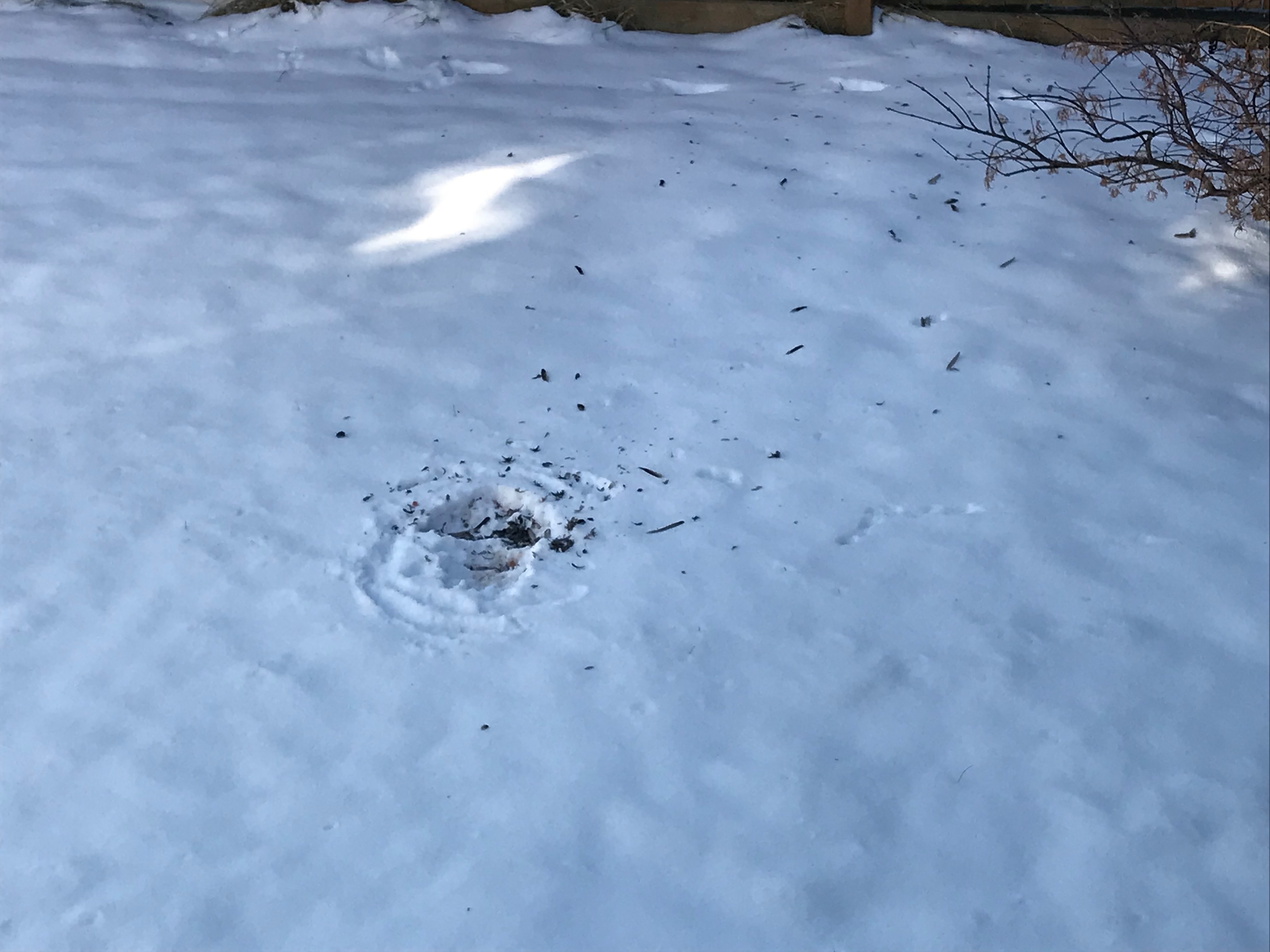
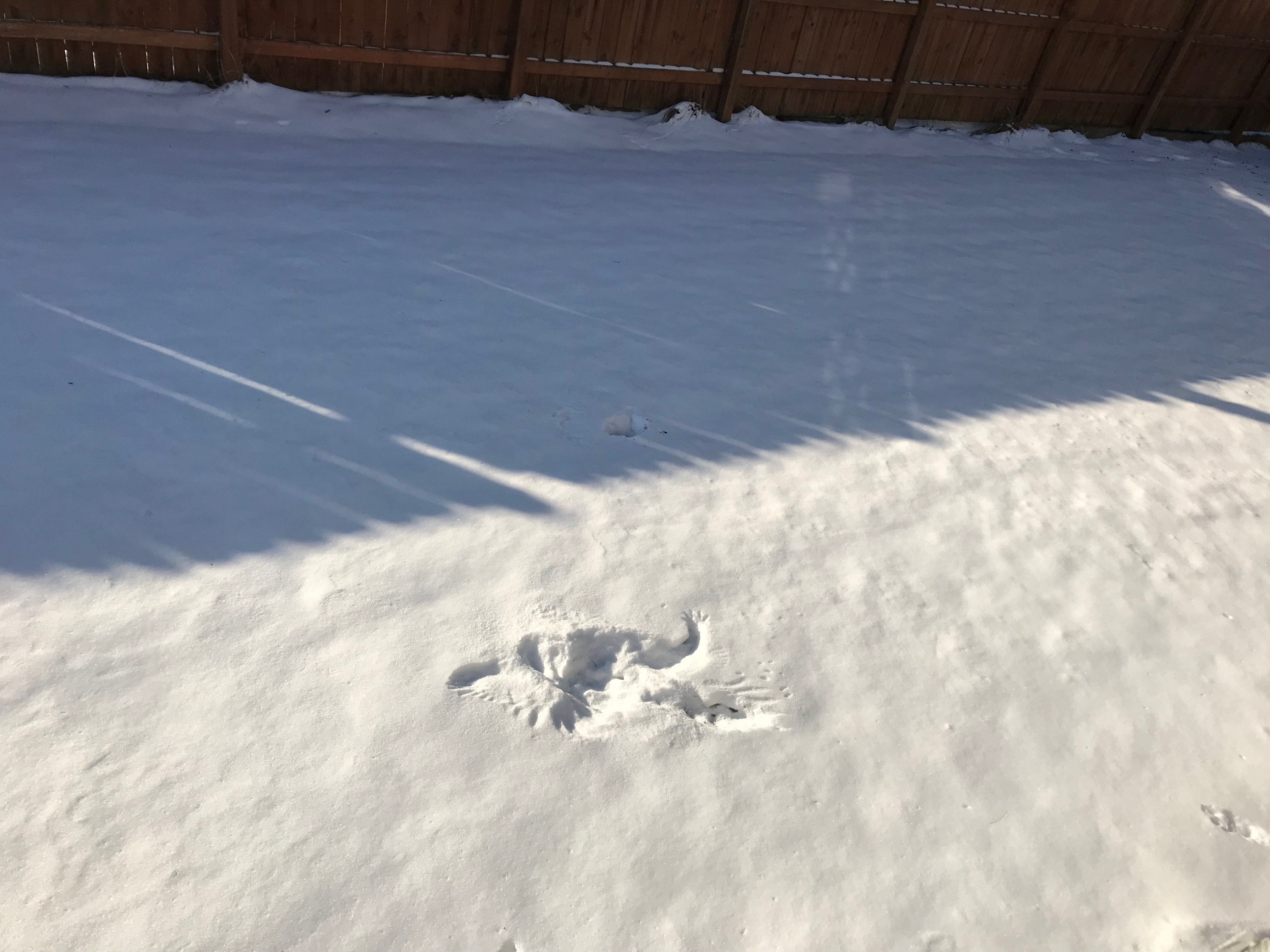
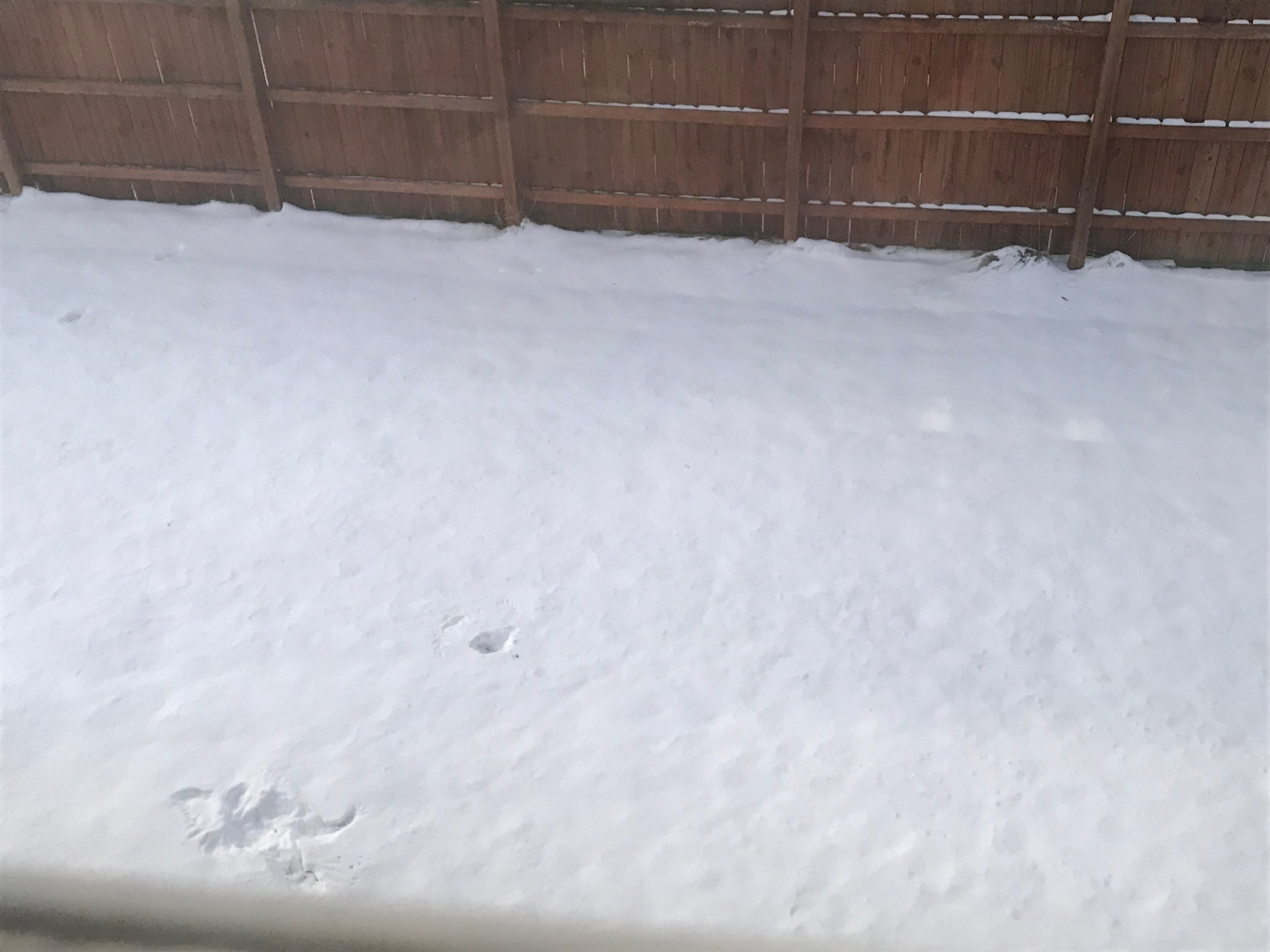
Dateline: January 24.  Location: Backyard.  It was clearly a crime scene.  There were prints in the snow.  Blood.  Signs of a struggle.  The marks hadn’t been there the evening before, so I knew I was looking at a recent offense.  Two indentations in the snow, about 10 yards apart.  Too far for a small animal to have leapt.  A third impression, closer to the second.  Clear feather imprints in the snow.  Earlier on the day in question, I had observed a hawk in the white pine across the street.  Two angry blue jays strafed the interloper, but he appeared unintimidated.  He fluffed his feathers and surveyed the area, including, I presume, my back yard.  In his own time he left, in an unmarked flight.

In the morning, rabbit tracks.  The first impact had been violent.  Debris had been raised from under the snow blanket and scattered toward the southwest.  No footprints leading away from the site.  This led me to conclude the victim had been lifted into the air.  But why the second impact site?  There had been a struggle.  The victim, presumably of the Lepus genus, had tried to make a stand.  The second impact site had bits of blood toward the west.  Neither of these first two scenes of investigation bore any indicative hints to the identity of either the victim or the perpetrator.  I did not have the means to test the blood.  No tracks led from either impression.  The third site clearly involved a struggle.

Impressions of feathers, spread at least two-thirds of a meter across, remained clearly visible in the snow.  Between these wing prints evidence of a scuffle.  Perhaps an argument ensued.  No feathers or fur remained on site.  I had to piece this together before the snow began to melt.  What I am labeling site 1, the initial strike, was near a bush under which rabbits are frequently observed to rest.  A hawk, confident of its ability, swooped down in the night and apprehended the rabbit.  The victim fought back, enforcing an unscheduled landing.  Site 2.  Blood was drawn.  Site 3 was an easy rabbit’s leap from site 2.  Perhaps the rabbit escaped.  The wing and claw marks on the snow suggest that the victim did not survive this third attack.  No solid physical evidence could be recovered.  It was just too cold outside to go and look personally.  I am not paid enough to do that kind of work.  Or I could have it backwards.  Site 3 could be the initial strike, but my reconstruction seemed more likely  Either way, the backyard would, however, never feel safe again.


Still October

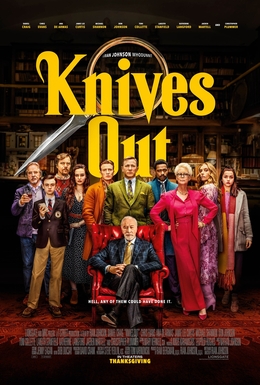
Before October was over, I wanted to watch Knives Out.  Not horror, it’s more of a murder mystery but it’s funny and it makes just about every list of movies to watch in October.  I’m pretty sure that list compilers don’t really understand what I mean by typing in “October movies.”  Or maybe the kinds of movies I’m thinking of simply don’t exist.  More on that later.  Knives Out is the story of the death of a famous writer.  (Given the fantastic house in which he lives, a very famous writer—the majority of us only ever modestly supplement our day job incomes with book sales.)  But this fantasy of being paid enormous sums for what is really hard work is, well, a fantasy.  This writer, who has/had three children, altered his will before his 85th birthday celebration and on this hangs the tale.

The two surviving children, and spouse of the third, have been cut out of the will.  Their means of support—they all relied on their father’s largess—is gone and so when the writer dies on the night of his birthday, by suicide, some questions arise.  There are many twists in the story, and I won’t give away the ending, but the main question that the private investigator asks is why he was hired in the first place.  All the forensic evidence confirms this having been a suicide, and although the adult children’s stories disagree in any particulars, the events surrounding the death seem clear enough.  At the center of all of this is the writer’s private nurse.  She’s an immigrant and she stays out of family squabbles.

The protests over the will bring out the true character of the children, or, in some cases, their spouses.  And although the viewer is clued in early as to what actually happened, like a mystery novel, a vital clue is left out that ties the whole together.  It’s quite well done.  It’s an October movie like Clue is an October movie, or perhaps Murder by Death.  There are some nice shots of trees in color, but it lacks the haunting, melancholy feel that I associate with October films.  Will I watch it again?  I should think so.  Movies like this bear re-watching, if for no other reason than to try to spot “donut holes” (the private detective’s phrase) in the plot.  It’s also a reflection on how money can corrupt.  But also how desperate people can become when their support system is withdrawn.  And that’s truly scary.  Knives Out would work on any dark and stormy night, but it’s not horror.