Holly Days

Thirty years ago today, my wife and I were penniless grad students.  Trying to be logical about when to marry—I’d been accepted at Edinburgh University shortly after we’d decided on a May wedding and the latest I could matriculate was April—we decided the holidays would be the best time.  Not Christmas, of course.  Or New Year’s Day.  As students we held to the illusion that others observed the natural caesura between the two.  We considered it from the feast of Stephen to New Year’s Eve, days when everyone is recovering from the intensity of Christmas or staying up late to welcome in 1989.  We settled on December 30.  The church was already decorated for Christmas, saving that expense.  Having moved up the date by some five months we did ask them to remove the banner that read “For unto us a child is born.”  Our reasons were purely academic.

I generally avoid writing too much about my personal life on this blog, but a thirty-year wedding anniversary is somewhat extraordinary.  Being a working-class kid I told my wife when I proposed that I couldn’t promise much but I could assure her our life together would be interesting.  That slippery qualifier has proven correct time and again.  Our first three years as a couple were spent in Edinburgh, and quite unexpectedly, the next fourteen at Nashotah House.  The first two of those years involved being apart from Sunday through Wednesday as I commuted from Champaign-Urbana to Delafield to teach my courses.  And, of course, to attend chapel.  Our daughter was born while we lived at the seminary and a Fundamentalist takeover led to the loss of my first (and to date only) full-time academic job.

The academic job market had been tough when I started and it had tanked in the meantime.  We had to uproot and move to New Jersey to find any work at all.  Publishing proved remarkably unstable and yet we stuck together.  This year we bought a house and moved to Pennsylvania.  It took three decades, but we’ve finally achieved what some would term normalcy.  The fact is, though, that long-term marriages are to be celebrated.  Many of the vicissitudes we’ve faced could easily have capsized our little boat.  Looking back over the years I can see that we never did prosper in any kind of financial or career situation.  Life has indeed been interesting.  I don’t blog much about my personal life, but today I can’t help but think of how incredibly fortunate I am to have found a soul-mate willing to stick with a guy who still thinks like a penniless grad student.  Thirty years of schooling and it’s not nearly enough.
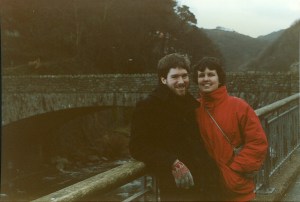
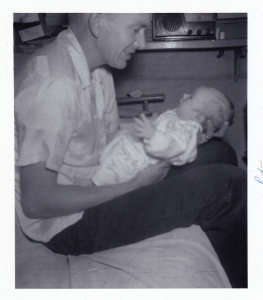
A young couple’s anniversary in Wales.

Fossilized Ideas

In our current political climate, perspective helps quite a bit.  Indeed, one of the shortcomings of our conscious species is our inability to think much beyond the present.  In either direction.  Because of the biblical basis of western civilization, a significant portion of otherwise intelligent people believe that the world was created 6000 years ago.  I grew up believing that myself, before I learned more about the Bible and its context.  I also grew up collecting fossils.  Somehow I had no problem knowing that the fossils were from times far before human beings walked the earth, but also that the earth wasn’t nearly as old as it had to be for that to have happened.  Faith often involves contradictions and remains self-convinced nevertheless.

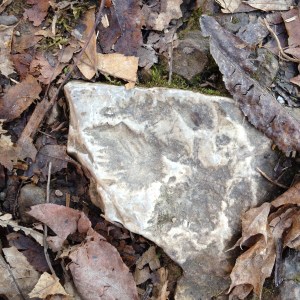
While out walking yesterday I came across a fossil leaf.  Unbeknownst to our movers last summer, I have boxes of fossils that I’ve picked up in various places that I’ve lived.  I find it hard to leave them in situ because of the fascinating sense of contradictions that still grabs me when I see one.  There was an impression of a leaf from millions of years ago right at my feet.  It was in a rock deeply embedded in the ground and that had to be left in place.  Never having found a floral fossil before this was somewhat of a disappointment.  Still it left an impression on me.  Perhaps when dinosaurs roamed Pennsylvania—or perhaps before—this leaf had fallen and been buried to last for eons.  How the world has changed since then!

After that encounter, I considered the brown leaves scattered from the recently departed fall.  Some lay on the muddy path, but few or none of them would meet the precise conditions required to form a fossil.  If one did, however, it would be here after humanity has either grown up and evolved into something nobler or has destroyed itself in a fit of pique or hatred.  We know we’re better than the political games played by those who use the system for their own gain.  The impressions we leave are far less benign than this ossified leaf at my feet.  The Fundamentalist of the dispensationalist species sees world history divided into very brief ages.  God, they opine, created the entire earth to last less than 10,000 years.  All this effort, suffering, and hope exists to be wiped out before an actual fossil has time to form.  It’s a perspective as fascinating as it is dangerous.


Giving a Hand

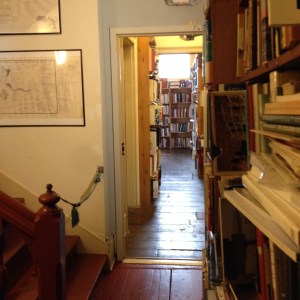
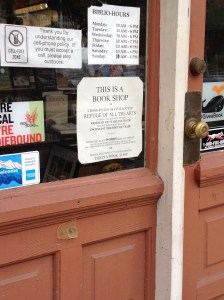
A friend sent me a news story that really spoke to me.  A bookstore in England, forced to move because of rent, asked for volunteers to help move their stock to a new storefront.  The response?  They had to start turning people away after 250.  A human chain was formed to pass books down by hand to their new home.  Book people, it seems to me, are like that.  I spent a recent weekend looking at downtown Easton—one of the triplet cities that make up “the Valley” (Allentown and Bethlehem being the other two).  Surprisingly, I found two used book stores within blocks of each other.  The proprietors (especially of the first) were friendly and helpful.  They were book people.

I mentioned to said first proprietor that two of the books I was buying were to replace copies ruined during our move.  The look of alarm and sympathy on her face was genuine.  Book people know that look.  They can feel each other’s pain.  They will freely give of their time to hold knowledge in their hands, if only briefly, to pass it along to others.  Now, like most bookish people, I’m aware that I’m considered odd by the average guy who enjoys sports, mechanical stuff, and money.  I’m content with a book, either reading or writing, and the occasional foray out among the more active and boisterous.  I like to think that if I lived in Southampton I’d have given up a vacation day to help out.  Saving books is saving civilization.

Book people know there’s more to life than themselves.  Ironically, such readers are often quiet and sometimes thought to be stuck up.  If you go to help move books by hand, I suspect that gives the lie to feeling above other people.  Reading is thought of as a passive activity, but it makes the mind more active.  There’s a reason our species have large brains.  It’s not that all books are for everyone—I’ve had plenty of disappointments in my reading life—but the unread book is full of potential energy.  And often that already read rewards us when we turn back to it.  Books, you see, are the ultimate givers.  Those who sell them may make a profit, but the return on investment tends to be quite high for the buyer.  If you have to move and you hire a moving company chances are they’ll complain about your books.  You’re better off asking book people for an unstinting hand.


Whelmed Over

I have to admit I feel overwhelmed by the task.  You see, I spent twelve years living in a town that went from one small used bookstore to none.  Within a half-hour’s drive I could be at two bookstores—indies, of course, since B&N doesn’t always count.  One of the shops was the Princeton University bookstore, so that was almost unfair.  Now I live in a region with many bookstores.  I wasn’t truly aware of this when deciding on where to settle; the decision was made on practical matters such as being able to get to work, and affordability.  It turns out that central eastern Pennsylvania is unexpectedly bookish.  I’m not complaining, you understand.  I haven’t had much time to explore, and that’s why I’m overwhelmed.  That, and Banned Books Week.

I’ve been to the oldest continuously operated bookstore in the world, The Moravian Book Shop, in Bethlehem.  Twice already.  But there are many more within an easy drive from here.  “Lead us not into temptation,” the prayer goes, but if we’re honest we’ll admit we love the challenge.  Home owning is expensive.  There’s always something that needs to be done—the sort of thing you used to let the landlord handle—they are lords, after all.  And time for reading is scarce.  Add to this that there are bookstores I haven’t even entered yet, not far away, and a kind of anxiety grows.  You have to realize that even in Manhattan reaching a bookstore on lunch hour was difficult.  They are few and far between.  It’s overwhelming being in a region where indie bookstores have held on.

My wife recently showed me an ad for an indie bookstore over the border in New Jersey.  They were looking for new owners.  We’ve often discussed how perhaps a retirement job for us might be just such a thing.  Of course, business sense isn’t my strong suit—just learning how to own a house seems pretty hard.  The idea of making a living surrounded by books, however, is appealing.  (You might think an editor reads all day, and while that sometimes happens the reading is generally embryonic books.  Besides, there’s something serendipitous about discovering fully fledged books that you didn’t know were coming.)  To buy a business requires capital, and we’re more the minuscule type, when it comes to finance.  As we settle into our house we decide which books go where, and it is remarkably satisfying.  After I’m done being overwhelmed by all there is to do in the house, I’m looking forward to being overwhelmed by exploring the bookstores of central eastern Pennsylvania.


A Kind of Happening

The roofers were here.  One of the things you learn only after laying down a ton of money is that those selling a house like to withhold information.  Moving during one of the rainiest summers in history, we naturally discovered leaks.  And so the roofers are here, like noisy angels banging above my head.  Given the orientation of our house, their access is outside the window of my work office.  I figured it was an opportunity to learn.  As the old shingles came raining down, however, I couldn’t help thinking of M. Night Shyamalan’s The Happening.  One of his more disappointing efforts, this horror film involved a memorable scene of mass suicide where people jumped off of a high building one after another.  Maybe other people would think of other comparisons, but the falling debris brought the film to mind in my case.

It’s a matter of framing, I suppose.  I’ve watched enough horror that it has become a framing device.  This is true although it has literally been months since I’ve seen a horror film.  (Moving proved to be its own kind of nightmare and one day I suspect we’ll be unpacked enough to watch movies again.)  Instead of losing the frame of reference, however, I find it intact.  If you spend long enough with Poe, he gets under your skin.  And changing states to M. Night Shyamalan’s eastern Pennsylvania might have something to do with it.  This is Bucks County territory, after all.  Another frame of reference, mediated by media.

As I watch the old shingles drop, I realize the window through which I’m witnessing this is another frame.  Like a camera lens, it limits my view.  At times it can be like Hitchcock’s Rear Window, seeing neighbors at their daily business.   Indulge me. For nearly the past five years I worked in a cubicle with no view of any windows whatsoever.  I was completely cut off from the outside.  (Which, for those of you who’ll admit to having seen The Happening, might not have been an entirely bad thing.)  Now that I have a window—my own framing device—I realize some of what I’d been missing.  At Routledge I had a window, but at such a level that the Manhattan outside seemed artificial.  You couldn’t see individuals down on the street.  The entire wall was a window—too much of a frame.  Gorgias Press involved working in a windowless room as well.  I’m professional enough not to let the falling material or the pounding distract me much.  There’s work to do because there are bills to pay.  And horror films prepared me for that as well.  It’s the ultimate framing device.


Away and a Stranger

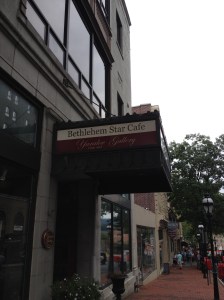
“And Joseph also went up from Galilee, out of the city of Nazareth, into Judaea, unto the city of David, which is called Bethlehem.”  Strangely enough, the great physician (although we know nothing of his medical practice) Luke was writing about a place an ocean and a sea away from here.  The place names of eastern Pennsylvania demonstrate the religious awareness of the early colonial Europeans who brought their Bibles and diseases to this nation.  Bethlehem, Pennsylvania was known more for being a house of steel than being a house of bread.  It’s just down the road from the little town of Nazareth, made famous by The Band’s classic hit, “The Weight.”  The road to Emmaus is nearby.  And the major medical facility is, you guessed it, St. Luke’s.

The Band had an influence somewhat surprising for those who may have trouble recalling their nondescript name.  “The Weight” is a story of a traveler coming to, of all places, Nazareth, Pennsylvania.  So taken by the song was a Scottish band that they adopted the name Nazareth before informing us that “Love Hurts.”  This is something the evangelist and purported doctor Luke presumably knew.  If you go down from Nazareth even unto Bethlehem, you’ll find the steel city recast as the Christmas city.  For those of us who grew up in the western part of the state, Pittsburgh was the real steel city anyway.  When I was growing up, Pittsburgh was the 16th largest city in the country.  It now sits at 65th, because, like Bethlehem it had trouble drawing people without the natural hardness that is Pennsylvania.  There’s a parable in a city transforming from a heavy metal to a holiday.  There’s no Pittsburgh in the Bible.

When Luke begins his Christmas narrative (think of this as one of those “Christmas in July,” or August things), quoted above, he ironically leaves Mary until the next verse.  Joseph, whom later tradition will say had nothing to do with the conception anyway, still gets first billing.  One wonders what might’ve been different had Mary led the way.  It was much later, after the gruesome crucifixion account, that Emmaus came into the picture.  Two unnamed disciples were walking along that road and didn’t recognize who Jesus was.  Had they kept walking, I wonder if they might’ve ended up in Pittsburgh, for the biblical names soon give way to places like Kutztown and Fleetwood, the latter of which, I have to admit, I never got into.  Had Mary taken a load off in Nazareth, this story would’ve been completely different.  Thus saith The Band.


Temporary Id

Who am I, really?  I can’t help but ponder this whenever I apply for a new form of identification.  While at the Department of Motor Vehicles I observed a room full of strangers—if there’s a melting pot in the United States, it’s the DMV.  Outside those cloistered in the major cities, you must drive to survive in this country (or at least to thrive) and the ritual of waiting your turn by number at the DMV is part of it.  I glanced at my application while waiting.  I’ve held drivers’ licenses in at least four states, but I’ve lived in at least six—how do you count where you live, really?  I think I must’ve had an Illinois license at some point, but I could find no record of it.  Who am I?  Are the Illinois years lost?  Big brother will find out, no doubt.

To apply for a license in Pennsylvania, as in most states, you have to prove you are who you say you are.  Swapping in your old license just doesn’t work any more.  While the actual “who” depends on government-issue documents (social security, birth certificates, or passports) the where question is more financial.  To prove your residence you must present bills with your name and current address.  You’re defined by your money.  Bills demonstrate that you’re integrated into the system, the matrix.  I spent one day, as a temp with Manpower, working for Detroit Electric (no, I didn’t have a Michigan license; I kept the Massachusetts one), processing requests for new service.  Despite not being asked back because they had expected a woman (really!), I learned that to get service you had to prove you were part of this matrix, with a history of paying your bills.

None of these agencies ask the deeper, more philosophical questions of identity.  None seem to care that each day is a struggle to define our spiritual selves in a world hopelessly secular and financial.  Yes, my birth certificate “proves” I was born in Pennsylvania.  The DMV records “prove” I learned to drive here and had my first license in this state.  They show nothing of the real question of who I am.  A reasonable facsimile of my visage appears on the plastic card that certifies my citizenship within these artificial borders.  But now my home state stamps “Temporary” on the card so that a security check can be run.  They want to discover if I am who my records say I am.  What the powers that be don’t seem to recognize is that although where we are born influences us every day for the rest of our lives, no little plastic card, despite the amount of information it conveys, can say who it is I really am.  “Temporary” may be the truest word on it.


Special Delivery

Apotropaic is a word that can be translated as “turning away evil.”  For all that, it’s a perfectly good English word, although seldom used outside realms such as religious studies and anthropology.  Although the word itself may be unfamiliar, the concept is one that everyone recognizes—the charm that wards off evil is the most common example.  The rabbit’s foot means good luck (except for the rabbit) because it’s an apotropaic device.  In perhaps one of the oddest twists in Christianity’s somewhat lengthy history is the fact that the Bible itself has become an apotropaic device.  You’ll see this quite a lot in horror films, and if you read Holy Horror when it comes out you’ll see it quite a bit, although I don’t use the technical term for it.  Apotropaic outlooks also pervade society as a whole.  A recent article on Mysterious Universe proves the point.

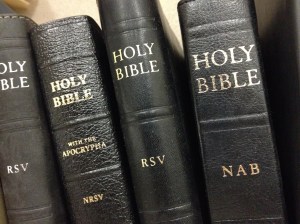
Pennsylvania is a weird state.  Having grown up here, I know that to be the case.  In Wilkes-Barre (which itself is a strange name) a ghost-hunter was arrested for breaking into a haunted house bearing a sword, shotgun, and Bible.  That should cover your bases.  Of course, I couldn’t help but notice the odd equivalence of these three weapons.  One is intended for close combat (the sword), one for a reasonable distance (the shotgun), and one for an enemy so close that they might get inside (the Bible).  Make no mistake about it; the Bible is indeed a weapon.  Probably intended as an apotropaic device in this context, it was nevertheless an object to defend the ghost hunter from evil.  The sword and shotgun, however, seem to betray a lack of trust in Holy Writ.

The Bible has been used for offensive purposes ever since people figured out that it can be used to control others.  Coercion, in whatever form, is a kind of violence.  Interestingly, reading the Good Book would seem to indicate that such usage of holy things is inappropriate.  Then again, the Bible doesn’t refer to the Bible.  The idea of Scripture as a powerful object developed only after the Good Book had become an iconic object.  The final authority.  Who can argue with what is claimed to be the word of God?  That idea has become more important than what the Bible actually says, as any “Bible-believing” Trump follower will prove.  Against ghosts, however, it might serve as an apotropaic device, but it won’t prevent you from being arrested, it seems.  A lesson worth pondering.


Spiritual Walls

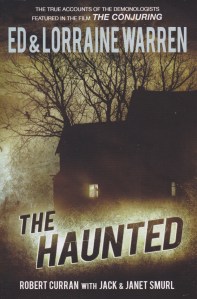
I often ponder what a difference walls make. Perhaps our ancient, cave-dwelling DNA just runs away with imaginations, but walls make us feel safe. Most of the time. As I was reading the ensemble-written The Haunted, by Robert Curran, Ed and Lorraine Warren, and Jack and Janet Smurl, the concept of walls showed its other face. In the mid-to late-1980s, the Smurls lived in a haunted house. The West Pittston duplex in Pennsylvania was also home to their four daughter’s and Jack’s parents. And the entity that harassed them there was deemed a demon. It’s easy to be skeptical about such accounts—no physical proof exists, after all, and proving anything is pretty near impossible anyway. Although I wasn’t aware of it at the time, apparently this become quite a media event. It’s easy to question the whole thing. Then I think about walls.

Although there are public haunted buildings, I often wonder about specific residences that foster claims of haunting. If spirits are, well, spiritual beings that can pass through walls, why would they stay in a house? In the case of the demon that everyone in the family saw, what does it mean to see physically a being that has no physical reality? And when the priest exorcised their house, why did they look to see where the incorporeal being might be hiding? It seems that the demon needed walls too.

Human beings are natural actors. We behave differently at home than we do in public. We act differently with friends than with strangers. Even closer to home, we act more natural with our families than we do even with friends. Beneath all these layers of pretending, most of us still act differently when we’re alone. That’s where walls come in. Although knowing someone’s in the next room might temper our behavior, the family unit within its walls is one intimate collective. What was happening within the walls of the Smurl household three decades ago? Any recounting will involve retelling. Interpretation. And we all know what a difference walls can make. The neighbors, according too this book, could hear demonic screams. Some even experienced invasions of their own during the height of the haunting. Books like this have a way of drawing you in, opening windows and doors through the walls into someone else’s life. What actually happens to them, however, is something we’ll only learn when walls begin to talk.


Parks and Wreck

It was a bit of a shock to see Bethel Park on the list. I make no bones about being a Democrat. I’ve supported progressive causes on an evolving journey since high school. When I saw the news that Conor Lamb is a worthy contender for the 39th district seat in my native western Pennsylvania, and that this area is “deep red,” I had to look it up. A special election’s coming up and the district is leaning a little blue. Historically, until 2010, it had been Democrat territory. But Bethel Park has other associations for me. My wife will pardon me, I hope, for saying it was the home of my first girlfriend.

As a naive and thoroughly Pauline Fundamentalist, I always believed marriage was against God’s will. The Bible says as much. Still, Paul magnanimously allows for marriage to those who “burn.” I’d felt the heat once or twice as a boy becoming a man, but I’d adequately stifled it with Scripture and the comparative fires of Hell. I was strong. I would never marry, I told myself. College up to that point had involved a cenobitic separation of the sexes in an all-male dorm on a campus where the rule was to sit with a Bible’s width between a guy and his girl. I met her at church summer camp where we were counselors together. She was from the city—Bethel Park is a suburb of Pittsburgh—and I was a kid from what she called “Roosterville” (the town of 900 souls was actually technically “Rouseville”). The ways of love, I was learning, were liberal.

To a point. That relationship limped along for a couple of years. I got on with my life, attended seminary and met my wife there. Bethel Park, I knew, had been named from the Bible. Bethel was the place of Jacob’s dream, the original stairway to Heaven. My first lady friend was impressed with my biblical knowledge—it was really about all I had to offer. Things improved after meeting the woman I would marry. Boston would remain a blue city while Bethel Park would degenerate from purple to red. When did this happen? The working class boy from Roosterville believes in equal rights for all. And now District 39 has a decision to make. Will the stairway to Heaven be limited to those who can afford those swank suburban houses? Or will the district remember its heritage that was blue from 1969 until we had our first African American president? “This,” Jacob muttered “is none other than the gate of Heaven.” Or, it could be, just another brick in the wall.


Nothing Better

While it may seem that the largest challenge on a blog like this is writing all these words every day, that’s often not the case. Early on in my blogging life, I learned that images draw readers in. That may no longer be the case, but I do try to ensure that my posts have apt illustrations. Due to the fact that I can’t keep up with technology, I no longer know where these images are even stored, so when I was seeking a picture—amid thousands—that I had saved on my backup drive, I came across a series of photos taken in central Pennsylvania. These showed some road-cuts with obvious and impressive folding of geological layers characteristic of orogenous zones. Geologists only discovered the earth was ancient in the nineteenth century, and evangelicals have been disputing it ever since.

Genesis, so the spotless thinking goes, says the world was created in six days. So, by God, in six days it was created! When Darwin simply put the pieces of the puzzle together, evangelicals objected loudly. They started electing US presidents in the next century—a blink of the eye in geologic terms. They don’t dispute non-biblical dinosaurs, however. Their kids would object. The impressive sedimentary layers (or for that matter, igneous or metamorphic) were, they claim, made by God to look old. To fool us. That’s the kind of deity he is. So I got to thinking of a “to do list” for a God with nothing better to do than to oversee intricate and complicated layers of rock that make sense in geological time, but which, apparently, are only planted here to test the faith of brand-spanking new Homo sapiens.

One thing such a deity might do is take care of social injustice. Since he is a father, I suspect we ought to listen to his son, my evangelical friends. Jesus of Nazareth seemed pretty set on helping other people and everyone loving one another. This was, of course, between stints of helping make the planet look older than it actually is so that sinful scientists could trick their compatriots into going to Hell by believing false evidence. There are so many things you could do if you had the time to make such intricate traps. Why not write another book, for example? The Bible could use a good sequel. But no, it is far better to spend divine time making a world look older than it is. And if I had been able to save the time looking for that image that took over half an hour to find, a post such as this would’ve never been created at all.


Keystones

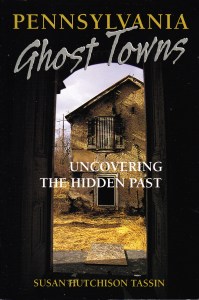
It was one of the very few parties to which I’d been invited in Edinburgh. “When a Scotsman asks you where you’re from,” one of the guests said to me, “he means where you were born.” Although we have no control or say over where we come into the world, we do feel that the place has a claim on us. Combined with my undying interest in local history, that means I like to read books about my native Pennsylvania. I was a first generation Pennsylvanian, to be sure, but to keep a nearly forgotten Scotsman happy, that’s where I’m from. Sarah Hutchison Tassin’s Pennsylvania Ghost Towns: Uncovering the Hidden Past is that familiar kind of book considered light reading, geared largely to the tourist and nostalgic past visitor or homebody crowd. Still, these kinds of quick studies often inspire the imagination. Lots of people lived here before you did.

A couple of factors stood out to me about Pennsylvania’s elder communities. One obvious feature is that a number of them began as intentional religious communities. Often breakaway sects from some major denomination, they established settlements to pursue spirituality in their own way, generally with strict rules, such as celibacy, that would spell their ultimate demise. Pennsylvania is well known for its separatist Anabaptist sects—Amish, Mennonites, and others who’ve been around for centuries and have integrated into the cultural mix of the state. I had no idea that a few ghost towns remain where some less successful spiritual seekers had broken ground. The second feature that stood out is how many communities were intentionally founded for commercial purposes. Often these were mining or lumber-processing towns. Some wealthy individual would buy a natural resource, build houses and a communal store, and permit workers to purchase goods only there. This meant individuals could never save money and never really afford to leave the mine or mill.

These are two very different conceptions of what it means to live in community. One is overly idealistic the other overly exploitative. At one end, the basic necessities of life—food, shelter, clothing—were kept from those who found themselves, like most of us, in need of a job. Or, at the other extreme, being held back from eternal life by failure to keep to the rules of a newly revealed religion. I never really thought of towns intentionally founded in these ways before. My naive view was more eclectic. But then, what do I know? I was born in a small Pennsylvania town and never thought to question why it was there. Where are you from? It’s a matter of perspective.


Night of the Museum

I admit to being a relative stranger to contemporary commercial television. We don’t have “triple play” at home, and since the internet provides more information and entertainment than one person can possibly handle in a lifetime, why pay extra? On a visit home, however, where internet does not yet exist, I fell to the default of watching TV. Scrolling through the cable channels available in this small town, I start to understand why we don’t pay extra for this at home. Much on offer appeals to the lowest common denominator, and although some educational programs exist, they have to put somebody in danger in some remote location in order to draw the viewers in. Then I stumbled on Mysteries at the Museum.

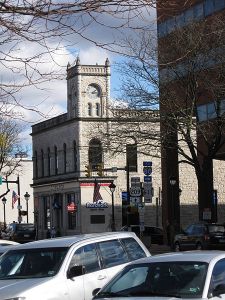
For those of us hopelessly enamored of the past, museums are an irresistible draw. I joined the program already in progress. It was talking about Stroudsburg, Pennsylvania, through which we’d driven to get here. A resort town in the Poconos, I always think of Stroudsburg as a traffic bottleneck, particularly on a holiday weekend. Instead the story was telling of a haunted jail in which a prisoner had to be exorcised after it was found that he could make it rain inside his cell. Then the name of the Warrens was mentioned. The Bible used in the exorcism is from their occult museum (thus the tie to the title of the program). Ed and Lorraine Warren, as my regular readers know, get mentioned here every once in a while. Real life ghost hunters, they kept a museum of the occult in their Connecticut home. I’d missed the part of the program where they revealed the provenance of the artifact. Now things started to make sense. After the commercial break, however, the story shifted to a historic pair of hiking boots.

Image credit: Creative Commons Share Alike 2.0 Generic license. Photo by Doug Kerr, Wikimedia Commons.

What was so striking about this brief segment of the show was not the implied credulousness of the investigation, but rather the certainty with which those interviewed declared this was a water demon case. Okay, so I’d just finished a seven-hour drive and I may not have been at my sharpest, but where did such certainty come from? Who were these experts telling us what had happened? I’ve read enough of the Warrens’ accounts to get a sense of how they worked, but not even the name of the priest was presented, let alone that of the demon. What we had, then, in this 15-minute segment, was a Bible and an anecdote of rain falling in a Stroudsburg jail. As I switched off the program to go to bed, I knew that I’d find the missing information on the internet. Even without triple play.


The Price of Worship

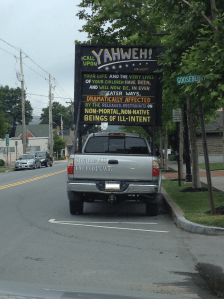
The wind resistance alone must drive the cost of gas up considerably. Of course, with Yahweh on your side you don’t need to worry about pocket change. We were driving through a sleepy town in the Poconos. A light rain was falling. We came upon a truck advocating not for the usual and expected Christ, but instead for Yahweh. Promising “dramatically affected” lives for those who do so, the implied message on this portable billboard is somewhat ominous. We are apparently being restrained by “non-mortal, non-native beings of ill-intent.” The grammar of the placard confuses things a bit since it seems to suggest that calling on Yahweh will “release restraints on” said non-mortals, and that’s hardly a good thing. I suppose they can’t reveal the nature of these entities without giving away spoilers for drawing the curious in.

This vague, supernatural world presided over by the personal name of the deity seems just a little out of place in Bible country. There’s a kind of literalism about Pennsylvania that I find strangely comforting. It is where and how I grew up. I never encountered God’s personal name—at least not with first-person familiarity—until I attended college. Even then we were encouraged to be careful with its use. The commandment about taking the divine name in vain is just a bit disconcertingly unspecific, considering that it isn’t spelled out in more detail. And who exactly are these beings of ill-intent? They’re all the more frightening for not being named. Demons, I must suppose, but I don’t recall the Good Book saying anything about their restraints being released. This is a new kind of apocalypse maybe.

The thing about the Bible is that it’s everybody’s book. Some modern translations use Yahweh rather freely, opting for the admission that translating it leads only to more questions and “Lord” is obfuscation. Still, it seems awfully familiar. The need to air one’s personal beliefs, in some quarters, is very intense. There’s a passion behind this proclamation that I can’t help but admire. People stop and stare. Some, like yours truly, will want photographs of your vehicle. I suppose that’s the point, nevertheless, not too many people like being stared at. Evangelical culture demands it, as I recall from my youth. Putting your personal beliefs out there comes with a price. Part of that may be reduced gas milage and, consequently, pocket change.


The Unliving

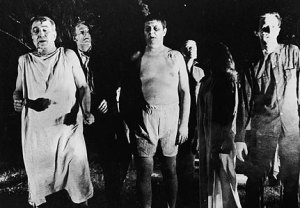
Western Pennsylvania, from which I hail, has few claims to fame. One, still largely forgotten, is that it was the birthplace of the petroleum industry. Remains of the early exploitation of the fossil fuel still lie scattered carelessly in the woods. Another claim to fame is that the region was the adopted home of George Romero and served as the setting for his groundbreaking film, Night of the Living Dead. Unintentionally, Romero created what continues to shamble on in the form of the modern zombie. Although the movie doesn’t call the living dead “zombies,” it established the trope of their endless hunger for human flesh and their rabid bite. So it was with sadness that I read of Romero’s death a couple of days ago. Although he wasn’t from Pittsburgh, he established the city as zombie central. It’s nice that he gave something back.

Zombies have, due to their protean nature, become a fixture among the monster constellations. They represent the worst of what people can be—selfish and brainless, without empathy, their own cravings being the only matters of importance to them. Sounds kind of like the Republican Party. The rest of the world calls them monsters. Night of the Living Dead shocked audiences of the late 1960s with its graphic portrayal of cannibalism and thoughtless destruction. Interestingly, the choice of a strong African American lead for the movie was, according to interviews with Romero, simply a matter of his being the best actor, not an intentional racial statement. (That too reminded me of western Pennsylvania; there were racial tensions where I grew up, but many of us befriended those who were “different” without any clue that it should matter at all.) Duane Jones carried off the role of Ben with conviction and energy. He died young but he never became a zombie.

To make an impact intention need not be present. While Romero denied for the rest of his life that the movie was “about” the Vietnam War, and that his choice of a black lead was a racial statement, both of these factors became facts about the film. Concepts, in other words, like zombies, may rise from the dead. Beyond the shock and gore, the movie made a powerful, if unintentional, statement. It helped to define Romero’s future career. A success in a difficult industry may indeed decide one’s fate. George Romero would go on to make many other monster movies. Western Pennsylvania would become a zombie haven. You never know what you might find scattered about in those forgotten woods of your childhood home.