Beautiful Nature

When it comes to gardening, my philosophy is to let nature add the beauty where I lack the artifice.  Repeating patterns please the eye and sometimes unplanted “weeds” form a pleasing patchwork of ground cover, as long as they don’t get too high.  I trust nature to be beautiful in its own time.  There are some places, many actually, were the beauty simply shines.  The best we can do as humans is to try to imitate it.  We all know of scenic overlooks, scenic by-ways, scenic attractions.  When I was young I flattered myself at being handy with a pencil.  I still love to draw, but my years of neglect in favor of words has left whatever skill I had depleted.  Or rusty from disuse.  Our artificial lives (9-2-5, 9-2-5, 9-2-5) prevent much time from being spread between various forms of self-expression.  But I appreciate beauty.

The more academic among us with call it aesthetics.  I tend to think of it in Faustian terms.  I remember well learning in high school that should Faust ever say, “verweile doch, du bist so schön” (remain, you are so beautiful) Mephistopheles will have won.  There are many moments in my life when beauty nearly overwhelms.  As humans, however, we know that should we see it every day it will become prosaic.  We’ll feel the need to find something even more sublime.  Such things lead to concepts of Heaven.  That certainly isn’t the case for my front garden.  Time to spend weeding is about as rare as time to spend drawing, particularly, for the former, when it’s not raining, or too hot, or when a weekend is otherwise not too busy.

We’re nearing the end of the growing season.  The melancholy beauty of autumn is the most poignant turning point in the year.  My mind tends to go to extremes, so when I have to bundle up a little to start my morning jog I begin to worry about heating bills and being chilly until next May.  I’m not one to wish away any season, however.  There’s beauty in the abundance of summer, just as there is in the bleakness of winter.  At a recent art show I was once again reminded that I’m most attracted to painting that capture the essence of autumn or winter.  That hint of snow on the ground under clear blue skies, announcing that change is coming—that too is beauty.  I still have to harvest the weeds that got out of control these last few weeks, looking for the beauty in their persistent existence.

Weeding Lessons

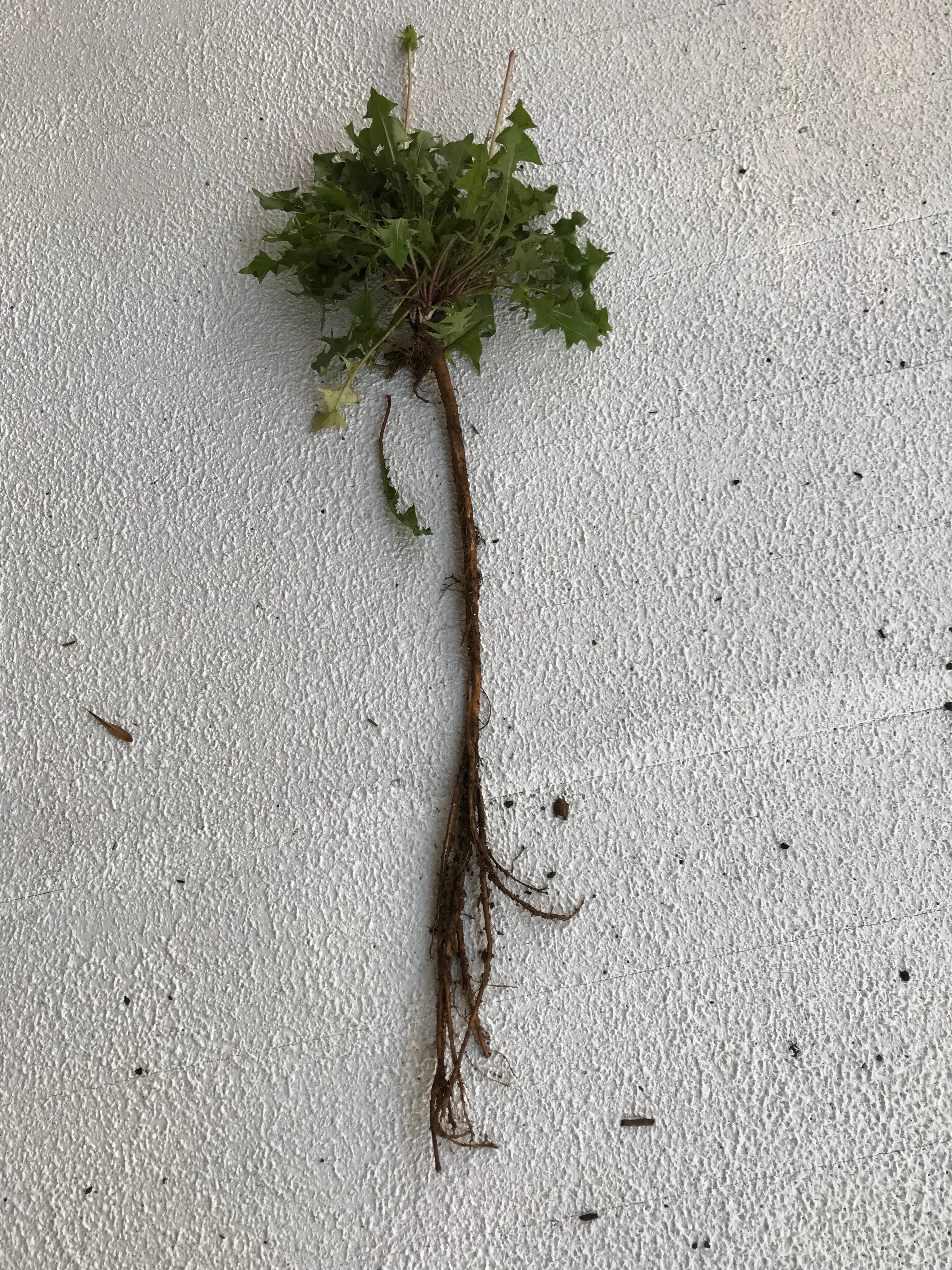
Weeding can be a spiritual exercise.  This summer has been particularly challenging for my communing with the earth because of heat spells, soupy, rainy days for a week at a time, and generally just being busy with other things.  Yesterday I went out to the front garden and received a shock.  A couple of caveats, in my defense: like many people we tend to use the back door instead of the front.  With our parking space behind the house, this is understandable.  Another excuse is that I’m too exhausted after work to do weeding.  At that time of day the unadulterated sun is having its way with the front garden, and, hey, three’s a crowd.  We planted our garden in the hopes of reducing the mowing by a little bit.  It did that, but we soon learned that the expensive plants you buy tend to be shy.

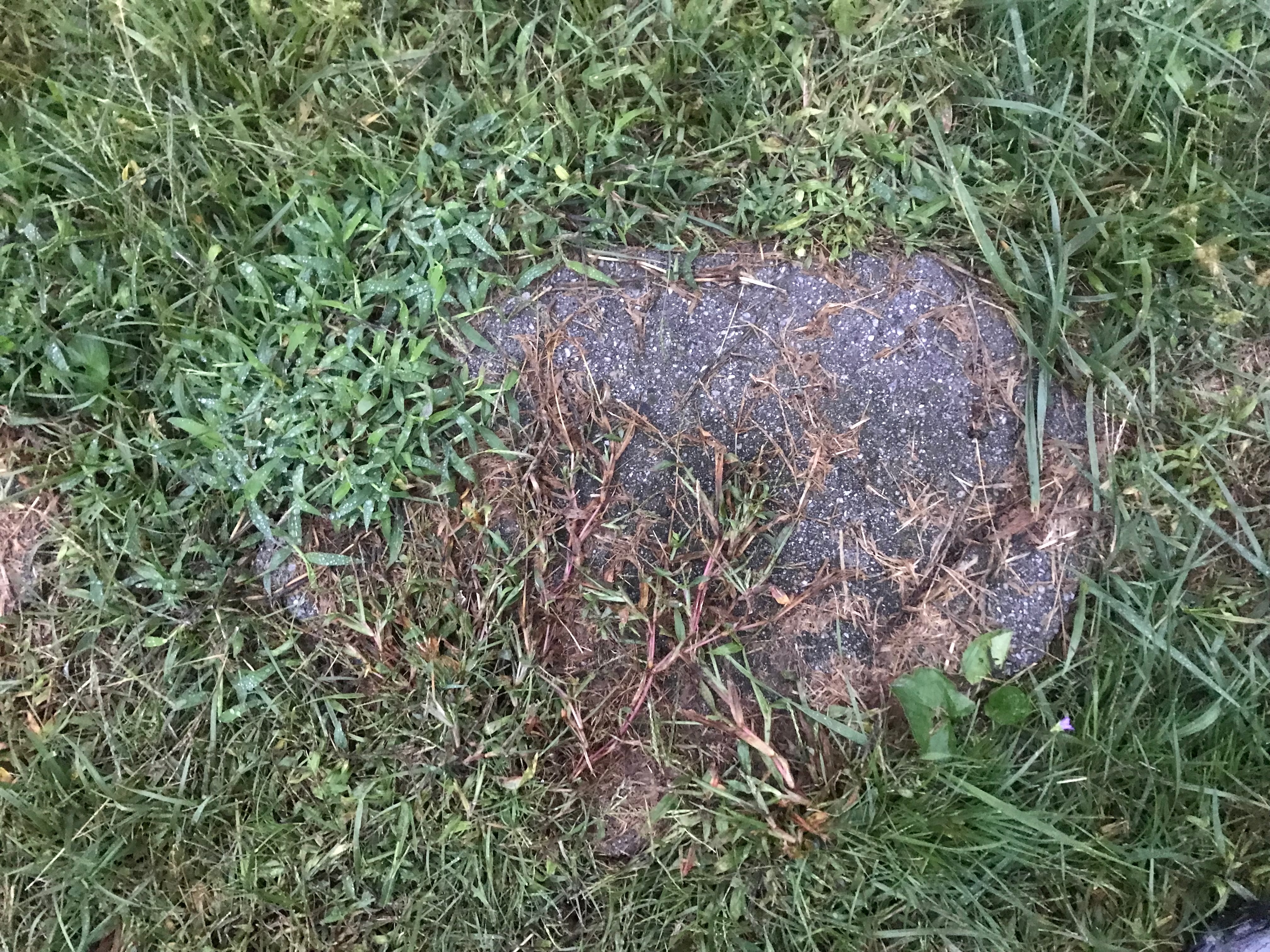
And “ground cover?”  There’s three year mantra: first it sleeps, then it creeps, then it leaps.  Ours slept a couple summers and seems to be in its second summer of creeping.  In the midst of all this: weeds.  Weeds may be the ultimate symbol of hope.  Life is extremely tenacious.  It doesn’t take “no” for an answer.  My amateur adventures in gardening have taught me that weeds grow next to those paving stones you put down.  Then they start growing over said stones.  If you let them go long enough (as I say, the weather has been awkward), they create their own soil over the stones.  Meanwhile, cars line up at the hardware store to buy bag after bag of soil.  Weeds can make their own.

I’m actually an admirer of weeds.  I enjoy the aroma of raw earth when they force me to my hands and knees in front of the house.  I do envy that their 9-2-5 is just being.  Growing.  Soaking up the sunshine, rain, and carbon dioxide.  If there’s a hint of soil, or something that can help them create their own soil, they’re not shy at all.  I don’t mind that they make me go outdoors on a pleasant weekend morning.  There’s peace in the air and I don’t mind the exercise.  I am surprised at just how many plants can grow in such a small amount of space.  I do wonder how our neighbors put up with us, but yesterday it was rejuvenating for my soul to be out there.  Everyone is sleeping in on a Saturday morning, and I’m learning some free life lessons from the amazing plants we call weeds.


Hopeful Weeds

Our approach to our front garden has been to buy the perennials we can afford and hope the beauty of nature does the rest.  Nature, we quickly learned, loves weeds.  Tough, tenacious, even if not always pleasing to the eye, weeds may be the ultimate symbol of hope.  A friend of mine, now departed, used to say that a weed was just a plant where we didn’t want it to be.  To put a more lexical sounding spin on it, a weed is “a plant considered undesirable in a particular situation” (according to Wikipedia).  Opportunistic plants, but those with a strong desire to survive.  I have noticed, in our eight years in this house, that each year different weeds predominate.  We have a front lawn that is difficult to finagle a mower onto, so we put down ground cover and mulch and planted several store-purchased non-weeds.

Some of these survived, and others haven’t.  Some hung on for a few years and then died.  It’s difficult to say if we just don’t have green thumbs or if the brutal, full summer sun did them in.  Weeds, however, thrive no matter what.  And they find any location with the smallest bit of promise.  Tired of wrestling the lawn mower down the front steps, a couple years back I put weed-blocking ground cover on the verge.  I went to the hardware store and bought many bags of sand and gravel and some paving stones.  First the sand on top of the ground cover.  Then the heavy paving blocks.  The gravel covered the sand, and I pushed it off the paving blocks to make a somewhat pleasing, if simple hop-scotch track.  (I’m delighted whenever I see kids using it that way.)  I hadn’t realized that weeds don’t mind sand.

That first year was good.  The second summer, however, weeds had begun to sprout and grow, tenaciously.  Instead of mowing, I was now kneeling on paving blocks and pulling weeds.  Mowing took less time.  Still, the weeding can be done every few weeks rather than the weekly ritual with the mower.  I decided for our front garden that any non-spiky plant that was shorter than what we’d planted would be left alone.  There aren’t enough hours in a weekend—even a three-day one—to weed properly, not with books to write and a 9-2-5 breathing down my neck all the other days.  Not to mention the mowing and grocery shopping and other errands that eat up weekends like popcorn.  Still, fresh in from pulling the latest batch of weeks I have to confess that they give me hope.  All it takes is a place to settle down, no matter how marginal, and the will to survive.


Life Plant

If your backyard is like mine, you’ll find The Ruins scary.  It’s pretty scary even if your plant-control skills are better than mine.  There’ll probably be some spoilers here, so I’ll say upfront that I recommend the movie.  If you’re wanting to see it fresh, well, you might want to pick up here afterwards.  Two couples vacationing in Mexico befriend a German who’s off to find his missing brother, last known to have visited an obscure archaeological site.  When the group arrives, they discover that the local Maya, who don’t speak Spanish or English, try to prevent them from approaching the pyramid.  Once they touch the vines growing all over it, the locals kill anyone who tries to leave.  It takes the group a few days to learn that the vines are carnivorous, and if you get a wound, they will invade your body through it.  It gets pretty gnarly.

Plants, we are coming to learn, share some form of consciousness.  They move (slowly by animal standards, but they do).  And they can quickly “consume” such things as say, oh, paving stones, that have been deployed to control them.   In a matter of maybe three weeks crab grass had nearly completely covered such stones that I laid out to try to reduce the amount of mowing the yard requires.  Plants exemplify the tenaciousness of life.  They can far outlive humans, or any other animal.  Being rooted in the earth has its benefits, it seems.  The Ruins has been described as ecological horror, and I would agree with that.  One thing, though.  Ecological horror often makes it clear that humans “started it.”  Here, the plant grows in one location only, kept under strict control by the locals.

Although the movie didn’t rock the critics, I thought the acting was good and the premise well laid out.  This writer knows how to put his protagonists at the edge of a cliff and then throw rocks at them.  The tourists are all likable people, but they’ve stumbled upon something dangerous, inadvertently, and they have to try to survive amid plants that seem to have a kind of sentience as well.  Somewhat like Triffids.  This is a very tense story.  There’s a bit of gore as well, so be warned.  Nevertheless, it’s not a gross-out for gross-out’s sake.  The larger story is intelligent and it even raises several ethical issues along the way.  And it seems to suggest that if you’re planning to travel to Mexico, stick with the well-touristed ruins rather than trying to discover some new ones.


Ever Hopeful

Plants are some of the most hopeful entities on the Earth.  As much as I’ve had trouble with houseplants, outside they seem to do fine.  Great, in fact.  Long-time readers will know that I struggle with lawn care.  It really didn’t enter my calculus of house buying—I was rather focused on the actual house, strangely.  We ended up with more yard than we required.  Thus, plants.  I’m not a fan of paving over greenery, but there’s a small strip of land between the sidewalk and the street—technically a “verge”—that’s difficult to mow.  Weed-eating it is also tricky because neighbors park their cars there practically 24/7 and some people don’t want a weed-eater that close to their showroom finish.  A couple years back I hauled some paving stones from our backyard out to the verge.  It decreased the grass by maybe 50 percent, but it still has to be whacked regularly.

I’ve been noticing over the summer into the fall that grass with a strong will to survive had begun growing roots over the top of the paving stones, intent on breaking them down.  That’s what plants do.  They work slowly, steadily, to achieve more room to grow.  This is always amazing to me.  Life is persistent.  Many animals see a stone as an obstacle—something to be stepped on or over.  Some plants see them as opportunities.  Our human obsession with allowing only certain kinds of plants close to our habitations, and those trimmed just so, seems an exercise in futility.  Of course, yard work isn’t my favorite activity, thus the paving stones in the first place.

After our species is done making a mess of the planet, plants will quietly take over again.  Especially anyplace near where someone once planted ivy.  We’ve got some very aggressive ivy in the back yard that I pull down year after year, and no matter how often I do it comes back with renewed vigor the next year.  And crabgrass.  That stuff won’t take no for an answer.  I can tell some former owners were trying to do some landscaping with, well, landscaping fabric and decorative gravel.  If you turn your back for a few weeks, the crabgrass gets in and its roots begin breaking the gravel down into soil.  I wonder how there’s any exposed rock in the world, or maybe my yard is a paranormal plant paradise.  I can imagine that without people here to “maintain” things, paradise (which is a garden) would return.  Perhaps there’s a parable of hope among the plants.