In Public

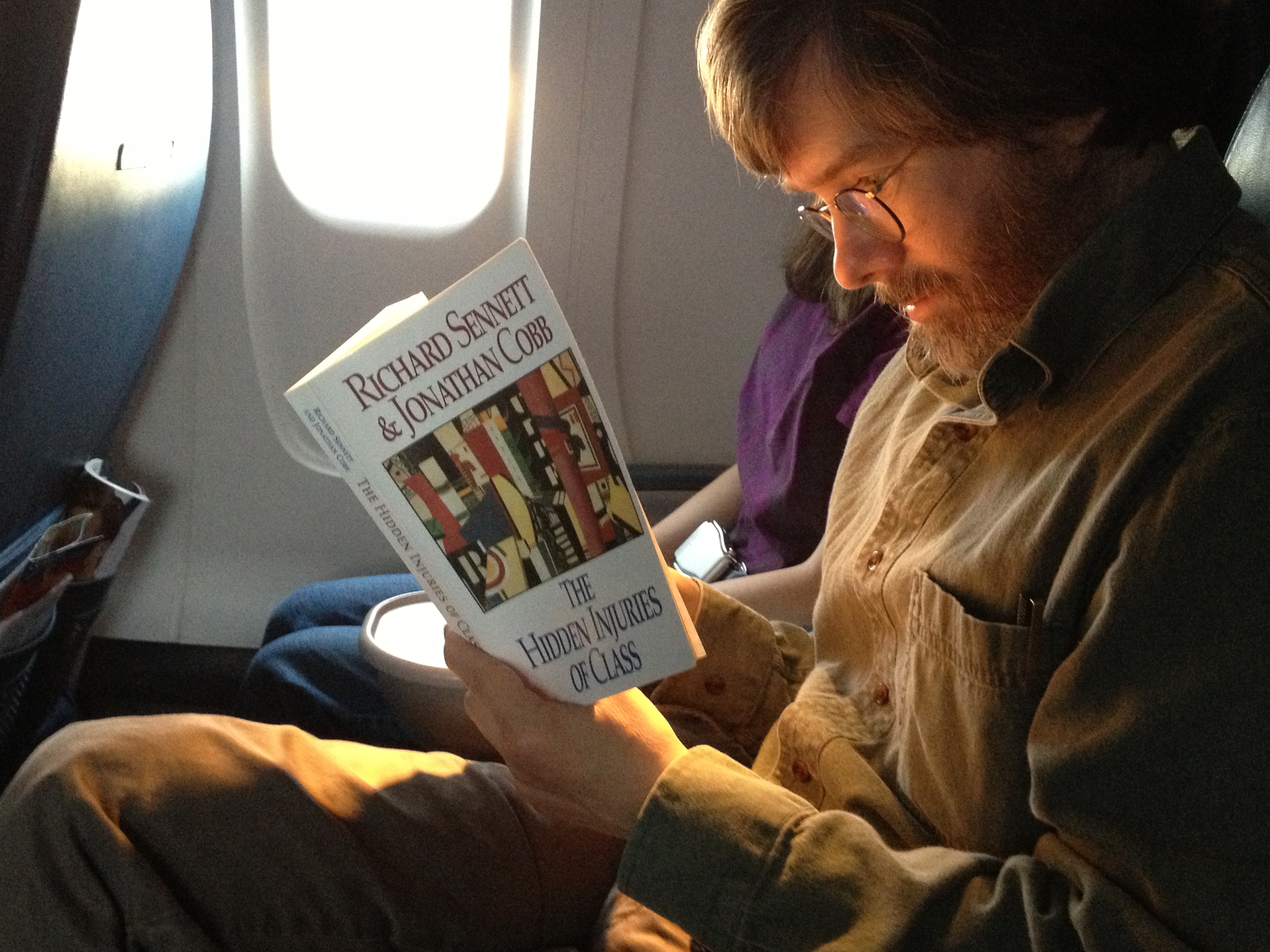
I’ve written about the virtues of reading in public before.  Book reading, that is.  I was reminded once again how restorative an exercise it can be.  The occasion this time was a book sale at the Bethlehem Public Library.  We didn’t realize this was one of those bi-monthly kinds of events—at least this year there are six such sales.  We met some friends there and I exercised considerable restraint, buying only two books.  One was a copy of Strunk & White’s The Elements of Style.  I’d had a copy of this, but it was ruined in the flood.  I decided to replace it.  The other book was a collection of all Flannery O’Connor’s stories.  I’d been thinking just the day before that I should read some of her work.  It happened that I finished before other members of our party so I waited in the hall and started reading the story “Geranium,” with which the book starts.

After a few minutes a college-aged guy walked by and said, “Great book.”  I thanked him for affirming my choice.  He said, “I’ve just been reading O’Connor, you’re in for a real treat.”  This brief exchange reminded me of being in Easton on a warm evening a few years back, reading in a public square.  I was there to pick someone up and they weren’t quite ready yet.  A couple of young women, probably Lafayette College students, walked by and asked what I was reading.  It was Toni Morrison’s Beloved.  They weren’t familiar with it and asked me what it was about.

Now, I’ve always been quite a shy person.  I don’t mind responding when someone talks to me, but initiating a conversation is something I don’t do very well with strangers.  I’m happy to respond when someone shows an interest in a book I’m reading.  I’ve had dentist hygienists ask about the book I inevitably bring in with me, asking if it’s any good.  The few times when I forget to bring a book and I have to try to entertain myself on my phone (it’s not easy; I quickly grow bored), I’ve never had anybody stop and ask what was interesting on my phone.  It’s the printed book, at least in populations with college students, that seems to bring out a willingness to chat.  I wonder how much of that bookish sociability that we’ve lost now that the electronic revolution has taken place.  How many discussions does a Kindle start?  It’s a virtue to read an actual book in public.

Mass Market

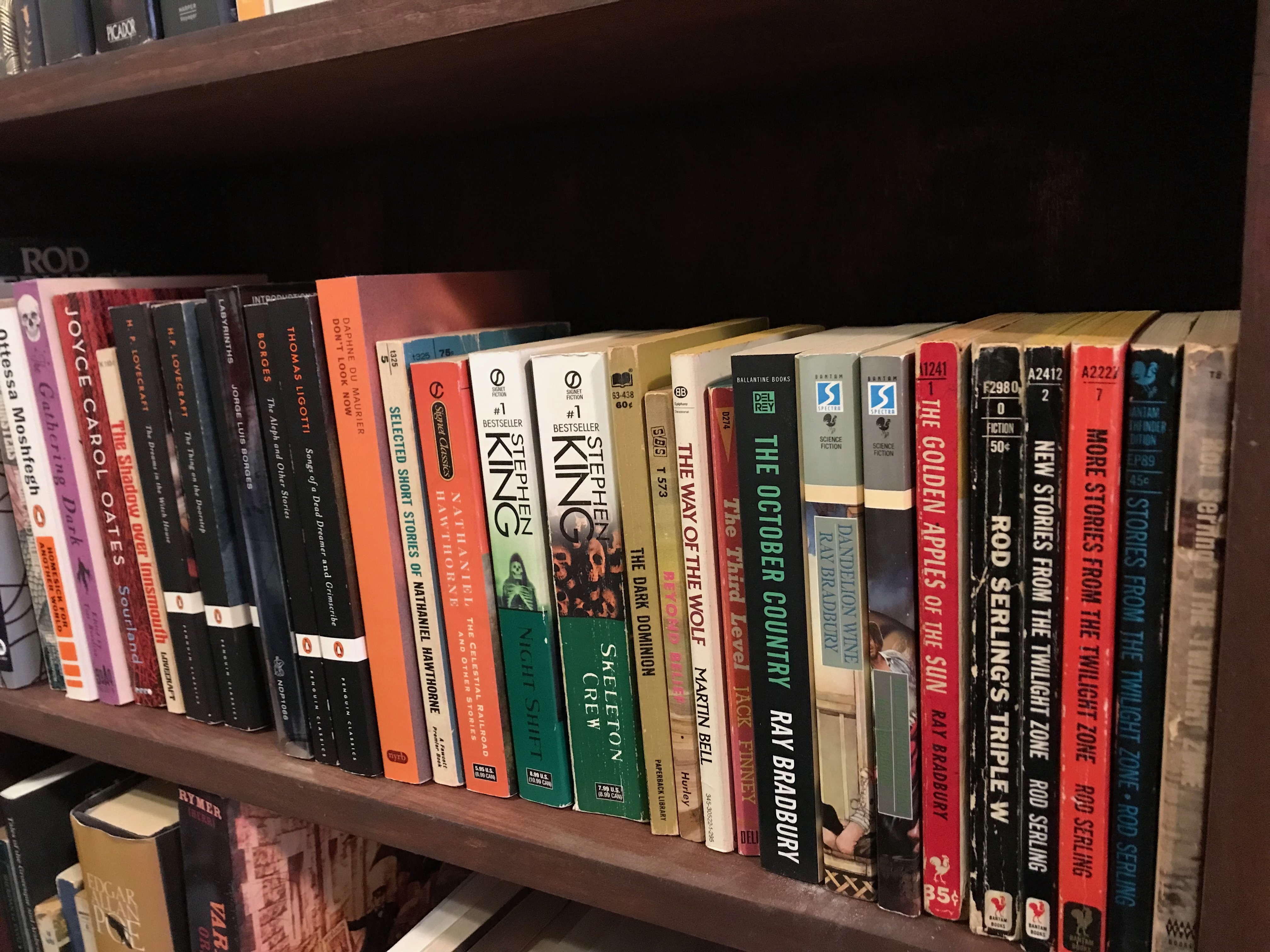
The mass market paperback.  This may very well be one of the best symbols of my younger years.  One of the largest distributors of mass market paperbacks (Readerlink) has announced that it will no longer distribute them.  It seems that the writing, instead of in readers’ hands, is on the wall.  Mass market paperbacks are the least expensive formats of books to buy.  Publishers have increasingly been tending to push trade size (about 6-by-9 inches)—they can charge more for them.  They don’t fit easily in your pocket, however, and well, they cost more.  Often, as someone who reads in public, I find myself wishing more literary fiction was still produced in mass market form.  Only the best selling authors ever make it down to that size.  I miss being able to stick a book in my pocket.  

The mass market paperback’s story began with railroad books, once innovated by my erstwhile employer, Routledge.  The form we recognize today only really took off in 1935.  When I was growing up, I considered all other formats somehow too big.  My book collection and reading habits began with mass market size.  When we moved to our house a few years back, I repurposed an old dresser as a bookshelf.  The top drawer slots were just tall enough for mass market books.  I discovered that I really didn’t have enough of them to fill that shelf.  Books have grown bigger.  Now, working in publishing I realize profit margins are thin in this industry.  Many publishers need the big sellers to help make up for disappointing sales of other titles.  (You have to have thick skin to be an author, I know from experience.)  They need to stay solvent.

But still, this feels like the end of an era.  Books in this format have been around really only less than a century.  Literacy—reading for pleasure—among the masses hasn’t been around much longer.  Books were expensive and were afforded by the elite, then cheaper forms and formats became available.  The electronic revolution has made much of life more convenient but some of us miss the challenge of having to fold a road map and never really knowing, for sure, where we are.  We’re also the ones who likely have a book in the car.  On the occasions when I don’t, I often regret it.  And one of the ways to encourage people to take books with them is to make them of a size that would sell thousands.  So many, in fact, that they would be given the title “mass market.”


Protest Reading

In these days of bold ignorance, reading in public is an act of resistance. A world that follows the uninformed to perdition requires those who stand as witnesses. Those who read. As a cabinet of the wealthiest people in the country is being assembled we need to remind each other that wisdom and wealth aren’t the same thing. Not even close. We read to improve our minds and we find, in such reading, that wealth increases happiness only to a point. Excess wealth leads to misery, but like the addicted, those who have it just can’t stop. Stop, I say, and pick up a book. To help with this my wife sent along the Banned Book Advent calendar. That’s not to say we can read a book a day, but I believe the world would be a better place if we could. Especially if those books were banned.

You see, banned books cause us to think. That’s the payoff. I’ve read many, many banned books. Some of them I didn’t like very much, but that’s not the point. Liking what you read may lubricate the process, but it is the reading itself that stretches the mind. Makes use of mental muscles we didn’t know that we had. Those who ban books want prejudiced minds to prevail. Think about it: prejudice comes from the combination of the prefix for “already” and the root for “judging.” The prejudiced have already decided. Reading challenges. It has from the earliest days of myths on clay down to the era of ordered electrons on a flat screen. Reading makes you question. The thought police prefer mindless acquiescence. Want to show your true colors? Pull out a book and read.

IMG_0899

The season of Advent is one of anticipation. We all know what’s behind door 25, but the journey is the point. That journey is better when it’s literate. When I travel my carryon always has books. More than I can read on the trip, just in case. Books are banned because we fear knowledge. Once exposed to an idea we must deal with it. Far simpler to lock it away in some sealed room and continue to do things like it’s still the 1450s. Before Twitter started revolutions, books did. When we put down our books we are opening an invitation to ignorance. Last month showed what happens when that invitation is given. I won’t make it through a book a day this season, but I flip out my reading material whatever chance I get. And I believe a better future will result.