Sky of Hope

When I stepped out for my jog yesterday, I was given a little hope.  It was a clear morning and I glanced up to see if the spider (how seasonal!) I saw hanging from our porch roof Monday was still there.  Instead of the spider I spied the moon.  And just above it, looking as if it was falling into the bowl of its crescent, was Jupiter.  It was beautiful, but I know better than to try to photograph nighttime objects in the sky with a phone.  (I’ll show you the spider instead; after all, it’s October.)  What gave me hope, though, was when I stepped off the porch, I saw a neighbor about half a block away, outside with their children, all looking at the sky.  I presumed they were looking at the moon and Jupiter, because it was really a stunning sight.  This gives me hope because someone was showing their children the wonders of the sky.
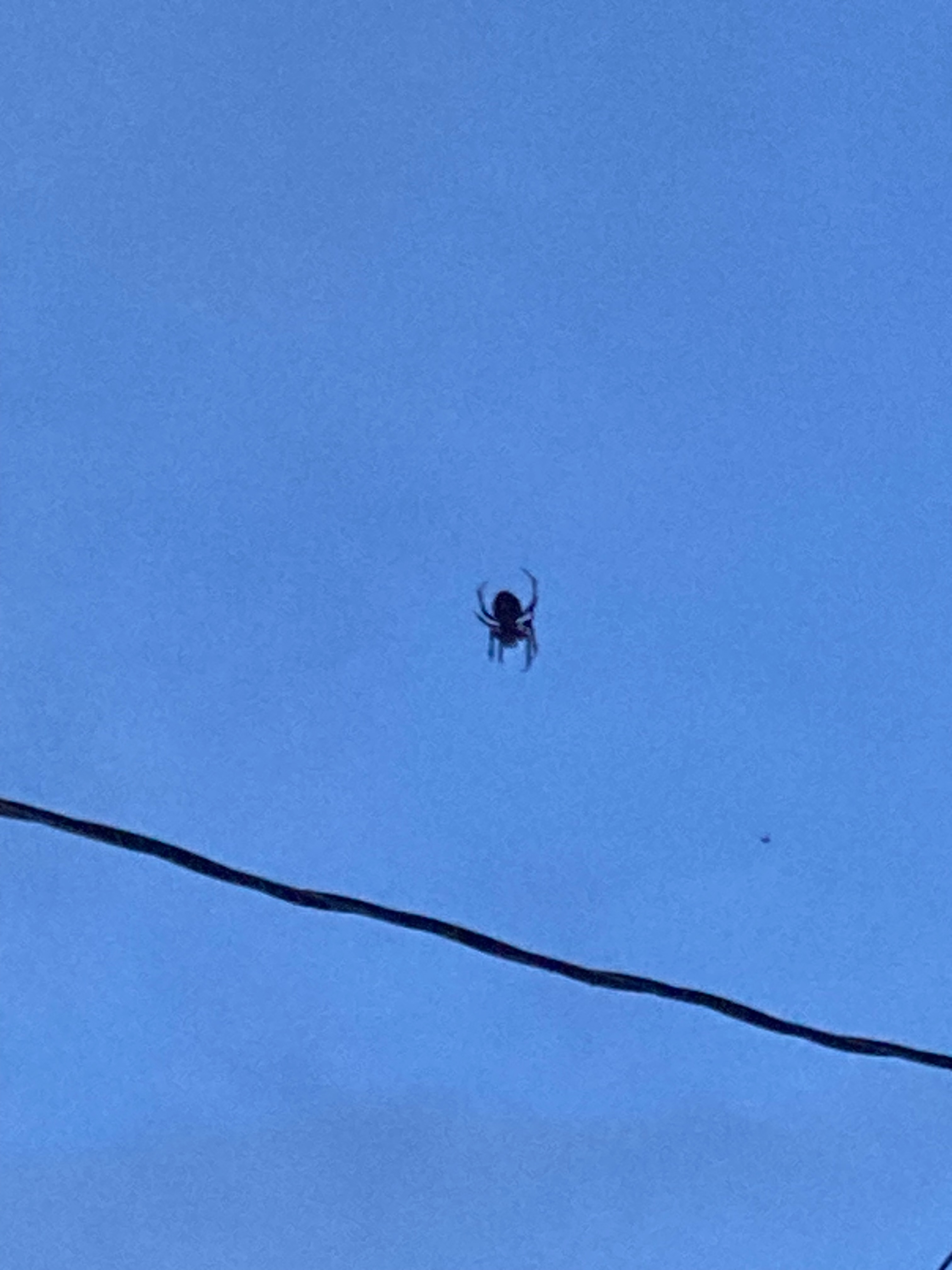
I go jogging as soon as it’s light enough to do so.  I’m generally back home before the sun rises.  And I pay attention to other people I encounter in the twilight.  I’d never seen this family outside before.  I can only start my jog around 6:30 these days; in the summer it’s closer to 4:30.  Looking at the sky is cause for hope.  We need to teach our children to do so as well.  It’s been cloudy around here the past few days.  I had a later start on Monday, the day of the spider, because clouds kept it darker than the naked sky.  A clear firmament is a thing of wonder.  I don’t look at the sky nearly enough any more.  I stare at a screen for most of the waking day.  

Last October a colleague invited me to talk about Weathering the Psalms to her students at Princeton Seminary.  The class was held outside so we could see the sky.  That memory is one I treasure.  While writing that book I explored, not nearly enough, the idea that the sky has always been associated with the divine.  It holds more than we can imagine, despite all the “empty” space.  I took an astronomy course in high school.  When I took one in college the math stymied me.  But still, when it’s clear, I can be caught staring at the sky.  I don’t know who the neighbors were—we only know the names of the family next door—but I do know that we both have some kind of appreciation for the beauty of the heavens.  And that’s cause for hope.

Exobiology

Are we alone in the universe? The answer is every day growing more and more certain that we are not. Humanity may experience shortages of many things, however, pride is not among them. For millennia we’ve been convinced of our own superiority and, of late, we’ve become convinced that we must be as good as it gets. We’ve mastered logic and our material world. We’ve sent probes to land on Venus and Mars, and flying by just about every other planetary body close enough to reach. We sure are smart. So it stands to reason that we are the brightest beings in a universe that we tell ourselves is infinite. A recent article on Exobiology that my wife pointed out to me on The Conversation, traces the history of the idea of life outside the earth. Not surprisingly, the idea has its origins in religious thought.

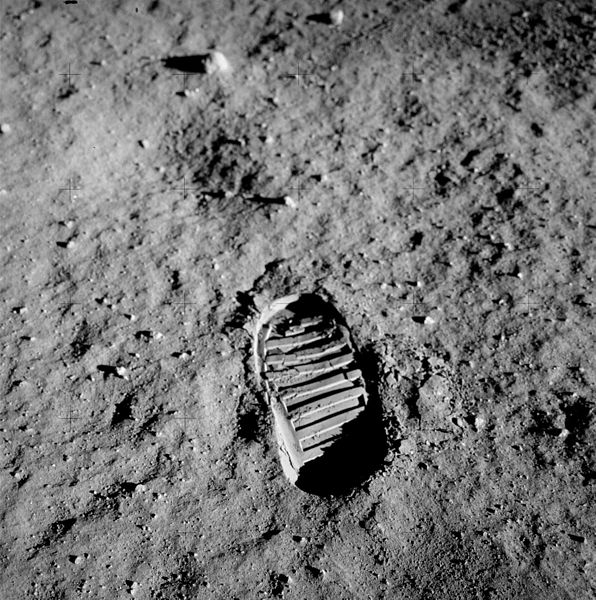
Giordano Bruno was an early modern Dominican who was burned at the stake for his heresies. Like his near contemporary Galileo, he was fascinated by the sky and postulated that the world up there could be full of life. A church increasingly under pressure from the pesky Protestant movement had no time for flights of fancy among the faithful. No, religion at the time wanted its feet planted on solid ground. The only life up there was angels and God. Still, the idea had been broached. Since the world’s major religions have been geocentric, as a rule, they’ve had a bit of difficulty adjusting to the idea of the other other. God as other is one thing, other creatures as other is quite another. How do earth-bound religions account for the possibility of life in space? This is not merely academic fancy at play. We will almost certainly discover life elsewhere—whether it comes to us (or already may have), or we go to it (which might take a little longer), we will discover that a universe that is infinite has infinite possibilities. Will religion keep us grounded?

596px-Apollo_11_bootprint

Ironically, one of the areas where science and religion have broadly agreed is in the superiority of humankind. Both remain staunchly geocentric. Religions and tend to say we’re sinful, but other than that, pretty much the best the earth has to offer. Although biologists say evolution is non-teleological, they still have a hard time imagining something more advanced than us. We are pretty self-absorbed. Meanwhile, we are discovering water is likely not unique to earth. Rocky planets seem to be the rule rather than the exception. And there are billions and billions of stars in our own galaxy alone, among billions of others. What are the chances we’re alone? Virtually none. Here is one place that both religion and science might learn a lesson based on early spiritual teachings. In the face of the unknown, humility is the most logical response. I’m impressed in how far we’ve come in the last several millennia of civilization. I think, however, that we’d better be prepared to meet exobiology with a realization that Genesis 1 was only the beginning.