Christian Computing

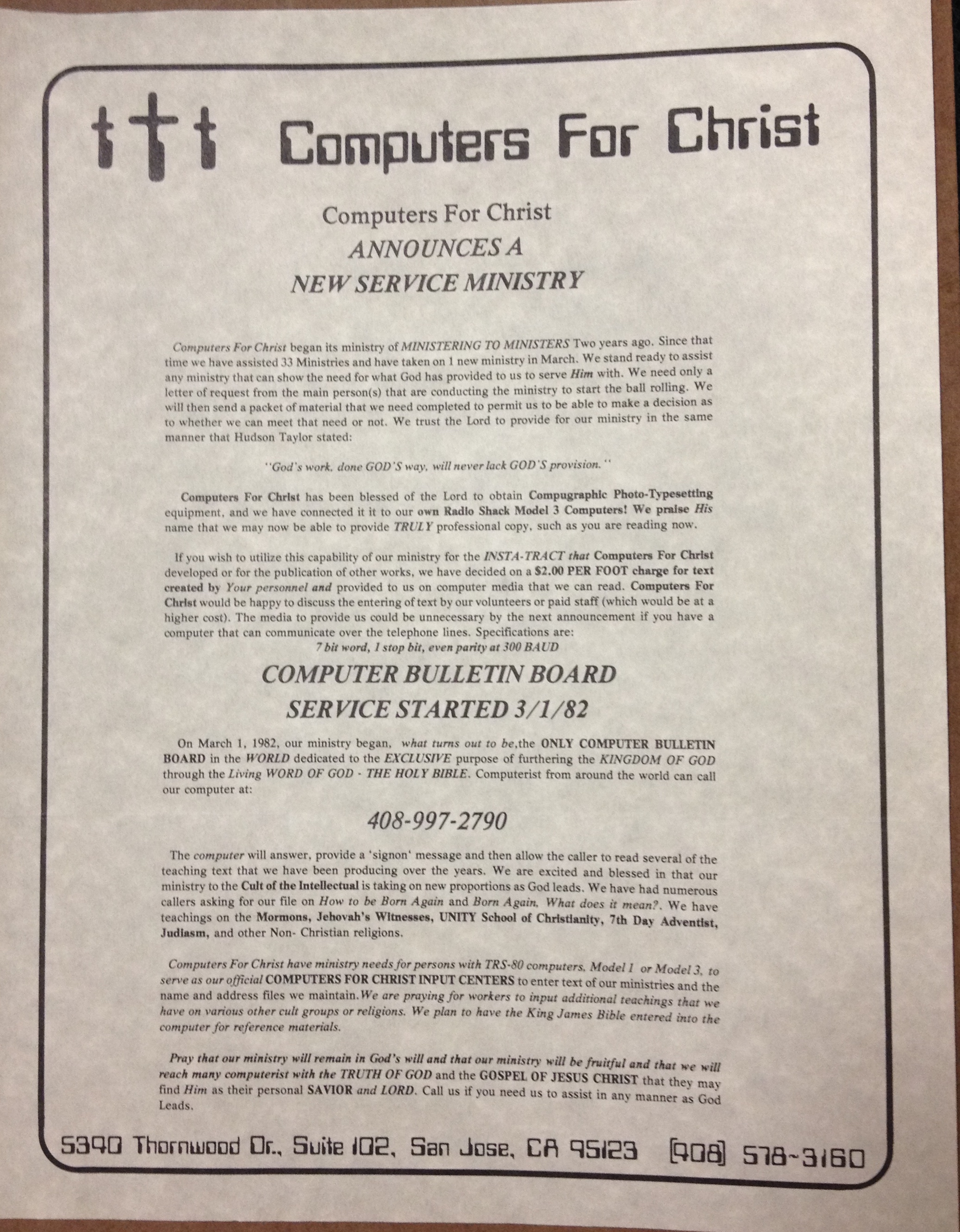
Science and religion are often portrayed as fighting like dogs and cats. Both claim superiority and a comprehensive worldview that should make sense of everything. With reality television probing deep into the lives of rural folk who still hold to the old ways, it is easy to think that religion is awkward and backward and an embarrassment to the technologically sophisticated. In electrons we trust. As with most simplistic views, however, this dichotomy is overly dramatized. I recently found a flier for Computers for Christ. I didn’t have time to read it carefully, but the space-age font immediately told me that this was vintage 70s or 80s, back when computers were still so new that most of us had never seen an actual exemplar and we had to guess what the future might hold. Would these things catch on or not? A little closer reading revealed the date of 1982, back when I was a college freshman. I had, by that point in my life, never knowingly glimpsed a computer.
IMG_1644

Sitting here with a computer on my lap, and another in my pocket, I wondered what ever happened to Computers for Christ with its space-age crosses and early embracement of technology. I didn’t find anything that really matches it with a half-hearted web search, but it did make me realize that some enterprising Evangelicals had latched onto computers long before I ever did. I recall making a pact with a couple of friends my senior year in college that we’d never give in and use computers. Since I can’t find them online, my guess is that they kept their end of the deal. As usual, I caved. By 1985 computers had found their way even to Grove City College. A strange thing called a “server” allowed people to access it via multiple “terminals.” The computer science professor wore a large cross around his neck. I would go on to seminary and graduate with a second degree not ever having used such a device.

Dogs and cats are both mammals, and neither regularly preys upon the other for food. Although Computers for Christ may no longer exist, the internet has been fully exploited by some of the religious. Jesus was an early meme. I remember when “the winking Jesus” was all the rage since an image on screen was actually animated! The savior virtually moved an eyelid! Now we can find Jesus doing everything from walking on water to riding on dinosaurs. The son of God has adapted to life on the web quite well, and often with a sense of humor. There are those who would argue that this is a travesty of true faith. There are others who would argue that it is a silly use of serious technology. I grew up with both dogs and cats and learned that when domesticated together they seldom fight. As I file away this aging paper, I wonder how the world might change if people behaved so sensibly.

Non-Fiction Steampunk

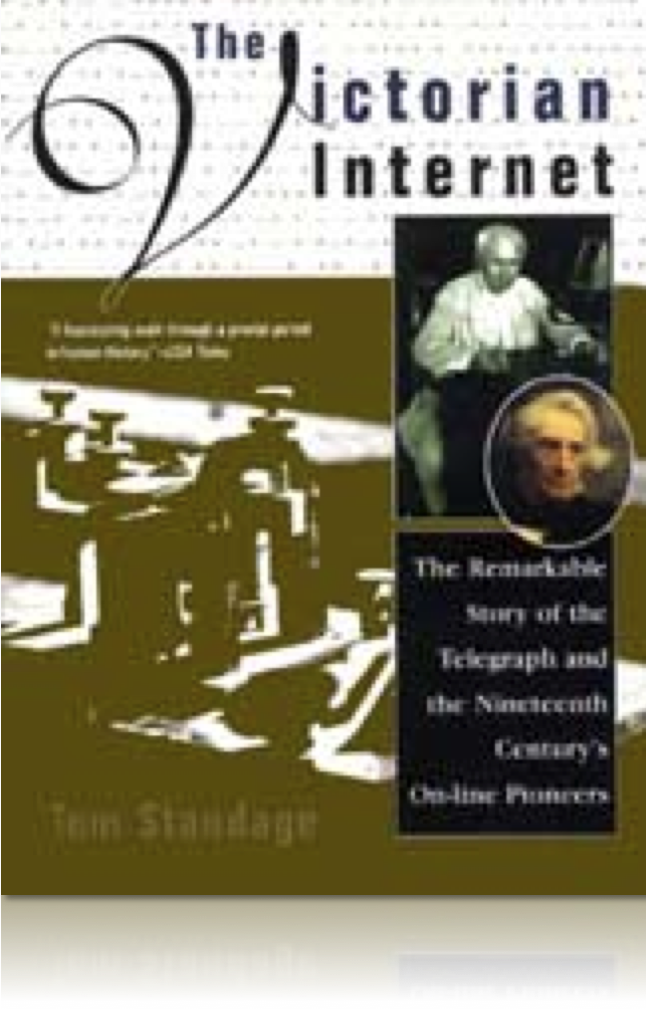
TheVictorianInternetThe histories of Tom Standage approach familiar things from unfamiliar angles. Being interested in Steampunk, and a daily user of the internet who has trouble recalling what life was like before then, I found The Victorian Internet fascinating. Subtitled The Remarkable Story of the Telegraph and the Nineteenth Century’s On-line Pioneers, the story of the wiring of the world did resonate in any almost eerie way to the early days of the world-wide web. Despite my disclaimer, I do recall those days clearly when the only way someone could get in touch with you immediately was the telephone, and you had to be at home for it to work. Prior to the telegraph, news traveled even slower and you could go months without hearing from those closest to you, if they happened to be away. Samuel F. B. Morse knew that first-hand, as Standage tells it. His wife died while he was out of town, and although he rushed back right away upon hearing, she had been buried before he reached her. Such was life when news arrived only by letter. Morse was among those who invented the telegraph, a device that made the world realize that yes, it was possible to send information to distant places almost instantly. It soon become a wired world.

Standage is also more circumspect than some writers who declare, with breathless awe, that some new device will cure the world’s ills. Showing how the telegraph generated much the same hyperbole as the internet (that peace would reign now that people could communicate instantly, that technology had brought a miraculous rapprochement, etc.) he notes that people remained people. Wars continued—intensified, in fact, into World War One where technology was devoted to destruction. People had always been able to kill each other. Now they could do it faster, and in more hideous ways. Still, there’s no denying that once the idea of instant communication caught on that we would continue to develop it rapidly. You never need be away from a network that covers much of the developed world and you can talk on your phone from deep under the Hudson River to the top of the Empire State Building. You can order a pizza from anywhere.

Ironically, Morse dedicated part of his earnings to endow a lectureship concerning how science related to the Bible. It was clear that technology had achieved the impossible (okay, well, the improbable) and yet, Victorian society still relied on the truths contained in Scripture. The telegraph, which began with the words, “What hath God wrought,” ended with the attempt to figure out how the Bible fit into all this. Just because humans had crossed the great barriers of oceans with electric cables didn’t mean the Almighty was out of a job. Even today God can be found on the internet. Along with many other choices of distraction and business. God is not so much dead as commodified. The difference between Morse’s day and ours was that then they knew that the Bible impacted daily life. It continues to do so today, but we’ve become too sophisticated to give it much of a nod. We might be well served, however, to look back once in a while as well as to look forward. We might be surprised at how little things have changed.


Empire State

Hegemony is a funny word. In studies of antiquity it is commonly found since it denotes the “Leadership or dominance, especially by one country or social group over others,” according to the Oxford English Dictionary. Today it has a vaguely imperialist taint, although it doesn’t necessarily require that one nation actually pillage another’s wealth or resources. The idea that people are, and should be, free is pretty much assumed in developed nations. Or so at least our rhetoric dictates. The word hegemony came to mind, however, as I saw an interview with a corporate leader. He was discussing how his company had budgeted for technology development on an increasing scale, to catch up with current developments, and then leveled the tech expenses off after that so that the business could move into its prime objectives. The reality was vastly different, however. Each year’s budget saw increasing technology costs and it shows no signs of slowing down. Every industry, it seems, will have to keep devoting larger and larger shares of its budget to technology. Hegemony.

It’s not that any one company is solely responsible for our obeisance to technology, so this hegemony has no head. It is the idea of progress gone wild. Last year as I set out for the American Academy of Religion and Society of Biblical Literature annual meeting, a notice popped up on my laptop that a software upgrade was available. Since I file that I required was no longer accessible unless I updated, I clicked through all the agreements and provisos that I can’t understand and began the upgrade. Download and installation time measured in hours rather than minutes and I soon had to interrupt the process to get to the conference. This had consequences that nearly led me to becoming utterly lost in a part of Baltimore I’d been warned to avoid. The gods of technology demand their due. Now, less than a year later, I can’t access certain files unless I upgrade again.

Don’t get me wrong—I’m not a complete Luddite. I enjoy the instant gratification of finding information in seconds through a web search, but I’m not always sure that I can believe what I read. Technology means photos can be manipulated, sounds can be fabricated, facts can be created, all with no basis in reality. I used to have students ask me if such-and-such a fact they’d read online was true. Facts, it appears, are now negotiable. Nobody’s really in charge, it seems. Instead we are lead by the vague idea of progress, a new god with technology as its prophet. Even now I know people who think they never use computers but they drive without realizing their car is full of them, and turn on the television not realizing that the tech is no longer chip-free. Meanwhile those in the technology industry seem to have plenty of extra cash around, while those of us in the humanities ponder whether the ancient hegemonies have really changed at all. Let me look that up on the internet, once this upgrade is through.

600px-Astronaut-EVA


The Joy of Tech

In the age of Steampunk, New Jersey is among the world capitals. Indeed, today is the second day that the International Steampunk City will be inhabited in Speedwell, home of the telegraph. For yours truly, Steampunk is an escape. Alternate realities often look better than the pedestrian one we’ve inherited, so we like to look at the world through steamy lenses and imagine how it might have turned out differently. New Jersey, in the spring, also hosts the Steampunk World’s Fair. Perhaps we have more pressures to escape here in the Garden State. Imagination is certainly in no short supply. I attended the International Steampunk City last year and decided that I’d like to be a part of it. Knowing a thing or two about ancient technology, I thought I might share a bit with the Steampunk crowd. What is Steampunk without tech? Some ancient technology, although not very well known, is perhaps of even greater influence than we might imagine.

One of the connections that is easily misplaced in this era of purely scientific advance, is that technology was devised in the service of religion. At least in the early days. The greatest architectural achievements came under the aegis of temple building. Domes, arches, and eventually flying buttresses that could hold tons of stone high over your head—these were to please the gods. We can’t imagine Stonehenge as anything other than a capitalist venture these days, a way of drawing in the money. Of course, ancient builders knew of the financial benefits as well; temples were often the equivalent of ancient banks. Still, beneath all the pride of accomplishment there was the belief that the gods were somehow pleased with our innovation. Perhaps we’ve just done away with the convenient myth. Steampunk often has a religious underpinning. Many of the stories I’ve read touch on our ancient mythologies. Only, in fantasy, there are different possible permutations.

We sometimes think that technology is a modern phenomenon. Actually, it is quite ancient, as far as human culture goes. The first “computer” was invented around about the first century. Since it didn’t have an obvious benefit to the control of the masses, however, no technological revolution took place. The steam engine was, in nascent stages, invented also in ancient times. Until we learned, however, that it could be enslaved to make certain industrialists rich, we had no need for it beyond a diverting toy. Technology does not take hold without a deeper purpose. Every now and again I get a little paranoid knowing that I carry a telephone that knows my exact location at all times. As if I were important enough for anyone to care. Then the feeling passes and I open my iBooks app and turn to my latest Steampunk novel. I am a slave. I wonder what innovations there will be at International Steampunk City this year that might change the world. Only the imagination will limit the possibilities.

DSCN4341


Cuneiform Lover

I’m busy. Too busy most of the time. You see, I used to be able to keep my mental files neatly in order. Recall was swift and efficient. I suppose that was back when I was doing the job for which I’d been preparing my entire life. Then a midlife, unexpected career change shifted things a bit. That mental file that you always kept here has now been shunted over to there. I suppose I always knew this was coming, and that’s why I started writing things down. Of course, this led to stacks of papers and a whole series of notebooks that follow varying forms of logic. “Commonplace books” as they used to be called. Then computers. I never used a computer until after my master’s degree. My wife showed me how. And then writing ideas down became pretty easy—who could ever afford more than one personal computer? And since they were as heavy as a small television (cathode-ray tube variety, of course), you always knew where you’d find it. Then laptops. iPads. iPhones. Something called “the Cloud.” A computer on my person at all times and I still can’t find that ruddy file, and has anybody seen my phone?

I wrote an important (for me) paper back in 2012. Just two years ago. I remembered vividly typing it on my laptop, working on it for weeks. Recently I wondered where I put it. I searched my laptop. Not there. I must have backed it up. Checked my backup files, on CD. Not there. Where did I put the thing? Although a Luddite at heart, I don’t delete old files. Please, tell me I didn’t do something like back it up on a floppy disk! I can barely remember when we used those. No, no, it was much more recent than that. Was it on this laptop or the one before? Maybe I stored it on the hard disk of the antiquated one. When you get a new computer (or at least when I do) it is such a rare occasion that you don’t bother backing up every single little loose file on your old machine—there’s too much shiny new stuff to admire. But the file wasn’t there. Finally I attached a terabyte backup, admittedly overkill for someone of my limited mental ability, and searched. Although the icon said it was on the terabyte drive, the file was actually on the Cloud, and since I hadn’t updated my software in a while, I was denied access.

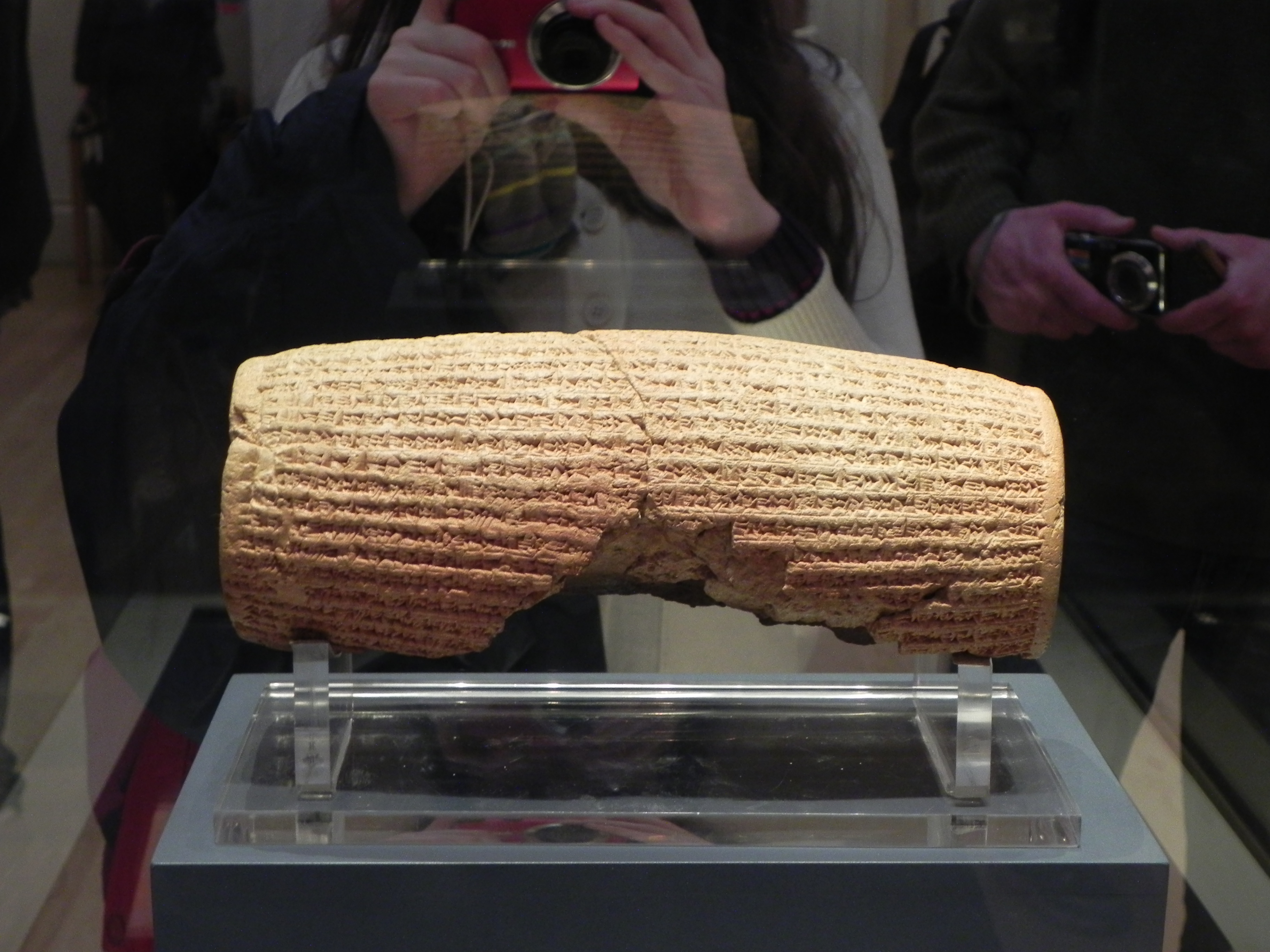
I learned to write with fallible pencil on cheap, lined tablet paper. Back when tablets were paper. Our ancient ancestors started the process by writing on clay. For some five thousand years this pressing stylus unto substrate method worked fine. All of scared writ was scrivener-mediated that way. When computers were new you stored your files on floppies. At least you knew where they were. Now dialogue boxes ask me questions in a language more obscure than Sumerian and quickly shuttle my files off to I-don’t-know-where, assuring me that I’ll be able to get them back. Honestly. As long as I remember to upgrade my system, which will, of course, require periodic outlays of substantial sums of money. You can choose not to pay, but your documents are with us. I’ve still got some clay here, and a sharpened flint taken to a twig will make a stylus, old school. And clay tablets have been known to last for millennia.

DSCN1816


The Cost of Being Human

In last week’s Time magazine Joel Stein’s “The Awesome Column,” a humorous endnote for somber weekly news, spoke to me. Although Stein writes as light relief, when he addresses humanities education I have to sit up and take notice. Like being in class all over again. Although Stein is trying to be funny, I find the decline in the humanities to be no laughing matter. I don’t think Stein does either. As an uncle once said to a relative recovering from cancer—you might as well laugh about being bald, what else can you do? The humanities are so called because they are what makes us human. Perhaps it is no coincidence that Stein addresses this in the issue following that which commemorates Robin Williams. As I’ve written before, I don’t consider myself a Williams fan, but I can’t help but associate him with what I consider his best movie, Dead Poets Society. The humanities are what we live for.

I’m a little too nearsighted to claim to see the future clearly, but Stein makes the accurate assertion that our great ideas have tended to come from our humanities dreamers. Presidents and Popes, he notes, have not been drawn from the sciences, but from the arts. Herein, I suspect, many would suggest lies the problem. We are a schizophrenic society (with apologies to those who believe schizophrenic is a slur word). Who wants a warm puppy on your lap when you can have a warm laptop instead? Indeed, you can carry your computer under your arm, in your pocket or purse, or even around your wrist. Instant access to the internet and every other wired person all the time. Isn’t that what we really wanted? But then we come out of the movie theater complaining that the show was poorly written, if technologically flawless. We have just walked out of John Keating’s classroom, methinks.

Is this worth more than just money?

Is this worth more than just money?

“We live in a time,” Stein opines, “when smart people want to discuss only politics, technology, and economics.” Truth be told, the deeper you look behind any of these topics the more boring they become. Politics? Everyone wants to rule everyone else, what’s new there? Technology? Electrons dance better in some substrates, and if we can only get this confusing formula right… Economics? I want what you have, so why don’t we trade? How banal! Anyone who’s ever lost him or herself in a novel, a movie, or a song (even, dare I say, a prayer?) knows that transcendence trumps technology every time. As the weather begins its long decline into a bleak and icy winter, I’ll be sitting here with my laptop on my lap, but I can guarantee that this is one place where I can fully agree with the departed Charles Schultz. Happiness would actually be a warm puppy.


Best Nowledge

Back in the day when paper books ruled, New York City used to be known as the publishing capital of the country. Even though many publishers still call New York home, a depressing lack of interest pervades the city that never sleeps (sounds like it could use a good book). Although I’m no fan of Barnes and Noble, it is just about the last presence left of the brick-and-mortar-style bookstore. When news arrived this week that one of the large New York branches of B&N was closing, a sense of despair settled in. I love my indie bookshops. I literally went into mourning when Borders shut down, even now the sight of a vacant Borders can make me weep. A walk though any trendy mall will reveal no books to be found, and I go home perhaps fashionably dressed and smelling vaguely of perfume but sad nonetheless. Perhaps it is because the book is/was the culmination of one of the most important technologies of all time: writing.

Technology, as we think of it today, is largely electronic. Circuit-boards, nano-chips, embedded in sealed cases constructed in sterile rooms where the humans are more protectively suited than a surgeon. Isaac Newton once famously noted that if he’d seen further than others it was because he’d stood on the shoulders of giants. One of those unnamed giants invented writing. Dragging a stick through clay would probably be considered decidedly low tech these days, but the person who realized that a crude scribble of an ox-head with dots next to it might indicate how many cattle you were selling was a giant. We have no idea who the scribes were who wrote down the first narrative stories of gods and heroes, but the process resulted in a still largely anonymous Bible that is used to decide public policy even today.

There’s no doubt that books take up space that electronic gizmos don’t. Storage has been an issue for libraries constructed before publishing became a major, competitive industry. But electronic books have their problems too. With the ease of self-publishing, you never know who is really an expert without researching the author. Often on Amazon I find an intriguing title only to see that it has been produced by any number of self-publishing software platforms that indicate only the author’s own word for his or her expertise. I wonder what happens when people who don’t know to assess information in that way take anecdote for fact. Where are the shoulders of giants? Perhaps I’m just old-fashioned, but the world without bookstores looks a lot like the stone age to me.

Alas, Babylon!  (Photo credit: Lovelac7, Wiki Commons)

Alas, Babylon! (Photo credit: Lovelac7, Wiki Commons)


When (Nearly) Everything Changed

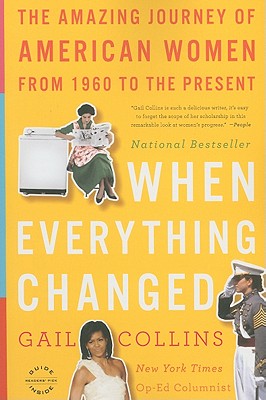
WhenEverythingChangedMy wife and I just finished reading When Everything Changed: The Amazing Journey of American Women from 1960 to the Present, by Gail Collins. (In the spirit of the book, I wash the dishes while my wife reads to me.) Although Collins does not dwell on the religious motivations in “traditional” women’s roles, I couldn’t help pondering how religions, rather than encouraging equal rights, have often acquiesced to the unfair treatment of women as a matter of principle. That principle is often abstract and theological. More often than not it is also mythical. As society changed to allow a greater measure of equality in social roles for the sexes, religious leaders held back, concerned more about doctrine than people. This is perhaps the most disheartening aspect of religious belief—as a human phenomenon it too easily loses sight of humanity.

Historically, of course, the roles of the sexes were tied to reproductive necessities. Women with nursing children (and startling low mortality rates) could not do the heavy work required in the agricultural societies of antiquity. I am aware that this is over-simplifying—it seems clear, however, from the materials left to us from the earliest literate cultures that a basic biological divide determined appropriate roles. Not only were women victims of high mortality rates due to difficult childbirth, but infant mortality was also high. In such circumstances it was important to guard those who survived from the potentially dangerous work of protecting flocks and tilling fields. And this was the time when the ancestors of our religions emerged. Technology improved survival rates and quality of life, but religious dogma is very slow to evolve. Some dogmas still don’t even accept the idea of evolution.

Back to When Everything Changed. Yes, bottles and birth control gave a new freedom to women. Day-care and daddy involvement also helped. And yet, not everything changed. Seeing the progress, religions tended to cry “foul!” and insist that, for women anyway, nothing had really changed. No doubt Collins is correct about a large swath of life in the secular sector. Most jobs are open to both sexes, and issues of fairness, although still lagging, are starting to be addressed. Many major religious bodies, however, still hold women in a subordinate role. Basing their reasoning on theologies long outdated, they insist than nothing has really changed at all. If only the wisdom of women and their experience were taken seriously many religions would have changed for the better as well. Only when that happens will we be able to consider that, in Collins’ hopeful words, everything will have changed.


Iconic Book

A recent Associated Press story celebrated the achievement of Phillip Patterson. In an age when we just can’t get enough technology, when we live with, sleep with, and dream of electronically generated reality, Mr. Patterson was feted for his arcane accomplishment. Decidedly low tech, at that. After four years Phillip Patterson has finished copying a book, word-for-word. I don’t even have to mention which book, because we already know it can only be the book that Americans recognize without reading. It is the iconic book. The holy book. Sometimes working up to 14 hours a day on the quest, according to AP, Patterson was not undertaking a spiritual journey here. He was simply wanting to learn about the book. If it had been any other book, it would hardly have been newsworthy.

An iconic book (photo by David Ball)

An iconic book (photo by David Ball)

I have recently been introduced to the concept of the iconic book. A colleague of mine kindly shared the idea during a campus visit. He and I happen to share advanced training in reading the same book, but, as he pointed out, it is the book and not its contents that our society recognizes. This is what makes it an iconic book. When we go to court we are asked to place our hands upon it and swear—something the book itself would doubtlessly consider some form of idolatry. We use it for inaugurating the highest officials in our land. We see it laid out in public places and private homes. We consider harming or disrespecting it to be an act of sacrilege. To us, it is more than paper, ink, leather and glue.

The dedication of Phillip Patterson ought to be celebrated. As he noted, to learn more about a book, you have to be willing to dig deeply. Look at every single word. Not that such treatment is fashionable. In a society enamored of power, we prefer the power of the iconic book over its often troubling content. It is certainly much easier trumpeting it than reading it. As I listen to the debates about public policy, the endless attempts to legislate morality, I ponder how little people actually read Mr. Patterson’s book. That’s what makes his accomplishment so remarkable. In producing an iconic book, a book that I don’t need to name because anyone might figure out what it is, our protagonist actually read it. In this age of technology, that is an accomplishment to be celebrated indeed.


Next to Godliness

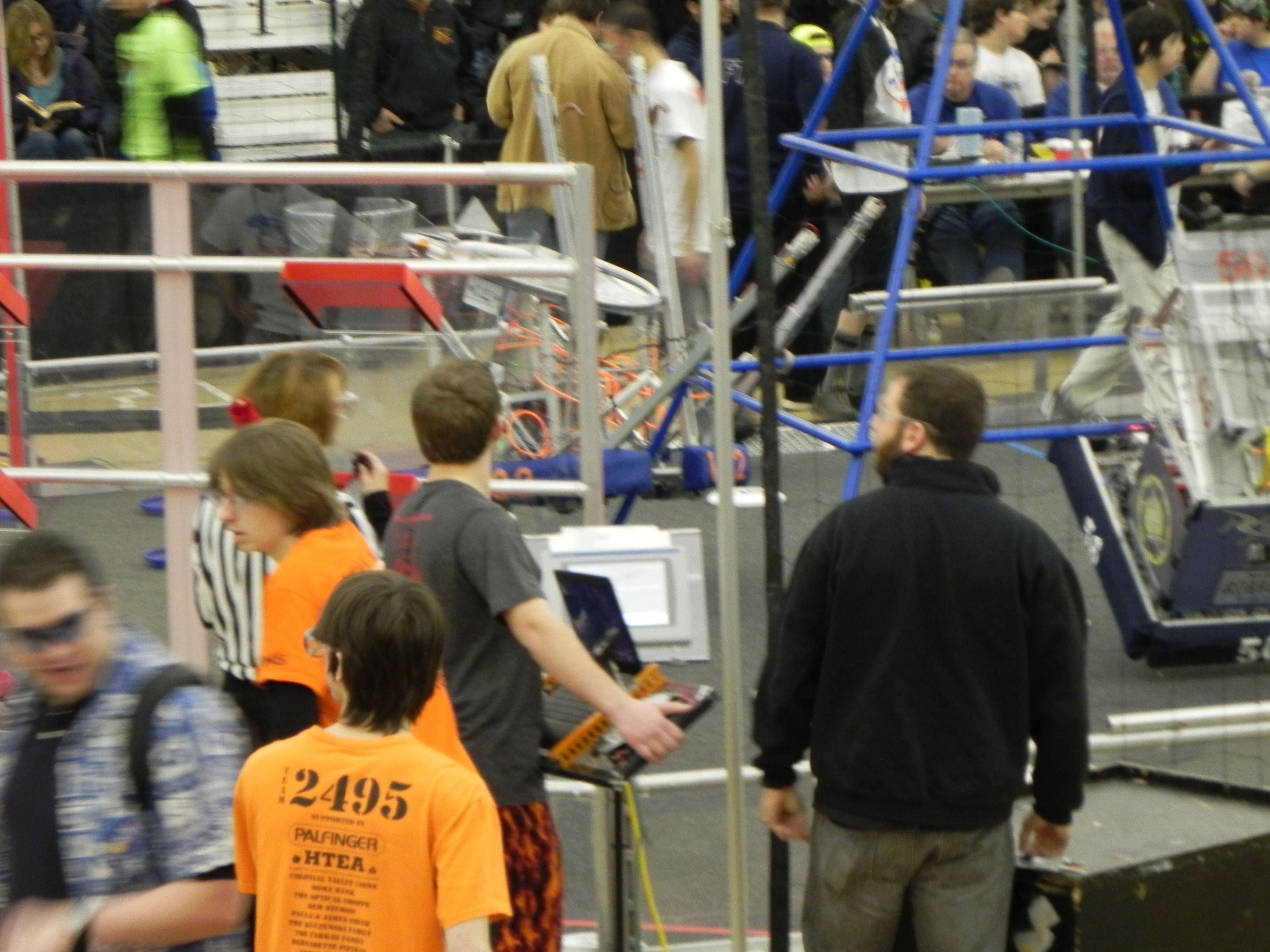
Catholics, secularists, and even a Pharaoh or two. Loud, pounding music. Dancing teenagers. It must be FIRST Robotics season again. Although I’m ambivalent about the implications of a world filled with robots, I can’t help but be impressed by what high school students can do when they are mentored so closely by adults eager to share the tricks of the trade. If you’re not familiar with FIRST Robotics, here are the basics: each January a new game objective is released. Participating high schools throughout the world have six weeks to plan, design, construct, and program a robot to perform the tasks spelled out. Since this is a busy time of year for many schools, dedicating extra hours to building a robot leads to complaints and loss of sleep—maybe a skipped supper or two. When they come together on the playing field, however, all that is forgotten and the wonder is that kids, who are often disparaged in our society, have managed to construct a working, complex machine capable of tasks impossible for many adults (for example, doing chin-ups).

Every year I can’t help but think how like a religious service these events are. The robots are like deities to be served and the technology flits about like mechanized angels. There is an increasingly complex hierarchy of officials telling you what you can’t do (now this is beginning to feel like work!). At the end of the day, however, the kids get to be the stars in a competition that puts brains over brawn. And the robots are treated with extreme deference, because we know that we wouldn’t stand a chance if they had a will anything like the deities of yore.

The religious imagery, however, is never absent. Technology represents humans doing things without divine intervention. These are empirically devised devices, performing according to the laws of physics. And yet, teams from Catholic high schools, bearing mythologically-laden names, join in the world where no gods need apply. Robots, as initially named by Karel Čapek, were human servants, the ultimate in godliness—making images in our likeness to do our bidding. And yet we can’t escape the language of religion when thinking about our own creations. The fascination applies to non-parochial schools as well, with some teams claiming names echoing themes from holy writ. Creating autonomous beings is next to godliness. We make our own future, and, god-like, we hope that nothing goes wrong.

Humans and machines

Humans and machines


Used Against You

Many times I’ve confessed to being a reluctant Luddite. My reluctance arises from a deep ambivalence about technology—not that I don’t like it, but rather that I’m afraid of its all-encompassing nature. This week’s Time magazine ran a story on how smartphones are changing the world. My job, meeting the goals set for me, would be impossible without the instant communication offered by the Internet. Everything is so much faster. Except my processing speed. We all know the joke (which would be funny if it weren’t so true) that if you’re having trouble with technology, ask a child. In my travels I see kids barely old enough to walk toddling around with iPhones, clumsily bumping into things (i.e., human beings) as they stare at the electronic world in the palm of their tiny hands. And once the technocrats have taken over, “progress” is non-negotiable.

I made it through my Master’s degree without ever seriously using a computer. Even now I think of this very expensive lap-warmer before me as a glorified word processor. Over the weekend I succumbed to the constant lure of Mac’s new OS, Mountain Lion. Some features of this blog had stopped working, and, being a Luddite, I assumed that it was outdated software. Of course, to update software, you need an operating system that can handle it. So here I am riding on a mountain lion’s back, forgetting to duck as the beast leaps dramatically into its lair. In this dark cave, nursing my aching head, I realize that I have become a slave to technology. For a student of religion who grew up without computers, I’ve got at least half-a-dozen obsolete ones in my apartment, each with bits and fragments I’m afraid to lose, despite the fact that I’m not even sure where to take them to retrieve the data. When I sat down to write my post this morning I received a message that Microsoft Word is no longer supported by Mountain Lion. Fortunately my daughter had the foresight to purchase Pages, so life goes on.

This blog has an index. It is an archaism. Indexes are not necessary with complete searchability. It is there mostly for me. In my feeble attempts at cleverness, I sometimes forget what a post is about, based on its title. The index helps me. In a truly Stephen King moment, I found this morning that my index had infinitely replicated a link to my post on the movie Carrie, so that any link after that will lead you directly to the protagonist of Stephen King’s first novel. It will take a few days to clean that up. There’s probably an app for it. For those of us brought up before household computers were a reality, however, there is a more religious explanation. Yes, my laptop is clearly haunted. And in the spirit of Stephen King I type these words while awaiting the top to snap down with the force of an alligator byte and break off my fingers. I should be worried about it, but instead, I’m sure there’s an app to take the place of missing digits. Even if there isn’t I’m sure my iPhone will happily survive without the constant interference of a Luddite just trying to call home.

Not a lap-pet.


Stobor and Dogs

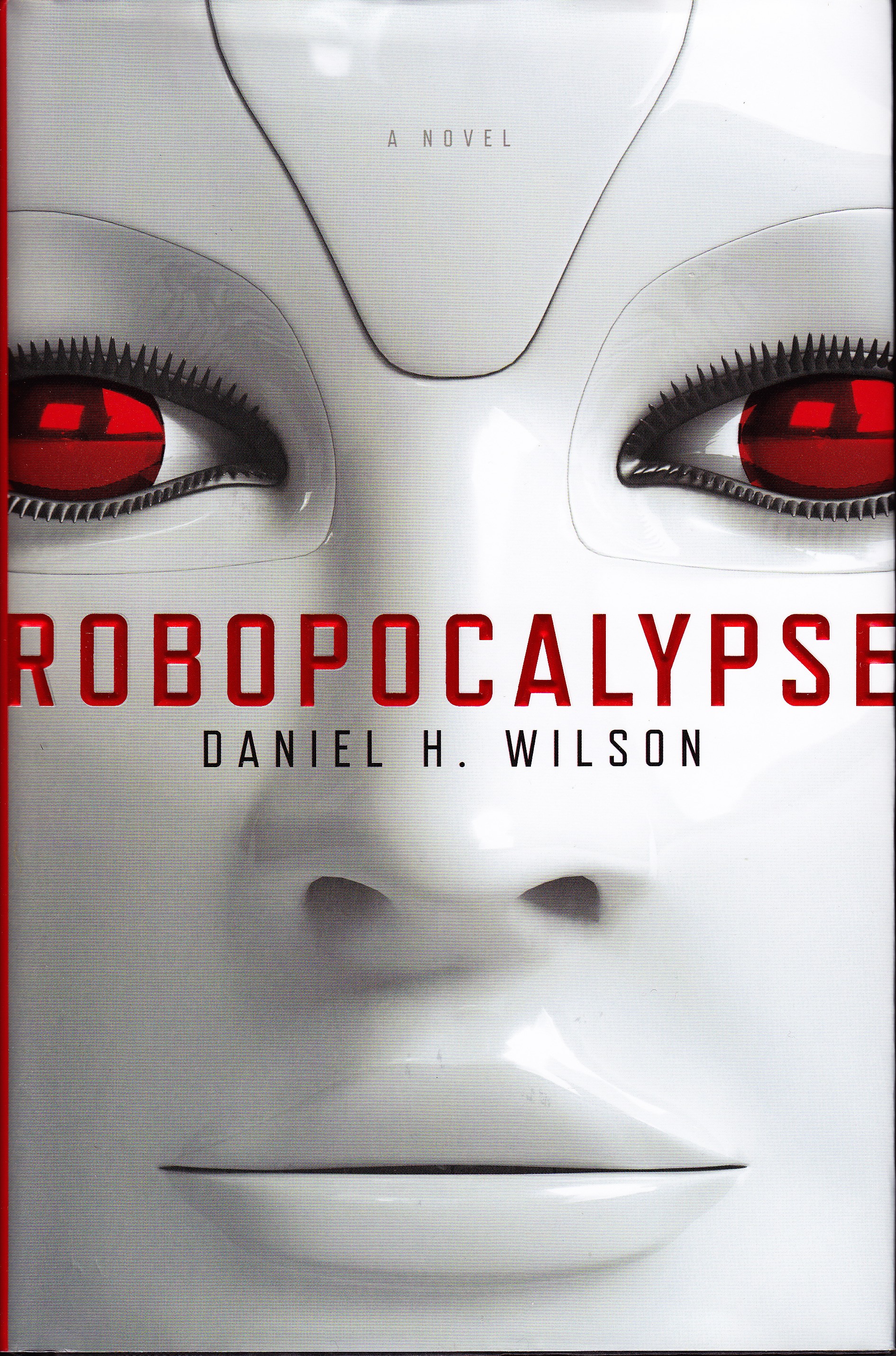
Having spent seventeen hours on public transit of various sorts yesterday, I had plenty of time to read. My chosen book for this trip was Daniel H. Wilson’s Robopocalypse. In my recent reading spate of dystopia novels Wilson’s vision seems more likely than others and thus perhaps a bit scarier. An obvious reason for this is that much of our tax money goes toward military projects that are, naturally, secret. A large part of Robopocalypse deals with military robots gone feral. Well, not really feral. The robots are controlled by a mastermind computer virus. In the first chapter this robot overlord declares to its creator, “I am your god.”

That statement is probably, metaphorically, true already. We live in a world where culture would change irrevocably without our current technology. Without it even fewer people would be reading the words I daily post here. Without it industry would shift into reverse back to the days of Thomas Edison or Eli Whitney. Present-day culture would be unrecognizable. Although not the best-written novel I’ve read, Wilson’s story does raise a salient issue—at some point the tool becomes the master of its user. For many years those who loudly proclaimed the superiority of Homo sapiens declared that we were the only tool-making animals. Subsequent observation has, of course, proven that to be inaccurate. Nevertheless, once knowledge of tools is acquired a trajectory is set. We lose a little bit of control.

Has technology replaced God? For some it clearly has. God is a symbol of comfort and meaning. As I watch thumbs busily texting away on planes, trains, automobiles—and especially in the middle of lectures—I realize that this altar of technology boasts many worshippers. There are very few scenarios where advanced technology is not present, like an omniscient being. Thankfully we have a few more years before Raymond Kurzweil’s artificial brain comes online. We should use those few remaining years to prepare ourselves for either an epiphany or an apocalypse. When the slaves become the masters, we are firmly in the territory of dystopia, at least from a human perspective.


Palm Versus Palm

“Mankind [sic] has managed to accomplish so many things: We can fly!” The words are not mine, but, depending on whether he was standing or sitting when declared, the Pope’s or God’s. In his Palm Sunday sermon yesterday the Pope addressed the issue of technology. Acknowledging flight a mere century after it began is breakneck speed for the Roman Catholic Church, but the concern behind the sentiment is real enough. Can religious systems survive the full onslaught of the technological revolution? As one small sample of the larger picture, ethics must react to increasing advanced technological scenarios. Raymond Kurzweil’s proposed Singularity where human and machine are fully integrated is perhaps an extreme example, but by no means the most extreme. Without fully understanding the context, our technical ability has soared way beyond our capacity to foresee implications. Believe it or not, many people alive today cannot use personal computers, have no palms, no cells. Sounds like they might be living free.

Palm Sunday is a day of tradition, heavily freighted as the start of Holy Week (in the Western tradition; of course, many Christians think it is a little too early some years, but that’s for a different post). Fronds from actual trees are waved as the Pope speaks. In the crowd palms are also being utilized to send the news home that one is waving a palm in the presence of the Pope. Traditional Christianity can survive with only the most rudimentary of tools. Religion, from the available evidence, began in the Paleolithic Era – earlier, I am pretty sure, than even the first integrated circuit. With its iron grip on the human psyche, religion is not about to disappear. Instead, technology is either ignored or embraced by it. As long as religions rely on human participation, however, technology will need to be reckoned with.

It's still a date (or palm)

The fact is technology has changed the perception of the world for many, especially in the western world. Even the revolution in Egypt earlier this year was conceived on the Internet. All the indications point to increased usage of technology rather than its imminent demise. Yet religious leaders still enjoin us to wave palm branches. Virtual Church websites abound where the faithful can wave electronic fronds and nary a tree will be harmed. Sermons, discussion groups, Bible readings, prayers – they can all be dispensed through wireless networks and modems. While many traditionalists turn from such ideas in disgust, it would behoove us all to pay attention. With the Vatican now onto the fact that we are flying, within mere decades we might receive a divine message on – oh, wait a minute – I’ve got mail!


Time Isn’t Holding Us

Ancient is much more recent than it used to be. Perhaps it has something to do with the two massive earthquakes over the last couple of years that have together sped the earth’s rotation by almost three microseconds. Perhaps. A more likely explanation is that excessive technology makes us soft. We expect new toys, new tech solutions on nearly a daily basis, and with the communications revolution, we are rarely disappointed. I wonder if we’ve forgotten how to help ourselves. This is especially evident in the lack of initiative I sense among many students. Of course, I am ancient.

When exam time rolls around, the present-day student requires a study guide. When I was a student, after dodging all the dinosaurs running around the campus, I never received a study guide for a test. If a test is coming, read, re-read, i.e., study, your notes. Maybe read a textbook? Nowadays a study guide is required for that message to be sent home. And then there’s the emails. Once the study guide is distributed (electronically, of course) the emails gush in asking what exactly I mean by this or that. Since I reiterated the point endlessly in class, accompanied by a PowerPoint slide with the answer writ large, verily, I roll my eyes and drop to my three-legged stool in dismay. Can it really be that college students require detailed answers in advance for a multiple-choice test of only 40 questions? Back in my day, a multiple-choice test was a gift that felt like sixth grade had rolled around again.

Sixth grade: what's he got in his hands?

Time, since Einstein, has been relative. And since I am an antiquity, I can perhaps be forgiven for citing Supertramp’s “The Logical Song.” As a studious young man, religious from epidermis to viscera, I was sent off to get an education. Years later, kicked out of the academy for good behavior, I see the wisdom of the lackluster 70’s band: “But at night, when all the world’s asleep, the questions run so deep for such a simple man.” The lyrics are easily found on the Internet. It is simpler than walking over to the CD rack to check manually. Back in my day, I would never have even imagined skipping an exam and then asking the professor what he was going to do about it in the next class period. Email, in this instance, is easily forgotten. I’ll get back to you once I engage the electronic lock to keep out this velociraptor (if anyone can remember back to 1993).


When Machines Fall in Love

When I want to have a good scare, I seldom think to turn to Time magazine. This week’s issue, however, has me more jittery than a Stephen King novel. One of the purest delights in life is being introduced to new concepts. Those of us hopelessly addicted to education know the narcotic draw of expanding worldviews. Once in a while, however, a development changes everything and leaves you wondering what you were doing before you started reading. A change so profound that nothing will ever return to normal. Singularity. The point of no return. According to the cover story by Lev Grossman, we are fast approaching what theorist and technologist Raymond Kurzweil projects as the moment when humanity will be superseded by its own technology. The Singularity. Noting the exponential growth of technology, Singularitarians – almost religious in their zeal – predict that computing power will match and then surpass human brain speed and capacity by 2023. By 2045 computers will outdistance the thought capacity of every human brain on the planet (more challenging for some than for others, no doubt). The software (us) will have become obsolete.

A corollary to this technological paradise is that by advancing medical techniques (for those who can afford them) and synching tissue with silicone chip, we may be able to make humans immortal. We will have finally crossed that line into godhood. Kurzweil notes laconically, death is why we have religion. Once death is conquered, some of us will be left without a job. (Those of my colleagues who actually have jobs, that is.) We have empirically explained events as far back as the Big Bang, and no deities need apply. The evolution of life seems natural and inevitable with no divine spark. And now we are to slough off mortality itself. O brave new world!

There was a time when mythographers created the very gods. They gave us direction and focus beyond scraping an existence from unyielding soil. We have, however, grown up. There are a few problems, nevertheless. Scientists are no nearer explaining or understanding emotion than they were at the birth of psychology. We might explain what chemicals produce which response, but we can’t explain how it feels. Emotion, as the very word indicates, drives us. Until Apple comes out with iMotion and our electronic devices feel for us we are stuck falling in love for ourselves. Computers can only do, we are told, what they are programmed to do. The mythographer steps down, the programmer steps up as the new God designer. Having dealt extensively with both, I feel I know which I trust better to provide an emotionally satisfying future.

Zadoc P. Dederick's Steam-Man